Soundtracks:  A B C D E F G H I J K L M N O P Q R S T U V W X Y Z #


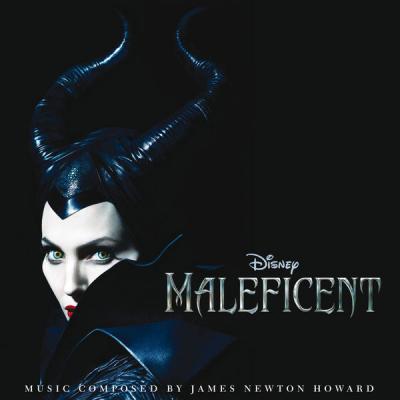
Maleficent Album Cover

"Maleficent" Soundtrack Lyrics

Movie • 2014

Track Listing


"Maleficent (Original Motion Picture Soundtrack)" – Album Guide to Tracks and Key Scenes

Maleficent Dream trailer frame with Lana Del Rey Once Upon a Dream and Angelina Jolie as Maleficent
The Maleficent “Dream” trailer pairs James Newton Howard’s score with Lana Del Rey’s dark cover of “Once Upon a Dream”.

Overview

How do you score a character who is both the villain and the hero of the same story? James Newton Howard’s music for Maleficent answers by wrapping the film in lush, old-fashioned fantasy orchestration and then quietly bending it toward ambiguity. The album, Maleficent (Original Motion Picture Soundtrack), runs a full seventy-plus minutes, almost entirely symphonic score, with a single song: Lana Del Rey’s brooding cover of “Once Upon a Dream”.

On disc and in the film, the music sets out to do three things at once. First, it has to honour the romantic, waltz-based world of Disney’s Sleeping Beauty, from which the story is spun. Second, it needs to sell Maleficent as a living, breathing person rather than a cackling archetype. Third, it has to carry large-scale fantasy action: battles, curses, walls of thorns, iron armour and a dragon-like showdown in a stone castle. Howard answers with several interlocking themes — for Maleficent herself, for Aurora, for the Moors, for the human aggressors — and uses them less as simple leitmotifs and more as a fluid web that follows the character’s shifting loyalties.

What makes the soundtrack stand out is the combination of size and sincerity. This is a big, orchestral fantasy score recorded with the London Symphony Orchestra at Abbey Road, full of choir, boy soprano, heavy brass and harp glissandi. Yet it rarely feels like bombast for its own sake. Even the showpiece cue “Maleficent Flies” is built as a memory of innocence rather than a victory march, and the long finale track “Maleficent Is Captured” spends as much time on regret and reconciliation as it does on action hits.

Stylistically the score sits between late-romantic symphonic writing and modern fantasy blockbuster language. You get broad, lyrical melodies that would not be out of place in Korngold or early Williams; dense, churning string ostinatos reminiscent of Howard’s own King Kong and The Last Airbender; and flashes of gothic colour that line up well with the film’s thorn and iron imagery. “Once Upon a Dream” pulls in a different direction: Del Rey’s version morphs Tchaikovsky’s waltz into a slow, minor-key lullaby with deep drums and echoing piano, underlining the film’s premise that fairy-tale romance hides something darker underneath.

How It Was Made

Disney hired James Newton Howard for Maleficent in late 2012, after his fantasy work on projects like Lady in the Water and The Last Airbender had already marked him out as a go-to orchestral worldbuilder. Director Robert Stromberg temp-tracked early cuts of the film with existing Howard scores, then brought the composer in to write original material once the tone of the movie was set. Recording sessions took place at Abbey Road Studios in London, with Pete Anthony conducting the London Symphony Orchestra and a full complement of choir and soloists.

Howard produced the album himself, building it as a continuous listening experience rather than a simple cue dump. The track list opens with “Maleficent Suite”, a nearly seven-minute overture that lays out major thematic ideas. Shorter cues like “Welcome to the Moors” and “Three Peasant Women” handle early worldbuilding, while longer, multi-part tracks such as “The Christening” and “Maleficent Is Captured” carry whole story sequences. The score uses very little electronics; most of the weight comes from traditional orchestral forces and vocal colours, including a prominent boy soprano line associated with Maleficent’s more vulnerable side.

The outlier track, Lana Del Rey’s “Once Upon a Dream”, originated as part of Disney’s marketing strategy. Del Rey’s cover debuted in a Grammys TV spot for the film, then appeared in trailers and finally over the end credits. Angelina Jolie reportedly hand-picked Del Rey to re-imagine the song from Sleeping Beauty, and producer Dan Heath reshaped it into a slow, almost funereal waltz that sits comfortably next to Howard’s darker cues.

Angelina Jolie as Maleficent looming over thorny forest in trailer shot
Recording at Abbey Road, Howard built a full thematic tapestry to support Maleficent’s transformation from betrayed fairy to guardian.

Tracks & Scenes

Because Maleficent is almost entirely orchestral, “tracks and scenes” here means major score cues tied to specific story beats, plus the one song that defines the film’s marketing and epilogue.

"Maleficent Suite" — James Newton Howard
Where it plays: Used over the opening logos and early narration, the suite functions as a condensed overture. We glide over the kingdom and the Moors as the main Maleficent theme, the Moors’ pastoral idea and darker human material are all introduced in turn. It feels like a storybook opening being painted in real time.
Why it matters: The suite sets expectations: this will be a big, thematic fantasy score, not a minimal, textural one. It also gently hints that Maleficent herself will move between warmth and menace, depending on how her theme is harmonised.

"Welcome to the Moors" — James Newton Howard
Where it plays: Early in the film, when young Maleficent soars over her homeland and we meet the water elementals, tree guardians and other creatures. The cue covers wide, sunlit shots of the Moors and Maleficent’s first encounter with the human boy Stefan.
Why it matters: This is the musical statement of what is at stake. The light strings, woodwinds and choir paint the Moors as a magical ecosystem worth protecting. Later, when thorns and iron invade the same spaces, you have a clear memory of what was lost.

"Maleficent Flies" — James Newton Howard
Where it plays: Still early in the story, as Maleficent tests the limits of her wings and loops across the sky at full speed. We see her joy in flying, her playful teasing of Stefan and her sense of ownership over the Moors.
Why it matters: This track introduces her main theme in its most open, hopeful form, with boy soprano and soaring brass. When the wings are cut off later, the memory of this cue makes that scene land harder: you have already felt the freedom that has been taken from her.

"Battle of the Moors" — James Newton Howard
Where it plays: During King Henry’s doomed assault on the Moors, as human armies clash with tree warriors and Maleficent unleashes her full power for the first time. The cue tracks cavalry charges, magical counterattacks and the moment where the human king is injured.
Why it matters: Musically it gives the score its first big action set-piece — rolling snares, brass stabs, full choir. Dramatically, it marks the point of no return between the human kingdom and the faerie lands; the motifs for humans and the Moors collide head-on.

"The Christening" — James Newton Howard
Where it plays: The famous curse scene. As baby Aurora is presented at court and the three pixies bicker over their gifts, Howard’s music initially plays the royal pomp fairly straight. Then Maleficent arrives in a swirl of dark chords that echo the original Sleeping Beauty score, and the cue ratchets up as she places the sleeping curse.
Why it matters: This is the one sequence that has to rhyme directly with the animated film. The music walks a tightrope between homage and reinvention, helping Jolie’s performance feel iconic rather than camp. The sting that hits when she declares “before the sun sets on her sixteenth birthday” is one of the album’s sharpest.

"Aurora and the Fawn" — James Newton Howard
Where it plays: A pastoral mid-film passage, covering young Aurora’s wanderings in the Moors under Maleficent’s not-so-secret watch. We see the girl playing with forest creatures, nearly falling off cliffs, and Maleficent repeatedly catching or protecting her without revealing herself.
Why it matters: The cue shifts Maleficent’s theme into something gentler, almost maternal. It is the musical proof that her relationship with Aurora has changed from revenge project to genuine attachment, long before she admits it aloud.

"Aurora in Faerieland" — James Newton Howard
Where it plays: A slightly later montage of Aurora as a teenager exploring the Moors in daylight. She meets creatures that once fled from Maleficent and now welcome her as the “mistress of all evil’s” favourite.
Why it matters: This track leans into wonder: high strings, airy woodwinds, evolving statements of the Aurora-Maleficent relationship theme. It musically answers the question: what if the princess grew up inside the supposedly cursed forest and loved it?

"The Spindle's Power" — James Newton Howard
Where it plays: The night of Aurora’s sixteenth birthday, when the curse finally comes due. As Aurora sleepwalks through secret passages toward the hidden spinning wheel, the cue throbs with low strings and subtle choir. The moment her finger touches the spindle, the music swells into a tragic, almost horror-like climax.
Why it matters: Howard lets the curse motif dominate here, drowning out the more hopeful themes. It is one of the purest examples of the score stepping into gothic territory, and it gives real weight to what could have been a simple plot mechanic.

"The Curse Won’t Reverse" — James Newton Howard
Where it plays: Earlier on the same day, when Maleficent finally tries to revoke her own spell and discovers she cannot. The scene plays in the Moors, with Aurora sleeping nearby and Maleficent whispering desperately over her.
Why it matters: The cue is short but critical. It reframes the curse theme as self-recrimination: low brass ask the question, high strings answer with a resigned, falling line. You feel her realisation that she has written herself into a corner.

"Prince Phillip" — James Newton Howard
Where it plays: When Aurora meets Phillip in the woods, and again when the pixies drag him toward the castle as their supposed “true love” solution. The music is lighter, with a knightly, slightly old-fashioned fanfare for his horse-back entrance and some romantic string writing for their woodland conversation.
Why it matters: Phillip’s theme is intentionally a bit generic — he is a red herring. Musically, that makes it satisfying later when his big kiss cue (“Phillip’s Kiss”) is undercut and the music never fully pays off his heroic promise.

"Phillip’s Kiss" — James Newton Howard
Where it plays: Inside the castle, as Phillip is pushed to kiss the sleeping Aurora and break the curse. The cue swells in the conventional fairy-tale way for a moment, then collapses into more subdued harmonies when nothing happens.
Why it matters: Howard uses the musical grammar of Disney romance to set up expectations, then subverts it almost instantly. The failure of the kiss is written into the music: unresolved chords, strings that refuse to bloom into a full statement of a love theme.

"True Love's Kiss" — James Newton Howard
Where it plays: Immediately after the failed prince kiss, when a grieving Maleficent apologises to Aurora and kisses her on the forehead. The cue begins in near silence, then lets Maleficent’s tender motif grow into a full, luminous statement as Aurora wakes.
Why it matters: This is the emotional centre of the score. The “true love” concept is redefined away from romance and toward chosen family, and the music follows by giving Maleficent the kind of soaring resolution normally reserved for princes and weddings.

"The Iron Gauntlet" — James Newton Howard
Where it plays: In the castle confrontation, as King Stefan’s iron-clad trap is sprung and Maleficent is dragged, beaten and pinned by metal chains and netting. The cue is full of sharp, dissonant brass and percussion, matching the brutal choreography.
Why it matters: Iron is Maleficent’s weakness; here, the music becomes almost physically uncomfortable, hammering home the sense of violation that began when Stefan cut off her wings. It sets up the catharsis of the next track.

"Maleficent Is Captured" — James Newton Howard
Where it plays: The entire endgame: Diaval turning into a dragon, the battle in the throne room, Maleficent bleeding and seemingly dying, Aurora freeing the imprisoned wings and the final escape through stained glass windows.
Why it matters: At over seven minutes, this is the score’s mini-symphony. It weaves together battle motifs, Maleficent’s themes in dark and light forms, and a triumphant statement when she takes to the air again with her wings fully restored.

"The Queen of Faerieland" — James Newton Howard
Where it plays: The epilogue. Aurora is crowned queen of both the human kingdom and the Moors, the thorn wall disappears and Maleficent, now at peace, flies into the clouds as the narrator closes the story.
Why it matters: The cue finally lets the Moors theme and Maleficent’s lighter variant resolve in the same key. It is the musical equivalent of the film’s thesis: this world can hold both darkness and mercy without collapsing.

"Once Upon a Dream" — Lana Del Rey
Where it plays: Over the end credits, and in the heavily promoted “Dream” trailer. In the film, it arrives only after the story is complete, turning the familiar Sleeping Beauty waltz into a slow, minor-key echo of the tale you have just watched.
Why it matters: The cover reframes a cheery Disney love song as something haunted and ambivalent. It makes the credits feel like a spell being slowly lifted and has become one of the most distinctive trailer tie-ins of the 2010s.

Shot from Maleficent Dream trailer showing Aurora among the Moors with dark score underneath
Key cues like “Maleficent Flies”, “The Christening” and “True Love’s Kiss” are tightly synced to the film’s most iconic visual moments.

Notes & Trivia

  • The official album runs 23 tracks: 22 pieces of score plus Lana Del Rey’s “Once Upon a Dream”.
  • Howard’s music for Maleficent was recorded at Abbey Road with the London Symphony Orchestra, continuing a long Disney–Abbey Road tradition.
  • The score earned James Newton Howard an International Film Music Critics Association award for Best Fantasy/Sci-Fi/Horror Score and additional nominations.
  • “Maleficent Flies” and “Maleficent Suite” were singled out in awards coverage as standout compositions from the album.
  • Howard has mentioned the score in interviews as one of his personal favourites from his own catalogue.
  • “Once Upon a Dream” was initially released as a free digital download for a week via Google Play to capitalise on the Grammys trailer launch.
  • Japanese releases of the soundtrack include a local-language end-credit cover of “Once Upon a Dream” alongside Del Rey’s version.

Music–Story Links

The score is unusually tightly bound to Maleficent’s emotional arc. Early cues like “Welcome to the Moors” and “Maleficent Flies” treat her as a kind of guardian angel for the land: bright major harmonies, lilting woodwinds and soaring voices. After Stefan’s betrayal, many of those same intervals come back in minor or half-diminished forms, so the themes feel wounded rather than simply replaced.

The relationship with Aurora gets its own musical thread. The tender motif that surfaces in “Aurora and the Fawn” and “Aurora in Faerieland” grows more complex as Aurora ages, picking up harmonies that echo Maleficent’s main theme. By the time we reach “You Could Live Here Now” and “True Love’s Kiss”, the line between “Maleficent’s theme” and “Aurora’s theme” is blurred on purpose — the music suggests that they now define each other.

Howard also builds a musical argument about what counts as “true love”. Phillip gets a charming, but relatively generic, motif. It peaks in “Prince Phillip” and briefly swells in “Phillip’s Kiss”, but it never quite blossoms into the full, sweeping love theme you expect from a Disney prince. That honour is reserved for Maleficent’s own motif in “True Love’s Kiss”, where the harmony finally stabilises and the orchestration opens up. The score literally moves the emotional centre of the fairy tale from romantic couple to chosen family.

On a broader level, the contrast between the Moors and Stefan’s kingdom is written into arrangement choices. The Moors are all flutes, harp, tambourine, choir; the human realm leans on brass, low strings and heavy percussion. Cues like “Battle of the Moors”, “The Wall Defends Itself” and “Path of Destruction” mash those palettes together, reflecting the way war tangles their fates.

Reception & Quotes

Among film-music writers, Maleficent was widely read as a return to form for James Newton Howard. Several reviewers compared it favourably with his earlier fantasy work and emphasised its thematic richness. According to Filmtracks and Movie Wave, the score’s combination of big themes, emotional development and old-school orchestral sweep set it apart from many 2010s fantasy soundtracks.

General-audience reviews of the film itself were more mixed, but Howard’s score and Del Rey’s end-credit song were often cited as presentation highlights. The darker take on “Once Upon a Dream” in particular became a talking point in coverage of both the film and Del Rey’s soundtrack work.

“Maleficent is big and bold, featuring memorable themes and emotional development… a truly impressive return to form.”
Movie Wave review
“An enjoyably old-fashioned film score experience… a beautiful return to form for the composer nonetheless.”
MFiles review
“Sweeping score locates a sweet spot between old Hollywood fantasy and modern fairy-tale darkness.”
Trade-press summary
“Del Rey’s gothy take on ‘Once Upon a Dream’ makes for a fitting closer.”
Variety review of the film
End-credit style Maleficent image from Dream trailer with Lana Del Rey Once Upon a Dream title card
The end-credit pairing of Howard’s motifs with Lana Del Rey’s “Once Upon a Dream” became one of the film’s signature impressions.

Interesting Facts

  • The soundtrack charted on both the Billboard 200 and the U.S. Soundtrack Albums chart, and reached the UK Official Soundtrack Albums top 50.
  • International editions kept the same score content but sometimes shuffled metadata and catalogue codes; Japan received the album slightly later with local packaging.
  • Howard later performed suites from Maleficent live in concert alongside music from The Dark Knight and The Hunger Games, treating it as part of his “core” repertoire.
  • The score leans heavily on boy soprano for Maleficent’s innocent side, a colour Howard rarely uses this prominently elsewhere.
  • A separate “score music from the motion picture” album by another orchestra appeared years later, essentially a re-recording of highlights for library and playlist use.
  • The film’s sequel, Maleficent: Mistress of Evil, switched composers to Geoff Zanelli, but reused and adapted Howard’s themes to keep musical continuity.
  • Del Rey’s “Once Upon a Dream” quietly became a staple in discussions of trailer music, often cited whenever studios lean on slowed-down covers of classic songs.
  • Because the film is PG, the score had to balance genuine menace with family accessibility; the most brutal moments are often handled with harmony and orchestration rather than sheer volume.

Technical Info

  • Album title: Maleficent (Original Motion Picture Soundtrack)
  • Year: 2014
  • Type: Film score (with one song)
  • Composer / producer: James Newton Howard
  • Song performer: Lana Del Rey — “Once Upon a Dream” (end-credit/title song)
  • Primary artist credit: James Newton Howard (score), Lana Del Rey (track 23)
  • Label: Walt Disney Records
  • Recording: 2012–2014, Abbey Road Studios, London; London Symphony Orchestra conducted by Pete Anthony
  • Length: Approx. 1:11:46 (23 tracks)
  • Core cues highlighted in film: “Maleficent Suite”, “Welcome to the Moors”, “Maleficent Flies”, “Battle of the Moors”, “The Christening”, “Aurora in Faerieland”, “The Spindle’s Power”, “True Love’s Kiss”, “Maleficent Is Captured”, “The Queen of Faerieland”, “Once Upon a Dream”
  • Awards / recognition: IFMCA Best Fantasy/Sci-Fi/Horror Score winner; additional nominations for Film Score of the Year and individual tracks; widely cited in “best scores of 2014” lists.
  • Availability: Streaming and digital download worldwide; CD and region-specific physical releases in 2014; Del Rey’s single also available separately.

Canonical Entities & Relations

Subject Relation Object / Description
Maleficent (film, 2014) Directed by Robert Stromberg
Maleficent (film, 2014) Music by James Newton Howard
Maleficent (film, 2014) Production company Walt Disney Pictures / Roth Films
Maleficent (Original Motion Picture Soundtrack) Is part of Maleficent (film, 2014)
Maleficent (Original Motion Picture Soundtrack) Released by Walt Disney Records
James Newton Howard Composed Score for Maleficent (2014)
Lana Del Rey Performed “Once Upon a Dream” (Maleficent end-credit song)
“Maleficent Suite” Music recording on Maleficent (Original Motion Picture Soundtrack)
“Maleficent Flies” Music recording on Maleficent (Original Motion Picture Soundtrack)
“Battle of the Moors” Underscores sequence Battle between King Henry’s army and the Moors
“The Christening” Underscores sequence Royal christening and Maleficent’s curse on Aurora
“Aurora in Faerieland” Underscores sequence Teenage Aurora exploring the Moors
“True Love’s Kiss” Underscores sequence Maleficent waking Aurora with a kiss on the forehead
“Once Upon a Dream” Title song for Maleficent (film, 2014)
Abbey Road Studios Recorded Maleficent (Original Motion Picture Soundtrack) orchestral sessions

Questions & Answers

Is the Maleficent soundtrack mostly score or songs?
It is almost entirely orchestral score by James Newton Howard. The only song is Lana Del Rey’s end-credit cover of “Once Upon a Dream”.
How many tracks are on Maleficent (Original Motion Picture Soundtrack)?
The standard album contains 23 tracks: 22 pieces of score plus “Once Upon a Dream” as the closing track.
Which cues should I hear to get the main themes?
Start with “Maleficent Suite”, then add “Maleficent Flies”, “Battle of the Moors”, “Aurora in Faerieland”, “The Spindle’s Power”, “True Love’s Kiss” and “The Queen of Faerieland”.
Where does Lana Del Rey’s “Once Upon a Dream” appear in the film?
Her version is used over the end credits and in the promotional “Dream” trailer; it is not heard during the main story.
Did the Maleficent score win any awards?
Yes. It won the IFMCA award for Best Fantasy/Sci-Fi/Horror Score and received additional nominations, and it often appears on “best scores of 2014” lists.

Sources: Disney and Fandom soundtrack overviews; James Newton Howard discography and album notes; track listings from official releases and Discogs; critical reviews from Filmtracks, Movie Wave, MFiles and AllMusic; chart data from official UK and Billboard listings; coverage of Lana Del Rey’s “Once Upon a Dream” in NME, Variety, Forbes and other outlets; film credits and production details from studio materials and major film encyclopedias.

Very nice movie where the main star is Angelina Jolie. She has a delightful devilish look, charming smile of all 32 teeth (and the impression that she has forty of them), and very skillful use of her appearance – both angelic and diabolical. She turned out to recreate the most convincing Maleficent (a character who is clearly more than 200 years at the moment, according to the tales and legends) of all times. The male part of the audience pulled their second halves to this movie in theaters because of the presence of Angie in the film. The female audience could only wonder and to agree, because all the same, it is a date. The fact that she has played very convincing, calls no doubt – with a budget of USD 180 million, the film grossed staggering $ 758 million. The most impressive scene where Maleficent soars with her wings (with instrumental music named Maleficent Flies) is very exciting and spectacular! Lana Del Rey made the title track, which we hear in the trailer, and in the film. As for us, it is too tranquil, but it's a matter of taste. Others, instrumental compositions, are formidable and calm. The Army Dances, The Spindle's Power – these are vivid examples of what you can create if you approach to the music with love and great sense of responsibility for the display of Maleficent not just devilish, but humane, with all inherent emotions. The compositions should also reflect her inner world and deliver the monumentality to the tale unfolding before our eyes. Lots of special effects, many beautiful scenes, full of gloomy grandeur. With the spirit of doom, decadence and at the same time – the heyday of the empire’s best days. James Newton Howard, who wrote music for the film, is a man without whom we do not imagine Hollywood. He made so many soundtracks so he must have a monument!

November, 15th 2025

'Maleficent': IMDb Profile, Full Cast & Crew
A-Z Lyrics Universe

Lyrics / song texts are property and copyright of their owners and provided for educational purposes only.