Soundtracks:  A B C D E F G H I J K L M N O P Q R S T U V W X Y Z #


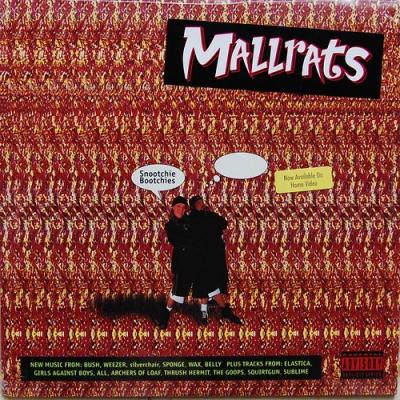
Mallrats Album Cover

"Mallrats" Soundtrack Lyrics

Movie • 1995

Track Listing

Love And Sharks

Jason Lee/Jeremy London

Bubbles

Bush

Susanne

Weezer

Freeing One's Mind

Priscilla Barnes/Jason Lee/Jeremy London

Seventeen

Sponge

Kryptonite Condoms

Jason Lee/Jeremy London

Line Up

Elastica

Mission Impossible #1

Jason Mewes

Mallrats

Wax

Taken With A Grain Of Salt

Shannen Doherty

Broken

Belly

Cruise Your New Baby Fly Self

Girls Against Boys

A Very Uncomfortable Place

Jason Mewes/Jason Lee/Jeremy London/Joey Lauren...

Guilty

All

That Ski Trip

Joey Lauren Adams/Jason Lee/Jeremy London

Web In Front

Archers Of Loaf

Hated It

Thrush Hermit

Post Coital Techno Boogie

Jason Lee/Shannen Doherty

Build Me Up Buttercup

The Goops

Cousin Walter

Jason Lee/Brian O' Halloran

Social

Squirtgun

Mission Impossible #2

Jason Mewes

Smoke Two Joints

Sublime

Stoned

Silverchair

Last Words

Jason Mewes


"Mallrats (Original Motion Picture Soundtrack)" – Album Guide to Tracks and Key Scenes

Mallrats 1995 trailer still showing the main cast inside the shopping mall
Mallrats movie soundtrack imagery, 1995

Overview

What does a mid-90s mall, a broken engagement, and a wall of noisy alt-rock have in common? In Mallrats, the answer is the soundtrack. The album doubles as both time capsule and emotional spine for Kevin Smith’s 1995 cult film, stitching together punk, grunge, Britpop and a few sweet, cheesy covers into one scruffy mixtape.

On paper it is a compilation: Squirtgun, Bush, Weezer, Elastica, Belly, Girls Against Boys, Archers of Loaf, All, plus dialogue snippets from the film. In practice, the songs constantly comment on the characters’ arrested development. “Social” blasts over comic-book style credits, “Stoned” and “Seventeen” score Brodie’s hangover breakup spiral, while “Susanne” and Wax’s “Mallrats” bookend the closing “where are they now?” gags and credits. The album leans hard into college-radio guitar music of the era; even the one big disco cue, “Boogie Shoes”, turns up as a joke about flea-market escape and retro kitsch rather than pure nostalgia.

The soundtrack’s mood is restless, sarcastic, but oddly romantic. Jay and Silent Bob’s chaos gets its own stoner anthem in “Smoke Two Joints”; Rene and Brodie’s elevator tryst rides a candy-colored punk cover of “Build Me Up Buttercup”; Brandi and T.S.’s reconciliation floats on Belly’s “Broken”. Short dialogue clips like “Love and Sharks” or “Kryptonite Condoms” act as punchlines between songs, mirroring the film’s rhythm of riffs and gags.

Genre-wise, the core is alternative and indie rock: Lookout!-style pop-punk (“Social”), British guitar pop (“Line Up”), fuzzed-out Australian grunge (“Stoned”), indie-noise classic “Web in Front”, plus post-hardcore-leaning cuts like Girls Against Boys’ “Cruise Your New Baby Fly Self”. The older soul and disco (“Boogie Shoes”) and easy-listening standards (“Garota de Ipanema”, “Lollipops and Roses”) are used sparingly but cleverly, as background to mall spaces and side gags. In other words: indie grit for slackers, polished oldies for the world they’re rebelling against.

How It Was Made

The film credits veteran composer Ira Newborn as the main music voice: his jazzy cues open the film under the infamous “cousin Walter” monologue and pop up as light connective tissue whenever Smith needs something more old-school than guitars. The soundtrack album, though, is built around licensed songs. MCA Soundtracks and 510 Records released Mallrats (Original Motion Picture Soundtrack) in October 1995 as a 25-track compilation combining songs and dialogue, running just under 50 minutes according to the label and AllMusic listings.

Music supervision sat with Kathy Nelson, a major 90s studio music supervisor whose credits around the same time include Pulp Fiction, Dangerous Minds and Apollo 13. She and Smith steered the selection toward mid-90s alt-rock and punk that felt “bigger” than the micro-budget Clerks soundtrack but still had a fanzine-level vibe. A nice behind-the-scenes detail: a feature on the film’s music notes that Billie Joe Armstrong from Green Day suggested Squirtgun’s “Social” for the opening credits, which helped land the Lookout! band on a major-studio movie.

The album’s sequencing deliberately breaks from the film order. On screen, Squirtgun’s “Social” is the first full song; on disc it arrives later, after dialogue bits. Meanwhile, Bush’s “Bubbles”, Elastica’s “Line Up” and Girls Against Boys’ “Cruise Your New Baby Fly Self” are placed to feel like a flowy mixtape rather than a literal scene-by-scene reconstruction. MCA also commissioned and cleared the Goops’ cover of “Build Me Up Buttercup” and had Smith direct its music video with Jay and Silent Bob cameos, tying the label’s promo cycle directly to the film’s fan base.

Mallrats 1995 trailer frame focusing on the Truth or Date stage inside the mall
Truth or Date and the mall chaos that the soundtrack scores

Tracks & Scenes

Below are the key musical cues as they play in the movie, not just on the album. I’ll flag whether they are diegetic (heard by the characters) or non-diegetic (only on the soundtrack).

"Social" — Squirtgun
Where it plays: After the cousin Walter intro, the film cuts to comic-book style character panels for each main cast member. “Social” explodes over these opening credits in the first few minutes, non-diegetic, with fast drums and choppy guitars under images of Brodie, T.S., Rene and the rest turned into cover art.
Why it matters: It announces the film’s comic-book obsession and punk energy up front. The song’s nerdy-pop-punk feel matches Brodie’s fanboy persona and immediately tells you this is a slacker story filtered through zines and longboxes rather than prestige drama.

"Stoned" — Silverchair
Where it plays: Early on, we find Brodie passed out against a wall plastered with superhero posters in his bedroom. “Stoned” plays non-diegetically as Rene wakes him, complains, and finally breaks up with him, roughly in the first ten minutes. The track’s sludge-to-chorus structure underlines his groggy, checked-out mood.
Why it matters: The cue nails Brodie’s arrested adolescence. A teenage grunge band scoring a grown man who still lives like a teenager is very on-the-nose, and that’s the joke: emotionally, he is still stuck in that noisey, fuzz-drenched headspace.

"Seventeen" — Sponge
Where it plays: Immediately after Rene’s verbal takedown, she tosses a letter at Brodie and walks out. “Seventeen” slams in as she leaves and continues over Brodie reading and reacting, still early in the first act. The song plays non-diegetically but tracks tightly with her exit.
Why it matters: The lyrically jaded, slightly sleazy alt-rock tone captures that mix of humiliation and self-pity Brodie sits in. The song becomes the “you had this coming” voice that Brodie refuses to internalize yet.

"Bubbles" — Bush
Where it plays: After both leads have been dumped, T.S. and Brodie decide to escape to the mall. As they head out and drive, “Bubbles” kicks in, skipping through its intro into the chorus while they stride toward their natural habitat. The cue bridges the apartment scenes and their arrival at the mall, non-diegetically, roughly around the 15-minute mark.
Why it matters: It’s the “road trip to nowhere” song. The muscular guitars and half-mumbled vocal give the mall trip an absurd sense of importance, turning junk-food retail therapy into their heroic mission.

"Boogie Shoes" — KC and the Sunshine Band
Where it plays: Later, T.S. and Brodie end up at a flea market, trying to lie low after causing trouble at the mall. “Boogie Shoes” plays as they move through the crowded stalls and try to avoid police attention. It is treated as diegetic source music, coming from the flea market sound system, turning up just long enough to be recognizable.
Why it matters: Dropping a 70s disco classic into a 90s indie universe is a deliberate clash. The shiny, carefree groove mocks the boys’ supposed “peril” and makes the flea market feel like a cheap, second-hand dream of adulthood they’re not ready for. The kicker: this cue is in the film but not on the original CD, which fans still notice.

"Line Up" — Elastica
Where it plays: When the film introduces Tricia Jones, the hyper-serious 15-year-old compiling a book about male orgasms, “Line Up” plays over shots of her at work and interacting with her subjects. The cue sits roughly mid-film, non-diegetic but tightly cut to her scenes.
Why it matters: Elastica’s clipped, slightly sardonic Britpop perfectly mirrors Tricia’s studied cool. The song’s talk of “lining up” feels like a sly nod to her research subjects, and the minimal, tight rhythm underscores the clinical-but-kinky tone of her storyline.

"Build Me Up Buttercup" — The Goops
Where it plays: One of the film’s most infamous sequences: Brodie and Rene end up in an elevator, arguing, kissing and eventually having hurried sex while the elevator keeps stopping. The Goops’ punky cover of “Build Me Up Buttercup” blares non-diegetically over the scene, stretching through most of the encounter, then shows up again attached to the film’s promo music video.
Why it matters: It’s pure contrast. The bubblegum melody, rendered as scrappy punk, collides with messy, half-public sex and all of Brodie’s unresolved emotional baggage. It turns a romantic oldie into an anthem for people who absolutely do not have their lives together.

"Cruise Your New Baby Fly Self" — Girls Against Boys
Where it plays: The slinky, bass-heavy track turns up over mall-set scenes featuring Shannon and the general predatory vibe around Rene and the clothing store. The cue functions non-diegetically, shading the environment rather than one single line of dialogue, roughly in the middle stretch of the film.
Why it matters: Girls Against Boys always sounded like smoke, neon and bad decisions. Here that tension-loaded groove underlines Shannon’s sleaze and the film’s anxiety about how women are treated in this mall ecosystem.

"Smoke Two Joints" — Sublime
Where it plays: In the third act, Jay and Silent Bob sabotage the dating show by getting the male contestants spectacularly stoned. There’s a montage of them sharing a blunt, then the guys lying on the floor surrounded by snacks, completely useless for live TV. Sublime’s “Smoke Two Joints” plays non-diegetically over this entire sequence, syncing with their baked laughter and munchies.
Why it matters: It’s almost too on-the-nose as a song choice, which is exactly the point. The laid-back ska-reggae feel turns what should be high-stakes sabotage into a hazy stoner cartoon and ties the film very specifically to mid-90s college dorm weed culture.

"Broken" — Belly
Where it plays: As everything resolves toward the end, the male leads publicly declare their feelings to Brandi and Rene on the game-show stage. “Broken” plays non-diegetically over these intertwined declarations, giving the montage a warm, bittersweet lift and continuing into their reconciliations backstage.
Why it matters: Belly’s shimmering guitars and Tanya Donelly’s vocals soften the film’s cruder humor for a moment. For once, the soundtrack lets itself be sincerely romantic, without irony, making the happy ending feel earned rather than purely snarky.

"Susanne" — Weezer
Where it plays: Right after the game show chaos, the film cuts into its “where are they now?” epilogue. “Susanne”, a Weezer B-side, starts up and runs across the montage: T.S. and Brandi on a talk show, Brodie and Rene, and finally Jay, Silent Bob, and their monkey Suzanne walking off together. The song is non-diegetic but tightly married to the editing, basically from the start of the epilogue to its final beat.
Why it matters: This is the emotional core of the soundtrack. A song originally written as a heartfelt ode to a record company receptionist becomes the love theme for these idiots and their girlfriends. It’s sweet, oddly wholesome, and ties the film to the broader mid-90s Weezer mythos.

"Mallrats" — Wax
Where it plays: After “Susanne” and the epilogue wrap up, Wax’s title song “Mallrats” slams in over the final stretch of the credits. The track is non-diegetic, a last blast of distorted guitars and shouted vocals as the names roll and the film exits the mall entirely.
Why it matters: This cue turns the credits into a final fanzine page: noisy, slightly obnoxious, but affectionate. For many viewers, the song is the last thing they remember about the film beyond the jokes, which is why Wax’s connection to the movie still gets mentioned in band histories.

"Web in Front" — Archers of Loaf
Where it plays: Used later in the film as one of the shorter needle-drops during mall-set sequences, “Web in Front” appears non-diegetically and fairly briefly compared to the marquee cues. It still has enough space to let its jagged riff and memorable vocal hook cut through the dialogue.
Why it matters: The song was already a cult indie classic when Smith used it. Placing it in a major-studio comedy gave the track (and band) extra visibility and helped cement the soundtrack’s reputation as a genuine alt-rock sampler rather than just radio hits plus filler.

Mallrats soundtrack moment with Jay and Silent Bob scheming in the mall corridor
Jay and Silent Bob’s schemes are underlined by some of the soundtrack’s most memorable cues

Notes & Trivia

  • The original CD and later digital versions differ slightly in running time and track count, but both include a mix of songs and short dialogue tracks.
  • “Boogie Shoes” is in the film but was left off the original soundtrack album, something fans still point out in Q&A-style sites and forums.
  • Squirtgun’s “Social” appears here in a slightly different version than on their Shenanigans EP; that EP’s liner and band interviews confirm the film used the EP take.
  • “Guilty” by All and “Cruise Your New Baby Fly Self” by Girls Against Boys are shared with other indie and punk catalogs, so the soundtrack also acts as a gateway into their discographies.
  • French and Brazilian credits for the film’s soundtrack highlight lounge pieces like “Garota de Ipanema” and “Lollipops and Roses”, reflecting how much of the mall’s soundscape leans on older muzak.

Music–Story Links

The soundtrack doesn’t just decorate scenes; it sketches the emotional map. The early run of “Stoned”, “Seventeen” and “Bubbles” charts the lead characters’ fall-from-grace: heartbreak at home, then immediate retreat into the mall as comfort zone. Those songs are the hangover, the angry walkout, and the “let’s just go somewhere familiar” impulse back-to-back.

Mid-film, cues like “Line Up” and “Cruise Your New Baby Fly Self” shift the focus to side characters and threats. Tricia’s research becomes a parallel commentary on male cluelessness, while Shannon’s sleazy presence is marked by heavier, darker grooves. They’re the musical versions of warning signs for Brodie and T.S., even though the guys ignore them.

In the third act, the tone flips. “Smoke Two Joints” and the game-show chaos play as overt comedy, but they also represent the moment when Jay and Silent Bob’s nonsense finally becomes useful, clearing the path for reconciliation. Then “Broken” and “Susanne” handle the emotional cleanup, transforming a story about horny slackers into something resembling a romantic comedy. Wax’s “Mallrats” at the end reasserts the film’s main thesis: these people might grow up a bit, but they’ll always be mallrats at heart.

Reception & Quotes

When Mallrats hit theaters in 1995, critics largely dismissed the film as a noisy, raunchy step down from Clerks. The soundtrack album, however, aged much better. Reissue notes, label blurbs and catalog entries now frame it as a solid snapshot of mid-90s alternative rock and a bridge between the Clerks soundtrack and later View Askew compilations.

Fans writing retrospective pieces often single out the album as their entry point into certain bands. One long-form feature on the film’s music goes as far as to say that, for some viewers, it’s really about the music, calling out “Social”, “Stoned”, “Seventeen”, “Smoke Two Joints” and “Susanne” as defining the tone of the movie.

“A kickass soundtrack, complete with 90s odds and ends, makes for one favorable cinematic ride.” — Ted Maider, Cinema Sounds column
“I kind of sincerely love the Mallrats soundtrack. Its catalogue of mid-1990s alt-rock makes me nostalgic for a time I don’t remember.” — personal blog reflection
“You know your movie’s iconic / a cult classic when the soundtrack alone still gets five stars decades later.” — recent fan review on a music review platform

Industry databases and storefronts consistently file the album under Pop/Rock and Alternative/Indie Rock, with MCA Soundtracks as label. According to AllMusic’s metadata, the release date is 17 October 1995 and the running time just under fifty minutes, making it one of the more substantial View Askew-era compilations.

Mallrats closing montage vibe as scored by Susanne and the title track
The closing montage and credits lock into the Weezer and Wax cues that define the album

Interesting Facts

  • The soundtrack sits directly after Clerks: Music from the Motion Picture in Kevin Smith’s informal “View Askew soundtrack” sequence, and both follow the same songs-plus-dialogue template.
  • The compilation appears on major streaming platforms under the title Mallrats (Original Motion Picture Soundtrack) with 25 tracks, slightly different from some earlier CD pressings.
  • “Web in Front” and “Susanne” are often cited by critics and bloggers as the songs that made them pick up the album in the first place.
  • Wax’s “Mallrats” is frequently mentioned in band bios as a key soundtrack placement that brought them to a wider audience beyond punk circles.
  • “Smoke Two Joints” later turned up in video games and other films, but many Sublime listeners first noticed it via the stoner montage here.
  • Girls Against Boys had already appeared on the Clerks soundtrack; using “Cruise Your New Baby Fly Self” here quietly turns them into a recurring View Askew presence.
  • Because of rights and regional licensing, vinyl editions and imports sometimes show slightly different sequence details, even when the front cover art is identical.

Technical Info

  • Title: Mallrats (Original Motion Picture Soundtrack)
  • Year of release: 1995 (album); film released October 1995 in the US
  • Type: Soundtrack compilation (songs + dialogue) to a theatrical feature film
  • Film: Mallrats, directed and written by Kevin Smith, produced by Gramercy Pictures / View Askew Productions
  • Composer (score cues): Ira Newborn
  • Music supervision: Kathy Nelson (studio credit as music supervisor)
  • Primary labels: MCA Soundtracks / 510 Records (original CD and LP releases); later digital editions under Geffen/UMG.
  • Core genres: Alternative rock, indie rock, pop-punk, grunge, plus selected disco and lounge standards.
  • Notable placements: Squirtgun’s “Social” (opening credits); Silverchair’s “Stoned” and Sponge’s “Seventeen” (Brodie/Rene breakup arc); Bush’s “Bubbles” (drive to the mall); Elastica’s “Line Up” (Tricia Jones scenes); KC & the Sunshine Band’s “Boogie Shoes” (flea market); Sublime’s “Smoke Two Joints” (stoner sabotage montage); Belly’s “Broken” and Weezer’s “Susanne” (final reconciliations and epilogue); Wax’s “Mallrats” (closing credits).
  • Running time: Just under 50 minutes for the full 25-track configuration; some databases list 47–50 minutes depending on edition.
  • Formats: Original 1995 CD and cassette; 1995 LP (MCA Soundtracks FT-11294); later digital download and streaming; occasional re-pressings tied to cult-status anniversaries.

Canonical Entities & Relations

Subject Relation Object
Mallrats (film) directed by Kevin Smith
Mallrats (film) music by (score) Ira Newborn
Mallrats (Original Motion Picture Soundtrack) is soundtrack to Mallrats (film)
Mallrats (Original Motion Picture Soundtrack) record label MCA Soundtracks / 510 Records
Kathy Nelson music supervisor for Mallrats (film)
Squirtgun – “Social” featured in Mallrats opening credits
Weezer – “Susanne” featured in Mallrats epilogue sequence
Wax – “Mallrats” featured in Mallrats closing credits
Elastica – “Line Up” featured in Tricia Jones scenes in Mallrats
Sublime – “Smoke Two Joints” featured in Truth or Date sabotage montage
Archers of Loaf – “Web in Front” included on Mallrats (Original Motion Picture Soundtrack)
Girls Against Boys – “Cruise Your New Baby Fly Self” included on Mallrats (Original Motion Picture Soundtrack)
MCA Soundtracks released Mallrats: Music From the Motion Picture (1995)
View Askew Productions produced Mallrats (film)

Questions & Answers

What kind of music dominates the Mallrats soundtrack?
Mostly 1990s alternative and indie rock: Lookout!-style pop-punk, Britpop, grunge and noise pop, with a few disco and lounge cuts used as comic counterpoints.
Which song plays during Brodie and Rene’s elevator scene?
The elevator argument-turned-hookup is scored to The Goops’ punk cover of “Build Me Up Buttercup”, which also got its own music video directed by Kevin Smith.
Why is “Boogie Shoes” in the movie but missing from the original album?
“Boogie Shoes” by KC & the Sunshine Band plays over the flea-market sequence, but the cue was never cleared for the original soundtrack CD, so it remains a film-only needle-drop.
How does this soundtrack differ from the Clerks album?
Clerks leaned more toward post-hardcore and heavier alt-rock on a tiny budget; Mallrats has a bigger studio package, more recognizable bands, and more integrated use of songs against specific scenes.
Is Mallrats (Original Motion Picture Soundtrack) still available?
Yes. Original CDs and LPs circulate on the second-hand market, and the full 25-track version is generally available on major streaming platforms under the same title.

Sources: film and soundtrack credits; official soundtrack listings on major music services; studio and label metadata; Cinema Sounds feature on Mallrats; national-language Wikipedia entries summarising the film’s soundtrack; press notes and trade credits for music supervision.

November, 15th 2025


A-Z Lyrics Universe

Lyrics / song texts are property and copyright of their owners and provided for educational purposes only.