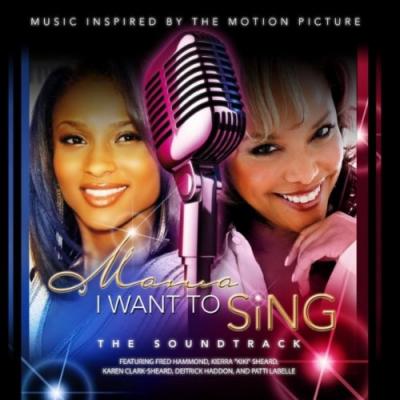
"Mama I Want to Sing" Soundtrack Lyrics
Musical • 2011
Track Listing
Deitrick Haddon
Patti LaBelle
Paris Bennett
Fred Hammond feat. Smokie Norful
Kierra Kiki Sheard
Fred Hammond feat. Cynthia Simon
21:03 feat. J Moss
B.R.I.G.G. feat. Eric Griggs
Irocc Williams
Karen Clark Sheard feat. Kierra Kiki Sheard
Desiree Coleman
"Mama I Want To Sing: The Soundtrack (2011 Gospel Musical Film)" – Album Guide to Tracks and Key Scenes
Overview
How do you score a story where church pews and TV studios fight for the same young voice? Mama I Want To Sing: The Soundtrack answers with a very specific recipe: modern gospel power, R&B polish, and lyrics obsessed with calling, conflict and grace.
The album accompanies the 2011–2012 film adaptation of Vy Higginsen and Ken Wydro’s long-running off-Broadway gospel musical about Doris/Amara Winter, a preacher’s daughter whose church-choir talent explodes into mainstream fame. The movie moves from Harlem pulpits to glossy performance stages, and the soundtrack mirrors that journey: booming choirs, tight rhythm sections, and guest turns from gospel and urban stars like Fred Hammond, Patti LaBelle, Kierra “Kiki” Sheard, Karen Clark Sheard, 21:03 and Desiree Coleman.
Across 50-plus minutes the record plays less like a traditional cast album and more like an all-star gospel compilation that happens to be tied to a film. Many tracks work as self-contained devotionals (“Not Created to Fall”, “Be Grateful”), while others feel built for montage and performance energy (“Tug of War”, “U Got Me Through”). It is a clean, radio-ready production: big low end, layered vocals, and choruses engineered to stick.
Stylistically the soundtrack sits at the crossroads of contemporary gospel, urban R&B and inspirational pop. Classic, church-rooted ballads (“Walk Around Heaven”) signal heritage and tradition; 2000s-era urban gospel with programmed drums and synths (“Tug of War Mix”, “U Got Me Through”) underline Amara’s move into commercial music; choir-driven worship pieces (“I’m Gonna Serve the Lord”) ground the story back in communal faith. In practice, traditional gospel cues read as family, church and duty; slick R&B textures track ambition, image and industry pressure.
How It Was Made
The film Mama, I Want to Sing! adapts Higginsen and Wydro’s 1983 off-Broadway hit, itself inspired by the real life of Doris Troy, whose church-choir beginnings led to the soul classic “Just One Look”. The movie, directed by Charles Randolph-Wright and starring Ciara, Lynn Whitfield and Patti LaBelle, reframes the story as Amara Winter’s rise from Harlem church soloist to mainstream R&B star while her mother becomes a prominent TV preacher.
For the soundtrack, the producers and music team did not simply record stage numbers. Instead they commissioned a slate of new, studio-designed songs from established gospel and inspirational artists. Releve Entertainment released the album in January 2011, ahead of the film’s straight-to-DVD bow through Fox Faith and 20th Century Fox Home Entertainment. A cluster of prominent gospel producers are attached to the project, including Fred Hammond, Deitrick Haddon, Warryn “Baby Dubb” Campbell, J. Drew Sheard II, Nisan Stewart and others, which explains why the record often feels like a who’s-who sampler of mid-2000s gospel rather than a traditional film score.
Although the original stage musical relied heavily on live band energy and choir arrangements anchored in Harlem church culture, the film soundtrack smooths those edges: tighter structures, radio-length runtimes, and polished overdubs. The album still points back to the musical’s roots via its heavy use of choir textures and call-and-response patterns, but the overall sound world is clearly built for CD and streaming, not just for the theater.
Tracks & Scenes
Because no official public cue sheet ties each track to exact timecodes, think of this section as a listening map: how each song’s lyrics, mood and arrangement line up with the film’s broad beats and recurring types of scenes.
"Tug of War Mix" — Deitrick Haddon
Where it fits: The title alone telegraphs the film’s core conflict: Amara is pulled between her church upbringing and the glitter of secular success. The song’s contemporary groove and layered vocals feel built for sequences where she juggles rehearsals, media appearances and family expectations. Energetically it belongs near the top of the story: early hustle, not yet total crisis.
Why it matters: As a framing device, “Tug of War” gives musical language to the argument between pulpit and pop stage. Its back-and-forth musical dynamics mirror Amara’s own wavering, making it an ideal entry point into the album.
"Walk Around Heaven" — Patti LaBelle
Where it fits: A slow, reverent ballad rooted in traditional gospel, carried by LaBelle’s unmistakable vocal power. It sonically matches the film’s grief and reflection passages: the loss of Reverend Winter, scenes of the congregation processing change, and moments where Lillian and Amara stand on opposite sides of the same faith they share.
Why it matters: Bringing in Patti LaBelle ties the project to a lineage of black church and soul divas that the original stage musical explicitly honors. The track slows the album down and re-centers it on heaven-minded hope rather than chart ambition.
"I Will" — Paris Bennett
Where it fits: Bennett’s youthful tone and the track’s mid-tempo feel line up with Amara’s transitional moments—times when she is still saying “yes” to both her calling and the industry around her. It works well over rehearsal or studio-booth visuals, where resolve has to be stated calmly rather than shouted from the pulpit.
Why it matters: “I Will” functions as a modest vow song: the lyrics read like a private prayer that the character could be whispering under her breath while cameras roll and contracts are signed.
"Living Not in Vain" — Fred Hammond feat. Smokie Norful
Where it fits: This is full-throated, choir-driven encouragement music. On screen, a track like this naturally belongs under montage sequences of Amara on tour, the church community pressing on, and Lillian’s ministry expanding. It sounds like Sunday morning and like a testimony service about surviving the grind of calling and career.
Why it matters: Hammond and Norful bring instant credibility. The song feels like it speaks equally to characters and viewers, saying that all the sacrifice and tension of this story line up with a larger purpose.
"Mama, I Want to Sing!" — Kierra “Kiki” Sheard
Where it fits: This is the title statement turned into a vocal showcase. Dramatically, it belongs at a point where Amara asserts her own voice—an audition, a church solo that goes further than planned, or a key live performance where she no longer tones herself down. The arrangement leaves room for ad-libs and churchy runs, which mirrors the character finally “opening up the throttle” in front of others.
Why it matters: In one cut the album bridges generations: Sheard, herself the daughter of a gospel legend, sings about a daughter asking permission to step into her own gift. That mirrors the mother–daughter dynamic at the core of the film.
"Be Grateful" — Fred Hammond feat. Cynthia Simon
Where it fits: Lyrically and musically, this is a response song. It makes sense after setbacks, public criticism or private arguments—scenes where Amara or her mother has to step back, breathe and remember why they started. The slow build and choir swells lend themselves to reflective church interiors and quiet home moments alike.
Why it matters: Gratitude is the antidote to career tunnel vision. This track gives the story a way to preach that without dialogue: the chords do most of the talking.
"U Got Me Through" — 21:03 feat. J Moss
Where it fits: Sonically this is modern, radio-friendly urban gospel, ideal for sequences that show Amara navigating press junkets, photo shoots and performances while still leaning on faith. Its hook feels like the sort of anthem that could play over end-credits or a late-film victory montage—she has made it through the worst of the tug-of-war.
Why it matters: The song translates church testimony language into a sleek, youth-oriented package. It is one of the clearest bridges between the character’s rootedness and the contemporary gospel market the album lives in.
"For Me" — B.R.I.G.G. feat. Eric “Bluetooth” Griggs
Where it fits: With its smoother, R&B-leaning production, “For Me” sounds built for club stages, rehearsals with a band and scenes on the secular side of Amara’s career. It’s the sound of management and producers trying to define her image and her trying not to get lost in it.
Why it matters: The song’s focus on personal destiny (“what’s for me is for me” as an idea) fits the story’s through-line that no one else can ultimately write Amara’s path—not church, not label execs.
"I'm Gonna Serve the Lord" — Johnny B. Williams
Where it fits: This plays like a straight, church-sanctuary declaration. In narrative terms it belongs with the film’s most explicitly religious set pieces—choir performances, altar scenes, or moments when supporting characters visibly recommit to faith regardless of industry outcomes.
Why it matters: The track anchors the album back in congregational worship. It’s the kind of song that could be sung in any church without context, which is exactly the point: the story is specific, the confession is universal.
"Jus' 1 of Dem Days" — Lil iROCC Williams
Where it fits: A more youthful, rhythm-driven cut, suitable for hanging-out sequences, behind-the-scenes moments with Amara’s brother Luke, or transitional scenes between the pulpit and the big stage. It carries the sense of “ordinary” days inside a very un-ordinary life.
Why it matters: The film deals in big conflicts, but this track injects the mundane: off days, mood swings, the grind of being young and visible.
"Sick-n-Tired" — Karen Clark Sheard feat. Kierra Sheard
Where it fits: Musically intense, vocally virtuosic, this feels like the sound of a breaking point—arguments between Amara and Lillian, media backlash, or an internal collapse after one compromise too many. Even without specific visuals, the song’s escalating emotion reads like a storm scene.
Why it matters: Pairing mother and daughter vocalists on a track about exhaustion mirrors the film’s mother-daughter clash. It underlines that both sides are weary, not just the young star.
"Not Created to Fall" — Desiree Coleman
Where it fits: This plays like a late-album thesis statement: whatever Amara has been through, she wasn’t created to stay down. In a viewing, it suits the film’s final act—reconciliation, renewed purpose, and a more integrated sense of calling.
Why it matters: As per retailer notes, this track is singled out by some listeners as the emotional peak of the album, and it functions almost like a closing benediction over the whole story arc.
Notes & Trivia
- The film’s story is loosely based on the life of singer Doris Troy, whose church-choir background led to the hit “Just One Look”.
- The original stage musical became one of the longest-running black off-Broadway shows in history, which is why the film leans so heavily into choir-based musical language.
- The soundtrack album was released about a year before the movie’s DVD debut, so many listeners met the music before seeing the film.
- The movie stars Ciara as Amara, but the album’s vocal spotlight mostly falls on established gospel artists rather than on her.
- Multiple physical editions exist, with slightly different running orders and credits, which has caused some confusion about the “definitive” tracklist.
Music–Story Links
The entire soundtrack is structured around the film’s faith-versus-fame axis. Early-story church scenes align with traditional or choir-heavy cues like “Walk Around Heaven” and “I’m Gonna Serve the Lord”, sonically tying Amara to her parents, her congregation and the expectation that her gift belongs inside the sanctuary.
As Amara moves into recording contracts and televised performances, more contemporary gospel and R&B textures take over. “Tug of War Mix”, “U Got Me Through” and “For Me” feel like the sonic equivalent of stage lights, stylists and camera crews. Even when the lyrics talk explicitly about God, the production choices mark these tracks as “industry” moments rather than church ones.
The mother–daughter conflict is where the album does its most interesting work. “Be Grateful” and “Not Created to Fall” can be heard as both characters’ internal monologues: Lillian’s reminder that ministry success still rests on grace, and Amara’s realization that her calling isn’t invalidated by missteps. A duet like “Sick-n-Tired”, sung by Karen Clark Sheard and Kierra Sheard, becomes a mirror of two generations talking past each other yet sharing the same fatigue and faith language.
By the time you reach the last cuts, the musical journey suggests a truce: the same God is present in the church pews and under the stage lights. The soundtrack does not fully resolve the tension—nor does the film—but it consistently argues, in song form, that the gift itself is not the enemy.
Reception & Quotes
Critically, the film and album have had a modest but steady life. The movie itself drew mixed responses, with some reviewers seeing it as a heartfelt but uneven remake of a beloved stage piece. Audience comments often praise the sincerity and the music even when they question the pacing or plotting.
The soundtrack has generally fared better among gospel listeners, especially fans of the featured artists. Retail ratings cluster in the “good but not classic” range, with particular affection for Desiree Coleman’s “Not Created to Fall” and the Fred Hammond–anchored cuts.
“A heart-warming story that all ages will enjoy… reminds us not to be afraid to dance to the music and to the beat of our own drum.” — Dove-style family review
“Preachy musical has few surprises, not enough songs.” — family-media critic on the film
“Brings down the house with electrifying performances by R&B and gospel music legends.” — promotional write-up for the DVD release
“This movie will not win an Oscar but it wins with me… you will walk away a better person.” — user review
On streaming services the album remains accessible, often filed under “Gospel” and “Soundtrack”, and serves as an easy gateway into late-2000s/early-2010s urban gospel aesthetics for listeners who might come in via Ciara or Patti LaBelle.
Interesting Facts
- The soundtrack’s label, Releve Entertainment, was closely tied to faith-based film and TV projects in the late 2000s and early 2010s.
- Some retail listings credit the album as both “Gospel” and “Soundtrack”, acknowledging that it stands on its own outside the movie.
- Different metadata sets list slightly different producers, reflecting the many hands involved across individual tracks.
- The soundtrack release predates the film’s BET broadcast by roughly a year, so TV viewers often already knew the songs.
- There is a separate cast recording for the original off-Broadway musical, released by Harlem-based labels, with a very different song list.
- The film went through a long, delayed release path—completed years before its eventual DVD debut—while the soundtrack quietly circulated in Christian retail and online shops.
- Patti LaBelle’s presence on “Walk Around Heaven” ties the project back to the soul and R&B icons that inspired the original stage work.
- For collectors, physical CD editions are still widely traded in gospel and soundtrack specialty stores, often marketed as “inspirational gospel” rather than just film music.
Technical Info
- Title: Mama I Want To Sing: The Soundtrack
- Year: 2011 (album release); film first released to DVD in 2012 after earlier festival-planning attempts
- Type: Gospel / inspirational soundtrack album for a musical drama film
- Main creative work: Film adaptation of the 1983 off-Broadway gospel musical Mama, I Want to Sing!
- Core story: Amara Winter, a preacher’s daughter and church soloist, rises to pop stardom while clashing with her mother, now a prominent TV preacher
- Music (film): Vy Higginsen, Ken Wydro, with additional contemporary gospel writers and producers
- Key featured artists (album): Deitrick Haddon, Patti LaBelle, Paris Bennett, Fred Hammond, Smokie Norful, Kierra “Kiki” Sheard, Karen Clark Sheard, 21:03 with J Moss, Desiree Coleman, Johnny B. Williams, Lil iROCC Williams, B.R.I.G.G.
- Label: Releve / Relevé Entertainment
- Release context: Album issued January 18, 2011; film later released straight-to-DVD and broadcast on BET
- Selected notable placements (album cuts): “Tug of War Mix”, “Walk Around Heaven”, “Mama, I Want to Sing!”, “U Got Me Through”, “Not Created to Fall”
- Formats & availability: CD (various pressings); digital download; streaming on major platforms under soundtrack/gospel categories
- Running time (album): Approx. 56 minutes
Canonical Entities & Relations
| Subject | Relation | Object |
|---|---|---|
| Mama, I Want to Sing! (musical) | was created by | Vy Higginsen & Ken Wydro |
| Mama, I Want to Sing! (musical) | is basis for | Mama, I Want to Sing! (2011/2012 film) |
| Mama, I Want to Sing! (film) | was directed by | Charles Randolph-Wright |
| Mama, I Want to Sing! (film) | stars | Ciara as Amara Winter / Doris |
| Mama, I Want to Sing! (film) | stars | Lynn Whitfield as Dr. Lillian Winter |
| Mama, I Want to Sing! (film) | stars | Patti LaBelle as Sister Carrie |
| Mama, I Want to Sing! (film) | has soundtrack | Mama I Want To Sing: The Soundtrack (album) |
| Mama I Want To Sing: The Soundtrack | is released by | Releve Entertainment |
| Mama I Want To Sing: The Soundtrack | features artist | Fred Hammond |
| Mama I Want To Sing: The Soundtrack | features artist | Kierra “Kiki” Sheard |
| Mama I Want To Sing: The Soundtrack | features artist | Desiree Coleman |
| Mama I Want To Sing: The Soundtrack | is about | Amara Winter’s journey from church choir to pop stardom |
| Heckscher Theatre, Harlem | hosted premiere of | Mama, I Want to Sing! (musical) in 1983 |
| Fox Faith / 20th Century Fox Home Entertainment | distributed | Mama, I Want to Sing! (film) on DVD |
Questions & Answers
- Is the 2011 soundtrack the same music as the original 1983 stage musical?
- No. The stage show used a mix of original numbers and classic gospel and soul material tailored to live performance, while the 2011 album is a newly produced, studio-oriented gospel compilation that supports the film adaptation.
- What music styles dominate Mama I Want To Sing: The Soundtrack?
- Expect contemporary gospel and urban R&B with some pop-rock elements: big choirs, programmed drums, lush keyboards and strong lead vocals from well-known gospel artists.
- Is the soundtrack still available today?
- Yes. The album remains available on major streaming platforms and as a digital download, and physical CDs continue to circulate through online retailers and second-hand markets.
- Do Ciara or other film cast members sing on the album?
- The featured track list is dominated by gospel and inspirational artists rather than the film’s lead actor. Ciara’s on-screen performances are central to the movie, but the branded soundtrack album mainly showcases guest vocalists.
- Is there a separate cast album for the original off-Broadway production?
- Yes. There are cast recordings tied to the stage musical, released through Harlem-connected labels, with different songs and arrangements aimed at capturing the theater experience rather than the film.
Sources: film and musical entries; label and retailer listings; soundtrack credits databases; family-media reviews; user and critic comments.
November, 15th 2025
A-Z Lyrics Universe
Cynthia Erivo Popular
Ariana Grande Horsepower
Post Malone Ain't No Love in Oklahoma
Luke Combs Good Riddance (Time of Your Life)
Green Day Bye Bye Bye
*NSYNC You're the One That I Wan
John Travolta & Olivia Newton-John I Always Wanted a Brother
Braelyn Rankins, Theo Somolu, Kelvin Harrison Jr. and Aaron Pierre The Power of Love
Frankie Goes to Hollywood Beyond
Auli’i Cravalho feat. Rachel House MORE ›