Soundtracks:  A B C D E F G H I J K L M N O P Q R S T U V W X Y Z #


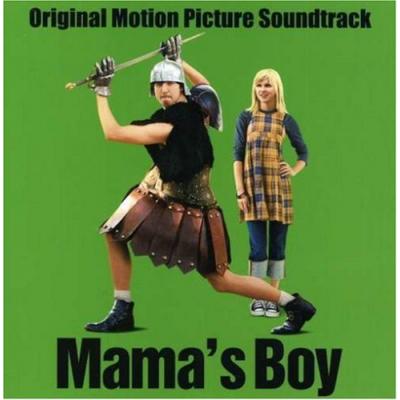
Mama's Boy Album Cover

"Mama's Boy" Soundtrack Lyrics

Movie • 2007

Track Listing


"Mama's Boy (Original Motion Picture Soundtrack)" – Album Guide to Tracks and Key Scenes

Mama's Boy 2007 trailer still with Jeffrey and Nora
Mama's Boy (2007) movie soundtrack mood as glimpsed in the theatrical trailer.

Overview

What does a film about a 29-year-old man-child living with his mother sound like? In Mama's Boy, the answer is: noisy, jangly, and very 1980s. The soundtrack leans hard on British post-punk and indie, then folds in compact score cues by Mark Mothersbaugh to underline the comedy and the late-in-the-day coming-of-age arc.

The album "Mama's Boy (Original Motion Picture Soundtrack)" pulls together songs by The Jam, Billy Bragg, Generation X, The English Beat, The Proclaimers and others, plus three short score pieces. Lakeshore Records released it on CD and digital in late 2007, running about 36 minutes. The film itself adds a few high-profile cues that are not on the disc, most notably songs by The Smiths and Morrissey that play a big role in the romance between Jeffrey (Jon Heder) and Nora (Anna Faris).

Tonally, the soundtrack works as a deliberate throwback. The alt-rock selections are a decade older than the characters, which fits Jeffrey’s whole deal: mentally stuck in a different era, clinging to retro signifiers. Fast, clipped guitars and sharp rhythm sections keep even slower scenes from drifting, while Mothersbaugh’s cues glue the transitions together rather than trying to compete with the needle-drops.

In terms of genre mix, the album is basically a collage of mod revival and punk-adjacent British rock (The Jam, Generation X, The English Beat), left-leaning folk-punk (Billy Bragg), and bright jangle-pop (The Proclaimers), capped by short score cues that feel like stripped-down indie film motifs. Rough, energetic punk here reads as Jeffrey’s arrested adolescence; Bragg’s tunes bring in class and romantic frustration; and the Smiths/Morrissey material off-album adds pure melancholy and romantic fatalism. It is not subtle, but it is coherent.

How It Was Made

Composer Mark Mothersbaugh (co-founder of DEVO and regular Wes Anderson collaborator) wrote the original score and produced the score cuts on the album. He is credited on the film as composer, with cues like “Dad’s Funeral/Jeanpaul,” “In the Desert,” and “What’s Important to You” providing brief, tonal bridges between the licensed songs and the story’s shifts from broad comedy to wounded feelings.

On the songs side, the soundtrack was assembled and released by Lakeshore Records as a various-artists compilation in November 2007. The label’s press materials highlight a carefully balanced mix: older UK acts (The Jam, The English Beat, Generation X), politically tinged singer-songwriter material (Billy Bragg, Rheostatics), and newer indie cuts (The Scanners), plus contributions from The Proclaimers. The resulting album feels curated around Jeffrey’s aesthetic: self-consciously “alternative,” but now old enough to be dad-rock.

Within the film, the music gets extra layers from the script. Nora is written as a singer-songwriter, and her taste in The Smiths and in Morrissey’s solo work becomes a bonding point with Jeffrey. In one scene, he notices a You Are the Quarry poster on her wall and insists Morrissey “died” with The Smiths, prompting her to play him “America Is Not the World” and drag his taste into the 2000s. That conversation, along with the later boombox homage, effectively turns music supervision into character development rather than just wall-to-wall wallpaper.

Mama's Boy 2007 trailer frame highlighting the offbeat romantic tone
The trailer teases the alt-rock, offbeat romantic tone that the soundtrack leans into.

Tracks & Scenes

There is no public cue sheet for Mama's Boy, so think of this section as a listening map built from the official album, soundtrack databases, and fan reports. Exact timestamps vary slightly by release, but the key placements and their dramatic roles are consistent.

"America Is Not the World" — Morrissey
Where it plays: The film uses this song twice in memorable ways. First, in Nora’s apartment, when Jeffrey dismisses Morrissey’s solo career, she puts on “America Is Not the World” to prove he is still worth hearing; we hear a portion of the track as the two sit amid posters and clutter, talking about music and identity, the song leaking out of her stereo into their tentative flirtation. Later, during the climactic Say Anything–style homage, Jeffrey stops Nora’s departing bus, climbs onto the hood of his car, and holds a boombox aloft blasting this same track, turning Morrissey’s political lament into a grand romantic gesture in the middle of the road.
Why it matters: The cue is a literal plot device. It marks the moment Nora updates Jeffrey’s taste and becomes “his person,” then returns as a callback when he finally grows up enough to make a gesture on her terms, not his mother’s.

"There Is a Light That Never Goes Out" — The Smiths
Where it plays: Used in one of the film’s more openly romantic passages, the song surfaces under a quiet, transitional sequence between Jeffrey and Nora. Even when only a portion is heard, the track’s iconic line about “a light that never goes out” re-frames their relationship: these two cynics are not as emotionally dead as they pretend to be. The film does not feature it on the official album; it remains a movie-only treat and a wink to Smiths fans.
Why it matters: This cue deepens the emotional register. Instead of a broad rom-com ballad, the film borrows a cult classic whose lyrics are about fatalism and longing, signalling that Jeffrey’s arc is about real change, not just quirky antics.

"Heaven Knows I’m Miserable Now" — The Smiths
Where it plays: Dropped into a scene that underlines Jeffrey’s self-pity, the song briefly takes over the soundscape while he stews in frustration about losing his mother’s undivided attention and fumbling his connection with Nora. The juxtaposition of the jaunty jangle and Morrissey’s “miserable” refrain mirrors Jeffrey’s combination of sulking and obliviousness.
Why it matters: It’s an on-the-nose but effective bit of musical irony, echoing the film’s theme that Jeffrey has to move past self-absorbed misery if he wants genuine relationships.

"The Modern World" — The Jam
Where it plays: One of the film’s signature energy bursts, “The Modern World” appears over montage-style material that sells Jeffrey as a retro, half-grown man out of step with contemporary life: walking through his bookstore job, tweaking window displays, and retreating into games and nerd hobbies while the world moves on around him. The guitars and shouted chorus inject momentum into otherwise low-stakes visuals.
Why it matters: The title is the joke. The film uses a furious punk anthem called “The Modern World” to underline how dated Jeffrey’s aesthetic really is, and how incapable he is of functioning in any kind of modern adulthood.

"Legal Age Life at Variety Store" — Rheostatics
Where it plays: Heard during another slice-of-life stretch, this song crops up under everyday scenes of Jeffrey inhabiting his frozen, adolescent routine. The low-key groove and wry lyrics support the idea that his “legal age life” has stalled somewhere between the counter of a shop and his childhood bedroom.
Why it matters: The track choice is thematically tidy: a song about a dead-end working life playing under a man who refuses to move past his comfort zone.

"Bed, Bath & Bullshit" — Billy Bragg
Where it plays: Used as a punchy, mid-film needle-drop, the song underscores Jeffrey’s growing resentment of Mert’s motivational-speaker platitudes and the hollow self-help culture he represents. Over scenes of staged positivity and passive-aggressive power plays in the house, Bragg’s voice cuts through like a sarcastic commentary track.
Why it matters: Bragg’s political, plain-spoken style matches the movie’s underlying suspicion of easy self-help slogans and helps the audience stay on Jeffrey’s side even when he is being petty.

"Hands Off... She’s Mine" — The English Beat
Where it plays: This track drops in around the escalating tug-of-war between Jeffrey and Mert, particularly as they circle around Jan and, increasingly, Nora. Whether over a barbecue sequence or another social gathering, the song’s refrain operates almost as an argument between the two men, rendered as ska-pop.
Why it matters: It underlines that Jeffrey treats both his mother and Nora as possessions. The song’s bouncy feel stops the possessiveness from turning too dark, but the message is still there.

"Then I Met You" — The Proclaimers
Where it plays: The film leans on this as a warmer, more openly sentimental cue in the back half, when Jeffrey’s self-image starts to crack and he genuinely falls for Nora. It is heard near or around their reconciliatory moments, either partially in-scene or during an end-credits run, leaving the viewer on a note of cautious optimism.
Why it matters: Coming after so much sardonic British guitar music, “Then I Met You” sounds almost nakedly earnest. That tonal shift mirrors Jeffrey’s move from irony to sincerity.

"Dad’s Funeral/Jeanpaul" — Mark Mothersbaugh
Where it plays: This brief score cue supports scenes that reference Jeffrey’s father and the unresolved grief that keeps him tethered to his mother. The instrumentation is more restrained than the songs around it, using simple motifs rather than big hooks, and it often plays under dialogue rather than dominating.
Why it matters: It supplies the emotional context the punk songs can’t: the sense that Jeffrey’s clinginess is rooted in loss, not just laziness.

"In the Desert" / "What’s Important to You" — Mark Mothersbaugh
Where they play: These pieces appear later in the film, particularly around Jeffrey’s low point (drifting, briefly homeless) and his eventual decision to repair the damage he has done. They sit under transitional shots and reflective beats rather than set-pieces, often nudging scenes gently rather than calling attention to themselves.
Why they matter: Together, they function as the score’s “growth” motif — subtle musical markers that Jeffrey is finally internalising the film’s lessons about independence and responsibility.

Off-album highlights
Where they play: Alongside the licensed cuts that made the official soundtrack, the film also uses The Smiths’ “There Is a Light That Never Goes Out” and Morrissey’s “America Is Not the World” as movie-only material, plus at least one other Smiths track. These show up in key relationship scenes and are frequently cited by fans who discovered the movie through The Smiths/Morrissey connection rather than the other way around.
Why they matter: They deepen the cult appeal: for some viewers this is not a Jon Heder film with some alt-rock, it is “the one where they blare Morrissey from a boombox.”

Mama's Boy 2007 trailer shot highlighting the offbeat family triangle
Key comic and romantic beats in Mama's Boy are driven as much by music cues as by dialogue.

Notes & Trivia

  • The film’s climax deliberately riffs on the boombox scene from Say Anything..., but swaps Peter Gabriel’s “In Your Eyes” for Morrissey’s “America Is Not the World.”
  • For Smiths/Morrissey fans, Mama's Boy is notable as one of the rare films to feature a solo Morrissey track prominently within the narrative.
  • Several critics commented that the soundtrack felt more carefully thought out than the film’s plotting, which has helped the album outlive the movie in some circles.
  • The official CD highlights British and Canadian acts, but the movie itself quietly weaves in additional UK indie staples that never made it onto the album.
  • Composer Mark Mothersbaugh was in a particularly busy mid-2000s run, scoring everything from indie comedies to animated features around the same time.

Music–Story Links

The soundtrack is not just nostalgic garnish; it mirrors Jeffrey’s emotional stuckness. Songs by The Jam, Generation X and The English Beat embody a specific late-70s/early-80s youth culture. Jeffrey wears that sound like armour, as if being “into” the right bands excuses his failure to grow up. When these tracks blast under montages of him gaming, rearranging bookstore displays or sabotaging Mert, they underline how much energy he spends avoiding adulthood.

Nora’s taste in The Smiths and Morrissey adds a second, more introspective axis. When she plays “America Is Not the World” to counter his claim that Morrissey effectively died in 1987, she’s not just sharing a song; she’s insisting that people can reinvent themselves after catastrophic endings. Later, when Jeffrey wins her back with the same track, the film essentially stages his acceptance of that idea.

Mothersbaugh’s cues handle the parts of Jeffrey that the needle-drops cannot reach. “Dad’s Funeral/Jeanpaul” and “What’s Important to You” surface when the script brushes against grief, guilt and genuine change. Their more subdued instrumentation marks moments when Jeffrey acts from empathy rather than defensiveness, especially in scenes with his long-suffering mother and with Seymour, the boss who quietly bails him out.

Finally, the placement of “Then I Met You” near the story’s resolution reframes the preceding chaos as messy prelude to a real relationship. After all the sniping and posturing, the Proclaimers’ open-hearted chorus plays like the film’s own confession: beneath the sarcasm, it believes in people finding each other and getting better.

Reception & Quotes

The film itself received poor reviews and minimal box-office attention, but the soundtrack drew noticeably kinder notice. Reviewers of the DVD and the album singled out the song choices and Mothersbaugh’s involvement as bright spots, even when they were unimpressed by the script or by Jeffrey as a protagonist.

“The film is peppered with all sorts of great 1980s-alt music… I would, however, buy the soundtrack.”
DigitallyObsessed DVD review
“A well put together soundtrack… a nice blend of well known names, solid underground and three new tracks by Mothersbaugh.”
EntertainmentVine album review
“I enjoyed the film’s soundtrack… a score by Mark Mothersbaugh and a selection of songs heavily weighted towards ’80s British alternative artists.”
Home Theater Forum DVD review
“Hamilton spends more time on his soundtrack selections than his storytelling.”
BrianOrndorf.com via Rotten Tomatoes

The album has remained available digitally on major platforms, while the original Lakeshore CD has drifted into low-key collector territory. According to the label’s materials and catalog listings, it has not been re-issued in expanded form, and the movie-only Smiths/Morrissey cues have never been added to the commercial release.

Mama's Boy 2007 marketing image focusing on Jeffrey and his mother
Marketing art leans on Jeffrey’s arrested development; the soundtrack leans on equally “stuck in time” alt-rock.

Interesting Facts

  • The soundtrack album is officially credited as Various Artists – Mama's Boy (Original Motion Picture Soundtrack), with Lakeshore Records catalogue number LKS 339312.
  • The CD and digital releases both include 13 tracks; three of them are Mothersbaugh’s score cues, the rest are licensed songs.
  • Notably absent from the album are “There Is a Light That Never Goes Out” and “America Is Not the World,” which remain film-only for this title.
  • Mothersbaugh also co-wrote and produced “Old-Fashioned Girl,” giving the soundtrack at least one quasi-diegetic song that feels like it could belong to Nora’s world.
  • Heidi Santelli, one of the film’s producers, is closely tied to the soundtrack’s release, with Lakeshore marketing leaning on her existing relationship with the label.
  • Some international listings shorthand the artist lineup as “JAM/RAMONES/SMITHS/B. BRAGG/GEN. X/MARK MOTHERSBAUGH,” foregrounding the punk/indie brand names even when not all appear on the disc itself.
  • The album’s running time (around 36 minutes) makes it an unusually digestible listen compared to many early-2000s soundtrack CDs that pushed close to 80 minutes.
  • Because the film underperformed theatrically, the soundtrack has become a minor “deep cut” in the discographies of several featured bands, especially The Jam and The Proclaimers.

Technical Info

  • Title: Mama's Boy (Original Motion Picture Soundtrack)
  • Film year / country: 2007, United States
  • Film type: Comedy-drama feature film
  • Director (film): Tim Hamilton
  • Key cast (film): Jon Heder, Diane Keaton, Jeff Daniels, Anna Faris, Eli Wallach
  • Composer (score): Mark Mothersbaugh
  • Featured artists (album): The Jam, Rheostatics, Billy Bragg, Generation X, The Scanners, The English Beat, The Proclaimers, Mark Mothersbaugh
  • Label: Lakeshore Records (CD catalogue LKS 339312 / UPC variants around 0780163393125)
  • Album release: 27 November 2007 (CD & digital)
  • Approx. duration: ~35–36 minutes, 13 tracks
  • Notable cues on album: “The Modern World,” “Legal Age Life at Variety Store,” “Bed, Bath & Bullshit,” “Then I Met You,” “Dad’s Funeral/Jeanpaul,” “In the Desert,” “What’s Important to You”
  • Additional songs in film only: “There Is a Light That Never Goes Out,” “America Is Not the World,” plus at least one further Smiths track
  • Availability: CD (often as an import or used copy), streaming on major platforms under the same title
  • Film runtime / rating: 93 minutes, MPAA PG-13 (language, sexual references, some drug use)

Canonical Entities & Relations

Subject Relation Object
Mama's Boy (film) directed by Tim Hamilton
Mama's Boy (film) music by Mark Mothersbaugh
Mama's Boy (film) features Jon Heder, Diane Keaton, Jeff Daniels, Anna Faris, Eli Wallach
Mama's Boy (Original Motion Picture Soundtrack) is soundtrack of Mama's Boy (film)
Mama's Boy (Original Motion Picture Soundtrack) released by Lakeshore Records
Mark Mothersbaugh composed score for Mama's Boy (film)
Mark Mothersbaugh contributed recordings to Mama's Boy (Original Motion Picture Soundtrack)
The Jam performed song "The Modern World"
"The Modern World" included on Mama's Boy (Original Motion Picture Soundtrack)
The Proclaimers performed song "Then I Met You"
"Then I Met You" included on Mama's Boy (Original Motion Picture Soundtrack)
The Smiths performed song "There Is a Light That Never Goes Out"
Morrissey performed song "America Is Not the World"
"There Is a Light That Never Goes Out" featured in Mama's Boy (film, movie-only cue)
"America Is Not the World" featured in Mama's Boy (film, movie-only cue)
Mama's Boy (film) distributed by Warner Bros. Pictures

Questions & Answers

Who composed the original score for Mama's Boy and what does it sound like?
Mark Mothersbaugh wrote the score. His cues are short, melodic pieces that bridge the louder punk and indie songs, often using simple motifs rather than big orchestral themes.
How is the soundtrack different from the music actually heard in the film?
The album includes 13 tracks, mostly songs plus three score cues. The film additionally uses songs like “There Is a Light That Never Goes Out” and “America Is Not the World,” which are not on the commercial soundtrack.
Is the Mama's Boy soundtrack available on streaming services?
Yes. The Lakeshore release appears on major platforms under the title Mama's Boy (Original Motion Picture Soundtrack), credited to Various Artists.
Why are The Smiths and Morrissey so prominent in this movie?
The script explicitly builds Jeffrey and Nora’s bond around their arguments about The Smiths and Morrissey. Their songs underscore key romantic scenes and even drive the final boombox gesture.
Did the soundtrack receive better reception than the film itself?
Broadly, yes. Critics were lukewarm or negative about the film but frequently praised the alt-80s song choices and Mothersbaugh’s involvement, with some reviewers saying they would happily buy the soundtrack even if they skipped the movie.

Sources: Wikipedia, IMDb, Wikidata, AllMusic, FilmMusic.com, SoundtrackINFO Project, Lakeshore Records listings and press, DigitallyObsessed DVD review, Home Theater Forum review, EntertainmentVine review, Rotten Tomatoes critic excerpts, Morrissey/Smiths fan forums, regional review sites and retailer catalog data.

November, 15th 2025

'Mama's Boy' is a 2007 American comedy-drama film starring Diane Keaton and Jon Heder, and features music by Mark Mothersbaugh. Learn more: Wikipedia, Internet Movie Database
A-Z Lyrics Universe

Lyrics / song texts are property and copyright of their owners and provided for educational purposes only.