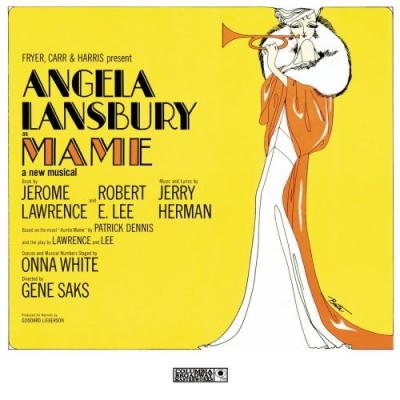
"Mame" Soundtrack Lyrics
Musical • 1999
Track Listing
"Mame (A New Musical) – Original Broadway Cast Recording (1999 Edition)" – Album Guide to Tracks and Key Scenes
Overview
How do you bottle an entire “life is a banquet” philosophy on one disc? The 1999 CD reissue of “Mame (A New Musical) – Original Broadway Cast Recording” comes close. It restores Angela Lansbury’s original 1966 performance, remasters the sound, and adds a handful of demos that expose Jerry Herman’s writing desk in real time.
The musical itself follows Mame Dennis, an eccentric New York socialite whose glamorous life is interrupted when she becomes guardian to her young nephew Patrick. Across the Great Depression and into World War II, Mame’s parties, lovers and setbacks are tracked almost entirely through song. The cast album captures that arc: riotous ensemble numbers (“It’s Today”, “Open a New Window”), character-defining solos (“Gooch’s Song”), and two of Herman’s most enduring ballads, “If He Walked Into My Life” and the holiday staple “We Need a Little Christmas”. According to the show’s own production history, this score cemented Herman as a major post–Hello, Dolly! figure.
The 1999 edition matters because of its extras. Legacy/Columbia’s reissue cleans up the original stereo recording and adds five demo tracks with Herman and singer Alice Borden working through early versions of “St. Bridget”, “It’s Today”, “Open a New Window” and “Mame”, plus the cut song “Camouflage”. Those bare-bones takes let you hear how much of the show’s personality is already on the piano and in the melodic contour, long before orchestrations and star vocals.
Genre-wise, the album is old-school Broadway through and through: brassy showtunes, two-beat foxtrots, soft-shoe pastiche, mock-latin flourishes and big, belt-heavy torch songs. The “banquet” philosophy plays out musically: up-tempo, syncopated numbers push Mame’s appetite for experience; 1930s-tinged dance-band textures frame the high-society parties; more intimate ballads strip the glitter away when she faces loss, aging and regret. If you map styles to meaning, the title song “Mame” is public adoration, “Open a New Window” is personal credo, “If He Walked Into My Life” is late-night reckoning, and “We Need a Little Christmas” is pure survival instinct dressed as holiday cheer.
How It Was Made
Mame opened on Broadway in 1966 at the Winter Garden Theatre, with music and lyrics by Jerry Herman and a book by Jerome Lawrence and Robert E. Lee based on Patrick Dennis’s novel Auntie Mame and the stage play of the same name. Angela Lansbury created the title role, flanked by Bea Arthur as Vera Charles, Frankie Michaels as young Patrick and Jane Connell as Agnes Gooch. The original production ran for more than 1,500 performances, a major hit by any 1960s standard.
The cast recording was made for Columbia in 1966 under the “Mame (A New Musical)” title. Donald Pippin conducts; orchestrations are by Philip J. Lang. The album essentially preserves the full score in theatre order, trimmed only for spoken dialogue. Vocals sit very forward in the mix, typical of the era’s Broadway albums, with brass and reeds carrying most of the rhythmic punch.
According to the musical’s recording notes, Legacy Recordings issued a remastered CD in 1999 under the Broadway Masterworks banner. That edition keeps the original track sequence and adds five demos drawn from Herman’s archives: early, piano-and-voice versions of several key songs and the cut number “Camouflage”. The demos are performed by Herman himself at the piano with Alice Borden singing, so you hear the show in workshop form. Liner material from library and label listings confirms that Sony Music/Columbia/Legacy handled this release.
The year 1999 was busy for Mame in general. A major regional revival at Paper Mill Playhouse in Millburn, New Jersey, starring Christine Ebersole, ran from September to October; an Australian concert-style staging from The Production Company in Melbourne also used the score as its calling card. It’s hard not to see the reissue as part of a wider push to keep the show in circulation for a new generation of producers and audiences.

Tracks & Scenes
Below, a map of key numbers as heard on the 1999 cast album, tied back to their moments in the stage musical. Exact minute marks vary by recording, so think in terms of act structure and track order rather than stopwatch timings.
"St. Bridget" — Young Patrick & Agnes
Where it sits: Very near the start of both show and album. Young Patrick and his nanny Agnes Gooch travel to New York after his father’s death, singing about their Irish Catholic background and the convent school (“St. Bridget”) he is leaving behind. On the disc it plays like an extended prologue before the first big house party.
Why it matters: It pins Patrick’s starting point: small, sheltered, conservative. That makes the contrast with Mame’s apartment and social circle much sharper when “It’s Today” explodes right after.
"It’s Today" — Mame, Vera & Company
Where it sits: The first major showstopper, early Act I. As Patrick arrives, Mame is throwing a roaring party with artists, intellectuals and oddballs. She persuades everyone that any day is worth celebrating. On the album, Lansbury sweeps from spoken interjections into full-throttle chorus as the ensemble joins in.
Why it matters: This is Mame’s thesis statement: throw the party now, worry later. The propulsive rhythm and stacked modulations embody her refusal to live cautiously, and the album preserves the sense of a room filling up with sound and people.
"Open a New Window" — Mame, Young Patrick & Company
Where it sits: Still in Act I. Mame takes Patrick on a whirlwind of unconventional outings — speakeasies, galleries, unusual schools — and the song becomes montage music in stage terms. On the recording, you can hear the musical “travelogue” structure: verses that hop from one adventure to another, with Patrick picking up lines as he grows bolder.
Why it matters: This track is the emotional adoption scene. Mame is not just housing Patrick; she is rewriting his world. The 1999 remaster keeps the details in the orchestration clear: banjo colors, bright brass hits, little rhythmic kicks that feel like doors opening.
"My Best Girl" — Young Patrick & Mame
Where it sits: Mid–Act I, after they have bonded. Patrick, still a child, sings about Mame as his “best girl” in a simple waltz that builds into a duet. On disc, the song is surprisingly intimate after the noise of the earlier ensemble pieces, with strings coming forward.
Why it matters: Musically, it is conservative, almost old-fashioned. That’s the point: beneath all the flair, Mame and Patrick’s relationship rests on very traditional loyalty and affection. The track becomes a musical motif for that bond later in the show.
"We Need a Little Christmas" — Mame, Patrick, Agnes, Ito & Beauregard
Where it sits: Late in Act I, just after the 1929 stock market crash wipes out Mame’s fortune. Refusing to surrender, she drags Patrick, Agnes and the household into an early Christmas celebration to lift everyone’s spirits. On the album, sleigh bells and bright brass jump in immediately; there is barely a breath between Mame’s decision and the chorus.
Why it matters: The song has escaped the show entirely and become a stand-alone Christmas standard, but in context it is about emergency joy, not holiday marketing. Listening straight through on the 1999 CD, the sudden entry of those sleigh bells after financial ruin still feels like Mame willing a new emotional season into existence.
"The Man in the Moon" — Vera, Mame & Company
Where it sits: A diegetic “show within the show” number. Vera Charles stars in a cheesy revue, singing a tongue-in-cheek ballad as “the woman in the moon”, with Mame clowning alongside her. On the album, Beatrice Arthur leans into the faux-elegant phrasing while chorus “moon maidens” coo behind her.
Why it matters: It establishes Vera as a working, if slightly faded, star, and shows Mame quite literally stepping into the spotlight of someone else’s show. The pastiche style lets Herman parody 1920s/30s stage kitsch, and you can hear that clearly even without the staging.
"Mame" — Beauregard & Company
Where it sits: Late in Act I, during Mame’s Southern romance arc. Beauregard Jackson Pickett Burnside leads his Georgian family and staff in a barnstorming tribute to Mame as she transforms their plantation. On the album, the male chorus and band sound bigger than anything so far, with trumpets screaming at the top of their range.
Why it matters: This is the title song for a reason: it is about how Mame’s energy feels from the outside. The 1999 master lets the call-and-response between lead and chorus punch through in a way that makes you understand why the number spawned multiple cover versions in the 1960s.
"Bosom Buddies" — Mame & Vera
Where it sits: Early in Act II, after a time jump. Mame and Vera, both older and somewhat bruised by life, trade affectionate insults and affirm their long friendship. On disc, Lansbury and Arthur spar rhythmically, pushing lines on top of each other just enough to sound like real bickering.
Why it matters: This is one of Broadway’s great “old broads” duets. Sarcasm covers genuine love. The recording catches micro-timing and laugh lines you might miss in a noisy theatre; the 1999 remaster keeps their blend and their differences equally clear.
"Gooch’s Song" — Agnes Gooch
Where it sits: Mid–Act II. Gooch, now unexpectedly pregnant after a disastrous attempt to “live”, pours out her panic and frustration. Jane Connell’s solo veers from patter to high belt and back. On the album, the orchestration stays fairly sparse to keep the vocal comedy front and centre.
Why it matters: The song is comic relief, but also a critique of how Mame’s “open a new window” philosophy lands on someone without money or glamour. The recording preserves Connell’s original timing, which later performers often imitate.
"If He Walked Into My Life" — Mame
Where it sits: Late in Act II, after grown Patrick has chosen an awful, snobbish fiancée and drifted away from Mame’s influence. Alone, she wonders if her unconventional parenting warped him. On the album, Lansbury moves from conversational regret to a huge, soaring finish over nearly five minutes.
Why it matters: This is the show’s emotional peak and one of Herman’s most recorded ballads. A separate pop version won a Grammy for Eydie Gormé; the cast album performance is rawer, less polished, and gains extra depth from the tracks leading up to it.
"Finale" & Bonus Demos — Company / Jerry Herman & Alice Borden
Where they sit: The stage finale reprises “Open a New Window”, “Mame” and “It’s Today” as Mame prepares to take Patrick’s son on new adventures. The album follows suit, with full company and bright brass. Then the 1999 CD adds its demos as a kind of coda: skeletal piano renditions of four key numbers, plus the cut duet “Camouflage”, sung by Herman and Borden.
Why they matter: The finale proves the themes have stuck; the demos show how they were born. Hearing Herman play “We need a little Christmas”–era material in raw form underlines how strong the melodic shapes are even before orchestration.
Notes & Trivia
- Angela Lansbury’s original Mame won her a Tony Award; Bea Arthur also won for Vera. You can hear the chemistry that critics raved about directly on this recording.
- The 1999 CD is part of Sony’s Broadway Masterworks line, which reissued key cast albums with remastered sound and archival bonus material.
- The bonus track “Camouflage” was written for Mame and Vera to sing but cut during development; the 1999 edition is the first widely available release of the song in any form.
- Many library catalogues explicitly list the 1999 CD as “remastered” and “with bonus tracks”, which helps distinguish it from earlier straight reissues.
- While “We Need a Little Christmas” now appears on countless holiday compilations, the cast album remains the primary source for its original theatrical context.
Music–Story Links
Jerry Herman uses the score as a time-lapse of Patrick’s upbringing. Early numbers like “St. Bridget” and “It’s Today” are almost back-to-back on disc: one is about convent discipline, the other about cocktails and bohemian guests. That whiplash is the story in miniature. The album lets you feel how fast Patrick’s world flips.
“Open a New Window” and “My Best Girl” are the emotional glue. The former is Mame’s explicit parenting philosophy — exposure over safety — while the latter is Patrick’s response: he interprets her chaos as security. Whenever “My Best Girl” returns in reprises, the recording marks a checkpoint: child Patrick’s dependence, older Patrick’s nostalgia, and finally a kind of musical blessing over the next generation.
Money and time hit the score hard. You can hear the crash of 1929 just from the sequencing: the exuberance of “Open a New Window” collapses into the forced cheer of “We Need a Little Christmas”, with orchestration doing as much work as lyrics. In headphones, the shift from bright party textures to slightly thinner, bell-heavy arrangements carries the sense of scraping together joy from scraps.
Act II’s songs track aging and self-doubt. “Bosom Buddies” sounds like two pros refusing to admit the party’s winding down; “Gooch’s Song” is a warning about unexamined slogans; “If He Walked Into My Life” is Mame’s late acceptance that her choices had consequences. By the time the finale reprises “Open a New Window”, the same musical material reads differently: it’s less about reckless adventure and more about passing on resilience.
Reception & Quotes
On stage, Mame was a smash in 1966. The original cast album sold strongly and helped push individual numbers into wider pop culture. Modern reviewers still treat the recording as the definitive way to experience the score, even for listeners who have never seen a full production.
Reissue and cast-album guides consistently praise the 1999 CD for sound quality and bonus content. One discography overview calls the set “the essential document of Herman’s second great Broadway triumph”, noting that the demos make it feel almost like a mini box set in a single disc. Cast-album fans also underline how much presence the remaster restores to Lansbury’s voice compared to some older LP pressings.
“Mame’s original cast album remains one of the great party records of the 1960s — you can drop the needle anywhere and feel like you’ve crashed something fabulous.” — Cast-album blogger, retrospective piece
“The Legacy edition is a must for Herman fans: the demo of ‘Camouflage’ alone is worth the upgrade.” — Collector-focused review
“Lansbury’s ‘If He Walked Into My Life’ is still devastating. No film or revival has improved on this performance.” — Podcast discussion of the album
Not every critic loves the show itself; some find the book creaky or the sentiment heavy. But there is wide agreement that the cast recording — especially in this cleaned-up form — is the score’s strongest argument. If you want to know why Mame keeps getting revived, the 1999 CD is usually where people point you.
Interesting Facts
- The original Broadway cast album was recorded and released in 1966; the 1999 remaster runs roughly 65 minutes and adds about 15 minutes of demo material.
- Library listings usually credit the 1999 CD to “Sony Music Entertainment / Columbia / Legacy”, reflecting corporate reshuffling since the original Columbia Masterworks issue.
- Streaming versions of the album generally mirror the Legacy tracklist, including demos, which means the “archival” material is now how many listeners first encounter the score.
- “We Need a Little Christmas” shows up in Disney parade soundtracks and theme-park programming, often without explicit mention that it originated in Mame.
- Cast-album guides often group Mame with Hello, Dolly! and La Cage aux Folles as Jerry Herman’s “big three”; the 1999 reissue helped keep that trilogy easily available in physical form.
- The Paper Mill Playhouse revival in 1999, starring Christine Ebersole, used the same basic score; many reviewers compared her directly to Lansbury using this recording as the benchmark.
- Discogs and retailer data show multiple 1999 pressings, including club editions, all using the same remaster but slightly different packaging.
- Because the Broadway album stayed in catalogue, there was never a separate 1999 “revival cast” disc; the Lansbury recording continues to represent the show commercially.
Technical Info
- Title (album): Mame (A New Musical) – Original Broadway Cast Recording
- Key edition discussed: 1999 remastered CD / digital issue with bonus demos
- Type: Cast recording for stage musical
- Main work: Mame (1966 Broadway musical)
- Music & lyrics: Jerry Herman
- Book: Jerome Lawrence & Robert E. Lee, based on Patrick Dennis’s novel Auntie Mame and the stage play Auntie Mame
- Original Broadway leads: Angela Lansbury (Mame Dennis), Bea Arthur (Vera Charles), Frankie Michaels (young Patrick), Jane Connell (Agnes Gooch), Charles Braswell (Beauregard)
- Label (1999 edition): Sony Music Entertainment – Columbia / Legacy (often branded “Columbia Broadway Masterworks”)
- Recording year: 1966 (original sessions)
- CD reissue year: 1999 (remastered, with bonus tracks)
- Conductor: Donald Pippin
- Orchestrations: Philip J. Lang
- Core genres: Broadway showtune, big-band musical theatre, traditional ballad
- Approximate running time (1999 edition): About 65 minutes for 20 tracks
- Notable numbers (selection): “St. Bridget”, “It’s Today”, “Open a New Window”, “My Best Girl”, “We Need a Little Christmas”, “Mame”, “Bosom Buddies”, “Gooch’s Song”, “If He Walked Into My Life”, Finale medley, plus demos including “Camouflage”.
- Associated 1999 stage activity: Major regional revival at Paper Mill Playhouse (Millburn, NJ) and Australian production by The Production Company in Melbourne.
- Availability: 1999 CD in various pressings; digital download; widely available on streaming platforms under “Mame (Original Broadway Cast Recording)”.
Canonical Entities & Relations
| Subject | Relation | Object |
|---|---|---|
| Mame (musical) | music & lyrics by | Jerry Herman |
| Mame (musical) | book by | Jerome Lawrence & Robert E. Lee |
| Mame (musical) | based on | Auntie Mame by Patrick Dennis & the play Auntie Mame |
| Mame (musical) | originally produced at | Winter Garden Theatre, Broadway (1966) |
| Mame (A New Musical) – Original Broadway Cast Recording | is soundtrack of | Mame (musical) |
| Mame (A New Musical) – Original Broadway Cast Recording (1999) | released by | Sony Music / Columbia / Legacy |
| Mame (A New Musical) – Original Broadway Cast Recording | features artist | Angela Lansbury (Mame Dennis) |
| Mame (A New Musical) – Original Broadway Cast Recording | features artist | Bea Arthur (Vera Charles) |
| Mame (A New Musical) – Original Broadway Cast Recording | features artist | Jane Connell (Agnes Gooch) |
| Mame (musical) | includes song | “It’s Today” |
| Mame (musical) | includes song | “Open a New Window” |
| Mame (musical) | includes song | “We Need a Little Christmas” |
| Mame (musical) | includes song | “If He Walked Into My Life” |
| Mame (musical) | revived at | Paper Mill Playhouse, Millburn, NJ (1999) |
| Mame (musical) | produced by | The Production Company, Melbourne (1999) |
Questions & Answers
- What exactly is the “1999” version of the Mame cast album?
- It is a remastered CD/digital release of the 1966 original Broadway cast recording, issued by Sony/Columbia/Legacy with improved sound and five bonus demo tracks from Jerry Herman’s archives.
- Does the 1999 edition include all the songs from the Broadway score?
- Yes, it includes the full set of principal musical numbers in show order (overture through finale), plus additional demo material. It still omits some underscoring and dialogue, as was standard for 1960s cast albums.
- What is unique about the bonus tracks on the 1999 CD?
- The extras are piano-and-voice demos featuring Jerry Herman and Alice Borden on early versions of several songs and the cut number “Camouflage”. They give a rare glimpse of how the score sounded in its workshop stage.
- How does this recording compare to the film soundtrack of Mame?
- The Broadway album preserves Angela Lansbury and Bea Arthur in their original stage roles and uses theatre-style orchestrations. The 1974 film soundtrack features Lucille Ball and Robert Preston with adjusted arrangements, an added song (“Loving You”) and different vocal qualities due to film recording techniques.
- Is the 1999 Mame cast recording still easy to find?
- Yes. Physical CDs circulate on the second-hand and collectors’ market, but the same 1999 master (including demos) is widely available on major streaming platforms under “Mame (Original Broadway Cast Recording)”.
Sources: Mame (musical) production and recording history; Broadway and licensing synopses; Legacy/Columbia reissue notes and catalogues; Discogs release data for the 1999 CD; library records for Mame: original Broadway cast recording; Spotify/Apple Music album metadata; Playbill and regional theatre coverage of the 1999 Paper Mill and Australian productions; cast-album review and podcast commentary.
November, 15th 2025
A-Z Lyrics Universe
Cynthia Erivo Popular
Ariana Grande Horsepower
Post Malone Ain't No Love in Oklahoma
Luke Combs Good Riddance (Time of Your Life)
Green Day Bye Bye Bye
*NSYNC You're the One That I Wan
John Travolta & Olivia Newton-John I Always Wanted a Brother
Braelyn Rankins, Theo Somolu, Kelvin Harrison Jr. and Aaron Pierre The Power of Love
Frankie Goes to Hollywood Beyond
Auli’i Cravalho feat. Rachel House MORE ›