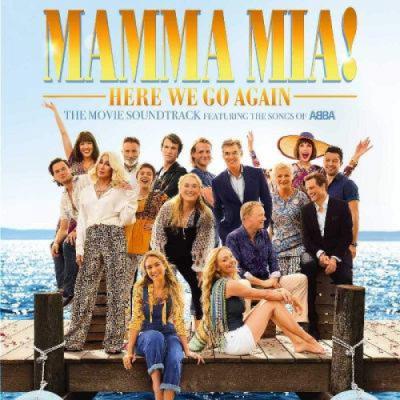
"Mamma Mia: Here We Go Again!" Soundtrack Lyrics
Movie • 2018
Track Listing
Cast
Cast
Cast
Cast
Cast
Cast
Cast
Cast
Cast
Cast
Cast
Cast
Cast
Cast
Cast
Cast
Cast
Cast
Abba
"Mamma Mia! Here We Go Again: The Movie Soundtrack" – Album Guide to Tracks and Key Scenes
Overview
How do you follow a jukebox musical that already burned through most of ABBA’s biggest hits? The answer in Mamma Mia! Here We Go Again is simple: lean harder into emotion, arrange the catalogue with more care, and trust the cast to sell even the deep cuts. The sequel’s soundtrack doubles as a memory machine, cutting between the late Donna’s youth and her daughter Sophie’s present-day grief.
Where the first film sometimes felt like karaoke chaos, the second plays more like a structured pop song cycle. Tempos rise and fall with the story: bold, brassy crowd-pleasers for group set-pieces, softer keys and strings for grief and reconciliation, and a finale that turns the end credits into a full-cast curtain call. I hear a more consistent musical arc here – from the reckless charge of “When I Kissed the Teacher” through the stormy doubt of “One of Us” to the benediction of “My Love, My Life”.
The soundtrack also shifts the emotional center toward Lily James’s young Donna. Many numbers are staged as diegetic performances – she sings on a boat, in a bar, in a half-ruined farmhouse – so the ABBA songs feel like her native language rather than background wallpaper. That choice allows the album to balance fizzy escapism with something more grounded: a story about leaving home, building a life from scratch, and passing that courage on to the next generation.
Stylistically, the album sticks to ABBA’s palette – disco, piano pop, 70s soft rock – but reshapes it. Big-band flourishes make “Why Did It Have To Be Me?” play like a swing-driven chase across the Aegean; “Andante, Andante” becomes a slow-burn Latin-tinged ballad; “I’ve Been Waiting For You” leans toward lullaby. Bright, uptempo tracks usually signal community and celebration, while stripped-back arrangements mark vulnerability, regret, or grief. Euro-disco polish sits over very human mess, which is exactly the point.
How It Was Made
The film’s music rests on a tight core team. ABBA’s Benny Andersson produced the soundtrack album, with Björn Ulvaeus and producer Judy Craymer serving as executive producers alongside Mark Taylor. Recording took place in Stockholm studios (Mono Music and Riksmixningsverket) and at Air Lyndhurst in London, with the cast performing new versions of ABBA songs rather than lip-syncing to the originals.
Composer Anne Dudley supplies the connective tissue – original score cues that bridge time jumps, smooth transitions between songs, and stop the film from feeling like a chain of isolated music videos. Her underscoring tends to stay light and rhythmic, keeping the comedy buoyant while still supporting the occasional gut-punch scene.
Music supervisor Becky Bentham shapes the overall song palette, from full numbers to the brief instrumental nods to earlier ABBA tracks. Her work was recognised with an Outstanding Music Supervision nomination at the Hollywood Music in Media Awards, and you can hear why: every reprise, background needle-drop, or a cappella snippet nudges the story rather than just filling silence.
On the performance side, veteran musical director and orchestrator Martin Koch helps translate ABBA’s studio-tight harmonies into something that can be sung live on a film set and still feel slick on record. Choirs, brass, and rhythm section are layered so that the vocals – often from actors not primarily known as singers – sit firmly on top without losing weight.
According to the soundtrack’s release notes, the album dropped on 13 July 2018, one week before the film’s cinema release, via Capitol Records in the US and Polydor internationally. A later sing-along edition and multiple vinyl picture discs and double-LPs turned it into a long-tail catalogue title rather than a one-summer tie-in.
Tracks & Scenes
Below are key musical moments from the film – not a full tracklist, but the spine of how the story sings.
"When I Kissed the Teacher" – Lily James, Jessica Keenan Wynn, Alexa Davies & Celia Imrie
Where it plays: The film opens in 1979 at Donna’s graduation in Oxford. Bored by the ceremony, she whips off her academic gown, jumps onto the stage with Rosie and Tanya, and turns a polite college event into a mini-concert. The number spills out of the hall, through cloisters and onto a boat, blurring performance and riotous exit.
Why it matters: The song announces young Donna as fearless and impulsive. It also sets the prequel structure: she will keep using music to crash through expectations, whether academic, romantic, or parental.
"One of Us" – Amanda Seyfried & Dominic Cooper
Where it plays: Early in the present-day storyline, Sophie and Sky sing from different locations – she on Kalokairi preparing the hotel reopening, he in New York wrestling with a job offer. Split-screen staging underlines the emotional distance between them.
Why it matters: A break-up song in ABBA’s catalogue becomes here a long-distance argument. It echoes Donna’s old conflicts with Sam and quietly suggests Sophie might repeat her mother’s patterns if she is not careful.
"Waterloo" – Hugh Skinner & Lily James
Where it plays: In a Paris café flashback, Harry tries to convince Donna to stay the night. The restaurant morphs into a playful battlefield, with waiters and diners joining in as the lyrics riff on Napoleon’s defeat. The sequence moves between literal flirting at a table and fantasy choreography among costumed soldiers.
Why it matters: It is a comedic highlight and a character sketch rolled into one: Harry as hopeless romantic and Donna as free spirit. Musically, the track leans hard into glam-rock piano and chanted backing vocals, giving the prequel timeline its own vivid colour.
"Why Did It Have To Be Me?" – Josh Dylan, Lily James & Hugh Skinner
Where it plays: Donna has missed her ferry to Kalokairi. Bill offers her a lift on his boat; Harry tags along, increasingly seasick. The song becomes a flirtatious chase across the deck, complete with call-and-response vocals and a detour to help a local fisherman reunite with his love.
Why it matters: The swing-inflected arrangement gives Bill a roguish swagger while showing Donna’s habit of diving head-first into adventure. It also keeps the “three possible dads” premise airy rather than gloomy.
"Andante, Andante" – Lily James
Where it plays: In a small taverna on Kalokairi, Donna takes the mic for the first time. Sam watches from the crowd as she shifts from tentative first verse to full-voiced confidence, backed by a band that gradually joins in.
Why it matters: This is Donna’s origin story as a working musician. The arrangement strips away disco gloss, letting the melody and her vocal phrasing carry the scene. It is one of the film’s most sincerely romantic moments.
"Mamma Mia" – Lily James, Alexa Davies & Jessica Keenan Wynn
Where it plays: After Donna discovers Sam’s engagement, she storms through the half-renovated farmhouse that will become the hotel. She sings into tools, dances on scaffolding, and vents her anger as the Dynamos rally around her.
Why it matters: The familiar title track becomes less about giddy love and more about bouncing back. Visually it mirrors Meryl Streep’s version from the first film, binding the two Donnas together.
"Angel Eyes" – Christine Baranski, Julie Walters & Amanda Seyfried
Where it plays: On the terrace before the big reopening party, Tanya and Rosie grill Sophie about her fight with Sky while also dishing on their own disastrous exes. The staging toggles between gossip at the table and mini-fantasy cutaways.
Why it matters: The song gives the older women room to be both comic relief and emotional anchors. It also lets Sophie admit how much she fears losing what her mother had with Sam.
"Dancing Queen" – Ensemble
Where it plays: In the present day, Harry and Bill decide they are coming to the reopening after all. The number begins on their boat, spreads to other vessels, and ends with a flotilla surging toward Kalokairi as Sophie, Rosie and Tanya dance on the jetty.
Why it matters: This is the film’s purest shot of joy: community restored, dads returning, and grief briefly overwhelmed by spectacle. It is also the clearest bridge back to the first movie’s tone.
"I’ve Been Waiting For You" – Amanda Seyfried, Julie Walters & Christine Baranski
Where it plays: Late in the film, heavily pregnant Sophie confides that she feels alone without Donna. Rosie and Tanya answer with a slow, steady reassurance, sung indoors as storm clouds clear outside.
Why it matters: A lesser-known ABBA ballad becomes a generational handover. The older women literally tell Sophie that they have been waiting for her – turning fan nostalgia into in-story support.
"Fernando" – Cher & Andy García
Where it plays: Ruby Sheridan arrives by helicopter just as the reopening party looks doomed. Later that night, she recognises hotel manager Fernando as her long-lost lover. Their duet unfolds on a balcony with fireworks, the chorus timed to literal explosions in the sky.
Why it matters: The sequence is camp by design and gives Cher her showcase. It also expands the story’s generational ladder one rung higher, showing where Donna’s showmanship partly came from.
"My Love, My Life" – Lily James, Meryl Streep & Amanda Seyfried
Where it plays: In parallel, we see young Donna baptising baby Sophie and, years later, Sophie baptising her own child. Donna’s “ghost” appears in the chapel, singing with her daughter as past and present share the same melody.
Why it matters: This is the emotional core of the whole film. The arrangement starts almost unaccompanied, then swells into strings and choir as three generations line up around the font.
"Super Trouper" – Full Ensemble
Where it plays: In an end-titles fantasy, past and present casts gather on a stage in glitter jumpsuits to perform for an imaginary crowd. It is deliberately separate from the narrative, framed as a curtain call.
Why it matters: The number lets every principal have a moment and underlines the idea that these characters are now part of a larger pop-culture pantheon; the story is over, but the songs keep touring.
Beyond the headline tracks, the film sneaks in shorter cues: Sophie quietly sings “Thank You For The Music”; Sam has a brief, raw reprise of “SOS”; party scenes feature snatches of “Hasta Mañana”, “Hole in Your Soul”, “Money, Money, Money”, and more. Some of these appear only in the film, not on the main album, reinforcing the sense that ABBA songs are simply in the air on Kalokairi.
Notes & Trivia
- The album includes “I Wonder (Departure)” and “The Day Before You Came”, even though both were ultimately cut from the film itself.
- Cher’s vocals were recorded and produced separately from the main cast, with Mark Taylor handling her sessions – a rare split in the production credits.
- Benny Andersson and Björn Ulvaeus cameo on screen: Andersson at a Paris piano during “Waterloo”, Ulvaeus as a professor at Donna’s graduation.
- Music supervisor Becky Bentham’s work on the film earned a nomination at the Hollywood Music in Media Awards, specifically recognising soundtrack curation.
- The closing gag – a customs officer singing “Take a Chance on Me” a cappella – gives Omid Djalili a tiny but memorable musical role that does not appear on the album.
Music–Story Links
The soundtrack’s biggest trick is how it uses ABBA’s catalogue to parallel two timelines. “When I Kissed the Teacher” shows Donna literally stepping off the academic path; decades later, “One of Us” shows Sophie fearing that settling down might cost her the same sense of freedom. Same band, same melodic brightness, very different anxieties.
Numbers like “Andante, Andante” and “Mamma Mia” act as turning points rather than decoration. Donna’s first taverna performance is the moment she realises she can stay on Kalokairi and make a living; her farmhouse tantrum to “Mamma Mia” is the moment she decides to move on from Sam. In both cases, the song locks a life choice into place.
In the present, “Dancing Queen” and “I’ve Been Waiting For You” sketch Sophie’s support system. The former floods the island with people who loved Donna; the latter narrows everything down to three women in a small room. One track treats grief as something you drown in music and fireworks. The other treats it as something you survive with quiet, late-night harmonies.
“My Love, My Life” then braids those threads. The song lets Donna, who is canonically dead, share a scene with Sophie and her baby without the film needing literal resurrection. Musically and visually, it says that memories – and the songs attached to them – are the way people remain present.
Reception & Quotes
Critically, the sequel’s music landed better than many expected. Review aggregators show a stronger score for the film than for the 2008 original, and audience polling gave it the same high cinema-grade. The soundtrack itself reached the top of album charts in several territories and climbed into the top three of the US Billboard 200, a strong result for a cast recording released in a streaming era.
One British critic admitted that, while he had disliked the first film, this one’s “weirdly irresistible” musical energy and self-aware goofiness eventually won him over. Another writer praised how the sequel digs into lesser-known ABBA songs without losing the party atmosphere people expect.
The sequel doubles down on spectacle yet somehow feels lighter on its feet; the musical numbers actually move the story this time.— Summary of mainstream press response
As a soundtrack, it’s a love letter to ABBA deep cuts that still knows when to unleash a huge, shameless hit.— Campus radio review
I walked out in a ridiculous good mood; the cumulative effect of these songs, in this order, is hard to resist.— Independent film blog
It’s a whirlwind of colour and music that sacrifices subtlety for joy, and the soundtrack is where that joy lives.— Student newspaper review
The music team also picked up industry recognition beyond charts: the soundtrack was nominated for Best Soundtrack Album at the Hollywood Music in Media Awards, and “Fernando” received a separate adapted-song nomination from the Online Film & Television Association.
Interesting Facts
- Several tracks were promoted as singles ahead of release, including “When I Kissed the Teacher”, “Waterloo”, “Fernando” and “Dancing Queen”, effectively teasing the film via its music.
- On many digital platforms the album is credited to “Cast of Mamma Mia! The Movie”, underlining that this is a performance project by actors, not by ABBA themselves.
- A sing-along edition on CD expands the package with extra lyric prompts, aiming squarely at home karaoke and repeat-watching parties.
- Vinyl editions include double-LP sets and picture discs; visually they lean into the film’s sun-drenched palette and group-photo imagery.
- The soundtrack’s rights sit in an interesting triangle: Littlestar Services oversees the film property, while Capitol and Polydor handle distribution and Universal’s music arm controls many downstream licences.
- Short instrumental uses of older ABBA tracks – “Our Last Summer”, “Slipping Through My Fingers”, “Take a Chance on Me” – quietly connect specific locations in the sequel to moments from the first film.
- Composer Anne Dudley has said in interviews that scoring a comedy stuffed with songs is trickier than scoring drama, because underscoring must lift the humour without overcrowding it.
Technical Info
- Title: Mamma Mia! Here We Go Again: The Movie Soundtrack
- Film: Mamma Mia! Here We Go Again (2018)
- Type: Soundtrack album for a jukebox musical romantic comedy
- Primary songwriters: Benny Andersson and Björn Ulvaeus (ABBA catalogue)
- Score composer: Anne Dudley
- Producers (album): Benny Andersson (also executive producer), with executive production by Björn Ulvaeus and Judy Craymer, and additional production by Mark Taylor
- Music supervision: Becky Bentham (film)
- Musical direction / orchestration: Martin Koch (songs, film)
- Lead vocal cast: Lily James, Amanda Seyfried, Christine Baranski, Julie Walters, Pierce Brosnan, Colin Firth, Stellan Skarsgård, Dominic Cooper, Hugh Skinner, Josh Dylan, Cher, Andy García and others
- Recording locations: Mono Music Studio and Riksmixningsverket (Stockholm); Air Lyndhurst Studios (London)
- Release date (album): 13 July 2018
- Labels: Capitol Records (US); Polydor Records (international)
- Running time: approximately 68 minutes across 18 tracks
- Formats: digital download and streaming; CD; double-LP vinyl; picture-disc vinyl; sing-along CD edition
- Chart highlights: reached top three on the US Billboard 200 and hit number one on album charts in countries including the UK, Ireland, Finland, New Zealand and others
- Key awards / nominations: Hollywood Music in Media Awards nomination for Best Soundtrack Album; separate nominations for music supervision and for the song “Fernando” in adapted-song categories
Canonical Entities & Relations
| Ol Parker | wrote and directed | Mamma Mia! Here We Go Again (film) |
| Benny Andersson | produced and arranged songs for | Mamma Mia! Here We Go Again: The Movie Soundtrack |
| Björn Ulvaeus | co-wrote songs and served as executive producer on | the soundtrack album |
| Anne Dudley | composed score for | Mamma Mia! Here We Go Again |
| Becky Bentham | supervised music for | Mamma Mia! Here We Go Again (film) |
| Martin Koch | orchestrated and conducted songs for | Mamma Mia! Here We Go Again |
| Judy Craymer | produced | both Mamma Mia! films and their soundtrack albums |
| Cast of Mamma Mia! The Movie | perform vocals on | the 2018 soundtrack album |
| ABBA | provided source catalogue for | all major songs in the film |
| Capitol Records | released | the soundtrack in the United States |
| Polydor Records | released | the soundtrack internationally |
| Universal Pictures | distributed | Mamma Mia! Here We Go Again theatrically |
| Playtone and Littlestar Productions | co-produced | the film |
| Hammersmith Apollo (London) | hosted the world premiere of | Mamma Mia! Here We Go Again |
| Kalokairi (fictional Greek island) | serves as setting for | most narrative and musical sequences |
Questions & Answers
- How is this soundtrack different from the first Mamma Mia! movie album?
- The sequel leans more on ABBA deep cuts, gives Lily James a larger vocal share, and uses the songs to mirror two timelines rather than a single wedding weekend.
- Does the film ever use original ABBA studio recordings?
- No. The on-screen performances and the album feature new vocals by the film cast, with Andersson and Ulvaeus overseeing arrangements so they stay stylistically close to ABBA.
- Why are some songs in the movie missing from the official soundtrack album?
- Short a cappella snippets and background party cues often run only a few bars. They clear rights for the film but are too brief or incidental to justify separate album tracks.
- Is there an official sing-along or lyrics-focused release?
- Yes. Labels issued a sing-along edition on CD and later vinyl and picture-disc editions, aimed at fans who want the full party-soundtrack experience at home.
- Where can I legally listen to the full soundtrack today?
- The album is widely available on major streaming platforms and digital stores, and still in print on CD and vinyl through Capitol/Polydor and their partners.
Sources: Wikipedia, Mamma Mia! Wiki (Fandom), Apple Music, Spotify, Discogs, Entertainment Weekly, ScreenRant, Universal Music press materials, Hollywood Music in Media Awards coverage, Queens Radio review, various newspaper and online film reviews.
The soundtrack of Mamma Mia: Here We Go Again! is the album of songs and music from the 2018 musical film of the same name. It is a sequel to the 2008 film Mamma Mia!, which is based on the 1999 musical of the same name. The songs are composed by Benny Andersson and Björn Ulvaeus, who are members of the Swedish pop group ABBA. The soundtrack features the voices of the main cast, including Lily James, Amanda Seyfried, Pierce Brosnan, Colin Firth, Meryl Streep, and Cher. The soundtrack also includes covers of some of ABBA’s classic hits by guest artists like Panic! at the Disco, Kacey Musgraves, and Weezer. The soundtrack was released on July 13, 2019, a week before the film’s release. The soundtrack has 18 songs, such as “When I Kissed the Teacher”, “Waterloo”, “Fernando”, and “Dancing Queen”. The songs are meant to tell the story of the film, which follows the characters of the first film and their younger selves in the past. The soundtrack has received positive reviews from critics and fans and has peaked at number three on the Billboard 200 and at number one in several countries, including the United Kingdom, Ireland, Australia, and New Zealand.November, 15th 2025
A-Z Lyrics Universe
Cynthia Erivo Popular
Ariana Grande Horsepower
Post Malone Ain't No Love in Oklahoma
Luke Combs Good Riddance (Time of Your Life)
Green Day Bye Bye Bye
*NSYNC You're the One That I Wan
John Travolta & Olivia Newton-John I Always Wanted a Brother
Braelyn Rankins, Theo Somolu, Kelvin Harrison Jr. and Aaron Pierre The Power of Love
Frankie Goes to Hollywood Beyond
Auli’i Cravalho feat. Rachel House MORE ›