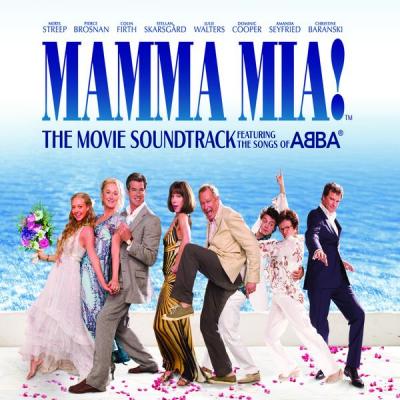
"Mamma Mia! The Movie" Soundtrack Lyrics
Movie • 2008
Track Listing
Seyfried, Amanda & Ashley Lilley/Rachel McDowall
Streep, Meryl & Julie Walters / Christine Baranski
Streep, Meryl
Streep, Meryl & Julie Walters / Christine Baranski
Firth, Colin & Pierce Brosnan / Stellan Skarsgard / Amanda Seyfried / Meryl Streep
Cooper, Dominic & Amanda Seyfried
Streep, Meryl & Julie Walters / Christine Baranski
Seyfried, Amanda & Ashley Lilley / Rachel McDowall
Seyfried, Amanda
Mamma Mia! Cast
Brosnan, Pierce & Meryl Streep
Baranski, Christine & Philip Michael
Streep, Meryl & Amanda Seyfried
Streep, Meryl
Brosnan, Pierce & Meryl Streep
Walters, Julie & Stellan Skarsgard / Colin Firth / Philip Michael / Christine Batanski
Seyfried, Amanda
Amanda Seyfried
Mamma Mia! Cast
Christine Baranski, Julie Walters, Meryl Streep
"Mamma Mia! The Movie Soundtrack: Featuring the Songs of ABBA" – Album Guide to Tracks and Key Scenes
Overview
Can a jukebox soundtrack built entirely from ABBA songs justify sitting next to the original albums? Mamma Mia! The Movie Soundtrack answers with a very loud “yes” – not by competing on polish, but by folding those songs into a messy, emotional, sun-bleached story about family and second chances.
The album collects the major musical numbers from Phyllida Lloyd’s 2008 film adaptation, performed almost entirely by the cast rather than by ABBA themselves. Produced by Benny Andersson, with Björn Ulvaeus as executive producer, it leans into live-sounding vocals, flexible tempos and character-driven phrasing rather than studio perfection. You hear Amanda Seyfried’s light, tremulous soprano against Meryl Streep’s more theatrical belt; Pierce Brosnan’s much-debated rock baritone rubs shoulders with Christine Baranski’s razor-sharp musical-theatre bite. The result feels like eavesdropping on a chaotic wedding weekend where people keep solving problems by bursting into ABBA.
As an album, it works surprisingly well away from the film. The sequence moves from giddy discovery (“Honey, Honey”) through financial frustration (“Money, Money, Money”) to mid-life heartbreak (“The Winner Takes It All”) and hard-won reconciliation (“When All Is Said and Done”). Big ensemble pieces like “Dancing Queen” and “Voulez-Vous” are mixed with intimate mother–daughter moments (“Slipping Through My Fingers”), so you get the same emotional arc you’d get from a concept album, just wrapped around a Greek island wedding instead of a rock opera.
Stylistically it’s a blend of 70s-rooted pop, disco and soft rock re-orchestrated for a modern film musical. The core ABBA sound is there – layered keyboards, melodic basslines, bright rhythm guitars – but Andersson and musical director Martin Lowe weave in Greek colours (notably bouzouki) to anchor the story on Kalokairi. Up-tempo disco tracks carry defiance and female solidarity (“Dancing Queen”, “Gimme! Gimme! Gimme!”), power ballads mark emotional pivots (“The Winner Takes It All”, “SOS”), while lighter pop numbers (“Our Last Summer”, “I Have a Dream”) frame Sophie’s coming-of-age and search for identity.
How It Was Made
The soundtrack sits at the end of a long chain: ABBA’s 1970s hits, the 1999 stage musical, and then the 2008 film. For the movie, Benny Andersson returned as producer, re-recording the songs in 2007–2008 with many of the original ABBA session players and a film-sized orchestra. The album was released by Decca in the US and Polydor internationally in July 2008, just ahead of the theatrical run, and later expanded into a deluxe edition with a “Behind the Music” feature and booklet.
Martin Lowe, who had already lived with the material as musical director of the West End production, oversaw vocal direction and arrangements for the cast. Keys were adjusted to fit individual ranges, and some intros and codas were rewritten so songs could grow directly out of dialogue. You can hear that in “Mamma Mia”, which springs straight out of Donna’s shock when she finds her three ex-lovers in the goat house, or in the way “Slipping Through My Fingers” emerges organically from quiet conversation on the morning of the wedding.
Sonically, the production splits the difference between ABBA’s pristine studio sound and the rough-edged energy of a stage show. Rhythm sections were tracked in Stockholm, then blended with on-set guide vocals and final studio takes from the actors. The hidden track “Thank You for the Music” – attached to “I Have a Dream” after a patch of silence on CD – underlines how reverent the team was toward the source material while still playing with format.
Tracks & Scenes
Below is a guided tour through key songs as they appear in the film, including a couple of memorable cues that never made it to the official album.
"I Have a Dream" — Amanda Seyfried
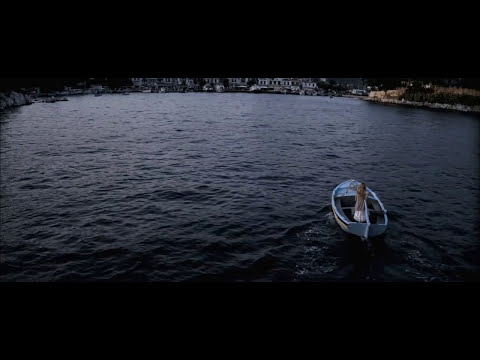
Where it plays: The film effectively begins and ends with this. Sophie sings it at night as she posts letters to the three possible fathers and again as she and Sky sail away after calling off the formal wedding. It’s presented mostly diegetically, with Sophie’s voice carrying over travel shots and waves, turning a pop ballad into a kind of folk-like story-prologue and epilogue.
Why it matters: It frames the entire narrative as Sophie’s quest for belonging. The lyrics about crossing the stream and seeing the dream through underline that she’s chasing an emotional truth, not just a biological fact.
"Honey, Honey" — Amanda Seyfried, Ashley Lilley & Rachel McDowall
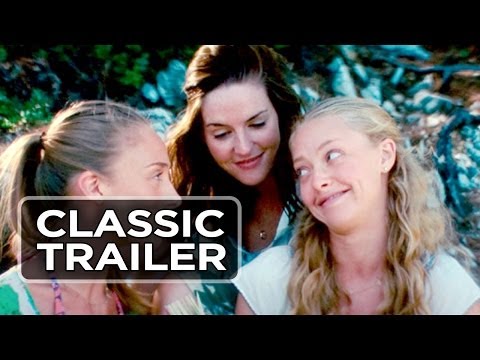
Where it plays: Early in the film, Sophie and her bridesmaids Ali and Lisa lie on the bedroom floor, reading Donna’s old diary out loud. The song bubbles up as they discover Donna’s 70s love life and realise there are three candidates for “Dad.” It’s fully diegetic: they’re literally singing along and reacting to the diary entries, with cuts between the bedroom and stylised flashbacks.
Why it matters: This is the exposition engine for the whole plot. The bubbly delivery and playful choreography keep what is essentially a paternity information dump feeling like a girlish secret-sharing ritual.
"Money, Money, Money" — Meryl Streep, Julie Walters & Christine Baranski
Where it plays: After another day of fixing leaks at Villa Donna, Donna vents to Tanya and Rosie about being permanently broke. The number starts in the shabby hotel and bursts into a fantasy sequence on a luxury yacht, with Donna as a fabulously wealthy captain surrounded by crews of islanders. The song is staged as a fantasy-within-reality: the characters “perform” it, but it’s clearly in Donna’s head.
Why it matters: It sketches Donna’s exhaustion and her buried wish for security without turning her into a martyr. The contrast between grimy plumbing and glittering dream boat sets up the core motif of sun-drenched escapism undercut by real-world strain.
"Mamma Mia" — Meryl Streep
Where it plays: Donna stumbles upon Sam, Bill and Harry hiding in the old goat house and promptly has an emotional meltdown. As she storms around the villa trying to avoid them, the song becomes an interior monologue she can’t stop singing. Choreography is built from frantic domestic tasks: slamming shutters, ducking behind walls, peeking through doors.
Why it matters: This is Donna’s panic attack in musical form. The playful arrangement keeps it comic, but the lyrics land as genuine frustration at patterns she thought she’d left behind. It’s also the moment when the film tells you outright: yes, the cast will really sing these songs themselves.
"Dancing Queen" — Meryl Streep, Julie Walters & Christine Baranski
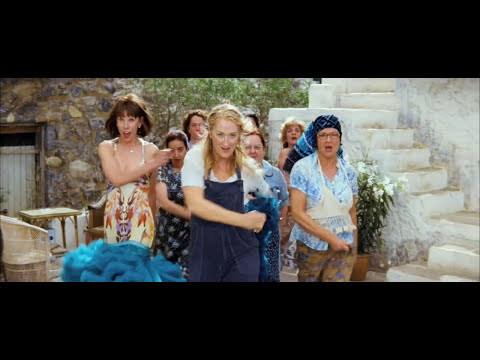
Where it plays: After Donna confesses that she feels old and worn out, Tanya and Rosie drag her out of bed and into one of the film’s biggest set-pieces. The song starts in Donna’s bedroom, then spills through the villa, down the hill and into the harbour as a growing crowd of women join in. There’s a diegetic band on a boat, with Benny Andersson himself cameoing at the piano.
Why it matters: It’s the thesis statement for the film’s attitude to aging and joy: you’re never too old to be “young and sweet.” The women-only dance parade, plus the real ABBA cameo, makes this the point where nostalgia, feminism and fan-service all lock together.
"Our Last Summer" — Colin Firth, Pierce Brosnan, Stellan Skarsgård, Amanda Seyfried & Meryl Streep
Where it plays: Sophie takes her three maybe-fathers out on a boat trip. As they reminisce about their time with Donna in Paris and on the island, the song unfolds as a gentle, mostly diegetic sing-along, blending their recollections with cutaways to younger versions of themselves.
Why it matters: For once the men get the reflective number. It softens them from comic archetypes into real people with regrets and nostalgia, and it shows Sophie recognising that each could be a good father in different ways.
"Lay All Your Love on Me" — Dominic Cooper & Amanda Seyfried
Where it plays: On the beach, just before his friends kidnap him for the stag party, Sky and Sophie tumble into the sand and sing the song as a teasing, half-serious argument about possessiveness and trust. A chorus of flipper-wearing groomsmen eventually “raids” the beach and, in perfect musical-comedy logic, carries Sky off into the sea while still chanting the hook. Entirely diegetic, but heightened.
Why it matters: It injects a sliver of genuine romantic tension – Sky worries Sophie is hiding something – while still playing goofy, especially with the synchronized snorkel choreography. It’s where the audience feels the wedding machinery may wobble.
"Gimme! Gimme! Gimme! (A Man After Midnight)" — Amanda Seyfried, Ashley Lilley & Rachel McDowall
Where it plays: Late at night, during Sophie’s hen party at the taverna, she and the female ensemble belt this out surrounded by pulsating lights and free-flowing ouzo. In between verses she blindfolds her three possible fathers and pulls each of them onto the dance floor, demanding they keep her secret.
Why it matters: The lyric flips from sexual yearning to a comic plea for clarity about her father. It’s chaotic, sweaty and a little desperate – exactly where Sophie’s plan is emotionally.
"Super Trouper" — Meryl Streep, Julie Walters & Christine Baranski
Where it plays: Still at the hen party, the Dynamos make a glitter-heavy entrance in sequined jumpsuits, performing “Super Trouper” on a makeshift stage for Sophie. The crowd responds like they’re local legends; the performance is fully diegetic, framed by concert-style lighting and crowd reaction shots.
Why it matters: It re-establishes Donna’s rock-chick past as something real and vital, not just a joke in the diary. For Sophie, it’s a rare glimpse of her mother as a performer rather than a hotel owner or stressed parent.
"Voulez-Vous" — Full Cast
Where it plays: As the hen and stag parties collide in the taverna, “Voulez-Vous” explodes into a frenetic ensemble number under strobing lights. During the song Sophie panics and confesses to the three men, one by one, that each might be her father; each, in turn, joyfully accepts the idea. The music barely pauses as emotions flip from comic to overwhelming.
Why it matters: This is the point of no return. The kinetic disco track mirrors the emotional overload, and the repeated “take it now or leave it” hook underlines Sophie’s fear that she’s set forces in motion she can’t control.
"SOS" — Pierce Brosnan & Meryl Streep
Where it plays: After tempers flare, Donna and Sam argue on a hillside and in the boathouse, the song emerging mid-fight. It functions as a classic movie-musical duet: they trade lines, circle each other, and wrestle with the fact that their breakup decades earlier still hurts.
Why it matters: However you feel about Brosnan’s voice, the vulnerability is naked. The original ABBA song is already about miscommunication; here, staged as a middle-aged couple trying and failing to say the right thing, it hits harder than expected.
"Does Your Mother Know" — Christine Baranski & Philip Michael
Where it plays: On the beach the next day, flirtatious bartender Pepper makes a full-court press on Tanya. She shuts him down – playfully – by turning the song into a cat-and-mouse chase with backing dancers leaping off sun loungers and jet skis.
Why it matters: It’s the comic-relief showstopper and a neat inversion of the usual gender dynamic in pop flirtation. Tanya’s amused distance (“you’re so hot, teasing me”) reinforces the film’s theme of older women owning their desire and boundaries.
"Slipping Through My Fingers" — Meryl Streep & Amanda Seyfried
Where it plays: Morning of the wedding. Donna helps Sophie get dressed, painting her toenails, adjusting the veil, and occasionally fighting back tears. The song flows in a single, intimate sequence through the bedroom and out into the courtyard as they walk towards the ceremony. It’s mostly diegetic singing, but mixed softly against natural sounds so it feels like thoughts turning into melody.
Why it matters: This is the emotional core of the film. The lyrics about a child growing too fast match the staging so precisely that, as the director has said in interviews, much of the business was improvised around that feeling.
"The Winner Takes It All" — Meryl Streep
Where it plays: On the rocky path up to the chapel, Donna confronts Sam about the past. The camera circles them as the wind picks up and the sky darkens into sunset, the ballad building from quiet accusation into near-shouted catharsis. It’s diegetic in the heightened musical sense: Donna is singing to Sam, but the staging is operatic rather than “realistic.”
Why it matters: It’s the film’s most nakedly theatrical moment and the track that finally convinces many sceptics that using the cast vocals was worth it. Streep leans into the rawness of the lyric, turning a break-up song into a case study in mid-life grief and forgiveness.
"When All Is Said and Done" — Pierce Brosnan & Meryl Streep
Where it plays: After Sophie decides not to go through with the wedding, Sam seizes the chance to propose to Donna instead. The two sing this as they stand before the guests and then walk back down the aisle together, with the congregation softly joining in on the chorus.
Why it matters: The song – originally an ABBA deep cut about divorce – becomes a surprisingly mature statement about choosing love again after mutual hurt. It balances the sheer silliness of the situation (impromptu substitute wedding) with emotional weight.
"Take a Chance on Me" — Julie Walters, Stellan Skarsgård & Ensemble
Where it plays: On the cliffs after the ceremony chaos, Rosie quite literally chases Bill, singing the song as an over-eager marriage proposal. Physical comedy (Bill trying to escape up rocks, Rosie nearly falling into the sea) plays against the relentless optimism of the lyric.
Why it matters: It gives Rosie and Bill their own rom-com button and shows another flavour of love: impulsive, messy, and maybe exactly what two long-term loners need.
"I Do, I Do, I Do, I Do, I Do" — Instrumental / Ensemble (film only)
Where it plays: This ABBA wedding classic underscores the moment Donna and Sam walk down the aisle together, effectively replacing Sophie’s cancelled ceremony with their second-chance marriage. Only fragments are heard, woven around dialogue and vows, and there’s no full version on the main soundtrack album.
Why it matters: It’s an in-joke for fans (using one of ABBA’s purest marriage songs) and a neat musical shorthand: we don’t need extra exposition to understand that Donna and Sam are serious this time.
"Waterloo" — Full Cast (end credits; not on main album)
Where it plays: In the gloriously absurd encore, Donna and the Dynamos appear in sparkly costumes to blast through “Waterloo,” soon joined by the three dads in matching glam-rock outfits. The scene plays in front of a studio-style backdrop of stars, fully breaking the film’s “reality.”
Why it matters: It’s pure fan service and a final reminder that this whole project is about unabashed joy. The fact that it’s missing from the main album has annoyed some listeners for years, pushing them back to the original ABBA recording.
Notes & Trivia
- The official album title in many catalogues is Mamma Mia! The Movie Soundtrack: Featuring the Songs of ABBA, credited collectively to the film cast and producers Benny Andersson and Björn Ulvaeus.
- The CD’s final listed track, “I Have a Dream,” hides “Thank You for the Music” after about half a minute of silence, stretching the running time far beyond what you’d expect from the printed track length.
- Arrangements were tailored to the film’s Greek setting, with bouzouki and other local colours woven into staple ABBA songs; you can hear this clearly in the intros to “Our Last Summer” and “I Have a Dream.”
- Martin Lowe, who had been musical director on the London stage production, returned to steer the film vocals – one reason the cast can move so confidently between speech and song.
- ABBA themselves appear: Andersson plays the on-screen “Dancing Queen” pianist, and Ulvaeus shows up dressed as a Greek god during the “Waterloo” credit sequence.
- The soundtrack doesn’t include full versions of every song heard in the film: “Chiquitita,” “I Do, I Do, I Do, I Do, I Do” and “Waterloo” only appear as partial or encore cues, pushing fans back to the original ABBA catalogue.
Music–Story Links
One of the pleasures of this soundtrack is how cleanly specific songs map onto character turns. “Honey, Honey” gives Sophie her detective energy: she literally sings the clue-string that leads to inviting three potential fathers. It’s upbeat teen-pop, which fits the slightly naïve logic of her plan.
Donna’s arc is essentially bracketed by “Money, Money, Money” and “The Winner Takes It All.” In the first, she dreams of financial escape; in the second, she confronts the emotional cost of those same years of independence. Same woman, same resilience, but very different stakes. Hearing both on the album in sequence underlines how far she travels during the story.
Mother–daughter dynamics are carried almost entirely by two songs: “Slipping Through My Fingers” and “I Have a Dream.” The first is about Donna’s fear of losing Sophie; the second is about Sophie’s fear that she’ll never fully know herself. Because we hear both voices across those tracks, the album ends up functioning as a two-hander concept record about letting go.
Even the comic numbers move plot. “Does Your Mother Know” isn’t just a flirtation – it quietly explains why Tanya can afford to treat Kalokairi as a playground, while “Take a Chance on Me” collapses years of Rosie and Bill’s will-they–won’t-they into one breathless proposition. On record, these tracks keep the narrative thread intact: you can “watch” the film in your head just by following how the keys and tempos shift from song to song.
Reception & Quotes
Commercially, the soundtrack was a juggernaut. It hit number one on the Billboard 200 in the US, topped album charts in countries from Australia to New Zealand and Greece, and picked up a Grammy nomination for Best Compilation Soundtrack Album. The film itself became one of the highest-grossing screen musicals ever, and the album rode that wave for years.
Critically, reactions split along the same lines as the film. Some reviewers complained about uneven vocals but conceded that the sheer enthusiasm was hard to resist; others argued that the re-recordings brought new character nuance to ABBA’s songbook. A later re-appraisal in Vogue put the film on a list of the best musical movies of all time, explicitly citing the soundtrack’s role in making ABBA feel newly contemporary.
“This jukebox fantasy is chaotic and sometimes off-key, but the ABBA soundtrack turns it into pure holiday escapism.” — paraphrasing early film-era reviews
“Even the so-called ‘bad’ singing is part of the fun; these tracks sound like real people belting on a Greek island, not studio ghosts.” — summary of fan responses on forums and social media
“Mamma Mia! is delightfully absurd – the ABBA numbers are the engine that keeps the whole contraption dancing.” — based on a 2025 feature in a UK newspaper
Among fans, the album has quietly become a gateway into deeper ABBA listening. Younger audiences often encounter songs like “When All Is Said and Done” or “Slipping Through My Fingers” here first and then work backwards to the original studio versions. That cross-generational loop is, frankly, exactly what a soundtrack like this is supposed to do.
Interesting Facts
- The deluxe edition pairs the CD with a DVD featurette showing the cast recording vocals in the studio, including early takes of “Dancing Queen” and “Lay All Your Love on Me.”
- A limited US vinyl pressing arrived in 2017 as a Barnes & Noble exclusive; in 2018, UK chain HMV issued a picture-disc edition with film stills on each side.
- Because “Waterloo” and “I Do, I Do, I Do, I Do, I Do” were never recorded as full film-cast studio tracks, fans often create homemade “complete” playlists by stitching the OST with original ABBA cuts.
- Cast interviews have made clear how nervous some of the male leads were about singing; that anxiety accidentally adds charm to numbers like “Our Last Summer” and “SOS.”
- The soundtrack lost the Grammy to a more conventional compilation, but later won an Empire Award for Best Soundtrack, reflecting how strongly film audiences connected to it.
- The album re-entered some European charts a decade after release when sequel Mamma Mia! Here We Go Again reignited interest in the franchise.
- In streaming statistics, “Dancing Queen,” “Mamma Mia,” “Lay All Your Love on Me” and “The Winner Takes It All” from this album remain perennial favourites, especially on party and “girls’ night” playlists.
- Producer Judy Craymer and the ABBA team have since hinted at a third film; if it happens, expect this 2008 soundtrack to spike again as new viewers go back to the original.
Technical Info
- Title: Mamma Mia! The Movie Soundtrack: Featuring the Songs of ABBA
- Primary work: Mamma Mia! (2008 film), directed by Phyllida Lloyd
- Year of album release: 2008 (main CD/Download), deluxe edition later in 2008; various vinyl editions from 2017 onward
- Type: Feature film soundtrack / jukebox musical album
- Primary composers/songwriters: Benny Andersson, Björn Ulvaeus (with Stig Anderson on selected songs)
- Performers: Mamma Mia film cast, including Meryl Streep, Amanda Seyfried, Pierce Brosnan, Colin Firth, Stellan Skarsgård, Julie Walters, Christine Baranski and Dominic Cooper
- Producer: Benny Andersson (executive producer Björn Ulvaeus)
- Musical direction/orchestration: Martin Lowe (musical director/conductor)
- Labels: Decca Records (US), Polydor Records (international)
- Recorded: 2007–2008, primarily in Stockholm studios with additional work in London
- Running time: roughly 70 minutes (standard CD, including hidden material)
- Notable placements in film: “Dancing Queen” (female solidarity march), “Slipping Through My Fingers” (wedding-morning prep), “The Winner Takes It All” (clifftop confrontation), “When All Is Said and Done” (spontaneous wedding), “Waterloo” (credit-sequence encore)
- Release context: Issued just before the July 2008 theatrical run; tied to the film’s marketing campaign and supported by single/clip promotions for tracks like “Gimme! Gimme! Gimme!” and “Lay All Your Love on Me.”
- Awards & nominations: Grammy nomination for Best Compilation Soundtrack; Empire Award for Best Soundtrack; American Music Awards nomination for Favourite Soundtrack.
- Availability: Widely available on major streaming platforms, digital download stores, CD reprints and select vinyl formats.
Canonical Entities & Relations
| Entity | Type | Relation statement |
|---|---|---|
| Mamma Mia! (2008 film) | Movie | Film uses ABBA songs and is scored by Benny Andersson and Björn Ulvaeus. |
| Mamma Mia! The Movie Soundtrack | MusicAlbum | Album is the official soundtrack to the 2008 film Mamma Mia!. |
| ABBA | MusicGroup | Group wrote and originally recorded the songs adapted for this soundtrack. |
| Benny Andersson | Person | Co-wrote ABBA songs and produced the film soundtrack. |
| Björn Ulvaeus | Person | Co-wrote ABBA songs and served as executive producer for the soundtrack. |
| Martin Lowe | Person | Served as musical director and conductor for the film’s recordings. |
| Meryl Streep | Person | Plays Donna Sheridan and performs lead vocals on key tracks, including “Mamma Mia” and “The Winner Takes It All.” |
| Amanda Seyfried | Person | Plays Sophie Sheridan and sings lead on “Honey, Honey” and “I Have a Dream.” |
| Decca Records | Organization | Label released the soundtrack in the United States. |
| Polydor Records | Organization | Label handled international releases of the soundtrack. |
| Universal Pictures | Organization | Distributed the film worldwide and licensed the soundtrack tie-ins. |
| Skopelos, Greece | Place | Island served as a primary filming location, inspiring the soundtrack’s Greek-flavoured arrangements. |
| Kalokairi (fictional island) | FictionalPlace | Story setting whose imagined atmosphere is shaped by the soundtrack’s sound world. |
Questions & Answers
- Are all the ABBA songs used in the film included on the official soundtrack album?
- No. Full studio versions of “Waterloo,” “I Do, I Do, I Do, I Do, I Do” and some shorter cues are not on the main album; they only appear in the film.
- What’s the difference between the standard and deluxe editions of the soundtrack?
- The deluxe version keeps the same audio tracks but adds a bonus DVD (“Behind the Music” feature, videos) and an expanded booklet with lyrics, notes and photos.
- Who is actually singing – the original ABBA members or the film cast?
- The film cast perform all the songs on this album. ABBA’s Benny Andersson and Björn Ulvaeus supervise and produce, and some original session musicians return, but the vocals are from the actors.
- Is the soundtrack available on streaming and on vinyl?
- Yes. It’s widely available on major streaming services and digital stores, and has seen several physical reissues, including CD reprints, standard vinyl and limited-edition picture discs.
- Do I need to watch the film to enjoy the album?
- It works both ways. Knowing the story deepens individual songs, but the album still plays as a high-energy ABBA covers record with a clear emotional arc even if you’ve never seen the movie.
Sources: Wikipedia entries for the film and soundtrack; MusicBrainz and Discogs release data; label and retail catalogue notes; press coverage in People, The Guardian, Vogue and WhatToWatch; streaming platform track metadata; official clips, interviews and studio featurettes related to the 2008 film.
November, 15th 2025
A-Z Lyrics Universe
Cynthia Erivo Popular
Ariana Grande Horsepower
Post Malone Ain't No Love in Oklahoma
Luke Combs Good Riddance (Time of Your Life)
Green Day Bye Bye Bye
*NSYNC You're the One That I Wan
John Travolta & Olivia Newton-John I Always Wanted a Brother
Braelyn Rankins, Theo Somolu, Kelvin Harrison Jr. and Aaron Pierre The Power of Love
Frankie Goes to Hollywood Beyond
Auli’i Cravalho feat. Rachel House MORE ›