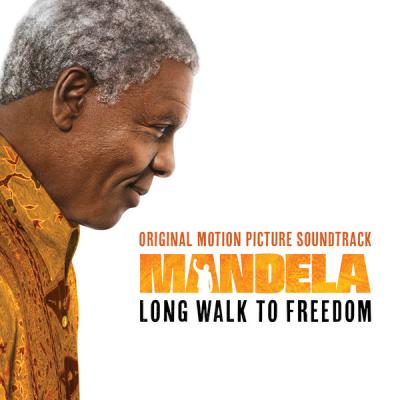
"Mandela: Long Walk to Freedom" Soundtrack Lyrics
Movie • 2013
Track Listing
U2
Miriam Makeba
Traditional
Nomfusi Gotyana
Traditional
Havana Swingsters
Bob Marley & The Wailers
Gil Scott-Heron
Piliso Ntemi’s Alexandra All Star Band
Traditional
Traditional
Jean Marchland
Blondie Makhene
Sibusiso Lerole
Traditional
Traditional
Jerry Dammers And Specials Aka
Traditional
Traditional
Traditional
Traditional
Todd Matshikiza And Pat Williams
Public Enemy
Traditional
Traditional
Traditional
Traditional
Traditional
Miriam Makeba
Art Blakey
"Mandela: Long Walk To Freedom (Original Motion Picture Soundtrack)" – Album Guide to Tracks and Key Scenes
Overview
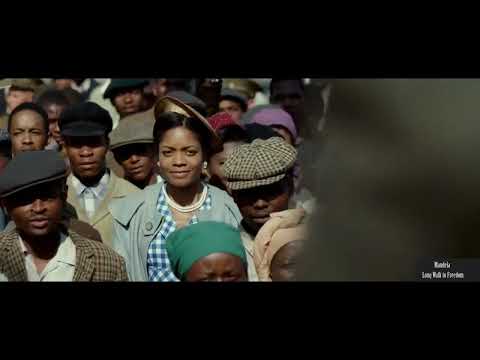
How do you score a life that already sounds like myth — and still keep it human? The soundtrack to Mandela: Long Walk to Freedom answers by treating music as a parallel biography. It does not just decorate scenes; it walks decade by decade beside Nelson Mandela, from township dance floors to prison yards and finally to the Union Buildings.
The album is a hybrid: half curated history lesson, half emotional score. Vintage South African jazz, kwela and township jive sit next to global protest anthems, with Alex Heffes’ orchestral cues and a new U2 ballad acting as connective tissue. You hear Havana Swingsters, the Manhattan Brothers, Art Blakey, Gil Scott-Heron, Bob Marley & The Wailers, The Special AKA and a studio “Mandela OST Cast” singing struggle songs that were re-created on set. By the time U2’s “Ordinary Love” rolls in over the credits, the record has covered roughly half a century of political and musical history in just under an hour.
As a listening experience, the soundtrack feels like a compressed radio dial of resistance. Early tracks lean into swinging horns and upright bass; later cuts hit harder with reggae, American spoken-word protest, and a jubilant 1980s ska anthem about Mandela himself. In between, Heffes’ score cues bring in strings, brass and subtle electronics, giving the film a through-line that pure compilation albums usually lack.
Stylistically, the album moves through several clear zones. Afro-jazz and township jive paint youth and urban energy; that sound suggests possibility, social life, flirtation. Cool jazz and hard bop, via Art Blakey, underline the more cosmopolitan, big-city 1950s and 60s — sharp suits, smoke, late-night meetings. Reggae and spoken-word protest tracks mark the era when the struggle goes global and the movement becomes a world story. Finally, the U2 ballad, very contemporary and polished, plays as a kind of epilogue: not the street, but the world’s reflection on Mandela, love, and forgiveness.
How It Was Made
The film’s original score is by British composer Alex Heffes, who had already built a reputation for politically charged African stories with titles like The Last King of Scotland and The First Grader. For Mandela, he was tasked with following Mandela’s life across decades, but also with honouring South Africa’s own musical traditions instead of drowning them in generic Hollywood strings. Heffes responded by writing a score that gradually expands: early cues lean on African instruments and smaller ensembles; later ones widen into full orchestra as the story scales up to national and global stakes.
Production on the music was split between South Africa and big London rooms. The official notes describe a 65-piece orchestra recorded in a major studio, paired with on-location sessions involving South African musicians and singers. Cast members were brought into those sessions to record traditional struggle songs under the guidance of musical figures like Dizu Plaatjies and Blondie Makhene. Those performances then slotted back into scenes, so the protest music you hear in the film is often literally being sung by the people on screen rather than dropped in from old archives.
Alongside the song-driven soundtrack, Decca and Universal issued a separate album, Mandela – Long Walk To Freedom (Original Score), collecting Heffes’ instrumental cues. That record runs over an hour and traces the narrative in track titles alone: “Sons of Xhosa”, “Sharpeville & Exile”, “The Release”, “Taking Office – The Long Walk to Freedom”. It became prominent enough to earn Heffes a Golden Globe nomination for Best Original Score and effectively acts as the film’s inner monologue.
U2’s “Ordinary Love” came in on top of that structure as a bespoke commission. The band were long-time supporters of Mandela and the anti-apartheid movement, and they wrote and recorded the song specifically for the film, with Danger Mouse producing. It was shaped to sit over the end credits and to mirror the film’s closing emphasis on forgiveness more than on anger.
Tracks & Scenes
"Ordinary Love" — U2
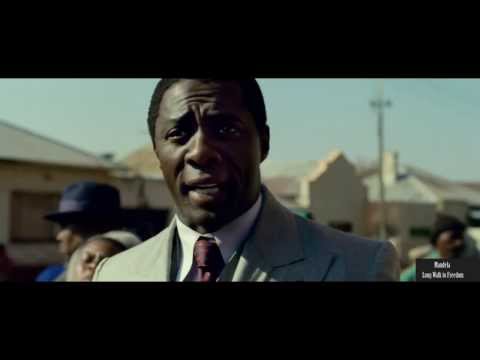
Where it plays: The song arrives as the narrative ends and the credits begin. Mandela walks through the countryside near his childhood home, reflecting in voice-over on how love comes more naturally to the human heart than hate. As his words fade, a gentle guitar figure and warm keys swell in, and the first credit card appears. A brief instrumental teaser had already surfaced a few moments earlier when Mandela steps out after his inauguration, with an African chant and a hint of The Edge’s guitar laid over cheering crowds.
Why it matters: This is the soundtrack’s awards-season tent-pole and its emotional release valve. It shifts the sound from township, prison yard and street into a global pop register, underlining that Mandela has become a symbol claimed by the world. The lyrics stay focused on vulnerability and ordinary affection rather than hero worship, which matches the film’s decision to end on the private cost of public sacrifice.
"Mzala" — Havana Swingsters
Where it plays: Used early in the film around scenes of young Mandela moving through lively urban spaces, this vintage Afro-jazz piece gives the Johannesburg sequences their period feel. Brass riffs and swinging rhythm carry shots of crowded streets, bars and social clubs, just as Mandela is still more concerned with work, friendship and romance than with leadership.
Why it matters: “Mzala” establishes that the struggle story starts in a very normal, very local world. It colours Mandela not yet as an icon but as a young man with charm, style and a social life. The choice of historic South African jazz signals the film’s commitment to rooting him in the culture of his own people rather than in generic orchestral pastiche.
"Be My Guest" — The Manhattan Brothers
Where it plays: The song accompanies a key stretch of Mandela’s early professional success and nightlife — parties, bars, and the sense that he’s becoming a celebrity lawyer in Johannesburg. The crooning vocal and close-harmony style glide under dialogue and dancing, non-diegetic but synced tightly to the rhythm of the cuts.
Why it matters: This track sketches class aspiration and social mobility. It shows Mandela as someone who enjoys attention and charm, but it also hints at the pull of a westernised, modern, black middle class. When later scenes strip that glamour away, the memory of this suave sound world makes the loss clearer.
"Amuck" — Art Blakey
Where it plays: Blakey’s driving drums and restless cymbals appear over mid-film sequences as political activity ramps up — meetings, arguments, the planning of resistance. The jazzy, propulsive groove plays non-diegetically over interiors lit by bare bulbs and cigarette smoke, tying Mandela’s legal and political work to a global modernity rather than to folk nostalgia.
Why it matters: The cue brings a harder edge to the jazz palette. It mirrors the shift from courtroom petitions and polite lobbying to talk of sabotage and underground cells. On the album, it sits at the hinge between local township material and explicitly political songs, so in the film it works as a musical bridge from private life to open confrontation.
"War" — Bob Marley & The Wailers
Where it plays: Later in the film, as images of state violence and global protest start to dominate, “War” underpins a montage of demonstrations, clashes with security forces, and international news coverage. The track is non-diegetic but often feels like it’s blasting from radios and TVs within the frame; it bleeds between spaces as we cut from South African streets to international forums.
Why it matters: Marley’s adaptation of Haile Selassie’s speech about racial equality turns the montage into something more than newsreel. It links the specific struggle against apartheid to wider fights against racism. Musically, the solid reggae groove and stern vocal make the moment feel grounded rather than sentimental, counterbalancing more emotional orchestral cues elsewhere.
"The Revolution Will Not Be Televised" — Gil Scott-Heron
Where it plays: The spoken-word classic runs over scenes of unrest, organising and the way media frames the uprising. Shots of TVs, radios and newspapers are cut with street action, so that Scott-Heron’s voice becomes a kind of sardonic commentary on both the images we see and the limitations of global attention.
Why it matters: This track explicitly questions how revolutions are represented. Dropping it into a prestige biopic is almost cheeky: the film is admitting that it, too, is a mediated version of events. For the soundtrack listener, it also jolts the ear out of pure melody into poetry and rhythm, echoing the more radical, militant phase of Mandela’s politics.
"Nelson Mandela" — The Special AKA
Where it plays: Near the end of the film, the upbeat ska anthem kicks in over celebration imagery: crowds dancing with ANC flags, street parties, archival-style shots of concerts and rallies. The song is non-diegetic but cut to the rhythm of people jumping, hugging and singing, emphasising joy rather than solemnity.
Why it matters: By the time this track arrives, Mandela is already free and on the path to the presidency, so the focus shifts from his inner life to what he means to others. The song itself predates his release and was part of the real-world campaign that helped keep his name alive. Its presence, then, works as a musical thank-you note from the film to the global movement.
"Bahleli bonke etilongweni" — Mandela OST Cast
Where it plays: This choral piece is sung diegetically by prisoners, with cast vocals recorded on set. It’s heard in the prison yard and in quieter interior moments, men sitting on bunks or working under guard as the melody rises. Warders move through the frame, sometimes trying to shut it down, sometimes letting it continue as background noise.
Why it matters: The song gives the prison sequences their emotional centre. Rather than only hearing non-diegetic lamentation, we hear inmates making meaning in the moment. Because the cast actually recorded these protest songs for the production, the texture feels rough and human rather than polished, underlining community in a place designed to break it.
"Nkosi Sikelel’ iAfrika" — Mandela OST Cast
Where it plays: The hymn, later part of South Africa’s national anthem, surfaces around Mandela’s release and the inauguration scenes. It rises over a mix of ceremony and crowd shots: flags, ululation, and Mandela’s image on big public screens. The performance takes on an almost liturgical role in the film’s sound design.
Why it matters: Using this hymn ties the personal story to the rebirth of the state. The song was banned and suppressed during apartheid; hearing it now as a public anthem marks the reversal. Within the soundtrack album, it also closes the circle started by earlier, quieter prison songs, transforming private faith and resilience into public ritual.
"Hoya Rona" — Tony Kgoroge & Mandela OST Cast
Where it plays: This energetic ensemble song backs scenes of organised resistance — marches, training, and ANC gatherings. It often feels half-diegetic: voices clearly come from groups on screen, but the mix blooms beyond what the camera shows, turning chanting into something near operatic.
Why it matters: The track anchors the collective dimension of the story. Mandela is crucial, but the film goes out of its way to show crowds, comrades and family around him. “Hoya Rona” makes that visible support audible, something the orchestral score alone could not do as directly.
"Fight the Power" — Public Enemy (trailer/non-album use)
Where it plays: The track is heard in marketing materials and television spots rather than on the main soundtrack album. It’s laid over fast-cut images of riot police, burning barricades and Mandela’s more militant quotes, designed to sell the film as urgent and confrontational.
Why it matters: Its presence in promotional material, but not on the official album, underlines the gap between how the film was sold and how it actually sounds. The advertising leans hard on a loud, American hip-hop protest song, while the film itself is more committed to South African and reggae-based material.
K’naan stadium anthem & “Ordinary Love” in trailers
Where it plays: An early teaser famously used a rousing K’naan stadium track over fairly conventional trailer cutting — big drums, crowd shots, and a generic “triumph over adversity” rhythm. A later trailer swaps that out for U2’s “Ordinary Love”, letting Bono’s voice carry slow dissolves of Mandela’s life and Idris Elba’s performance.
Why it matters: For some commentators, those choices felt oddly detached from the film’s own musical roots, especially compared with the deep bench of anti-apartheid songs and local styles available. At the same time, they show how strongly the marketing leaned on globally recognisable names to position the film for awards voters and mainstream audiences.
Notes & Trivia
- The soundtrack and the separate original score album were both released in late 2013, aligned with the film’s international rollout and awards campaign.
- Heffes’ score earned a Golden Globe nomination, while U2’s “Ordinary Love” actually won the Golden Globe for Best Original Song and was later Oscar-nominated.
- The soundtrack sequencing deliberately runs chronologically through Mandela’s life, from 1940s Afro-jazz to 1980s ska and international protest music.
- Several traditional songs are credited not to famous artists but to a generic “Mandela OST Cast”, reflecting the on-set ensemble recordings.
- A 10th-anniversary restoration of the score and film soundtrack has brought previously hard-to-find cues and cast recordings back into digital circulation.
Music–Story Links
Early in the film, the jazzy swing of “Mzala” and “Be My Guest” links Mandela to a modern, urbane black middle class. The songs move with him through bars, courtrooms and crowded streets, suggesting he is first and foremost a man in motion — social, ambitious, enjoying the world as it is. That sonic comfort zone makes his later embrace of danger and sacrifice feel like a conscious step away from an easier life.
As the narrative darkens, the score and song choices grow heavier. Art Blakey’s “Amuck” and similar cues align with meetings, bombings and crackdowns: the rhythm tightens, harmony gets edgier, and Heffes’ orchestral writing starts to lean on lower strings and tense brass. The shift mirrors the film’s move from romance and professional success to underground struggle and moral compromise.
Prison sequences pivot to voice and percussion. Pieces like “Bahleli bonke etilongweni” and other cast-sung anthems turn Robben Island into a place where sound is both weapon and refuge. The fact that these tracks are recorded with the performers we see makes them feel less like commentary and more like survival — music as resistance, not as soundtrack.
Finally, the global protest songs and “Nelson Mandela” by The Special AKA expand the frame. They acknowledge that the fight was not only happening inside South Africa. When those tracks arrive, the visuals cut between fictionalised scenes and imagery staged to feel like archival footage. Heffes’ cue “Taking Office – The Long Walk to Freedom” then sits under Mandela’s inauguration, tying together all the strands: personal journey, collective fight, and the uneasy peace that follows.
Reception & Quotes
The film itself drew mixed but respectful reviews, with many critics singling out Idris Elba’s performance and the music as stand-out elements. Audience polling was notably warmer than critic scores, which fits the soundtrack’s populist approach: it takes in ska, reggae, jazz, pop and African choral music rather than aiming for an austere art-house soundscape.
The score’s Golden Globe nomination put Alex Heffes alongside much bigger studio titles that year, and several film-music outlets praised how he balanced large-scale orchestral writing with regional instruments and voices. One specialist review described the score as a work that “embodies Mandela with the kind of heroic, but never bombastic, musical presence” you want from this kind of biography.
“‘Ordinary Love’ played over the end credits of Justin Chadwick’s biopic and it won the Golden Globe for best original song.” Los Angeles Times
“The film’s official soundtrack provides a musical documentary of the times, from 1940s Afro-jazz to The Special AKA’s classic ‘Nelson Mandela’.” PopMatters
“Two trailers in and it seems this movie is disregarding the rich musical history of the movement.” OkayAfrica on the trailer song choices
“I realised the music was telling the story of the film, just without words.” Alex Heffes, on why film music hooked him
Among fans, “Ordinary Love” remains a lightning-rod. Some listeners heard it as a moving, restrained tribute; others saw it as a calculated awards bid. Either way, the song’s awards trajectory — Golden Globe win, Oscar nomination, strong soundtrack sales — ensured that many people heard the music before they saw the film. That, in turn, helped the album live a longer life than the movie’s modest box office might have suggested.
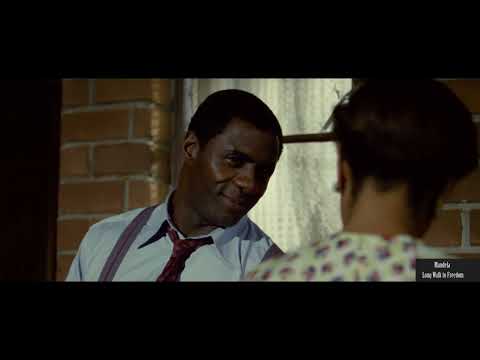
Interesting Facts
- The song “Ordinary Love” was written specifically for the film after the producers approached U2; it was not recycled from an album session.
- On some editions, the score album and song compilation were marketed separately: one as Original Score, the other as Original Motion Picture Soundtrack.
- Retailers list the main soundtrack at around 50–51 minutes, with 17 tracks, while the score album runs more than 68 minutes with 19 cues.
- Cast-sung protest tracks such as “Bahleli bonke etilongweni” and “Nkosi Sikelel’ iAfrika” were later re-issued in expanded “Original Film Soundtrack” editions.
- The soundtrack appears under both major-label imprints (Decca/Universal) and a Distant Horizon label credit, reflecting the South African producers’ direct involvement.
- At the time of release, the vinyl single of “Ordinary Love” briefly hit high positions on Amazon’s vinyl and rock charts even before the full song was widely available.
- Because the film premiered in London on the night Mandela’s death was announced, the closing credits — and thus the first public play of “Ordinary Love” in context — took on unexpected weight.
- A later remaster of the score was promoted by Heffes himself, who highlighted working again with South African collaborators and restoring previously buried details in the mix.
Technical Info
- Title: Mandela: Long Walk To Freedom (Original Motion Picture Soundtrack)
- Film: Mandela: Long Walk to Freedom (2013), biographical drama
- Type: Compilation soundtrack plus original score cues
- Primary composer (score): Alex Heffes
- Key songwriters: Bono, The Edge, Adam Clayton, Larry Mullen Jr. & Danger Mouse (“Ordinary Love”), along with original writers for licensed jazz, reggae and protest songs
- Key performers on album: Havana Swingsters, The Manhattan Brothers, Art Blakey, Bob Marley & The Wailers, Gil Scott-Heron, The Special AKA, Mandela OST Cast, U2
- Production & label: Decca Records / Universal Music in partnership with Pathé, Distant Horizon and Videovision
- Release window: December 2013, timed to the film’s international release and awards push
- Running time (main soundtrack): roughly 50–51 minutes over 17 tracks (varies slightly by edition)
- Running time (score album): about 68 minutes over 19 cues
- Notable cue titles (score): “Sons of Xhosa”, “Sharpeville & Exile”, “The Verdict & Transfer to Robben Island”, “The Release”, “Taking Office – The Long Walk to Freedom”
- Awards: Golden Globe winner for Best Original Song (“Ordinary Love”); Golden Globe nomination for Best Original Score; Academy Award nomination for Best Original Song
- Availability: Widely available on CD and digital platforms; later remastered digital editions and an expanded “Original Film Soundtrack” focusing on cast recordings
- Music supervision: Detailed crediting varies by territory; protest song sessions were overseen by South African musical directors including Dizu Plaatjies and Blondie Makhene, while the overall soundtrack was coordinated through Decca and the film’s producing team.
Canonical Entities & Relations
| Subject | Relation | Object |
|---|---|---|
| Justin Chadwick | directs | Mandela: Long Walk to Freedom (film) |
| William Nicholson | writes screenplay for | Mandela: Long Walk to Freedom (film) |
| Nelson Mandela | writes | Long Walk to Freedom (autobiography) |
| Long Walk to Freedom (autobiography) | is adapted into | Mandela: Long Walk to Freedom (film) |
| Alex Heffes | composes score for | Mandela: Long Walk to Freedom (film) |
| Alex Heffes | creates | Mandela – Long Walk To Freedom (Original Score) (album) |
| Various Artists | perform on | Mandela – Long Walk To Freedom (Original Motion Picture Soundtrack) |
| U2 | perform | “Ordinary Love” (song) |
| “Ordinary Love” (song) | is written for | Mandela: Long Walk to Freedom (film) |
| Bob Marley & The Wailers | perform | “War” (song) |
| Gil Scott-Heron | performs | “The Revolution Will Not Be Televised” (song) |
| The Special AKA | perform | “Nelson Mandela” (song) |
| Mandela OST Cast | perform | traditional protest songs for the film |
| Decca Records | releases | Mandela – Long Walk To Freedom (Original Motion Picture Soundtrack) |
| Decca Records | releases | Mandela – Long Walk To Freedom (Original Score) |
| Distant Horizon / Videovision | produce | Mandela: Long Walk to Freedom (film) |
| Mandela – Long Walk To Freedom (Original Motion Picture Soundtrack) | is part of | Mandela: Long Walk to Freedom (film franchise) |
| Mandela: Long Walk to Freedom (film) | premieres at | Toronto International Film Festival 2013 |
| Mandela: Long Walk to Freedom (film) | is scored by | Alex Heffes |
Questions & Answers
- Who composed the score for Mandela: Long Walk to Freedom?
- The original score was composed by British film composer Alex Heffes, who blended African instruments, voices and a large orchestra to follow Mandela’s life across the decades.
- Which U2 song was written for the film, and where is it used?
- U2 wrote “Ordinary Love” specifically for the film. It plays over the closing scenes and end credits, after Mandela’s final walk through the countryside and his reflection on love and forgiveness.
- Does the soundtrack use authentic South African music?
- Yes. It features historic South African jazz and township tracks plus newly recorded struggle songs sung by the cast themselves under South African musical direction, giving key scenes a documentary-like realism.
- Is there a separate album for the instrumental score?
- There is. Mandela – Long Walk To Freedom (Original Score) collects Heffes’ orchestral and atmospheric cues in narrative order, separate from the song-based soundtrack compilation.
- Are all the songs heard in marketing included on the main soundtrack album?
- No. Some tracks used in trailers and TV spots, including certain hip-hop and K’naan cues, were promotional choices only and do not appear on the primary soundtrack album.
Sources: Film and soundtrack credits; Wikipedia entries for the film and score; Videovision/Decca soundtrack press materials; retailer and library listings (Decca/Universal, Distant Horizon, Silva Screen); AllMusic review of the score; PopMatters essay on the soundtrack; LA Times piece on U2’s movie songs; IMDb soundtrack page; Soundtrakd song index; U2 fan/AtU2 commentary; OkayAfrica article on the trailers; discography sites such as Discogs, Muziekweb, Spotify and related catalogues.
November, 15th 2025
Nelson Mandela is one of the great moral and political leaders of our time: read about British-South African biographical film about him on Internet Movie Database and WikipediaA-Z Lyrics Universe
Cynthia Erivo Popular
Ariana Grande Horsepower
Post Malone Ain't No Love in Oklahoma
Luke Combs Good Riddance (Time of Your Life)
Green Day Bye Bye Bye
*NSYNC You're the One That I Wan
John Travolta & Olivia Newton-John I Always Wanted a Brother
Braelyn Rankins, Theo Somolu, Kelvin Harrison Jr. and Aaron Pierre The Power of Love
Frankie Goes to Hollywood Beyond
Auli’i Cravalho feat. Rachel House MORE ›