Soundtracks:  A B C D E F G H I J K L M N O P Q R S T U V W X Y Z #


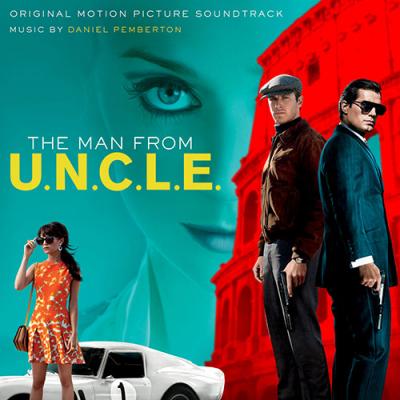
Man from U.N.C.L.E. Album Cover

"Man from U.N.C.L.E." Soundtrack Lyrics

Movie • 2015

Track Listing


"The Man from U.N.C.L.E. (Original Motion Picture Soundtrack)" – Album Guide to Tracks and Key Scenes

The Man from U.N.C.L.E. 2015 trailer frame with Napoleon Solo and Illya Kuryakin in a 1960s European street
The Man from U.N.C.L.E. movie soundtrack energy as teased in the theatrical trailer, 2015

Overview

Can a Cold War spy caper feel laid-back and ferocious at the same time? Daniel Pemberton’s score for The Man from U.N.C.L.E. answers yes, loudly. The soundtrack stitches together original cues and vintage songs into something that feels like a lost 1960s record crate, but with modern punch. It is all swaggering bass flutes, twangy guitars, harpsichord stabs and hand percussion that never quite lets you settle.

The album works hard in the film. It has to sell Guy Ritchie’s cool: long dialogue scenes, sudden split screens, extended chases that lean on rhythm as much as on explosions. Instead of wall-to-wall drones, you get sharply profiled cues that behave almost like characters — sly motifs for Napoleon Solo, more jagged textures for Illya Kuryakin, glamorous sweeps for villainess Victoria Vinciguerra. When period source tracks drop in, they do not just decorate; they twist a scene’s mood with a single needle drop.

What makes this soundtrack distinct among modern spy scores is its willingness to be strange. Pemberton leans into bass flute squeals, cimbalom clatter, surf guitar and Hammond organ in ways that could have felt gimmicky. Here they land as world-building: the music tells you we are in a heightened, movie-Europe version of the 1960s where spies, mechanics and would-be nuclear barons all share the same sonic universe. According to the composer, he wanted something that felt like a “kaleidoscope of international colour”, and that intent is audible in almost every cue.

Stylistically, the album jumps between jazz, classic rock, Euro-pop, Italian canzone, Brazilian tropicália and Morricone-esque spy-western textures. Jazz-funk and soul numbers usually signal solo character cool or seduction. Continental pop songs tend to arrive in more ironic, comic beats. The score cues often mix spaghetti-western guitar with sharp percussion for action, while harpsichord and organ underscore cat-and-mouse games. Genres map to psychology: sleek soul for Solo’s charm, staccato rhythm for Illya’s volatility, lush romantic strings only when the film lets its guard down.

How It Was Made

The main album, The Man from U.N.C.L.E. (Original Motion Picture Soundtrack), is credited to Daniel Pemberton and released by WaterTower Music. Recording took place over roughly eleven months at Abbey Road Studios in London, with Pemberton bringing in individual players to experiment. Instead of writing a generic “spy” score and laying it over a finished cut, he worked with Guy Ritchie during the edit, trading ideas and reshaping cues as scenes evolved.

One breakthrough came with a bass flute. Standard orchestral chase music over the opening East Berlin sequence felt too predictable, so Pemberton asked flautist Dave Heath to show him “all the crazy noises no one lets you do”. Those breathy, overblown attacks became a signature sound of the film: half-groovy, half-threatening, always slightly off-centre. Around that, he built a palette of Spanish guitar, electric guitar, accordion, Hammond B3 organ, harpsichord, mandolin, cimbalom, bongos and a busy battery of percussion.

Crucially, the team avoided leaning on Jerry Goldsmith’s original TV theme in the score itself. Ritchie and Pemberton felt the clean major-key TV tune did not quite fit the more sly, morally ambiguous tone of the film. Instead, there is a cheeky nod via a Hugo Montenegro arrangement in one radio gag, while the rest of the score aims for an authentic-but-modern 1960s vibe. Music supervisor Ian Neil handles the needle drops — the Roberta Flack, Nina Simone, Peppino Gagliardi and others — making sure the source songs sit comfortably next to Pemberton’s cues.

Technically, the production mixes vintage and modern. Old amps, keyboards and microphones were used where possible to keep the sound grainy and tactile, but the mix is clean, punchy and built for cinema subs. As several interviews with Pemberton and Neil note, the idea was not museum-piece pastiche but something that would feel bold in a contemporary multiplex while still clearly rooted in the 1960s.

Behind-the-scenes style still from The Man from U.N.C.L.E. with spies in tailored suits in 1960s Rome
Behind-the-scenes mood that the score mirrors: razor-sharp tailoring, playful espionage and 1960s swagger

Tracks & Scenes

This is not a full tracklist, but a guide to key songs and cues and how they work in the film.

"Compared to What" – Roberta Flack
Where it plays: The movie’s opening titles in East Berlin. As Solo drives into the divided city to extract Gaby, the camera glides through night streets and drab apartments while Flack’s long, live-sounding recording runs over the visuals. The crackling drums and political edge of the lyrics sit against the slick spy photography.
Why it matters: It announces immediately that this is not a straight-laced thriller. A jazz-soul protest song over a Cold War spy extraction gives the film attitude and sets up the whole needle-drop strategy.

"Bunter Drachen" – Suzanne Doucet
Where it plays: Early in Rome, when Gaby is being kitted out as Illya’s fake fiancée. She is dragged through chic boutiques, trying on clothes while Solo and Illya debate her cover story. The lightweight German pop floats above the bickering spies and fashion montages.
Why it matters: The song underlines Gaby’s role as both asset and person with her own taste. It also helps shift tone from grim Berlin escape to glamorous caper, telegraphing that costume, identity and performance will be central.

"Wenn ich ein Junge wär'" – Rita Pavone
Where it plays: Shortly after the shopping trip, around the mid-teens in minutes, as Illya and Gaby discuss her disguise and he gives her an engagement ring. She tests the boundaries of the cover; he tries to stay rigidly professional.
Why it matters: The bratty, gender-flipping lyric (“If I were a boy”) slyly mirrors Gaby’s situation: a woman being asked to play a role in a male spy game, yet constantly pushing back.

"Cry to Me" – Solomon Burke
Where it plays: Around half an hour in, in Gaby’s hotel room in Rome. She turns up the radio and starts dancing alone to Burke’s slow, sensual soul ballad. Illya pretends to stay focused on a chess game, then loses his composure as the dance becomes flirtation and then a wrestling match that trashes the room.
Why it matters: It is one of the film’s best character beats. The song gives Gaby control of the scene: she provokes, tests Illya’s limits, and proves she is not just cargo. The sensuality is undercut by slapstick, but the chemistry sticks.

"Five Months, Two Weeks, Two Days" – Keely Smith, Louis Prima & Sam Butera & The Witnesses
Where it plays: At the Rome racetrack, roughly forty minutes in. Solo stages an over-the-top scene to get Victoria Vinciguerra’s attention: loud behaviour, show-off bets, an “accidental” encounter. The jumpy swing track bounces under the dialogue and crowd noise.
Why it matters: The song is pure brassy showbiz, matching Solo’s conman persona. It signals that seduction and performance are part of his toolkit, and gives the sequence a carnival feel rather than straight menace.

"Viaggio nella prateria 1" – Stelvio Cipriani
Where it plays: Around the mid-film vault break-in. Solo and Illya infiltrate an industrial facility, trying to crack a safe as alarms and guards threaten to close in. The cue, originally from an Italian western, layers guitar, organ and steady rhythm over creeping tension.
Why it matters: Borrowing a western track for a heist reframes the spies as gunslingers on hostile turf. It is also a neat nod to the Italian lineage of stylish 1960s genre cinema the film is channeling.

"Banana Freak Out" – George Guzman
Where it plays: About an hour in, during the truck sequence where Solo tries different radio stations. He starts the vehicle and flicks through channels while Illya is still in serious danger elsewhere. This track is one of the brief stations he lands on.
Why it matters: It sets up the entire radio gag: Solo is half in a chase, half on a joyride. The goofy Latin groove makes his apparent lack of concern darkly funny and emphasizes the split between his cool and Illya’s panic.

"The Man from U.N.C.L.E. – Theme" – Hugo Montenegro & His Orchestra
Where it plays: In the same gag, as Solo clicks through to a lush orchestral version of the original TV theme while driving along the shoreline at night. The action outside the truck briefly feels like a different, older show.
Why it matters: It is the clearest homage to the 1960s series. The TV theme surfaces diegetically as just another radio track, acknowledging the source material without breaking the film’s new musical language.

"Che vuole questa musica stasera" – Peppino Gagliardi
Where it plays: During the now-famous boat chase. Illya flees guards in a speedboat, chaos exploding around him, while Solo has calmly found food and wine in a truck cab. Gagliardi’s aching Italian ballad plays as Solo eats, drinks and watches the chase like a TV show before finally driving into the water to ram the pursuing boat and save Illya.
Why it matters: The needle drop is deliberately perverse. A romantic lounge song over slapstick near-death turns the whole action beat into a joke about genre: Solo is in one kind of movie; Illya in another. It is also a perfect character snapshot of Solo’s detached cool.

"Jimmy, Renda-Se" – Tom Zé
Where it plays: Shortly after the boat sequence, around 1 hour 5 minutes in. Gaby drinks alone in her room, processing the betrayals and half-truths swirling around her. Meanwhile, Solo and Illya sneak back into the hotel, trying to avoid Victoria’s people. The Brazilian tropicalia track drifts lazily over the cross-cutting.
Why it matters: The song brings in a different global flavour, hinting at the wider world of Cold War proxy games. Its laid-back groove softens the tension and lets the film breathe between set-pieces.

"Torture in D Minor" – Sergio Pizzorno
Where it plays: Around 1 hour 17 minutes. Nazi-sympathiser Rudi sits Solo down in a grim, concrete torture room and begins monologuing about his past. The track combines classical motifs, guitar and a steady, almost dance-like beat as voltage is applied and Victoria departs by speedboat above.
Why it matters: The cue is gleefully stylised. It keeps the sequence from feeling sadistic by wrapping the violence in a music-video sheen, and gives Rudi a twisted showman’s theme.

"Il Mio Regno" – Luigi Tenco
Where it plays: Immediately after the torture set-piece, as Solo and Illya talk about what they have just done to Rudi and his unintended fate. The camera lingers on the aftermath while Tenco’s melancholic Italian song plays.
Why it matters: It is a rare moment of regret in a snappy film. The tune underlines that the leads are not completely numb to what the job requires, and that some lines of violence still land heavily.

"Take Care of Business" – Nina Simone
Where it plays: Over the end credits, once the Vinciguerras are defeated and the trio has been quietly reassigned under the new U.N.C.L.E. banner. Simone’s vocal rides over footage and graphics that tease further adventures.
Why it matters: It is both a wink and a mission statement. The title fits the wrap-up perfectly, and the choice of Simone keeps the soundtrack’s commitment to strong, distinctive voices right through the final frame.

Beyond these, Pemberton’s own cues — “Escape from East Berlin”, “His Name Is Napoleon Solo”, “The Drums of War”, “Take You Down” and others — do just as much heavy lifting, shaping action and banter. Some tracks like Ennio Morricone’s “Il colpo” appear briefly or only in certain versions and are absent from the main album, which helps keep the record focused while the film enjoys a slightly wider palette.

Action sequence frame from The Man from U.N.C.L.E. showing a chase with 1960s vehicles and stylised editing
Action sequences lean on rhythm and groove as much as explosions, with score and song choices driving the pacing

Notes & Trivia

  • The album’s standard edition features 24 tracks; a deluxe digital version adds four more score cues, bringing the running time to just over 80 minutes.
  • The soundtrack was issued on limited vinyl (around 750 copies), which quickly became a collector’s item among spy-score fans.
  • Despite being a film based on a TV show with an iconic Jerry Goldsmith theme, the score mostly avoids quoting it; the main overt nod is via the Hugo Montenegro radio track.
  • “Compared to What” and “Cry to Me” both had long histories in film and soul culture before this movie, but many younger viewers now associate them strongly with specific U.N.C.L.E. scenes.
  • Composer Daniel Pemberton went straight from this soundtrack into other high-profile projects like Steve Jobs and later Spider-Man: Into the Spider-Verse, with critics repeatedly pointing back to U.N.C.L.E. as an early breakout.

Music–Story Links

The soundtrack often does the job of dialogue. “Compared to What” over the Berlin opener undercuts the heroism of Solo’s extraction with a song about hypocrisy and social injustice. It hints that our charming thief-turned-spy is working for a system that is far from clean, even before anyone says so out loud.

Inside the trio, songs map emotional lines. Gaby’s dance to “Cry to Me” is not just flirtation; it is her way of testing Illya’s humanity. If he stayed entirely rigid through that scene, their later camaraderie would be harder to sell. Instead, the music lets his mask slip. Later, “Jimmy, Renda-Se” plays while she sits alone and the men move in secret; the sunny groove ironically highlights how isolated she feels inside this boys’ game.

Solo’s arc, meanwhile, is written partly in his relationship to music. He is the one who pauses mid-mission to find food and a better soundtrack during the boat chase, allowing “Che vuole questa musica stasera” to run while bullets fly. The joke is that he treats life-threatening danger like background television. By the time “Take Care of Business” rolls under the credits, that same blasé style has been redirected toward something slightly more altruistic.

Pemberton’s score cues tie character beats together. The jagged, rhythmic textures over Illya’s more violent moments echo in quieter scenes through fragments of flute or guitar, suggesting a coiled energy that never fully disappears. Softer, more romantic scoring is reserved for brief windows where trust opens up — usually only to be undercut again by a new reveal or double-cross, keeping the audience slightly off balance.

Reception & Quotes

Among film-music writers, The Man from U.N.C.L.E. quickly gained a reputation as one of 2015’s standout genre scores. Several specialist reviewers praised its confident blend of homage and originality, and noted how clearly it stands out in a year crowded with spy films. Some outlets even shortlisted it in year-end “best scores” lists or gave it special mentions alongside Pemberton’s work on Steve Jobs.

Mainstream critics often highlighted the soundtrack when the film itself received more mixed notices. A recurring theme: the music seems to understand the tone the movie is going for even more precisely than some of the plotting does. The Los Angeles Times, Variety and others pointed out the way the score’s “classy jazz” and “self-consciously groovy” style props up both action and banter.

The score is a whistle-stop tour of ’60s film music styles that somehow feels fresh rather than dusty. — Summary of specialist soundtrack reviews
Pemberton’s breathy flutes, twangy guitars and pounding drums nail the movie’s mix of homage and new swagger. — Paraphrase of Los Angeles and trade-press reactions
As an album, it’s ridiculously listenable: stylish, playful, and more adventurous than most big-studio spy scores. — Composite of online soundtrack commentary
It would have been easy for this score to vanish in a crowded year; instead, it’s one many listeners kept returning to. — Paraphrase of year-end lists

Commercially, the soundtrack functions more as a cult favourite than a chart monster. It has a durable streaming presence, a deluxe digital edition and that small vinyl run, and it helped cement Pemberton’s reputation as someone who can bend genre expectations without losing accessibility.

Stylised closing montage style image from The Man from U.N.C.L.E. with the three leads framed like a 1960s poster
The closing montage and credits lean heavily on music to send viewers out on a groove, not a grim note

Interesting Facts

  • The album mixes Pemberton’s original score with licensed tracks; the balance is unusually even for a modern action film, closer to a true needle-drop collage.
  • Some fans discovered older artists like Tom Zé, Luigi Tenco and Peppino Gagliardi through the film, then traced their catalogues backwards from the soundtrack playlist.
  • The Comic-Con trailer prominently used Solomon Burke’s “Cry to Me”, which helped prime that song as an emotional anchor even before audiences saw the full scene.
  • WaterTower Music’s digital deluxe version groups the extra cues (“The Red Mist”, “The Switch”, “Warhead”, “Fists”) after the standard sequence rather than scattering them, preserving the album’s flow.
  • A small but vocal online fandom regularly cites the boat-chase needle drop with “Che vuole questa musica stasera” as one of the best comic-action uses of music in the 2010s.
  • The score is often mentioned in the same breath as retro-leaning spy scores like Mission: Impossible – Rogue Nation and Kingsman: The Secret Service, but its eclectic instrumentation gives it a more eccentric edge.
  • Even people who found the film slight sometimes single out the soundtrack as their main reason for wanting a sequel; the music feels built to support an ongoing series.

Technical Info

  • Title (album): The Man from U.N.C.L.E. (Original Motion Picture Soundtrack)
  • Film: The Man from U.N.C.L.E. (2015)
  • Year of release (album): 2015 (mainly 7–8 August, depending on territory)
  • Type: Feature film soundtrack (original score + various artists)
  • Primary composer / producer: Daniel Pemberton
  • Score recording location: Abbey Road Studios, London
  • Key genres: Jazz, classic rock, soul, hip hop touches, 1960s spy/thriller pastiche
  • Label: WaterTower Music
  • Standard running time: about 73 minutes (24 tracks)
  • Deluxe running time: about 80 minutes (28 tracks including bonus cues)
  • Format availability: Digital download and streaming; CD; limited-edition vinyl (approx. 750 copies); later digital deluxe editions
  • Music supervision (film): Ian Neil
  • Notable licensed placements: “Compared to What”, “Cry to Me”, “Five Months, Two Weeks, Two Days”, “Che vuole questa musica stasera”, “Jimmy, Renda-Se”, “Take Care of Business” and others
  • Film music credits: Music by Daniel Pemberton; film directed by Guy Ritchie
  • Streaming metadata: Typically credited to “Daniel Pemberton” with various guest artists, under the full album title on major platforms.

Canonical Entities & Relations

Guy RitchiedirectedThe Man from U.N.C.L.E. (2015 film)
Daniel Pembertoncomposed and produced music forThe Man from U.N.C.L.E. (Original Motion Picture Soundtrack)
WaterTower MusicreleasedThe Man from U.N.C.L.E. (Original Motion Picture Soundtrack)
Henry CavillportraysNapoleon Solo in the 2015 film
Armie HammerportraysIllya Kuryakin in the 2015 film
Alicia VikanderportraysGaby Teller in the 2015 film
Elizabeth DebickiportraysVictoria Vinciguerra in the 2015 film
Hugh GrantportraysAlexander Waverly in the 2015 film
Roberta Flackperforms“Compared to What” on the soundtrack
Solomon Burkeperforms“Cry to Me” on the soundtrack
Peppino Gagliardiperforms“Che vuole questa musica stasera” in the boat-chase sequence
Nina Simoneperforms“Take Care of Business” over the end credits
Ian Neilserved asmusic supervisor on the film
Abbey Road Studioshosted recording sessions forthe score
WaterTower Music (label)is imprint ofWarner Bros. related music arm

Questions & Answers

How much of The Man from U.N.C.L.E. soundtrack is original score versus existing songs?
The album is anchored by Daniel Pemberton’s score cues but also features a substantial run of 1960s songs and library tracks, all sequenced so they feel like one coherent record.
Does the 2015 film use the original TV theme?
Yes, but sparingly. A Hugo Montenegro arrangement of the classic theme appears diegetically on a truck radio; Pemberton’s score otherwise establishes its own identity.
Are all the songs heard in the movie included on the official soundtrack album?
Most major needle drops and all of Pemberton’s key cues are there, but a few brief or background tracks are film-only and do not appear on the main album.
What makes this score stand out among other modern spy-movie soundtracks?
Its unapologetic 1960s flavour — bass flutes, cimbalom, Italian pop, soul, tropicalia — and its willingness to let bold, distinctive textures lead scenes rather than sit quietly underneath.
Where can I listen to The Man from U.N.C.L.E. (Original Motion Picture Soundtrack) today?
It is available on major streaming platforms and digital stores worldwide, and physical copies (CD and limited vinyl) circulate through usual retail and second-hand channels.

Sources: Wikipedia (film and soundtrack articles), WaterTower Music release notes, Apple Music and Spotify album pages, Discogs release data, Soundtrakd song-scene listings, interviews with Daniel Pemberton in film-music outlets, specialist soundtrack reviews (Movie Music UK, MFiles, Movie Wave), and mainstream film reviews highlighting the score.

A total of 18 songs, this soundtrack was created for the quite active film in espionage style. Entertaining blockbuster has different music in its accompanied – Latin American (eg, Jimmy, Renda se by Tom Zé and Valdez), in the style of the movie "Puss in Boots" and a spy-style "James Bond" (as You Work for Me by Laura Mvula ). The film is quite promptly came out – it reflects the confrontation of Russian and Americans. In fact, one of the eternal themes. Beautiful actresses, beautiful actors, all is beautiful – the environment, the atmosphere and the music soundtrack. Broaching and beautiful melodies, such as the Il Colpo by Ennio Morricone, will satisfy lovers of melodies consisting of sounds, escalate the situation. But, of course, the main distinguishing feature of the music for this film is that it is all old, written in the last century, in the period from 1960 to 1990. There is a completely different languages of music, from Spanish to English, from French to Italian. It seems that the versatility of the soundtrack is just the world may say that there is not a single corner of the world, which would not like this collection. Qualitative, as the movie to which it is matched.

November, 15th 2025

More info on IMDb and Wikipedia
A-Z Lyrics Universe

Lyrics / song texts are property and copyright of their owners and provided for educational purposes only.