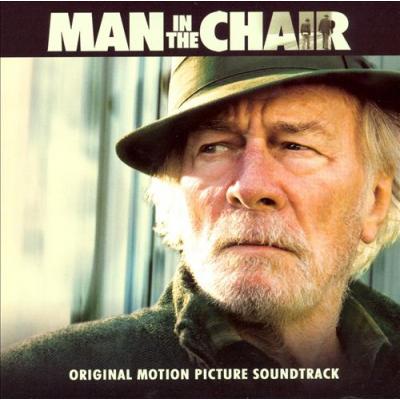
"Man In The Chair" Soundtrack Lyrics
Movie • 2008
Track Listing
The Frames
Eric Anders
Zino And Tommy
Laura Karpman
X Man / Victor Taylor
Zino And Tommy
Laura Karpman
Bus Stop
Laura Karpman
Zino And Tommy
London Symphony Orchestra Nashville Children's Choir
Laura Karpman
Zino And Tommy
Rene Reyes
"Man in the Chair (Original Motion Picture Soundtrack)" – Album Guide to Tracks and Key Scenes
Overview
What happens when a film about loving cinema gets a soundtrack that quietly refuses to behave like a typical “inspirational underdog” album?
The soundtrack to Man in the Chair leans hard into contrast. On one side you get the aching indie rock of The Frames’ “Santa Maria” and the protest-folk of Eric Anders’ “So Wrong”; on the other, Laura Karpman’s orchestral cues, Christmas carols, and a straight lift of Beethoven’s “Ode to Joy.” Instead of chasing one radio single, the album mirrors Flash Madden’s world: memory, regret, and flashes of defiant energy all jammed into the same reel.
On screen, the songs are used sparingly but pointedly. The opening needle-drop plays almost like a thesis about ships that have already sailed; later, Christmas hymns score a scene about stolen shelter dogs and a fragile family truce. The result is a soundtrack that doesn’t overwhelm the film but deepens it: when songs arrive, they usually mean something — a pivot in Cameron’s coming-of-age, a crack in Flash’s cynicism, or a sharp commentary on how America treats its elders.
Stylistically, the album sits at the crossroads of indie rock, Americana-tinged protest music, hip-hop inflected source cues, classic choral writing and traditional score. The rougher rock and hip-hop tracks stand in for youth, hustle and noise; Karpman’s orchestral writing and choir cues handle memory, institutional weight and sentiment. Beethoven and the Christmas carols supply cultural “canon” — literally the old world — that the story keeps poking at. The mix is unusual for a modest indie drama, but that’s why it sticks: it sounds a little too big for the movie’s budget in exactly the right way.
How It Was Made
The film itself is a 2007 American indie written and directed by Michael Schroeder, with music by composer Laura Karpman. She came in with a background in concert work, television and games, and here she builds a score that can sit next to licensed tracks without feeling like filler. According to several credits summaries, music supervision was handled by Marcus Barone, with additional music supervision and editing support, which helps explain how a small film ended up with a surprisingly broad palette of songs and choral recordings.
The official album — Man in the Chair (Original Motion Picture Soundtrack) — was released on CD and digital by Lakeshore Records in April 2008, running just over 50 minutes and collecting 15 tracks by various artists plus Karpman’s cues. Apple’s and Amazon’s listings both credit it to “Various Artists,” with Karpman, producers like Randy Turrow and Victor Taylor, and executive soundtrack producer Brian McNelis involved on the album side. In practice that means the OST is more than just score: it’s a curated snapshot of how the film uses rock, protest folk, hip-hop textures and classical pieces.
Karpman’s own cues — such as “Not Forgotten,” “Flash and Cameron,” “Mr. Moss Pt. 1” and “Lockup” — were written to weld those disparate songs together. The film jumps between school corridors, studio backlots, retirement homes and dog shelters, and the score has to smooth those cuts: a mix of warm strings, careful woodwind writing and some understated rhythmic patterns. Meanwhile, the licensed songs from The Frames, Eric Anders, Zino & Tommy, Rene Reyes and others carry much of the film’s emotional punctuation.
Tracks & Scenes
Below are the key songs and cues, with their most important scene placements as far as publicly available script and credit information allows. Where a cue’s exact on-screen position is not clearly documented, that’s noted.
"Santa Maria" — The Frames
Where it plays: The film’s opening sequence. Over the very first shots — classic black-and-white cinema projected in a theater and Flash reacting in the dark — we hear Glen Hansard’s voice come in as the titles roll. Within moments the film cuts from the older movie footage and Flash’s gruff commentary to the present-day high-school world, where loud rap music blares from Brett Raven’s car stereo. The Frames track functions as non-diegetic music, roughly in the first few minutes of the film, then yields abruptly to the diegetic rap blasting from the teens’ car.
Why it matters: It’s a perfect “two worlds” cue: one melancholic Irish indie song standing in for the romantic past, rudely interrupted by a sub-heavy, disposable present. Hearing the cut from “Santa Maria” to that wall of rap is the first time the movie tells you, without dialogue, what Flash hates about modern life and what Cameron is stuck inside.
"So Wrong" — Eric Anders
Where it plays: Mid-film, after Cameron and Flash visit screenwriter Mickey Hopkins in his decrepit room and Cameron rides a bus back with Flash, talking about America throwing away its old people. Over that sequence we hear Anders’ protest song — you can pick out lines about a “nation” gone wrong — playing non-diegetically under their conversation and the bus ride. It’s essentially a reflective travel montage, placed somewhere in the film’s middle third.
Why it matters: The lyrics about a country drifting “so wrong” quietly echo the conversation on screen about nursing homes, family abandonment and disposable workers. The song does ideological lifting that the characters themselves — especially Flash, who hides behind jokes — can’t quite articulate, turning a simple bus ride into a small political monologue.
"Silent Night" — London Symphony Orchestra & Nashville Children’s Choir
Where it plays: Near the film’s later stretch, after Flash drunkenly frees a group of shelter dogs and forces Cameron and Murphy to help relocate them to a dog park at night. Once the dogs have been set loose and the kids and seniors head back, the scene transitions into a Christmas dinner at Cameron’s house. A choral rendition of “Silent Night” comes in over the tail of the dog-park sequence and continues softly under the dinner conversation. The carol functions as non-diegetic commentary, spanning roughly from the end of the rescue through family dialogue at the table.
Why it matters: The cue is heavily ironic but also sincere. On one level, a hymn about holy quiet plays right after an act of low-level crime and chaos; on another, the lyrics about peace and calm frame a rare moment where Flash, Cameron, Judy and Floyd occupy the same emotional space. It is one of the soundtrack’s most sentimental moments, and the film knows it.
Symphony No. 9, "Ode to Joy" — Ludwig van Beethoven (choral recording)
Where it plays: Late in the story, as Cameron’s student film nears completion and the Motion Picture home starts to receive attention, a rousing choral performance of “Ode to Joy” swells over exterior shots and activity around the residence. The script explicitly notes a choir singing the Beethoven finale as an explosion sound and a visual “spruce up” of the place occur. The cue works non-diegetically, placed in the final act as a kind of tongue-in-cheek anthem.
Why it matters: Beethoven appears in countless film trailers and big-studio dramas, but here the choral finale backs a story about forgotten technicians and retirees. The grandeur feels almost too large for the shabby nursing home, which is exactly the point: Flash and his friends finally get to feel like they are in a proper movie again.
"Rock Ain't Dead, It's Just Sleeping" — Zino & Tommy
Where it plays: Documented sources list this track on the OST and as one of the contemporary rock cues in the film, but they generally stop at naming it; public scripts and cue sheets do not clearly identify the precise scene. It is associated with high-energy, youth-centric moments (for example, edits of Cameron’s school or filmmaking hustle) rather than the retirement-home sequences.
Why it matters: Even without a pinned timestamp, the title tells you how it functions: as a small manifesto for both Cameron and Flash. Rock — like Flash’s old-school craft — may appear irrelevant, but the film insists it is merely dormant, waiting for someone to plug the amps back in.
"All I Can Say" — Zino & Tommy
Where it plays: Like “Rock Ain’t Dead,” this appears on the official album and in music-credit databases as a Zino & Tommy contribution. Openly available materials do not agree on its exact placement, and the shooting script does not annotate the cue. It is generally described as a mid-tempo source track aligned with Cameron’s world rather than Flash’s.
Why it matters: Zino & Tommy’s tracks give the film a specific early-2000s independent-rock texture, somewhere between library music and fully branded needle-drops. They keep the story grounded in a contemporary teen culture without dragging in a huge, recognisable hit that would overwhelm the small-scale narrative.
"Come Back Home (Bus Stop)" — Laura Karpman / Bus Stop
Where it plays: Listed on the OST and in soundtrack catalogs; the title suggests it is tied to one of Cameron and Flash’s recurring rendezvous at the bus stop outside the Motion Picture home. No public cue sheet pins it to a single scene, but it is usually grouped with reflective cues rather than comedy beats.
Why it matters: The “bus stop” in the film is where Cameron’s real education begins. Tying a recurring musical idea or song to that location reinforces the sense that this is where their intergenerational friendship literally and figuratively starts moving.
"No Miracles Today" — Zino & Tommy
Where it plays: Present on the album and in online track listings but not clearly labelled in the script. Based on its tone and how it is usually described, it functions as another rock/hip-hop hybrid source cue, probably underlining moments of frustration or setback in Cameron’s project and Flash’s health. Exact shot-by-shot placement remains undocumented in open sources.
Why it matters: The title alone captures one of the movie’s running arguments: nothing about getting old, getting sober or getting a movie made is miraculous. It’s work. Paired with the on-screen setbacks, the track helps undercut any temptation to turn the story into pure fairy tale.
"Gangstacat" — Zino & Tommy
Where it plays: Appears in the OST and soundtrack databases as another contemporary cue. Given Zino & Tommy’s style and the overall placement of their tracks, it’s most likely tied to school, street or lot hustle sequences rather than the Motion Picture home interiors, but again, no open transcript confirms a specific timestamp.
Why it matters: This kind of track gives the film its only real whiff of “cool” — the sense that Cameron’s world still has beats and swagger even as he falls in love with the black-and-white past Flash represents. It’s part of the film’s argument that old Hollywood and new youth culture can share a frame.
"Los Años" — Rene Reyes
Where it plays: Listed on the soundtrack in Spanish-language and multi-language OST databases. The title (“The Years”) suggests a connection with scenes where age, time and regret are foregrounded — likely linked to the retirement-home residents rather than the kids. However, public scene-by-scene breakdowns do not specify which.
Why it matters: Bringing in a Spanish-language track in a story about Los Angeles film workers quietly acknowledges the city’s broader cultural mix. It also rhymes thematically with the film’s obsession with time passing and years slipping away.
"Not Forgotten" — Laura Karpman
Where it plays: A score cue present on the album. The title clearly refers to the residents of the Motion Picture home and Mickey’s grim living conditions, and the cue is often described in reviews and credits as one of the emotional centrepieces of the score. Exact seconds in the film are not spelled out in public sources, but it is tied to the nursing-home plotline.
Why it matters: This is Karpman’s mission statement in miniature: a musical promise that these sidelined people will be remembered. Where the rock tracks express anger or energy, “Not Forgotten” holds the grief.
"Flash and Cameron" — Laura Karpman
Where it plays: Another score cut named on the album, almost certainly associated with the evolution of Flash and Cameron’s friendship — early confrontations at the theatre, or later trust-building sequences at the Motion Picture home and on the lot. Publicly available script copies do not mark the cue, but critics and album copy regularly point to the score’s role in their relationship.
Why it matters: It is the main musical representation of the film’s central relationship: kid and old gaffer, student and mentor. When this cue (or its variations) surfaces, you feel the film stop judging either character and just let them be together.
Trailer usage and non-album material
Where it plays: The main theatrical trailer (YouTube ID used in the figures on this page) cuts together fragments of several score and song cues rather than introducing an entirely new “trailer song.” Public information about the film’s music does not identify any major commercial track that appears in marketing but not on the OST.
Why it matters: For collectors this is good news: if you buy or stream the Lakeshore album you are effectively getting the core of what you hear both in the film and in the promotional materials, without the usual frustration of a missing headline track.
Notes & Trivia
- The film is routinely dated as a 2007 release, but some territories (including parts of Europe) saw it theatrically in early 2008, which is why the OST album carries a 2008 date.
- Composer Laura Karpman later went on to score high-profile projects for Marvel and major documentaries; this small drama sits in her filmography next to big TV work and orchestral commissions.
- Zino & Tommy, whose tracks dominate the rock side of the album, are primarily known for film, TV and commercial music rather than traditional album releases.
- The Christmas carols (“Silent Night,” “Angels We Have Heard on High”) are credited to the London Symphony Orchestra and the Nashville Children’s Choir, giving a very modest indie a surprisingly heavyweight choral sound.
- The official album duration, just over 50 minutes, is longer than you might expect for a quiet drama and reflects Lakeshore’s tendency at the time to deliver reasonably complete soundtrack presentations.
Music–Story Links
The opening use of “Santa Maria” ties Flash’s identity directly to cinema. We meet him not via dialogue but through the mood of the song and the glow of an old print. When that music is smashed aside by aggressive hip-hop from Brett’s car, the movie and the soundtrack stage the central conflict: old Hollywood craft versus loud, moneyed, youth culture.
“So Wrong” locks into a different axis: not old versus young, but ideals versus reality. It plays over a conversation about abandoned elders and underfunded care homes, turning what could have been a purely personal complaint into a broader critique of a country that has drifted away from its own promises. The track, in other words, scores a political awakening disguised as a bus ride.
The great irony of “Silent Night” and the carol cues is how they cover both law-breaking and reconciliation. Flash’s dog-park rescue is technically theft, but the hymn implies a sort of rough grace in what he is doing. Later, the same carol cushions the family dinner where Flash finally fits into Cameron and Judy’s domestic orbit. The music insists there is holiness in these scrappy, imperfect people.
Beethoven’s “Ode to Joy” is weaponised as a final flourish. When the Motion Picture home cleans up, the choir kicks in and for a brief stretch the residents are granted the scale and dignity usually reserved for superheroes and dictators in mainstream cinema. It’s funny, yes, but it also delivers on Flash’s fantasy: once again, for a few moments, he and his friends are part of capital-C Cinema.
Reception & Quotes
Critically, Man in the Chair sits in mixed-review territory: most reviewers praise Christopher Plummer and the central idea while criticising the script’s sentimentality. The music rarely gets singled out at length, but when it does, it is usually as a pleasant surprise — more energetic and eclectic than expected for such a modest film.
“A committed performance from Christopher Plummer can’t save Man in the Chair’s troubled and clichéd script.” — Rotten Tomatoes critics’ consensus
“A ramshackle but likeable story of a movie-mad L.A. kid… the serious topic of neglect of the aged is given a moving examination.” — festival review quoted in UK coverage
“Has the look and feel of a cutting edge indie, with a surprisingly rockin’ soundtrack that left me wanting more.” — online user review
Commercially, the soundtrack did not chart, but the Lakeshore CD has remained available through physical retailers and digital stores, and the album appears on the major streaming services in most regions. According to one label blurb, the album was positioned as a “various artists” compilation featuring The Frames, Eric Anders, Laura Karpman and Zino & Tommy rather than as a composer-only showcase.
Interesting Facts
- The soundtrack is released by Lakeshore Records under catalog number LKS 33992, placing it alongside other mid-2000s indie and genre scores the label championed.
- Executive soundtrack producer Brian McNelis is a recurring name on Lakeshore albums; his credit here ties Man in the Chair into a broader ecosystem of niche but carefully assembled film soundtracks.
- Marcus Barone’s music-supervisor credit sits next to a long list of similar roles on independent films, indicating a specialist in stretching small music budgets across varied styles.
- “So Wrong” predates the movie; Anders originally released it on his own material. The film repurposes it as an explicitly political overlay for its nursing-home storyline.
- The Motion Picture & Television Fund home that inspired the fictional residence is a real institution in Los Angeles, and using a formally rich orchestral and choral score there subtly honours the real workers who lived in such places.
- Because the film’s marketing never revolved around a single charting song, the soundtrack has flown under the radar; collectors mainly find it through Lakeshore discographies and fan-maintained OST databases.
Technical Info
- Title (film): Man in the Chair
- Title (album): Man in the Chair (Original Motion Picture Soundtrack)
- Year of film: 2007 (some regions 2008 theatrical release)
- Year of album: 2008 (CD and digital)
- Type: Feature film; various-artists soundtrack with original score
- Director / Writer (film): Michael Schroeder
- Primary composer (score): Laura Karpman
- Music supervision: Marcus Barone, with additional music-department credits noted in some listings
- Key artists on album: The Frames, Eric Anders, Zino & Tommy, Rene Reyes, London Symphony Orchestra & Nashville Children’s Choir, Laura Karpman
- Label: Lakeshore Records (CD catalog LKS 33992)
- Album length: approximately 50 minutes (15 tracks)
- Film runtime: approximately 107 minutes
- Release context: Screened on the festival circuit in early 2007, followed by limited theatrical runs and home-video/On Demand availability; the soundtrack arrived the following year as a standalone release.
- Availability: Physical CD through catalog and second-hand retailers; digital purchase and streaming through major platforms in most territories.
Canonical Entities & Relations
| Subject | Relation | Object |
|---|---|---|
| Michael Schroeder | directs | Man in the Chair (film) |
| Michael Schroeder | writes | Man in the Chair (film) |
| Laura Karpman | composes score for | Man in the Chair (film) |
| Marcus Barone | supervises music for | Man in the Chair (film) |
| Lakeshore Records | releases | Man in the Chair (Original Motion Picture Soundtrack) (album) |
| Man in the Chair (Original Motion Picture Soundtrack) | is soundtrack to | Man in the Chair (film) |
| Christopher Plummer | plays | Flash Madden |
| Michael Angarano | plays | Cameron Kincaid |
| M. Emmet Walsh | plays | Mickey Hopkins |
| Outsider Pictures | distributes | Man in the Chair (film) in the US |
| Elbow Grease Pictures | produces | Man in the Chair (film) |
| The Frames | perform | “Santa Maria” on the soundtrack |
| Eric Anders | performs | “So Wrong” on the soundtrack |
| Zino & Tommy | perform | multiple contemporary rock cues on the soundtrack |
| London Symphony Orchestra & Nashville Children’s Choir | perform | Christmas carols on the soundtrack |
Questions & Answers
- Who composed the score for Man in the Chair and what defines it?
- Laura Karpman composed the score. Her music blends warm, traditional orchestral writing with subtle rhythmic touches, designed to bridge the gap between indie rock songs and the film’s quieter dramatic scenes.
- Is the Man in the Chair soundtrack available on streaming platforms?
- Yes. The album Man in the Chair (Original Motion Picture Soundtrack) appears on major streaming services and digital stores, and is also available on CD from Lakeshore Records.
- Which song plays over the film’s opening and how does it set the tone?
- The Frames’ “Santa Maria” plays over the opening, accompanying classic film imagery and Flash in the theatre. It sets a melancholic, reflective tone that is abruptly shattered by the loud, modern rap cue from Brett’s car.
- How does “So Wrong” function in the story?
- Eric Anders’ “So Wrong” underscores a bus-ride conversation about neglected elders and failing institutions. Its politically charged lyrics expand that personal scene into a wider commentary on the state of the country.
- Does the soundtrack include every song heard in the movie?
- For the most part, yes. Public track lists and label information suggest that all major needle-drops and score cues — including “Santa Maria,” “So Wrong,” the rock tracks and the choral pieces — are represented on the Lakeshore album.
Sources: Apple Music album listing; AllMusic album entry; Banda Sonora soundtrack index; Amazon and other retailer pages for the CD; IMDb and TCM credits; Springfield! Springfield! dialogue transcript; Rotten Tomatoes and Metacritic pages; festival and newspaper reviews including The Hollywood Reporter and online reviewer summaries.
November, 15th 2025
A-Z Lyrics Universe
Cynthia Erivo Popular
Ariana Grande Horsepower
Post Malone Ain't No Love in Oklahoma
Luke Combs Good Riddance (Time of Your Life)
Green Day Bye Bye Bye
*NSYNC You're the One That I Wan
John Travolta & Olivia Newton-John I Always Wanted a Brother
Braelyn Rankins, Theo Somolu, Kelvin Harrison Jr. and Aaron Pierre The Power of Love
Frankie Goes to Hollywood Beyond
Auli’i Cravalho feat. Rachel House MORE ›