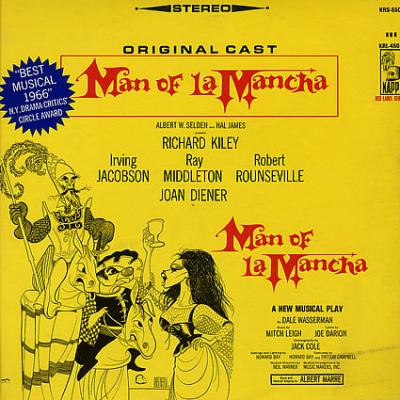
"Man of La Mancha (Don Quixote)" Soundtrack Lyrics
Musical • 1965
Track Listing
"Man of La Mancha (1965 Original Broadway Cast Recording)" – Album Guide to Tracks and Key Scenes
Overview
How do you score a story that insists madness might be the sanest response to the world? The original 1965 Man of La Mancha Broadway cast recording answers with a sound that is lean, hard-edged and strangely tender. Instead of lush violins, the pit band punches out Spanish-inflected rhythms on brass, woodwinds, percussion and flamenco guitars. The result is a score that feels like it was hammered together in the same dungeon where Miguel de Cervantes tells his story.
The cast album preserves that stage energy. Richard Kiley’s Cervantes/Quixote moves from dry, amused narration to full-voiced idealism; Joan Diener’s Aldonza cuts through the orchestration with a rasped defiance that never quite softens; Irving Jacobson’s Sancho bounces between clowning and quiet loyalty. Recorded in the mid-60s, the album still plays with unusual intensity: there is almost no “easy listening” filler, only tightly written numbers that sit exactly where the book needs them to.
Because the musical is a play-within-a-play, the songs often have to do double duty. “Man of La Mancha (I, Don Quixote)” is both a rousing entrance for a knight and a desperate act of improv by a prisoner trying to save his manuscript. “The Impossible Dream” is simultaneously a credo and a legal defence. The cast recording keeps that ambiguity: you hear the dungeon under the fantasy, especially in the ensemble work and the way the orchestra snaps from swagger to prayer.
Stylistically, the score fuses Spanish dance forms, Broadway brass and quasi-liturgical choral writing. Guitar-driven rhythms and castanets suggest Quixote’s imagined Spain; militaristic percussion and fanfares underscore his “battle” with windmills and soldiers; hymn-like choral lines in “The Psalm” and parts of “The Impossible Dream” tie the quest to something almost sacred. In very broad strokes: guitar and percussion often signal Quixote’s improvising imagination, harsh ensemble shouts mark the brutality of Aldonza’s world, and more spacious, modal harmonies appear whenever the show reaches for transcendence.
How It Was Made
The musical itself pairs Dale Wasserman’s book with Mitch Leigh’s music and Joe Darion’s lyrics. It began life at Goodspeed Opera House in 1965 before moving to the ANTA Washington Square Theatre off-Broadway and then into a long Broadway run. Albert Marre directed and Jack Cole staged the musical numbers, with Howard Bay designing the stark dungeon set that famously never changes location.
The cast album captures that original Broadway company: Richard Kiley as Cervantes/Don Quixote, Joan Diener as Aldonza, Irving Jacobson as Sancho, Ray Middleton as the Innkeeper, and Robert Rounseville as the Padre. Neil Warner conducts. The LP was produced by Michael Kapp for Kapp Records (catalogue KRL/KRS-4505), and later remastered and reissued on CD by Decca Broadway with an extra track from “The Combat”. According to label notes and reissue blurbs, the recording sessions aimed to keep theatre balances – voices very forward, orchestra tight and bright – rather than re-orchestrating for a studio sound.
One big technical choice defines the score: no violin section. Contemporary write-ups emphasise that the orchestra relied on brass, woodwinds, percussion and a double bass, with flamenco guitars as virtually the only plucked strings. That decision keeps the sound dry and percussive, closer to a pit band in a stone vault than a symphonic wash, and it helps “The Impossible Dream” arrive as something stark instead of syrupy.
The album also fixes the show’s song order in most people’s minds. Later productions and translations have cut, moved or added material, but the 1965 recording becomes the default map: Quixote’s declaration of identity early on, Aldonza’s bitter “It’s All the Same”, Sancho’s plain-spoken loyalty numbers, the first statement of “The Impossible Dream” before the act-one combat, then a darker, more wounded sequence in act two leading to the final reprise.

Tracks & Scenes
This is not a full tracklist, but a tour through the key numbers as they appear in the stage story and on the original cast album.
"Man of La Mancha (I, Don Quixote)" — Richard Kiley, Irving Jacobson & Ensemble
Where it plays: Early in the show, once Cervantes has convinced the other prisoners to let him stage his defence as a play. He dons armor, becomes Alonso Quijano turned Don Quixote, and charges into his quest with Sancho at his side. The number sweeps around the dungeon, with prisoners doubling as horses and peasants as the staging flips from grim cell to storybook road.
Why it matters: It is the show’s thesis in song form: a madman re-names himself and decides reality will yield. The track on the album is where Kiley first unveils the ringing, slightly cracked heroism that carries the whole score.
"It's All the Same" — Joan Diener & Muleteers
Where it plays: At the inn (really the dungeon “castle”), Aldonza fends off a pack of coarse muleteers. She catalogues the men who use her, shrugging that every night and every customer blur together. The staging keeps her hemmed in by bodies, buckets, tables – it feels crowded, unsafe, and the song is half defence mechanism, half bitter inventory.
Why it matters: This is Aldonza’s entrance as a human being, not just a fantasy lady. On the album, Diener’s abrasive, wide-interval vocal line makes clear she is no ingénue; her later softening has to fight its way out of this starting position.
"Dulcinea" — Richard Kiley & Ensemble
Where it plays: Shortly after, Quixote spots Aldonza and immediately declares her his lady Dulcinea. He serenades her in the inn courtyard, seeing courtly grace where everyone else sees a tired sex worker. The muleteers mockingly echo his phrases, turning the melody into a jeer.
Why it matters: The song sits at the fracture line between fantasy and fact. On record, you can hear the contrast: Kiley’s smooth, slightly formal baritone against gruff chorus interjections, with guitar and brass holding the two worlds together.
"I'm Only Thinking of Him" / "We're Only Thinking of Him" — Antonia, Padre, Housekeeper, Dr. Carrasco
Where it plays: Back in Alonso Quijano’s house, his niece Antonia, the Housekeeper and the Padre worry about his delusions. First, Antonia and the women try to frame their concern as selfless; later, the men join in with a faster, more ironic reprise as they plot to “cure” him by force. Both versions are staged almost like a church committee meeting slowly curdling into intervention.
Why it matters: These numbers give the so-called rational world its musical voice: neat, tidy, a little smug. On the album, they also break up the heavier tavern material with light patter and tight ensemble work.
"I Really Like Him" — Irving Jacobson
Where it plays: After Aldonza vents about Quixote’s lunacy and noble speeches, Sancho tries to explain why he follows this ridiculous master. Standing in the road with a pack full of mismatched loot, he sings directly to her – and, by extension, to the audience – about loyalty that has no logical basis.
Why it matters: The song grounds the show. Quixote’s ideals could seem abstract; Sancho’s simple affection is what persuades us to take them seriously. The track is also a reminder that the score can do intimacy and comedy without guitars blazing.
"What Does He Want of Me?" — Joan Diener
Where it plays: Alone after another encounter with Quixote, Aldonza tries to parse his behaviour. Why does he keep calling her a lady, seeing purity where she sees only damage? The staging often leaves her literally in the middle of the courtyard, with light falling away around her as she sings.
Why it matters: This is the hinge where Aldonza shifts from mocking to unsettled. On the album, the melody keeps climbing and dropping back, like someone circling a question she can’t shake.
"Little Bird, Little Bird" — Muleteers
Where it plays: In the inn courtyard, the muleteers taunt Aldonza with a deceptively lilting song about trapping a bird. Choreography and staging usually make the predatory intent unmistakable: the men close in, circling her, their harmonies too smooth for the ugly content.
Why it matters: The number weaponises sweetness. On the recording, the close male ensemble and delicate rhythmic feel underline how violence in this world often arrives dressed as a game.
"Golden Helmet of Mambrino" — Barber, Quixote, Sancho & Ensemble
Where it plays: A barber passes the inn wearing his brass shaving basin on his head. Quixote decides it is the legendary helmet of Mambrino and insists on seizing it. What follows is a comic standoff: villagers, priest and Doctor all disagree about what they are seeing while the music steps briskly through martial figures and patter exchanges.
Why it matters: This scene is the musical’s epistemology debate in miniature: is it a basin or a helmet? Fact or truth? On the cast album, the overlapping vocal lines sketch the chaos as everyone argues over the same object.
"To Each His Dulcinea (To Every Man His Dream)" — Robert Rounseville
Where it plays: After watching Quixote insist on his vision, the Padre reflects in a quiet corner. He wonders whether curing the old man is really kindness, or whether everyone needs some impossible dream to live by. The staging often pulls the action back, leaving the Padre momentarily alone with his doubts.
Why it matters: Musically gentle, this song sharpens the central debate: a man’s fantasy might be the only buffer between him and despair. On the album, Rounseville’s clear tenor and the spare accompaniment feel almost like a hymn.
"The Impossible Dream (The Quest)" — Richard Kiley
Where it plays: Late in act one, in the inn courtyard at night, Aldonza confronts Quixote about his “quest.” Standing vigil over his armor, he answers with this song: a list of impossible tasks sung as if they were the only tasks worth attempting. Other prisoners watch from the shadows as the melody climbs and the orchestration gradually widens.
Why it matters: This is the show’s signature number and the track that made the cast album famous beyond theatre circles. It reframes Quixote’s madness as radical commitment; on record, the controlled build and lack of sentimental strings keep it closer to a prayer than a power ballad.
"Knight of the Woeful Countenance" & "The Dubbing" — Innkeeper, Aldonza, Sancho
Where it plays: After Quixote has defended Aldonza in the fight with the muleteers, he insists on being properly knighted. The Innkeeper, who has been humoring him, goes through a mock ceremony while Aldonza and Sancho assist, still bruised from the battle. The music alternates between mock-regal fanfare and genuine affection as the “knight” is dubbed.
Why it matters: These cues show the fantasy starting to infect the cynics. On the album, the Innkeeper’s half-sincere delivery makes clear that, for a second, everyone wants to believe in this ritual.
"The Abduction" & "Little Bird" (reprise) — Muleteers & Aldonza
Where it plays: In one of the darkest scenes of act two, the muleteers lure Aldonza out and assault her, reprising their earlier “Little Bird” taunt. The music starts with familiar motifs, then fractures into harsher rhythms and dissonance as the attack plays out.
Why it matters: The reprise weaponises our memory of the earlier, almost playful version. On the album, it is one of the most uncomfortable passages, reminding listeners that Quixote’s ideals do not magically protect those around him.
"The Impossible Dream" (reprise) / "Man of La Mancha" (finale) — Richard Kiley, Company
Where it plays: Near the end, Quixote lies dying as Alonso Quijano. Aldonza forces him to remember who he was by feeding him lines from “The Impossible Dream” until he can finish the phrase himself. After his death, in the framing prison story, the prisoners return his manuscript as they sing the song in chorus and then reprise “Man of La Mancha” as he goes to face the Inquisition.
Why it matters: The finale fuses all the musical themes into a statement about legacy. On the cast recording, the chorus entry on “The Impossible Dream” under Cervantes’ ascent gives you the sense of a myth being born in real time.
Notes & Trivia
- The show’s score was orchestrated without violins – very unusual for a 1960s Broadway hit – leaning instead on brass, reeds and flamenco guitar colours.
- The musical is staged almost entirely on a single dungeon set; all changes of place are achieved with props, lighting and imagination, which the music has to support.
- Richard Kiley’s performance on the cast album helped win him the Tony Award for Best Actor in a Musical for the original production.
- The 1965 staging and recording turned “The Impossible Dream (The Quest)” into a standard; covers by Jack Jones, Frank Sinatra and others followed quickly.
- Original Aldonza Joan Diener later reprised her role in the 1968 London production and in some revivals, but the 1965 album remains her definitive English-language document.
Music–Story Links
The cast recording makes the “prison play” frame impossible to ignore. “Man of La Mancha (I, Don Quixote)” is written like an anthem, but in context it is a last-ditch performance by a man trying to win over a hostile jury. Listening to the album with that in mind, you can hear the desperation under the bravado.
Sancho’s “I Really Like Him” is the emotional bridge between Quixote’s rhetoric and Aldonza’s rage. Without that song, the knight’s ideals might feel abstract. With it, his quest becomes personal: if this flawed, practical man trusts him, maybe we should as well. The gentle melody and modest vocal demands underline Sancho’s grounded nature.
Aldonza’s sequence – “It’s All the Same”, “What Does He Want of Me?”, the “Little Bird” material and her final insistence that her name is Dulcinea – charts a full character arc almost entirely in song. The cast recording lets you track that change just by vocal colour: from Diener’s early belt and spit consonants to the more focused, open tone in her final lines.
Finally, “The Impossible Dream” and its reprise span both levels of the story. Inside the play, it is Quixote’s credo; in the prison frame, sung by the inmates as Cervantes climbs toward his real trial, it becomes a manifesto about art itself. The album’s last chorus leaves that double meaning hanging in the air.
Reception & Quotes
The musical was a major hit. The original Broadway production ran for 2,328 performances and won five Tony Awards, including Best Musical and Best Original Score. The cast recording became the default reference for the score, later reissued on CD and digital platforms, and it is often cited in theatre histories as one of the classic Broadway albums of the 1960s.
Critics at the time noted both the starkness of the staging and the freshness of the music. Later commentators tend to focus on how the score combines a commercial show-tune sense with genuinely unusual orchestration and structure. The album is frequently recommended to students of musical theatre orchestration as an example of doing more with less.
A dark, iron-willed musical that sings about hope inside a stone prison, driven by one of Broadway’s most distinctive scores.— Summary of later theatre criticism
The cast album still sounds tougher and stranger than most ‘inspirational’ shows; the famous anthem grows out of grit, not sugar.— Composite of soundtrack reviews
Kiley’s Quixote turns “The Impossible Dream” into a quiet act of courage rather than a vocal stunt, which is why it holds up.— Comment from a music-theatre journal
Heard in sequence, the recording tells the story almost as clearly as the libretto – a rare case where the score is the script.— Retrospective cast-album guide
Beyond Broadway, the score has generated a dense discography: Spanish, Mexican and Peruvian cast albums in the late 1960s, Jacques Brel’s French adaptation L’Homme de la Mancha, a 1996 studio recording with Plácido Domingo, and multiple revival albums. The 1965 cast, though, remains the benchmark against which these are measured.
Interesting Facts
- The 1965 orchestration’s lack of violins was partly practical (space and budget) and partly aesthetic: the team wanted a harsher, more “Spanish” sound.
- On many streaming platforms the album now appears under the title Man of La Mancha (1965 Original Broadway Cast), with the tracks remastered from the Decca Broadway release.
- The remastered CD adds “The Combat” as a previously unreleased cue, filling a gap between “The Impossible Dream” and the dubbing sequence.
- Jacques Brel’s French adaptation kept much of Leigh’s music but completely reworked the lyrics; Joan Diener sang Aldonza in both English and French cast recordings.
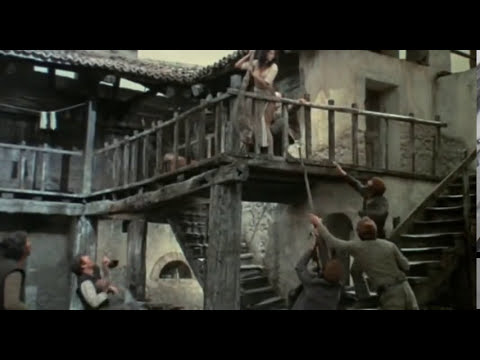
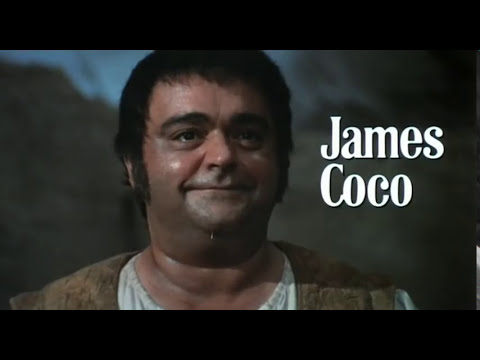
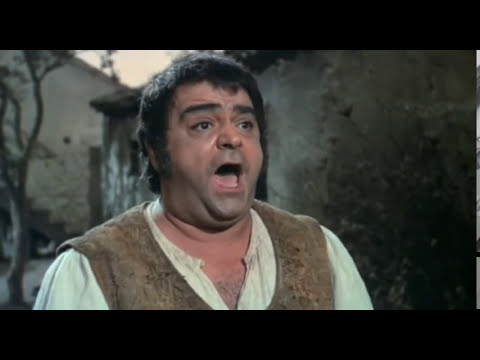
- The 1972 film uses many of the same songs, but with different arrangements and singers; fans of the stage version almost always point newcomers to the Kiley recording first.
- Because the musical is strongly associated with its central anthem, some listeners are surprised by how sardonic and rough much of the rest of the score sounds.
- Study guides for modern productions routinely highlight “Facts are the enemy of truth” and “to dream the impossible dream” as lines that encapsulate the show’s philosophy.
Technical Info
- Work: Man of La Mancha (stage musical, 1965)
- Album title: Man of La Mancha (1965 Original Broadway Cast)
- Type: Original Broadway cast recording
- Music: Mitch Leigh
- Lyrics: Joe Darion
- Book (musical): Dale Wasserman
- Principal cast on album: Richard Kiley (Cervantes/Don Quixote), Joan Diener (Aldonza), Irving Jacobson (Sancho), Ray Middleton (Innkeeper/Governor), Robert Rounseville (Padre)
- Conductor: Neil Warner
- Original LP label: Kapp Records (KRL/KRS-4505)
- Notable CD reissue: Decca Broadway (remastered with extra track, early 2000s)
- Instrumentation highlight: Orchestra without violins; brass, woodwinds, percussion, double bass and flamenco guitars dominate
- Stage orchestra/orchestrations: Orchestrations by Carlyle W. Hall (as noted in production histories)
- Awards (show): Tony Awards for Best Musical and Best Original Score among five wins
- Key songs on album: “Man of La Mancha (I, Don Quixote)”, “It’s All the Same”, “Dulcinea”, “I Really Like Him”, “What Does He Want of Me?”, “To Each His Dulcinea”, “The Impossible Dream (The Quest)”
- Availability: Widely available on major streaming platforms and digital stores; physical copies on CD and vintage vinyl
Canonical Entities & Relations
| Dale Wasserman | wrote the book for | Man of La Mancha (musical) |
| Mitch Leigh | composed the music for | Man of La Mancha |
| Joe Darion | wrote lyrics for | Man of La Mancha |
| Albert Marre | directed the original Broadway production of | Man of La Mancha |
| Jack Cole | staged and choreographed musical numbers for | the original production |
| Howard Bay | designed scenery and lighting for | the original Broadway staging |
| Richard Kiley | originated the role of | Cervantes/Don Quixote on Broadway |
| Joan Diener | originated the role of | Aldonza/Dulcinea on Broadway |
| Irving Jacobson | originated the role of | Sancho Panza on Broadway |
| Kapp Records | released | the original Broadway cast album of Man of La Mancha |
| Decca Broadway | reissued | the 1965 cast album in remastered form |
| Goodspeed Opera House | hosted the first full production of | Man of La Mancha in 1965 |
| ANTA Washington Square Theatre | presented the New York premiere of | Man of La Mancha |
| Miguel de Cervantes | created the novel | Don Quixote, which inspired the musical |
Questions & Answers
- What makes the 1965 Man of La Mancha cast recording sonically unusual?
- It uses a pit orchestra with no violins, leaning on brass, woodwinds, percussion and flamenco guitars. That gives the album a dry, percussive, “stone dungeon” sound unlike most lush 1960s Broadway scores.
- Does the original cast album include the full score from the stage show?
- It captures all the major vocal numbers and key instrumental cues, though not every bar of underscoring. Later CD editions add at least one previously unreleased instrumental (“The Combat”) that fills a gap between songs.
- Where in the story does “The Impossible Dream (The Quest)” occur, and how is it performed here?
- It comes late in act one, as Quixote stands vigil over his armor and explains his “quest” to Aldonza. On the recording, Richard Kiley builds the song steadily, treating it as a prayer with a controlled climax rather than a show-off high note.
- How does this cast recording differ from the 1972 film soundtrack?
- The Broadway album features the original stage orchestrations and Richard Kiley’s vocals. The film uses different singers and new arrangements tailored to cinema, with a smoother, more symphonic approach and some cuts and rewrites.
- What other major recordings of Man of La Mancha should I know about?
- Notable alternatives include the 1968 French album L’Homme de la Mancha with Jacques Brel, several Spanish-language cast recordings, and a 1996 studio set featuring Plácido Domingo and Mandy Patinkin. But the 1965 cast remains the reference point.
Sources: Wikipedia and Concord Theatricals entries on the musical; original Broadway production and recording data from CastAlbums, Discogs, MusicBrainz and Amazon listings; study guides and synopses from theatre companies and educational PDFs; commentary on “The Impossible Dream” from song-history and theatre-analysis articles; notes from Decca Broadway and other reissue materials; coverage of Jacques Brel’s L’Homme de la Mancha and later cast recordings from Masterworks Broadway and related discographies.
November, 15th 2025
A-Z Lyrics Universe
Cynthia Erivo Popular
Ariana Grande Horsepower
Post Malone Ain't No Love in Oklahoma
Luke Combs Good Riddance (Time of Your Life)
Green Day Bye Bye Bye
*NSYNC You're the One That I Wan
John Travolta & Olivia Newton-John I Always Wanted a Brother
Braelyn Rankins, Theo Somolu, Kelvin Harrison Jr. and Aaron Pierre The Power of Love
Frankie Goes to Hollywood Beyond
Auli’i Cravalho feat. Rachel House MORE ›