Soundtracks:  A B C D E F G H I J K L M N O P Q R S T U V W X Y Z #


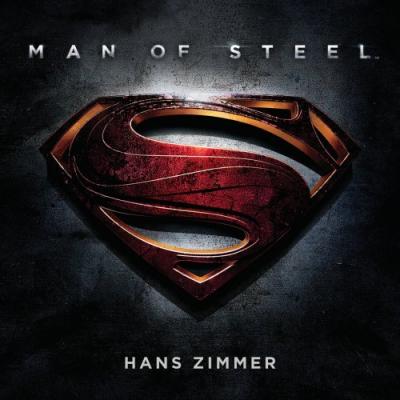
Man of Steel Album Cover

"Man of Steel" Soundtrack Lyrics

Movie • 2013

Track Listing


"Man of Steel: Original Motion Picture Soundtrack" – Album Guide to Tracks and Key Scenes

Man of Steel 2013 trailer frame with Superman flying above Metropolis
Man of Steel movie soundtrack imagery, 2013.

Overview

Can a Superman score work without the famous John Williams march? Man of Steel: Original Motion Picture Soundtrack answers “yes, but differently”. Hans Zimmer’s music throws out the brassy hero fanfare and replaces it with pounding drums, slow-building motifs and a big, rough-edged sense of resolve rather than effortless optimism.

The score is built around a handful of short ideas – a four-note Superman figure, a more intimate Clark motif, a ghostly Krypton sonority, and an aggressive, asymmetric rhythm for Zod. Instead of long melodies, Zimmer layers these cells with electronics, choir and an unusually prominent battery of drum kits. The result is heavy and physical: you feel lift-off, shockwaves and impact as much as you hear harmony.

On screen the music does two things at once. In the Krypton prologue and World Engine battle it behaves like pure sci-fi spectacle, almost like industrial sound design stretched into composition. In quieter scenes – Pa Kent’s speeches, Clark’s wanderings, the final Daily Planet montage – the same material slows down, thins out and becomes reflective. That dual use of limited themes is one reason the score sticks, even for listeners who are sceptical about its sheer volume.

Stylistically, the soundtrack blends modern film-score hybrids: processed strings and synth pads for alien awe, pedal-steel glissandi and guitar for “middle America” roots, and a quasi-rock drum language for conflict. According to one detailed analytical essay on the score, the “heroic” and “introspective” Superman themes are two faces of the same musical idea – one pushed toward stadium-anthem catharsis, the other toward internal doubt. This mirrors the film’s core tension between godlike power and moral uncertainty.

How It Was Made

The film’s music is credited to Hans Zimmer, recorded mainly at the Eastwood Scoring Stage (Warner Bros.) and the Newman Scoring Stage (20th Century Fox) for WaterTower Music and Sony Classical. He was supported by a team of additional composers including Tom Holkenborg (Junkie XL), Atli Örvarsson, Andrew Kawczynski, Steve Mazzaro and Geoff Zanelli, plus a large orchestral and choral ensemble.

To differentiate this Superman from earlier incarnations, Zimmer and director Zack Snyder agreed early on that John Williams’ classic march would not appear. Instead the team built a new identity around rhythm and texture: a “celebrity drum circle” of a dozen top session drummers (Jason Bonham, Pharrell Williams, Sheila E., Vinnie Colaiuta and others) tracked massive multi-kit patterns that became the backbone of Zod’s material and much of the action writing.

There is also an eight-player pedal-steel “orchestra”, used not in a country style but as an almost electronic sound source – long sliding notes and buzzing harmonics under Superman’s themes. Ambient metallic sculptures by sound-artist Chas Smith were recorded and mangled into the eerie Krypton soundscape. As one cue-by-cue breakdown notes, these elements are then woven with piano, strings and choir rather than simply sitting on top of them.

On the release side, the score appears in a standard album (17 tracks) and an expanded deluxe edition that adds suites like “Man of Steel (Hans’ Original Sketchbook)”, “General Zod”, “Earth” and “Arcade”. The album also served as a showcase for DTS Headphone:X: a dedicated app and mix simulate the 11.1 surround layout of Zimmer’s studio over regular stereo headphones, a rare case where the delivery format became a selling point of the soundtrack itself.

Behind the scenes inspired trailer still for Man of Steel soundtrack and score
Trailer imagery often doubled as a showcase for Zimmer’s new Superman sound.

Tracks & Scenes

Below are key cues and songs, including non-album and trailer pieces, with their narrative moments. Times are described by story beat rather than exact timestamps, to match how the music lands in the film.

"Look to the Stars" — Hans Zimmer
Where it plays: Non-diegetic over the opening Krypton sequence. It starts with the studio logos and runs through Kal-El’s birth and Jor-El’s warning to the ruling council as the planet’s core destabilises.
Why it matters: This cue defines the Krypton sound palette – airy choral textures, a lonely four-note Superman motif in low guitars, and an uneasy harmonic bed that makes the planet feel advanced but doomed.

"DNA" — Hans Zimmer
Where it plays: Still on Krypton, as Jor-El steals the Codex, escapes on his winged mount and races back to the citadel through Zod’s coup. The cue tracks aerial combat, alarms and the looming civil war.
Why it matters: “DNA” ties the Codex to a specific musical cell, so later in the film any recurrence of that pattern reminds us that Kal-El himself carries Krypton’s genetic future.

"Goodbye My Son" — Hans Zimmer
Where it plays: Non-diegetic during Kal-El’s launch to Earth. Lara and Jor-El place their child in the escape pod, encode the Codex into his cells and send the craft away while Zod’s forces close in.
Why it matters: This is where the score first goes openly emotional: a lullaby-like female voice over strings, then a rising brass figure. It frames Superman’s origin as an act of parental sacrifice, not just sci-fi spectacle.

"Oil Rig" — Hans Zimmer
Where it plays: Early in the film at the burning offshore platform, as adult Clark works undercover on a fishing trawler. When the rig explodes, he holds a collapsing tower so the crew and rescue helicopter can escape.
Why it matters: Short but crucial. The drum-circle rhythm and brass hits introduce the action vocabulary for Superman’s powers long before he has a costume or public identity.

"Are You Listening, Clark?" — Hans Zimmer
Where it plays: In a flashback triggered when adult Clark floats unconscious in the ocean. Young Clark panics in school as his x-ray vision and super-hearing activate, locking himself in a closet until Martha calms him down.
Why it matters: The cue leans on ambient textures and whisper-like voices rather than melody. It sells the idea that super-senses are overwhelming and frightening, not “cool powers”.

"Sent Here for a Reason" — Hans Zimmer
Where it plays: Jonathan Kent’s barn conversation with teenage Clark. Jonathan reveals the spacecraft in the storm cellar and explains why he believes Clark’s arrival will change the world, for better or worse.
Why it matters: A fragile piano figure and the “Earth” motif sit under Pa Kent’s monologue. The restraint is deliberate: it frames Clark’s destiny as a burden of choice, not destiny handed on a plate.

"Tornado" — Hans Zimmer
Where it plays: Flashback at Pa Kent’s grave. The Kents are caught in highway traffic when a tornado forms. Jonathan goes back to save the family dog; Clark hesitates, and Jonathan dies rather than let his son reveal his powers.
Why it matters: Drum-circle pulses combine with a mournful string line. The music pushes the feeling of paralysis – all that potential power, still unused – which becomes one of Clark’s defining regrets.

"I Have So Many Questions" — Hans Zimmer
Where it plays: In the Kryptonian scout ship buried in the Arctic. Clark speaks with the AI echo of Jor-El and sees the stylised history of Krypton, his natural birth, and why he was sent away.
Why it matters: This cue glues the motifs together – Codex figure, Krypton harmony, Clark theme. Dramatically, it’s the moment Clark finally understands his origin; musically, it’s the thesis statement for the whole score.

"Flight" — Hans Zimmer
Where it plays: Jor-El presents the suit; Clark steps onto the ice and tests his ability to fly, stumbling, then blasting through clouds, mountains and city skylines on his first true flight.
Why it matters: This is the Superman theme in “demo” form – starting as hesitant low figures, then breaking into a guitar-and-orchestra surge. According to one cue analysis, the film version even tweaks the string lines to make the ascent feel less polished and more experimental.

"Terraforming" — Hans Zimmer
Where it plays: Nearly all of the World Engine sequence. Superman flies to the Indian Ocean to attack the machine while Metropolis is hammered by gravity waves from Zod’s mothership. Perry and others try to save civilians amid collapsing streets.
Why it matters: At almost ten minutes, this is the big action canvas. Mission rhythms derived from Zod’s motif grind under rising Superman figures, so the track constantly flips between hope and menace instead of just “loud = heroic”.

"You Die or I Do" — Hans Zimmer
Where it plays: The final confrontation in Metropolis Central Station, after Lois and the military destroy Zod’s ship. Zod vows to rebuild Krypton “on the bones” of humanity and forces Superman into a brutal close-quarters fight.
Why it matters: The cue underlines that the victory costs something. The music peaks exactly as Superman kills Zod to save a trapped family, then collapses into quiet, almost shell-shocked textures as he screams in anguish.

"If You Love These People" — Hans Zimmer
Where it plays: During parts of the Metropolis battle as Zod learns to fly, hurls Superman through buildings, and the fight spills into space and back down again.
Why it matters: Built around a rising, almost chant-like pattern, this cue has become the go-to “hero push” for trailers and fan edits. It gives moral frame to what could otherwise feel like pure destruction.

"What Are You Going to Do When You Are Not Saving the World?" — Hans Zimmer
Where it plays: The epilogue. Clark and Martha visit Pa Kent’s grave, then we cut to Metropolis where Clark starts at the Daily Planet, puts on the glasses and meets Lois as “new reporter”. The theme continues into the end credits.
Why it matters: This is the Superman theme in full: piano introduction, steady drum build, then anthemic strings and brass. As one review notes, it finally fuses the score’s grit with a sense of uplift.

"Ring of Fire" — Allison Crowe
Where it plays: Diegetic bar performance. In a rough roadhouse where Clark is working under an alias, Crowe sings this Johnny Cash classic on stage while a trucker harasses a waitress and mocks Clark. Later, Clark silently crushes the man’s truck outside.
Why it matters: The song’s lyrics about fiery love and danger play ironically under Clark’s controlled anger. It is one of the few uses of recognisable pop music in the film and roots the story in a very ordinary, terrestrial barroom world.

"Seasons" — Chris Cornell
Where it plays: Shortly after the oil-rig rescue. Clark emerges from the ocean, walks past fishing gear and steals clothes from a line before heading inland. The track plays over this quiet, transitional stretch.
Why it matters: Originally from the Singles soundtrack, the song’s drifting guitars and reflective tone underline Clark’s rootlessness. Fans often point to this placement as a rare moment of grunge-era melancholy inside a superhero film.

"The Long Walk" — Marco Beltrami & Buck Sanders
Where it plays: Source-like underscore during General Zod’s global broadcast, repurposed from their score to The Hurt Locker. It plays under Zod’s demand that Earth hand over Kal-El.
Why it matters: Reusing a war-film cue for Zod’s ultimatum quietly aligns his ultimatum with military occupation and fear, rather than comic-book villain theatrics.

Trailer-Only and Promotional Cues

"The Bridge of Khazad-Dûm" — Howard Shore
Where it plays: In the first teaser trailer, over contemplative images of fishing boats, a drifting Clark and a child running in a cape. This track originally scores Gandalf’s fall in The Lord of the Rings: The Fellowship of the Ring.
Why it matters: Snyder borrowed it from the studio library. The solemn choir and strings reshape Superman not as a bright Saturday-morning hero but as a mythic, burdened figure – long before Zimmer’s final themes were unveiled.

"Elegy" — Lisa Gerrard & Patrick Cassidy
Where it plays: Prominently in the second major theatrical trailer, underpinning Malick-like shots of Kansas and Clark’s childhood.
Why it matters: Gerrard’s voice gives the marketing a spiritual, almost liturgical colour. According to a trailer-music rundown, it shares tonal space with Zimmer’s eventual Krypton/earthmotif mix, easing audiences into the new sound world.

"An Ideal of Hope" (Trailer 3 music) — Hans Zimmer
Where it plays: The third trailer. The music is effectively a condensed, rearranged form of “What Are You Going to Do When You Are Not Saving the World?”, edited specifically to fit trailer beats.
Why it matters: This cue became a stand-alone online release and, per several soundtrack write-ups, served as many listeners’ first encounter with the new Superman theme.

"Fate of Your Planet" (Trailer 4 music) — Hans Zimmer
Where it plays: The “Fate of Your Planet” trailer focused on Zod’s invasion. The track uses Zod’s rhythm, choir swells and aggressive brass stabs cut tightly to voice-over lines like “You are not alone”.
Why it matters: It shows how modular Zimmer’s themes are: the same building blocks can sell either inspirational heroism or pure threat, depending on which motif is pushed to the front.

Montage shot from Man of Steel trailer emphasizing heroic music beats
Trailer editing often rides directly on Zimmer’s builds and drum hits.

Notes & Trivia

  • The official album omits all three source songs heard in the film – “Ring of Fire”, “Seasons” and “The Long Walk” – even though they are credited in the end titles.
  • The deluxe edition splits the programme into a “Flight” disc (film cues) and “Experiments from the Fortress of Solitude” (sketches and suites like “General Zod” and “Earth”).
  • Zimmer’s long suite “Man of Steel (Hans’ Original Sketchbook)” runs over 28 minutes, effectively a one-track concept album sketching most of the score’s themes in one continuous piece.
  • The soundtrack reached the top ten of the US Billboard 200 and peaked at number 2 on the US Soundtrack Albums chart, unusually high for a modern score album.
  • Zimmer later reused the underlying “Mission” rhythm from this score as part of Wonder Woman’s action ostinato in Batman v Superman: Dawn of Justice.

Music–Story Links

The score maps Superman’s identity crisis onto clear musical contrasts. The introspective Clark material – soft piano, the three-note “Earth” motif and gentle synth pads – appears when he doubts his place: hiding in school, wandering from job to job, or talking to Martha. Whenever he moves toward a decision, the same motif thickens into the full Superman theme with drums and guitar.

Zod’s material is defined less by melody than by its jagged 11-beat drum pattern and harsh string figures. That rhythm first appears on Krypton around the Codex theft, then keeps resurfacing through “Ignition”, “Terraforming” and the final duel. The storytelling trick is simple: the audience can feel Zod’s presence and ideology whenever that lopsided pattern shows up, even in shots where he is physically off-screen.

Family ties get their own set of colours. Lara and Jor-El’s scenes have a more lyrical string theme and female voice; Pa Kent scenes lean on the quieter Clark theme. When Superman destroys the World Engine, elements of the Lara motif surface in the choir, suggesting he is literally fighting for the future his parents imagined. Analytical work on the score often points out these “two sides of the same coin” relationships between themes.

Even the source songs are carefully placed. “Ring of Fire” appears when Clark is at his most anonymous and powerless in public, working for tips and swallowing his anger. “Seasons” plays over his drifting, pre-Superman period. “The Long Walk”, borrowed from a war film, underscores Zod’s broadcast and frames his ultimatum as a slow, inevitable military march rather than a cartoon threat.

Reception & Quotes

Public response to the album was largely positive – it briefly climbed near the top of digital charts – but critical reaction was sharply divided. Some reviewers praised the new Superman theme and the bold, heavy production; others felt the constant drums and simple motifs failed to match the character’s legacy.

According to the soundtrack’s Wikipedia summary, outlets like AllMusic and AVForums highlighted “Look to the Stars” and the end-title suite as examples of how the score balances grit with a sense of wonder, while more traditional score reviewers worried about repetition and the downplaying of orchestral detail in favour of percussion.

“Grittier and darker than any of its predecessors… yet with enough goose-bump moments to be called a proper Superman score.” AllMusic
“For [Superman] to be saddled with witless percussion and such a simplistic thematic statement is disappointing in the extreme.” Movie Music UK
“Turgid” and “over-produced”, with an overreliance on drums. The Washington Post
“Blistering, bold and, I have to say it, brilliant” despite the drum excess. AVForums

The score also earned Hans Zimmer a “Composer of the Year” award at the Classical BRITs for his work on both Man of Steel and The Dark Knight Rises, underlining how central this sound became to early-2010s blockbuster music.

Audience-focused Man of Steel trailer frame that matches the climactic end-title music
For many viewers, the end-title suite defined the “sound” of this version of Superman.

Interesting Facts

  • The album was one of the first commercial releases mixed for DTS Headphone:X, simulating Zimmer’s 11.1 studio layout over ordinary headphones.
  • A dedicated mobile app (often branded “Z+ Music”) originally allowed buyers to hear a special Headphone:X version of selected tracks from the score.
  • The bar performance of “Ring of Fire” was filmed in a real Vancouver Island pub; Allison Crowe appears on screen as the singer in Cassidy’s.
  • “Seasons” had already appeared in the early-90s film Singles, making its reuse here a neat crossover between two very different portraits of young adulthood.
  • Zimmer has said in interviews that he drew on images of “middle America” – fields, trucks, open roads – more than on comic-book panels when shaping the sound of Clark’s theme.
  • Many of the drum patterns in the score were later sampled and repurposed in concert suites and live tours, where guitar solos expand the Superman theme far beyond the film version.
  • The soundtrack’s chart peak (top 10 on the Billboard 200) put it ahead of many contemporaneous superhero scores that never left the specialist soundtrack charts.
  • Howard Shore’s “The Bridge of Khazad-Dûm” in the teaser created a brief online debate over whether the final film should also borrow from previous Superman music or stay completely new.

Technical Info

  • Title: Man of Steel: Original Motion Picture Soundtrack
  • Year: 2013
  • Type: Feature film score album (superhero / sci-fi)
  • Film: Man of Steel (2013), directed by Zack Snyder
  • Primary composer: Hans Zimmer
  • Additional music: Tom Holkenborg (Junkie XL), Atli Örvarsson, Andrew Kawczynski, Steve Mazzaro, Geoff Zanelli
  • Key songs not on album: “Ring of Fire” (Allison Crowe, Johnny Cash cover), “Seasons” (Chris Cornell), “The Long Walk” (Marco Beltrami & Buck Sanders)
  • Recording studios: Eastwood Scoring Stage (Warner Bros.), Newman Scoring Stage (20th Century Fox)
  • Labels: WaterTower Music, Sony Classical
  • Main themes: Superman A/B/C/D motifs, Clark theme, Earth motif, Lara theme, Codex motif, Zod rhythm and Zod B theme
  • Release format: Standard CD/digital album and limited deluxe two-disc edition with additional suites
  • Chart performance: Top 10 on US Billboard 200; top 3 on US Soundtrack Albums; various mid-chart placements in Europe
  • Notable tech: First major score album promoted with DTS Headphone:X binaural surround mix via companion app

Canonical Entities & Relations

Subject Relation Object
Hans Zimmer composed Man of Steel: Original Motion Picture Soundtrack
Hans Zimmer scored Man of Steel (2013 film)
Tom Holkenborg (Junkie XL) provided additional music for Man of Steel soundtrack
Zack Snyder directed Man of Steel (2013 film)
Henry Cavill portrays Clark Kent / Kal-El / Superman
Allison Crowe performs “Ring of Fire” in Man of Steel bar scene
Chris Cornell performs “Seasons” used in Man of Steel
Marco Beltrami & Buck Sanders composed “The Long Walk” reused in Zod’s broadcast
WaterTower Music released Man of Steel: Original Motion Picture Soundtrack
Sony Classical co-released Man of Steel: Original Motion Picture Soundtrack
Warner Bros. Pictures distributed Man of Steel (2013 film)
Man of Steel soundtrack is part of DC Extended Universe scores

Questions & Answers

Why doesn’t Man of Steel use John Williams’ Superman theme?
The filmmakers wanted a clear break from earlier films. Zimmer built a new musical identity so this version of Superman would not feel like a continuation of the 1978 score.
What is the big triumphant theme at the end of the film?
That is “What Are You Going to Do When You Are Not Saving the World?”, the full presentation of Zimmer’s Superman theme used over the epilogue and end credits.
Which songs in the movie are missing from the official soundtrack album?
The key omissions are Allison Crowe’s bar-room “Ring of Fire”, Chris Cornell’s “Seasons”, and “The Long Walk” from The Hurt Locker, used during Zod’s worldwide broadcast.
What is the music used in the first Man of Steel teaser trailer?
The teaser famously uses Howard Shore’s “The Bridge of Khazad-Dûm” from The Lord of the Rings: The Fellowship of the Ring, not Zimmer’s own score.
How is the deluxe edition of the soundtrack different from the standard release?
The deluxe edition adds a second disc with longform suites like “Man of Steel (Hans’ Original Sketchbook)”, “General Zod”, “Earth” and “Arcade”, plus a few extra film cues.

Sources: official soundtrack credits and liner summaries; Wikipedia entries for the film, soundtrack and Superman music; cue-by-cue breakdowns of the score; published soundtrack reviews (AllMusic, Movie Music UK, AVForums, SoundtrackGeek); interviews and features on Hans Zimmer’s production process; reporting on DTS Headphone:X and the Z+ app; articles on Man of Steel trailer music and reuse of existing film cues.

November, 15th 2025

Read about Man of Steel, a superhero film featuring the DC Comics character Superman on Wikipedia and Internet Movie Database
A-Z Lyrics Universe

Lyrics / song texts are property and copyright of their owners and provided for educational purposes only.