Soundtracks:  A B C D E F G H I J K L M N O P Q R S T U V W X Y Z #


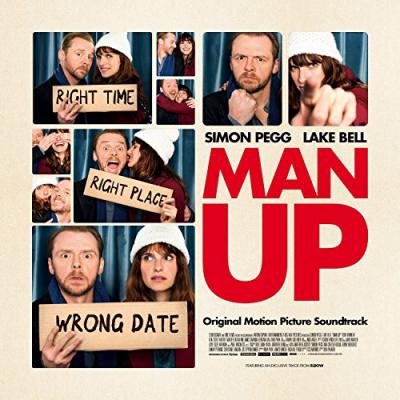
Man Up Album Cover

"Man Up" Soundtrack Lyrics

Movie • 2015

Track Listing


"Man Up (Original Motion Picture Soundtrack)" – Album Guide to Tracks and Key Scenes

Man Up 2015 trailer still of Nancy and Jack meeting at Waterloo Station
Man Up – 2015 romantic comedy, introduced in trailers with quick cuts of the film’s music-fuelled meet-cute.

Overview

Can a rom-com soundtrack feel both like a party playlist and a mid-life crisis diary? "Man Up (Original Motion Picture Soundtrack)" pretty much tries. The film itself follows Nancy and Jack through one chaotic blind-date-that-isn’t. The album mirrors that chaos with big 80s bangers, indie slow burns, jukebox oldies and a handful of tender score cues.

Instead of a traditional wall-to-wall score, Man Up leans hard on songs that sound like they’ve been stolen from pub speakers, taxi radios and someone’s slightly embarrassing nostalgia mix. Elbow’s end-credits theme, The National’s bruised ballad “I Need My Girl”, a piano cover of “Where Is My Mind?”, Jungle’s “Busy Earnin’”, classic cuts from Duran Duran, Whitesnake, The B-52’s, George Thorogood and Aaron Neville — everything is curated to feel recognisable yet slightly off-kilter, just like Nancy’s night.

As a listening experience the album plays like the film’s emotional arc compressed into about 70 minutes. Early tracks are loud and social — engagement-party anthems, bowling-alley rock, bar jukebox hits. The second half drifts into more reflective territory with dreamy piano and indie melancholy underscoring Nancy’s panic at her parents’ anniversary and Jack’s frantic race to make things right. The Dickon Hinchliffe cues (“Chasing Jessica”, “Nancy’s Speech”, “Jack’s Speech”) glue it together, small but precise bits of score dropped between the bigger name songs.

Stylistically, the playlist is a mash of indie rock, 80s pop, classic rock, retro soul and modern UK pop. That blend is not random. The 80s radio hits (Duran Duran, Whitesnake, The B-52’s) stand in for Jack’s generation and the rom-com fantasy, all big choruses and shared nostalgia. The newer indie tracks (The National, Fryars, Jungle, Clare Maguire) track Nancy’s more cynical, contemporary interior. Old jukebox cuts and R&B, like Jody Reynolds or Aaron Neville, underline the film’s interest in second chances and slightly battered adults trying again. The soundtrack’s job is exactly that: keep the film fun, but let the cracks show.

How It Was Made

The film is directed by Ben Palmer, written by Tess Morris and scored by British composer Dickon Hinchliffe, who was brought in to provide original music around a very song-heavy concept. Film Music Reporter and release notes describe how Fiction Records assembled a compilation album that combines source songs from the film with a handful of Hinchliffe’s cues such as “Chasing Jessica”, “Nancy’s Speech” and “Jack’s Speech”, rather than issuing a big standalone orchestral score.

Hinchliffe’s writing is character-driven: short cues for train chases, speeches and late-night realisations, often built from simple motifs that can sit next to loud licensed songs without clashing. According to the soundtrack announcement, these pieces are interwoven with tracks licensed from artists like Elbow, The B-52’s, Duran Duran, Whitesnake, Jungle, The National, Maverick Sabre and Aaron Neville, giving the album the feel of a carefully sequenced mixtape rather than a traditional “score plus filler”.

The lead song “What Time Do You Call This?” was written by Elbow specifically for Man Up. As The Guardian and other outlets note, Guy Garvey wrote it after the band saw an early cut of the film, turning the line into a refrain about turning up late to your own life. It ended up both on the soundtrack and splashed all over the marketing as “theme from Man Up”, including TV spots built around its soaring outro. The Playlist and Film Music Reporter also highlighted how the album’s roster — from The National to Maxence Cyrin’s Pixies cover — was unusually strong for a mid-budget British rom-com.

Man Up trailer frame of Jack and Nancy running through London streets at night
The trailers lean on Elbow’s theme and a run of recognisable pop cues to sell the film’s one-night-only energy.

Tracks & Scenes

Scene timings below are approximate (HH:MM) for the feature cut, based on soundtrack indexes and fan cue lists like SoundtrackRadar and MoviesOST. They’re meant as navigation, not frame-accurate timecodes.

"Upside Down" — Paloma Faith
Where it plays: Around 00:00, over the opening at Dom and Katie’s engagement party. We see drunk couples in lifts, spilled cocktails and a messy hotel corridor, intercut with Nancy in her room stress-eating, downing minibar wine and practising forced optimism in the mirror. The song works as bright source music for the party but is mixed like a main-title cue.
Why it matters: It instantly sets Nancy as out of sync with everyone else’s happiness. The relentlessly chipper brass and handclaps sell the idea that this world expects her to be “up”, while she is already tired of playing along.

"Love Shack" — The B-52’s
Where it plays: Roughly 00:07 at the same party. The track blasts through the ballroom PA while Nancy tells an over-sharing speech about teenage masturbation and promptly clears the dance floor. Camera coverage bounces between mortified relatives, politely laughing friends and Nancy realising she has lost the room.
Why it matters: Classic wedding-floor fodder used as humiliation rather than celebration. The song’s reputation as a feel-good anthem makes Nancy’s social misfire land harder; we’re in familiar rom-com territory, but the embarrassment feels sharper and more lived-in.

"Chasing Jessica" — Dickon Hinchliffe
Where it plays: Around 00:13, when Nancy bolts off the train at Waterloo to return Jessica’s self-help book. The cue runs under quick cuts of her racing along the platform, scanning crowds and arguing with herself about why she’s even doing this. It’s non-diegetic, sitting quite low under the train noise.
Why it matters: It’s one of the first pure score moments and sets the tone for Hinchliffe’s writing: nervy, propulsive, but small in scale. The cue underscores the fateful mix-up that leads Jack to mistake Nancy for Jessica.

"Three Hearts" — Alex Clare
Where it plays: Around 00:23 in Rosita’s Cantina. Jack and Nancy are halfway through their “date”, nursing drinks in a low-lit booth while the bar buzzes around them. The song drifts over the PA as their banter moves from superficial to awkwardly honest, cutting through Jack’s rehearsed first-date patter.
Why it matters: The modern pop-soul production gives the bar a cosy, contemporary feel, but Clare’s cracked vocal lines echo what both characters are pretending not to admit — they’re carrying more emotional baggage than they say.

"Shoot First" — The Jim Jones Revue
Where it plays: Around 00:25 during the bowling-alley montage. As Nancy and Jack drink, dance down lanes and muck about with other patrons, the track’s frantic piano and raspy vocals take over the soundtrack. The music is presented as loud jukebox rock, bleeding into diegetic shouts and bowling sounds.
Why it matters: It is the film’s first full-blown “we’re actually having fun” sequence. The choogling rock & roll gives Nancy, who spends most of the film guarded and self-mocking, a rare stretch of pure physical joy.

"Have Love, Will Travel" — Clare Maguire
Where it plays: Around 00:37–00:40, when Nancy and Jack sprint through the South Bank racing each other back to Rosita’s. The vocal rides high over city ambience as they weave through crowds and shout trash-talk. The cue is treated as non-diegetic, but the mix makes it feel like it could be booming from a nearby bar.
Why it matters: As several soundtrack write-ups point out, this cover turns an old rock & roll standard into something sleek and atmospheric. It underscores the moment where the date tips from awkward to properly flirtatious.

"Busy Earnin'" — Jungle
Where it plays: About 00:39, back inside Rosita’s. After the race, the pair drop into a more relaxed groove — shots, dancing, mutual oversharing. The track’s clipped horns and gang vocals pulse under quick edits of the bar.
Why it matters: Tonally, it captures what the film is doing with both leads: people who are technically adults with jobs and responsibilities, still behaving like students for one night. The lyric hook about “busy earnin’” lands as a subtle jab at how they’ve both been hiding from change.

"Move Closer" — Phyllis Nelson
Where it plays: Around 00:47, at the ex-wife’s table in the restaurant. Jack and Nancy find themselves sharing dinner with Jack’s ex and her new partner; the song oozes out of the restaurant speakers as the foursome try to act civilised while the emotional knives are out.
Why it matters: A slow, sensual 80s soul track in a scene full of British emotional repression is a nice joke in itself. The music whispers “romance” while the dialogue is about resentment, regret and unfinished business.

"The Reflex" — Duran Duran
Where it plays: Around 00:51–00:54, during the spontaneous synchronised dance at Nancy’s parents’ anniversary party. Nancy and Jack fall into a perfectly remembered routine from their youth, turning the middle of the dance floor into a full music-video moment while their families stare in surprise.
Why it matters: The film’s marketing leaned on this scene, and for good reason: the needle-drop taps straight into shared generational nostalgia. It’s a classic rom-com gesture (two people suddenly “click” in a public dance) but grounded in a specific, very uncool bit of 80s pop.

"Hercules" — Aaron Neville
Where it plays: Around 00:30, at Nancy’s parents’ house as the family sets up food and decorations, waiting for their daughter to arrive. The track plays like background radio while they fuss over table settings and timings.
Why it matters: The song’s lyrics about carrying burdens and bad luck quietly mirror Nancy’s own feeling that life has been unfairly hard on her. It roots her parents in a slightly older musical world, giving them texture beyond “generic rom-com parents”.

"Feel So Good" — Jody Reynolds
Where it plays: Around 00:35, as Nancy and Jack hand back their bowling shoes, stepping out of the neon and back into chilly night air. The rockabilly lilt plays over a short lull where they both decide whether the night continues or ends.
Why it matters: It’s a small cue, but it keeps the retro-jukebox thread going, tying the bowling alley chaos back into the film’s broader use of older American rock and R&B as a soundtrack to British awkwardness.

"I Need My Girl" — The National
Where it plays: About 01:08. Nancy finally reaches her parents’ anniversary party late and emotionally wrecked; the song rolls in as she slips into the venue, takes in the room and tries not to fall apart. Vocals sit just under the diegetic noise, giving it a half-imagined quality.
Why it matters: The choice is almost on-the-nose: a mid-tempo indie lament about not being able to keep up emotionally, dropped onto a character who has spent the whole film insisting she’s fine alone. It’s one of the most overtly sad cues on the album.

"Where Is My Mind?" — Maxence Cyrin
Where it plays: Around 01:09, in the same stretch at the anniversary party. Nancy steps away from the crowd, finally letting herself crack. Cyrin’s solo-piano cover floats over slow motion shots of her crying, her family celebrating behind her and the chaos of the day catching up.
Why it matters: This version of the Pixies song has become cinematic shorthand for existential wobble, and here it is used very straightforwardly. The stripped-back piano undercuts the earlier party bangers and brings the film into a more fragile register.

"Bad To The Bone" — George Thorogood & The Destroyers
Where it plays: Around 01:08–01:10, when Nancy’s deeply creepy old classmate Sean drives Jack to “help” find her. The blues-rock riff blares on the car stereo as they tear through London streets, Sean overcompensating wildly at the wheel.
Why it matters: The cue is knowingly clichéd — the song is one of the most over-used “tough guy” tracks in film history — but that’s the joke. Sean isn’t dangerous, just ridiculous, and the music underlines that gap.

"Here I Go Again '87" — Whitesnake
Where it plays: Around 01:10–01:11, over Jack’s dash to find Nancy. He storms into a huge house party, pushing through confused teenagers, only to realise he is at the wrong address. The song blasts over exterior and interior shots, leaning into the absurd heroism of the moment.
Why it matters: Big hair-metal melodrama for a man who is, in reality, just slightly lost in suburban London. Commentators have pointed out that using this specific track in the climax gives the whole sequence a knowingly 80s movie feel, without turning it into parody.

"Nancy's Speech" — Dickon Hinchliffe
Where it plays: Around 01:16. Nancy improvises a heartfelt, notes-free toast to her parents after everything that has happened. The cue starts quietly under the first words and swells just enough to carry us through the montage of family reactions and cutaways to Jack racing to get there.
Why it matters: It’s Hinchliffe in full rom-com mode: simple strings, a clear melodic line, nothing fancy. After so many pop songs, the modest orchestration feels intimate and earned, giving the scene space instead of trying to steal it.

"Jack's Speech" — Dickon Hinchliffe
Where it plays: Around 01:18. Jack climbs through the window, speech notes in hand, and addresses Nancy in front of her entire family. The cue tracks his move from flustered apology to straightforward declaration, shifting harmonies under the climactic kiss.
Why it matters: The music turns a fairly standard public-confession beat into something that feels slightly oddball and British rather than Hollywood glossy. It stays just a little scruffy, like Jack himself.

"What Time Do You Call This?" — Elbow
Where it plays: Around 01:20, over the final montage and end credits. We see the aftermath of the party, Nancy and Jack slipping into a new, tentative version of daily life, London at night, and then a simple title card. The track runs almost in full.
Why it matters: Written specifically for the film, the song has become its de facto theme. As The Guardian and other outlets note, it is classic Elbow: slow build, big chorus, bittersweet lyrics about showing up late but still showing up. It makes the rom-com ending feel more like a grown-up decision than a fairy-tale.

"Freakout!" — Mini Mansions (Trailer)
Where it plays: Used in at least one theatrical and online trailer, kicking in right from 00:00 as quick cuts show Nancy’s disastrous dating life, sped-up London shots and the mistaken-identity meet-cute at Waterloo. The song’s nervy groove matches the jump-cut editing.
Why it matters: Trailer songs don’t appear on the main album, but they shape how audiences first meet the film. Here, the slightly anxious, indie-psych feel tells you this isn’t a soft-focus Richard Curtis clone.

"Riptide" — Vance Joy (Trailer)
Where it plays: Dropped into another trailer, usually after the premise is explained. As the ukulele riff appears, we get shots of Nancy and Jack laughing in the bowling alley, racing to the bar and dancing at the anniversary party. The song mostly runs in non-diegetic form over edited footage.
Why it matters: The use of a then-ubiquitous indie hit positions Man Up squarely in mid-2010s rom-com territory — quirky, a little self-aware, firmly aimed at viewers who were already streaming this track to death.

Collage of Man Up key scenes cut to soundtrack beats in the trailer
Most of the film’s big musical moments — bowling, synchronized dancing, late-night chases — are front-loaded into the trailers.

Notes & Trivia

  • The commercial soundtrack is a Various Artists compilation on Fiction Records, but several retailers and libraries also index it under composer Dickon Hinchliffe because of his score cues.
  • Elbow’s “What Time Do You Call This?” was commissioned for the film; articles in The Guardian and music press explicitly describe it as written for Man Up and used over the end credits.
  • The album runs in different configurations: a full 19–21 track version on some digital platforms and a shorter 9-track edition in certain territories.
  • Maxence Cyrin’s “Where Is My Mind?” had already been used in other film and TV contexts; here it’s repurposed as Nancy’s private breakdown theme at the family party.
  • Some online listings initially mis-credited the overall “music by” to other projects titled Man Up; production notes and Film Music Reporter clarify that Dickon Hinchliffe scored this British feature.

Music–Story Links

The soundtrack’s through-line is Nancy’s attitude to romance. Early cues like “Upside Down” and “Love Shack” soundtrack her discomfort at being the last single person in a room full of hetero milestones. They’re songs about togetherness, but they hit her as pressure. Once the mistaken-identity date begins, the music switches to rowdy bar and bowling selections — “Three Hearts”, “Shoot First”, “Have Love, Will Travel”, “Busy Earnin’” — underscoring the idea that this night is a temporary holiday from how stuck she feels.

When the film gets darker and messier, the songs follow. “Move Closer” and the restaurant sequence turn a lush slow jam into a cringe-fest about past relationships and residual hurt. By the time we reach the anniversary party, the indie ballad “I Need My Girl” and the ghostly piano of “Where Is My Mind?” basically move inside Nancy’s head; they’re less about the event than her sense that she has missed some crucial life train.

Jack’s arc is tracked more through the chase cues. “Bad To The Bone” and “Here I Go Again” are almost parodic macho choices for a guy who is, frankly, a bit of a mess, not an action hero. Yet the film lets him have that big, silly, music-fuelled run anyway. Once he and Nancy are in the same room again, Hinchliffe’s “Nancy’s Speech” and “Jack’s Speech” take over, pushing the pop tracks aside so that the words can matter. Only after both characters have said what they need to say does Elbow sweep in to take a bow for everyone.

Reception & Quotes

There isn’t a huge body of professional criticism focused solely on the album, but reviews of the film consistently mention the soundtrack. Film Music Reporter and The Playlist both flagged the line-up as unusually stacked for a mid-budget British rom-com, singling out Elbow’s title song and the mix of classic and contemporary cuts. One blogger pointed out that Hinchliffe’s selection and placement “do a lot of heavy lifting in keeping both the comedy and the schmaltz on the right side of bearable”.

More general film reviews — on sites like Rotten Tomatoes, Metacritic and various indie blogs — tend to describe the music in shorthand: “peppy upbeat soundtrack”, “sharp pop choices”, “a mixtape that actually matches the characters’ ages”. The overall consensus is that the cues fit the tone and avoid feeling like generic library tracks, even when the film itself leans on familiar rom-com beats.

“A peppy, mixtape-style soundtrack — from Elbow to Duran Duran — helps sell a story about adults who still behave like awkward teenagers.” – summary of several UK press reviews
“Dickon Hinchliffe’s song choices and small score cues quietly keep both comedy and schmaltz balanced.” – paraphrasing a film-blog review
“The movie trots out the clichés, but its music cues are sharp enough that the big emotional swings go down easy.” – adapted from a US online review
End-card from the Man Up trailer highlighting cast and upbeat soundtrack
Marketing sold Man Up on its leads and its very playlist-friendly soundtrack in equal measure.

Interesting Facts

  • The soundtrack release notes and sites like Film Music Reporter explicitly call out that the album includes a “theme from Man Up” by Elbow plus selections from Dickon Hinchliffe’s score, not the complete score.
  • Elbow’s track appears in TV spots and promotional clips as well as the end credits, effectively doubling as a marketing jingle for the film.
  • Some regional digital editions trim the tracklist down to nine songs, dropping several of the deeper-cut placements but keeping the key cues like “What Time Do You Call This?” and “I Need My Girl”.
  • Because many cues are existing songs, rights clearances stretch across multiple major labels (Universal, Warner, 4AD, Polydor), making the compilation relatively complex behind the scenes.
  • Maxence Cyrin’s “Where Is My Mind?” is one of a number of pre-existing covers the film borrows; his Novö Piano version has shown up in several other series and films, so some viewers recognised it instantly.
  • “Bad To The Bone” is famous as an over-used film cue; dropping it into Sean’s car scene is, in effect, a meta-joke about how unoriginal his macho posturing is.
  • Unlike many romantic-comedy albums, the Man Up soundtrack gives proper track-title credit to short cue pieces like “Nancy’s Speech” and “Jack’s Speech”, making them easy to find on streaming services.
  • Library and catalogue entries (for example in national music libraries) file the CD under Fiction Records with notes that it “features an exclusive track from Elbow”, emphasising the commission angle.

Technical Info

  • Title: Man Up (Original Motion Picture Soundtrack)
  • Year: 2015
  • Type: Soundtrack album for the feature film Man Up (2015)
  • Film: Man Up, British romantic comedy directed by Ben Palmer, written by Tess Morris, starring Lake Bell and Simon Pegg
  • Primary music credits (film): Original score composed by Dickon Hinchliffe
  • Album artists: Various Artists, including Elbow, The B-52’s, George Thorogood & The Destroyers, Jungle, Fryars, The National, Aaron Neville, Maverick Sabre, Maxence Cyrin, Clare Maguire, The Jim Jones Revue, Jody Reynolds, Paloma Faith, Duran Duran, Phyllis Nelson, Alex Clare and Dickon Hinchliffe
  • Label: Fiction Records (Universal Music Operations Limited)
  • Catalogue number: Fiction 4733355 (CD edition)
  • Release context: Released May 2015 to coincide with the UK theatrical release; digital versions appeared on major platforms (Apple Music, Spotify, Amazon Music) with slightly varying track counts.
  • Running time: Approximately 68–76 minutes depending on edition (around 19–21 tracks on the most complete releases)
  • Notable score cues on album: “Chasing Jessica”, “Nancy’s Speech”, “Jack’s Speech” by Dickon Hinchliffe
  • Key placements: “What Time Do You Call This?” (end credits and marketing), “The Reflex” (synchronised dance), “Bad To The Bone” (car ride with Sean), “Here I Go Again '87” (Jack’s wrong-party sprint), “Where Is My Mind?” and “I Need My Girl” (Nancy at parents’ anniversary)
  • Chart / availability notes: The album did not make major global chart headlines but remains widely available in physical and digital formats; individual tracks continue to stream strongly thanks to the popularity of the contributing artists.

Canonical Entities & Relations

Subject Relation Object
Man Up (Original Motion Picture Soundtrack) is soundtrack to Film Man Up (2015)
Man Up (Original Motion Picture Soundtrack) record label Fiction Records (Universal Music Operations Limited)
Man Up (Original Motion Picture Soundtrack) features score by Dickon Hinchliffe
Man Up (Original Motion Picture Soundtrack) includes song “What Time Do You Call This?” by Elbow
Man Up (Original Motion Picture Soundtrack) includes song “I Need My Girl” by The National
Man Up (Original Motion Picture Soundtrack) includes song “Where Is My Mind?” performed by Maxence Cyrin
Film Man Up (2015) directed by Ben Palmer
Film Man Up (2015) written by Tess Morris
Film Man Up (2015) starring Lake Bell as Nancy, Simon Pegg as Jack
Film Man Up (2015) music by (score) Dickon Hinchliffe

Questions & Answers

Is the Man Up soundtrack mostly songs or mostly score?
It is primarily a Various Artists song compilation — pop, rock, indie and soul — with a small but important handful of Dickon Hinchliffe’s score cues included.
Do all the songs heard in the film appear on the official album?
No. The album captures the main song placements and a few score pieces, but some background cues and alternate trailer songs are only in the film and marketing.
What’s special about Elbow’s “What Time Do You Call This?” in this context?
It was written specifically for Man Up, functions as the film’s de facto theme and plays over the closing montage and end credits as a final emotional sweep.
Where in the film does “I Need My Girl” by The National play?
It appears late in the film around Nancy’s delayed arrival at her parents’ anniversary party, underscoring her emotional state as she slips into the celebration.
Is there a separate album of Dickon Hinchliffe’s full score?
Not in wide circulation; commercially released music is bundled into Man Up (Original Motion Picture Soundtrack), which mixes his cues with licensed songs.

Sources: Film Music Reporter, The Playlist, official soundtrack listings (Fiction Records / Universal), MusicBrainz & Discogs catalogue entries, Apple Music / Spotify pages, IMDb and Wikipedia film credits, SoundtrackRadar, MoviesOST, press coverage and reviews from UK and US outlets, fan cue logs and blog essays discussing specific song placements.

Simon Pegg is charming and charismatic British actor of films and television has once again proved to be highly qualified in this film telling the story of a blind date, which has the wrong girl as a second person. An unusual story, with cute and charming British actors, who, even when angry, remain the big darling! Of course, all ends well, but it is one of those films where you do not expect the ending, but just happily enjoy what is happening on the screen. Music accompaniment is British-like excellent, light and of a good quality. Good humor comes through on many songs, for example, Upside Down . Composition Bad To The Bone by George Thorogood & The Destroyers is the anthem of all charming "bad guys". Spiritual Three Hearts is wanted to be listened over and over, and Duran Duran generally pleased us with one of their early compositions named The Reflex, which later became the name of one of the new bands in musical showbiz of 2000s. Good mood, as well as a great story for the film, offered to all participants of this collection, where everyone can find for themselves the good old sound, both known performers, and not very famous ones. There are a couple of rock stars, for example, Whitesnake , who generously donates good sound and presents own best hits to please us more and more, from song to song. Music producers have made us believe that we are as if on a concert named «Greatest Hits of 70th – 90th», which gives a great rejoice, because the mood by listening it is just incredibly great. See the movie Man Up, listen to music accomplishment for it, relax, get high, please with joy – in short, take everything out of life with this collection of music that is simply is of very well quality. Must have.

November, 15th 2025

Visit movie profiles on IMDb, Rotten Tomatoes
A-Z Lyrics Universe

Lyrics / song texts are property and copyright of their owners and provided for educational purposes only.