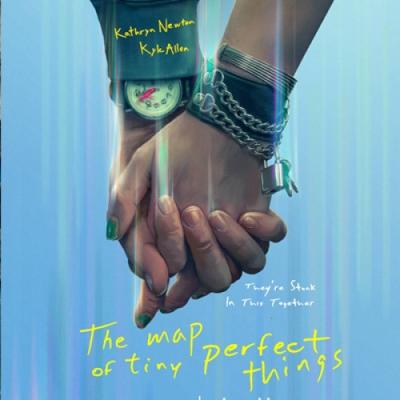
"Map of Tiny Perfect Things" Soundtrack Lyrics
Movie • 2021
Track Listing
Claire Rosinkranz
Wallows
Junior Mesa
Sam Bartle
Blossoms
Fontaines D.C.
Kishi Bashi
Mike Krol
Jaguar Sun
Drug Store Romeos
Bruises
"The Map of Tiny Perfect Things (Original Motion Picture Score & Songs)" – Album Guide to Tracks and Key Scenes
Overview
What does a time-loop movie sound like when it refuses to wallow and instead leans into curiosity and forward motion? In The Map of Tiny Perfect Things, the answer is a blend of warm, slightly scruffy indie tracks wrapped around a surprisingly tender original score. The music keeps the stakes low-key but emotionally precise: it never oversells the drama, yet it pinpoints every shift from boredom to wonder, from self-absorption to genuine care.
The film follows Mark and Margaret through the same summer day on repeat, and the soundtrack mirrors that reset. Pop-leaning songs provide the rush of “first time” energy, while Tom Bromley’s score gives the loop its emotional memory — a sense that the characters have been here before, even when the visuals repeat. The result is a sonic world that feels like a mixtape a clever teenager might actually assemble, not a generic studio compilation.
Structurally, the soundtrack does two things well. First, it uses needle-drops as clear chapter markers: the opening bike run, the catalog of “tiny perfect” moments, the late-film emotional payoffs all arrive with distinct musical signatures. Second, it lets a modest chamber-style score thread those islands of pop together, so scenes never feel like disconnected music-video vignettes. The songs can be playful, but the score quietly handles the film’s grief, time-physics and coming-of-age undercurrents.
In terms of genre, the film leans heavily on recent indie and bedroom pop, with a dash of jangly rock and a few remixed classical pieces. Guitar-driven tracks sketch out the characters’ youth and restlessness; hazier dream-pop textures underline their more reflective, late-night conversations; and moments built on reworked classical cues hint at the story’s mathematical and cosmic angle. In simple terms: indie grit for vulnerability, shimmery pop for possibility, and baroque harmony when the film wants you to feel the “design” behind the loop.
How It Was Made
The original score is by Tom Bromley — best known as guitarist and arranger for Welsh indie band Los Campesinos! — making one of his higher-profile film scoring turns here. Across the dedicated score album, he builds the sound around guitars, piano, small string ensemble and light electronics, favouring short, motif-driven cues over big themes. The writing stays close to character perspective: cues swell only when Mark or Margaret have a realisation, not when the script reaches for spectacle.
Bromley recorded the score with a compact group of players, with strings and drums featured prominently on the released album. The cue titles (“The Repetition, The Isolation”, “Perfect Things”, “A Temporal Anomaly”) mirror story beats and make it clear the score is designed as a narrative arc as much as a collection of pieces. One neat flourish is the tongue-in-cheek “Canon In D Major Major Majr Mjr”, a playful nod to the classical canon that also reflects the film’s obsession with patterns and variations.
On the supervision side, the film taps into a crop of contemporary indie and alt-pop artists who were still relatively fresh when the movie dropped in early 2021. A music-supervision approach like this means the soundtrack feels genuinely of its moment rather than leaning on legacy hits. It also lines up with how the studio marketed the film — as a YA-friendly streaming original with a “discover new bands” hook baked in. The result is a score-plus-songs package: Bromley’s cues handle the emotional continuity, while the supervised tracks serve as standalone moments you might immediately add to a playlist.
Tracks & Scenes
This section focuses on the most distinctive song placements in the film, including a few that only appear in marketing trailers rather than in-film.
"Losing My Grip" — Junior Mesa
Where it plays: At the very start of the film, during Mark’s now-perfected bike ride through town. He glides past traffic, catches a tossed drink without looking, and generally behaves like someone speed-running their morning. The song plays non-diegetically over the sequence, turning the routine into a confident, almost cocky music video. The moment runs for roughly a minute or two, long enough that you feel the groove before the plot really kicks in.
Why it matters: The lyrics and title are on-the-nose for a time-loop story, but the tone is loose rather than anxious. It tells us Mark thinks he’s in control, even as the situation is inherently unstable. The bouncy rhythm and crisp drums make the reset day feel fun, not oppressive — which makes it hit harder later when that confidence starts to crack.
"I Have Seen a Ghost" — Sam Bartle
Where it plays: Over the haircut montage after Mark finally gets Margaret’s number. He cycles through different looks, trying to decide how he wants to present himself when he texts her, while the day keeps resetting beneath the surface. The track is non-diegetic but cut tightly to each new hairstyle and expression.
Why it matters: The slightly off-kilter indie-electro production underlines how disoriented Mark actually is, despite the comedic visuals. In a film about reliving the same 24 hours, this scene shows the smallest “tiny perfect things” can be purely internal — a moment when you’re brave (or vain) enough to reinvent yourself.
"Canon In D" — Guido Del Fabbro (arr.)
Where it plays: During Mark and Margaret’s wander through a music store and into the restaurant kitchen, where they turn the ordinary layout of their town into a playground. The arrangement comes in as a diegetic-sounding piece at first (the kind of classical track you might expect as background), then slides into more stylised underscore as they talk through the logic of their loop and various escape strategies.
Why it matters: Pachelbel’s canon is all about repeating chord patterns with small variations — exactly what a time loop feels like. Using this piece (and its remixed cousin in the score album) is a clever thematic choice: it frames their theorising as part of a larger, almost mathematical structure rather than random teen rambling.
"Liberty Belle" — Fontaines D.C.
Where it plays: Over the scene where Mark and Margaret trash the pristine model home. They stomp through display rooms, knock things over and deliberately wreck the fantasy of a perfectly staged life. The guitar-driven track blares non-diegetically, cutting sharp against the suburban calm outside.
Why it matters: The rough, post-punk energy captures their frustration with being stuck in patterns — not just the loop, but all the expectations about careers, family and “the future”. Letting a noisy, Dublin band soundtrack this outburst also keeps the film from feeling too polished; it injects a welcome streak of messiness.
"I Wonder" — Mike Krol
Where it plays: Also associated with the destructive model-home sequence, this garage-rock cut underlines the more chaotic beats of the rampage. Guitars snarl as picture frames shatter and carefully placed props go flying. It is firmly non-diegetic, acting as a sonic exclamation point for each act of vandalism.
Why it matters: Krol’s deliberately scrappy sound has a “what if we just don’t care anymore?” vibe that fits the characters’ temporary nihilism. The song helps keep the scene fun rather than mean-spirited, and it gives the film a brief shot of pure punk impulse before the story turns back toward responsibility.
"If You Think This Is Real Life" — Blossoms
Where it plays: As Mark and Margaret commandeer a small construction vehicle (a CAT machine) and trundle through town, talking about the fourth dimension. The track rolls underneath as they sit high above the street, half joking and half genuinely trying to map out the physics of their situation.
Why it matters: The title doubles as a meta-question: is any of this “real”, and does it matter if it isn’t? The glossy indie-pop production contrasts with the absurd image of two teens joyriding in a digger, reinforcing the film’s habit of pairing big philosophical questions with mundane suburban visuals.
"Penny Rabbit and Summer Bear" — Kishi Bashi
Where it plays: In a montage where Mark and Margaret criss-cross town, collecting their catalog of “tiny perfect things”: a turtle being helped across the road, a kid landing a trick, a stranger’s spontaneous dance. The song plays as full, non-diegetic accompaniment, smoothing the jump-cut rhythm of quick, repeated moments.
Why it matters: Kishi Bashi’s mix of violin, looping and gentle vocals has a whimsical but precise quality. It says what the film is trying to argue: that tiny, almost throwaway details can be as moving as any grand gesture, especially when you finally slow down enough to notice them.
"Time" — Jaguar Sun
Where it plays: When Mark decides to stop obsessing over the loop and instead show up properly for his family. The song underscores the sequence where he attends Emma’s soccer match and she finally scores, a small change that feels huge to her. The track is non-diegetic, but the tempo matches the flow of the game.
Why it matters: The song’s dreamy indie atmosphere has a wistfulness that fits Mark’s realisation: he can’t control the loop, but he can choose how he spends the hours he keeps getting. It’s one of the film’s clearest statements that “time well spent” is the only victory on offer.
"1992" — Bruises
Where it plays: Near the end, when Mark and Margaret finally return Chewbarka, the lost dog, to its owner. The track plays over them walking the dog home in the soft evening light, a domestic, almost banal image after all the cosmic talk. The placement is non-diegetic, functioning as a gentle celebratory coda to their scavenger-hunt of perfect moments.
Why it matters: The slightly retro feel of the song underlines the film’s tug-of-war between nostalgia and forward motion. It’s not a big finale anthem, just a song that feels like a familiar memory — which is exactly what the characters are trying to build out of their loop.
"The Map of Tiny Perfect Things Theme" — Tom Bromley
Where it plays: Over the late-film poolside confession and then into the end credits, as Mark and Margaret finally kiss and the loop begins to break. The cue starts almost invisibly under dialogue, then swells once they step into the rain and the movie shifts into a new timeline.
Why it matters: This is the score’s emotional thesis statement. The melody is simple, but the harmonic movement gives a sense of something resolving that was previously stuck. It sells the idea that the loop ends not because of a plot trick, but because someone is finally ready to move on.
"Backyard Boy" — Claire Rosinkranz
Where it plays (trailer): Used in marketing, particularly edits of Mark and Margaret goofing around town and at the pool. In trailers, the song runs over quick-cut shots of them sharing jokes, pulling small stunts and generally vibing their way through the same day.
Why it matters: Even though it’s trailer-only, the track colours how many viewers remember the film. Its TikTok-adjacent bounce frames the story as a light, summery romance and helps position the movie in the same streaming ecosystem as other Gen-Z-aimed titles.
"Remember When" — Wallows
Where it plays (trailer): Also a key trailer song, particularly in spots that emphasise the nostalgic feel of revisiting the same moments. Guitars and drums kick in under a montage of looping gags, Mark’s failed attempts at flirting, and the map itself being drawn.
Why it matters: The song’s title and lyrical focus on looking back make it a natural fit for a story about reliving days. It adds a slightly more introspective touch to the promotional cut, hinting that the film is as much about memory and regret as it is about cute time-loop hijinks.
Other notable cues and songs: Lucas Holliday’s cover of “This Woman’s Work”, Drug Store Romeos’ “Frame of Reference”, Delphine Measroch’s “Etude Op. 25 No. 1 (Remix)” and Brandon Showell’s take on “There’s Nothing Holdin’ Me Back” crop up in trailers and promotional spots, broadening the sonic palette without overwhelming the lean 99-minute runtime.
Notes & Trivia
- The film’s original score album was released digitally in 2021, with Tom Bromley credited as sole composer and performer on most tracks.
- One cue title, “Canon In D Major Major Majr Mjr”, openly jokes about the famous Pachelbel piece that also appears in the film in a more traditional arrangement.
- The movie’s time-loop premise sits in the same lineage as Groundhog Day, Palm Springs and Russian Doll, but its soundtrack skews younger, pulling from indie acts active around 2019–2020.
- The film’s Golden Trailer Awards campaign was singled out specifically for “Best Music”, a rare nod that effectively honours the song choices used in marketing.
- Several fans first found the soundtrack through user-curated playlists on streaming platforms and then discovered the official score later, which is the reverse of how studio-era soundtracks often worked.
Music–Story Links
The simplest link between music and story here is structural: the film uses songs to delineate “chapters” in Mark’s emotional development. “Losing My Grip” belongs to the fully self-centred version of Mark, happily gaming the loop for style points. By the time “Time” plays at his sister’s soccer match, those same instincts are redirected toward showing up for other people.
Margaret’s arc is more covert but still mapped with music. Classical and quasi-classical cues tend to cluster around her — the Pachelbel canon arrangement in the music store, the more delicate score passages when she visits the hospital. Those tracks give her an aura of control and composure, making it more jarring when we realise she is clinging to the loop out of fear of losing her mother.
The shared “tiny perfect things” montage, set to Kishi Bashi, is essentially the film’s mission statement in musical form. Instead of underlining one big plot turn, the song binds together dozens of small, easily missed beats. It’s a neat echo of how Mark stops centring himself and starts paying attention to everyone else’s day.
Finally, the score theme over the poolside confession doesn’t just mark a romantic climax; it also functions as the story’s exit from genre. Up to that point, we watch the film as a time-loop puzzle. Once the theme swells and the rain falls, the loop stops being a mystery to solve and becomes a metaphor for grief and acceptance — and the music quietly flips from playful to elegiac to match.
Reception & Quotes
Critically, The Map of Tiny Perfect Things landed in the “generally favourable” zone. Major aggregators show a solid but not spectacular approval rating in the high-70s percentile range, with an average score a little above the midpoint. Reviewers often noted that the film doesn’t revolutionise time-loop stories but executes the formula with unusual warmth.
The soundtrack is frequently picked out as one of the film’s advantages. Several critics and bloggers highlighted its indie-heavy selection and the way the songs keep the tone buoyant even when the script touches on illness and loss. One outlet explicitly called it a “cool indie soundtrack” that meshes well with the coming-of-age themes, while a British critic praised the film as “a trove of romcom enjoyment and small treasures,” which fits the score’s modest, detail-oriented approach.
“A contained, idealised world – a trove of romcom enjoyment and small treasures I had no problem looping through.”
Adrian Horton, The Guardian
“It has fun and likeable characters, a cool indie soundtrack and an interesting premise.”
Becca Johnson, Film Focus Online
“The Map of Tiny Perfect Things is a mixed bag, but does have an offbeat charm that’s unpretentious and welcoming.”
M.N. Miller, Ready Steady Cut
“It doesn’t break the mold, but heartfelt charm and likeable leads make it worth following.”
Critics’ consensus summary
On the awards side, the film’s campaign picked up Golden Trailer Awards recognition, including a win for Best Romance and a nomination in the Best Music category, plus a Critics’ Choice nomination for Best Movie Made for Television. Those nods indirectly validate the soundtrack and music-driven marketing as a key part of the film’s appeal.
Interesting Facts
- The official score album was released as a free digital download by Bromley on Bandcamp, making it unusually accessible compared with many streaming-only score drops.
- Bromley comes to film scoring from an indie-rock background: he has spent well over a decade touring and recording with Los Campesinos!, which helps explain the guitar-centric textures in the score.
- Music from the film, combined with Bromley’s other work, later appeared on various “best syncs” lists for 2021, highlighting supervisors’ growing interest in indie-driven film soundtracks.
- The same year, a separate composing team — the de Luca Brothers — scored the Weed Road Pictures logo that appears before the film, meaning there is technically a piece of original music before Bromley’s work even starts.
- The Golden Trailer Awards nomination for Best Music was tied to a trailer cut titled “Love Story”, underscoring how closely the marketing leaned on its needle-drops.
- Most of the licensed songs pre-date the film by only a year or two, so the soundtrack effectively serves as a snapshot of late-2010s–early-2020s indie and alt-pop.
- Fan-made playlists often mix the film’s songs with other time-loop titles like Palm Springs and Russian Doll, turning this modest streaming release into a minor cult entry in the sub-genre.
Technical Info
- Title: The Map of Tiny Perfect Things — Original Motion Picture Score & Songs (informal combined reference)
- Year: 2021 (film release; score album released later the same year)
- Type: Feature film soundtrack (hybrid of original score and licensed songs)
- Primary composer: Tom Bromley
- Key performers (score): Small ensemble including strings, drums and guitars; Bromley performs and programs much of the material himself.
- Music supervision: Overseen by a supervisor associated with several high-profile sync projects in 2021, with a strong emphasis on recent indie and alt-pop releases.
- Notable song placements: “Losing My Grip” (opening bike-run), “Penny Rabbit and Summer Bear” (perfect-moments montage), “Time” (Emma’s soccer game), “1992” (Chewbarka’s return), plus multiple trailer-only cuts.
- Release context: Film debuted worldwide on Amazon Prime Video on 12 February 2021 as a streaming original.
- Labels / distribution: Songs appear through their respective labels on streaming platforms; the score album is self-released digitally by Bromley.
- Availability: Film available on Prime Video; songs scattered across major music services; the score album is hosted on Bandcamp with high-resolution audio.
Canonical Entities & Relations
| Entity | Type | Relation |
|---|---|---|
| The Map of Tiny Perfect Things | Movie | Directed by Ian Samuels; music by Tom Bromley; distributed by Amazon Studios. |
| Tom Bromley | Person | Composed and performed the original score; guitarist and songwriter for Los Campesinos!. |
| Los Campesinos! | MusicGroup | Indie band with which Bromley has recorded and toured extensively. |
| Amazon Studios | Organization | Financed and distributed the film for streaming on Prime Video. |
| FilmNation Entertainment | Organization | Co-produced the film alongside Weed Road Pictures and others. |
| Weed Road Pictures | Organization | Production company founded by Akiva Goldsman; produced the movie. |
| Claire Rosinkranz | Person | Performs “Backyard Boy”, used prominently in marketing trailers. |
| Junior Mesa | Person | Performs “Losing My Grip”, which scores the opening time-loop bike sequence. |
| Kyle Allen | Person | Plays Mark, whose perspective dominates the soundtrack’s early cues. |
| Kathryn Newton | Person | Plays Margaret, whose emotional arc anchors the score’s later, more reflective tracks. |
Questions & Answers
- Who composed the original score for The Map of Tiny Perfect Things?
- The score was written and largely performed by Tom Bromley, best known as a member of indie band Los Campesinos!.
- What kind of music dominates the soundtrack?
- It is a mix of Bromley’s guitar- and piano-driven score with contemporary indie, bedroom pop and alt-rock songs from late-2010s and early-2020s artists.
- Which song plays during Mark’s opening bike-ride time-loop sequence?
- That scene is soundtracked by “Losing My Grip” by Junior Mesa, underscoring how effortlessly Mark moves through a day he has repeated countless times.
- Is the film’s score officially available to stream or download?
- Yes. Bromley released the score as a standalone digital album, including cues like “The King of Everything” and “Perfect Things”.
- Why does the soundtrack rely so heavily on recent indie tracks?
- The film targets a contemporary YA audience, and using current indie and bedroom-pop acts keeps the tone aligned with how teens actually discover music now.
Sources: Refinery29 feature on the film’s songs; Whatsong.org soundtrack scene guide; official film and soundtrack credits; Rotten Tomatoes and Metacritic listings; newspaper and online reviews; Tom Bromley’s score release notes.
November, 15th 2025
A-Z Lyrics Universe
Cynthia Erivo Popular
Ariana Grande Horsepower
Post Malone Ain't No Love in Oklahoma
Luke Combs Good Riddance (Time of Your Life)
Green Day Bye Bye Bye
*NSYNC You're the One That I Wan
John Travolta & Olivia Newton-John I Always Wanted a Brother
Braelyn Rankins, Theo Somolu, Kelvin Harrison Jr. and Aaron Pierre The Power of Love
Frankie Goes to Hollywood Beyond
Auli’i Cravalho feat. Rachel House MORE ›