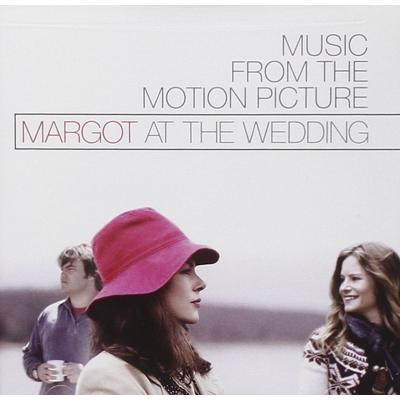
"Margot at the Wedding" Soundtrack Lyrics
Movie • 2007
Track Listing
Steve Forbert
Jorma Kaukonen
Evie Sands
Steve Forbert
Dinosaur Jr.
X
Blondie
Alice Cooper
Gilbert O'Sullivan
Diane Cluck
The dB's
Stephen Bishop
Donovan
Karen Dalton
"Margot At The Wedding (Music from the Motion Picture)" – Album Guide to Tracks and Key Scenes
Overview
What happens when a film about emotional shrapnel refuses big musical gestures? Margot at the Wedding answers by giving you a folk-leaning mixtape that mostly hides in the walls. Where a conventional family drama might lean on swelling strings to soften its characters, this soundtrack keeps things exposed: 1970s singer-songwriters, brittle indie guitars, and one haunted folk classic that waits until the final minutes to really bloom.
The album, released as “Margot At the Wedding (Music from the Motion Picture)” by Lakeshore Records in 2007, is essentially a carefully sequenced compilation. You get Steve Forbert, Jorma Kaukonen, Evie Sands, Dinosaur Jr., X, Lesley Duncan, Blondie, Alice Cooper, Gilbert O’Sullivan, Diane Cluck, Fleetwood Mac, Donovan, Karen Dalton and more, with one original cut, “Northern Blue,” by Dean Wareham & Britta Phillips. The selection skews toward deep cuts and slightly off-center tracks rather than obvious hits, which fits Baumbach’s taste for characters who live in their own cultural bubbles.
On screen, the music mostly stays low in the mix. According to a review in The Playlist, the only tracks really pushed to the foreground are Fleetwood Mac’s “That’s All for Everyone” and Karen Dalton’s “Something On Your Mind,” with everything else woven in almost apologetically. That restraint is the point: the songs act like intrusive thoughts rather than commentary, colouring awkward silences, botched confessions, and mid-argument pauses instead of dictating how you should feel.
Stylistically, the soundtrack leans on three main currents. First is 1970s folk and folk-rock (Forbert, Kaukonen, Dalton, Donovan), which underlines the film’s bruised introspection and middle-class bohemia. Second is late-70s/early-80s pop and new wave (Blondie, Gilbert O’Sullivan, Alice Cooper), the stuff Margot and Pauline might have grown up with, now sounding slightly faded and ironic. Third is alternative/indie and anti-folk (Dinosaur Jr., X, Diane Cluck), which brings abrasiveness and emotional static, mirroring the way conversations in the film keep shorting out instead of resolving.
How It Was Made
Behind the scenes, Noah Baumbach didn’t build the film around a traditional orchestral score. Instead, composer Cliff Eidelman provides low-key scoring elements, while the musical identity you actually notice comes from curated songs. The English-language credits and several secondary sources credit Eidelman as the film’s composer, but critics and soundtrack notes consistently emphasise that the released album is song-driven rather than score-driven.
The heavy lifting on the curated side comes from Dean Wareham and Britta Phillips, listed as music consultants. As several write-ups have noted, they helped Baumbach lean into “obscure singer-songwriters” – Steve Forbert, Lesley Duncan, Evie Sands, Diane Cluck – instead of obvious nostalgia fodder. Their own song “Northern Blue” appears on the album as the lone original, a short, chiming piece that sits comfortably among the older material.
The soundtrack album itself dropped in mid-November 2007 through Lakeshore Records, in step with the film’s limited U.S. theatrical release. It was issued on CD and digital, clocks in at just over an hour for 17 tracks, and has since stayed available on major services like Apple Music and Spotify. Most of the recordings are licensed catalog masters; there’s no expanded “deluxe” edition, no outtakes disc, and no separate release for Eidelman’s cues.
In interviews and production notes, Baumbach has talked about wanting the film to feel like a slightly fraying home movie – washed-out photography, overlapping dialogue, abrupt cuts. The music supervision matches that: instead of obvious needle-drops telegraphing emotion, songs tend to arrive mid-scene, fade quickly, or lurk as half-remembered background, as if someone upstairs left a stereo on.
Tracks & Scenes
The film doesn’t plaster its songs with on-screen titles, so several cues work almost subliminally. Below are the most clearly identifiable song–scene pairings, plus a look at how the marketing used the music.
"Sunday Girl" — Zane Pais (Blondie cover)
Scene: Claude sits alone in his guest room with a battered tape recorder and the Parallel Lines LP sleeve in his lap. He reads the lyrics to “Sunday Girl,” hits the red record button, and belts the song in an earnest, slightly off-key falsetto until Maisy appears in the doorway and catches him mid-phrase. The performance is fully diegetic; we hear only his voice and the room’s small echo, no backing track.
Why it matters: It’s one of the most vulnerable moments in the film. Claude’s clumsy attempt at pop confidence underlines how much he’s still a kid observing adult messes he doesn’t control. The song – sugary on record – turns fragile and a bit embarrassing, mirroring how Margot’s family weaponises private moments against each other.
"That’s All for Everyone" — Fleetwood Mac
Scene: Late in the film, after Malcolm’s behaviour blows up the wedding plans, the group flees the house and takes a ferry toward a seaside hotel. The camera stays relatively observational – family members scattered across the deck, bundled against the coastal wind – while “That’s All for Everyone” swells in the mix. The cue is non-diegetic, playing over the ambient ship noises.
Why it matters: A critic at The Solute describes this as a “sonic implosion,” and that’s accurate: the song’s layered, slightly disintegrating production tracks the family’s attempt to escape their own emotional fallout. It also undercuts the supposed relief of leaving the house; the ferry ride feels like limbo, not rescue.
"Something On Your Mind" — Karen Dalton
Scene: After Margot’s late decision to board the bus with Claude, the film moves into its closing stretch and end credits. Dalton’s version of “Something On Your Mind,” with its ghostly vocal and slow, resigned tempo, plays over the final images and through the credits as a non-diegetic curtain call.
Why it matters: Several retrospectives point out that this song closes the film, and a Karen Dalton bio even flags its use in the ending credits. It’s an almost too-perfect match: lyrics about self-deception and emotional cost sit on top of Margot’s attempt at one decent choice, leaving you unsure whether this is a beginning, an apology, or just another cycle.
"On and On" — Michael Medeiros (Stephen Bishop song)
Scene: In the dingy bar of the seaside hotel, a karaoke singer half-heartedly tackles the 1970s soft-rock ballad “On and On.” The performance is diegetic, slightly off-pitch and muffled, while Pauline and Malcolm conduct a raw, damage-control phone call in the foreground. The song drifts in and out behind their conversation rather than dominating it.
Why it matters: The choice is darkly funny: a slick, depressive love song performed badly while a relationship implodes over the phone. It’s one of Baumbach’s most Cassavetes-like passages – the cue underscores how people cling to familiar emotional wallpaper even as their lives fall apart.
"Northern Blue" — Dean Wareham & Britta Phillips
Scene: “Northern Blue,” the one original by the music consultants themselves, is used in the film as a low-key connective cue rather than a showcase. It surfaces under transitional material and quieter beats, its chiming guitar and soft vocal lines blending with room tones and dialogue instead of stopping the film for a montage.
Why it matters: On album, it marks the point where the compilation stops excavating old vinyl and lets the overseers speak in their own voice. In context, it reinforces the idea that Margot’s world is steeped in tastefully curated melancholy – the kind of song a character like Pauline might put on without ever calling attention to it.
"Romeo’s Tune" — Steve Forbert
Scene: Featured early in the film’s soundscape, “Romeo’s Tune” works over images of travel and transition, echoing Margot and Claude’s movement toward Pauline’s house and the emotional collision that awaits. The recording itself is non-diegetic, heard over cuts rather than from any on-screen source.
Why it matters: Forbert’s bright piano and romantic lyric sit in deliberate contrast with Margot’s barbed personality. The track belongs to a different era of adult emotion – hopeful, slightly naïve – which makes it feel like a relic of lives the characters never quite grew into.
"That’s All for Everyone" & "Something On Your Mind" — as emotional bookends
Scene: Taken together, the ferry cue (“That’s All for Everyone”) and the closing credits song (“Something On Your Mind”) form the film’s musical frame. One underscores the attempt to run away, the other the sober aftertaste once running has failed.
Why it matters: As one reviewer notes, these are the only songs really allowed to dominate the mix. Structurally, they’re the only moments when the film gives you something like a traditional “theme”; everything in between feels deliberately unresolved.
Trailer & marketing cues
Scene: The U.S. trailer leans harder on recognisable hooks than the film itself, using the original Blondie recording of “Sunday Girl” and other punchier snippets to sell a slightly lighter, quirkier family dramedy. Some TV spots reportedly fold in more upbeat moments from the compilation to give the impression of a warmer, ensemble comedy.
Why it matters: The disconnect between trailer and film is sharp. Where the marketing cuts tend to foreground choruses, the feature mostly buries those same songs, keeping the audience in the same unsettled headspace as Margot and Pauline instead of reassuring them.
Notes & Trivia
- The English-language Wikipedia entry emphasises that the soundtrack leans on “obscure singer-songwriters” Baumbach was obsessed with – Forbert, Lesley Duncan, Evie Sands, Diane Cluck – rather than mainstream hits.
- Despite the songs-only album, multiple reference sources credit Cliff Eidelman as the film’s score composer, suggesting additional, unreleased orchestral or atmospheric cues exist in the final mix.
- Dean Wareham and Britta Phillips are formally credited as music consultants, a role that sits somewhere between music supervisor and curator rather than traditional composers.
- The soundtrack tracklist circulated in slightly different “tentative” forms online before Lakeshore supplied a final sequence to press outlets.
- “Something On Your Mind” has become closely associated with the film; several music sites mention Margot at the Wedding specifically when describing Karen Dalton’s later cultural afterlife.
- Claude’s “Sunday Girl” moment shows up in more than one review as a shorthand for the film’s mix of cruelty and tenderness – even writers who dislike the film tend to single out that scene.
- In at least one interview, Nicole Kidman stressed that she essentially worked for scale on this film, treating it as an artistic passion project rather than a star vehicle.
Music–Story Links
Baumbach’s characters talk a lot about art – old records, books, films – but rarely use it well. The soundtrack picks up that thread. When Margot and Pauline trade references to long-neglected LPs and bands like X or the Pixies, the songs on the album quietly underline that they’ve built their identities around tastes they half remember more than experiences they’ve actually processed.
Claude’s bedroom performance of “Sunday Girl” does double duty: it shows how pop culture filters down to the next generation, and it reveals how perilous that hand-off is in this family. He imitates a female-fronted new-wave track in a falsetto that makes him feel exposed the instant he’s observed – a neat echo of how Margot publishes thinly veiled stories about her sister and then recoils when anyone reads them.
The ferry-ride blast of “That’s All for Everyone” is arguably the emotional peak of the soundtrack. Pauline, Margot, and the kids are physically leaving Malcolm behind, but the music is all swirling uncertainty rather than triumph. You can read it as the record that would have been playing in their parents’ house when they were children; the song turns the boat into a time machine, dragging their history along instead of letting it wash away.
“Something On Your Mind” over the credits works as the final verdict. Dalton’s cracked voice sounds like the version of Pauline we never quite hear: someone who actually lets herself feel the damage instead of weaponising it. Margot’s decision to get on the bus with Claude runs directly against her earlier coldness, but the song won’t let it play as redemption – only as the next, ambiguous chapter.
Reception & Quotes
As a film, Margot at the Wedding landed in a divided spot. Aggregators show a roughly split critical consensus: some reviewers admire its rawness, others can’t get past how unpleasant the characters are. The soundtrack, though, tends to get more uniform praise, especially from critics who appreciate its crate-digging and its refusal to sweeten the experience.
Several pieces on Baumbach’s work single this movie out as one of his sharpest uses of music: sparsely deployed, but devastating when it finally steps up in the mix. A CD-era review pointed out that, aside from “Northern Blue,” the album is mostly catalog material but that the sequencing makes it feel like a single, coherent portrait of brittle adulthood.
“Musically there’s not much you’re going to notice… but the folky soundtrack itself is rather fantastic, just pretty subtle throughout.” — Rodrigo Perez, The Playlist
“When Claude sings ‘Sunday Girl’ in a painfully pubescent falsetto… it is so deeply satisfying because it is so familiar to us.” — The Tech (MIT)
“Two films… offer eclectic tunes that defy the usual soundtrack; Margot at the Wedding runs a close second.” — NewBeats CD review
“Karen Dalton’s ‘Something On Your Mind’… is the soundtrack during the ending credits of the 2007 film Margot at the Wedding.” — NTS artist bio
On the availability side, the album remains in print digitally and has been re-promoted on streaming platforms as part of Lakeshore’s back-catalogue push. Physical CDs are now essentially a collector’s item, floating around on secondary markets but rarely repressed.
Interesting Facts
- The official soundtrack album and the list of songs used in the film don’t line up perfectly; some licensed cues never made the disc, while others are more prominent on album than on screen.
- Preview articles originally circulated a “tentative” tracklist that Lakeshore later corrected, a reminder of how fluid soundtrack clearances can be right up to release.
- Baumbach reportedly requested a King Crimson track during licensing; at least one critic notes the reference but couldn’t confirm whether it actually made the final cut.
- “Northern Blue” has become a minor fan favourite in Dean & Britta’s catalogue precisely because it isn’t attached to a showy scene – listeners discovered it on the album rather than in the theatre.
- Steve Forbert’s “Romeo’s Tune” gained a small revival bump from the film; several retrospectives on the song now mention Margot at the Wedding alongside its original chart run.
- Because the film never over-subtitles or calls out its music, many viewers only realise how song-heavy it is when they later check the soundtrack album.
- Portuguese and some fan-compiled sources categorise the film under “scores by Cliff Eidelman,” which coexists with English-language coverage that focuses almost entirely on the songs and music consultants.
- The karaoke “On and On” scene has been singled out by at least one critic as the most overtly Cassavetes-influenced passage in Baumbach’s work to that point.
Technical Info
- Title: Margot At the Wedding (Music from the Motion Picture)
- Film: Margot at the Wedding (2007, dir. Noah Baumbach)
- Year of album release: 2007
- Type: Compilation soundtrack (various artists) with light score elements in the film mix
- Primary composers: Cliff Eidelman (score), Dean Wareham & Britta Phillips (original song “Northern Blue,” music consultants)
- Music supervision / consultation: Dean Wareham, Britta Phillips; Lakeshore Records A&R
- Notable placements: “Sunday Girl” (Claude’s bedroom performance), “That’s All for Everyone” (family ferry escape), “On and On” (hotel bar karaoke), “Something On Your Mind” (end credits)
- Label: Lakeshore Records
- Original release format: CD and digital download; currently available on major streaming services
- Running time / tracks: Approx. 60 minutes, 17 tracks on the commercial album
- Film release context: Premiered at Telluride 2007; limited U.S. release in November 2007, during Baumbach’s post-Squid and the Whale run
- Chart / reception notes: No major chart impact, but often cited in discussions of Baumbach’s best music choices and in write-ups on Karen Dalton’s renaissance.
Canonical Entities & Relations
| Subject | Relation | Object |
|---|---|---|
| Margot at the Wedding (film) | directed by | Noah Baumbach |
| Margot At the Wedding (Music from the Motion Picture) | is soundtrack of | Margot at the Wedding (film) |
| Margot At the Wedding (Music from the Motion Picture) | released by | Lakeshore Records |
| Dean Wareham | music consultant / performer on | Margot at the Wedding soundtrack |
| Britta Phillips | music consultant / performer on | Margot at the Wedding soundtrack |
| Cliff Eidelman | composer for | Margot at the Wedding (film score) |
| “Northern Blue” (song) | performed by | Dean Wareham & Britta Phillips |
| “Romeo’s Tune” (song) | performed by | Steve Forbert |
| “Sunday Girl” (film performance) | performed on screen by | Zane Pais as Claude |
| “That’s All for Everyone” (song) | used in | Ferry sequence in Margot at the Wedding |
| “Something On Your Mind” (song) | used over | Ending credits of Margot at the Wedding |
| Margot at the Wedding (film) | stars | Nicole Kidman, Jennifer Jason Leigh, Jack Black |
| Margot at the Wedding (film) | distributed by | Paramount Vantage |
Questions & Answers
- Is there a separate score album for Margot at the Wedding?
- No. Cliff Eidelman’s score has never been released on its own; only the various-artists song compilation is commercially available.
- Who actually shaped the soundtrack’s song choices?
- The curation is credited to music consultants Dean Wareham and Britta Phillips, working with Baumbach and Lakeshore Records to assemble mostly 1970s and indie catalog cuts plus their original “Northern Blue.”
- Which song plays over the ferry scene near the end?
- The ferry escape to the seaside hotel is scored with Fleetwood Mac’s “That’s All for Everyone,” mixed prominently over the ambient sound of the boat.
- What song runs over the film’s ending credits?
- The end credits use Karen Dalton’s version of “Something On Your Mind,” which several music outlets now cite as a key part of her modern rediscovery.
- Is “Sunday Girl” only in the trailer, or does it appear in the film too?
- Both. The trailer leans on the original Blondie recording, while in the feature Claude (Zane Pais) performs “Sunday Girl” a cappella into his tape recorder in one of the film’s most awkwardly tender scenes.
Sources: Wikipedia; IMDb soundtrack notes; The Playlist review; The Tech (MIT) review; The-Solute Cassavetes feature; Lakeshore Records / Apple Music listings; Discogs release data; NTS artist bio for Karen Dalton; various archival reviews and soundtrack databases.
November, 15th 2025
Learn about 'Margot at the Wedding', the family drama film on IMDb.com and WikipediaA-Z Lyrics Universe
Cynthia Erivo Popular
Ariana Grande Horsepower
Post Malone Ain't No Love in Oklahoma
Luke Combs Good Riddance (Time of Your Life)
Green Day Bye Bye Bye
*NSYNC You're the One That I Wan
John Travolta & Olivia Newton-John I Always Wanted a Brother
Braelyn Rankins, Theo Somolu, Kelvin Harrison Jr. and Aaron Pierre The Power of Love
Frankie Goes to Hollywood Beyond
Auli’i Cravalho feat. Rachel House MORE ›