Soundtracks:  A B C D E F G H I J K L M N O P Q R S T U V W X Y Z #


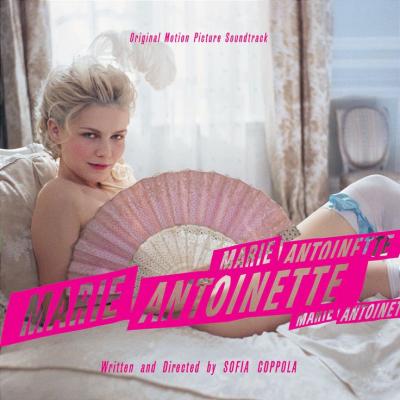
Marie Antoinette Album Cover

"Marie Antoinette" Soundtrack Lyrics

Movie • 2006

Track Listing


"Marie Antoinette: Original Motion Picture Soundtrack" – Album Guide to Tracks and Key Scenes

Marie Antoinette 2006 official trailer still with Kirsten Dunst reclining in pastel palace interior
The 2006 Marie Antoinette trailer sets up the film’s clash of 18th-century Versailles and post-punk pop.

Overview

How do you tell the story of an 18th-century queen using songs from Siouxsie and the Banshees, Bow Wow Wow, New Order, Aphex Twin, and The Cure? Sofia Coppola’s Marie Antoinette answers by treating the young queen as a teenager first and a historical figure second. The soundtrack album, “Marie Antoinette: Original Motion Picture Soundtrack”, takes a bold anachronistic route: post-punk and new wave rub shoulders with baroque harpsichord pieces and modern ambient electronics, turning Versailles into something like a decadent teenage bedroom.

The album, released on 10 October 2006 by Verve Forecast and Polydor, collects 26 tracks across two discs. It spans 1970s–80s post-punk (Gang of Four, Adam & the Ants, Siouxsie and the Banshees), indie and dream-pop (The Strokes, The Radio Dept.), electronic artists (Aphex Twin, Squarepusher), French acts (Air, Phoenix), and several baroque selections by Vivaldi, Couperin, Rameau and Scarlatti. Brian Reitzell produced and supervised the soundtrack, continuing the collaboration with Coppola that began on The Virgin Suicides and Lost in Translation.

On screen, the music works as a running commentary on Marie’s inner life. Contemporary songs score shoes-and-cake montages, masked balls, and country retreats, while period pieces underline court ritual and public scrutiny. The soundtrack doesn’t just decorate the images; it rewrites the emotional code of the period film. A historical drama suddenly moves like a coming-of-age movie, complete with party bangers, breakup songs and hangover music.

In genre terms, the album lives at a strange intersection: post-punk and new wave supply the rebellious, angular energy of youth; dream-pop and ambient electronics (The Radio Dept., Aphex Twin, Dustin O’Halloran) reflect Marie’s loneliness and drifting mindset; baroque and classical cues anchor us in Versailles’ ceremony and hierarchy. New wave guitar spikes equal impulse and defiance, soft piano means fragile introspection, while baroque strings and harpsichord stand for etiquette, duty and judgment closing in.

How It Was Made

The soundtrack grew out of Sofia Coppola’s long-running partnership with music supervisor and producer Brian Reitzell. He assembled a library of late-70s and early-80s post-punk, plus contemporary indie and electronic tracks, then wove them together with newly recorded baroque selections and original score cues by Dustin O’Halloran (solo piano) and others. Historic-music specialist Roger Neill consulted on the period pieces, ensuring that Couperin, Rameau and Vivaldi sat convincingly alongside the punk records.

Reitzell and Coppola deliberately chased “anachronistic but emotionally right” choices: Gang of Four, Bow Wow Wow and Adam & the Ants for the aggressive consumerism and rebellion; The Strokes and The Radio Dept. for hazy, melancholy youth; Aphex Twin and Squarepusher for the sense of a modern consciousness trapped inside ornate ritual. A feminist-music analysis notes that the soundtrack treats post-punk as a political echo, linking pre-Revolution France to the UK’s late-70s unrest and Thatcher-era anxiety.

The album exists in several editions: the original 2-CD release, digital versions with 26 tracks, and a later double-LP pressing with gatefold packaging and cover art by painter Elizabeth Peyton. All keep the same core sequencing: an upbeat, band-heavy first disc and a more reflective, score-plus-ambient second disc, effectively “party” and “morning after” halves.

Marie Antoinette 2006 trailer frame of Versailles hallway with courtiers and chandeliers
Behind the gilded halls: Brian Reitzell’s supervision mixes post-punk, baroque and ambient cues into a single Versailles soundworld.

Tracks & Scenes

The film uses over 30 cues, with the album collecting most of them. Below, key songs and cues are tied to specific scenes and functions.

"Natural’s Not In It" — Gang of Four
Where it plays: Over the opening credits. On black frames with hot-pink titles, we glimpse a single vignette: young Marie having her shoe slipped on by a servant, icing a cake with one finger, staring back at the camera. The track is non-diegetic and runs through the credit sequence, roughly the film’s first minute.
Why it matters: The lyric about “the problem of leisure / what to do for pleasure” undercuts the luxury on screen. It frames Marie’s consumerism as a political and emotional problem from the first shot, turning what could be simple costume porn into a critique of empty privilege.

"Concerto alla rustica" — Antonio Vivaldi
Where it plays: Over Marie’s morning dressing routine, a ritual we see several times. Courtiers shuffle in and out to offer garments in the correct order while she stands half-dressed, shivering in front of a crowd. The Vivaldi cue is diegetic-adjacent (sounding like court music) but functions essentially as score, looping with each repetition of the routine.
Why it matters: The baroque brightness becomes ironic. Rather than elegance, it conveys monotony and dehumanisation: Marie is more mannequin than monarch. A critic has compared the cue’s use here to Bob Fosse’s All That Jazz, where the same music scores a director’s brutal morning regimen.

"Hong Kong Garden (Strings Intro / Single Version)" — Siouxsie and the Banshees
Where it plays: The Paris masquerade ball. A new string prelude arranged for the film ushers Marie and her friends down the stairs into a smoky, candlelit club space; then the familiar punk single kicks in as they hit the dancefloor, masks on, bodies pressed close. It’s fully non-diegetic but mixed loud, turning the entire room into a punk club for several minutes.
Why it matters: The cue detonates the film’s first full anachronistic set-piece, selling Marie as a rich kid sneaking out to a downtown gig. According to one analysis, the track also nods to the racial politics of exoticism and the way girls are “packaged” as consumable images.

"I Want Candy (Kevin Shields Remix)" — Bow Wow Wow
Where it plays: The signature shopping montage. After a breakdown, Marie decides to live in pleasure. We cut to a fast, candy-coloured sequence of cakes, champagne, tiny dogs, wigs, feathers and towering Manolo Blahnik shoes. The remix plays non-diegetically over rapid jump cuts, roughly a two-minute montage, with one visual gag showing Converse sneakers tucked among silk heels.
Why it matters: The song literalises the connection between consumption and emotional release. It’s bubblegum post-punk, originally crafted around the marketable sexuality of teenage singer Annabella Lwin; here, it turns Marie’s coping mechanism into viewer-friendly spectacle, even as it hints at emptiness underneath.

"Fools Rush In (Kevin Shields Remix)" — Bow Wow Wow
Where it plays: The carriage ride home after the masquerade. Marie leans against the window, half-smiling as she replays her flirtation with Count Fersen in her mind. The song plays non-diegetically over the slow, night-time drive, contrasting the giddy vocal with the quiet interior and her dazed expression.
Why it matters: This is the “afterglow” to the ball. As one commentary notes, the slightly strained vocal and lo-fi feel match the thrill of having just met someone new and “shiny,” while also hinting that she may be throwing herself into something she doesn’t fully grasp.

"What Ever Happened?" — The Strokes
Where it plays: Later in the film, at a party after Fersen has reappeared and then left again. Marie walks away from the revelry, slipping out of a crowded room to process the loss. The song rips in non-diegetically as she exits, with its opening line, “I want to be forgotten / and I don’t want to be reminded”, syncing almost perfectly to her expression.
Why it matters: A detailed fashion-and-music essay points out how this moment fuses lyric and history: Marie as someone desperate to escape the gaze, even as history refuses to forget her. The track frames her not as villain but as a burnt-out party girl who has run out of ways to distract herself.

"Kings of the Wild Frontier" — Adam & the Ants
Where it plays: During Marie’s affair with Count Fersen at her country retreat and in playful, sun-drenched sequences. We see horse rides, games, flirtatious glances and stolen kisses; the track blares non-diegetically like a private rock video for their romance.
Why it matters: Adam Ant’s pseudo-military, New Romantic image becomes a direct template for Fersen’s styling in the film. The song’s tribal drums and yelped vocals underline how their relationship feels like a wild frontier compared to the rigid structure of Versailles.

"Ceremony" — New Order
Where it plays: A birthday montage for Marie. Candles, gifts, party guests and yet another round of excess blur together as the band’s chiming guitars and melancholy melody roll over the images. It’s non-diegetic, slightly recessed under dialogue and laughter but still clearly present.
Why it matters: The track is a hinge between joy and doom. Written as Joy Division transformed into New Order, it carries a sense of mourning for something already lost, which aligns with Marie celebrating in a world that is quietly collapsing around her.

"Jynweythek Ylow" — Aphex Twin
Where it plays: Early on, as Marie travels to France and undergoes the ritual of being stripped of her Austrian identity at the border. Sparse piano figures and electronic textures accompany the carriage moving through misty countryside and her anxious first steps into French territory.
Why it matters: A critic singles this out as conveying “the horror of her initiation into a foreign world.” The cue turns what could have been stately period scoring into something uncanny and modern, linking Marie’s disorientation to contemporary feelings of alienation.

"Avril 14th" — Aphex Twin
Where it plays: Several reflective passages and into the end credits. We hear it under slow, quiet scenes at Petit Trianon and again as Marie and Louis leave Versailles for the last time; then it returns as credits begin, before giving way to The Cure.
Why it matters: The simple piano pattern works almost like a lullaby for a fallen world. A feature on the soundtrack describes it as perfectly matching the film’s melancholy and notes how often it recurs, turning into a kind of unofficial theme for Marie’s solitude.

"All Cats Are Grey" — The Cure
Where it plays: Over the final credit stretch. After we see Marie and Louis’ abandoned bedroom and their carriage fading into the gardens, the song’s slow drum pattern and foggy synths fill the soundtrack as names roll.
Why it matters: The lyrics about being crushed among stone columns and having no flags to signal you home resonate heavily with Marie’s fate. The track closes the film in a mood of dignified, exhausted despair rather than outrage or sentimentality.

"Les Barricades Mystérieuses" — François Couperin (performed on harpsichord)
Where it plays: In calm interludes at Versailles, often as Marie wanders halls or sits for portraits. The cue is treated as quasi-diegetic chamber music drifting through rooms, sometimes fading in and out as doors open and close.
Why it matters: The title (“The mysterious barricades”) is almost too on the nose: the elegant patterning hints at invisible obstacles between Marie and her subjects, and between her private self and the role she has to perform.

"Tristes apprêts, pâles flambeaux" — Jean-Philippe Rameau (sung by Agnès Mellon with Les Arts Florissants)
Where it plays: During an opera performance and the sequence in which the court turns against Marie. It continues as we see the royal family’s portrait removed and replaced, then over the funeral of her child. Voices and orchestra dominate, overwhelming ambient sound.
Why it matters: The aria is a lament of grief and pale torches; its sorrowful tone reframes the montage as collective mourning, not just scandal. A soundtrack index notes how the piece runs through the entire funeral sequence, tying personal tragedy to public condemnation.

"Hong Kong Garden" & "Fools Rush In" — as masquerade bookends
Where they play: “Hong Kong Garden” powers the masked ball itself; the Fools Rush In remix scores the dreamy carriage ride home.
Why it matters: Together they map the arc from reckless, neon-lit escape to private, post-party haze. We see Marie go from queen of the dancefloor to a solitary, thoughtful figure staring out the window, while the music shifts from manic to wistful.

"Age of Consent" — New Order (trailer only)
Where it plays: In the original U.S. trailer, not the film. As the teaser cuts between images of Versailles decadence and fast-paced party snippets, “Age of Consent” drives the montage with its insistent bassline.
Why it matters: A well-known essay on the film points out how this choice frames Marie’s story as one about youth and doomed responsibility. It also helped push the idea that the movie would be aggressively modern in tone, even more so than the finished feature.

Marie Antoinette masked ball scene style frame from the trailer
“Hong Kong Garden” and Bow Wow Wow’s remixes turn the masked ball and its aftermath into a full-blown post-punk teen night out.

Notes & Trivia

  • The official soundtrack album is heavily post-punk and new wave, but the film itself uses more classical pieces than the discs include; some baroque cues remain unreleased.
  • Roger Neill’s role as “historic music consultant” meant checking that the baroque selections matched Versailles practice while still leaving room for modern tracks.
  • Siouxsie and the Banshees’ “Hong Kong Garden” was reworked with an orchestral string intro specifically for this film and has since become closely associated with it.
  • The first trailer’s use of New Order’s “Age of Consent” is widely cited by critics as one of the reasons the film’s music stuck in people’s memories even before release.
  • Several analyses argue that the soundtrack “politicises” an otherwise apolitical narrative by linking pre-Revolution France with late-70s UK recession culture.
  • Some viewers only realise how central Aphex Twin’s “Avril 14th” is after rewatching; it appears multiple times and into the credits yet never announces itself with lyrics.
  • Phoenix, whose frontman Thomas Mars later married Coppola, appear in the film as court musicians at Marie’s pastoral retreat, tying the music back to the director’s own circle.

Music–Story Links

The soundtrack’s logic is simple: court ritual gets baroque; inner turmoil and self-invention get post-punk and dream-pop. “Natural’s Not In It” over the opening credits instantly reframes Marie’s consumption as a problem, not a joke. It’s not just pretty cake – it’s a thesis about leisure and labour in aristocratic life.

“Concerto alla rustica” and other classical cues underline how Marie’s body is controlled by protocol. The repeated dressing sequence, always scored the same way, emphasises her status as an object to be moved, posed and inspected. In contrast, “I Want Candy” and the other Bow Wow Wow cues accompany the moments when she actively chooses excess, turning spending into rebellion.

Whenever Fersen is involved, the soundtrack tends to pivot to bands rooted in subcultural glamour: Adam & the Ants for their affair, Bow Wow Wow for the post-ball ride, The Strokes for the later ache of separation. These placements frame the romance as both thrilling and shallow – more like a band crush than a grand historical love story.

Aphex Twin and Dustin O’Halloran sit in the cracks between these extremes. “Jynweythek Ylow” and “Avril 14th” play when Marie is in transit, alone or caught between roles, neither princess nor martyr. The Radio Dept. tracks (“Pulling Our Weight,” “Keen on Boys,” “I Don’t Like It Like This”) float over bedroom gossip and quiet garden scenes at Petit Trianon, suggesting that much of her life is spent in a haze of half-felt emotions rather than clear decisions.

By the time “All Cats Are Grey” closes the film, the musical language has shifted from confident, spiky riffs to blurred, reverb-heavy textures. The transition mirrors Marie’s arc: from the sharp angles of teen rebellion to the soft-focus terror of a woman who finally understands the stakes and can do nothing about them.

Reception & Quotes

The film itself opened to mixed reviews. Early coverage often accused Coppola of favouring style over substance, and Rotten Tomatoes’ consensus still highlights “lavish imagery and a daring soundtrack” as points of distinction alongside thin plotting. Over time, though, the soundtrack has been widely reassessed as one of the defining film albums of the 2000s.

The album debuted at #154 on the Billboard 200 in the U.S., jumped into the top 100 the following week, and earned a Critics’ Choice nomination for Best Soundtrack. Empire later included it in a list of soundtracks that defined the decade, and it has appeared in best-of film-music lists from outlets like Pitchfork.

“Following the astute soundtracks of The Virgin Suicides and Lost in Translation, the soundtrack to 2006’s Marie Antoinette is something to be remembered.” — Consequence, soundtrack feature
“Smart and playful, the songs of Marie Antoinette illuminate the intricacies of a discouraged young woman’s state of mind and being.” — Slant Magazine
“Lavish imagery and a daring soundtrack set this film apart from most period dramas; in fact, style completely takes precedence…” — Rotten Tomatoes critics’ consensus
“A period film set in 18th-century France, the soundtrack is primarily made up of post-punk artists like the Banshees and The Cure, with The Strokes and some Vivaldi thrown in.” — UpVenue, on great soundtracks

The gap between film and album reputation has become a talking point. Several later articles argue that even viewers who bounce off the movie’s tone still rate the soundtrack as a standalone compilation, while others now see the whole project as an under-appreciated experiment in blending teen-movie grammar with historical biography.

Marie Antoinette trailer shot with carriage leaving Versailles at dawn
As the carriage pulls away from Versailles, Aphex Twin and The Cure carry the story into the credits instead of traditional orchestral swells.

Interesting Facts

  • The soundtrack album is split into two discs that loosely act as “party” (post-punk, pop) and “morning after” (piano, ambient, baroque).
  • Age of Consent by New Order never appears in the film, only in early trailers, but it still became strongly associated with Coppola’s take on Marie.
  • “Hong Kong Garden” was reportedly used as a wake-up track for cast and crew during production before being locked into the masked-ball scene.
  • Aphex Twin’s “Avril 14th” later resurfaced in pop culture through high-profile sampling disputes, which retroactively drew more ears back to its use here.
  • Elizabeth Peyton’s artwork for the limited vinyl edition matches the film’s pastel palette rather than traditional historical portraiture.
  • The Radio Dept. gained many new listeners via the film; write-ups of their album Lesser Matters often mention Marie Antoinette as a key exposure point.
  • Some classical cues, such as the Vivaldi concerto, were chosen specifically because other films had used them to score obsessive routines, creating intertextual echoes.
  • Phoenix’s cameo performance at Petit Trianon indirectly documents the early stage of Coppola and Thomas Mars’ relationship, years before their marriage.
  • The double-LP reissue has become a sought-after object in collector circles, often selling above original retail due to limited pressings.
  • Despite its chart modesty, the album is frequently cited in academic work on pop soundtracks and “genre as bait” in historical cinema.

Technical Info

  • Title (album): Marie Antoinette: Original Motion Picture Soundtrack
  • Film: Marie Antoinette (2006, dir. Sofia Coppola)
  • Year of album release: 2006
  • Type: Various-artists soundtrack (2-disc set, plus digital and 2-LP editions)
  • Primary music supervision / production: Brian Reitzell
  • Original score contributors: Dustin O’Halloran (piano pieces), additional work by Brian Reitzell; historic music consulting by Roger Neill
  • Key featured artists: Siouxsie and the Banshees, Bow Wow Wow, Gang of Four, New Order, Adam & the Ants, The Strokes, The Radio Dept., Phoenix, Air, Aphex Twin, Squarepusher, The Cure
  • Baroque / classical composers featured: Antonio Vivaldi, François Couperin, Jean-Philippe Rameau, Domenico Scarlatti
  • Labels: Verve Forecast, Polydor (often credited jointly; “I Want Candy LLC” appears in some digital credits as compilation owner)
  • Running time / tracks (album): 26 tracks, roughly 90 minutes depending on edition
  • Film release context: Premiered at Cannes 2006; wide release later that year, with strong emphasis on visuals and music in marketing.
  • Chart / awards: Entered the Billboard 200 at #154, later peaking in the 90s; nominated for Best Soundtrack at the Critics’ Choice Awards; listed by Empire among “soundtracks that defined the 2000s.”
  • Availability: In print on major streaming platforms; physical CD and vinyl editions available intermittently via reissues and specialty retailers.

Canonical Entities & Relations

Subject Relation Object
Marie Antoinette (film, 2006) directed by Sofia Coppola
Marie Antoinette (film, 2006) stars Kirsten Dunst, Jason Schwartzman, Judy Davis, Rip Torn
Marie Antoinette: Original Motion Picture Soundtrack is soundtrack of Marie Antoinette (film, 2006)
Marie Antoinette: Original Motion Picture Soundtrack produced by Brian Reitzell
Marie Antoinette: Original Motion Picture Soundtrack released by Verve Forecast / Polydor
Brian Reitzell music supervisor for Marie Antoinette (film, 2006)
Dustin O’Halloran composed piano score for Marie Antoinette (film, 2006)
Roger Neill historic music consultant on Marie Antoinette (film, 2006)
“Hong Kong Garden” (song) performed by Siouxsie and the Banshees
“I Want Candy” (Kevin Shields Remix) performed by Bow Wow Wow
“Natural’s Not In It” (song) performed by Gang of Four
“Ceremony” (song) performed by New Order
“Avril 14th” (track) composed by Aphex Twin (Richard D. James)
“All Cats Are Grey” (song) performed by The Cure
“Keen on Boys” (song) performed by The Radio Dept.
Marie Antoinette (film, 2006) based on Marie Antoinette: The Journey by Antonia Fraser
Versailles (palace) primary setting of Marie Antoinette (film, 2006)

Questions & Answers

Why does the Marie Antoinette soundtrack use post-punk and new wave instead of period music?
The idea was to treat Marie as a contemporary teenager, using post-punk and indie tracks to express her emotions and politics while baroque pieces cover ritual and public life.
Which song plays during the famous shoe-and-cake shopping montage?
The montage of pastries, parties, wigs and shoes is scored to Bow Wow Wow’s “I Want Candy” in a Kevin Shields remix, turning retail therapy into a pop anthem.
What song is used at the masked ball in Paris?
The Paris masquerade ball features Siouxsie and the Banshees’ “Hong Kong Garden,” preceded by a specially arranged string introduction before the punk single crashes in.
Which tracks close the film over the end credits?
Aphex Twin’s “Avril 14th” leads into the end credits and is followed by The Cure’s “All Cats Are Grey,” which carries the film to its final frame.
Is New Order’s “Age of Consent” actually in the movie?
No. “Age of Consent” appears in an early trailer but not in the film itself; New Order’s “Ceremony” is the New Order track used onscreen, during a birthday montage.

Sources: Wikipedia (film and soundtrack entries); IMDb soundtrack listing; Apple Music and Spotify album pages; Billboard and chart reports; Consequence soundtrack feature; Slant Magazine review; academic and blog analyses of the film’s music; MoviesOST scene breakdown; Vice feature on Coppola’s use of music; Elusive Disc vinyl listing; Empire and other retrospective soundtrack lists.

This is creation by daughter of Mr. Francis – Sofia Coppola, of the studio American Zoetrope, which is loved by their family to make own films. Marie Antoinette in life, as a real person, was Austria’s princess and the Queen of France in 18 century. Being transferred there because of desire of her mother to make peace between two countries, in her 15, several years later she regained the official status of the Queen. But she found out that she will not be happy to her newly received husband. He didn’t consider her as a wife and was a virgin, so that is why she’s decided not to fall in grief but to have fun to the fullest! So, she started to entertain herself, taking huge amounts of money from the national treasury house, considering it not the property of the French people, but her personal entertainment stash. That is why people called her nothing other but embezzler (‘Madame Déficit’) and eventually the crowd made her run from Versailles, the residence of ruler’s dynasties, to Paris. The film ends on this, but in life, she and her husband were arrested & executed. She was very cold-hearted when headed the guillotine & didn’t say a word of repentance. Despite many tragedies of her personal life and death, and the revolution that surrounded her last years of life (the same revolution that French people-murderers of their rulers of 18 century now celebrate as the Bastille Day – the day when the governors of the country were cruelly murdered as the result of successful palace coup), the film concentrates only on bright sides of her luxurious living. Among the popular performers are The Cure with their Plainsong and All Cat's Are Grey – interesting pieces with soft sound and containing almost no lyrics. The same as majority of tracks here have no lyrics like Il Secondo Giorno by Air.

November, 15th 2025


A-Z Lyrics Universe

Lyrics / song texts are property and copyright of their owners and provided for educational purposes only.