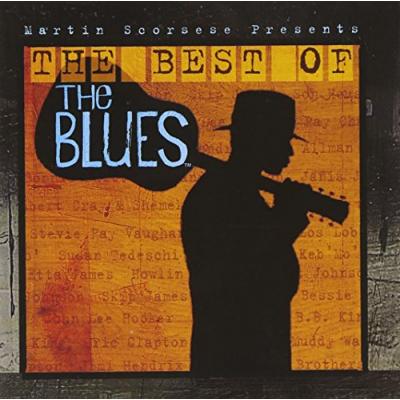
"Martin Scorsese: Best of the Blues" Soundtrack Lyrics
Movie • 2003
Track Listing
Robert Johnson
Bessie Smith
Skip James
Howlin' Ron Wolf
Muddy Waters
John Lee Hooker
Son House
Ray Charles
Etta James
B.B. King
Eric Clapton
Janis Joplin
Jimi Hendrix Experience
The Allman Brothers Band
Stevie Ray Vaughan
Keb' Mo'
Susan Tedeschi
Los Lobos
Cassandra Wilson
Bonnie Raitt
Shemekia Copeland
"Martin Scorsese Presents: The Best of the Blues (Original Documentary Soundtrack Compilation)" – Album Guide to Tracks and Key Scenes

Overview
Is this a movie soundtrack, a history lesson, or a greatest-hits disc? The honest answer: it is all three at once. “Martin Scorsese Presents: The Best of the Blues” is a single-CD companion to the 2003 PBS documentary series The Blues, curated as a guided tour through more than half a century of the music rather than a cue-by-cue score for specific scenes.
Instead of mirroring one film, the album compresses the whole seven-part series into 21 tracks. You start in the haunted, small-room intensity of Delta blues and end up in modern studios with artists who grew up on those records. That arc is the narrative: from Robert Johnson and Bessie Smith to B.B. King, Eric Clapton, Los Lobos, Cassandra Wilson, Bonnie Raitt and Robert Cray, the disc jumps across decades but keeps a coherent emotional line – loss, desire, defiance, survival.
As a listening experience, it feels like dropping into the “highlight reel” of the entire project. Early tracks lean on acoustic guitar, brittle 78-rpm sonics, and unvarnished vocals; the middle section moves into thick electric Chicago grooves and soul-inflected ballads; the back stretch slides into British blues-rock and contemporary Americana. It is sequenced so smoothly that newcomers can play it straight through and still feel a rough chronological flow.
Stylistically, the record covers country blues, Delta blues, Chicago blues, rhythm & blues, soul-blues, British blues-rock and 1990s–2000s roots revival. Acoustic Delta sides stand in for isolation, spiritual hunger and rural hardship; horn-laced R&B and urban blues signal migration, nightlife and new social power; British and Texas-electric guitar heroics express amplification – literally and metaphorically – of Black American source material. The newer tracks by Keb’ Mo’, Susan Tedeschi, Los Lobos and Cassandra Wilson work almost like footnotes, showing how the grammar of the blues keeps mutating while the emotional vocabulary stays the same.
How It Was Made
The album sits inside a larger ecosystem: the PBS series The Blues (executive produced by Martin Scorsese) and the five-disc box set Martin Scorsese Presents the Blues: A Musical Journey. The series assigned each episode to a different director – including Scorsese himself, Wim Wenders, Richard Pearce, Charles Burnett, Marc Levin, Mike Figgis and Clint Eastwood – with each film focusing on a particular era, city or angle on the blues. The box set then spread that story across five themed discs; this “Best of” disc distills it all to a single-CD entry point.
On the business side, the project was unusually ambitious. Sony and Universal (via Columbia/Legacy, Hip-O and UTV) cooperated to license signature recordings that normally live in competing catalogues – Robert Johnson and Bessie Smith on the Columbia side, Muddy Waters and Howlin’ Wolf from Chess, Ray Charles from Atlantic/Warner, B.B. King from UMG, plus later material from Jimi Hendrix, The Allman Brothers Band and Stevie Ray Vaughan. That cross-label cooperation is why a one-disc history can jump so freely between companies and decades without sounding like a patchwork.
Most tracks come from previously issued masters, but the campaign also commissioned fresh recordings for the TV series and its soundtracks – among them Los Lobos’ “Voodoo Music”, Cassandra Wilson’s “Vietnam Blues”, Bonnie Raitt’s “Round and Round”, and the Robert Cray & Shemekia Copeland live take on “I Pity the Fool”. The compilation pulls those newer cuts alongside canonical sides like “Cross Road Blues” and “The Thrill Is Gone” so that the “classroom history” and the living, evolving genre sit on equal footing.
Tracks & Scenes
Because this album is a cross-series compilation rather than a literal cue sheet, each track is best understood as a “portal” into the scenes and themes the films explore. Below, I focus on how the songs line up with moments and ideas from the documentaries – especially the episodes Warming by the Devil’s Fire, Feel Like Going Home, The Road to Memphis, Red, White & Blues and Piano Blues.
"Cross Road Blues" – Robert Johnson
Scene: The mythic crossroads hangs over the whole series, but it becomes literal in Charles Burnett’s Warming by the Devil’s Fire, where a young boy’s moral tug-of-war is framed by a dramatized image of Robert Johnson at a lonely Southern intersection. In PBS classroom materials, teachers are specifically asked to play “Cross Road Blues” while students consider that reenacted crossroads moment and what it says about fate, risk and bargaining with the world. You can hear the dry room sound and Johnson’s nervous, dancing guitar as the visual language of the series cuts between old photographs, road signs and church fronts.
Why it matters: On the album, this track opens with a jolt: the hiss of the 1930s recording and the compressed vocal pull you straight out of high-definition TV culture and into a fragile, analogue past. It anchors the idea that all later electric heroics and British reinterpretations trace back to one man, a guitar, and a desperate prayer at a crossroads.
"Muddy Water (A Mississippi Moan)" – Bessie Smith
Scene: The films regularly cut from rural landscapes to crowded urban clubs, showing how river cities like Memphis and New Orleans absorbed country blues into more sophisticated arrangements. Bessie Smith’s track evokes that shift: you can easily picture a smoky 1920s club, horn section lined along the back wall, while the camera glides over archival photos of riverboats, levees and flooded streets. Her phrasing frames the Mississippi River less as scenery and more as a moody character of its own.
Why it matters: This is one of the compilation’s key “bridge” recordings – still rooted in blues, but already flirting with jazz and vaudeville polish. It prepares the ear for the jump from Johnson’s solitary guitar to the full-band textures that dominate mid-century blues and R&B.
"Devil Got My Woman" – Skip James
Scene: In Wim Wenders’ episode The Soul of a Man, James is treated almost like a ghost returning to haunt the present day. The movie leans on archival performances and new covers, and this chilling original studio recording feels like the inner monologue behind those images – a voice so high and brittle it almost sounds disembodied while Wenders’ camera circles graveyards, train tracks and back-road churches.
Why it matters: Dropping this track so early makes the compilation feel less like a museum tour and more like a séance. The sense of dread and erotic jealousy in James’s voice sets up the idea that the blues has always been as much about psychological horror as about entertainment.
"Evil (Is Going On)" – Howlin’ Wolf
Scene: When the series shifts to Chicago in episodes like The Road to Memphis and Godfathers and Sons, the visuals switch to neon signs, traffic, barrooms and Chess Records session photos. You can imagine “Evil” underscoring a montage of crowded dance floors and cramped studios, Wolf looming over a microphone while sidemen lean in. The groove is lurching but irresistible, matching the camera’s habit of tracking down dark alleys into bright club doorways.
Why it matters: Here the sound jumps to fully amplified band blues: electric guitar, drums, snarling vocals. It captures the moment blues stopped being purely personal lament and became a mass-market urban force, feeding directly into rock and R&B.
"(I'm Your) Hoochie Coochie Man" – Muddy Waters
Scene: Muddy’s swagger is tied in the series to images of South-to-North migration – men in suits stepping off trains, women in their Saturday-night best heading into clubs, bright marquees promising live music all night. The track’s stop-time riff fits the editorial rhythm of interview snippets and performance clips: everything pauses as Muddy delivers another boast, then the band slams back in and the club erupts.
Why it matters: As a cross-media motif, this song marks the point where blues becomes assertive identity rather than pure sorrow. On the album it also acts as a hinge between country blues and later rock, since so many British artists built their sound on this exact Chess Records template.
"Boom Boom" – John Lee Hooker
Scene: Hooker’s music shows up in the series whenever the directors want to convey motion: cars, trains, people walking city blocks. “Boom Boom” has that relentless one-chord vamp that feels like a camera mounted on the hood of a car, cruising past storefronts and bar windows. Over it, Hooker’s vocal is half invitation, half threat – the sort of thing that might be playing on a bar jukebox while an interview subject tells a story about trouble that started “one night on Beale Street”.
Why it matters: This track represents the hypnotic, groove-driven side of the blues that feeds directly into funk and rock. In the compilation’s flow, it’s the first cut where rhythm overtly outweighs harmony and melody, underlining the argument that the blues reshaped 20th-century popular music around feel rather than complexity.
"Death Letter Blues" – Son House
Scene: When the series digs into the emotional cost of the blues life – death, abandonment, spiritual doubt – it often falls back on stark, solo performances. “Death Letter Blues” sounds like it was recorded in a narrow, resonant room; on screen, it pairs naturally with black-and-white stills of funerals, dirt roads and hand-painted church signs. You can imagine the episode cutting to House in mid-song, sweat on his brow, while he slams out that desperate slide riff.
Why it matters: This is one of the disc’s emotional peaks: the lyrics spell out grief in plain language while the guitar rages against the inevitable. It mirrors a recurring visual pattern in the films – the tension between religious salvation and earthly suffering – and anchors the “spiritual blues” thread that Clint Eastwood later picks up in Piano Blues.
"Hard Times (No One Knows Better Than I)" – Ray Charles
Scene: As the series moves into post-war R&B, figures like Ray Charles appear in performance clips and interviews to show how gospel phrasing and blues harmony merged into soul. “Hard Times” feels like a cutaway to the interior life behind the glossy TV appearances: dim backstage corridors, musicians counting cash, long drives between shows. The horns and backing vocals give the music a sheen, but Charles keeps turning the lyric back to loneliness.
Why it matters: This track widens the project’s scope beyond “pure” blues into the borderlands with soul and pop. On the album, it acts as a reminder that the blues is not only back-porch guitar music – it also lives in sophisticated arrangements and big-band settings.
"I'd Rather Go Blind" – Etta James
Scene: Few songs on the disc feel as cinematic as this one. In the context of the series’ later episodes, you can imagine it underscoring a close-up-heavy segment about heartbreak and addiction: grainy club footage, slow zooms on Etta’s face, and cutaways to interviewees describing what it cost to live this music. The arrangement is minimal – organ, bass, drums – which lets her vocal supply the “camera movement,” pushing and pulling against the beat.
Why it matters: This is the emotional centre of the compilation’s middle stretch. It crystallizes a major thesis of the entire project: that blues is not just about suffering but about the decision to speak that suffering out loud, even when it hurts.
"The Thrill Is Gone" – B.B. King
Scene: In The Road to Memphis and in later tributes, B.B. King often appears bathed in stage light, Lucille in his hands, the band spread out behind him. “The Thrill Is Gone” plays like the series’ leitmotif for fame, ageing and the cost of success: the director can cut from packed arenas to quiet hotel rooms while that sustained string bend hangs in the air.
Why it matters: On record, it’s the clearest statement of the move from raw blues to lushly arranged, string-sweetened crossover music. On the compilation, it signals that the story has crossed from “folk history” into the era when blues became a global brand and B.B. King a household name.
"All Your Love" – John Mayall’s Bluesbreakers with Eric Clapton
Scene: Mike Figgis’ Red, White & Blues explores how British musicians re-imported the blues back to America. A track like “All Your Love” feels like the perfect soundtrack to archival footage of London clubs, young white bands sweating through Chicago influences in tiny basements, and grainy TV clips of guitarists emulating their American heroes.
Why it matters: Here the guitars are louder, the drums punch harder, and the soloing turns into a manifesto. The placement of this track in the sequence underscores a key story beat: the blues left the U.S., returned as rock, and forced American audiences to reconsider the music’s originators.
"Red House" – The Jimi Hendrix Experience
Scene: Hendrix’s studio and live footage – when used in blues documentaries – often acts as a visual crescendo: saturated colours, wild outfits, close-ups of feedback-drenched amps. “Red House” slots into that mode, the sound of traditional 12-bar structure exploded into psychedelic space. Think of the camera circling the stage while Hendrix stretches single notes into wails.
Why it matters: By the time the album reaches this track, the connection between country blues and arena rock is undeniable. Hendrix’s performance makes explicit how the vocabulary of Johnson and House can be amplified – literally – without losing its core tension.
"Pride and Joy" – Stevie Ray Vaughan & Double Trouble
Scene: Vaughan’s sequence in the broader Scorsese blues project is often presented as a late-20th-century coda: a Texas bar band that turned vintage blues into MTV-era guitar heroics. Play “Pride and Joy” and you can picture small-club footage, sweat flying, neon beer signs in the background, and quick cuts to fans talking about discovering the blues through SRV.
Why it matters: This is the album’s clearest signpost that the blues survived into the modern rock era with its core grammar intact. It also balances the disc’s historical weight with something closer to party music, echoing how the series ends by emphasizing continuity rather than nostalgia.
"Am I Wrong" – Keb’ Mo'
Scene: In the companion films and promotional material, Keb’ Mo’ represents a contemporary, acoustic-leaning songwriter who consciously channels early Delta styles. “Am I Wrong” sounds like a modern field recording: clean but intimate, vocals close-miked, guitar bright. Visually, it pairs with interview setups of him playing in a studio or on a porch, talking about lineage.
Why it matters: This track signals that the blues is not just museum music. It sits near the end of the compilation as a reminder that new artists still choose to work inside this form, in dialogue with the past but not trapped by it.
"Voodoo Music" – Los Lobos
Scene: This modern cut, recorded for the Scorsese project, fits best with the series’ interest in the blues as a global, cross-cultural language. You can hear border-town rock, Mexican folk textures and electric blues all rubbing shoulders. Think of a montage of present-day street scenes, Latinx neighbourhoods, and multi-generational bands on stage at festivals.
Why it matters: It underlines the curators’ point that “the blues” is not frozen in the Mississippi Delta; it travelled, hybridized and came back wearing new clothes. Placing it so late in the sequence makes that evolution explicit.
"Vietnam Blues" – Cassandra Wilson
Scene: Wilson’s smoky, jazz-inflected delivery feels less like a straightforward performance clip and more like a late-night confession in a documentary – a singer in a dim studio, minimal lighting, as archival war footage rolls in intercut. The groove is slow, almost suspended, leaving room for newsreels, protest photos and interview sound bites.
Why it matters: This song connects the blues to explicitly political memory, not just personal heartache. As a closing-section track, it helps the album arrive at the idea that the blues also documents national trauma.
"Round and Round" – Bonnie Raitt
Scene: Raitt has long been a visible bridge between 1960s roots revival and later generations. In the wider Scorsese project she appears as both performer and commentator; “Round and Round”, recorded for the campaign, feels like end-credits music – a reflective, mid-tempo piece you could imagine over closing titles listing all the musicians the series pays tribute to.
Why it matters: Conceptually, this is the album’s curtain call: a contemporary artist with deep respect for the tradition offering a new song that could sit comfortably next to the old ones. It’s a way of saying the story loops back on itself, round and round, as each generation discovers the blues anew.
"I Pity the Fool (Live)" – Robert Cray & Shemekia Copeland
Scene: A live duet like this evokes the concert-style sequences sprinkled through the project – big festival stages, multi-artist bills, and a sense of the blues as a communal event rather than a solitary lament. Picture Cray and Copeland trading verses while the camera cuts to crowd shots and fellow musicians nodding approval side-stage.
Why it matters: Ending the compilation with a modern live track underlines the idea that the blues story is unfinished. The song itself, associated with Bobby Bland, ties back to classic soul-blues while the performance shows a younger generation actively carrying that material forward.

Notes & Trivia
- The album is not a score to a single film but a curated overview of the whole seven-part PBS series The Blues. It plays like a “best moments” reel from the larger box set.
- “Martin Scorsese Presents: The Best of the Blues” was issued as a one-disc spin-off from the five-CD A Musical Journey box, aimed at listeners who wanted an entry point instead of a deep archival dive.
- The sequencing loosely moves from 1930s Delta recordings to late-20th-century electric and roots-rock tracks, even though exact recording dates jump around.
- Several artists on the disc – Keb’ Mo’, Susan Tedeschi, Los Lobos, Cassandra Wilson, Robert Cray and Shemekia Copeland – recorded their contributions specifically for the Scorsese project rather than contributing old hits.
- In educational kits built around the series, “Cross Road Blues” is used as a key example for discussing metaphor, symbolism and the idea of “life crossroads” in African American culture.
- The title “Best of the Blues” has caused occasional confusion with individual artist volumes (like Martin Scorsese Presents the Blues: B.B. King) and with the main five-disc set – all different but interrelated releases.
Music–Story Links
The compilation’s first third – Johnson, Smith, James, House – maps directly onto the opening episodes, where Scorsese, Wenders and others trace the music from work songs and field hollers into early records. Acoustic guitar, minimal accompaniment and surface noise reinforce imagery of trains, fields and crossroads, and the songs chosen here are exactly the ones documentary filmmakers love to place under slow pans of photographs and maps.
The middle stretch, anchored by Muddy Waters, Howlin’ Wolf, John Lee Hooker, Ray Charles, Etta James and B.B. King, corresponds to the series’ shift into electric Chicago blues, R&B and the Beale Street / Memphis club circuit. You can feel that in the arrangements: drums lock into backbeats, horns punch out riffs, and lyrics move from rural survival to nightlife, lust and professional hustle. These are the tracks that visually pair with neon signs, crowded bars and tour-bus life.
With “All Your Love”, “Red House”, The Allman Brothers’ “One Way Out (Live)” and Stevie Ray Vaughan’s “Pride and Joy”, the story pivots again: British and American rock musicians internalize the blues and feed it back into amplified, improvisation-heavy formats. That lines up with the episodes dealing with the British Invasion and later revivalists, and with talking-head segments about record-collecting, imports and transatlantic influences.
The final run – Keb’ Mo’, Susan Tedeschi, Los Lobos, Cassandra Wilson, Bonnie Raitt, Robert Cray & Shemekia Copeland – works almost like an epilogue to the series. These tracks echo themes the films raise explicitly: that the blues continues to absorb Latin, jazz, rock and folk elements; that women and younger players are central to its present; and that live performance remains where its communal meaning crystallizes.
Reception & Quotes
Critically, the album has generally been praised as both an accessible gateway and a slightly frustrating tease. Reviewers note that any 21-track overview of something as sprawling as the blues will be incomplete by design, but many still recommend it as a first purchase for newcomers, especially in the context of watching the series.
One review describes it as essentially a “soundtrack to a history of the blues”, highlighting how the disc runs from early acoustic sides to late-20th-century electric statements in a single sitting. Another later appraisal calls it a “solid hour-long collection” that saves listeners the trouble of sorting through the multiple soundtracks and artist-specific discs attached to the project.
“This album is filled with some of the greatest music ever made and… presents an overview of the genre from early greats to the latest names.” PopMatters
“Seven TV soundtracks, 12 featured-artist retrospectives, a single-disc overview & a whopping five-CD box set. Who has time to sort through all that?” Tinnitist
“A centerpiece… will be PBS’s flagship fall program, ‘Martin Scorsese Presents the Blues — A Musical Journey,’ a seven-film package.” The Washington Post, on the broader project
Commercially, the broader Scorsese blues campaign performed well in its niche, with the full A Musical Journey box set hitting high on the blues charts and winning Grammy awards for Best Historical Album and Best Album Notes. The single-disc Best of the Blues did its job as a sampler – widely stocked in big-box retailers and library collections – and has remained in print in various editions.
Availability today is a mix of physical and digital. European editions credit Columbia/Legacy alongside UTV, and the track sequence is widely available on streaming platforms and in user-curated playlists matching the original CD. Individual artist volumes (for Robert Johnson, B.B. King, Stevie Ray Vaughan, J.B. Lenoir and others) also remain in circulation, effectively expanding on the tastes this compilation introduces.

Interesting Facts
- The Scorsese blues project generated at least four kinds of releases: the seven-film DVD box, the five-CD A Musical Journey set, a dozen single-artist CDs and this single-disc “Best of” compilation.
- Educational materials tie specific classroom exercises to “Cross Road Blues”, using it to discuss poetic devices, oral tradition and the symbolism of crossroads.
- “The Thrill Is Gone” appears both here and on B.B. King’s dedicated Martin Scorsese Presents the Blues artist disc, making it one of the project’s most heavily featured modern cuts.
- Los Lobos’ “Voodoo Music” and Cassandra Wilson’s “Vietnam Blues” also show up on the larger A Musical Journey box, where they help bridge the story into contemporary, genre-blurring territory.
- The European issue of the compilation credits Columbia as the label of record, while UTV is the primary imprint on U.S. editions – a reflection of the underlying Sony/Universal partnership.
- Because the titles are so similar, some retailers list this album simply as “Martin Scorsese: Best of the Blues (Original Soundtrack)”, which can make catalog searches slightly confusing.
- The overarching project was explicitly designed as a multimedia outreach campaign – films, CDs, books, websites and teaching materials – to reboot commercial and cultural interest in the blues in the early 2000s.
Technical Info
- Title: Martin Scorsese Presents: The Best of the Blues
- Year: 2003 original release (some European issues dated 2004/2008)
- Type: Compilation album + television documentary soundtrack sampler
- Project context: Companion to PBS documentary series The Blues and the five-disc box set Martin Scorsese Presents the Blues: A Musical Journey
- Primary labels: UTV Records / Hip-O (U.S.), Columbia / Legacy (Europe)
- Compiled from recordings: 1930s–2000s, including Columbia, Chess, Atlantic, ABC, Mercury, Epic and others
- Notable producers of source recordings: Don Law, Willie Dixon, Jerry Wexler, Bill Szymczyk, Tom Dowd and others (credited track-by-track on the CD)
- Running time: approximately 76 minutes, 21 tracks
- Key vintage cuts: “Cross Road Blues”, “Muddy Water (A Mississippi Moan)”, “Devil Got My Woman”, “Death Letter Blues”
- Key modern / project-exclusive cuts: “Am I Wrong”, “Just Won’t Burn”, “Voodoo Music”, “Vietnam Blues”, “Round and Round”, “I Pity the Fool (Live)”
- Release context: Launched alongside the fall 2003 PBS broadcast window for The Blues as the most affordable single-disc entry point into the campaign
- Chart / award notes (related project): The five-disc A Musical Journey box reached near the top of U.S. blues charts and won Grammy awards for Best Historical Album and Best Album Notes.
- Current availability: Multiple CD pressings in different territories; tracks widely available on major streaming services and digital stores.
Canonical Entities & Relations
| Subject | Relation | Object |
|---|---|---|
| Martin Scorsese | executive produced | The Blues (2003 documentary film series) |
| The Blues (film series) | inspired | Martin Scorsese Presents: The Best of the Blues (compilation album) |
| Martin Scorsese Presents: The Best of the Blues | released by | UTV Records (U.S.) and Columbia/Legacy (Europe) |
| Martin Scorsese Presents: The Best of the Blues | compiled from | Martin Scorsese Presents the Blues: A Musical Journey (5-CD box set) |
| Robert Johnson | performs | “Cross Road Blues” |
| Bessie Smith | performs | “Muddy Water (A Mississippi Moan)” |
| Son House | performs | “Death Letter Blues” |
| B.B. King | performs | “The Thrill Is Gone” |
| John Mayall’s Bluesbreakers with Eric Clapton | perform | “All Your Love” |
| The Jimi Hendrix Experience | performs | “Red House” |
| Stevie Ray Vaughan & Double Trouble | perform | “Pride and Joy” |
| Keb’ Mo’ | performs | “Am I Wrong” |
| Los Lobos | perform | “Voodoo Music” |
| Cassandra Wilson | performs | “Vietnam Blues” |
| Bonnie Raitt | performs | “Round and Round” |
| Robert Cray & Shemekia Copeland | perform | “I Pity the Fool (Live)” |
| PBS | broadcast | The Blues (2003 documentary series) |
| Hip-O Records | released | Martin Scorsese Presents the Blues: A Musical Journey (box set) |
| Wim Wenders | directed | The Soul of a Man (episode of The Blues) |
Questions & Answers
- Is “Martin Scorsese Presents: The Best of the Blues” a soundtrack to a single movie?
- No. It is a one-disc compilation tied to the PBS series The Blues and the larger A Musical Journey box set, not a cue-by-cue score for a specific film.
- How does this album differ from the five-disc box set “A Musical Journey”?
- The box set spans five themed CDs and more than six hours of music; this album compresses that scope into 21 tracks chosen as an accessible overview, especially for viewers discovering the blues through the TV series.
- Are all the tracks vintage recordings, or are some newly recorded for the project?
- Most cuts are classic catalog recordings (Johnson, Smith, Waters, Wolf, Charles, King, Hendrix, The Allman Brothers), but several later-sequence tracks – by Keb’ Mo’, Susan Tedeschi, Los Lobos, Cassandra Wilson, Bonnie Raitt and Robert Cray & Shemekia Copeland – were recorded or highlighted specifically for the Scorsese blues campaign.
- Do I need to watch the PBS series to appreciate this album?
- No, it works fine as a standalone blues anthology. But if you watch the films, the sequencing makes more sense: you can hear how each song aligns with particular eras, cities and themes the documentaries cover.
- What’s the best way to use this disc if I’m new to blues?
- Play it straight through once, then go back and pick one or two favourite tracks from each “era” – Delta (Johnson, James, House), Chicago and soul-blues (Waters, Wolf, Charles, Etta, B.B. King), rock-era reinterpretations (Clapton, Hendrix, Allmans, SRV), and modern voices – and use those as springboards into deeper artist-specific albums.
Sources: AllMusic; PopMatters; PBS “The Blues” site; Muziker tracklist; MusicBrainz; Washington Post; Rotten Tomatoes; Tinnitist; label and retail listings (UTV, Columbia/Legacy, Amazon, Discogs).
November, 15th 2025
A-Z Lyrics Universe
Cynthia Erivo Popular
Ariana Grande Horsepower
Post Malone Ain't No Love in Oklahoma
Luke Combs Good Riddance (Time of Your Life)
Green Day Bye Bye Bye
*NSYNC You're the One That I Wan
John Travolta & Olivia Newton-John I Always Wanted a Brother
Braelyn Rankins, Theo Somolu, Kelvin Harrison Jr. and Aaron Pierre The Power of Love
Frankie Goes to Hollywood Beyond
Auli’i Cravalho feat. Rachel House MORE ›