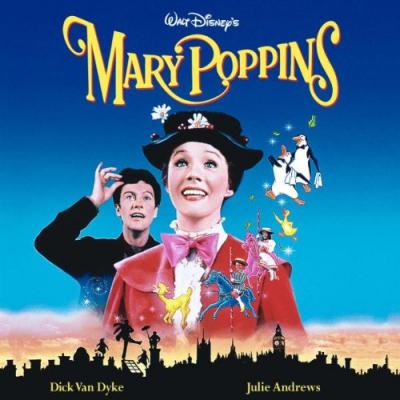
"Mary Poppins" Soundtrack Lyrics
Musical • 2001
Track Listing
Original London Cast
Laura Michelle Kelly
Mary Poppins Original London Cast
"Mary Poppins (Original London Cast Recording)" – Album Guide to Tracks and Key Scenes
Overview
Can a “practically perfect” Edwardian nanny reinvent herself for a 21st-century stage and still sound like the same woman who floated out of a 1964 film? The Mary Poppins (Original London Cast Recording) answers that by fusing the Sherman Brothers’ film songs with newly written theatre numbers, giving the story a darker, more psychological spine without losing its sugar-rush charm.
You asked for Mary Poppins, musical, 2001. That year is crucial behind the scenes rather than on the disc: 2001 is when Cameron Mackintosh and Disney Theatrical formally teamed up so the stage show could use the film songs. The musical itself premiered in 2004, and this cast album followed in 2005, becoming the definitive audio document of that collaboration.
The recording tracks the Banks family’s arc from brittle respectability to open rebellion and, finally, to something like collapse and rebuilding. Early tracks sit in clipped, almost fussy rhythmic patterns – George Banks’ world of “Precision and Order”. As Mary arrives and drags the children into chalk-drawing parks, talking shops and rooftop ballets, the score broadens into waltzes, music-hall pastiche and full-blown tap explosions. By the time we reach “Anything Can Happen”, harmonies stretch, modulations lift the floor under your feet, and the album has quietly moved from strict routine to audacious possibility.
Stylistically, you can hear three clear phases. The film carry-overs (“Chim Chim Cher-ee”, “A Spoonful of Sugar”, “Feed the Birds”, “Supercalifragilisticexpialidocious”) keep their sing-along DNA but are reharmonised and re-orchestrated for a big pit orchestra. The new musical-theatre numbers by George Stiles and Anthony Drewe (“Practically Perfect”, “Being Mrs Banks”, “Brimstone and Treacle”, “Anything Can Happen”) bring contemporary West End writing: sharper character turns, more internal conflict. Sitting between them are hybrid pieces that recycle Sherman melodies in new dramatic contexts, letting the album jump from cosy nostalgia to surprisingly tough family drama without feeling like two different shows glued together.
How It Was Made
The stage musical grew slowly. Producer Cameron Mackintosh first secured stage rights from author P. L. Travers in the 1990s, but Travers did not want a simple copy of the Disney film. In 2001 Mackintosh sat down with Disney Theatrical president Thomas Schumacher; that meeting created the joint venture that allowed both the Sherman film songs and new material to coexist in one score, with Travers’ book stories supplying additional plot.
The creative team pulled in heavyweight theatre names. Julian Fellowes (later of Downton Abbey) wrote the book, reshaping the story to focus more strongly on George and Winifred Banks’ marriage and on the cost of Edwardian respectability. The Sherman Brothers’ original songs became the spine, while composer George Stiles and lyricist Anthony Drewe built new numbers and dramatic bridges around them – “Practically Perfect” to introduce Mary in musical-comedy style, “Being Mrs Banks” to give Winifred a voice, “Brimstone and Treacle” to turn Miss Andrew into a genuinely frightening antagonist.
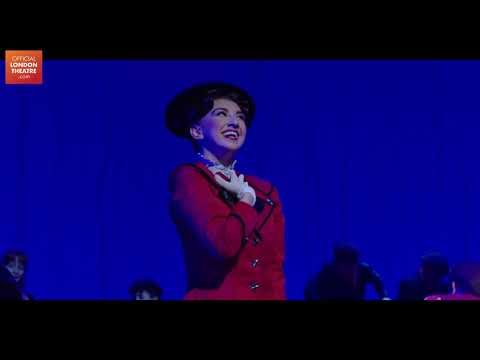
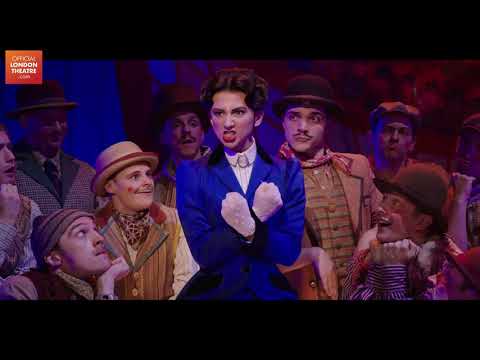
The album itself captures the original West End cast at the Prince Edward Theatre. According to the cast-album notes, it was recorded at Whitfield Street Studios in early 2005 with Laura Michelle Kelly as Mary, Gavin Lee as Bert, David Haig as George, and Linzi Hateley as Winifred, under the musical supervision and orchestrations of William David Brohn. A large orchestra, heavy on woodwinds and brassy flourishes, combines with choral layering to make numbers like “Step in Time” and “Anything Can Happen” feel bigger than most theatre pits usually dare.
One controversial element preserved on this recording is the nightmare sequence “Temper, Temper”, in which the children’s toys come to life and turn on them. Later productions cut the song and replaced it with “Playing the Game” after families complained it was too intense for younger audiences, but on this album you hear the original concept in full.
Tracks & Scenes – Key Numbers in the Stage Story
Unlike a film soundtrack, a stage cast album doesn’t come with hard timestamps, but its sequence closely follows the running order of the original London production. Here are the core numbers and how they land in the show.
"Prologue / Chim Chim Cher-ee" — Gavin Lee as Bert and Company
Where it plays: Right at the top of Act I, as the curtain rises on a silhouetted London rooftop. Bert sings directly to the audience, sketching the city in soot and starlight while the orchestra weaves fragments of the main motif. It is half-diegetic: he is busking in-world, but the orchestral underscoring goes far beyond a street musician. The music segues seamlessly into the Banks household bustle on Cherry Tree Lane.
Why it matters: This opening establishes Bert as narrator and guide, not just comic relief. Musically, “Chim Chim Cher-ee” becomes the show’s harmonic glue – its minor-key line will return in tender, ominous and ecstatic forms all night.
"Cherry Tree Lane (Part 1 & Part 2)" — George, Winifred, Jane, Michael, household staff
Where it plays: Early in Act I, roughly ten minutes into the show, inside the Banks house as maids, nannies and children collide. The music darts between patter-song bustle and prim waltz as George complains about domestic chaos while insisting on bank-style order. The reprise in Part 2 follows the children’s disastrous encounter with yet another failed nanny.
Why it matters: This is pure exposition, but cleverly so. The orchestration feels slightly over-tight, with clipped woodwinds and strict oom-pah, mirroring how rigid and fragile the Banks home really is. By the end of Part 2, the children have written their own advertisement for a new kind of nanny – the seed for Mary’s entrance.
"The Perfect Nanny" — Jane and Michael
Where it plays: Immediately after the first “Cherry Tree Lane” chaos, the children sit down and sing their ideal job advert: kind, witty, flexible, willing to play games. On stage, they tear up the “official” ad while a gentle waltz lilts under their homemade version. The melody is simple, almost hymn-like, and completely diegetic – this is literally the text that will drift up the chimney to Mary.
Why it matters: Dramatically, it tilts the story’s power: two children, not their father or the bank, are summoning the force that will change the house. You can hear the difference between George’s tight march rhythms and the children’s freer lines.
"Practically Perfect" — Laura Michelle Kelly as Mary Poppins, with Jane and Michael
Where it plays: Mary’s first full song, early Act I, once she has floated in and taken control of the nursery. She unpacks her carpetbag, measures herself and the children, and calmly rewrites the house rules over a jauntily precise 2/4. On album, the scene runs as an extended character piece: spoken lines into patter sections, then a soaring refrain on the title phrase.
Why it matters: This number is the clearest example of how the new material shifts the tone. It is friendly but slightly unsettling: the harmony tightens under words like “firm but kind”, hinting that Mary is not just a babysitter but a disruptive force. It also plants a key musical motif that returns in her final farewell.
"Jolly Holiday" — Bert, Mary, Jane, Michael, statues and ensemble
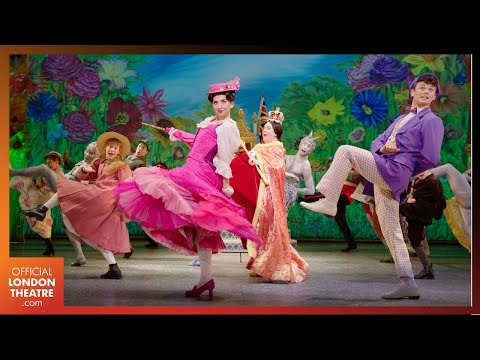
Where it plays: In Act I’s first big set-piece, Bert leads the children – and Mary – into a park where statues come to life. The London production kept a muted, almost monochrome palette for the scene, letting the music carry most of the “technicolor” fantasy. The song grows from simple stroll into a full ensemble number with dancing statue Neleus and chorus lines of parkgoers.
Why it matters: This is the score’s pure escapism moment. The Sherman melody is mostly intact, but the orchestrations are thicker and more rhythmic than in the film, giving the cast album a sense of swing you don’t get on the 1964 soundtrack. Dramatically, it shows the children that joy doesn’t have to be an act of rebellion; adults can play too.
"A Spoonful of Sugar" — Mary, Jane, Michael, Robertson Ay, Winifred
Where it plays: Mid-Act I in the stage kitchen, not the nursery. Jane and Michael have destroyed the room in a tantrum; Mary calmly turns cleaning into a game, syncing snapped fingers with rattling crockery and magically self-loading plates. The number is largely diegetic – the characters recognise they are “singing a song to get work done” – with an orchestral tag that keeps going after the last lyric.
Why it matters: Moving this song to the kitchen changes its purpose. Now it is less “look at Mary’s tricks” and more “look what happens when we tackle consequences together”. Orchestration-wise, this is the first time the pit really lets the tune rip, showing how the stage version can go bigger than the original studio orchestra.
"Feed the Birds" — Bird Woman and Mary
Where it plays: Late in Act I, on the steps of St Paul’s. Mary and the children encounter the Bird Woman; she sings the main verse in a fragile, almost vibrato-less tone, while Mary supplies gentle harmonies. The orchestration is unusual for a family musical: long, slow string lines, very little percussion, big bare chords that hang in the air. On the album it’s one of the quietest tracks by sheer volume, but emotionally one of the loudest.
Why it matters: This remains the emotional core, just as in the film. Here, though, it also functions as a pivot for George’s moral choices at the bank later. The reprise in Act II underscores George’s walk back to the bank and turns what was once a lullaby into a conscience nag.
"Supercalifragilisticexpialidocious" — Mary, Mrs Corry, Bert, Jane, Michael, customers
Where it plays: Near the end of Act I, in Mrs Corry’s talking shop rather than in the park. The children, Mary and Bert visit a wonderland of letters, words and candy; as they learn to spell the famously long word, the choreography becomes increasingly gymnastic. On album, you can hear the dancers’ breath and crowd noise; consonants are snapped rhythmically, and the word is literally spelled out in music and ensemble shout-backs.
Why it matters: This is the cast album’s purest high-energy explosion. It showcases the tap-and-tongue-twister staging and gives the new supporting characters (like Mrs Corry) their own vocal identity. It also acts as a pressure release after some of the darker material, sending the audience into interval on a sugar rush.
"Temper, Temper" — Toys, Jane, Michael
Where it plays: Early in Act II in the original London version. After the children mistreat their toys, Mary sends them to their room. As the lights drop, dolls, clowns and puppets come to life and surround the siblings, singing a jagged, minor-key waltz about bad tempers and consequences. On disc you hear creaking strings, echoing choral effects and an increasingly hysterical final verse as the toys close in.
Why it matters: This sequence pushed the show into unexpected horror territory. Many parents found it too frightening; it was later replaced with “Playing the Game”. On the album, though, it gives Act II real bite and shows Mary as genuinely uncompromising: love without indulgence.
"Brimstone and Treacle (Parts I & II)" — Miss Andrew; then Miss Andrew and Mary
Where it plays: Part I introduces Miss Andrew – George’s childhood nanny – when she arrives to take over the household. Her aria is all shrill coloratura and martial rhythms, praising harsh discipline and her nasty tonic “brimstone and treacle”. Part II comes when Mary returns; the two nannies battle vocally, Mary calmly turning Andrew’s own medicine back on her over rising orchestral scales.
Why it matters: Musically, this is almost a mini-operetta inside the musical. Miss Andrew’s lines flirt with parodying grand opera villains, while Mary’s entries quote “A Spoonful of Sugar” as an antidote. Dramatically, these songs expose what George grew up with and why he is the way he is – the score is doing psychology.
"Step in Time" — Bert, Mary, children, chimney sweeps
Where it plays: Mid-Act II on the rooftops. The children join Bert and a chorus of sweeps in a long, athletic tap number that moves from rooftop edges to the inside of the Banks house. On the recording you get a relentless build: drum kit, tap sounds, ensemble shouts, and orchestral punches driving the dance phrases.
Why it matters: For an audio-only listener, this is where you most feel the show’s sheer physicality. The number is a rite of passage for Jane and Michael – they see their father’s ordered city from a new, chaotic angle – and a proof that the stage version can honour the film’s set-piece while outdoing it in sustained energy.
"A Man Has Dreams / A Spoonful of Sugar (Reprise)" — George and Bert
Where it plays: After the rooftop chaos, back in the quiet of Cherry Tree Lane as George fears he is about to be ruined at the bank. He reflects on the life he planned and how far he has drifted from it; Bert gently pushes him to see his children’s needs. The reprise of “A Spoonful of Sugar” comes as George starts to reframe kindness not as weakness but as strength.
Why it matters: This conversation is the real hinge of Act II. The album makes the shift clear: orchestration shrinks to almost chamber-music scale, then slowly adds instruments back as George’s resolve returns.
"Anything Can Happen" — Mary, Jane, Michael, Winifred, full company
Where it plays: Late Act II, as the family’s crisis resolves. Mary leads the children – and eventually Winifred and the bank clerks – through a lesson in optimism and imagination. The number is in two parts: an intimate first section about mindset, then a full-company flight sequence where characters literally and musically rise into the air.
Why it matters: This is the “new” anthem that completes the show’s arc. It’s not present in the film; instead, it functions as a contemporary 11-o’clock number, summing up the musical’s argument that self-worth and kindness are learned, not inherited. The final key changes and high ensemble chords make it one of the album’s most replayable tracks.
Notes & Trivia
- The album preserves the original London song order, including “Temper, Temper”, which was later replaced by “Playing the Game” in licensed and revival versions.
- Some short reprises heard on stage – like parts of “Chim Chim Cher-ee (Winds Do Change)” and “Precision and Order (Reprise)” – are not included on the London cast recording.
- Winifred Banks is no longer a suffragette as in the film; her numbers “Being Mrs Banks” and its reprise reframe her as an ex-actress struggling with expectations of respectability.
- Several numbers combine multiple cues from the show into single album tracks, so the recording plays almost like a radio-ready symphonic suite of the whole evening.
- Later cast albums (notably the Australian live recording) document the “Temper, Temper” → “Playing the Game” swap and other small structural refinements.
Music–Story Links
Track by track, the cast album maps neatly onto the Banks family’s emotional journey. The early “Cherry Tree Lane” sequences and “Precision and Order” hang on rigid rhythms, constantly stressing beats two and four – you can almost hear George banking time. Whenever Mary’s motifs enter (“Practically Perfect”, “A Spoonful of Sugar”), the groove loosens and dotted rhythms creep in; she literally swings the household out of straight time.
The children’s songs mark their growth. “The Perfect Nanny” is naive, their list of demands unchecked by real experience. By the time they reach “Anything Can Happen”, they are harmonising in more complex lines, echoing Mary rather than simply following her. The melodic shape grows up with them: small intervals at first, then leaps and held notes as their world expands.
George’s inner life is scored through motif recycling. When he hears “Feed the Birds” in Act I, it’s almost background – something happening near the steps of St Paul’s. In Act II, its reprise colours his walk back to the bank and his decision to show compassion. The same tune now carries his risk instead of the Bird Woman’s loneliness. That’s smart musical storytelling, not just nostalgia.
Even the scary set-pieces serve character arcs. “Temper, Temper” isn’t there just to frighten children; it externalises Jane and Michael’s guilt, showing that their anger has consequences for the things they value. “Brimstone and Treacle” does the same for George, turning Miss Andrew into a walking embodiment of his worst instincts. When Mary defeats Andrew musically, she is also freeing George from that inherited cruelty.
Reception & Quotes
The London cast recording was generally welcomed as proof that a beloved film score could survive heavy reworking. Many reviewers highlighted how the Sherman songs benefited from William David Brohn’s fuller orchestrations and how the new Stiles & Drewe material felt stylistically compatible without sounding like pastiche. Theatre-focused outlets often call it their “go-to” audio version of the stage show, even after later live and revival albums appeared.
Some criticism centres on tone. The inclusion of “Temper, Temper” and the darker edge of “Brimstone and Treacle” can make the mid-album stretch feel surprisingly grim for casual listeners expecting only cosy nostalgia. On the other hand, fans who grew up with the film often appreciate the extra dramatic bite and the chance to hear familiar melodies in a more sophisticated harmonic frame.
One London-based review of the musical remarked that the show “flies, both literally and figuratively, yet never quite reaches the dizzy giddiness of the film,” while praising the music as the glue holding a massive stage machine together. A cast-album review noted that the record “turns Mary Poppins into something old, yet new and wonderful,” underlining how effectively the disc recycles the classic score into a fresh theatrical language.
“The people who did the London cast album turned Mary Poppins into something old, yet new and wonderful – it grips you immediately.” — listener review
“A fair bit of spoken dialogue appears in the recording… you can follow the story almost entirely by ear.” — cast-album review
“This production truly does fly, both literally and figuratively.” — West End stage review
“Stiles and Drewe’s new numbers sit seamlessly alongside the Sherman classics, deepening characters we barely knew in the film.” — musical-theatre commentary
Interesting Facts
- The London cast album runs about 72 minutes and includes 21 tracks, but still omits several short reprises that only exist in the theatre.
- “Temper, Temper” remains easiest to hear on this album; most licensed amateur and touring versions now use “Playing the Game” instead of the original nightmare song.
- The recording credits list both the Sherman Brothers and Stiles & Drewe as album artists, underlining the deliberate “two-generation” authorship.
- The album’s final track, pairing “A Spoonful of Sugar (reprise)” with the orchestral “A Shooting Star”, mirrors Mary’s last flight and acts as an epilogue rather than a curtain-call medley.
- Because so much scene dialogue is preserved between songs, the album can work almost like an audio play; this is unusual compared with many older cast recordings that strip dialogue out.
- Down the line, an Australian live recording and later revival recordings joined it, but the 2005 disc is still the reference point for orchestration and vocal style.
- Richard and Robert Sherman’s original film songs had already won Oscars and Grammys; the stage score built on that legacy and brought them back into West End awards conversations four decades later.
- Licensed materials for productions still reference the London album as the default musical blueprint, even when they incorporate newer songs such as “Playing the Game”.
Technical Info
- Album title: Mary Poppins (Original London Cast Recording)
- Work: Mary Poppins – stage musical based on P. L. Travers’ books and the 1964 Disney film
- Year (core creative deal): 2001 Disney Theatrical–Cameron Mackintosh partnership agreed
- World-premiere production: 2004 Bristol try-out; 2004 West End opening at Prince Edward Theatre
- Album release year: 2005 (original CD and digital)
- Composers / lyricists: Richard M. Sherman and Robert B. Sherman (original film songs); additional music by George Stiles; additional lyrics by Anthony Drewe
- Book: Julian Fellowes
- Producers (stage): Cameron Mackintosh; Disney Theatrical Productions
- Principal cast on album: Laura Michelle Kelly (Mary Poppins); Gavin Lee (Bert); David Haig (George Banks); Linzi Hateley (Winifred Banks); Charlotte Spencer (Jane); Harry Stott (Michael)
- Key musical numbers featured: “Prologue / Chim Chim Cher-ee”, “Cherry Tree Lane” (Parts 1 & 2), “The Perfect Nanny”, “Practically Perfect”, “Jolly Holiday”, “Being Mrs Banks”, “A Spoonful of Sugar”, “Feed the Birds”, “Supercalifragilisticexpialidocious”, “Temper, Temper”, “Brimstone and Treacle” (I & II), “Step in Time”, “A Man Has Dreams (reprise) / A Spoonful of Sugar (reprise)”, “Anything Can Happen”, “A Spoonful of Sugar (reprise) / A Shooting Star”
- Recording details: Recorded at Whitfield Street Studios, London, early 2005; large orchestra with expanded woodwinds and brass; numerous featured soloists and children’s voices.
- Label & rights: Disney Enterprises, Inc. and Cameron Mackintosh Ltd under licence to First Night Records / Walt Disney Records (territorial branding varies by edition)
- Availability: Widely available on major streaming platforms and in CD form; original 2005 artwork typically shows the stage Mary hovering above the London skyline.
Questions & Answers
- Why is 2001 often mentioned in connection with the Mary Poppins musical if the album is from 2005?
- 2001 is the year Cameron Mackintosh and Disney Theatrical formalised their partnership, allowing the stage show to use the film’s songs. The musical then premiered in 2004, and the Original London Cast Recording documenting that production was released in 2005.
- How is the stage score different from the 1964 Mary Poppins film soundtrack?
- The stage version keeps core Sherman songs but adds new numbers by Stiles & Drewe, expands the orchestrations for a large pit orchestra and choir, and repositions songs to serve a more character-driven plot, especially for George and Winifred Banks.
- Which songs on the London cast album are completely new to the musical?
- Key new numbers include “Practically Perfect”, “Being Mrs Banks” (and its reprise), “Brimstone and Treacle” (Parts I & II), “Temper, Temper” and “Anything Can Happen”, all written to deepen character arcs that were only sketched in the film.
- Why was “Temper, Temper” later removed from many productions?
- “Temper, Temper” stages a genuinely frightening toy-room nightmare for Jane and Michael. Many audiences – especially families with younger children – found it too dark, so later productions replaced it with a slightly less intense sequence called “Playing the Game”.
- Is this London cast recording still the best place to start with the Mary Poppins musical?
- For most listeners, yes. It preserves the original arrangements, the full “Temper, Temper” sequence, and star turns from Laura Michelle Kelly and Gavin Lee. Later recordings are valuable, but this one remains the canonical snapshot of the musical’s first major incarnation.
Canonical Entities & Relations
| Subject | Relation | Object |
|---|---|---|
| Mary Poppins (Original London Cast Recording) | documents | Mary Poppins stage musical (original West End production) |
| Richard M. Sherman | composed songs for | Mary Poppins stage musical |
| Robert B. Sherman | composed songs for | Mary Poppins stage musical |
| George Stiles | wrote additional music for | Mary Poppins stage musical |
| Anthony Drewe | wrote additional lyrics for | Mary Poppins stage musical |
| Julian Fellowes | wrote book for | Mary Poppins stage musical |
| Cameron Mackintosh | co-produced | Mary Poppins stage musical |
| Disney Theatrical Productions | co-produced | Mary Poppins stage musical |
| Laura Michelle Kelly | performed as | Mary Poppins on Original London Cast Recording |
| Gavin Lee | performed as | Bert on Original London Cast Recording |
| First Night Records | released | Mary Poppins (Original London Cast Recording) |
| Disney Enterprises, Inc. | holds rights to | Mary Poppins (Original London Cast Recording) |
| Mary Poppins (1964 film) | provides songs for | Mary Poppins stage musical |
| P. L. Travers | wrote source books for | Mary Poppins stage musical |
| Step in Time | is performed in | Mary Poppins stage musical rooftop sequence |
| Anything Can Happen | serves as finale of | Mary Poppins stage musical |
Sources: Wikipedia – Mary Poppins (musical); Disney Wiki (Mary Poppins musical & cast album; Temper, Temper; Playing the Game); MTI show history; Discogs and retail listings for Mary Poppins (Original London Cast Recording); Apple Music and Spotify album metadata; Ovrtur musical numbers listing; theatre and album reviews from London and international outlets; recent obituaries and retrospectives on the Sherman Brothers.
Mary Poppins is well-known story and back in 2004, it was made as a musical, staged in London for the first time. Since then, many years have passed but it is still on stage and there are plans for several performances for 2017. It was toured 3 times (two of them – in UK) and visited more than a dozen countries (it was in Reykjavík, Copenhagen, Helsinki, Mexico City and Australia with New Zealand amongst others). What its songs are about? Each of them underlines the moment of the mood of the hero right now – you know hot it happens in musicals: they differ from songs for films, where a bunch of people writes something for the film and then sound producers choose the best seconds from them to input to right moments. In musicals, heroes sing through their songs fully, inputting emotions, lines of replicas and do the thing so plot evolved. In addition to Broadway musical, there was also a film, with similar soundtrack, which scenario correlated with theatrical’s version of libretto. Whatever the songs are, they are mostly bright and life-affirming like Let's Go Fly A Kite or Sister Suffragette. Whom are they sang by? Most of all, Original London Cast, if it is a song for big number of participants or by individuals, like Laura Michelle Kelly’s song (who depicts Mary Poppins). By the way, her Supercalifragilisticexpialidocious, which unofficially means something extraordinarily good or wonderful, has so cheerful lyrics that after its listening, there is a desire to live! In contrast to cheer pieces, there are ones with sad lyrics and mood, like Feed The Birds or strict like Fidelity Fiduciary Bank. Anyway, no matter if this is a musical or a film, book or any other variant of story, Mary Poppins is always heart-opened thing from our childhood, which is so lovely to hear again.November, 15th 2025
A-Z Lyrics Universe
Cynthia Erivo Popular
Ariana Grande Horsepower
Post Malone Ain't No Love in Oklahoma
Luke Combs Good Riddance (Time of Your Life)
Green Day Bye Bye Bye
*NSYNC You're the One That I Wan
John Travolta & Olivia Newton-John I Always Wanted a Brother
Braelyn Rankins, Theo Somolu, Kelvin Harrison Jr. and Aaron Pierre The Power of Love
Frankie Goes to Hollywood Beyond
Auli’i Cravalho feat. Rachel House MORE ›