Soundtracks:  A B C D E F G H I J K L M N O P Q R S T U V W X Y Z #


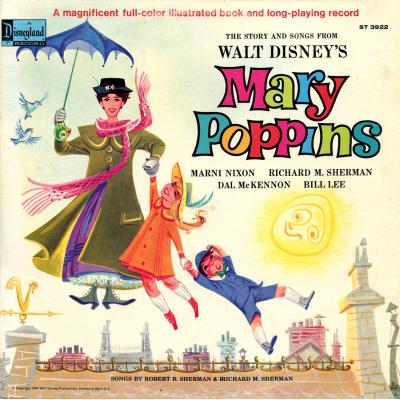
Mary Poppins (Cartoon) Album Cover

"Mary Poppins (Cartoon)" Soundtrack Lyrics

Cartoon • 2001

Track Listing


"Mary Poppins (Original Motion Picture Soundtrack – 2001 Remastered Edition)" – Album Guide to Tracks and Key Scenes

Overview

How do you remaster a soundtrack that already feels “practically perfect” and still make it worth buying again? The Mary Poppins (Original Motion Picture Soundtrack – 2001 Remastered Edition) answers with cleaner stereo imaging, bonus material and a renewed focus on the film’s unusual mix of live action and animation. The film itself is from 1964, but this 2001 CD-era refresh is where a lot of listeners first heard the full score in modern digital quality.

The movie sits in a strange but fertile space: not fully cartoon, not fully live-action. Animated penguins dance with a very real Julie Andrews, London rooftops become a stylised sketchbook, and the songs bridge that gap. The soundtrack follows the Banks family’s arc in clear stages – arrival (Mary descending from the clouds), adaptation (the children learning her rules), rebellion (against Mr Banks’ “precision and order”), and a controlled collapse that forces everyone to rebuild. The 2001 edition keeps that narrative shape but lets the orchestral detail and vocal nuance come through with more bite.

The Sherman Brothers’ songs swing between Edwardian music-hall bounce and Broadway-style emotional writing. “Sister Suffragette” and “Supercalifragilisticexpialidocious” lean into winking vaudeville; “Feed the Birds (Tuppence a Bag)” and “Stay Awake” strip everything back to bare harmonies and long vocal lines. Irwin Kostal’s orchestrations turn those tunes into set-pieces: bass clarinet and oboe for the sooty melancholy of “Chim Chim Cher-ee”, full brass and snare for “Step in Time”, harps and woodwinds for the chalk-painting fantasy.

Across the album you can hear distinct genre phases that track the story. Early numbers use clipped marches and patter to sketch a rigid household. The animated “cartoon” sections move into lilting waltzes and bright woodwind flurries. The bank and rooftop scenes borrow from big-band and show-tune energy, almost like a studio-era MGM musical crashing into British children’s literature. The 2001 remaster doesn’t change those choices, but it does sharpen the contrast: low flutes and high strings pop out more clearly, and the choir in “Let’s Go Fly a Kite” finally feels as big as it looked on screen.

How It Was Made

The music for Mary Poppins started long before any 2001 disc existed. Walt Disney spent years trying to secure rights to P. L. Travers’ books; once he did, he handed the musical side to Richard M. Sherman and Robert B. Sherman. Their brief was unusual: write songs that could carry a live-action story but also survive against full animation. They ended up with more than thirty drafts and ideas; only around half reached the final cut, with several “lost” songs surviving as demos.

Orchestrator and conductor Irwin Kostal (fresh off West Side Story) turned the Shermans’ piano-and-voice demos into a full orchestral score. Sessions took place at Walt Disney Studios in Burbank through 1963, with Julie Andrews, Dick Van Dyke and the rest of the cast recording vocals live to pre-scored tracks. Kostal built a sound world that could pivot from drawing-room to rooftop to cartoon countryside without ever sounding like three different movies stitched together.

The original 1964 album came out on Buena Vista/Disneyland Records and ran just under 54 minutes, with some songs trimmed for LP side length. Later CD-era reissues restored material and added demos and story-meeting excerpts. The 2001 “Remastered Original Soundtrack / Bonus Tracks” editions use those restored masters, applying digital cleaning and often adding extra content at the back – demo fragments, alternate endings or spoken introductions from archival meetings between Walt Disney and the Shermans.

From a production standpoint, the soundtrack had to match ambitious visuals. The “Jolly Holiday” and penguin-dance sections required tight synchronization with complex optical work; “Step in Time” had to carry a huge ensemble of dancers without drowning the tap noise. The result is a score that feels hand-built to the film’s editing, beat for beat, which is exactly why remastering it carefully in the 2000s mattered – any shift in timing would have broken those alignments.

Mary Poppins trailer still showing Mary and Bert walking into the chalk-painting animated world
Recording sessions in the 1960s aimed to make the music feel seamless across live action and fully animated sequences like the chalk-painting holiday.

Tracks & Scenes – Key Songs and Screen Moments

Below are selected highlights rather than a full tracklist, focusing on how each song works in the film and how it plays on the 2001 remastered album.

"Overture" — Orchestra
Where it plays: Over the opening credits, clouds filling the screen as the camera floats above London. The overture stitches together snatches of “Chim Chim Cher-ee”, “A Spoonful of Sugar”, “Jolly Holiday” and “Let’s Go Fly a Kite”, with harp glissandi sliding under the title cards. Non-diegetic, purely for the audience.
Why it matters: It signals straight away that this is a musical built on many recurring motifs rather than isolated numbers. On the remaster, inner woodwind lines are easier to pick apart, and you can hear how carefully Kostal foreshadows almost every major cue.

"Sister Suffragette" — Glynis Johns as Mrs Banks
Where it plays: Early in the film, as Winifred Banks returns home from a suffragette rally, still wearing her sash. She marches through the hallway singing about “votes for women” while the servants help her remove banners and hatpins. It’s diegetic – she is genuinely singing – but the underscore swells beyond what a parlour pianist could do.
Why it matters: The number anchors the story in a very specific Edwardian political moment while also playing Winifred’s activism for bittersweet comedy. Musically, it introduces a brisk, quasi-military rhythm that will echo later in the bank scenes, tying George’s world and Winifred’s world together in subtle ways.

"The Life I Lead" / "The Life I Lead (Reprise)" — David Tomlinson as Mr Banks
Where it plays: Mr Banks strides home from work, then explains his worldview to his family: everything in its place, timetables precise, no room for nonsense. The reprise occurs when he believes Mary’s influence has upended that order. The song is non-diegetic in the street but feels almost diegetic inside the house as he barks lines at the staff like a sung monologue.
Why it matters: This is George’s thesis statement. Later in the film, when the musical language around him has changed, the reprise reveals how small and cramped his original “order” now sounds.

"A Spoonful of Sugar" — Julie Andrews as Mary Poppins
Where it plays: In the nursery, after Mary has taken charge. She suggests that every task has an element of fun, then literally clicks the room tidy: beds make themselves, toys march into cupboards, a coat stand strolls back to its corner. The song starts as a simple music-hall waltz and gradually adds whistling birds, glockenspiel and choir. Fully diegetic – Mary intends the children to hear the lesson – but the orchestration pushes it into fantasy.
Why it matters: This is the manifesto for Mary’s entire approach: she will not remove responsibility, but she will transform how it feels. On the remastered album the whistling robin and small percussion details sound more present, which emphasises the “magic but playful” tone.

"Jolly Holiday" — Dick Van Dyke, Julie Andrews & ensemble
Where it plays: After the “chalk drawing” scene, Mary, Bert and the children step into an animated countryside. Penguins serve as waiters, carousel horses peel off and ride through a pastel landscape. Bert leads the verse, Mary takes a lightly mocking response line, and animals join in. Diegetic inside the chalk world: everyone clearly hears and dances to the song.
Why it matters: This is where the soundtrack fully embraces its cartoon side. The orchestration imitates old English dance bands but keeps slipping into more filmic swells when Mary sings, hinting that she has more inner life than she lets on. The 2001 remaster strengthens stereo separation between voices and orchestra, which helps the overlapping animal interjections stay intelligible.

"Supercalifragilisticexpialidocious" — Andrews, Van Dyke & ensemble
Where it plays: In the same chalk-world sequence, at a fairground where Mary and Bert improvise tongue-twisting verses about an all-purpose word. The camera whirls through hand-drawn stalls and folk dancers as the syllables get faster and more percussive. Everything is diegetic and explicitly about language: Mary even “rewinds” the word, singing it backwards as a joke.
Why it matters: It’s the album’s showpiece of sheer verbal and rhythmic fun. According to some critics, this is also the clearest example of the Shermans leaning into British music-hall tradition: call-and-response, patter verses, a chorus that anyone can shout. The remaster keeps the consonants crisp, which is crucial when half the hook is tongue gymnastics.

"Stay Awake" — Julie Andrews
Where it plays: Late at night, when the children claim they are not tired, Mary “lulls” them to sleep by telling them to stay awake and not close their eyes. The room is still, the lights dim, and the orchestration shrinks to strings and celesta. Completely diegetic: a lullaby framed as reverse psychology.
Why it matters: This is the quiet counterweight to “A Spoonful of Sugar”. It shows Mary’s gentler tactics and her respect for the children’s intelligence. On a good stereo system, the 2001 edition makes Andrews’ breath control and vibrato much more obvious – small details, but emotionally important.

"Feed the Birds (Tuppence a Bag)" — Disney Studio Chorus, Julie Andrews
Where it plays: On the steps of St Paul’s Cathedral. The Bird Woman sits almost motionless, singing about feeding the birds for tuppence. Mary describes her to the children, and the music swells from solo voice to full choral and orchestral textures as the camera glides up the façade of the cathedral and out over London. Strictly speaking it is non-diegetic for most of its length, though the story treats it as a song you could hear in that square.

Why it matters: Walt Disney reportedly called this his favourite piece in the score and would ask the Shermans to play it at the piano for visitors. It is the moral heart of the soundtrack: a slow, simple melody that reframes charity as beauty rather than duty. The remastered version gives the strings and choir more air, so the long sustains feel less compressed.

"Chim Chim Cher-ee" — Dick Van Dyke & ensemble
Where it plays: Multiple times. At first, as Bert’s street song as he draws on the pavement; later, as a haunting rooftop motif while chimney sweeps dance along the skyline; finally, as a gentle goodbye when Mary leaves. Sometimes diegetic (Bert playing for coins), sometimes purely score. Each reprise arrives in a different arrangement: solo, duet, massed male chorus, hushed lullaby.

Why it matters: The song won the Oscar for Best Original Song, and it functions as the film’s central musical identity. The 2001 remaster reveals subtle doublings – oboe with E-flat clarinet, for example – that give the tune its slightly off-kilter colour.

"Step in Time" — Van Dyke & chimney sweeps
Where it plays: On the rooftops during the film’s biggest dance sequence. What starts as a simple call (“Step in time!”) becomes a relentless routine of kicks, flips and choreographed chaos along the chimney line and through the Banks’ house. Entirely diegetic: the sweeps chant and drum their brooms; the orchestra simply amplifies that energy.

Why it matters: This is the cinematic equivalent of a massive tap break in a stage musical. The song itself uses a very simple chant-hook; the power lies in arrangement and repetition. On the album, the 2001 mastering helps keep the thick percussion track from turning to mush, so individual rhythmic shapes remain clear.

"Fidelity Fiduciary Bank" — bank partners and choir
Where it plays: Inside the bank when George takes the children to show them his world. Senior partners sing a quasi-Gilbert-and-Sullivan patter hymn to compound interest and empire, surrounding the small figure of Michael as they press him to deposit his tuppence. It’s diegetic – they are effectively singing a sales pitch – but the staging and echoing chorus push it into expressionism.

Why it matters: This number translates financial ideology into musical theatre. The heavy, almost ecclesiastical harmonies make the bank feel like a church of money, which is exactly what the plot needs.

"Let’s Go Fly a Kite" — Mr Banks, family and chorus
Where it plays: Near the end, after George has been sacked and has chosen play with his children over career humiliation. The family heads to the park with a repaired kite; as it lifts into the sky, other families join in. The melody is diatonic and buoyant, harmonies opening out just as the kite catches the wind. It’s diegetic but heavily orchestrated beyond what a small band would provide on-screen.

Why it matters: It’s the sonic sign that the arc has completed: collapse, then rebuild. George’s stiff rhythms from “The Life I Lead” finally loosen; now he sings on the same beat as his children. On the remaster, choral parts and high woodwinds sit more clearly above the brass, so the final key lift lands with more impact.

Mary Poppins rooftop dance moment with chimney sweeps during Step in Time
Numbers like “Chim Chim Cher-ee” and “Step in Time” were written to carry both intricate choreography and the film’s stylised rooftop ‘cartoon’ London.

Notes & Trivia

  • The film is a hybrid: mostly live-action but with extended animated sequences, which is why many viewers casually remember it as a “Mary Poppins cartoon”.
  • The original 1964 album trimmed several songs to fit on LP; later CD issues – including the remastered editions around 2001 – restored longer intros and tag endings.
  • More than thirty songs were drafted for the film; unused pieces like “The Chimpanzoo” and “The Eyes of Love” survived only as Sherman Brothers demos until bonus-track editions surfaced them.
  • “Practically Perfect” was initially considered as a film song but its melody ended up reworked into “Sister Suffragette”; the later stage musical reclaims the title for a new number.
  • The rooftop “Chim Chim Cher-ee” reprise originally had more extensive sung material over a “smoke staircase” gag; some of that music exists only in restored bonus audio and DVD extras.

Music–Story Links

The soundtrack is tightly wired into the film’s structure. The opening overture acts as a map: every important theme appears in miniature before we see any characters. When Mary arrives, her songs – “A Spoonful of Sugar”, “Stay Awake” – deliberately undercut George Banks’ march-like motifs, replacing rigid two-step patterns with waltzes and lilting triple time. You can hear the family’s emotional temperature drop a few degrees whenever “The Life I Lead” material returns without her counterweight.

“Feed the Birds” functions as the moral axis. Heard first as a street song and later as a kind of memory haunting George, it reframes the choice at the bank from a financial decision to an ethical one. The fact that it shares some harmonic DNA with “Let’s Go Fly a Kite” is not an accident – the same instinct that pushes Michael to protect his tuppence eventually pulls George out of his career shell and into the park.

The animated sequences use the music to legitimise their unreality. “Jolly Holiday” and “Supercalifragilisticexpialidocious” do not apologise for being cartoonish; their orchestrations expand to match the pastel backgrounds, and the vocal style broadens into almost pantomime-like exaggeration. When the film snaps back to London fog and bank interiors, the music also tightens – less vibrato, more muted brass – signalling to children in the audience that the rules are changing again.

Finally, the recurrence of “Chim Chim Cher-ee” across radically different moods ties the whole journey together. Humble street tune, eerie rooftop motif, tender farewell – the same melody shadows the Banks children’s movement from passive observers to active participants in their parents’ transformation. The 2001 remaster, by bringing out low woodwind colours, makes those shifts more obvious on headphones than they were on older LP pressings.

Reception & Quotes

The original soundtrack was a commercial phenomenon, topping US album charts and selling millions of copies within a few years. “Chim Chim Cher-ee” took the Academy Award for Best Original Song, and the score as a whole won both an Oscar and a Grammy. Decades later, critics still rank the album among Disney’s most sophisticated musical achievements, noting how it blends British music-hall traditions with Broadway craft.

Reissues – including the remastered editions around 2001 and the later 40th/50th anniversary sets – were welcomed partly because they finally made Kostal’s full orchestral score and demo material widely available. A Film Score Monthly review called the expanded CD a “treasure trove”, and AllMusic has consistently praised Julie Andrews’ performances as the ideal balance of warmth and poise. Later writers have also pointed out how useful some songs remain in everyday life: “Stay Awake” and “Feed the Birds” as lullabies, “Step in Time” as housework fuel.

One retrospective commentary describes the soundtrack as “one of Disney’s most musically sophisticated achievements,” while another notes that even in the age of modern CGI musicals, “few scores balance glee and melancholy as gracefully as Mary Poppins.” Those assessments line up with audience behaviour: the album keeps returning in playlists, cover versions, and tribute concerts every time a new generation discovers the film.

“A lavish modern fairy tale celebrated for its catchy songs and Julie Andrews’ legendary performance.” — summary of critical consensus

“Warm and bouncy… every number is a perfectly turned piece of character writing.” — soundtrack review

“The expanded CD release is a treasure trove, finally giving us the full whimsical score.” — film-music commentary

“One tune after another… the most beautiful thing I’d ever heard.” — Dick Van Dyke, recalling his first listen to the songs

Mary Poppins trailer shot of Mary holding her umbrella as she prepares to fly away above the park
The closing reprises of “Chim Chim Cher-ee” and “Let’s Go Fly a Kite” carry Mary’s farewell and the Banks family’s rebirth.

Interesting Facts

  • The original soundtrack album ran about 54 minutes; later CD and remastered editions expanded total music time significantly with demos and story-meeting excerpts.
  • “Supercalifragilisticexpialidocious” eventually entered the Oxford English Dictionary, a rare case of a nonsense lyric crossing into formal language.
  • Some LP and early CD pressings included spoken introductions and dialogue snippets; others kept it strictly musical, so collectors compare track timings carefully.
  • The “Fidelity Fiduciary Bank” sequence was once scored with even more elaborate choral counterpoint; part of that expanded arrangement surfaced only in later anniversary sets.
  • The 2000s-era deluxe editions added actual audio from story conferences where Walt Disney and the Shermans discuss how each song should function in the film.
  • Several melodies cut from Mary Poppins were recycled into other Disney projects, including a later film song and a theme used in a children’s TV show.
  • Because the film mixes live action and animation so tightly, music editors had to lock cues very early; on some tracks you can still hear tiny “click” cues used to keep actors and orchestra in sync.
  • Modern streaming versions usually use the same digital masters created for the big CD-era remasters, so the “2001 sound” is effectively the default for many listeners today.

Technical Info

  • Title (original album): Mary Poppins: Original Cast Soundtrack
  • Focus of this guide: 2000s-era digitally remastered editions, including the 2001 “Remastered Original Soundtrack / Bonus Tracks” CD releases
  • Film: Mary Poppins (1964) – live-action/animated musical fantasy
  • Original album release year: 1964
  • Key reissue years: 1989, 1991, 1997 (expanded CD), 2001 (remastered CD with bonus tracks marketed in that period), 2004 (40th Anniversary 2-CD Special Edition), 2014 (Legacy Collection 3-CD)
  • Composers / lyricists: Richard M. Sherman & Robert B. Sherman (songs); Irwin Kostal (orchestration, adaptation, conducting)
  • Primary performers: Julie Andrews (Mary Poppins), Dick Van Dyke (Bert), David Tomlinson (George Banks), Glynis Johns (Winifred Banks), Karen Dotrice (Jane), Matthew Garber (Michael), Ed Wynn (Uncle Albert), plus studio chorus and orchestra
  • Label history: Buena Vista / Disneyland Records (original LP); later Walt Disney Records-branded CD and digital releases
  • Representative key tracks: “Overture”, “Sister Suffragette”, “The Life I Lead”, “A Spoonful of Sugar”, “Jolly Holiday”, “Supercalifragilisticexpialidocious”, “Stay Awake”, “Feed the Birds (Tuppence a Bag)”, “Chim Chim Cher-ee”, “Step in Time”, “Fidelity Fiduciary Bank”, “Let’s Go Fly a Kite”
  • Recording location: Walt Disney Studios, Burbank, California (1963 sessions)
  • Runtime (core soundtrack): approx. 54 minutes for the original album; expanded sets run significantly longer with score cues and demos
  • Awards: Academy Awards for Best Original Score and Best Original Song (“Chim Chim Cher-ee”); Grammy Awards for Best Original Score Written for a Motion Picture and Best Recording for Children
  • Availability: Widely available on major streaming services and in multiple CD editions; some bonus tracks and story-meeting excerpts are exclusive to special or anniversary releases.

Questions & Answers

Is there actually a separate “Mary Poppins” cartoon from 2001?
No. The core film is from 1964 and is a mix of live action and animation. The 2001 date usually refers to remastered soundtrack and home-video editions, not a new animated remake.
What exactly is special about the 2001 remastered soundtrack?
It uses cleaned-up digital transfers of the original sessions and adds bonus material such as demos or alternate versions. The basic song lineup matches the classic soundtrack, but with better stereo clarity and extra archival content at the end.
Who wrote the Mary Poppins songs and who handled the orchestral score?
The Sherman Brothers – Richard M. and Robert B. Sherman – wrote the songs. Irwin Kostal orchestrated and conducted the score, turning their piano sketches into full orchestral cues.
Which songs best show the animated “cartoon” side of the movie?
“Jolly Holiday” and “Supercalifragilisticexpialidocious” are the clearest examples, scoring the chalk-painting countryside, dancing penguins and fairground. Their bouncy orchestrations and patter lyrics are built to sit right on top of the animated sequences.
Where should a new listener start with the Mary Poppins soundtrack?
A good path is: “A Spoonful of Sugar”, “Jolly Holiday”, “Feed the Birds”, “Chim Chim Cher-ee”, “Step in Time” and “Let’s Go Fly a Kite”. After that, dig into a remastered or anniversary edition for demos and story-meeting excerpts if you want to hear how the score evolved.

Canonical Entities & Relations

Subject Relation Object
Richard M. Sherman co-composed songs for Mary Poppins (Original Motion Picture Soundtrack)
Robert B. Sherman co-composed songs for Mary Poppins (Original Motion Picture Soundtrack)
Irwin Kostal orchestrated and conducted Mary Poppins (Original Motion Picture Soundtrack)
Julie Andrews performed vocals on Mary Poppins (Original Motion Picture Soundtrack)
Dick Van Dyke performed vocals on Mary Poppins (Original Motion Picture Soundtrack)
Mary Poppins (film) is scored by Mary Poppins (Original Motion Picture Soundtrack)
Walt Disney Productions produced Mary Poppins (film)
Walt Disney Records reissued Mary Poppins soundtrack in remastered editions
“Chim Chim Cher-ee” appears in Mary Poppins (film and soundtrack)
“A Spoonful of Sugar” appears in Mary Poppins (film and soundtrack)
“Feed the Birds (Tuppence a Bag)” appears in Mary Poppins (film and soundtrack)
“Supercalifragilisticexpialidocious” appears in Mary Poppins (film and soundtrack)
Mary Poppins (soundtrack) is based on songs from Mary Poppins (film)
Mary Poppins (film) is based on books by P. L. Travers
Buena Vista / Disneyland Records originally released Mary Poppins soundtrack

Sources: Wikipedia – Mary Poppins (film) & Mary Poppins (soundtrack); Disney Wiki; Walt Disney Records / Buena Vista catalogue data; Discogs and retailer listings for remastered/bonus-track CDs; Film Score Monthly and AllMusic reviews; interviews and retrospectives with the Sherman Brothers, Julie Andrews and Dick Van Dyke; coverage of Walt Disney Records anniversary editions and The Legacy Collection.

November, 15th 2025


A-Z Lyrics Universe

Lyrics / song texts are property and copyright of their owners and provided for educational purposes only.