Soundtracks:  A B C D E F G H I J K L M N O P Q R S T U V W X Y Z #


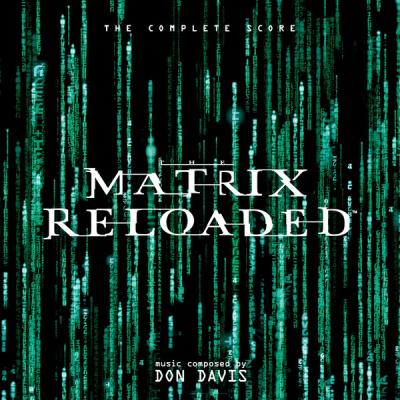
Matrix Reloaded Album Cover

"Matrix Reloaded" Soundtrack Lyrics

Movie • 2003

Track Listing


"The Matrix Reloaded: The Album (Music from the Motion Picture)" – Album Guide to Tracks and Key Scenes

The Matrix Reloaded 2003 trailer frame with Neo and Trinity in bullet-time action pose
The Matrix Reloaded (2003) – trailer imagery that cemented the soundtrack’s mix of metal, trance and orchestral score in pop culture.

Overview

Can a blockbuster sequel still feel subversive when its soundtrack is full of mall-metal and club trance? In 2003, The Matrix Reloaded: The Album (Music from the Motion Picture) tried exactly that. The film dives deeper into the lore of the Matrix; the album mirrors this by splitting reality in two: Disc 1 for songs “from and inspired by” the movie, Disc 2 for Don Davis’ hybrid orchestral–electronic score.

Disc 1 is where the franchise’s pop image lives. Linkin Park, Marilyn Manson, Rob Zombie, P.O.D., Rage Against the Machine and others supply compressed, aggressive tracks that sound like the early-2000s compressed into 70-odd minutes. These songs sit over credits, promos and some in-film sequences, but they also function as their own snapshot of nu metal, industrial and alternative rock at the moment the trend was peaking and starting to wobble.

Disc 2 is the other side of the mirror. Don Davis expands the symphonic language he established in the 1999 film, then welds it to Juno Reactor’s trance machinery and Rob Dougan’s dark orchestral electronics. Long-form cues like “Mona Lisa Overdrive”, “Burly Brawl” and the “Matrix Reloaded Suite” pull you through entire set-pieces with almost no dialogue, turning the film’s action into something closer to a wordless opera.

Structurally, the soundtrack traces the sequel’s own arc: arrival, adaptation, rebellion, collapse. The early songs lean hard into slick, consumer-facing aggression (nu metal, industrial rock) that matches the film’s surface cool. Midway, the score and electronica start to dominate, reflecting Neo’s deeper entanglement with code and prophecy. By the finale and end credits, you get a three-part sequence – Rage Against the Machine, P.O.D. and a Dave Matthews Band/Oakenfold remix – that plays like an argument over what the Matrix means: revolution, religion, or just one more product cycle.

How It Was Made

Warner Bros. and Maverick Records released The Matrix Reloaded: The Album on April 29, 2003 as a two-disc set, unusual for the time because it bundled both songs and excerpts from the score instead of selling them separately. Disc 1 collects 11 tracks by various artists; Disc 2 condenses key cues from Don Davis’ score and his collaborations with Juno Reactor and Rob Dougan into a 7-track, 40-minute mini-album. According to label notes, the total runtime lands around 93 minutes, which made it one of the more generous soundtrack packages on shelves that year.

Davis wrote more than what appears on this commercial album. A later limited-edition 2-CD set from specialty label La-La Land expanded the score to over 150 minutes, restoring cues like “Main Title/Trinity vs. Car”, “Smith at the Door”, “Morpheus on the Mount/Zion Drum Source” and alternate versions of major set-pieces. That release confirmed how the movie’s final tracks sometimes splice together Davis’ orchestral writing with outside beats: the liner notes explicitly mention “Double Trouble” being altered to incorporate Paul Oakenfold’s “Dread Rock” during the Twins’ pursuit of the Keymaker.

On the song side, the album functions as a small industry summit. Linkin Park contribute the instrumental “Session”; Marilyn Manson offers “This Is the New Shit”; Rob Zombie, Rob Dougan, Deftones, Team Sleep, Fluke, P.O.D. and others fill out the rest. “Sleeping Awake” by P.O.D. was commissioned as the lead single, its lyrics (“dreaming of Zion awake”) written directly in response to the film’s mythology. The band later said that working on the track arguably kept them together during a turbulent period, a rare case of a soundtrack gig influencing a group’s internal story.

The real experiment, though, is in the score’s texture. Davis keeps his signature brass stabs and dissonant clusters, but integrates Juno Reactor’s trance pulses and Japanese taiko drummers (via “Teahouse”) to push fight scenes into quasi-techno territory. Rob Dougan returns from the first film’s “Clubbed to Death” fame with new material like “Furious Angels” and “Chateau”, both orchestrally dense pieces that sit halfway between film score and club track. It is an aggressive fusion, and it gives Reloaded its distinct sound compared with more traditional symphonic sequels.

Studio-like still from the Matrix Reloaded trailer hinting at orchestral score merged with digital rain visuals
Behind the scenes, Don Davis’ score sessions and electronic collaborations defined how Reloaded would sound, not just how it would look.

Tracks & Scenes

What follows focuses on concrete, verifiable placements. For some pieces we know exact uses; for others, we lean on well-documented fan and critic descriptions. Think of this as a guided tour of the moments where picture and music fuse most strongly.

"Furious Angels" (instrumental) — Rob Dougan
Where it plays: The film opens in medias res with a dream – Trinity on a motorcycle, plunging through glass, confronting Agents in the air before falling. In the finished cut, the instrumental form of “Furious Angels” underpins Neo’s nightmare and the short, brutal skirmish with three Agents in the building lobby/rooftop setup. The piece uses chopped breaks, choral pads and piano, pushing hard but staying just under the level of full rock song. It is non-diegetic, flooding the soundscape while Trinity says almost nothing.
Why it matters: This is Reloaded announcing that it won’t repeat the first film’s exact musical formula. Instead of re-using “Clubbed to Death”, the sequel calls on Dougan for a new, more anxious theme that turns Neo’s prophetic visions into something closer to a panic attack.

"Zion" — Fluke
Where it plays: During the infamous Zion “rave” sequence, Morpheus gives a speech to the citizens about the machines’ imminent attack, then the crowd descends into a sweating, dust-kicking celebration deep in the city’s caverns. As the camera cuts between the pounding drummers, dancing bodies and Neo and Trinity’s parallel love scene, Fluke’s “Zion” drives the rhythm with layered percussion and a slowly evolving electronic groove. The cue blends into and out of Don Davis’ “Morpheus on the Mount/Zion Drum Source” material, but “Zion” is the backbone of the dance passage.
Why it matters: The scene splits fans, but musically it is crucial. “Zion” is one of the few overtly diegetic tracks: these people are dancing to something. It makes the human city feel dirty, physical and tribal, as far away from green Matrix code as possible.

"Burly Brawl" — Juno Reactor vs. Don Davis
Where it plays: Neo meets Agent Smith in a rainy courtyard, only to watch him replicate into dozens, then hundreds, of copies. The resulting fight – known universally as the “Burly Brawl” – starts with purely orchestral writing and slowly layers in Juno Reactor’s trademark trance pulses and synthetic percussion. As Neo whips polearms around and uses Smiths themselves as weapons, the cue’s choral stabs and rhythmic hits escalate, only to drop out into near-silence right before particularly heavy slow-motion beats.
Why it matters: This track is the thesis for the score’s hybrid approach. The choral writing sells the scene’s mythic scale; the electronics remind you that it is still a digital simulation, more game than reality. On album, it stands as one of the best examples of early-2000s film score flirting with club music without collapsing into generic “trailer” sound design.

"Chateau" — Rob Dougan
Where it plays: Neo storms the Merovingian’s mansion to rescue the Keymaker, ending up in a multi-level weapons room where pale, vampire-like henchmen attack with swords, axes and antique pistols. “Chateau” kicks in as the camera circles Neo grabbing weapons off the wall mid-combat. The music is all strings, choir hits, harpsichord flourishes and relentless rhythm, cut with drum loops that feel seconds away from a dancefloor drop. Every slow-motion bullet dodge or wall-run lands exactly on a musical accent.
Why it matters: According to several soundtrack guides, this is one of the most requested pieces from the film. It turns a complex bit of wire-fu choreography into something resembling a baroque music video and shows how precisely the Wachowskis and Dougan synced stunt footage to musical beats.

"Mona Lisa Overdrive" — Juno Reactor & Don Davis
Where it plays: During the freeway chase, Trinity and the Keymaker weave in and out of insane traffic while Morpheus battles the Twins on top of trucks and agents possess drivers mid-journey. “Mona Lisa Overdrive” begins as the heroes exit the chateau, grows as they merge onto the highway, and then runs almost uninterrupted as cars flip, trucks jack-knife and an agent-possessed semi aims for a head-on collision. The track’s ten-minute structure – rising arpeggios, phased percussion, synthesized choirs – matches the escalating danger beat for beat.
Why it matters: As one critic put it, this cue is basically Goa trance translated into blockbuster action geometry. It is one of the rare modern action scenes where you can’t imagine the visuals without the music.

"Komit" — Juno Reactor & Don Davis
Where it plays: A recurring mid-film motif, “Komit” is most famously heard when Link comments that Neo is “doing the Superman thing” and we cut to an aerial shot of him flying above the clouds. The cue layers processed choirs and a steady, hypnotic beat while the camera glides past skyscrapers and storms, turning Neo’s flight into something between religious ascension and superhero flex.
Why it matters: This is the musical sound of overpowered comfort. Nothing is chasing Neo; nothing is exploding. “Komit” sells the brief illusion that he has things under control, making the later failures hit harder.

"Double Trouble" / "Dread Rock" — Don Davis (cue) & Paul Oakenfold
Where it plays: As the heroes escape the Merovingian’s chateau with the Keymaker, the Twins pursue them through corridors and up into the on-ramp that spills onto the freeway. The cue known as “Double Trouble” provides the orchestral skeleton – short, stabbing figures, tense strings, electronic pulses. In the final mix, the beat from Oakenfold’s “Dread Rock” is laid under parts of it, giving the pursuit a big-beat, club-remix drive.
Why it matters: This is where the soundtrack’s “music from and inspired by” marketing becomes literal. The film is already using Davis’ composition; adding Oakenfold’s rhythm turns it into something closer to the compilation’s Disc 1 tracks, blurring the line between score and song.

"Calm Like a Bomb" — Rage Against the Machine
Where it plays: After the Architect scene and Neo’s dramatic choice, the film cuts hard to credits. The opening guitar figure of “Calm Like a Bomb” crashes in over the first names, with Zack de la Rocha’s vocal coming in soon after. No diegesis, no subtlety: it is pure end-credit release, played loud enough in theaters to feel like an extra punch in the chest.
Why it matters: The first film ended with Rage’s “Wake Up”; Reloaded chooses a later album cut with more explicit imagery of explosions and uprising. It signals continuity – this is still a story about resistance – but also hints that the revolution is messier and more ambiguous than the first film suggested.

"Sleeping Awake" — P.O.D.
Where it plays: Following “Calm Like a Bomb”, P.O.D.’s “Sleeping Awake” slides into the credits, its chugging guitars and insistently spiritual lyrics running over the mid-section of the scroll. Anecdotal reports note that some of the more overt “Zion” references in the chorus are dialled down or cut in the film mix, but the song remains clearly identifiable as the Matrix tie-in single.
Why it matters: Written specifically for the movie, this is the album’s most direct lyrical engagement with the story. Lines about waking up, seeing “what’s real” and dreaming of Zion map neatly onto Neo’s own increasing disillusionment with both the Matrix and the prophecy.

"When the World Ends (Oakenfold Remix)" — Dave Matthews Band & Paul Oakenfold
Where it plays: As the credits continue, Rage and P.O.D. give way to a smoother but still apocalyptic-sounding remix of Dave Matthews Band’s “When the World Ends”. Oakenfold stretches the original’s ballad structure into a slow, pulsing electronic piece, laying Matthews’ voice over wide pads and delayed beats while the final names roll.
Why it matters: Ending on this track is a dark joke: the film has just raised the stakes to machine invasion and systemic failure, and the credits close with a love song about staying together when everything collapses. It completes the trilogy of end-credit tracks: revolt, religious vision, intimate apocalypse.

"Session" — Linkin Park
Where it plays: On the album, “Session” is Disc 1’s opener – a scratch-heavy, mostly instrumental Linkin Park track that introduces the compilation’s modern, processed aesthetic. In the broader Matrix universe, it is tied to Reloaded’s campaign and atmosphere rather than a single, iconic on-screen scene, but it has become synonymous with the era for many fans.
Why it matters: The track demonstrates how comfortable the franchise is with then-contemporary rock production: compressed drums, glitchy samples, chopped vocals. It also gave Linkin Park a high-profile film association at a time when their own popularity was exploding.

Trailer-only and non-album highlights
Beyond the official album, several tracks gained notoriety through trailers and marketing rather than the film itself. Rob Dougan’s “I’m Not Driving Anymore (Instrumental)” underscores parts of the theatrical trailer, alongside cues like “The Wonders of You” by Andy Hunter and “Supermoves” by Overseer. These pieces never appear on the main album but shaped how audiences first “heard” Reloaded months before release, much as “Clubbed to Death” did for the original film’s early trailers.

Highway chase and chateau fight glimpses from the Matrix Reloaded trailer, tied to key music cues
Set-pieces like the chateau fight and highway chase are built around cues such as “Chateau” and “Mona Lisa Overdrive”, not the other way around.

Notes & Trivia

  • The commercial album splits neatly: Disc 1 is songs (largely metal/electronica), Disc 2 is mostly Don Davis score plus collaborations with Juno Reactor and Rob Dougan.
  • A later limited-edition 2-CD score release runs to about 150 minutes, roughly double the music heard on the standard soundtrack’s second disc.
  • “Mona Lisa Overdrive” first appeared here; Juno Reactor later issued a different version on their 2004 album Labyrinth.
  • Some score cues were partly replaced in the film mix; for the Twins’ chase, “Double Trouble” was altered to incorporate the beat from Paul Oakenfold’s “Dread Rock”.
  • “Sleeping Awake” served as P.O.D.’s lead single in 2003 and later appeared as a bonus track on certain editions of their album Payable on Death.
  • The soundtrack reached the US Billboard 200 and topped out just outside the top 10 on the dedicated Soundtrack Albums chart, with healthy charting in several European territories.

Music–Story Links

The soundtrack’s structure mirrors Neo’s journey. “Furious Angels” and the early score cues tie his prophetic dreams to pounding, anxious electronics: even his visions sound like club tracks glitching. As he dives deeper into the system, the Juno Reactor collaborations (“Teahouse”, “Burly Brawl”, “Mona Lisa Overdrive”) take over, making fights feel more like rituals than brawls.

Zion’s material, by contrast, is all bodies and drums. Fluke’s “Zion” and the associated drum-source cues underscore that the city is built on flesh, sweat and community, not code. The fact that the Zion dance is one of the few scenes with clearly diegetic music emphasizes this difference: people are actually there, hearing it, not just the audience.

The end-credit suite tracks Neo’s ideological whiplash. Rage Against the Machine’s “Calm Like a Bomb” insists on revolution as the answer to the Architect’s manipulation. P.O.D.’s “Sleeping Awake” reframes the same problem as a spiritual test: are you awake or still dreaming? “When the World Ends (Oakenfold Remix)” pulls the focus back down to two people holding on to each other as systems fail. It is almost an outline of the trilogy’s competing readings.

Even small placements help define characters. “Komit” plays when Neo flies because, at that point, he still feels like a superhero with admin rights. Once he encounters the Architect and realises how many times this story has played out, purely triumphant cues vanish; dissonant brass and unresolved harmonies take their place. You can chart his dawning horror just by listening to how the score abandons the simpler heroic gestures.

Reception & Quotes

Contemporary reviews of The Matrix Reloaded: The Album were mixed but interested. Some critics praised the compilation for capturing the early-2000s collision of nu metal, industrial and big-beat electronica; others argued that Disc 1 felt like a label sampler stapled to a much more intriguing score on Disc 2. The two-disc format itself drew attention, since most films still released songs and scores separately.

On the score side, writers tended to be more positive. Film-music outlets highlighted Davis’ ability to expand his original harmonic language while keeping the series’ musical identity intact, and pointed to the Juno Reactor collaborations as rare examples of electronic–orchestral fusion that genuinely advanced both elements rather than reducing one to wallpaper for the other.

Fans, meanwhile, continue to debate the album’s best entry points. For some, the holy trinity is “Burly Brawl”, “Chateau” and “Mona Lisa Overdrive”. Others treat the compilation as a time capsule, returning mainly for Linkin Park’s “Session”, Rage’s “Calm Like a Bomb” and P.O.D.’s tie-in single. Either way, the consensus is that Reloaded’s soundtrack pushed harder and weirder than a safe sequel needed to.

A hybrid of orchestral heft and club electronics that turns set-pieces into extended dance tracks for brass and choirs. — film score review, early 2000s
The two-disc approach feels bloated, but the highlights — especially Mona Lisa Overdrive and Chateau — are undeniable. — contemporary music press summary
A nu-metal time capsule welded to one of the most daring big-studio scores of its decade. — retrospective soundtrack column
Whatever you think of the film, the sound design and music remain propulsive, inventive and oddly emotional. — mainstream film review
Matrix Reloaded trailer closing image of Neo in the sky, echoing the film’s end credits songs
End credits run from Rage Against the Machine to P.O.D. to Dave Matthews Band/Oakenfold – three different ways to soundtrack the end of a world.

Interesting Facts

  • The album’s total runtime (about 93 minutes) means it nearly maxes out the practical capacity of a two-disc commercial release from the CD era.
  • “Session” later earned Linkin Park a Grammy nomination for Best Rock Instrumental Performance, partly on the strength of its Matrix association.
  • “Mona Lisa Overdrive” has been reused in contexts as varied as rhythmic gymnastics routines and fan edits of the highway chase sequence.
  • The album sits between The Matrix: Original Motion Picture Score (1999) and The Animatrix: The Album (2003) in the franchise’s soundtrack chronology.
  • Several cues on the limited-edition score release combine multiple short film cues into longer, album-friendly tracks like “Main Title/Trinity vs. Car” and “The Wonder of Zion/The Lascivious Lift/Link and Zee”.
  • Although Davis’ score carries over motifs from the first film, he intentionally avoids simply repeating earlier cues, instead twisting harmonies and rhythms to reflect Neo’s uncertain role as “The One”.
  • The compilation’s chart performance was stronger in Europe than in the US, with mid-tier placements in countries like Switzerland, Spain and Germany.

Technical Info

  • Title: The Matrix Reloaded: The Album (Music from the Motion Picture)
  • Film: The Matrix Reloaded (2003), directed by Lana and Lilly Wachowski
  • Year of album release: 2003 (primary commercial release April 29, 2003)
  • Type: Two-disc soundtrack album – Disc 1 (songs), Disc 2 (score)
  • Primary composer: Don Davis (film score)
  • Key collaborators (score): Juno Reactor (Ben Watkins), Rob Dougan, Fluke
  • Selected artists (Disc 1): Linkin Park, Marilyn Manson, Rob Zombie, Deftones, P.O.D., Rage Against the Machine, Dave Matthews Band (Oakenfold remix), Rob Dougan, Fluke, Team Sleep
  • Lead single: “Sleeping Awake” — P.O.D.
  • Label: Warner Bros. / Maverick
  • Length: Approx. 93 minutes total (both discs)
  • Notable score tracks on Disc 2: “Main Title”, “Teahouse”, “Chateau”, “Mona Lisa Overdrive”, “Burly Brawl”, “Matrix Reloaded Suite”
  • Notable in-film-only placements: “Komit” (Juno Reactor & Don Davis), “Zion” (Fluke), “Double Trouble” (Don Davis, modified with “Dread Rock” by Oakenfold)
  • Charts (selected): US Billboard 200 (top 150), US Soundtrack Albums top 10; mid-chart peaks in several European markets.
  • Expanded score: The Matrix Reloaded: Limited Edition 2-CD score album, limited pressing via La-La Land Records, over 150 minutes of music.

Questions & Answers

Why does The Matrix Reloaded have a two-disc soundtrack instead of separate song and score albums?
The studio and label packaged everything together: Disc 1 for songs “from and inspired by” the movie, Disc 2 for Don Davis’ hybrid score. It was a marketing flex and a way to position Reloaded as an event release.
Which track plays during the highway chase?
The bulk of the freeway sequence is driven by “Mona Lisa Overdrive” by Juno Reactor & Don Davis, a ten-minute trance/score hybrid written specifically for that set-piece.
What is the music in the chateau fight?
When Neo battles the Merovingian’s henchmen in the weapons room, the cue is “Chateau” by Rob Dougan – a baroque-tinged, rhythm-heavy piece on Disc 2 of the album.
What songs run over the end credits?
The first stretch of credits uses “Calm Like a Bomb” by Rage Against the Machine, followed by P.O.D.’s “Sleeping Awake” and then Dave Matthews Band’s “When the World Ends (Oakenfold Remix)”.
Is all the music in the film actually on The Matrix Reloaded: The Album?
No. Some score cues only appear on the later expanded score release, and certain trailer tracks and alternate versions are found only on other albums or compilations.

Canonical Entities & Relations

Subject Relation Object
Don Davis composed score for The Matrix Reloaded (film)
Juno Reactor (Ben Watkins) collaborated with Don Davis on “Mona Lisa Overdrive”, “Burly Brawl” and “Komit”
Rob Dougan composed “Furious Angels” and “Chateau” for The Matrix Reloaded
Fluke performed “Zion” for the Zion dance sequence
P.O.D. wrote and performed “Sleeping Awake” as the film’s lead single
Rage Against the Machine performed “Calm Like a Bomb” over the opening end credits
Dave Matthews Band & Paul Oakenfold provided “When the World Ends (Oakenfold Remix)” for the closing credits
Warner Bros. / Maverick released The Matrix Reloaded: The Album (Music from the Motion Picture)
La-La Land Records issued The Matrix Reloaded: Limited Edition expanded score
The Matrix Reloaded: The Album is part of The Matrix soundtrack chronology between the 1999 score and The Animatrix: The Album
Lana and Lilly Wachowski wrote and directed The Matrix Reloaded (film)

Sources: official album notes and label credits; Wikipedia and Matrix Wiki discography entries; soundtrack specialty reviews and articles; soundtrackinfo.com Q&A; La-La Land Records release information; mfiles and other film music reviews; fan-verified scene–song breakdowns and archival forum threads.

November, 15th 2025


A-Z Lyrics Universe

Lyrics / song texts are property and copyright of their owners and provided for educational purposes only.