Soundtracks:  A B C D E F G H I J K L M N O P Q R S T U V W X Y Z #


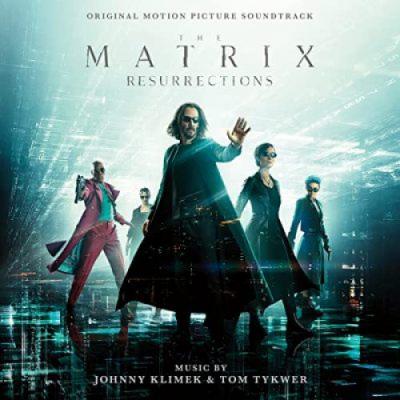
Matrix Resurrections Album Cover

"Matrix Resurrections" Soundtrack Lyrics

Movie • 2021

Track Listing


"The Matrix Revolutions: Music from the Motion Picture" – Album Guide to Tracks and Key Scenes

The Matrix Revolutions official trailer still with Neo facing the Machine City
The Matrix Revolutions score and imagery – war at Zion and the road to the Machine City

Overview

How do you score the end of the world when the heroes are half-coded and half-messianic? The Matrix Revolutions: Music from the Motion Picture answers by going bigger, darker and more choral than anything the series had tried before. Don Davis closes his three-film “symphony” with a soundtrack that feels like a slow eruption: arrival in the war, adaptation to the desperate new rules, rebellion against both machines and destiny, and finally a kind of luminous collapse.

The film finishes the trilogy’s arc: Zion under siege, the docks drowning in Sentinels, Neo blind and bargaining his way to the Machine City, and a last stand against the endless Smiths in a rain-soaked nightmare. The score tracks that escalation with dense, dissonant writing for huge orchestra and choir, then gradually pulls in an ancient Sanskrit prayer as the story leans into outright myth. By the time “Neodämmerung” hits in the final fight, the music has shifted from cyberpunk suspense to something closer to an apocalyptic oratorio.

Unlike the first two films, Revolutions mostly abandons the jukebox approach. According to the film’s own production notes, there is essentially one external band track in the narrative (“In My Head” by Pale 3), with the rest handled by Davis and his collaborators. The album mirrors that focus: sixteen tracks, mostly continuous score, moving from tense train-station minimalism to the massive choral blasts of the finale and the trance-infused end credits of “Navras”. It is less about cool needle-drops and more about welding the trilogy’s musical ideas into a single towering structure.

You can hear clear phases across the runtime. Early cues like “The Trainman Cometh” and “In My Head” sit in a brutal, industrial-EDM hybrid zone: pounding drums, distorted bass, metallic hits. Mid-film Zion battle cues (“Men in Metal”, “Moribund Mifune”, “Kidfried”) lean into militaristic rhythms and snarling brass, all grit and desperation. The last stretch — “Trinity Definitely”, “Neodämmerung”, “Why, Mr. Anderson?”, “Spirit of the Universe”, “Navras” — shifts toward choral writing, high-register strings and harmonic release, turning a hacker saga into straight-up religious opera. Industrial elements signal the machine hive. Orchestral mass signals faith, sacrifice and the thin hope of peace.

How It Was Made

Don Davis approached the Matrix trilogy as one long symphonic project, with Revolutions as the final movement. He had already established a sound in the first film: jagged string clusters, brass that cuts like razors, and electronic textures sitting under the orchestra rather than on top. For Reloaded he added heavier collaboration with Juno Reactor and Rob Dougan, which gave the highway and chateau fights their club edge. With Revolutions, he deliberately pushed back toward pure orchestral-and-choral weight while still keeping Juno Reactor in key action moments.

The score was recorded in 2003 at the Newman Scoring Stage on the Fox lot with the Hollywood Studio Symphony, using a very large orchestra and choir. Sessions covered multiple blocks in August and September, allowing Davis to refine motifs that had been seeded in the earlier films. A later La-La Land Records release in 2014 reconstructed almost the complete score across two CDs, making it clear how tightly he develops his material from film to film.

One of the most important creative decisions came from the Wachowskis bringing Davis the Pavamana Mantra — “lead me from untruth to truth, from darkness to light, from death to immortality” — and asking him to embed it in the climactic music. He initially worried about wasting a large choir on simple vowels; the mantra solved that problem and fit the story’s spiritual tilt. The result is “Neodämmerung”, a piece that fuses Wagnerian end-of-the-world gestures with Sanskrit text from the Brihadaranyaka Upanishad, and then “Navras”, a Juno Reactor vs. Davis remix that turns the same material into rolling, trance-like credits music.

Production-wise, Revolutions is also leaner on outside bands. The 2003 album is almost entirely Davis, with Juno Reactor co-producing two cues and Pale 3 contributing the single vocal track “In My Head”. A Spanish-language summary of the album notes that, unlike The Matrix and Reloaded, there was no separate “songs” compilation this time — just the score album. That choice makes the soundtrack feel more like a unified composition than a collage.

Battle for Zion visualized in The Matrix Revolutions trailer thumbnail with Sentinels swarming
Recording and mixing focused on large orchestra, choir, and tightly integrated electronics

Tracks & Scenes

Times are approximate and refer to the original 2003 cut.

"The Matrix Revolutions Main Title" – Don Davis
Where it plays: Over the opening logos and title, this cue reprises the signature Matrix brass stabs and string clusters while the green code rain pours down. It is non-diegetic and tightly synchronized to the classic title reveal and transition into the Logos ship material.
Why it matters: It frames the film as a direct continuation of the previous two scores, restating the core intervallic idea that has been running since 1999 before the movie dives into new territory.

"The Trainman Cometh" – Juno Reactor & Don Davis
Where it plays: Early in the film in Mobil Ave, as Neo realizes he is trapped in a limbo subway station controlled by the Trainman and meets Rama-Kandra and his family. The cue moves from distant, rumbling percussion to an almost industrial pulse as the Trainman appears and as the train roars through the station.
Why it matters: It marks a tonal shift: the Matrix is no longer just a sleek late-90s simulation; it has strange in-between spaces with their own rules, and the music feels more chaotic and mechanical than in earlier films.

"In My Head" – Pale 3
Where it plays: In Club Hel, when Trinity, Morpheus and Seraph descend into the Merovingian’s underground BDSM club. As they walk through the crowd, the track thunders diegetically through the PA system: distorted guitars, grinding synths, and a sultry vocal loop. The camera moves in slow, predatory passes as bodies twist under strobe lights and chains hang from the ceiling.
Why it matters: It is the film’s only major non-score needle-drop, and it paints Club Hel as a kind of infernal remix of the original Matrix nightclub. The lyrics and oppressive groove underline how transactional and corrupted this corner of the simulation has become.

"Tetsujin" – Juno Reactor & Don Davis
Where it plays: Still in Club Hel, as the three doormen attack and the fight explodes across floor, ceiling and walls. The cue brings in heavy taiko-style drumming and aggressive electronic loops, tightly cut to the choreography as Seraph and Trinity run along the ceiling and Morpheus dives for dropped weapons.
Why it matters: This is the last big “cool” club fight of the trilogy, and the music leans into that, echoing the tea-house fight sound from Reloaded but making it harsher. It reminds you how much the series has relied on rhythm to sell gravity-defying combat.

"The Road to Sourceville" – Don Davis
Where it plays: Around scenes of Neo’s body in the real world as the Nebuchadnezzar’s successor ship pushes toward the Machine City and the crew prepares for the final leg of the journey. The cue is brief but tense, layering low strings and brass over ticking patterns.
Why it matters: It works as connective tissue between the human-scale drama in Zion and the more abstract, mythic journey Neo is about to take into machine territory.

"Niobe's Run" – Don Davis
Where it plays: During the sequence where Niobe pilots the Logos through maintenance tunnels and cramped conduits to bring an EMP to Zion. The camera rides the ship as it threads impossible gaps, while the music races with propulsive ostinatos, cluster chords and sudden cuts whenever the ship scrapes the walls.
Why it matters: It is one of the purest action cues in the score: no choir, just grinding orchestral motion. It makes Niobe’s skill feel like a superpower and shows how much of the war’s outcome rests on her choices.

"Men in Metal" – Don Davis
Where it plays: In the Zion dock battle, as the APU suits roll out and Mifune leads the human defenders against the drilling Sentinels. The cue pounds in 5/4 and 7/4 patterns, with brass snarls and low-choir stabs cutting through the metallic SFX.
Why it matters: This is the musical voice of Zion’s industrial war machine. It is brutal and nearly atonal, but every rhythmic punch lines up with loader cannons and Sentinel swarms, selling the scale of the onslaught.

"Moribund Mifune" – Don Davis
Where it plays: As Captain Mifune makes his last stand in the broken APU, screaming at the kid to “open that gate” while Sentinels tear his suit apart. The music blends harsh brass and desperate string writing with a grim harmonic descent that does not resolve.
Why it matters: It gives one of the series’ most human deaths a full tragic frame. No techno, no stylization, just a doomed soldier buying time with his life.

"Kidfried" – Don Davis
Where it plays: Immediately after Mifune falls, Kid drags himself to the cannons, fires blindly at the oncoming Sentinels and finally triggers the docking gate for Neo’s ship. The cue starts in shell-shocked quiet, then swells into a rough, almost heroic version of the Zion battle material as the gate opens and civilians cheer.
Why it matters: It converts an anxious side character into a legitimate savior figure in a single musical beat. The title itself is a nod: the kid is “fried” in the battle, but also freed into a new role.

"Trinity Definitely" – Don Davis
Where it plays: On the Logos’s final flight to the Machine City and during Trinity’s death. You hear it as the ship rises above the cloud layer into sunlight, then crashes back down into a forest of cables and towers. As Neo and Trinity say goodbye, the cue leans hard into their love theme, now fully developed with strings, horns and choir.
Why it matters: This is the emotional breaking point of the trilogy. The music lets go of most of the series’ dissonance and gives the relationship a long, clear melodic line just before the story takes Neo away as well.

"Neodämmerung" – Don Davis
Where it plays: In the final battle between Neo and Smith in the rain-drenched crater, after Neo has negotiated with the Deus Ex Machina and re-entered the Matrix one last time. The choir sings fragments of the Pavamana Mantra over pounding orchestra as the two slam into each other with so much force that they blow rain away in shockwaves.
Why it matters: This is the musical summit of the trilogy: Wagner-sized, spiritually loaded, and unashamedly grand. According to one often-cited analysis of the mantra’s use, the text itself tracks Neo’s path from illusion to sacrifice, which gives the cue more than just surface bombast.

"Why, Mr. Anderson?" – Don Davis
Where it plays: Intercut with “Neodämmerung”, especially around Smith’s monologues about purpose, inevitability and the futility of choice. The music thins out under dialogue — high strings, unresolved brass chords — then slams back in as punches land and the camera pulls wide on the crater.
Why it matters: It keeps the duel from feeling like a pure visual spectacle. You can hear the score teetering between dread and reluctant hope, matching Neo’s decision to lose in order to win.

"Spirit of the Universe" – Don Davis
Where it plays: After Neo’s body is carried away by the machines and the war stops, this cue underscores the images of Sentinels withdrawing from Zion, people climbing out of bunkers and the city bathed in new light. It continues into the scene with the Oracle and Sati watching the sunrise in the rebuilt Matrix.
Why it matters: It is the closest the trilogy gets to a peaceful epilogue. The harmony finally stabilizes, and the choral writing turns from aggressive to contemplative, suggesting that the reprieve might be fragile but real.

"Navras" – Juno Reactor vs. Don Davis
Where it plays: Over the end credits, beginning immediately after the Oracle and the Architect’s brief exchange and the wide shot of the new sunrise. The track remixes “Neodämmerung”’s choral material into a driving trance piece, with added percussion, synth lines and extended choral sections repeating the mantra text.
Why it matters: It functions as a victory lap and a coda. After the grey-green oppression of the trilogy, the music suddenly feels strangely joyful, even if the chord progressions remain serious. It also made its own life outside the film, turning up in sports, gymnastics and later Juno Reactor releases.

"Neodämmerung" (Trailer Excerpt) – Don Davis
Where it plays: In at least one of the major theatrical trailers, the choral climax of “Neodämmerung” is cut in under quick shots of Zion’s defense and the Neo–Smith showdown. The choir hits as the tagline “Everything that has a beginning has an end” appears, then cuts off on a hard visual blackout.
Why it matters: Using unfinished score material in marketing was risky, but it paid off: the trailer essentially promised that the final chapter would be as much apocalyptic opera as cyberpunk action.

Neo and Smith facing off in the rain during The Matrix Revolutions trailer
Key cues like “Neodämmerung” and “Navras” fuse Sanskrit prayer, orchestral weight and trance production

Notes & Trivia

  • Revolutions uses far fewer licensed songs than the first two films; a production summary notes that only one non-score track plays prominently in the story.
  • Club Hel actually features multiple cues: Pale 3’s “In My Head” at the entrance, then “Tetsujin” and related score segments during the fight.
  • The Pavamana Mantra text that powers “Neodämmerung” and “Navras” comes from the Brihadaranyaka Upanishad and is a classic “from darkness to light” prayer.
  • “Navras” later reappeared in Juno Reactor’s album Labyrinth, where it is explicitly framed as a remix of “Neodämmerung”.
  • A 2014 La-La Land Records edition nearly doubles the available music, expanding the original 66-minute album to a 128-minute, two-disc score release.
  • The main album was originally an enhanced CD, including a trailer, a Matrix comic preview and a small PC game as extras.

Music–Story Links

The soundtrack maps cleanly onto the film’s structure: arrival, adaptation, rebellion, collapse. “The Trainman Cometh” and “In My Head” sit in the arrival/adaptation phase, where Neo, Trinity and the audience step into liminal or underworld spaces — a ghost subway and a hell-club — that stretch the rules of the simulation. The music in both cases feels disoriented and industrial, telling us that normal Matrix logic no longer applies.

The dock battle material, from “Men in Metal” through “Kidfried”, scores rebellion in the most literal sense: human bodies in machines fighting a machine hive. Here Davis keeps the harmony jagged and the rhythm unforgiving, which makes each human death feel like another note in a relentless process. When the EMP finally fires and the Sentinels drop, the score pauses, almost as if the system itself has glitched.

The collapse phase is paradoxical. “Trinity Definitely” sounds like emotional collapse; “Neodämmerung” sounds like cosmic collapse; “Spirit of the Universe” and “Navras” sound like a world resetting itself with new parameters. The Upanishadic text, with its plea to move from unreality to reality and from death to immortality, mirrors Neo’s bargain: accept personal annihilation in exchange for a temporary armistice and a rewired Matrix.

Character-wise, the score quietly repositions Neo. His motif is less prominent than in the first film; instead, the music often treats him as part of a larger tapestry. Zion has its own recurring gestures, the machines have theirs, Smith has his decaying variants of earlier ideas, and the choir sits above all of them. The message is pretty clear: by the end of Revolutions, Neo is not just “the One” but a node in a much larger, stranger system — and the music supports that by constantly balancing his theme against everything else.

Reception & Quotes

Among film-music fans, the Matrix Revolutions score is often considered the high point of Davis’s trilogy. A long-running review site describes it as the culmination of ideas planted in 1999 and expanded in 2003, with Revolutions pushing them toward “a victorious finale of religious proportions”. Others note that it can feel overwhelming on album, especially in its expanded two-disc form, but rarely accuse it of being generic.

“One of the most exciting and challenging mainstream sci-fi scores of its era… the trilogy’s ideas coalesce into a genuinely symphonic conclusion.”
Filmtracks review summary
“You can just tell from the music how epic and big Don Davis was trying to make this score… he used a gigantic orchestra to score the film.”
ReadJunk soundtrack review
“Neodammerung… this is one of the best written pieces of a score I’ve heard in a movie.”
Contemporary fan-critic essay

Mainstream critics at the time were more divided about the film than about the score. Many reviews that slammed the story’s metaphysics still singled out the dock battle and the Neo–Smith showdown as audiovisual high points, largely because of how tightly the music locks to the imagery. Over time, the score has aged well: it is regularly cited as a template for big, choral-heavy sci-fi music that still keeps a strong, slightly alien identity.

On the availability side, the original 2003 album from Warner Bros./Maverick remains on streaming platforms and digital stores, while the 2014 La-La Land edition is aimed squarely at collectors, with nearly the entire recorded score and detailed liner notes about recording dates and cue construction.

The Matrix Revolutions trailer thumbnail with Zion defense and green Matrix code
Critical conversation often centers on the final battle and the choral writing that accompanies it

Interesting Facts

  • “Neodämmerung” literally plays under the line “Mr. Anderson, welcome back”, turning a simple villain greeting into the start of a choral apocalypse.
  • The Sanskrit mantra heard in “Neodämmerung” and “Navras” has been used in contexts as varied as governmental economic reports and progressive rock albums.
  • “Navras” quickly escaped the film world, turning up in rhythmic gymnastics routines at the 2004 Olympics and later in club remixes and live Juno Reactor sets.
  • The 2014 double-CD release effectively reveals cue titles that film-only viewers never see, like “Deus Ex Machina” and “Bridge of Immortality”.
  • Compared to the heavy band presence on the first Matrix soundtrack, the Revolutions album has only one non-score artist track credited on its front cover.
  • “Tetsujin” and “In My Head” are among the few Matrix cues that live almost entirely in diegetic club space, heard “in-world” by characters rather than just the audience.
  • Juno Reactor’s later album Labyrinth not only reuses “Navras” but lists key musicians — including taiko group Gocoo and multiple percussionists — who also shape the Revolutions sound.
  • The dock-battle material is demanding enough that it has become a favorite programming choice for film-music concerts trying to show off large choirs and brass sections.
  • Because the main album is only about 66 minutes long, a significant amount of battle underscore was unavailable until the 2014 expansion arrived.
  • The Revolutions score effectively closes the “Don Davis era” of the franchise; later films shift to different composers and a more explicitly electronic palette.

Technical Info

  • Title (album): The Matrix Revolutions: Music from the Motion Picture
  • Film: The Matrix Revolutions (feature film, 2003)
  • Type: Original motion picture soundtrack (score-focused)
  • Composer: Don Davis
  • Additional / co-production: Juno Reactor (on “The Trainman Cometh”, “Tetsujin”, “Navras”), Pale 3 (track “In My Head”)
  • Recording: Newman Scoring Stage, 20th Century Fox Studios, Los Angeles (August–September 2003)
  • Original album label: Warner Bros. / Maverick Records (2003 enhanced CD, digital)
  • Expanded score label: La-La Land Records (2-CD Limited Edition, released 2014)
  • Main album length: ~66:02, 16 tracks
  • Expanded album length: ~128:49, almost complete film score across two discs
  • Core highlights: “The Trainman Cometh”, “Tetsujin”, “Niobe’s Run”, “Moribund Mifune”, “Trinity Definitely”, “Neodämmerung”, “Why, Mr. Anderson?”, “Spirit of the Universe”, “Navras”
  • Key non-score / featured track: “In My Head” – Pale 3 (Club Hel sequence)
  • Trailer music notes: Choral sections from “Neodämmerung” tracked into theatrical trailers alongside edited score material.
  • Availability: Widely available on major streaming platforms and digital stores; 2014 La-La Land edition periodically repressed in limited runs for collectors.

Questions & Answers

How is The Matrix Revolutions soundtrack different from the earlier Matrix albums?
It leans far more heavily on orchestral and choral writing, with very few outside band tracks, and treats the trilogy’s themes as a single, culminating symphonic statement rather than a mix of score and songs.
Which song plays in Club Hel when Trinity, Morpheus and Seraph walk through the crowd?
That is “In My Head” by Pale 3, heard diegetically over the club’s sound system before the fight kicks off and the Juno Reactor/Davis cue “Tetsujin” takes over.
What music is used for Neo and Smith’s final fight in the rain?
The climactic duel is primarily scored with “Neodämmerung”, a large choral-orchestral cue built around the Pavamana Mantra, with material from “Why, Mr. Anderson?” intercut for dialogue-heavy moments.
What track plays over the end credits of The Matrix Revolutions?
The end credits are scored with “Navras” by Juno Reactor vs. Don Davis, which remixes “Neodämmerung”’s choir and motifs into a long trance-influenced piece.
Is there an expanded edition of the Revolutions score?
Yes. La-La Land Records released a 2-CD limited edition in 2014 containing nearly the complete score, including cues and alternates that were not on the original 2003 album.

Canonical Entities & Relations

Subject Relation Object
The Wachowskis wrote and directed The Matrix Revolutions (film)
Don Davis composed score for The Matrix Revolutions (film)
Juno Reactor co-produced music for The Matrix Revolutions (Music from the Motion Picture)
Pale 3 performed song “In My Head” for The Matrix Revolutions soundtrack
Warner Bros. / Maverick Records released The Matrix Revolutions: Music from the Motion Picture (2003 album)
La-La Land Records released The Matrix Revolutions: Limited Edition (2-CD score set)
Juno Reactor vs. Don Davis created “Navras” (end credits music for The Matrix Revolutions)
Hollywood Studio Symphony performed The Matrix Revolutions (film score)
Warner Bros. Pictures distributed The Matrix Revolutions (film)
The Matrix Revolutions: Music from the Motion Picture is soundtrack to The Matrix Revolutions (film)

Sources: Wikipedia (film, soundtrack and score entries), Matrix Wiki, La-La Land Records notes, SoundtrackInfo, Filmtracks review, ReadJunk review, Pavamana Mantra documentation, Juno Reactor discography notes, fan and critic essays on Revolutions music.

November, 15th 2025


A-Z Lyrics Universe

Lyrics / song texts are property and copyright of their owners and provided for educational purposes only.