Soundtracks:  A B C D E F G H I J K L M N O P Q R S T U V W X Y Z #


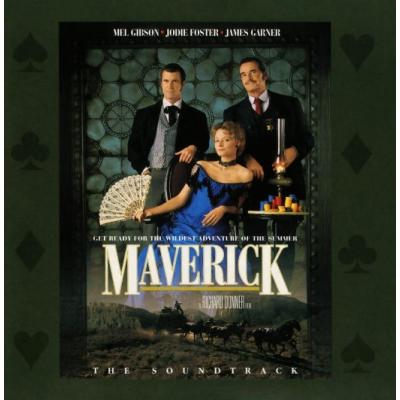
Maverick Album Cover

"Maverick" Soundtrack Lyrics

Movie • 1994

Track Listing


“Maverick — Music from and Inspired by the Motion Picture” – Album Guide to Tracks and Key Scenes

Maverick 1994 theatrical trailer still with Mel Gibson at poker table
Maverick (1994) – theatrical trailer frame that set up the soundtrack’s playful Western tone.

Overview

What kind of Western lets the soundtrack shuffle like a deck of cards between outlaw country, radio hits and hymn-like choir? Maverick (1994) answers that by treating its album as a second poker game: every song is a bet on charm, irony, or sentimentality. The film is a light Western caper about Bret Maverick hustling his way to a high-stakes riverboat poker tournament; the soundtrack mirrors that hustle with glossy Nashville production and a wink.

The narrative arc is simple: arrive at the table, survive the cons, then walk away with a grin. The album tracks follow that rhythm. Early cuts lean into swagger and outlaws, middle songs feel like road-trip and saloon interludes, and the closer “Amazing Grace” resets everything with unexpectedly sincere gospel weight. The music doesn’t dig into tragedy; instead it keeps the stakes fun—even when the plot points toward nooses and crooked marshals.

Where the film’s score by Randy Newman handles tension, suspense and slapstick, the commercial soundtrack album handles brand and atmosphere. It packages the movie as a star-studded 1990s country moment: big names, tight runtimes, catchy choruses. Singles spin off onto country radio, while the choir track turns the film’s celebrity cameos into a charity project you can actually hear.

In terms of genres and themes, you can hear three phases. The chart-aimed country singles with gambling metaphors cover Maverick’s bravado and risk-taking. The more wistful tracks (“Solitary Travelers”, “The Rainbow Down the Road”) frame the drifters and dreamers that a professional gambler meets along the trail. Finally, the hymn (“Amazing Grace”) and Newman’s own “Ride Gambler Ride” close things off with a blend of playful theology and farewell—redemption after all the bluffs.

How It Was Made

The film uses two overlapping musical projects. First is the country-song compilation album released by Atlantic Records in May 1994, credited to various artists. It plays like a compact Nashville sampler: Tracy Lawrence, Clint Black, Restless Heart, Vince Gill, Carlene Carter, John Michael Montgomery, Confederate Railroad, Hal Ketchum, Patty Loveless with Radney Foster, Waylon Jennings, plus Randy Newman and the all-star “Maverick Choir”. The album hit the top 5 of the Billboard Top Country Albums chart and crossed over to the main Billboard 200, so it functioned as a commercial product in its own right, not just merchandise.

Parallel to that stands Randy Newman’s orchestral score album, issued separately. Newman gives the film most of its real dramatic shading—lonely trumpet writing in the “Opening”, playful action cues for stagecoach chases, and subtly tender material for Bret’s banter-flirt relationship with Annabelle. One detailed review points out how the score toggles between sincere Western grandeur and tongue-in-cheek pastiche, exactly in line with the film’s tone.

Production-wise the compilation side is classic early-90s Nashville: established producers and session musicians, tight three-minute cuts designed for radio edit, and a couple of tracks (“A Good Run of Bad Luck”, “Something Already Gone”) pulled into the film from artists’ own albums to double their promotional reach. The closer “Amazing Grace” was recorded as a charity single with a large “Maverick Choir” of country stars and cast, with royalties directed to the Elizabeth Glaser Pediatric AIDS Foundation—so the album had a philanthropic angle built in.

Maverick soundtrack era press still of Mel Gibson, Jodie Foster and James Garner
Behind the soundtrack: a film that sells both poker gags and polished Nashville country.

Tracks & Scenes

“Renegades, Rebels and Rogues” — Tracy Lawrence
Where it plays: Used on the riverboat sequence titled “The Commodore’s Welcome”, roughly around 1h23m into the film. As Bret Maverick boards the Lauren Belle and the camera drifts over gamblers, card tables and riverfront spectacle, the song plays non-diegetically over the bustle. The upbeat groove cushions the introductions, the Commodore’s showmanship and the first glance at how rigged the big tournament might be.
Why it matters: It frames the whole riverboat as a magnet for troublemakers and charming cheats. The lyrics and title effectively label the cast: they are the renegades and rogues about to collide. Tonally it tells you this Western is about playful mischief, not grim violence.

“A Good Run of Bad Luck” — Clint Black
Where it plays: Over the big poker montage on the Lauren Belle, at about 1h27m. The film cuts quickly through hand after hand, chips flying, players busting out, as Maverick plays his way toward the final table. The song is non-diegetic, laid over fast edits of close-ups, reaction shots and dealer movements, compressing hours of play into a slick couple of minutes.
Why it matters: The lyric is built entirely on gambling metaphors, so it turns the montage into a kind of sung internal monologue for every player in the room. It also anchors the film in 1994 country radio—this was a number-one country hit—so the sequence feels current rather than purely nostalgic Western.

“You Don’t Mess Around with Me” — Waylon Jennings
Where it plays: During “Countdown to the Final Game”, around 1h33m. The players for the climactic poker showdown take their seats, the crowd settles, side bets circulate and the stakes are laid out. The track plays over exterior shots of the riverboat, interior crowd noise and table-level glances, functioning as montage glue more than foreground hook. It is non-diegetic, but it feels like the boat’s unofficial theme song for the serious gamblers.
Why it matters: Jennings’ outlaw persona sets a different tone from the lighter cuts: now we’re in the dangerous part of the con. The song underlines the idea that, whatever the jokes, someone could get killed over the money on this table.

“Amazing Grace” — The Maverick Choir
Where it plays: Over the end credits, after the last twist and the bath-house reveal between Bret Maverick and his “pappy”, from roughly 2h02m onward. The film has moved from dusty canyons to polished riverboat to intimate cabin; now the screen turns into names and roles while this large choir sings a straight but slick version of the hymn. Entirely non-diegetic, functioning as curtain call music.
Why it matters: It sounds like the film asking forgiveness for all its gleeful cheating. The choir is stacked with country stars and several cast members, so on another level it’s a roll-call of everyone who made the movie. Because the royalties went to charity, the track pushes the project beyond simple commerce.

“Ride Gambler Ride” — Randy Newman
Where it plays: Also tied to the end-credits stretch, intertwining with or following “Amazing Grace” depending on the version. A jaunty, Newman-style piece with wry vocals, it rides under final images of the riverboat and the notion that Maverick will keep hustling somewhere else. Non-diegetic score-song hybrid, closer in feel to the orchestral cues than to the Nashville material.
Why it matters: It re-centres the soundtrack on the title character: a gambler moving on, unredeemed in a conventional moral sense but blessed by the hymn that just finished. It also gives Newman a whimsical vocal moment after mostly doing instrumental work.

“Maverick” — Restless Heart
Where it plays: This is used as a thematic song for the character more than a clearly highlighted on-screen needle-drop. It appears on the album and in some TV spots and secondary marketing, functioning as shorthand for the film’s title and persona rather than a focal scene cue. When it does surface, it sits non-diegetically over transition shots and montage rather than dialogue.
Why it matters: The lyric and arrangement feel like a 1990s country anthem about the charming drifter, which perfectly fits Bret Maverick’s mix of ego and warmth. Even if you only meet it on the album, it helps define how the studio wanted audiences to “hear” the character.

“Something Already Gone” — Carlene Carter
Where it plays: Primarily an album cut associated with the film—there is no widely documented single, prominent placement in the feature itself. It shows up in the Maverick compilation and in tie-in promotion. Think of it as music you’d hear on the way to the riverboat rather than at the poker table itself.
Why it matters: The song’s theme of loss and missed chances mirrors the way Maverick and Annabelle keep out-conning each other instead of committing. On the album it gives the project a touch of heartache, balancing all the swagger.

“Dream On Texas Ladies” — John Michael Montgomery
Where it plays: Another track with its clearest life on the album and in radio rotation, not in a single, unmistakable movie moment. When paired mentally with the film, you can map it onto the saloon scenes and the travelling sequences—women watching gamblers roll in and out of town, dreaming of something more stable.
Why it matters: Lyrically it speaks about women waiting on cowboys, which echoes the parade of admirers and marks that Maverick leaves behind. As part of the soundtrack set it broadens the project’s perspective beyond just the male con-artist leads.

“Ladies Love Outlaws” — Confederate Railroad
Where it plays: On the album, and occasionally in background/source-music style in barroom settings, but again without a well-documented hero shot in the film. It feels most at home in sequences where Annabelle and Bret verbally spar and flirt—she loves outlaws, but she is one too.
Why it matters: It ties Maverick back to the 1970s outlaw-country tradition (through Waylon Jennings’ original association) while staying sonically 1990s. Thematically it tells you exactly why this sort of charming cheat gets away with as much as he does: people enjoy watching him break the rules.

“Solitary Travelers” — Hal Ketchum
Where it plays: A reflective piece that primarily lives on the soundtrack album, not foregrounded in the movie to the same extent as the big singles. It fits best with the quieter campfire scenes and travel interludes, where Maverick, Cooper and Annabelle temporarily drop their masks.
Why it matters: The title alone underlines one of the film’s subtexts: all these poker-table extroverts are essentially loners. Musically it slows the album down and gives the listener a breather from the punchier tracks.

“The Rainbow Down the Road” — Patty Loveless & Radney Foster
Where it plays: Identified primarily with the tie-in album and not clearly pinned to a signature on-screen cue. Its lyrical language about long shots, stacked decks and hidden feelings tracks so neatly with the story that it feels like a thematic epilogue—something you’d hear rolling over a montage of Maverick riding off, even when the film chooses different credits music.
Why it matters: It’s one of the clearest examples of the “inspired by the motion picture” half of the album title. Instead of scoring a specific scene, it refracts the film’s card-table metaphors into a relationship song.

Trailer and non-album cues
The main theatrical trailers lean heavily on Randy Newman’s energetic score motifs and short bursts of the country singles rather than introducing completely separate songs. It is a typical mid-90s pattern: quick drum hits, brass stabs, a few vocal hooks, all cut into one fast-moving minute that sells the comedy and the poker action more than any single track.

Poker montage image used in Maverick trailer and soundtrack promotion
The poker montage on the Lauren Belle — where “A Good Run of Bad Luck” turns cards and cuts into a crowd-pleasing sequence.

Notes & Trivia

  • The soundtrack album and the orchestral score were released as separate products, a common strategy in the 1990s for studio films with marketable songs and a strong composer.
  • Three tracks from the compilation charted on Hot Country Songs, giving the film extra visibility on country radio while it was in cinemas.
  • The “Maverick Choir” version of “Amazing Grace” channels all royalties to the Elizabeth Glaser Pediatric AIDS Foundation, turning a hymn into a fundraiser.
  • Many choir members also appear in the film in cameo roles, so the end-credits track doubles as a hidden roll-call of bit-part players.
  • Restless Heart’s “Maverick” reprises musical ideas from the original TV show’s theme, connecting the movie to its 1950s source series.

Music–Story Links

The film’s central relationship triangle—Maverick, Annabelle, and Cooper—lines up neatly with the album’s mix of swagger, romance and ruefulness. Brash singles like “Renegades, Rebels and Rogues” and “A Good Run of Bad Luck” track Bret’s public persona: he is the guy who makes bad odds look fun. In contrast, moodier pieces such as “Solitary Travelers” hint at the fact that once the game ends, every gambler walks away alone.

When the Lauren Belle appears and the soundtrack kicks into “Renegades, Rebels and Rogues”, the music effectively baptizes the boat as a floating church for outlaws. Later, “You Don’t Mess Around with Me” during the final-table countdown warns that whatever comic tone the film maintains, there are lines you cannot cross without consequences. The choice of Waylon Jennings for that moment is no accident: his voice carries decades of outlaw-country mythology about boundaries and pride.

Finally, the pairing of “Amazing Grace” and “Ride Gambler Ride” over the credits closes the thematic loop. Maverick has dodged death, out-cheated cheaters and walked away with the pot; the hymn suggests grace covers even this kind of moral universe, while Newman’s tune insists the gambler will keep on rolling. It’s forgiveness without reform, which fits the character perfectly.

Reception & Quotes

The film itself landed in the “generally favorable” band with critics and did strong box office business. Within that, several reviewers and later soundtrack writers singled out the music as one of the most purely enjoyable parts of the package—slick, unashamedly commercial, but exactly right for a summer Western-comedy.

“The commercial album is basically a who’s who of early-’90s Nashville, dressed up in gambler metaphors and riverboat sheen.” — a modern soundtrack review
“Newman’s score walks the line between sincere Western grandeur and a wink at the audience, much like Gibson’s performance.” — film-music critic on the orchestral album
“Even if you never see the movie, the singles work as self-contained little Western stories.” — country-press comment on the Maverick compilation

On fan forums, “A Good Run of Bad Luck” and “Renegades, Rebels and Rogues” often come up as favourite cuts, with several viewers saying they first discovered those artists through the movie’s poker montage.

Riverboat Lauren Belle and crowd, used in Maverick end credits and marketing
The Lauren Belle riverboat — visual anchor for the film’s climactic game and many of its key song placements.

Interesting Facts

  • The country compilation was released a few days before the film, so radio play could build awareness ahead of opening weekend.
  • “Renegades, Rebels and Rogues” and “A Good Run of Bad Luck” both had music videos featuring Western imagery and, in Clint Black’s case, clips from Maverick itself.
  • Waylon Jennings already embodied the “outlaw” brand long before the film, so using him for “You Don’t Mess Around with Me” was an easy shorthand for danger.
  • Hal Ketchum’s “Solitary Travelers” and Patty Loveless & Radney Foster’s “The Rainbow Down the Road” are less known than the big singles, but they give the album emotional depth and cult-favourite status among country fans.
  • The separate Randy Newman score album includes cue titles that mirror story beats (“Runaway Stage”, “The Hanging”, “Bret Escapes”), so you can follow the plot almost scene by scene through instrumentals.
  • Because “A Good Run of Bad Luck” was already a hit from Clint Black’s own album, Maverick essentially borrowed a chart-topper to energize its centerpiece montage.
  • The all-star “Maverick Choir” recording session pulled in both country icons and then-rising names like Faith Hill and Reba McEntire, turning one track into a mini-summit of 1990s country.

Technical Info

  • Title: Maverick — Music from and Inspired by the Motion Picture
  • Film: Maverick (1994), directed by Richard Donner
  • Year of soundtrack release: 1994
  • Type: Song compilation soundtrack; separate original motion picture score album
  • Primary composers: Randy Newman (score); various songwriters for compilation tracks
  • Key performing artists: Tracy Lawrence, Clint Black, Restless Heart, Vince Gill, Carlene Carter, John Michael Montgomery, Confederate Railroad, Hal Ketchum, Patty Loveless & Radney Foster, Waylon Jennings, Randy Newman, the Maverick Choir
  • Label: Atlantic Records (song compilation); separate labels/partners for the score release
  • Notable single placements: “Renegades, Rebels and Rogues” on the riverboat welcome; “A Good Run of Bad Luck” over the poker montage; “You Don’t Mess Around with Me” during the final-table countdown; “Amazing Grace” and “Ride Gambler Ride” in the end credits.
  • Chart highlights: Album peaked in the top tier of Billboard’s Top Country Albums, with several singles reaching significant positions on country charts.
  • Availability: Original CD and cassette in 1994; later digital/streaming availability for both the compilation and Randy Newman’s score album.

Questions & Answers

Which Maverick song actually plays during the big poker montage?
That sequence on the Lauren Belle uses “A Good Run of Bad Luck” by Clint Black, cut over a fast series of game snippets as players are eliminated.
What’s the hymn-like track over the end credits?
It is “Amazing Grace” performed by the Maverick Choir, an all-star group of country singers and cast members, recorded as a charity single.
Is there a separate album for Randy Newman’s score?
Yes. In addition to the country-song compilation, there is a dedicated score release featuring Newman’s instrumental cues such as “Opening”, “Runaway Stage” and “Bret Escapes”.
Did any songs from the Maverick soundtrack become country hits?
Several did, including Tracy Lawrence’s “Renegades, Rebels and Rogues”, Clint Black’s “A Good Run of Bad Luck”, and Carlene Carter’s “Something Already Gone”.
Is the TV-series theme referenced on the album?
The Restless Heart track “Maverick” is a modernized take that nods to the original television theme, linking the movie to its 1950s source.

Canonical Entities & Relations

Entity Relation Other Entity
Maverick (1994 film) features music from Maverick: Music from and Inspired by the Motion Picture
Richard Donner directed Maverick (1994 film)
Randy Newman composed score for Maverick (1994 film)
Atlantic Records released Maverick soundtrack album
Tracy Lawrence performed “Renegades, Rebels and Rogues”
Clint Black performed “A Good Run of Bad Luck”
The Maverick Choir performed “Amazing Grace” (soundtrack version)
Lauren Belle (riverboat in film) location for poker tournament scenes underscored by multiple soundtrack songs

Sources: Wikipedia (film and soundtrack entries), Warner Bros./fan wikis and DVD chapter listings, soundtrack discographies (Atlantic/score releases), contemporary soundtrack and film-music reviews, country-music chart references and artist discographies.

November, 15th 2025

'Maverick' is a 1994 American Western comedy film directed by Richard Donner and written by William Goldman. Get more info: Wikipedia, Internet Movie Database
A-Z Lyrics Universe

Lyrics / song texts are property and copyright of their owners and provided for educational purposes only.