Soundtracks:  A B C D E F G H I J K L M N O P Q R S T U V W X Y Z #


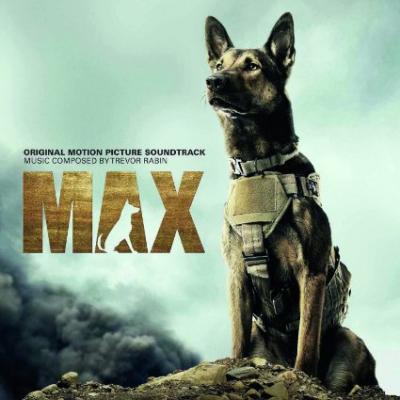
Max Album Cover

"Max" Soundtrack Lyrics

Movie • 2015

Track Listing


“Max (Original Motion Picture Soundtrack)” – Album Guide to Tracks and Key Scenes

Max 2015 official trailer frame with military dog and handler
Max (2015) – official trailer frame that introduced audiences to the war dog and Trevor Rabin’s score.

Overview

How do you score a story where the hero cannot speak but feels everything? The soundtrack to Max (2015) answers with a mix of muscular action writing, gentle Americana and one very pointed pop cover. The film follows a traumatized military dog from Afghanistan to a small-town American family; the music traces the same path, from harsh duty to hesitant healing.

The plot is straightforward: Max loses his handler, Kyle, in combat and is taken in by Kyle’s younger brother Justin, a teenager more into video games than responsibility. The score by Trevor Rabin leans heavily on a clear, singable main theme for Max and the Wincott family, then fractures it whenever trauma or danger surfaces. When the story shifts into conspiracy and desert chases, the music hardens: guitars, percussion, string ostinatos, almost like a leaner cousin of Rabin’s earlier action work.

A small set of licensed songs carries the human, everyday side: bike parks, parades, car rides, kids texting. They sit around the score like snapshots from Justin’s world before he properly sees Max as a partner. Then, at the very end, Blake Shelton’s cover of “Forever Young” steps in as a kind of blessing over the dog, the boy and the family they rebuild.

In genre terms the soundtrack moves through phases. Early war and investigation scenes lean on modern film-score action: low brass, crisp percussion, edgy electronics. Domestic and grief beats tilt toward melodic guitar and piano, soft strings, almost small-town drama. Youth-oriented moments at the bike park or July 4 parade lean on radio-friendly pop/rock and marching-band arrangements. Finally, the end credits drift into country-inflected adult contemporary with “Forever Young”, signalling that the story’s emotional war has ended even if scars remain.

How It Was Made

Composer Trevor Rabin was hired early; the film’s press materials emphasise that the director wanted someone comfortable with heartfelt sports-style drama and action suspense, which lines up with Rabin’s work on titles like Remember the Titans and National Treasure. His job here: make a war dog movie feel big enough for the cinema but intimate enough to track a teenager’s grief, guilt and growth.

The score album, Max (Original Motion Picture Soundtrack), collects 17 cues, just under 38 minutes. Sony Classical released it in June 2015 under license from Warner Bros. and MGM, with the CD and download carrying the same core program. Track titles follow the story beat by beat (“Max Rushes Coffin”, “Max Escapes”, “Round Two”, “Epilogue”), so the album doubles as a plot map once you know the film.

Recording-wise it is classic Rabin territory: orchestra at the core, reinforced with electric guitar, programmed drums and some light electronic textures. A label press note describes the music as emotional and uplifting while still acknowledging the character’s trauma, which fits what you hear: the main theme is simple and diatonic, but Rabin surrounds it with anxious rhythms whenever Max’s training kicks into combat mode.

Parallel to the score, the producers cleared eight licensed songs for key teenage and community moments, from Andy Grammer’s “Back Home” at the bike park to a marching-band version of “Tubthumping” for the small-town Fourth of July parade. Separately, Blake Shelton recorded a cover of Bob Dylan’s “Forever Young” specifically for the film’s end credits and soundtrack promotion, with the song rolled out as a digital single ahead of release.

Max 2015 behind-the-scenes style still of dog and teenage handler in small town
Behind the scenes in musical terms: a blend of Rabin’s orchestral writing with a handful of carefully placed source songs.

Tracks & Scenes

“Max’s First Cache” — Trevor Rabin & Jennifer Hammond
Where it plays: Early in the film, during one of the Afghanistan sequences, Max works point with Kyle’s squad as they locate and secure hidden weapons. The cue tracks the team advancing through dusty terrain, Max alert and laser-focused. It is non-diegetic, sitting under radio chatter and the sound of boots on gravel, with the main motif hinted in tense fragments.
Why it matters: This is the musical introduction to Max as a professional soldier, not a pet. The cue balances tension with admiration, setting up the idea that the dog is a trained asset and a character in his own right, long before Justin appears.

“Max Rushes Coffin” — Trevor Rabin & Jennifer Hammond
Where it plays: Around the funeral sequence back home, when Kyle’s flag-draped coffin is present and Max, barely controlled, bolts toward it. The music swells sharply as the dog breaks formation and the handlers struggle; strings and brass pull the main theme into a more openly tragic shape. It is non-diegetic but mixed quite prominently, riding over the muted ceremonial sounds.
Why it matters: The cue pins down Max’s grief in one image and one musical hit. This is the moment the film stops being a generic “war dog story” and becomes about a specific dog and family. On album, it’s one of the most immediately memorable short tracks because it condenses that entire emotional beat into under two minutes.

“Higher Than My Station” — Close Your Eyes
Where it plays: About 00:15:00 into the film, in Justin’s bedroom. He has headphones on, zoned out in a video game when a message from his friend Chuy pops up. The song plays diegetically through his headphones and then bleeds slightly into the room mix as the camera cuts between the screen, Justin’s face and the clutter around him.
Why it matters: This is our sonic introduction to Justin’s world: plugged-in, self-focused, detached from his family’s grief. The track’s modern rock feel and title quietly underline Justin’s attitude that he’s “stuck” in a small life and would rather be anywhere else — a stark contrast to Max’s discipline in the opening scenes.

“Back Home” — Andy Grammer
Where it plays: Around 00:24:00 at the mountain bike park, when Justin meets his friends and shows off. The song plays non-diegetically over wide shots of jumps, dusty turns and kids heckling each other; later, a snippet returns as Justin tries on T-shirts at home before heading out, giving the sequence a pop montage feel.
Why it matters: The song sells the sense of freedom Justin gets from biking and from his peer group — a different “unit” than the Marines Kyle served with. Its upbeat, radio-ready sound also makes the shift back to quieter score cues later feel more grounded; we’ve heard what normal teen life sounds like.

“Believer” — American Authors
Where it plays: Roughly 00:27:00, when Justin cycles through different shirts in his room as Carmen and Chuy arrive. The cue runs non-diegetically over quick cuts of wardrobe choices, glances in the mirror and the slight panic of trying to look cooler than you feel.
Why it matters: It frames Justin’s growing interest in Carmen and suggests a small step away from numb grief toward connection. Musically it keeps the film from sinking entirely into heaviness; the soundtrack reminds you this is also a coming-of-age story.

“Mami Baila” — Skeey
Where it plays: Around 00:34:00, during a car ride when Justin’s mom Pamela drives Carmen home. The track plays on the car stereo at a low volume while Pamela probes Justin about his attitude and Carmen quietly reads the table between them. It starts diegetically and then becomes more of a soft background wash as the conversation deepens.
Why it matters: This small moment uses a Latin-flavoured track to underline Carmen’s cultural background and to lighten the mood while still letting Pamela challenge Justin’s snap judgments. It’s a rare instance where the song feels like something the characters could actually have chosen themselves, not just a studio placement.

“Can You Get to That” — Houndmouth
Where it plays: Around 00:35:00, when Justin takes Max for one of their first proper walks through town toward the bike park. The track is non-diegetic, playing over shots of Max learning to match Justin’s pace, glancing up at him, neighbourhood streets rolling by, people turning to look at the clearly military-trained dog.
Why it matters: The relaxed, rootsy sound contrasts with Max’s rigid heel work and Justin’s uncertainty. It suggests the possibility of a more normal life for both: a dog on a leash, a kid with a companion, not just a piece of war equipment and a sulking teenager.

“Tubthumping” — Chumbawamba / ASU Sun Devil Marching Band / Dr. Robert “Coach” Fleming
Where it plays: Around 00:42:00, during the Fourth of July parade in town. The ASU Sun Devil Marching Band performs a brass-heavy, drumline-driven version on the street as floats go by, families cheer and Justin, Max and friends move through the crowd. This is fully diegetic, part of the on-screen band performance, with all the ambient parade noise around it.
Why it matters: The choice is pretty on the nose — a song about being knocked down and getting back up again, blasted by a marching band in a story about a wounded dog and a grieving family. It also grounds the film in very specific American community imagery: small-town holiday, high-school band, flags everywhere.

“Join the 21st Century” — Dror Mohar
Where it plays: About 1:28:00, when Chuy gets a phone call from his mother. The film is in a tenser phase by this point: guns, bad deals, suspicion of Tyler. The song plays quietly in the background as a kind of ambient texture while Chuy steps away, phone pressed to his ear, trying to reassure his worried mom that everything is fine.
Why it matters: It anchors Chuy as a kid caught up in events he doesn’t fully control. The relatively modern, slightly edgy track contrasts with his very old-fashioned problem: he’s in over his head and still answering to his parents.

“Forever Young” — Blake Shelton
Where it plays: Around 1:44:00 and onward over the end credits. After the climax in the woods and rail yard, when Justin and Max have faced down the weapons smuggling plot and earned a fragile peace, the film resolves their arc and then fades into credits with Shelton’s version of the Bob Dylan classic. The music is purely non-diegetic, accompanying montage-like credit images and final glimpses of Max’s new life.
Why it matters: The song reframes the entire story as a wish or prayer for the younger generation — for Justin, for Max, for the Marines we saw in the opening. Country-vocal warmth and a familiar melody make the ending feel hopeful rather than simply relieved. It also gave the film a strong promotional hook on country radio and music TV.

“Bike Ride” — Trevor Rabin & Jennifer Hammond
Where it plays: During one of the transitional sequences when Justin rides with friends and later with Max running alongside or watching. The cue follows the movement of the bikes and the countryside, non-diegetic but very tightly synchronized with cuts and jumps.
Why it matters: It’s one of the lighter score cues, using the main theme and rhythmic guitar figures to show that Max is not only a weapon or a source of drama. These are the moments where the dog genuinely becomes a companion, and the music lets the audience breathe.

“Fireworks Display” — Trevor Rabin & Jennifer Hammond
Where it plays: During the Fourth of July fireworks sequence. Bright explosions in the sky trigger Max’s combat training and anxiety; the cue alternates between awe-filled chords and more jagged stabs as the dog reacts. It’s non-diegetic, but the rhythm lines up with the bursts of light and crowd gasps.
Why it matters: This scene crystallises Max’s PTSD for the audience, and the cue has to hold both perspectives at once: celebration for the town, sensory overload for the dog. On album it’s a compact showcase of Rabin’s ability to slide from wonder to tension in just under two minutes.

“Max Escapes” — Trevor Rabin & Jennifer Hammond
Where it plays: In the middle act, when Max breaks away from confinement or from a dangerous situation to track Justin or a threat. You hear fast string figures, pounding percussion and snare patterns as the dog darts through woods or yards, intercut with Justin chasing after him or trying to catch up by bike.
Why it matters: It’s pure thriller writing, but locked to a canine point of view. The cue reinforces that Max’s instincts are often ahead of the humans; musically, the main theme appears in fragments, suggesting the bond between dog and boy even when they’re physically apart.

“Round Two” — Trevor Rabin & Jennifer Hammond
Where it plays: Near the final confrontation, essentially the score for the climactic showdown with Tyler and the weapons smugglers. Vehicles weave through forest roads or quarry-like terrain, Max makes critical attacks, Justin pushes past his fear. The cue stays non-diegetic but is mixed almost like an action set-piece in its own right, with sharp brass hits and guitar reinforcing turning points.
Why it matters: This is the payoff to the more restrained action writing earlier. Rabin finally lets the main theme go big in heroic form as Justin steps up and Max completes his journey from tool to protector to family member.

“Max’s Suite” — Trevor Rabin & Jennifer Hammond
Where it plays: Over parts of the end credits and possibly the very last card, as a summation of themes. On album, it functions as a concert-style suite that weaves together the Max motif, family theme and some action material into one continuous piece.
Why it matters: It’s the clearest showcase of the score’s architecture. If you only listen to one track away from the film, this gives you the emotional and stylistic range in four minutes: grief, loyalty, danger, resolution.

Max 2015 action shot from trailer with dog running in forest during chase
Action sequences like the forest and quarry chases are driven as much by Rabin’s rhythmic cues as by engine noise and barking.

Notes & Trivia

  • The film uses eight licensed songs in-key scenes, but the official score album is purely Trevor Rabin’s instrumental music.
  • “Tubthumping” appears not in its familiar studio recording but as a marching-band arrangement by the ASU Sun Devil Marching Band under Dr. Robert “Coach” Fleming.
  • The pop-country single “Forever Young” is Blake Shelton’s cover of Bob Dylan’s 1974 song, recorded specifically for Max.
  • Max himself is played primarily by a Belgian Malinois named Carlos, with multiple trained doubles used for different stunts.
  • Soundtrakd (formerly soundtrack.net) and German site Popkultur both document the same eight song placements, giving rare agreement on a modern soundtrack’s needle-drops.

Music–Story Links

The structure of the score mirrors Justin’s journey from checked-out teenager to responsible handler. At the start, his scenes get more of the licensed songs and lighter cues; Max’s combat work gets colder, tighter action writing. Once Justin accepts responsibility and starts actively protecting Max, the themes begin to merge — emotional strings from family scenes appear over chases, while Max’s motif sneaks into quieter domestic moments.

Specific songs mark turning points. “Higher Than My Station” plays while Justin hides from his family in a screen glow; “Back Home” and “Believer” score his attempts to present a confident front to friends and to Carmen. After the funeral and the fireworks incident, these radio-friendly cues give way to more score-driven sequences; it is only when “Forever Young” plays that the film allows a full song again, this time as an external benediction rather than background noise to avoidance.

Max’s PTSD is given musical shape most clearly in “Fireworks Display” and “Max Rushes Coffin”. In both, familiar thematic material is twisted by harmony and rhythmic stress, just as familiar settings (a funeral ceremony, a town celebration) become triggers instead of comforts. By the time “Max’s Suite” plays, the theme has been restored; it now belongs equally to Justin and Max, not just to a fallen Marine or a damaged dog.

Reception & Quotes

Critically, the film received mixed but generally warm notices as a family adventure; the score album attracted interest mainly from film-music fans. Reviewers often pointed out that the music is very recognisably Trevor Rabin in style — big, muscular, sometimes a little glossy, but effective for an earnest story about loyalty and courage.

“There’s a sweet little main theme… some very familiar Rabin action music… 17 tracks on the 38-minute album so nothing has any time to be developed.” — a film-music review
“Blake Shelton’s cover of Bob Dylan’s ‘Forever Young’ gives the movie a lump-in-the-throat ending it otherwise might not have earned.” — country-press reaction
“The music sells Max as a hero without making him super-dog; the score keeps pulling back to the boy and his family.” — online soundtrack commentary

Fans of Rabin’s earlier action scores tend to rank Max as a smaller but solid entry: not as showy as Armageddon or National Treasure, but with a more focused emotional through-line. Among casual viewers, the needle-drops “Back Home” and “Forever Young” are the pieces most often mentioned when people recall the movie’s sound.

Max 2015 emotional trailer shot of dog beside flag-draped coffin
Moments like the funeral sequence rely heavily on Rabin’s score, later echoed by the sentiment of “Forever Young”.

Interesting Facts

  • The score album’s running time (about 37–38 minutes) is relatively short by modern standards, making it an easy front-to-back listen.
  • Release dates vary slightly by territory: digital on or around June 19, 2015, with physical CD following in late June.
  • Discogs and label listings tag the album under multiple style labels: film score, soundtracks, but also light electronic and rock due to Rabin’s guitar work.
  • “Max’s Suite” was promoted separately on YouTube and streaming as a way to showcase Rabin’s main themes without dialogue or effects.
  • Blake Shelton’s “Forever Young” video uses extensive clips from the film, effectively functioning as a condensed emotional trailer.
  • Soundtrakd notes approximate timestamps for all eight licensed songs, which is unusually detailed for a smaller family film.
  • The soundtrack helped position Max as part of the wave of 2010s films focusing on military working dogs, giving this one a more mainstream, pop-accessible sound.

Technical Info

  • Title (album): Max (Original Motion Picture Soundtrack)
  • Film: Max (2015), directed by Boaz Yakin
  • Year: 2015
  • Type: Original motion picture score (separate from film’s song placements)
  • Composer: Trevor Rabin (with Jennifer Hammond credited alongside on album)
  • Music for film: Trevor Rabin (score), plus various artists for licensed songs
  • Key licensed artists: Close Your Eyes, Andy Grammer, American Authors, Skeey, Houndmouth, Chumbawamba / ASU Sun Devil Marching Band, Dror Mohar, Blake Shelton
  • Label: Sony Classical / Masterworks, under license from Warner Bros. Entertainment and MGM
  • Album length: approx. 37–38 minutes, 17 score tracks
  • Key score cues: “Max’s First Cache”, “Max Rushes Coffin”, “Bike Ride”, “Fireworks Display”, “Max Escapes”, “Round Two”, “Max’s Suite”
  • Key song placements: “Higher Than My Station”, “Back Home”, “Believer”, “Mami Baila”, “Can You Get to That”, “Tubthumping”, “Join the 21st Century”, “Forever Young”
  • Availability: CD, download and major streaming platforms for the score; individual songs available via their respective artists’ releases and digital stores.

Questions & Answers

Which song plays over the end credits of Max?
The end credits use Blake Shelton’s cover of “Forever Young”, originally written and recorded by Bob Dylan.
Is there a separate album for the instrumental score?
Yes. Max (Original Motion Picture Soundtrack) is a dedicated score album with 17 cues by Trevor Rabin and Jennifer Hammond.
How many commercial songs are used in the film besides the score?
Eight licensed songs appear in the movie, from “Higher Than My Station” and “Back Home” to “Tubthumping” and “Forever Young”.
Does the album include Blake Shelton’s “Forever Young”?
The core score album focuses on Rabin’s music; “Forever Young” was released separately as a single tied to the film’s promotion.
What kind of music style dominates the score?
It is mostly contemporary orchestral action-drama with electric guitar and light electronics, in line with Rabin’s other Hollywood scores.

Canonical Entities & Relations

Entity Relation Other Entity
Max (2015 film) features score Max (Original Motion Picture Soundtrack)
Boaz Yakin directed Max (2015 film)
Trevor Rabin composed score for Max (2015 film)
Sony Classical released Max (Original Motion Picture Soundtrack)
Close Your Eyes performed “Higher Than My Station”
Andy Grammer performed “Back Home”
American Authors performed “Believer” (used in Max)
Blake Shelton performed “Forever Young” (for Max soundtrack)
Bob Dylan wrote “Forever Young”
ASU Sun Devil Marching Band performed “Tubthumping” arrangement in parade scene

Sources: film credits and official studio notes, Sony Classical press info and digital store listings, Discogs and AllMusic album entries, soundtrack documentation on Soundtrakd and Popkultur, articles on Blake Shelton’s “Forever Young” for the Max soundtrack, and reviews from specialist film-music sites.

Family film about a dog that needs to be awarded ten times for a bunch of exploits, which she did. The sad and sentimental, the film also combines the storylines who makes the viewer to rejoice, to be proud and empathize. Very nice dog is the protagonist of the movie, touches and makes you want to all dogs in the world were the same people’s helpers. The soundtrack is strong. Not included in the main collection, the Higher Than My Station song is a bit like the main theme to the TV series Buffy – the Vampire Slayer. Quite the opposite to it, Back Home – too reminiscent of the soundtrack to the Armageddon film, only much more life affirming. Tumthumping at performance of Asu Sun Devil Marching Band & Dr. Robert "Coach" Fleming very interesting, but not as energetic as from the ChambaWamba group, who have sing it distant ten years ago. Pure American singer Blake Sheldon sings a patriotic song from which the heart illuminates and you want to get up and to go make something pure, eternal and heroic.

November, 15th 2025

More info on IMDb, Wikipedia
A-Z Lyrics Universe

Lyrics / song texts are property and copyright of their owners and provided for educational purposes only.