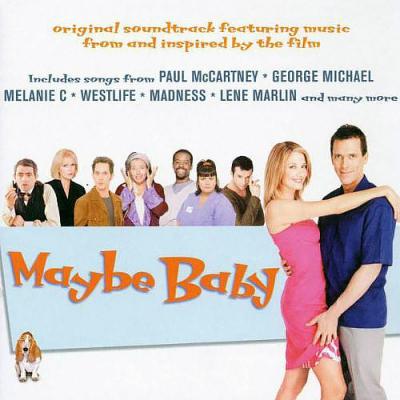
"Maybe Baby" Soundtrack Lyrics
Movie • 2000
Track Listing
Paul McCartney
Lene Marlin
Melanie C
Westlife
Kasey Chambers
Elvis Costello & the Attractions
Shack
George Michael
Atomic Kitten
Madison Avenue
Gold'n'Delicious
Roxy Music
Birth
Tin Tin Out
Hobotalk
Madness
"Maybe Baby – Original Soundtrack Featuring Music From And Inspired By The Film" – Album Guide to Tracks and Key Scenes
Overview
What does a bouncy Buddy Holly rock-and-roll tune have to do with IVF clinics, marital strain and diary betrayal? Maybe Baby answers that with a very British shrug and a lovingly curated compilation album. Ben Elton’s 2000 film follows Sam and Lucy Bell, a London couple who seem to have everything except the one thing they want – a child – and the soundtrack tracks that emotional whiplash from optimism to burnout and back again.
The film’s plot is simple enough: Sam, a BBC drama executive, hits a wall at work and at home. Out of ideas, he cannibalises the couple’s infertility struggle for his own screenplay, secretly lifting lines from Lucy’s diary and turning their private pain into a commercial property. The music sits right on that fault line. Vintage rock-and-roll, turn-of-the-millennium pop, sleek electronica and bittersweet ballads all rub shoulders, underlining how glossy the couple’s life looks from outside and how bruised it feels from within.
Crucially, this isn’t just wall-to-wall chart fodder. Composer Colin Towns provides a warm, flexible score that stitches together the needle-drops – a mix of Paul McCartney’s cover of “Maybe Baby”, Lene Marlin’s Norwegian pop melancholy, Melanie C’s Beatles-ish “Suddenly Monday”, Westlife’s boy-band heartache and cult favourites by Roxy Music, Air, Elvis Costello, Atomic Kitten, George Michael and Madness. The songs handle the big emotional beats; the score fills in the quiet, anxious gaps between clinic appointments and late-night arguments.
Across the film the soundtrack’s genres effectively map the relationship phases. Retro rock-and-roll and jangly guitar pop score the “arrival” of Sam and Lucy as the perfect, motorbike-riding couple. Smoother adult-pop and downtempo electronica take over during the “adaptation” phase, as medical routines and career compromises grind them down. Spikier new-wave and club-leaning tracks underline the “rebellion” – Lucy’s anger and Sam’s creative gamble – before stately ballads and Towns’ score cover the partial “collapse” and tentative reconciliation. It is not a subtle palette, but it is deliberately on-the-nose: a jukebox of early-2000s feelings.
How It Was Made
Maybe Baby adapts Elton’s own novel Inconceivable, and the soundtrack has the same slightly show-off quality as the script – it wants you to notice who is on the record. The film credits Colin Towns for the score, but the commercial hook is Paul McCartney’s newly recorded cover of Buddy Holly’s “Maybe Baby”, co-produced with Jeff Lynne and cut specifically for the project after McCartney’s late-90s rock-and-roll phase. The film uses an edited version over the opening credits, trimming the album arrangement for punchier titles.
Virgin Records built the album – officially titled Maybe Baby – Original Soundtrack or in full Maybe Baby: Original Soundtrack Featuring Music From And Inspired By The Film – as a cross-promotional compilation. The disc leads with McCartney’s track, then dives into a run of late-90s/early-2000s names: Lene Marlin, Melanie C, Westlife, Kasey Chambers, Atomic Kitten, George Michael, Roxy Music, Air, Elvis Costello & The Attractions, Tin Tin Out and others. According to one catalogue entry, it first appeared in the UK in early June 2000, just as the film hit British cinemas, with Virgin catalogue number CDV 2916.
Behind the scenes, the film’s score and songs were handled like a mid-budget British prestige project. Towns provides the connective tissue for clinics, offices and car journeys, while the licensed tracks handle “headline” beats – the party sequences, emotional montages and end-of-reel transitions. Hugh Laurie adds a unique in-world novelty: he co-writes and performs the comic blues number “Sperm Test in the Morning”, effectively giving the film an original diegetic song voiced by its star. Various interviews and fan discographies also note that Laurie directed some scenes when Ben Elton briefly stepped away, which makes his musical contribution feel even more like an inside joke among collaborators.
The album itself had a modest commercial life. Official Chart Company records show it entering the UK compilations chart in June 2000, peaking around the lower reaches and staying for only a couple of weeks. That’s typical for a niche British rom-com, but the disc remains a small cult item, especially among McCartney collectors and fans of late-90s UK pop who like hearing their favourites collide on a single CD.
Tracks & Scenes
Public cue sheets for Maybe Baby are incomplete, so not every song placement is documented shot-by-shot. What follows focuses on how key tracks function in the story – roughly where they fall in the film, the type of scene they support, and why they matter to Sam and Lucy’s arc.
"Maybe Baby" – Paul McCartney
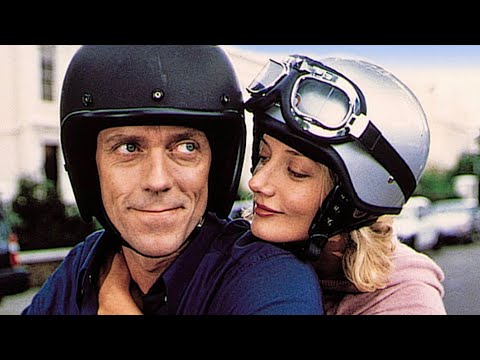
Where it plays: McCartney’s rock-and-roll cover kicks in over the opening credits, an edited version of the album track that tightens the structure for cinema titles. Visually, we move through playful glimpses of Sam and Lucy as the “perfect” London couple – motorbikes, flirty glances, busy careers – before the dialogue even acknowledges their fertility problems. The song is non-diegetic, sitting above the action like a mischievous narrator and running for roughly the length of the main title sequence.
Why it matters: As a hook, it does heavy lifting. The Buddy Holly tune links the film to classic teen-romance pop, and McCartney’s presence instantly elevates what could have been just another rom-com. It also sets up the joke in the title: for these characters, “maybe baby” is not just a cute refrain, it is the defining uncertainty of their lives.
"Unforgivable Sinner" – Lene Marlin
Where it plays: Marlin’s introspective pop song appears in an early-to-mid stretch, tracking Lucy’s growing frustration as invasive treatments and hopeful cycles blur together. The cue plays non-diegetically under a sequence that intercuts hospital corridors, waiting rooms and Lucy watching other people’s children in parks and cafés. Dialogue dips in and out, but the chorus tends to land on close-ups of her face as she politely pretends everything is fine.
Why it matters: The lyric’s idea of a person quietly carrying guilt fits Sam more than Lucy, which creates a neat dissonance. The song effectively foreshadows the diary betrayal; even before Lucy knows what he is doing, the soundtrack hints that someone in this couple is about to cross a line.
"Suddenly Monday" – Melanie C
Where it plays: This bright, Beatles-ish tune – originally from Melanie C’s Northern Star – is used for one of the film’s breezier montages, cutting between Lucy’s work life and their slightly chaotic domestic routine. We see her juggling phone calls, commuting, laughing through minor disasters in the flat, then dropping into bed exhausted as another week of treatments and script meetings looms. The cue is non-diegetic, running over quick cuts that emphasise repetition more than specific gags.
Why it matters: The jauntiness is deceptive. Underneath the brass and hooky chorus you get the sense of somebody stuck in a loop, which mirrors Lucy’s sense that every new month just resets the same anxiety. It is also a smart bit of zeitgeist casting – a Spice Girl alumna singing about the grind of Mondays in a film about reproductive drudgery.
"I Don’t Wanna Fight" – Westlife
Where it plays: According to the film’s documentation, Westlife’s ballad appears towards the end of the movie, during the late-act run where Sam and Lucy have split but the story hasn’t given up on them. The song underpins an emotional passage that intercuts their separate lives – Sam attending his own film’s premiere and Q&A, Lucy wrestling with whether to see him or keep her distance. The track is used non-diegetically and allowed to breathe, so verses and chorus play over reaction shots rather than dialogue-heavy scenes.
Why it matters: It is a very on-the-nose choice, but that is the point. Where earlier cues play with irony, this one simply says what neither character can yet say out loud. Boy-band balladry gives the reconciliation arc a pop-romance sheen, almost daring you to lean into the sentimentality even if you find Sam’s behaviour questionable.
"Cradle" – Atomic Kitten
Where it plays: “Cradle”, with its lullaby imagery and late-90s pop production, appears around moments when Lucy confronts the fact that her body might never give her what she wants. Visually, it tends to support more intimate sequences – Lucy watching a friend’s newborn, or silently standing in a nursery-goods shop, lost among pastel-coloured fantasies. The cue is strictly non-diegetic, smoothing transitions between locations while keeping Lucy’s longing in focus.
Why it matters: The symbolism is almost too neat: a song literally called “Cradle” in a film about missing cradles. But it also gently shifts the tone away from pure joke territory. This is where the soundtrack reminds us that, under the sitcom situations, there is real grief with no guaranteed payoff.
"Kelly Watch the Stars" – Air
Where it plays: Air’s dreamy electronic track slips under one of the film’s more stylised passages, likely tying into night-time sequences or scenes of Sam and Lucy moving through a neon-lit London. The cues we have suggest its use as atmospheric wallpaper rather than a “spotlight” song – a way of making hospital visits, parties and city streets feel slightly unreal, as if the couple is floating through someone else’s life.
Why it matters: Placing French downtempo electronica inside a mainstream British rom-com was an unexpectedly hip choice for 2000. It helps Maybe Baby feel plugged into a broader European culture, and it marks stretches of the film where the story steps back from banter and leans into mood.
"Do the Strand" – Roxy Music
Where it plays: Roxy Music’s art-rock swagger fits the film’s industry satire, and it is most plausibly used in or around scenes involving Sam’s work at the BBC and his encounters with preening directors and actors. The track plays non-diegetically over one of the more chaotic workplace sequences, giving the procession of egos – including Tom Hollander’s ridiculous auteur Ewan Proclaimer – an extra jolt of camp energy.
Why it matters: The song’s playful, decadent vibe underlines the sense that Sam’s professional world is shallow and performative, even as he tries to pull something authentic out of his own life. Musically it also connects Maybe Baby back to 1970s art-pop, grounding the film’s year-2000 problems in a longer tradition of British entertainment excess.
"Pump It Up" – Elvis Costello & The Attractions
Where it plays: Costello’s taut new-wave anthem is used as high-energy punctuation – likely on a party sequence or quick montage involving the shoot of Sam’s script once it finally goes into production. Fast jump cuts of extras, lights, and a slightly bewildered Sam on set match the choppy bass and keyboard stabs. The cue is non-diegetic, playing the crew like dancers in a music video none of them realise they are in.
Why it matters: In a story about “pumping up” a private crisis for public consumption, the song choice is pretty cheeky. It keeps the film from wallowing too long in infertility angst and reminds us that there is a circus aspect to turning any real-life trauma into cinema.
"I Can’t Make You Love Me" – George Michael
Where it plays: This cover by George Michael sits over one of the more painful stretches, when Lucy has emotionally detached and Sam is only starting to understand what he has broken. Rather than playing under a straightforward argument, it’s more effective as montage material – Lucy packing, moving through a new flat, or deliberately ignoring calls. The song remains non-diegetic, almost like the voice of the film stepping in to say what neither character could articulate in a single speech.
Why it matters: The title alone echoes one of Maybe Baby’s core cruelties: you can’t make a partner forgive you and you can’t make a pregnancy stick. By drafting in Michael – one of Britain’s most emotive pop vocalists – the soundtrack doubles down on the idea that the film’s jokes sit on top of real, hard limits.
"Sperm Test in the Morning" – Hugh Laurie
Where it plays: Laurie’s comic blues song is a rare case of a star singing in-character in his own film. It appears diegetically in a light-hearted scene that punctures the embarrassment around male fertility testing – Sam or another character uses humour to defuse a clinic visit, with the song either being performed on screen or heard in a context where the lyrics directly comment on the action. The cue is short but pointed, designed around the rhythm of a single gag rather than a full musical number.
Why it matters: It stops the subject matter from tipping into pure misery without trivialising it. You can feel Laurie’s sketch-comedy background – the song feels like something that could have come from A Bit of Fry & Laurie, dropped into a rom-com to prove that the film remembers how absurd this whole process can be.
Notes & Trivia
- The opening-credits version of “Maybe Baby” is a bespoke edit of McCartney’s recording, trimming a verse compared to the album cut.
- Laurie’s “Sperm Test in the Morning” is officially credited as a co-write with Ben Elton, blurring the line between his acting and musical careers.
- The soundtrack album was released by Virgin in multiple territories (CD and cassette), all using the core track sequence built around McCartney, Marlin, Melanie C and Westlife.
- Although Colin Towns wrote the score, the commercial album is dominated by songs; most instrumental cues have never been separately released.
- Internationally, the film carried alternate titles like “Sex Bomb” in the Philippines, but the soundtrack kept the Maybe Baby branding tied to McCartney’s cover.
- The compilation briefly entered the Official UK Compilations Chart in June 2000, peaking around the lower Top 100 before dropping out.
Music–Story Links
The easiest way to read the soundtrack is as a surrogate emotional diary for Sam and Lucy. Early on, McCartney’s “Maybe Baby” and Melanie C’s “Suddenly Monday” are almost smugly upbeat – they soundtrack the couple’s identity as fun, sexy urban professionals. The fact that these cues are so effervescent makes the later, more sombre tracks land harder; the music remembers how hopeful they once were, even when they no longer do.
As the fertility grind kicks in, the needle drops cool down. Air’s “Kelly Watch the Stars” and the softer edges of Towns’ score capture the dissociation of repeated medical procedures and waiting-room small talk. These aren’t scenes where anyone is cracking jokes; the drifting, sometimes hypnotic sound design gently tells us that time is slipping away, cycle by cycle.
The film’s betrayal and separation beats are largely carried by songs whose lyrics practically double as subtitles: “Unforgivable Sinner” shadowing Sam’s decision to raid Lucy’s diary, “I Can’t Make You Love Me” stepping in once she has walked away, and “I Don’t Wanna Fight” arriving when the possibility of reconciliation is finally on the table. None of this is subtle, but in context it plays as honest rather than clumsy – the soundtrack says the hard truths the characters are too proud or too ashamed to say directly.
Even the industry satire connects back to the couple through music. Tracks like “Do the Strand” and “Pump It Up” are placed in the orbit of Sam’s BBC job and the film-within-the-film production, contrasting the high-energy buzz of showbusiness with the quiet, clinical spaces where real life is happening. When Sam’s script becomes a hit, the noisy punk and glam cues emphasise how far the public narrative has drifted from the fragile private one.
Reception & Quotes
Critically, Maybe Baby received a mixed response. Aggregators such as Rotten Tomatoes and Metacritic place it squarely in “average” territory, with many reviewers admiring the cast but questioning the tonal mix of farce and melodrama. Some praised its willingness to talk frankly about infertility within a mainstream comedy; others found the script too self-satisfied for such painful material.
The soundtrack, by contrast, tends to be singled out as one of the film’s sturdier elements. Retail blurbs and fan reviews often highlight the blend of big names (McCartney, George Michael, Westlife) with more left-field choices like Air and Roxy Music, and note that the album plays surprisingly well even away from the film.
“In alternating between farcical spoof and bittersweet romantic comedy, Maybe Baby maintains a surprisingly secure comic footing.” Stephen Holden, The New York Times
“A likable cast gives Maybe Baby some romantic appeal, but its noncommittal tone makes for an earnest comedy that isn’t as funny or sincere as it wants to be.” Rotten Tomatoes critics’ consensus
“Opening with a Paul McCartney cover of Buddy Holly’s ‘Maybe Baby’, the soundtrack’s 15 other songs take us through the highs and lows of Lucy and Sam’s relationship.” Retail album description
“This really is an exasperatingly boring film… A real miss.” Peter Bradshaw, The Guardian
So you end up with a strange split verdict: the film is remembered, when it is remembered at all, as a minor Hugh Laurie curiosity, while the soundtrack quietly survives in the libraries of McCartney completists, Westlife fans and people who happen to have bought a cheap Virgin compilation in 2000.
Interesting Facts
- McCartney’s “Maybe Baby” was recorded at Capitol Studios in 1999, during the same general period as his rock-and-roll album Run Devil Run, but held for this soundtrack.
- The original Buddy Holly song also appears on the classic American Graffiti soundtrack; Maybe Baby effectively gives the tune a second major film-soundtrack life via McCartney’s cover.
- Melanie C’s “Suddenly Monday” started life on her solo album Northern Star and later gained a second identity as “the Maybe Baby song” for many fans.
- Westlife’s “I Don’t Wanna Fight” pulls double duty: it is a deep cut on their debut album and a key end-of-film cue here, helping introduce the group to non-boy-band audiences.
- Air’s “Kelly Watch the Stars” was already a critical darling from the album Moon Safari; its use in Maybe Baby is one of several late-90s film placements that cemented the track as shorthand for dreamy modernity.
- Atomic Kitten’s “Cradle” appears on the soundtrack right before the group’s big chart breakthrough with “Whole Again”, making the album a snapshot of their pre-fame phase.
- The UK album packaging highlights McCartney in the marketing line (“Includes Exclusive Paul McCartney Track”), even though he only contributes a single song.
- Official chart logs treat the record as a compilation by “Original Soundtrack”, with no individual artist credited as the album’s primary performer.
- Some overseas press releases described the album as “music from and inspired by the film”, signalling that not every track heard on the CD necessarily appears in full on screen.
- Hugh Laurie’s “Sperm Test in the Morning” has never been officially released as a separate single, which keeps it as a little in-film Easter egg rather than a standalone novelty hit.
Technical Info
- Title: Maybe Baby – Original Soundtrack / Maybe Baby: Original Soundtrack Featuring Music From And Inspired By The Film
- Year: 2000 (album released June 2000 in the UK)
- Type: Film soundtrack compilation (songs + original score cues)
- Main film: Maybe Baby (UK, 2000), directed and written by Ben Elton, based on his novel Inconceivable
- Principal cast (film): Hugh Laurie (Sam Bell), Joely Richardson (Lucy Bell), Adrian Lester, James Purefoy, Tom Hollander, Joanna Lumley, Rowan Atkinson, Emma Thompson, Dawn French
- Score composer: Colin Towns
- Key songs / artists: “Maybe Baby” – Paul McCartney; “Unforgivable Sinner” – Lene Marlin; “Suddenly Monday” – Melanie C; “I Don’t Wanna Fight” – Westlife; “Cradle” – Atomic Kitten; “Kelly Watch the Stars” – Air; “Do the Strand” – Roxy Music; “Pump It Up” – Elvis Costello & The Attractions; “I Can’t Make You Love Me” – George Michael; “Sperm Test in the Morning” – Hugh Laurie
- Producers (title track): Paul McCartney and Jeff Lynne (for “Maybe Baby”)
- Label: Virgin Records (CDV 2916; various territory-specific catalogue numbers)
- Release context: Issued to coincide with Maybe Baby’s UK theatrical release in June 2000; later pressed on cassette in some markets
- Chart notes: Entered the Official UK Compilations Chart in June 2000, peaking around No. 80 and remaining in the Top 100 for two weeks
- Notable placements: Paul McCartney’s “Maybe Baby” over opening credits; Westlife’s “I Don’t Wanna Fight” in the film’s late-act reconciliation stretch; George Michael’s “I Can’t Make You Love Me” and Lene Marlin’s “Unforgivable Sinner” anchoring mid-film emotional passages
- Physical formats: CD and cassette releases in Europe, Australia and other territories
- Current availability: Widely accessible second-hand on CD; many tracks (including McCartney, Melanie C, Westlife, Air and Roxy Music cuts) are available on major digital platforms via artist or compilation catalogues.
Questions & Answers
- Is Paul McCartney’s “Maybe Baby” the same recording as the Buddy Holly original?
- No. McCartney recorded a new cover in 1999, co-produced with Jeff Lynne, specifically for the Maybe Baby soundtrack. It is a homage, not a reuse of Holly’s master.
- Does Hugh Laurie really sing on the Maybe Baby soundtrack?
- Yes. Laurie co-wrote and performs the comic blues song “Sperm Test in the Morning” in the film itself, and he is officially credited as its writer on filmographies and fan discographies.
- Are all the songs from the film included on the commercial soundtrack album?
- The album is marketed as “featuring music from and inspired by the film”. It contains most of the major cues, but some in-film uses, edits and score passages only exist in the movie mix.
- How does the soundtrack compare to other British rom-com albums from the same era?
- It is less chart-dominating than, say, Notting Hill or Bridget Jones, but it is more adventurous, mixing boy-band pop and ex-Spice-Girl tracks with Air, Roxy Music and Elvis Costello.
- Is the Maybe Baby soundtrack still worth seeking out if I have no special interest in the film?
- If you like late-90s/early-2000s UK and European pop, McCartney’s rock-and-roll side and a few deep cuts, the album works surprisingly well as a standalone compilation.
Canonical Entities & Relations
| Subject | Relation | Object |
|---|---|---|
| Ben Elton | wrote and directed | Maybe Baby (2000 film) |
| Ben Elton | wrote | novel Inconceivable |
| Hugh Laurie | plays | Sam Bell |
| Joely Richardson | plays | Lucy Bell |
| Colin Towns | composed score for | Maybe Baby (film) |
| Paul McCartney | performs | cover of “Maybe Baby” (Buddy Holly song) for the film and soundtrack |
| Paul McCartney | co-produced (track) | “Maybe Baby” with Jeff Lynne |
| Hugh Laurie | co-wrote and performs | “Sperm Test in the Morning” |
| Lene Marlin | performs | “Unforgivable Sinner” on the soundtrack |
| Melanie C | performs | “Suddenly Monday” on the soundtrack |
| Westlife | performs | “I Don’t Wanna Fight” in the film and on the album |
| Atomic Kitten | performs | “Cradle” on the soundtrack |
| Air | performs | “Kelly Watch the Stars” in the film |
| Roxy Music | performs | “Do the Strand” on the soundtrack |
| Elvis Costello & The Attractions | perform | “Pump It Up” on the soundtrack |
| George Michael | performs | “I Can’t Make You Love Me” on the soundtrack |
| “Maybe Baby – Original Soundtrack” (album) | is soundtrack for | Maybe Baby (2000 film) |
| Virgin Records | released | “Maybe Baby – Original Soundtrack” |
| Pandora / BBC Films | produced | Maybe Baby (film) |
| Redbus Film Distribution | distributed | Maybe Baby in the UK |
Sources: Wikipedia film and song entries; Official Charts Company album data; Discogs and McCartney discography notes; soundtrack listings on RingoStrack and Banda-Sonora; artist discographies for Melanie C, Westlife, Air and others; Rotten Tomatoes, Metacritic and New York Times reviews; Amazon and retailer album descriptions.
November, 15th 2025
A-Z Lyrics Universe
Cynthia Erivo Popular
Ariana Grande Horsepower
Post Malone Ain't No Love in Oklahoma
Luke Combs Good Riddance (Time of Your Life)
Green Day Bye Bye Bye
*NSYNC You're the One That I Wan
John Travolta & Olivia Newton-John I Always Wanted a Brother
Braelyn Rankins, Theo Somolu, Kelvin Harrison Jr. and Aaron Pierre The Power of Love
Frankie Goes to Hollywood Beyond
Auli’i Cravalho feat. Rachel House MORE ›