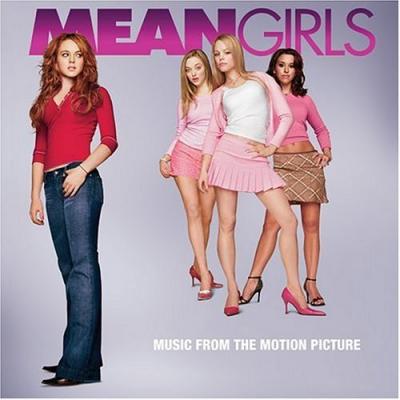
"Mean Girls" Soundtrack Lyrics
Movie • 2004
Track Listing
Pink
Missy Elliott
Kelis
Orbital
Samantha Ronson
Boomkat
Peaches
N.O.R.E. feat. Pharrell
Katy Rose
Daniel Franzese
Kevin Gnappor (Rajiv Surendra)
Blondie
Nikki Cleary
Anjali
Joe Beal & Jim Boothe
"Mean Girls: Music from the Motion Picture" – Album Guide to Tracks and Key Scenes
Overview
How do you marry razor-sharp high-school social satire with an early-2000s pop-rock soundtrack? That’s what Mean Girls (2004) attempts — and succeeds more often than not. The virgin-to- Plastics arc of Cady Heron (Lindsay Lohan) is accompanied by songs that channel teenage angst, empowerment, social jockeying and, yes, partying. :contentReference[oaicite:1]{index=1}
The soundtrack album, titled Mean Girls: Music from the Motion Picture, leans heavily into early-2000s female-led rock, pop punk, electro-pop and club-ready R&B. These genres map onto the film’s phases: initial outsider wonder, infiltration of power, fallout and redemption. The high-energy tracks emphasise the “allies-become-rivals” turn; the slower, darker songs hint at regret and isolation.
What makes this soundtrack distinct is how it blends in-film diegetic party cues (the Halloween party, the Spring Fling), club-sequencing, and end-credits rocker. The music doesn’t just accompany the masquerade of high-school social life — it underscores it. As a result, the album serves as both film support and a nostalgic standalone pop compilation of 2004’s “girls in control” moment. :contentReference[oaicite:3]{index=3}
How It Was Made
The film’s original score was composed by Rolfe Kent, who provided instrumental underscore — but the commercially-released album focuses overwhelmingly on licensed songs. :contentReference[oaicite:5]{index=5}
The album was released on September 21, 2004 by Rykodisc and Bulletproof Records, coinciding with the home-media release of the film. :contentReference[oaicite:8]{index=8}
Music supervisors selected tracks that would align with themes of empowerment and teenage rebellion — for example, God Is a DJ by P!nk and Milkshake by Kelis both appear; the latter became a major pop hit. :contentReference[oaicite:13]{index=13}
Behind the scenes, licensed tracks didn’t always match exactly the on-screen version. Some songs listed on the album aren’t used in full in the film; conversely, several songs used in the film do **not** appear on the album. :contentReference[oaicite:14]{index=14}
Tracks & Scenes
Below are selected key songs from the album (and some additional in-film cues) with scene context and why they matter.
“Dancing with Myself” – The Donnas
Where it plays: During the end-credits sequence, the high-school social world returns to normal after the Spring Fling. The camera tracks students dancing, dispersing cliques, and Cady sharing a look with Aaron. The song is non-diegetic over the credits. :contentReference[oaicite:15]{index=15}
Why it matters: The post-dramatic chargeless energy — dancing “with myself” — mirrors the film’s message: you can survive high-school’s cruelty and still enjoy your own company.
“God Is a DJ” – P!nk
Where it plays: Used in a montage where Cady and her new Plastics gang step into party mode, prepping for the Halloween party (costumes, make-up, changing). The song is non-diegetic but closely linked to the visuals of transformation.
Why it matters: The club-anthem vocabulary underscores Cady’s shift from outsider to insider — the beat becomes the glue of her assimilation.
“Milkshake” – Kelis
Where it plays: Heard as background music in Regina’s bedroom chat with Aaron, when the camera lingers on the “Burn Book” imagery and Regina’s manipulation. Non-diegetic in the scene though real-world radio would plausibly play.
Why it matters: The overt sexual confidence of the song contrasts sharply with the film’s moral undertones about manipulation and objectification, giving the moment a layered ironic edge. :contentReference[oaicite:16]{index=16}
“Built This Way” – Samantha Ronson
Where it plays: At the Spring Fling dance, when Cady is crowned queen and the gym is decked out; the girl-clique belts into pop-rock energy. According to fan cue references, this song accompanies the dance floor energy. :contentReference[oaicite:17]{index=17}
Why it matters: The title itself speaks to identity construction — exactly what Cady grapples with. The song underscores the social architecture of popularity built from image and performance.
“Overdrive” – Katy Rose
Where it plays: Reportedly during the scene in Regina’s bedroom or mirror-preparation sequence where the Plastics critique Cady’s look and insecurities. While not listed explicitly on the album tracklist, the song appears in the film. :contentReference[oaicite:18]{index=18}
Why it matters: A teenage angsty pop-rock anthem, it mirrors Cady’s inner implosion as she loses authenticity in pursuit of social ascendancy.

Notes & Trivia
- The album features 14 tracks by artists such as The Donnas, P!nk, Kelis, Samantha Ronson, Katy Rose, Peaches, Boomkat and Blondie. :contentReference[oaicite:19]{index=19}
- Some songs heard in the film do **not** appear on the album. Examples: “Pass That Dutch” (Missy Elliott), “At Seventeen” (Janis Ian) are used in the film but omitted from the CD. :contentReference[oaicite:20]{index=20}
- The song “At Seventeen” by Janis Ian appears in the girls-fighting scene as intentional metatext (character Janis named after the singer). :contentReference[oaicite:21]{index=21}
- The end-credits track is “Dancing with Myself” (The Donnas) — not a slow ballad but a high-energy rocker, which is an unusual choice for teen-comedy fare. :contentReference[oaicite:22]{index=22}
- The soundtrack was intended as a “time capsule” of 2004 teen-pop/rock culture; critics noted how it skewed female-fronted bands and empowered-girls themes. :contentReference[oaicite:23]{index=23}
Music–Story Links
The soundtrack dovetails with the film’s structure of outsider → insider → fallout. Early cues (e.g., “Overdrive”) amplify Cady’s outsider anxiety; mid-film tracks (“God Is a DJ”, “Built This Way”) illustrate her entry into popularity; end-of-film cues (“Dancing with Myself”) reflect her recovery of self-identity.
Additionally, the textual song titles themselves act as commentary on the narrative: “Milkshake” signals the power-play of attraction; “Sorry (Don’t Ask Me)” addresses guilt that Cady later must feel; “Rip Her to Shreds” (Boomkat) echoes the women’s war-of-words in the “Burn Book”.
Reception & Quotes
Critics regarded the soundtrack as sharper than many teen-film compilations. Heather Phares of AllMusic wrote:
“The soundtrack to Mean Girls is nearly as sharp and knowing as the movie is.”:contentReference[oaicite:24]{index=24}
The album did not produce as many top-ten singles as the film might suggest, but songs like “Milkshake” remained hits independently. The film grossed over US $130 million worldwide. :contentReference[oaicite:25]{index=25}
Interesting Facts
- The film’s character Janis Ian is named after the singer Janis Ian, whose song “At Seventeen” plays in the background of the film’s girls-fight scene. :contentReference[oaicite:26]{index=26}
- The Halloween party scene uses “Operate” by Peaches — though it is on the album it is less prominent in marketing. :contentReference[oaicite:27]{index=27}
- “Milkshake” was originally a 2003 single by Kelis and wasn’t written for the film, but its metaphor of sexual-agency aligns surprisingly well with Regina’s manipulation tactics. :contentReference[oaicite:28]{index=28}
- The D.C. licensing of older songs like “One Way or Another” (Blondie) shows the producers aimed for multi-generational appeal beyond teen viewers. :contentReference[oaicite:29]{index=29}
- The end-credits choice of “Dancing with Myself” instead of a ballad signals the film’s refusal to wrap things up in neat sentimentality. :contentReference[oaicite:30]{index=30}
Technical Info
- Title: Mean Girls – Music from the Motion Picture
- Year: 2004 (soundtrack released September 21, 2004) :contentReference[oaicite:31]{index=31}
- Type: Film soundtrack compilation (licensed songs + some score elements via Rolfe Kent)
- Film: Mean Girls (2004) directed by Mark Waters, written by Tina Fey :contentReference[oaicite:32]{index=32}
- Artists featured: The Donnas, P!nk, Kelis, Samantha Ronson, Katy Rose, Peaches, Boomkat, Blondie and more :contentReference[oaicite:33]{index=33}
- Label: Rykodisc / Bulletproof Records :contentReference[oaicite:34]{index=34}
- Notable placements: “Dancing with Myself” (end-credits); “God Is a DJ” (party montage); “Milkshake” (Regina/Aaron scene); “Built This Way” (Spring Fling dance)
- Format & availability: CD and cassette at release; now available via streaming platforms. :contentReference[oaicite:35]{index=35}
- Excluded tracks from album: Several songs heard in film not on album (e.g., “Pass That Dutch”, “Naughty Girl”) :contentReference[oaicite:36]{index=36}
Questions & Answers
- Is “Milkshake” by Kelis specifically written for Mean Girls?
- No — the song was released in 2003 and was licensed for use in the film; it wasn’t custom-written for it. :contentReference[oaicite:37]{index=37}
- Which song plays during the end credits of Mean Girls?
- “Dancing with Myself” by The Donnas plays over the end credits. :contentReference[oaicite:38]{index=38}
- Does the soundtrack album include every song heard in the film?
- No — several songs heard in the film are omitted from the CD release, often due to licensing or space constraints. :contentReference[oaicite:39]{index=39}
- Who composed the film’s original score (besides the soundtrack songs)?
- The original score was composed by Rolfe Kent. :contentReference[oaicite:40]{index=40}
- What kind of musical tone does the soundtrack aim for?
- It aims for edgy early-2000s teen female empowerment, with a mix of rock, pop, dance-rock and electro, aligning with the film’s critique of high-school cliques and identity performance.
Canonical Entities & Relations
| Subject | Relation | Object |
|---|---|---|
| Mean Girls (film) | releasedIn | 2004 |
| Mean Girls (album) | isSoundtrackFor | Mean Girls (film) |
| Mean Girls (album) | releasedBy | Rykodisc / Bulletproof Records |
| P!nk | performs | “God Is a DJ” |
| Kelis | performs | “Milkshake” |
| The Donnas | perform | “Dancing with Myself” |
| Rolfe Kent | composedScoreFor | Mean Girls (film) |
November, 15th 2025
A-Z Lyrics Universe
Cynthia Erivo Popular
Ariana Grande Horsepower
Post Malone Ain't No Love in Oklahoma
Luke Combs Good Riddance (Time of Your Life)
Green Day Bye Bye Bye
*NSYNC You're the One That I Wan
John Travolta & Olivia Newton-John I Always Wanted a Brother
Braelyn Rankins, Theo Somolu, Kelvin Harrison Jr. and Aaron Pierre The Power of Love
Frankie Goes to Hollywood Beyond
Auli’i Cravalho feat. Rachel House MORE ›