Soundtracks:  A B C D E F G H I J K L M N O P Q R S T U V W X Y Z #


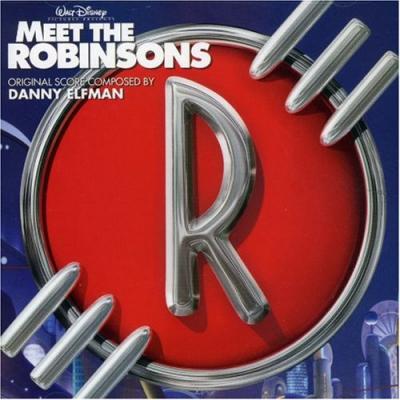
Meet the Robinsons Album Cover

"Meet the Robinsons" Soundtrack Lyrics

Cartoon • 2007

Track Listing


"Meet the Robinsons (Soundtrack from the Motion Picture)" – Album Guide to Tracks and Key Scenes

Meet the Robinsons trailer frame with Lewis and Wilbur in the time machine above the future city
Meet the Robinsons – Lewis and Wilbur take the time machine on a first wild flight into the future

Overview

How do you score a story where the future literally shows up at your bedroom window and tells you to “keep moving forward”? The soundtrack to Meet the Robinsons answers by wrapping Danny Elfman’s orchestral chaos around a ring of pop songs from Rufus Wainwright, Rob Thomas, Jamie Cullum, The All-American Rejects, They Might Be Giants and the Jonas Brothers. It has to cover an orphanage rooftop, a broken science fair, a retro-future city and a family so strange it might as well be alien.

The film follows Lewis, a 12-year-old inventor who wants to find the mother who left him. His Memory Scanner backfires at the school science fair, a kid from the future drags him into the year 2037, and a villain with a sentient bowler hat tries to steal his life’s work. The soundtrack mirrors that snap between timelines: bittersweet pop and tender score in the present, full kinetic brass and rock when the future explodes into view, and then a calm, adult-contemporary glow as Lewis finally accepts the life in front of him.

The album itself, released by Walt Disney Records as an 18-track compilation, takes the same route. Score cues like “The Prologue”, “To the Future!”, “Meeting the Robinsons”, “Goob’s Story” and “A Family United” sit alongside songs such as “Another Believer”, “Little Wonders”, “The Future Has Arrived”, “Where Is Your Heart At?”, “Give Me the Simple Life”, “The Motion Waltz (Emotional Commotion)”, “There’s a Great Big Beautiful Tomorrow” and “Kids of the Future”. It plays almost like a compressed version of the film: loneliness, manic possibility, collapse and a quietly hopeful ending.

Stylistically, you can break it into phases. Early tracks lean on wistful pop and lyrical score to cover adoption interviews, late-night tinkering and rooftop stargazing. The middle of the film – the future city and Robinson family home – is a blend of big-band swing, lounge crooning and Elfman’s fizzy, oddball action writing. The final stretch switches into richer strings and reflective rock-ballad territory, so when “Little Wonders” finally drops, the whole thing feels less like a kids’ movie soundtrack and more like a full life story in miniature.

How It Was Made

Disney brought in Danny Elfman to score the film after a substantial mid-production overhaul. His job was tricky: write a score that can be playful enough for frogs on a chandelier, dark enough for a sentient hat rewriting history, and still sincere enough for a boy trying to find his mother. The orchestral language he landed on mixes warm, repeating motifs for Lewis with fast, angular figures for the time-travel and villain material, then lets all of that melt into straightforward, emotional writing in the last reel.

The soundtrack album, issued by Walt Disney Records on March 27, 2007, runs roughly 52 minutes over 18 tracks. It is billed as Meet the Robinsons (Soundtrack from the Motion Picture) and credited to Various Artists, with Walt Disney Records listed as label and “This Compilation ℗ 2007 Walt Disney Records” in the metadata. The core contributors beyond Elfman are Rufus Wainwright, Rob Thomas, Jamie Cullum, The All-American Rejects, They Might Be Giants and the Jonas Brothers, whose songs are interlaced rather than grouped into a separate “song suite”.

According to Disney’s own promotional notes and fan-oriented soundtrack sites, the pop material was chosen very deliberately. “Another Believer” was written and placed to frame Lewis’s obsessive inventing, “Little Wonders” was positioned as the closing emotional statement, and “The Future Has Arrived” was treated as the public-facing anthem for the film’s “future is bright” message. Older Disney DNA shows up too: “There’s a Great Big Beautiful Tomorrow”, originally written for the Carousel of Progress, gets an indie-quirky cover by They Might Be Giants to tie the movie’s tomorrow back to Walt’s tomorrow.

Meet the Robinsons trailer still with Lewis holding his invention in the orphanage
Behind the scenes in-story – Elfman’s score and the songs have to track Lewis from orphanage tinkerer to future patriarch

Tracks & Scenes

(Scene descriptions below follow the US theatrical cut, with approximate placement rather than strict timecodes.)

“Another Believer” — Rufus Wainwright
Where it plays: Early in the film, over a montage of Lewis building the Memory Scanner at the orphanage. After a failed adoption interview and a discouraging talk with Mildred, Lewis raids the kitchen for parts, sketches blueprints, scavenges tape recorders and projectors, and works under a bare bulb long after everyone else has gone to bed. The song runs over drawings, test failures and small triumphs as daylight turns to night and back again outside his window.
Why it matters: It’s the first full song we hear and it immediately positions Lewis as someone clinging to belief in the face of failure. The laid-back swing and slightly sardonic vocal stop the scene from becoming a maudlin “sad orphan montage”; instead, it feels like a kid stubbornly refusing to give up.

“The Prologue” — Danny Elfman
Where it plays: Right at the start. A hooded woman climbs the orphanage steps on a rainy night, leaves a baby in a cardboard box and disappears into the dark. The cue starts with soft strings, harp and chimes, then slowly grows as Mildred opens the door and discovers the child. As the title card appears, the music widens from intimate to almost cosmic for a few bars, before dropping back to a gentle theme for Lewis.
Why it matters: This is the score’s DNA. You get sadness, mystery and a hint that this small act has huge consequences. Later cues quote and twist this material, so by the time Lewis finally chooses not to meet his mother in the past, the same musical colours tell you how far he has come.

“The Science Fair” — Danny Elfman
Where it plays: The school gym is decked out with folding tables, bubbling volcanoes and potato batteries. Lewis wheels in the Memory Scanner, Wilbur sneaks around the rafters, and Bowler Hat Guy and Doris lurk in the background. The cue bounces between plucky woodwinds for the kids’ projects, sneaky low strings for the villains and nervy little figures for Lewis as he tries to set up the machine. When the Scanner overloads and explodes, the music jumps into frantic, brittle action mode.

Why it matters: It shows off Elfman’s ability to juggle tones. The same cue has to cover comedy, high stakes and humiliation in a few minutes, which it does by constantly shifting tempo and instrumentation while keeping Lewis’s motif present under the chaos.

“To the Future!” — Danny Elfman
Where it plays: Wilbur reveals the time machine and drags Lewis into the sky. As the craft breaks through clouds and into the time stream, the cue surges with brass, choir and swirling strings, then slams into a high-energy section when the city of the future comes into view. We get wide shots of transport tubes, hovering buildings, jet packs and flying billboards while the music rides a steady rhythmic engine underneath bright melody lines.
Why it matters: This is the musical form of the film’s slogan. The fear and nausea of time-travel are still there, but the cue turns them into exhilaration. It also introduces the more “heroic” variant of Lewis’s theme that will come back in the finale.

“Meeting the Robinsons” — Danny Elfman
Where it plays: As Lewis is smuggled into the Robinson house and introduced to the family, the music becomes as jumpy as the editing. Uncle Art bursts through a window to a mock-heroic fanfare, the talking dog gets comic bassoons, the bowler-plant uncles on the front lawn trigger muted brass and plucked strings. The cue keeps switching style every time a new relative appears: surf-rock colours for Uncle Art, jaunty woodwinds for Cousin Tallulah and her giant train, clipped rhythms for Grandpa’s upside-down entrance.
Why it matters: The track makes the Robinsons’ chaos feel exciting instead of overwhelming. It literally orchestrates the idea that a family can be weird, loud and still safe. When they later chant “We’re going to adopt you!”, your ear already associates their sound with joy.

“Give Me the Simple Life” — Jamie Cullum
Where it plays: At dinner in the Robinson home, as Frankie the Frog and his band play above the table. The frogs swing from a chandelier, crooning while the family sends food flying on miniature trains and pneumatic tubes. The camera swirls as the horns do; Franny conducts the frogs with her spoon; Lewis ducks meatballs and formula while trying to understand what “normal” even means here.
Why it matters: The song’s title is pure irony and the arrangement is pure big-band comfort. It turns what could be a sensory overload into a kind of controlled musical number, and it anchors the frogs as more than a throwaway gag.

“Where Is Your Heart At?” — Jamie Cullum
Where it plays: In the garden amphitheatre, where future-Franny conducts her frog jazz band. Lewis watches from the wings while frogs in suits, hats and sunglasses croon the tune, with Robinson relatives drifting in and out behind them. Grandpa loses and finds his teeth to the beat; Wilbur handles little crises off to the side while pretending everything is fine.
Why it matters: Under the lounge-jazz sheen, the lyrics mirror Lewis’s own confusion about belonging. This is the moment he sees what his adoptive mother will become: someone who has built her own version of the family she wanted, and is inviting him into it without yet knowing who he is.

“Goob’s Story” — Danny Elfman
Where it plays: When adult Goob explains how everything went wrong after Lewis’s late-night inventing kept him from sleeping before an important baseball game. We see a younger Goob nodding off in the outfield, missing the catch, losing the game and becoming a punchline. The cue starts light and then sours as each disappointment piles on: minor key twists, tired strings, dragging rhythms that never quite resolve.
Why it matters: It is the score’s main “regret” cue. Without it, Goob might read as a pure cartoon villain; with it, you hear that his bitterness is built on a very human, if warped, sense of being left behind.

“The Evil Plan” — Danny Elfman
Where it plays: Bowler Hat Guy lays out the hat’s plan to take over the world: sabotage Lewis’s work, sell the stolen inventions, let Doris replicate herself and enslave humanity. We see a nightmare future of robotic bowler hats clamping onto people’s heads, cities overgrown with metal, and even the Robinson house turned into a horror-garden. The cue leans hard into dark comedy: ominous organ, pounding ostinatos, sudden stops when Goob misunderstands his own scheme.
Why it matters: It gives Doris a sonic identity – sharp, mechanical, almost insect-like – and makes clear that, for all the film’s colour, the stakes are genuinely apocalyptic if Lewis fails.

“The Future Has Arrived” — The All-American Rejects
Where it plays: It appears in the film’s future-world sections in short bursts, then takes over during the early end credits. After Lewis sets the timeline right and accepts his life, the movie jumps into stylised credits filled with gears, silhouettes and concept art of the future city while the band drives through a mid-2000s rock groove.
Why it matters: This is the most straightforward “anthem” on the album. It’s there to send kids out of the theatre buzzing, but it also underlines that the future Lewis chooses is not some abstract utopia – it’s loud, messy and built on all the work we just saw.

“There’s a Great Big Beautiful Tomorrow” — They Might Be Giants
Where it plays: Mainly as an album cut and in some credit/context uses that nod directly to Disney Parks. In the film’s world, its spirit hangs over Tomorrowland-style shots of the city and the Robinson home’s optimistic architecture. On the album, the track appears near the end, with bouncy guitars and playful vocals turning the original Carousel of Progress song into something that sounds like a kids’ indie anthem.
Why it matters: It ties the film’s version of the future to a specific slice of Disney history. The song was originally written for a rotating theatre about technological optimism; hearing it here reinforces Lewis’s choice to look forward instead of back.

“Kids of the Future” — Jonas Brothers
Where it plays: In promotional material and in some end-credit configurations that emphasise character montages. The track reworks “Kids in America” with future-centric lyrics while rapid cuts cycle through shots of the Robinson family, gadgets and time machines. Guitars, handclaps and stacked harmonies give it a straightforward pop-rock sheen.
Why it matters: It’s pure marketing glue, but effective. It pins the film to a particular era of Disney teen pop and makes the Robinsons’ world feel like something you could join rather than just watch.

“Little Wonders” — Rob Thomas
Where it plays: After Lewis has fixed the timeline, confronted his future and chosen not to see his mother in the past, the film slides into a closing montage scored by this song. We see Lewis being adopted by Lucille and Bud, moving into their quirky home, setting up his own lab in the attic and heading back to the science fair with a re-built Memory Scanner. Quick flashes of earlier scenes – Goob catching the baseball this time, Wilbur keeping his promise, the Robinsons waving goodbye – pass by under the chorus.
Why it matters: It’s the emotional lock on the whole film. The lyric about “these small hours” turns a loud, time-travel plot into a story about tiny choices: staying up late to draw, saying yes to a new family, forgiving a friend. For many listeners the soundtrack is basically this song plus hazy memories of the rest, which says a lot about how strongly it lands.

“The Motion Waltz (Emotional Commotion)” — Rufus Wainwright
Where it plays: Late in the end credits, after the more extroverted tracks. Stylised drawings, gears and concept art float across the screen while the song sways in an off-kilter waltz. The vocal delivery leans into theatrical phrasing, with the orchestra framing the tune in lush, slightly old-fashioned colours.
Why it matters: It functions as a post-script. After all the “future is awesome” messaging, this track quietly reminds you that the film is also about being strange, feeling out of place and then finding your people anyway.

Trailer-only: “This Much Fun” — Cowboy Mouth
Where it plays: Not in the movie or on the official album, but used in at least one major trailer and TV spot. Over a rapid montage of the film’s biggest gags – the T-rex crashing through the science fair, Bowler Hat Guy flailing, frogs scat-singing – you hear the hook about not having had “this much fun in such a long, long time”.
Why it matters: For a slice of the audience, this was the first sonic association with the film. Its absence from both the movie and the soundtrack album is still a small sore point for completists.

Meet the Robinsons scene of the Robinson family gathered around the dinner table with frogs playing above
Key track territory – jazz, swing and Elfman’s score make the Robinson home feel chaotic but safe

Notes & Trivia

  • The commercial soundtrack contains 18 tracks and runs just over 52 minutes, released as a Various Artists compilation on Walt Disney Records.
  • The album sequence starts with “Another Believer” and “Little Wonders”, then alternates between pop songs and Elfman cues so the listening experience reflects the film’s rapid tonal shifts.
  • The track “Little Wonders” was released as a single, paired with “There’s a Great Big Beautiful Tomorrow” and an Elfman piece as B-sides, and reached the Billboard Adult Contemporary chart as well as top-20 positions in several countries.
  • “Kids of the Future” re-writes “Kids in America” with new lyrics and is credited as a Jonas Brothers track; it appears on the soundtrack but is more visible in marketing than in the film’s core scenes.
  • They Might Be Giants’ version of “There’s a Great Big Beautiful Tomorrow” effectively turns a 1960s theme-park jingle into a modern indie sing-along, a rare case of an attraction song crossing over into a feature soundtrack.
  • Soundtrack Q&A resources explicitly identify “Another Believer” as the song playing when Lewis draws a picture of himself and his mother, and confirm that “Little Wonders” covers the ending montage.
  • The song “This Much Fun” by Cowboy Mouth, strongly associated with trailers, never appears in the film or on the official album, so fans often add it manually to playlists.

Music–Story Links

On a story level, the soundtrack sketches two competing futures and then reconciles them. “Another Believer” and the early score cues belong to the version of Lewis who thinks the answer is precision and control: build the right machine, find the missing piece, fix the past. “To the Future!” and “The Future Has Arrived” belong to the fantasy of a perfect tomorrow where everything is already sorted out.

Once Lewis meets the Robinsons, the music deliberately refuses to be sleek or tidy. Jazz-club frogs, big-band dinner songs and jumpy action cues insist that a good future is messy, loud and full of people who make mistakes. The frogs’ numbers and the “Meeting the Robinsons” cue do a lot of character work: they make this chaos legible as love, even when it feels overwhelming to Lewis.

The villain material takes that same musical toolkit and twists it. Goob’s flashback is scored like a broken version of Lewis’s own theme, and “The Evil Plan” hijacks the bright orchestrations to score a nightmare of a hat-ruled world. When Lewis “sets things right”, the score resolves those tensions by bringing back prologue colours and folding them into the final future-city material, while “Little Wonders” quietly reframes the whole narrative as being about small decisions rather than grand fixes.

Reception & Quotes

The film landed as a mid-tier Disney release at the box office but earned steady praise for its heart and for the way its “keep moving forward” message was woven into the story rather than just pasted on. The soundtrack benefited from that reputation. Film-music reviewers pointed to Elfman’s work as a solid, slightly underrated entry in his 2000s output, highlighting how often he flips between manic and sincere without losing the thread.

Song-wise, “Little Wonders” stood out immediately. Contemporary coverage and later retrospectives both treat it as a “sleeper Disney classic” – a ballad that sits comfortably next to the studio’s 90s hits despite coming from a non-musical computer-animated film. Fan discussions often pair it with “Another Believer” as a kind of opening-and-closing bracket for the whole story.

The broader consensus is that the album works better in context than as a stand-alone pop record, but for listeners who grew up with the film, its mix of orchestral cues and mid-2000s rock and adult-contemporary songs has strong nostalgia pull. It is also often cited as an example of Disney beginning to lean more heavily on contemporary artists alongside full scores in non-princess features.

“The score see-saws between emotional, heartfelt orchestral themes and Elfman’s brand of patented wackiness, but always in service of Lewis’s journey.” — summary of a film-music review
“Little Wonders is that rare soundtrack single that quietly becomes the emotional core of its movie.” — paraphrased critical commentary
“The song playing when Lewis draws his mother is ‘Another Believer’… The ending song is ‘Little Wonders’ by Rob Thomas.” — soundtrack Q&A resource
Meet the Robinsons closing shot of Lewis looking toward the city skyline and observatory
Final images – “Little Wonders” and “The Future Has Arrived” turn the film’s motto into sound

Interesting Facts

  • The album often appears under slightly different titles (“Soundtrack from the Motion Picture” versus “Original Walt Disney Records Soundtrack”), but tracklists are effectively identical.
  • Digital listings credit the release as a Various Artists compilation, but soundtrack and discography sites still group it under Danny Elfman’s film-score discography because his cues make up the bulk of the runtime.
  • “Little Wonders” was released as a single with an EP-style track list that doubled as a mini-companion to the main album, including the Carousel of Progress cover and an additional Elfman cue.
  • Some international editions swap in local-language theme songs while keeping the same Elfman score; Japan, for example, uses a different closing song for local marketing.
  • The soundtrack includes both in-universe performance pieces (“Give Me the Simple Life”, “Where Is Your Heart At?”) and non-diegetic songs, which blurs the line between what the characters hear and what the audience hears.
  • Because the trailer-only track “This Much Fun” did not make the album, fan-made “complete soundtrack” playlists online often add it manually to recreate the full 2007 listening experience.
  • The use of “There’s a Great Big Beautiful Tomorrow” is one of the neatest examples of Disney cross-pollinating theme-park music with feature animation in the 2000s catalogue.
  • Streaming compilations and fan uploads sometimes label the whole album “Danny Elfman – Meet the Robinsons” even though only about half the tracks are his cues.

Technical Info

  • Album title: Meet the Robinsons (Soundtrack from the Motion Picture)
  • Alternative title: Meet the Robinsons (Original Walt Disney Records Soundtrack)
  • Film: Meet the Robinsons (2007, Walt Disney Animation Studios)
  • Year of soundtrack release: 2007
  • Type: Compilation soundtrack – original score plus songs
  • Primary composer (score): Danny Elfman
  • Featured song artists: Rufus Wainwright, Rob Thomas, Jamie Cullum, The All-American Rejects, They Might Be Giants, Jonas Brothers
  • Label: Walt Disney Records
  • Approximate length: 18 tracks, about 52 minutes
  • Key score cues (selection): “The Prologue”, “To the Future!”, “Meeting the Robinsons”, “The Science Fair”, “Goob’s Story”, “A Family United”, “Pop Quiz and the Time Machine Montage”, “The Evil Plan”, “Setting Things Right”
  • Key songs (selection): “Another Believer”, “Little Wonders”, “The Future Has Arrived”, “Where Is Your Heart At?”, “Give Me the Simple Life”, “The Motion Waltz (Emotional Commotion)”, “There’s a Great Big Beautiful Tomorrow”, “Kids of the Future”
  • Notable trailer-only track: “This Much Fun” — Cowboy Mouth (marketing only; not on the OST)
  • Notable single performance: “Little Wonders” reached the Billboard Adult Contemporary chart and made top-20 in several international markets.
  • Availability: Widely available on streaming platforms and as a physical CD; album metadata on major services credits it as a 2007 Walt Disney Records compilation.

Questions & Answers

Is the Meet the Robinsons soundtrack mainly songs or mainly score?
It is a hybrid: Danny Elfman’s score cues make up about half the runtime, with the rest filled by songs from artists like Rufus Wainwright, Rob Thomas and The All-American Rejects.
What song plays when Lewis is drawing his mother and working late on the Memory Scanner?
The song is “Another Believer” by Rufus Wainwright, used over a montage of him sketching and building the invention at the orphanage.
Which track plays over the ending montage when Lewis’s future comes together?
That closing montage – adoption, new home, return to the science fair – is scored with “Little Wonders” by Rob Thomas.
What music is used for the big time-travel arrival in the future city?
The arrival sequence is driven by Elfman’s cue “To the Future!”, which introduces the future skyline and the Robinson house with sweeping orchestral writing and choral accents.
Which trailer song is missing from both the film and the official album?
The rock track “This Much Fun” by Cowboy Mouth was used in advertising but does not appear in the movie itself or on the standard soundtrack release.

Canonical Entities & Relations

Subject Relation Object
Meet the Robinsons (film) has soundtrack Meet the Robinsons (Soundtrack from the Motion Picture)
Meet the Robinsons (film) music composed by Danny Elfman
Meet the Robinsons (Soundtrack from the Motion Picture) released by Walt Disney Records
Meet the Robinsons (soundtrack) includes song “Another Believer”
“Another Believer” performed by Rufus Wainwright
Meet the Robinsons (soundtrack) includes song “Little Wonders”
“Little Wonders” performed by Rob Thomas
Meet the Robinsons (soundtrack) includes song “The Future Has Arrived”
“The Future Has Arrived” performed by The All-American Rejects
Meet the Robinsons (soundtrack) includes song “Where Is Your Heart At?”
“Where Is Your Heart At?” performed by Jamie Cullum
Meet the Robinsons (soundtrack) includes song “Give Me the Simple Life”
“Give Me the Simple Life” performed by Jamie Cullum
Meet the Robinsons (soundtrack) includes song “There’s a Great Big Beautiful Tomorrow”
“There’s a Great Big Beautiful Tomorrow” performed by They Might Be Giants
Meet the Robinsons (soundtrack) includes song “Kids of the Future”
“Kids of the Future” performed by Jonas Brothers
Meet the Robinsons (film) produced by Walt Disney Animation Studios
Meet the Robinsons (film) distributed by Buena Vista Pictures Distribution

Sources: Disney and soundtrack metadata, film and album reference sites, and specialist soundtrack Q&A resources were used to align track credits, scene placements and release details.

November, 15th 2025


A-Z Lyrics Universe

Lyrics / song texts are property and copyright of their owners and provided for educational purposes only.