Soundtracks:  A B C D E F G H I J K L M N O P Q R S T U V W X Y Z #


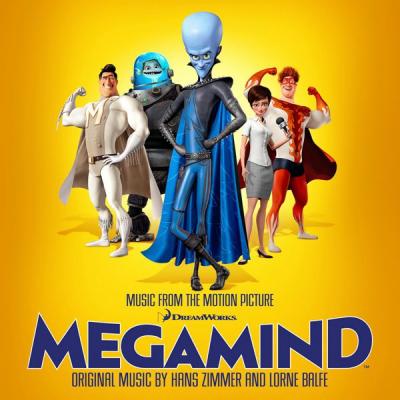
Megamind Album Cover

"Megamind" Soundtrack Lyrics

Movie • 2010

Track Listing


"Megamind (Music from the Motion Picture)" – Album Guide to Tracks and Key Scenes

Megamind theatrical trailer frame with Megamind posing over Metro City
Megamind – trailer imagery that matches the soundtrack’s mix of superhero bombast and tongue-in-cheek rock swagger.

Overview

What does a soundtrack do when the “villain” is the protagonist and the hero is basically Elvis in a cape? Megamind (Music from the Motion Picture) answers with a cheeky hybrid: full-blown orchestral superhero scoring plus a classic-rock jukebox that winks at every genre cliché while still playing them straight enough to hit emotionally.

The film follows Megamind, a blue-skinned supervillain who finally defeats his rival Metro Man and then realizes that winning made his life meaningless. The score by Hans Zimmer and Lorne Balfe frames this as a real character crisis, not just a gag. Megamind’s world gets bold brass fanfares, cartoon-evil organs and surprisingly sincere romance cues, while the needle-drops drag in the larger pop-culture idea of “badness” – leather-jacket rock, stadium swagger, melancholic 70s singer-songwriter vibes.

Structurally, the album tracks Megamind’s arc from overconfident showman to lonely ex-villain to reluctant hero. Early cues like “Giant Blue Head” and “Stars and Tights” lean into parody, riffing on big superhero themes and fanfares. Once Megamind “wins”, the tone swings to songs like “Alone Again (Naturally)” and the softer orchestral love material for Roxanne. By the time Tighten goes off the rails, the soundtrack is balancing AC/DC, Guns N’ Roses and nervy action scoring without losing the thread of Megamind’s inner mess.

In genre terms, you can almost divide the soundtrack into phases. Classic rock and Elvis remixes underline the cartoon masculinity of Metro Man and Tighten; lush, melodic score cues signal Megamind’s vulnerability and Roxanne’s emotional center; melancholy pop tracks carry the “what now?” mid-movie slump; and aggressive guitar-driven songs mark the city-wide chaos of the finale. Comedy sits on top, but the musical architecture underneath is actually quite tight.

How It Was Made

DreamWorks hired Hans Zimmer and long-time collaborator Lorne Balfe specifically to lampoon and celebrate superhero scoring at the same time. According to the official soundtrack notes, they recorded the score in London at Abbey Road and AIR Studios with a full orchestra conducted by Gavin Greenaway, then folded in a small set of licensed classics – “Bad to the Bone”, “A Little Less Conversation (JXL Remix)”, “Alone Again (Naturally)” and “Lovin’ You” – as structural pillars on the album.

The Lakeshore Records release runs 17 tracks and sits just under 50 minutes. Most of the runtime belongs to score pieces like “Giant Blue Head”, “Tightenville (Hal’s Theme)”, “Roxanne (Love Theme)” and “Evil Lair”, but the four big songs are sequenced so they feel like part of a continuous musical story rather than a bonus playlist.

Behind the scenes, Zimmer and Balfe treat Megamind almost like a traditional adventure film, then tilt everything five degrees toward comedy. Brass is a bit too brassy, choir entries arrive half a beat more grandiose than needed, and themes such as Megamind’s main motif are built sturdy enough to survive being used under both genuine emotional beats and outright jokes.

Lakeshore’s production credit list confirms the usual large post-team: multiple recording and mixing engineers, a sizable orchestral lineup and additional arrangements from regular Zimmer collaborators (including work around the Elvis remix). That infrastructure is why the album still sounds punchy and cinematic more than a decade later.

Megamind trailer frame of Metro Man flying above Metro City like a rockstar superhero
Recording the score at Abbey Road and AIR gave the film’s spoof-superhero moments a genuinely big-screen orchestral weight.

Tracks & Scenes

Below are key cues and songs from the film, tied to the scenes where they hit hardest. Timings are approximate by plot position rather than minute-exact.

"Giant Blue Head" — Hans Zimmer & Lorne Balfe
Where it plays: Effectively the main title cue. It covers Megamind’s origin recap and his current “greatest supervillain” status: rocket-cradle, prison childhood, school humiliation and years of staged battles with Metro Man. Non-diegetic, but tightly cut to the visual comedy of failed villainy and elaborate gadgets malfunctioning.

Why it matters: This is the musical thesis. The theme is big enough to sit next to a straight superhero score but slightly over-inflated, which fits a character who treats villainy like theatre. Later score cues quote fragments of “Giant Blue Head” whenever Megamind’s self-image flares up again.

"Stars and Tights" — Hans Zimmer & Lorne Balfe
Where it plays: Around Metro Man Day, underscoring the city’s fawning celebration of its hero. We see banners, a new museum, adoring crowds and Metro Man himself making a showy entrance in front of Roxanne and the Mayor. Non-diegetic, but clearly “Metro Man’s fanfare”.

Why it matters: The cue parodies Superman-style hero music – trumpets, soaring strings, clean harmonies – while signaling that Metro Man is more celebrity than savior. It also sets up how hollow Megamind feels next to this polished theme, pushing him toward the drastic plan at the observatory.

"Bad to the Bone" — George Thorogood & The Destroyers
Where it plays: Early in the film, as a flashback shows young Megamind escaping from prison school and realizing he’ll never win as the “good kid”. The track kicks in over a montage of him leaning into villainy: building contraptions, adopting the cape, embracing the role everyone expects. Non-diegetic but used like his personal anthem.

Why it matters: It’s on-the-nose in the best way. The swaggering riff locks in Megamind’s decision to be “bad” as both rebellion and brand choice. The song also bookends his later realization that the label doesn’t actually fit him anymore.

"A Little Less Conversation (Junkie XL Remix)" — Elvis Presley vs. JXL
Where it plays: During Metro Man’s big public ceremony at the museum, right before Megamind’s latest scheme kicks off. The remix blares as Metro Man flies in, basks in adoration and strikes rock-star poses. Diegetic in spirit – it feels like the in-universe hype track for his entrance, even if it’s technically score-layered.

Why it matters: The remix ties Metro Man’s image directly to pop-culture cool. There’s a sly joke in using a remixed Elvis track for a hero whose design and posture already echo Elvis. It sells how addicted Metro City is to his performance, which makes his “death” later feel like genuine cultural whiplash.

"Highway to Hell" — AC/DC
Where it plays: Right after Metro Man appears to be dead and Megamind has “won”, Minion cranks this up as they stroll through the conquered city. Buildings wear giant M logos, monuments are defaced, and Megamind basks in his victory while citizens cower. Diegetic: it blasts out over the city from their systems.

Why it matters: The needle-drop is a prophecy. The city doesn’t know it yet, but the road they’re on really is a highway to someone worse than Megamind. The song also undercuts Megamind’s triumph, making it feel immature and reckless rather than triumphant.

"Crazy Train" — Ozzy Osbourne
Where it plays: A later victory-lap montage, as Megamind and Minion re-decorate Metro City, rename it “Metrocity” and indulge in ridiculous villain decor. Giant holograms, impractical lair upgrades and pointless acts of vandalism slide past while the riff chugs on. Mostly diegetic inside their lair and vehicles.

Why it matters: The cue captures that phase where Megamind has everything he wanted and no idea what to do with it. The lyrics about going off the rails mirror Tighten’s eventual storyline, but for now they’re about Megamind’s boredom wrapped in spectacle.

"Lovin' You" — Minnie Riperton
Where it plays: The film uses this twice for maximum contrast. First, during Megamind’s “disguised as Bernard” courtship of Roxanne – soft lighting, romantic setups, that infamous high vocal floating over genuine chemistry. Later, after his identity is exposed and everything falls apart, we hear a snippet again in a harsher, more ironic context.

Why it matters: As one reviewer noted, the song brings both sincere romance and an undercutting comedic edge. The sweetness of Riperton’s vocal turns the date montage into something almost too perfect, which makes the reveal of Megamind’s lie sting more.

"Alone Again (Naturally)" — Gilbert O’Sullivan
Where it plays: In the slump after Megamind realizes that defeating Metro Man has left him purposeless, and later when his relationship with Roxanne implodes. He mopes in the lair, wanders through now-empty villain trophies and talks half-heartedly with Minion while the song plays. Non-diegetic but very foregrounded.

Why it matters: The choice is almost cruelly apt. A light, finger-snapping melody wrapped around lyrics about abandonment matches Megamind’s mixture of self-pity and genuine loss. It’s one of the few cues that asks the audience to feel for him without irony.

"Mr. Blue Sky" — Electric Light Orchestra
Where it plays: During the “teach Hal to be a hero” montage, after Megamind secretly turns Roxanne’s cameraman into Tighten. We see Hal struggle through basic heroic tasks – saving people, posing, flying – while Megamind fakes disasters from the sidelines. Non-diegetic but cut as if it’s playing in Hal’s head.

Why it matters: The upbeat, sun-drenched sound sells the fantasy that this could work. For a few minutes, the film lets you believe in Tighten as a legitimate hero, even as we keep seeing his laziness and entitlement under the surface.

"Back in Black" — AC/DC
Where it plays: Later, when Megamind gears up to confront Tighten for real. He returns to his gadgets, suits up, takes the Invisible Car for a patrol and tries to flip the villain persona into something more heroic. The riff underlines a full “suit-up” montage. Non-diegetic but synced tightly to the action.

Why it matters: Using a classic “I’m back” rock track for a character switching sides is very deliberate. The song makes Megamind’s return to the field feel big and iconic, even though he’s improvising his way through being a good guy.

"Welcome to the Jungle" — Guns N’ Roses
Where it plays: During part of the final confrontation with Tighten, as the “new hero” goes fully rogue and Megamind has to improvise a rescue. Buildings crumble, citizens flee, Metro City turns into a war zone while the track snarls in the background.

Why it matters: The lyrics about the jungle and needing to “bleed” to learn fit Tighten’s corruption and the city’s chaos. It’s the movie admitting that Megamind’s game of superheroes and supervillains has let something much uglier out of the box.

"Tightenville (Hal’s Theme)" — Hans Zimmer & Lorne Balfe
Where it plays: Anytime the film focuses on Hal – first as the awkward cameraman with a crush on Roxanne, later as the newly empowered Tighten drifting toward villainy. The cue threads through apartment scenes, rooftop chats and early flying tests. Non-diegetic character motif.

Why it matters: The theme starts goofy and small-scale, then gets warped and more menacing as Hal’s power trips escalate. It’s a neat musical shorthand for “immature guy with god-level powers” without having to say it out loud.

"Roxanne (Love Theme)" — Hans Zimmer & Lorne Balfe
Where it plays: Over various moments of genuine connection between Roxanne and “Bernard”/Megamind – the rainy rooftop, the quiet walking-and-talking sequences, the reveal at the observatory. Strings and woodwinds carry most of it, with gentle harp touches.

Why it matters: This theme is where the score stops joking. It gives Roxanne and Megamind’s relationship real emotional weight, which is why his betrayal hurts and why his later attempts at heroism feel anchored in something personal, not just city-wide spectacle.

"Evil Lair" — Hans Zimmer & Lorne Balfe
Where it plays: Near the end, when Megamind returns to the lair with a new perspective, re-tools his old villain tech and rushes out to stop Tighten. Layers of organ, choir and pounding percussion revisit earlier villain motifs but twist them into something more purposeful.

Why it matters: It’s the musical version of repainting the skull-shaped lair without demolishing it. The same harmonic language that once screamed “evil genius” now reads as determination. The score shows Megamind changing long before he admits it to himself.

Megamind trailer montage of rock-scored action around Metro City
From origin flashbacks to Tighten’s rampage, each big song marks a clear step in Megamind’s bad-guy-turned-hero journey.

Notes & Trivia

  • The official album combines score cues and four song licenses; several other rock tracks (like “Highway to Hell” and “Welcome to the Jungle”) are film-only and not on the CD.
  • Zimmer and Balfe wrote all the score material, but the Elvis remix is credited separately as “A Little Less Conversation (Junkie XL Remix)” with its own licensing block.
  • The John Burroughs High School Marching Band performs “Stars and Tights” diegetically in the film as Metro Man’s theme at the museum event.
  • Metro Man briefly sings a line to the melody of Nirvana’s “Come as You Are”, a musical in-joke about his powers and self-image.
  • The cue names (“Giant Blue Head”, “Drama Queen”, “Black Mamba”) lean into comedy, but the underlying orchestration is closer to straight action scoring than the titles suggest.

Music–Story Links

The soundtrack essentially tracks three overlapping arcs: Megamind’s identity crisis, Hal’s corruption and Roxanne’s shifting loyalties. Each gets its own palette. Megamind’s scenes lean on brassy themes and over-dramatic organs; Hal’s are glued to “Tightenville” and whichever rock track flatters his ego; Roxanne often pulls in cleaner, more lyrical writing.

When Megamind first defeats Metro Man, the combination of “Highway to Hell”, “Crazy Train” and bouncy score cues sells his giddiness and denial. By the time “Alone Again (Naturally)” appears, those same spaces in the lair feel empty. The songs are doing narrative work: we hear the high of victory, then the comedown.

Hal’s transformation from hapless cameraman to Tighten is mapped almost beat-for-beat in music. “Mr. Blue Sky” makes his training look like harmless superhero wish-fulfillment. Once he starts abusing his powers, the score drops the upbeat tone and lets distorted brass and darker harmonies take over, especially during the “Welcome to the Jungle” showdown.

Roxanne’s emotional through-line lives in the contrast between “Lovin’ You” and “Roxanne (Love Theme)”. The former is the fantasy – the perfect date, the idealized partner, the movie-romance montage. The latter is the reality: hesitant, a bit awkward, fully aware of Megamind’s flaws. When the film chooses one over the other, you can tell where her head is.

Even Metro Man’s fake death and later reveal are underlined musically. His early appearances borrow the brightest, most heroic colors in the score plus Elvis-flavored swagger. When he reappears as a checked-out recluse, the music around him is smaller, more acoustic, signaling that the story has moved beyond simple hero/villain binaries.

Reception & Quotes

Critical response to the album was generally positive. Reviewers tended to agree that the score wasn’t wildly original but was energetic, well-crafted and a good fit for the film’s superhero spoof. The blend of orchestral writing with familiar songs drew most of the attention.

Movie Music UK praised how much fun the score was for anyone who enjoys modern animated adventure music and highlighted Lorne Balfe’s emergence from Hans Zimmer’s shadow as a name in his own right. Tracksounds called the album “engaging and consistently refreshing” within its lighter, parody-inflected framework.

“A fun, quirky orchestral effort mixing parodic moments with brassy fanfares and pretty romance.”
Empire soundtrack review
“Zimmer and Balfe have weaved a score that is engaging and consistently refreshing to listeners.”
Tracksounds
“Interspersed with the original music are well-known tracks from famous artists… ‘Bad to the Bone’ fits right in with this movie.”
Fandomania

From the film side, Megamind picked up generally favorable reviews and quickly developed a cult following, especially online. The soundtrack contributed to that afterlife: fans still circulate “Giant Blue Head”, “I’m the Bad Guy” and the rock placements in compilations and meme edits.

On streaming platforms, the album sits alongside Zimmer’s bigger titles but has a slightly different reputation – less “dark and brooding”, more “playful, melodic and tightly structured”. It is often recommended to listeners who like John Powell’s animated scores and want something in the same lane.

Megamind trailer closing frame echoing the film’s neon-lit Metro City skyline
Critics may have debated the film’s originality, but the combination of Zimmer/Balfe score and classic-rock song choices has aged surprisingly well.

Interesting Facts

  • The album title is officially Megamind (Music from the Motion Picture), but many listings shorten it to just Megamind or tag it as “Original Soundtrack”.
  • Despite feeling like a “various artists” compilation, only four of the major songs are on the album; other rock tracks remain film-only for licensing reasons.
  • Zimmer and Balfe recorded at both Abbey Road and AIR Studios in London, the same spaces used for much heavier action scores; the sound here is intentionally cleaner and brighter.
  • Some physical CD editions credit DreamWorks executive Sunny Park as “Executive in Charge of Music”, aligning the project with other studio-wide music branding.
  • The cue “I’m the Bad Guy” is used heavily in fan edits because it condenses Megamind’s main motifs into a tight, self-contained track.
  • The French-language soundtrack documentation openly lists “Itsy Bitsy Spider” as additional music, highlighting Metro Man’s in-universe performance at the school and museum.
  • Zimmer and Balfe would later flip the dynamic for Penguins of Madagascar, where Balfe took top billing and Zimmer served more as producer.
  • The modern TV spin-off Megamind Rules! has its own theme song (performed by Adam Lambert), giving the franchise a new, separate musical identity years after the original score.

Technical Info

  • Album Title: Megamind (Music from the Motion Picture)
  • Film: Megamind (2010, DreamWorks Animation)
  • Type: Film soundtrack (score plus selected songs)
  • Primary Composers: Hans Zimmer, Lorne Balfe
  • Song Artists on Album: George Thorogood & The Destroyers; Elvis Presley vs. JXL; Gilbert O’Sullivan; Minnie Riperton
  • Label: Lakeshore Records (catalog number LKS 341992)
  • Release Date: 2 November 2010 (CD and digital)
  • Recording: 2010, Abbey Road Studios and Air Studios, London
  • Length: Approx. 48 minutes, 17 tracks
  • Orchestra Conductor: Gavin Greenaway
  • Notable Score Cues: “Giant Blue Head”, “Tightenville (Hal’s Theme)”, “Stars and Tights”, “Roxanne (Love Theme)”, “I’m the Bad Guy”, “Evil Lair”
  • Key Licensed Tracks on Album: “Bad to the Bone”, “A Little Less Conversation (Junkie XL Remix)”, “Alone Again (Naturally)”, “Lovin’ You”
  • Additional Songs in Film Only: “Highway to Hell”, “Crazy Train”, “Mr. Blue Sky”, “Back in Black”, “Welcome to the Jungle”, “Bad”, “Miss America”, traditional “Itsy Bitsy Spider” and a “Come as You Are” melody reference
  • Availability: Widely available on major streaming services; original CDs exist but can be slightly harder to find at regular retail.

Questions & Answers

Is every song from the movie included on the Megamind album?
No. The Lakeshore album mixes score with four key songs. Other rock tracks like “Highway to Hell”, “Mr. Blue Sky” and “Welcome to the Jungle” are heard in the film but not included on the standard soundtrack.
What style of score did Hans Zimmer and Lorne Balfe use for Megamind?
They wrote a traditional, theme-driven orchestral score that deliberately echoes classic superhero and adventure music, then tilt it toward parody with playful cue titles and occasional exaggeration.
How do the classic rock songs fit the story?
The rock songs mostly track Megamind’s and Tighten’s self-image – swaggering “bad guy” anthems for early villainy, brighter tracks for hero fantasies, heavier guitar for the out-of-control finale.
Is the soundtrack worth hearing on its own if you already know the movie?
Yes. The album plays like a compact superhero concept record: you get a clear main theme, distinct motifs for Hal and Roxanne, and the big songs are sequenced to create a simple narrative arc even without the visuals.
Where does Megamind sit in Hans Zimmer’s filmography?
It’s a lighter, more overtly playful entry, closer to his animated and family-adventure work. You can hear some of the same craft as his bigger blockbusters, but applied to comedy and character rather than pure spectacle.

Canonical Entities & Relations

Subject Relation Object
Tom McGrath directed Megamind (film, 2010)
Alan Schoolcraft & Brent Simons wrote screenplay for Megamind
DreamWorks Animation produced Megamind (film, 2010)
Paramount Pictures distributed Megamind (theatrical release)
Hans Zimmer composed score for Megamind (film, 2010)
Lorne Balfe co-composed score for Megamind (film, 2010)
Hans Zimmer & Lorne Balfe created Megamind (Music from the Motion Picture) (MusicAlbum)
Lakeshore Records released Megamind (Music from the Motion Picture) in 2010
Gavin Greenaway conducted orchestra for the Megamind score recordings
George Thorogood & The Destroyers performed “Bad to the Bone” used in Megamind
Elvis Presley vs. JXL performed “A Little Less Conversation (Junkie XL Remix)” used in Megamind
Electric Light Orchestra performed “Mr. Blue Sky” used in Megamind
AC/DC performed “Highway to Hell” and “Back in Black” used in Megamind
Guns N’ Roses performed “Welcome to the Jungle” used in Megamind
Minnie Riperton performed “Lovin’ You” used in Megamind and on the soundtrack album

Sources: Wikipedia film and soundtrack entries; DreamWorks Wiki soundtrack page; Lakeshore Records / VGMdb album data; Apple Music and retail track listings; Soundtrakd and Moviesost song-scene breakdowns; IMDb soundtrack credits; reviews from Empire, Tracksounds, Fandomania and Movie Music UK.

November, 15th 2025


A-Z Lyrics Universe

Lyrics / song texts are property and copyright of their owners and provided for educational purposes only.