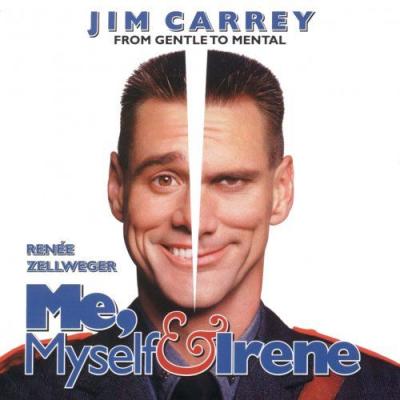
"Me Myself & Irene" Soundtrack Lyrics
Movie • 2000
Track Listing
Foo Fighters
Smash Mouth
Third Eye Blind
Offspring
Ellis Paul
Wilco
Ivy
Hootie & the Blowfish
Brian Setzer Orchestra
The Push Stars
Marvelous 3
Pete Yorn
Ben Folds Five
Billy Goodrum
Tom Wolfe
"Me, Myself & Irene (Music From The Motion Picture)" – Album Guide to Tracks and Key Scenes
Overview
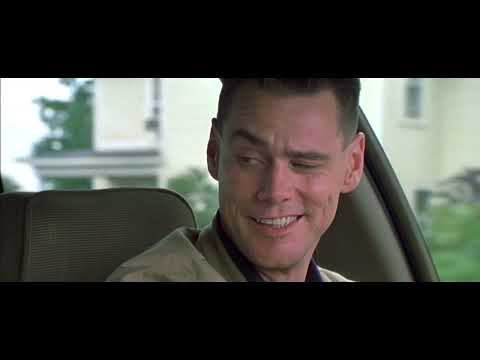
How do you score a film where the lead keeps switching between doormat and maniac? Me, Myself & Irene answers with a soundtrack that behaves like Hank: loud, nervy and a little too clever. On paper it’s a rock-leaning compilation; in practice it’s a stealth Steely Dan tribute album welded onto a Jim Carrey slapstick chase.
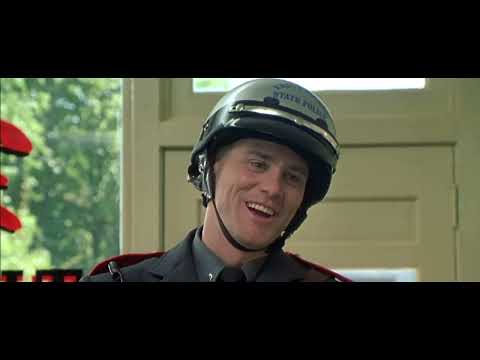
The movie follows Rhode Island trooper Charlie Baileygates, whose years of swallowed humiliation finally fracture into an alter ego, Hank Evans. Mild Charlie and feral Hank both end up escorting Irene, a woman on the run from corrupt suits and ex-boyfriends. The soundtrack has to keep up with humiliations, shootouts, split-personality brawls, and a late-breaking romance. Instead of relying on generic score stabs, the film leans on songs that are either swaggering (for Hank), jangly and hopeful (for Charlie), or dryly ironic about how little anyone ever learns.
The commercial album, Me, Myself & Irene (Music From The Motion Picture), collects 15 tracks, many of them covers of Steely Dan songs performed by alt-rock and post-grunge acts. According to the film’s music section and disc releases, eight of the fifteen cuts are Steely Dan tunes reinterpreted by Wilco, Ivy, Brian Setzer Orchestra, The Push Stars, Marvelous 3, Ben Folds Five, Billy Goodrum and others, alongside Foo Fighters, Third Eye Blind, The Offspring, Pete Yorn, Ellis Paul and Hootie & The Blowfish.
Genre-wise, the album sits at the intersection of late-’90s/early-’00s modern rock, power-pop and singer-songwriter Americana. You can loosely map it to the story’s phases: power-pop aggression and industrial breaks for Hank’s rampages; jangly folk-rock and mid-tempo rock for Charlie’s road-trip redemption; silky, ironic Steely Dan covers as the connective tissue that makes the whole thing feel slightly smarter than the on-screen mayhem. Where many comedies go wall-to-wall novelty songs, this one plays like a decent college-radio hour that just happens to be underscoring lawn-pooping and cow-in-the-road gags.
How It Was Made
The film’s original score was written by Pete Yorn, working in guitar-based, slightly melancholic cues that pre-figure his debut album musicforthemorningafter. Contemporary write-ups of his career note that scoring Me, Myself & Irene was his first big break and that his single “Strange Condition” landed both on an EP and on the movie’s soundtrack. The score itself never received a wide standalone release; it survives as promo material and isolated cues in the film.
The song compilation, meanwhile, came out on Elektra as Me, Myself & Irene (Music From The Motion Picture), catalogue 62512, in June 2000, with about 56 minutes of music over 15 tracks. Elektra and Fox essentially commissioned a mini Steely Dan covers project inside a Carrey vehicle: Wilco tackle “Any Major Dude Will Tell You”, Ivy caress “Only a Fool Would Say That”, Brian Setzer Orchestra go big-band on “Bodhisattva”, The Push Stars rough up “Bad Sneakers”, Marvelous 3 rip through “Reelin’ In the Years”, Ben Folds Five do “Barrytown”, Billy Goodrum covers “Razor Boy”, while Smash Mouth handle “Do It Again”. The rest of the lineup is rounded out with contemporary originals and existing cuts licensed in.
Placement work was unusually precise for a broad studio comedy. A dedicated soundtrack site and fan Q&A threads document which songs land where, from Junior Brown’s “Highway Patrol” on the opening patrol run, to Ellis Paul’s “The World Ain’t Slowin’ Down” in the road-trip stretch and the pre-credits helicopter rescue, to Hardknox’s “Fire Like This” thrown under Hank’s most antisocial moments. Instead of dumping the album at the end credits, the filmmakers seed almost every track into a specific gag, beat or travel leg.
Tracks & Scenes
Below are key songs — both from the official album and from the film-only pool — with how and where they play. Scene info draws on detailed Q&A breakdowns and soundtrack databases rather than guesswork.
Opening, Breakdown & “Two Guys, One Body”
"Highway Patrol" — Junior Brown
Where it plays: Right at the beginning, over Charlie’s early patrol work in Rhode Island. We see him tooling around in his cruiser, waving at locals, being the polite pushover everyone exploits. The track comes in diegetically from the patrol-car radio and then floods the mix as a kind of character theme.
Why it matters: It’s an on-the-nose choice for a trooper, but the twangy novelty vibe hints that this is not going to be a dignified cop movie. It tells you straight away that Charlie’s world is cartoon-country, not gritty procedural.
"It’s Alright" — Bret Reilly
Where it plays: In the “18 years earlier” flashback, as Charlie and Layla make out at the picnic and the caption drops. The song sits over their awkwardly sweet wedding-day energy and the quick montage that leads into the birth of the triplets.
Why it matters: The lyric and easygoing groove sell the idea that, at least for a minute, Charlie really believed everything was alright. That makes the later betrayal — and his overcompensation as Hank — hit harder.
"I’d Like That" — XTC
Where it plays: Early in the present-day section, near the grocery-store sequence. Charlie leaves the shop, gets casually disrespected, and pedals away on his little motorbike while XTC sing about wanting things “high, really high, like a really high thing”. The song appears as source on a radio and then spills into the general soundtrack.
Why it matters: It’s a gentle, witty pop song about daydreaming bigger than your life. That’s Charlie in one line: ambitions he barely lets himself think about, smothered under politeness.
"Where He Can Hide" — Tom Wolfe
Where it plays: During the scene where Layla finally leaves with the limo driver and Charlie is left standing, stunned, as the camera slowly pushes in. The track plays non-diegetically, weeping guitars and soft vocals underscoring the shock and sadness.
Why it matters: It’s one of the few straight emotional cues before the movie goes fully absurd. It quietly marks the moment the conditions for Hank’s birth are locked in.
"Fire Like This" — Hardknox
Where it plays: Every time Hank really cuts loose. It first kicks in when Charlie finally snaps in the grocery store and transforms into Hank, and it returns over a montage of Hank’s misdeeds: crashing the car into the barber shop, abusing strangers, defiling the neighbour’s lawn. Later, fragments are used in the helicopter scene and other action beats.
Why it matters: The industrial breakbeat and distorted samples are miles away from the Steely Dan universe. That contrast makes Hank feel like an alien intrusion into Charlie’s soft-rock life.
"Hem of Your Garment" — Cake
Where it plays: Under the pitch-black gag where Hank “rescues” a little girl by nearly drowning her, plus some additional background mischief. The song sits low in the mix, coming from an off-screen radio or jukebox while the camera focuses on Hank’s casual cruelty.
Why it matters: Cake’s deadpan, morally ambiguous lyrics become a sly comment on Hank’s supposed righteousness. It’s one of the darkest needle-drops in the film.
Road Trip, Romance & Rock
"Breakout" — Foo Fighters
Where it plays: In the diner where Hank picks a fight with a kid and the baseball bros. As the scene escalates, “Breakout” cranks up, guitars and drums mirroring Hank’s joy in finally not being Charlie.
Why it matters: Dave Grohl yelling “I don’t want to look like that” pretty much is Hank’s thesis statement. It’s pure early-2000s radio-rock aggression, used as comedy ammunition.
"Just Another" — Pete Yorn
Where it plays: Later, when Irene and Charlie drive after he’s been beaten up by the baseball guys. The track comes from the car radio as they talk about Hank and Charlie’s condition. It’s low-key, almost a palate cleanser after the chaos.
Why it matters: It’s one of the few moments where Pete Yorn the songwriter pokes through Pete Yorn the score composer. The weary tone fits Charlie’s confusion and budding self-awareness.
"The World Ain’t Slowin’ Down" — Ellis Paul
Where it plays: Several times, but most prominently when Charlie and Irene take the bike on the long drive and pass the cow in the road, and again near the end when Irene drives with the “Will You Marry Me, Bitch?” banner overhead. It also plays right before the credits roll, just as it seems things might finally settle.
Why it matters: As multiple fan answers point out, this is the film’s true theme song. The lyric is blunt: the world does not care about Charlie’s breakdown or Irene’s drama; it just keeps going. It’s surprisingly poignant in context.
"Can’t Find the Time to Tell You" — Hootie & The Blowfish
Where it plays: Over one of the more sincere Charlie/Irene bonding stretches on the road, and again in fragments when they dance around admitting what’s happening between them. It plays like a bar-band classic on the radio, not a “big moment” cue.
Why it matters: It’s a cover of a ’60s soft-rock song, delivered with Hootie’s polished warmth. That mix of nostalgia and smoothness lines up with Charlie’s old-fashioned sense of duty and the clumsy way he handles affection.
"Love Me Cha Cha" — Jimmy Luxury
Where it plays: During the helicopter rescue at the end, when Charlie’s genius sons swoop in to save him and Irene with a banner-towing craft, and through the final bits of chaos as they haul everyone out of the river. The rap and lounge horns wrap around the whole set-piece.
Why it matters: The track is a kind of lounge-rap victory lap. It keeps the ending from turning into straight sentimentality; you’re laughing at the absurdity even as the story resolves.
"I Love Life" / "Sentimental Guy" — Jimmy Luxury
Where they play: In smaller domestic scenes with the triplets, like the homework sequence about protons and neutrons, and the hacking scene where one son shows off his Yale-level skills. The music runs on the TV or stereo in the background.
Why they matter: These cues give Charlie’s kids their own sonic identity: half old-man lounge, half hip-hop swagger, all self-aware. It reinforces the gag that they’re smarter and cooler than everyone.
Steely Dan Covers & Set-Piece Moments
"Do It Again" — Smash Mouth
Where it plays: Over the early closing-credits run, picking up after “The World Ain’t Slowin’ Down”. It also sneaks into background cues tied to Hank’s more circular, self-sabotaging behaviour.
Why it matters: Smash Mouth turn the Dan original into a straight party song, which fits a movie that treats bad decisions as setups for jokes. It’s the most on-brand crossover between band and film.
"Any Major Dude Will Tell You" — Wilco
Where it plays: In quieter travel stretches and transitional scenes, such as late-night motel interiors, where Charlie and Irene have a little space to breathe. It usually comes from a radio, barely above the dialogue.
Why it matters: Wilco lean into the song’s gentler side. In a movie full of shouting, this is one of the tracks that quietly suggests Charlie might actually be okay if he starts listening to that inner “major dude”.
"Only a Fool Would Say That" — Ivy
Where it plays: As a soft background in a restaurant scene and possibly over part of the love-scene montage where Charlie shows Irene his family photos. The arrangement is clean, cool and slightly detached.
Why it matters: The title alone is a commentary track on half of Hank’s actions. Ivy’s light touch keeps the joke from being too loud; it’s there if you’re listening.
"Bodhisattva" — Brian Setzer Orchestra
Where it plays: Near the climax, when Charlie is knocked out by the crooked detective and Hank “wakes up” to fight back, leading into the showdown around the sand pit and the later train-area confrontations. The horn-driven big-band cover blasts while Hank goes full cartoon hero.
Why it matters: It’s outsized and flashy, just like Hank. Taking a guitar-heavy Dan track and turning it into jump-swing mirrors the character’s over-the-top, look-at-me energy.
"Bad Sneakers" — The Push Stars
Where it plays: Over driving and roadside scenes, especially ones where Charlie’s dignity takes another hit. It tends to show up where he’s literally or figuratively in the wrong shoes.
Why it matters: The Push Stars bring a bar-band looseness that fits Charlie’s slightly out-of-time vibe. The cover is affectionate, not mocking, which is how the film ultimately treats him.
"Reelin’ In the Years" — Marvelous 3
Where it plays: As high-energy background in one of the mid-film action/comedy stretches, though fans have noted it’s hard to catch in the final mix. It’s more a presence on the album than a signature film moment.
Why it matters: On the record, it keeps the Steely Dan motif going and gives the compilation another straight-ahead rock highlight.
"Barrytown" — Ben Folds Five
Where it plays: On the album and faintly in the film over a transitional scene. Its piano-driven arrangement and harmonies slot neatly into the record’s “smart pop” corner.
Why it matters: Folds has the same love of snarky, well-crafted pop that Steely Dan do. His cover underlines that the Farrellys really did go looking for artists who understood the original material.
"Razor Boy" — Billy Goodrum
Where it plays: In later-act tension scenes, as Charlie and Irene get closer to the conspiracy and the inevitable confrontation on the bridge. It usually plays as a mood-setter rather than a foreground banger.
Why it matters: It gives the back half of the film a slightly more ominous Steely Dan flavour to balance the full-throttle comedy.
"Strange Condition" — Pete Yorn
Where it plays: Over introspective moments involving Charlie’s mental state, and in parts of the end-credit roll, depending on the version. It sometimes overlaps with the Pete Yorn score cues, blurring song and score.
Why it matters: The lyric about being in a “strange condition” is about as on-the-nose as it gets, but the song works. It’s also the piece that best links the film to Yorn’s later solo career.
Oddities & Deep Cuts
"Motherfucker" — The Dwarves
Where it plays: In the car when Hank and Irene drive and she’s holding the lawn dart, and in other moments where Hank screams the title word along with the track. It blasts from the car stereo at full tilt.
Why it matters: It’s abrasive and deliberately offensive, which lines up perfectly with Hank’s complete lack of impulse control.
"Don’t Say You Don’t Remember" — Sally Taylor & Chris Soucy version
Where it plays: In the health-food diner where Hank breaks down crying after insulting Whitey, and again in the end credits in a cover version that fans attribute to Sally Taylor and Chris Soucy. It comes from the restaurant sound system and later from the general mix.
Why it matters: It’s an unexpectedly tender, slightly kitschy ballad that treats Hank’s meltdown as something more than a joke. For a film accused of cruelty, it’s a rare moment of grace.
"Here Comes Your Man" — Pixies (probable)
Where it plays: Briefly on the police bike ride when Charlie takes Irene to the station, playing from a background radio. Fans debate this one, but multiple cue lists identify it as the likely track.
Why it matters: Even if you only half-hear it, the jangly riff fits the sense that Irene has accidentally boarded someone else’s reckoning.
"Blowin’ in the Wind" — Joan Baez
Where it plays: On the TV when Charlie and the boys watch together, in a scene that echoes a similar use in Forrest Gump. It’s diegetic, coming from a performance clip on screen.
Why it matters: It’s a knowing nod to earnest ’60s protest songs, dropped into a story where “how many times must a man look away” is almost literal.
Notes & Trivia
- The official CD runs just over 56 minutes with 15 tracks, but digital releases sometimes list a slightly different total duration due to indexing differences.
- Music-library notes and discographies confirm that eight of the album tracks are Steely Dan covers, making this one of the densest Dan-cover collections on a mainstream soundtrack.
- Ellis Paul’s “The World Ain’t Slowin’ Down” predates the film, but many fans now identify it almost entirely with Charlie’s road trip.
- Several songs heard on screen — including Junior Brown’s “Highway Patrol”, Cake’s “Hem of Your Garment”, Hardknox’s “Fire Like This” and Jimmy Luxury cuts — never appeared on the main CD.
- Pete Yorn’s “Strange Condition” later resurfaced on his debut album and other films, but Me, Myself & Irene is where many listeners heard it first.
Music–Story Links
The soundtrack basically splits along Charlie/Hank lines. Hank gets “Breakout”, “Fire Like This”, “Motherfucker” and the brashest Steely Dan cuts; Charlie gets “I’d Like That”, “Where He Can Hide”, “The World Ain’t Slowin’ Down” and the more reflective material. You can tell who’s in the driver’s seat before the camera even cuts just by what’s playing.
The Steely Dan covers act like a running meta-joke. Dan songs are famously about dubious men and bad decisions wrapped in immaculate arrangements. Here, modern bands replay those songs while Charlie staggers between denial and explosive overreaction. It’s hard not to read some of the lyrics — “Any major dude will tell you”, “Only a fool would say that” — as commentary on every terrible choice anyone makes in this story.
Road-trip structure turns music into a map. “Highway Patrol” for the local beat; “I’d Like That” for Charlie’s small-town rut; “The World Ain’t Slowin’ Down” every time they actually move forward; “Love Me Cha Cha” for the absurd airborne rescue. Each cue pins a specific route or mode of transport: bike, cruiser, train, helicopter.
Finally, the quieter songs signal where the film’s sympathy lies. “Where He Can Hide”, “Can’t Find the Time to Tell You”, “Don’t Say You Don’t Remember” and “Strange Condition” all crop up when the script stops laughing at Charlie and starts worrying about him. The soundtrack, more than some of the jokes, insists that he’s not just a punching bag.
Reception & Quotes
Critical response to the album was more positive than to the film itself. An AV Club review notes that, for a Farrelly comedy, the soundtrack “features no fewer than eight acts willing to give [Steely Dan] a try” and argues that the pairings of band and song are smarter than you’d expect from the marketing. An Amazon editorial blurb describes the disc as “literally half-full of Steely Dan covers” and praises how Foo Fighters, Third Eye Blind, The Offspring and others hold their own alongside the tributes.
A later blog column on standout albums singles this soundtrack out as a surprise favourite, framing it as the kind of CD you keep even when you’ve ditched most physical media. Reddit threads about the record are even more blunt: one poster calls it “way better than it has any right to be” and another says the album is “the perfect compliment to an amazing movie”, emphasising the sequencing and the Ellis Paul/Pete Yorn axis.
More sceptical voices point out that the film leans heavily on the songs to generate any emotional resonance, especially in its softer Charlie/Irene beats, and that some of the more abrasive cues (like “Motherfucker”) will be a hard sell outside the film. But even reviews that dislike the movie often concede the soundtrack is fun on its own.
“The participating artists prove more than up to the task, thanks to the canny pairing of the right acts to the right songs.”
— summary of AV Club’s soundtrack piece (paraphrased)
“Me, Myself & Irene arrives with a disc literally half-full of Steely Dan covers, and the miracle is how rarely they feel like a stunt.”
— editorial perspective (paraphrased from retail notes)
“This soundtrack had no business being this good… it’s the only physical CD I still listen to.”
— fan comment in a music discussion thread (paraphrased)
Interesting Facts
- The official CD is on Elektra, with catalogue number 62512 and UPC 075596251228; it’s often billed as “Various Artists, Pete Yorn”.
- Some streaming versions list 15 tracks and about 58:35 of music, while physical releases and collector databases quote 56:12 — a minor but persistent timing discrepancy.
- Ellis Paul’s “The World Ain’t Slowin’ Down” originally came from his album Translucent Soul; the Me, Myself & Irene placement significantly boosted its visibility.
- Wilco’s cover of “Any Major Dude Will Tell You” later shows up in discussions of the band’s rarities and soundtrack work, often cited as one of the better Steely Dan tributes.
- Pete Yorn’s involvement as a film composer here directly prefigures his later solo success; career retrospectives explicitly link this score to his major-label signing.
- Dedicated soundtrack hobbyists have assembled “complete” playlists combining the album with every film-only cue, using sources like Q&A listings and DVD rips.
- Some fans argue that the soundtrack’s slightly smarter, more self-aware tone clashes with the broadest gags; others think that tension is exactly why it works.
Technical Info
- Title (album): Me, Myself & Irene (Music From The Motion Picture)
- Year: 2000
- Film: Me, Myself & Irene – black comedy directed by Bobby and Peter Farrelly
- Primary album type: Compilation soundtrack (songs), largely studio recordings
- Score composer: Pete Yorn (original score, mostly unreleased commercially)
- Label: Elektra Entertainment Group / WEA
- Catalogue / UPC: Elektra 62512-2; UPC 075596251228
- Release date: 13 June 2000 (CD shipping date)
- Runtime & tracks: approx. 56–58 minutes; 15 tracks on the standard album
- Representative album tracks: “Breakout” — Foo Fighters; “Do It Again” — Smash Mouth; “Deep Inside of You” — Third Eye Blind; “Totalimmortal” — The Offspring; “The World Ain’t Slowin’ Down” — Ellis Paul; “Any Major Dude Will Tell You” — Wilco; “Only a Fool Would Say That” — Ivy; “Can’t Find the Time To Tell You” — Hootie & The Blowfish; “Bodhisattva” — Brian Setzer Orchestra; “Bad Sneakers” — The Push Stars; “Reelin’ In the Years” — Marvelous 3; “Strange Condition” — Pete Yorn; “Barrytown” — Ben Folds Five; “Razor Boy” — Billy Goodrum; “Where He Can Hide” — Tom Wolfe.
- Key non-album film cues: “Highway Patrol” — Junior Brown; “It’s Alright” — Bret Reilly; “Fire Like This” — Hardknox; “Hem of Your Garment” — Cake; “Motherfucker” — The Dwarves; “Don’t Say You Don’t Remember” cover by Sally Taylor & Chris Soucy; multiple Jimmy Luxury tracks (“Love Me Cha Cha”, “I Love Life”, “Sentimental Guy”); “Just Another” — Pete Yorn; “El Capitan” — Alta Mira.
- Format history: CD, cassette, later digital/streaming; at least one enhanced and promo edition documented by collectors.
- Stylistic focus: Rock / Pop-Rock / Stage & Screen, with a strong Steely Dan-covers concept and late-’90s alt-rock flavour.
Questions & Answers
- Is there more than one official Me, Myself & Irene album?
- No. The widely released album is Me, Myself & Irene (Music From The Motion Picture) on Elektra. Pete Yorn’s score exists, but only as scattered promos and in the film itself.
- Why are there so many Steely Dan songs on the soundtrack?
- The producers leaned into a deliberate concept: eight of the fifteen album tracks are Steely Dan covers by contemporary bands, turning the soundtrack into a quasi-tribute record as well as a film tie-in.
- What song plays when Charlie and Irene are on the bike before they hit the cow?
- That stretch uses Ellis Paul’s “The World Ain’t Slowin’ Down”, which also returns near the end when Irene is driving and just before the credits start.
- Which track runs under Hank’s worst behaviour, like the lawn-poop and barber-shop crash?
- Those sequences use “Fire Like This” by Hardknox and, in the car meltdowns, “Motherfucker” by The Dwarves. Both sit firmly in Hank’s sonic world rather than Charlie’s.
- Does the commercial CD include songs like “Highway Patrol” and “Hem of Your Garment”?
- No. Those cues are in the film only. The CD sticks to the 15-track Elektra lineup; for a “complete” experience, you have to add the film-only songs manually.
Canonical Entities & Relations
| Subject | Relation | Object |
|---|---|---|
| Bobby Farrelly & Peter Farrelly | directed | Film Me, Myself & Irene |
| Jim Carrey | portrayed | Charlie Baileygates / Hank Evans |
| Renée Zellweger | portrayed | Irene Waters |
| Pete Yorn | composed | Original score for Me, Myself & Irene |
| Pete Yorn | performed | Song “Strange Condition” on the soundtrack album |
| Foo Fighters | performed | “Breakout” on Me, Myself & Irene (Music From The Motion Picture) |
| Smash Mouth | performed | Steely Dan cover “Do It Again” on the soundtrack album |
| Third Eye Blind | performed | “Deep Inside of You” on the soundtrack album |
| The Offspring | performed | “Totalimmortal” on the soundtrack album |
| Ellis Paul | performed | “The World Ain’t Slowin’ Down” on the soundtrack album and in the film’s road-trip sequences |
| Wilco | performed | Steely Dan cover “Any Major Dude Will Tell You” for the soundtrack |
| Ivy | performed | Steely Dan cover “Only a Fool Would Say That” for the soundtrack |
| Brian Setzer Orchestra | performed | Steely Dan cover “Bodhisattva” for the soundtrack |
| The Push Stars | performed | Steely Dan cover “Bad Sneakers” for the soundtrack |
| Marvelous 3 | performed | Steely Dan cover “Reelin’ In the Years” for the soundtrack |
| Ben Folds Five | performed | Steely Dan cover “Barrytown” for the soundtrack |
| Billy Goodrum | performed | Steely Dan cover “Razor Boy” for the soundtrack |
| Tom Wolfe | performed | “Where He Can Hide” on the soundtrack album |
| Junior Brown | performed | “Highway Patrol”, heard in the film but not on the main album |
| Jimmy Luxury | performed | “Love Me Cha Cha” and related tracks used in helicopter and family scenes |
| Hardknox | performed | “Fire Like This” for Hank’s rampage scenes |
| Cake | performed | “Hem of Your Garment” in several dark-comedy sequences |
| Elektra Records | released | Me, Myself & Irene (Music From The Motion Picture) |
| 20th Century Fox | distributed | Film Me, Myself & Irene |
| Me, Myself & Irene (Music From The Motion Picture) | is part of | Elektra’s film soundtrack catalogue |
Sources: Wikipedia (film & music sections), AllMusic album listing, Elektra/retail catalog data, SoundtrackINFO tracklist and Q&A scene breakdowns, Apple Music and Spotify pages, Discogs and MusicBrainz entries, Muziekweb notes on the Steely Dan covers, critical pieces from AV Club and album-review blogs, plus fan discussions on soundtrack forums and Reddit.
November, 15th 2025
A-Z Lyrics Universe
Cynthia Erivo Popular
Ariana Grande Horsepower
Post Malone Ain't No Love in Oklahoma
Luke Combs Good Riddance (Time of Your Life)
Green Day Bye Bye Bye
*NSYNC You're the One That I Wan
John Travolta & Olivia Newton-John I Always Wanted a Brother
Braelyn Rankins, Theo Somolu, Kelvin Harrison Jr. and Aaron Pierre The Power of Love
Frankie Goes to Hollywood Beyond
Auli’i Cravalho feat. Rachel House MORE ›