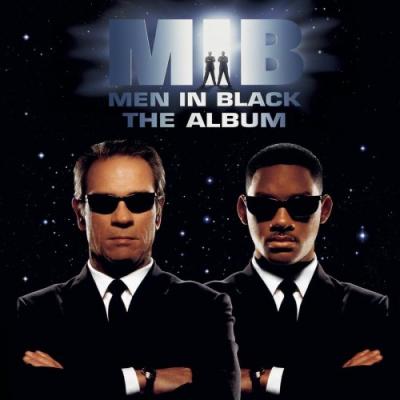
"Men in Black" Soundtrack Lyrics
Movie • 1997
Track Listing
Will Smith
Snoop Dogg f/ JD
Ginuwine
Alicia Keys
Will Smith
The Roots f/ D'Angelo
Trey Lorenz
Nas
Emoja
A Tribe Called Quest
Destiny's Child
3T
De La Soul
Buckshot LeFonque
Danny Elfman
Danny Elfman
"Men in Black: The Album" – Album Guide to Tracks and Key Scenes
Overview
How do you score a story where galaxy-level stakes sit next to deadpan jokes about filing cabinets and pug dogs? Men in Black: The Album answers by splitting the job in two. On one side you have Danny Elfman’s elastic, minor-key orchestral score, full of nervous strings and sly brass. On the other you have Will Smith and a lineup of late-90s hip hop and R&B acting as the film’s public-facing “party suit.” Together they turn a paranoid UFO conspiracy into something sleek, witty, and weirdly warm.
The film itself follows Agents K and J as they police hidden alien refugees in New York and chase a cockroach-like invader who wants a tiny galaxy hidden on a cat’s collar. The soundtrack has to juggle that tonal whiplash: existential danger, everyday bureaucracy, buddy-cop bickering. Elfman’s themes lean into the absurd grandeur of it all, with a main motif that is half spy thriller, half carnival. The companion song album leans hard into groove — Smith’s “Men in Black” is essentially a cheerful recruitment ad for a secret agency that erases your memory.
Unlike many 90s soundtracks, the commercial album and the film’s actual audio track only partially overlap. The movie itself is dominated by Elfman’s score, with just two key pop inclusions: Will Smith’s “Men in Black” over the end credits and Elvis Presley’s “Promised Land” blasting from K’s beloved car stereo in the Queens–Midtown Tunnel. Most of the big-name hip hop and R&B cuts live around the film rather than inside it, in radio, video rotation, and marketing tie-ins, which is part of why the album feels like an expanded universe of its own.
Stylistically the soundtrack moves in phases. Early Elfman cues fuse noir-ish strings and twitchy woodwinds — the unease of first contact and secret files. The middle cues add more rhythmic ostinatos and percussion as the investigation ramps up. By the climax and end credits, the palette opens into swagger: funk-inflected bass, drum loops, and Will Smith’s rap built on Patrice Rushen’s “Forget Me Nots.” Hip hop reads as confidence and control, R&B smooths the edges, while Elfman’s orchestrations keep reminding you that, underneath the swagger, the universe is still very strange.
How It Was Made
The music for Men in Black came together on two parallel tracks. Barry Sonnenfeld and the producers hired Danny Elfman to handle the score; at the same time, Columbia/Sony put together a song-driven tie-in album aimed squarely at late-90s radio. Elfman wrote a full orchestral score recorded in 1996–1997, developing a pulsing main theme for the agents, quirky material for the aliens, and big, sweeping “cosmic” statements for moments like the Orion’s Belt reveal.
The companion album, Men in Black: The Album, was released in mid-1997 through Columbia. It’s credited to “Various Artists” and built around hip hop and R&B producers such as Poke & Tone, Jermaine Dupri, The Ummah, De La Soul, and Branford Marsalis. The film’s music supervisor Pilar McCurry coordinated the on-screen use and helped shape a record that could stand alone as a commercial release while echoing the film’s themes. Only three tracks from the album — Smith’s “Men in Black” plus Elfman’s “M.I.B. Main Theme” and “M.I.B. Closing Theme” — actually appear in the movie; the rest function as an inspired-by mix.
Will Smith’s title song was treated almost like a separate mini-project. It had to summarize the film’s conceit, work as a radio single, and dovetail with Elfman’s tonal world. The track heavily reworks Patrice Rushen’s “Forget Me Nots,” flipping its “to help you to remember” hook into “they won’t let you remember” to reference the neuralyzer. In practice, the hit single did double duty: it sold the film everywhere from MTV to mall speakers and gave the album a flagship track that instantly anchored the rest of the songs around it.
Behind the scenes, Elfman’s score earned serious industry attention. It picked up an Academy Award nomination for Best Original Musical or Comedy Score and a Grammy nomination, while contemporary coverage in outlets like the Los Angeles Times and Variety highlighted how the music kept the film lively without undercutting its stakes. Later press noted that the album’s roster also marked early high-profile appearances by Alicia Keys and Destiny’s Child, making the disc a small time capsule of future stars.
Tracks & Scenes
Below are the key pieces that actually surface in the 1997 film or its core marketing, plus how they work in context.
"M.I.B. Main Theme" – Danny Elfman
Where it plays: Over the opening credits, tracking the CGI dragonfly as it darts through the night sky, past car headlights and into danger on the highway. The camera follows the insect with almost absurd seriousness until it becomes a smear on a windshield, right as we drop into the first immigration-raid encounter. The cue is non-diegetic, but it behaves like a character: bass line and snare hits sync with the creature’s zig-zag flight, while sharp woodwind runs underline every feint and near-miss.
Why it matters: This theme is the musical DNA of the franchise. Its mix of sneaky chromatic lines and big, brassy hits tells you the movie will balance menace and comedy. By tying the theme to such a mundane-but-strange image (a bug on a windshield), Elfman sets the tone: cosmic jokes, played straight.
"Promised Land" – Elvis Presley
Where it plays: In the Queens–Midtown Tunnel sequence, when K flips a hidden switch and the MIB Ford LTD launches onto the ceiling to bypass traffic. As J screams and clings to the dashboard, K calmly slides in an old eight-track of Elvis’ “Promised Land” and sings along while driving upside-down. The track is fully diegetic — it’s coming from the car’s sound system — and it runs through much of the set-piece as they weave between ceiling-mounted lights and startled commuters below.
Why it matters: The song choice is pure character work. K’s obsession with Elvis and his line “No, Elvis is not dead, he just went home” give the scene its punchline, but the track itself — a runaway rock-and-roll travelogue — mirrors the breakneck escape. It also underlines one of the film’s running themes: to K, the truly “alien” thing isn’t the bug they’re chasing, it’s the modern world that moved on from his music.
"Men in Black" – Will Smith (featuring Coko)
Where it plays: Over the closing credits of the theatrical film and on most home-video releases, after the universe-as-marble twist. The track comes in once the story is resolved and the camera has pulled back from Earth to the playground of giant aliens. In some TV and promo edits, a shortened version of the song is paired more tightly with the credits scroll, while full versions show up in ancillary promotional material and VHS extras, including the music video following the film.
Why it matters: This is the signature sound people associate with Men in Black. Lyrically, Smith raps in character as Agent J, turning exposition about memory wipes, dress code, and alien policing into a recruitment anthem. The Patrice Rushen sample smooths the track into dance-floor territory, so by the time the credits hit, the audience leaves humming a chorus that restates the core premise in under four minutes. It essentially neuralyzes any lingering darkness from the finale.
"M.I.B. Closing Theme" – Danny Elfman
Where it plays: In the end-credits suite, often intertwined with or bracketing Smith’s song depending on the mix. This cue extends the orchestral side of the score into the credits, with chattering strings, jazzy brass punches, and a slightly more heroic restatement of the main motif. It functions as a musical epilogue, letting the audience sit with the score one last time after the plot’s final reveal.
Why it matters: The closing theme completes the arc Elfman sets up in the main titles. Early in the film, the motif feels sly and conspiratorial; by the end it has picked up more swagger and weight, reflecting J’s growth into the suit and the sense that the bizarre, unseen universe is now his everyday beat.
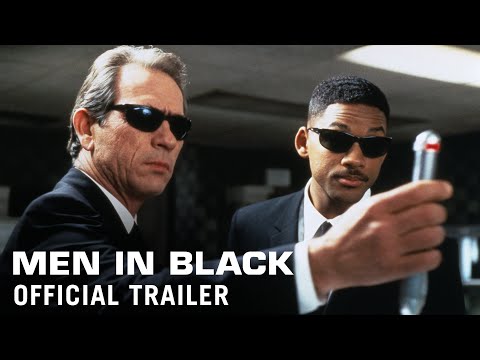
Trailer cues – Elfman theme and edit-suite percussion
Where it plays: The 1997 trailers cut between early Elfman cues (variants of the main theme and action stingers) and standard trailer drum hits and rises. You hear short bursts of the motif under narration lines introducing the secret organization, then more percussive editing during gags like the noisy cricket and the worm-guy coffee break.
Why it matters: The trailers essentially taught audiences to associate that strange, bouncing melody with the idea of “the Men in Black.” Even when generic trailer percussion takes over, the snippets of Elfman’s theme give the marketing a sonic logo that carries directly into the movie’s first scene.
Notes & Trivia
- Men in Black: The Album topped the Billboard 200 for two consecutive weeks and was certified triple platinum in the U.S., making it one of the most commercially successful 90s soundtrack albums.
- Except for “Men in Black” and Elfman’s two cues, none of the album tracks appear in the film itself; the disc works more like a branded hip hop/R&B compilation tied to the movie’s universe.
- The album quietly introduced then-unknown names: Alicia Keys appears with “Dah Dee Dah (Sexy Thing)” and Destiny’s Child contribute “Killing Time,” both recorded before their breakthrough records.
- Elfman’s score for the film earned an Oscar nomination for Best Original Musical or Comedy Score and helped solidify his long-running collaboration with director Barry Sonnenfeld across the franchise.
- The dedicated score album, Men in Black: The Score, originally a 1997 CD, later saw a specialty vinyl release that brought cues like “Edgar’s Truck/A New Man” and “Orion’s Belt/Cat Stinger” back into circulation for collectors.
- The Queens–Midtown Tunnel “Promised Land” sequence has become a minor icon in Elvis fandom – you will find fans citing it as the moment they first noticed that specific track.
- The main theme’s bass line is nimble enough that Elfman later echoed aspects of it in other scores, creating a loose stylistic family among his 90s sci-fi and comic-book projects.
Music–Story Links
The most obvious link between music and story is structural: Elfman’s main theme bookends the narrative. At the start, it plays under the dragonfly’s flight and the first border-crossing encounter, framing the MIB as shadowy custodians keeping the absurd just out of public view. By the time a variation returns during the finale and closing titles, J has joined that world, and the same melodic twists now feel like his personal fanfare rather than a warning from the shadows.
Elvis’ “Promised Land” is the clearest piece of diegetic character writing. K doesn’t just like the song; he uses it as a coping mechanism. While J panics on the tunnel ceiling, K leans into the familiar rock groove, barely raising his voice. That contrast visually and sonically explains their partnership: K anchors the scene in his own cultural comfort zone, even as the car literally drives on the roof. The Elvis cue turns an effects sequence into a character sketch of a man who never really left the 60s.
Will Smith’s “Men in Black” functions almost like an epilogue chapter delivered directly to the audience. The film ends with a cosmic zoom-out that shows the galaxy as a child’s marble. The song then reasserts J’s perspective, rapping in the first person about how the agents “walk in shadow, move in silence.” It re-humanizes the story after that cosmic joke, reminding you that, for all the talk of galaxies, the emotional core is still this one guy choosing a life of anonymity.
Even the unused album cuts add thematic shading if you treat them as paratext. Tracks by Nas, De La Soul, and Buckshot LeFonque tilt toward street-level swagger and jazzy experimentation, mirroring the idea that Earth is a messy crossroads of species and cultures. They don’t score specific scenes, but they extend the film’s “hidden worlds in plain sight” vibe into the listening experience outside the theater.
Reception & Quotes
Critically, the score and album were received as different but complementary successes. Film critics singled out Elfman’s music as a key part of the movie’s texture, noting how it kept the film buoyant even when the plot leaned toward horror. Trade coverage at the time emphasized that the soundtrack’s commercial muscle — especially Smith’s single — helped push the film into blockbuster territory, with the album briefly eclipsing the movie itself on music charts.
According to the film’s music section on major reference sites, Elfman’s work was described as “rousing” by one big-city daily and “always lively” by Variety, which is a tidy summary of how the score threads energy through dialogue-heavy scenes without overwhelming the jokes.
Later music-centric retrospectives have focused more on Smith’s single as a kind of peak era-defining movie theme. One longform piece on 90s pop soundtracks framed “Men in Black” as the moment when Smith completed his transformation from sitcom star to multi-platform blockbuster brand, with the song functioning as both plot summary and self-promotion.
Elfman’s score gives the agents their swagger long before Will Smith’s theme song kicks in.— summary of critical consensus in film-music retrospectives
The title track turned a high-concept sci-fi comedy into something you could dance to in a mall food court.— modern pop-culture essay on 90s movie themes
Among fans, the consensus has settled into a neat split: the album is remembered for the Will Smith track and the curiosity of early Alicia Keys/Destiny’s Child cuts, while the score is praised for its instantly recognizable main theme. Collectors tend to chase both — the chart-topping song album for nostalgia and the later vinyl of Elfman’s score for its deeper cuts.
Interesting Facts
- The album ships Elfman’s cues to the very end of its track list: “M.I.B. Main Theme” and “M.I.B. Closing Theme” appear as tracks 15 and 16, after all the vocal cuts.
- A single release strategy pushed “Men in Black,” “Just Cruisin’,” and “We Just Wanna Party With You” into rotation in different markets, effectively turning the movie into a small radio ecosystem for one summer.
- The soundtrack’s credits list Pilar McCurry as album music supervisor, bridging her work on other 90s urban-leaning soundtracks into a big-budget sci-fi property.
- The Elvis needle-drop is credited separately in the film’s soundtrack listings, reflecting that it sits outside the main Columbia-Sony album license.
- The official score album, released later in 1997, omits Smith’s song entirely and focuses just on Elfman’s orchestral cues; some listeners first encountered the main theme there rather than on the pop album.
- When the score finally came to vinyl in the 2010s, press coverage openly framed it as a chance to “flash back” to favorite scenes via tracks like “Orion’s Belt/Cat Stinger.”
- Because the song album is substantially longer than the score (around 66 minutes vs. a more compact score runtime), the two discs offer very different listening experiences despite sharing the franchise name.
- In some overseas territories only the song album was released at first, with the full Elfman score harder to find until later reissues.
Technical Info
- Title: Men in Black: The Album
- Year: 1997
- Type: Soundtrack album (songs inspired by and used in the film) plus two score cues
- Main film: Men in Black (1997, dir. Barry Sonnenfeld)
- Score composer: Danny Elfman
- Key single: “Men in Black” — Will Smith (built on a sample from Patrice Rushen’s “Forget Me Nots”)
- Record labels: Columbia Records / Sony
- Primary genres: Hip hop, R&B, film score
- Producers (album): Poke & Tone, Jermaine Dupri, The Ummah, De La Soul, Branford Marsalis and others
- Music supervisor (film / album credit): Pilar McCurry
- Running time (album): Approx. 66 minutes
- Notable placements in the film: “M.I.B. Main Theme” (opening titles), “Promised Land” (Queens–Midtown Tunnel car-ceiling chase), “M.I.B. Closing Theme” and “Men in Black” (end credits)
- Release context: Album released just ahead of the film’s July 1997 U.S. theatrical run; separate score album issued later the same year.
- Commercial performance: Two weeks at No.1 on the Billboard 200; certified 3× Platinum in the United States.
- Current availability: Both the song album and the score are widely available on major streaming services and via digital download; original 90s CD/cassette and later vinyl issues are sought by collectors.
Questions & Answers
- Why are most songs from Men in Black: The Album not heard in the movie?
- The album was designed as a commercial companion piece as much as a literal soundtrack. Only the title song and two Elfman cues were folded into the film; the rest expand the brand sonically for radio and home listening rather than scoring specific scenes.
- What’s the difference between Men in Black: The Album and Men in Black: The Score?
- The Album is a various-artists collection of hip hop/R&B tracks plus two Elfman themes, anchored by Will Smith’s single. The Score is a separate release containing Elfman’s orchestral cues only, with no pop songs.
- Is Will Smith’s “Men in Black” actually in the film?
- Yes. A version of the track plays over the end credits, after the main story concludes. The full song also appears in its own music video and on the album, which is how many listeners first heard it.
- Which Elvis track plays in the tunnel scene, and why that one?
- The song is Elvis Presley’s cover of “Promised Land.” It fits K’s nostalgic taste and mirrors the frantic journey of the car chase — a rock-and-roll travel song for a literal head-spinning ride on the tunnel ceiling.
- How can I listen to the Men in Black soundtrack today?
- The song album and the Elfman score are both widely available on streaming platforms and in digital storefronts. Physical copies exist on CD, cassette, and later vinyl pressings for collectors.
Canonical Entities & Relations
| Subject | Relation | Object |
|---|---|---|
| Men in Black: The Album | is soundtrack to | Men in Black (1997 film) |
| Men in Black (1997 film) | directed by | Barry Sonnenfeld |
| Men in Black (1997 film) | music by | Danny Elfman |
| Men in Black: The Album | released by | Columbia Records / Sony |
| Will Smith | performed | “Men in Black” (song) |
| “Men in Black” (song) | appears on | Men in Black: The Album |
| “Men in Black” (song) | sampled | “Forget Me Nots” — Patrice Rushen |
| “M.I.B. Main Theme” | composed by | Danny Elfman |
| “M.I.B. Main Theme” | used in | Opening titles (dragonfly sequence) |
| “M.I.B. Closing Theme” | composed by | Danny Elfman |
| “M.I.B. Closing Theme” | used in | End credits |
| “Promised Land” (song) | performed in film by | Elvis Presley |
| “Promised Land” (Elvis version) | used in | Queens–Midtown Tunnel car-ceiling scene |
| Pilar McCurry | music supervisor for | Men in Black (1997 film) |
| Amblin Entertainment | produced | Men in Black (1997 film) |
| Columbia Pictures | distributed | Men in Black (1997 film) |
Sources: studio credits and trade coverage; album and score discographies; major film and music reference sites; soundtrack collector notes; contemporary and retrospective reviews.
November, 15th 2025
A-Z Lyrics Universe
Cynthia Erivo Popular
Ariana Grande Horsepower
Post Malone Ain't No Love in Oklahoma
Luke Combs Good Riddance (Time of Your Life)
Green Day Bye Bye Bye
*NSYNC You're the One That I Wan
John Travolta & Olivia Newton-John I Always Wanted a Brother
Braelyn Rankins, Theo Somolu, Kelvin Harrison Jr. and Aaron Pierre The Power of Love
Frankie Goes to Hollywood Beyond
Auli’i Cravalho feat. Rachel House MORE ›