Soundtracks:  A B C D E F G H I J K L M N O P Q R S T U V W X Y Z #


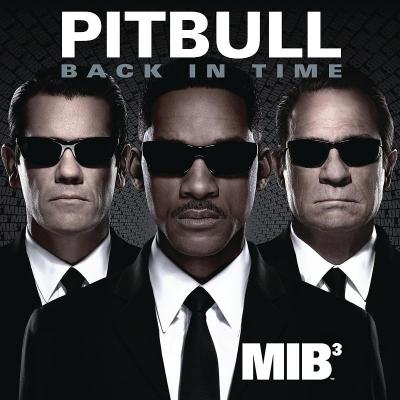
Men in Black III Album Cover

"Men in Black III" Soundtrack Lyrics

Movie • 2012

Track Listing


"Men in Black 3 (Original Motion Picture Soundtrack)" – Album Guide to Tracks and Key Scenes

Men in Black 3 trailer frame with Agents J and K facing an alien threat
Men in Black 3 science-fiction action framed by its score and theme song in the original trailer, 2012

Overview

What happens when a time-travel story about regret leans on a score built from swagger, melancholy and 1960s psychedelia instead of one big pop single? Men in Black 3 answers that by pushing its music in two directions at once: Danny Elfman’s orchestral backbone and a glossy, club-ready theme, Pitbull’s “Back in Time”. The result feels like a film constantly slipping between eras, even when the camera stays locked on Will Smith’s Agent J.

The movie sends J back to 1969 to save his partner K and the Earth from the Boglodite invasion. The soundtrack follows that loop. Elfman’s score returns to the brass-heavy, strutting “Men in Black” motif, but stretches it into something more emotional, especially whenever older K’s secrets start to surface. Around that spine, a run of 1960s source songs — The Rolling Stones, The Velvet Underground, Cream, Status Quo, Chad & Jeremy — turn New York into a jukebox snapshot of the period rather than a museum piece.

Instead of wall-to-wall comedy scoring, the album leans into a cleaner action-adventure sound. J’s time jump, the Apollo 11 launch, Boris the Animal’s attacks — they all get big, muscular cues like “Time Jump”, “The Mission Begins” and “Mission Accomplished”. In between, shorter cues such as “Regret”, “Forget Me Not” and “A Close One” quietly underline the film’s key twist: J’s childhood connection to K.

Stylistically, the soundtrack moves in phases that mirror the story. The early present-day material is all sleek film-score thriller — tight rhythmic ostinatos, electronics supporting a polished men-in-suits facade. The 1969 section pulls in British psychedelia, jangly rock and sunshine pop to color J’s disorientation in the past. Finally, during the Cape Canaveral climax and the emotional revelation on the beach, Elfman shifts into something closer to heroic symphonic drama, letting the franchise theme open up instead of staying ironic and detached.

How It Was Made

Composer Danny Elfman returned for Men in Black 3 after scoring the first two films, again working with Sony Classical on the album release. The score was recorded in 2012 at the Sony Scoring Stage in Culver City and at Elfman’s own Studio Della Morte in Los Angeles, with Pete Anthony conducting a large orchestra and Gina Zimmitti contracting players. The production credits list Elfman and long-time collaborator Steve Bartek as score producers, with Bill Abbott producing the album version.

The brief was tricky: keep the instantly recognizable Men in Black sound but accommodate a story that spends much of its time in 1969. Elfman reportedly lifted core thematic material from the earlier films — the swaggering main theme, slinky alien textures, elastic bass lines — and then dialed down the overt retro funk in favour of more straightforward orchestral writing. Some critics point out that the guitar-driven “Main Titles” flirts with rock before dropping into pure score, a conscious attempt to refresh the franchise’s opening without losing its identity.

On the business side, Sony Classical handled the score album, while the more commercial pieces went elsewhere. Pitbull’s “Back in Time”, based on the guitar riff from Mickey & Sylvia’s “Love Is Strange”, was commissioned as the film’s theme but released as a single and later folded into his album “Global Warming” rather than the Elfman-only score record. The film’s own end credits list a separate block of licensed 1960s material — The Rolling Stones, Status Quo, The Velvet Underground, Cream, Chad & Jeremy and others — all cleared through the studio’s music department.

Studio scoring session vibe reflected through Men in Black 3 trailer imagery
Men in Black 3 score energy echoed in the promotional trailer cuts, 2012

Tracks & Scenes

Below are key songs and cues from the film — both Elfman’s score and the licensed tracks — with where they play and why they matter.

"Men in Black 3 (Main Titles)" — Danny Elfman
Where it plays: Over the opening sequence as Boris the Animal escapes from the LunarMax prison and the franchise logo returns. Non-diegetic, roughly the first few minutes, weaving between shots of space, the prison interior and Boris’s breakout. The cue combines jagged electric guitar figures with the familiar Men in Black brass theme as the camera glides past grotesque aliens and security systems failing in slow escalation.
Why it matters: It reintroduces the series’ musical DNA immediately but adds a nastier edge for Boris. The track signals that the tone will be closer to the first film’s balance of deadpan humour and real threat, not the cartoonish feel of the second.

"Amazing Grace" — Eric Rigler & Bill Garden Orchestra
Where it plays: Around the 0:08 mark, during Zed’s funeral. Diegetic. The Worms, in full ceremonial mode, “play” the hymn on bagpipes while the camera tracks through the sombre Men in Black gathering. The bagpipe line leads the melody while strings pad the harmony, and the scene cuts between J’s mixture of sadness and discomfort and the odd sight of alien mourners trying to follow human rituals.
Why it matters: This is the emotional reset for the trilogy. Turning a deeply traditional hymn into black-comedy spectacle fits the series, but the arrangement still carries enough dignity to sell Zed’s absence. It also sets up K’s visible, almost uncharacteristic grief, which the score later explores in “Regret”.

"I'm an Old Cowhand (From the Rio Grande)" — Roy Rogers
Where it plays: Immediately after the funeral, at roughly 0:09. Diegetic on the car radio while J and the older K drive in silence through New York. Rogers’ easygoing Western tune clashes with the futuristic dashboard and the agents’ black suits; J eventually snaps at K’s ancient taste in music while K refuses to change the station.
Why it matters: The contrast between cowboy nostalgia and intergalactic bureaucracy underlines how stuck in the past K is, long before the time-travel plot shows us why. It is one of the franchise’s purest examples of using anachronistic source music as character shorthand.

"Toccata – Carpimus Noctem" — Trans-Siberian Orchestra
Where it plays: Around 0:11 in the film, when Boris first visits the electronics shop to get the time-jump device and launches his plan to rewrite history. Non-diegetic, driving the sequence with heavy guitars and rock-opera drums as the camera whips through fluorescent aisles and then up to the rooftop where Boris prepares to jump through time. The arrangement reworks Bach’s “Toccata and Fugue” into something halfway between metal and film trailer music.
Why it matters: This is the most overtly “bombastic” licensed cue. It frames Boris not as a sneaky infiltrator but as a theatrical super-villain, bridging Elfman’s score with the modern trailer-style sound audiences associate with big genre blockbusters.

"2000 Light Years from Home" — The Rolling Stones
Where it plays: At about 0:39, just after J’s time-jump sequence as he realises he has landed in 1969. Non-diegetic. The song kicks in when he steals a classic car and speeds off to find the younger K, neon signage and period billboards flickering by as the Stones’ spaced-out psychedelia fills the soundtrack. The camera indulges in wide shots of a less crowded Manhattan while J tries, and often fails, to blend in.
Why it matters: The title alone makes the cue an on-the-nose joke about distance and dislocation, but the hazy mix and echoing vocal also sell J’s dizziness after ripping through a time vortex. It is one of the clearest examples of the film using era-appropriate rock to comment on the sci-fi plot in real time.

"Pictures of Matchstick Men" — Status Quo
Where it plays: Around 0:54, as J and young K enter the mod-heavy model catwalk/Factory-style party. Non-diegetic but grounded in the club’s sound system. The song’s spiral guitar riff and phasing effects match the dizzying camera moves, strobe lights and exaggerated fashion on display. Andy Warhol, undercover as Agent W, drifts through the background while K and J try to spot their target in the crowd.
Why it matters: The track is practically a shorthand for late-60s psychedelia. By dropping it into a Warhol-styled space, the film nails the intersection of pop art, fashion and rock in one go. It also sets up a contrast with the drier, procedural tone of the Men in Black headquarters scenes.

"I'm Waiting for the Man" — The Velvet Underground
Where it plays: About 0:57, as the second song in the catwalk sequence. Primarily heard when young K steps into the back rooms and talks with “Warhol” while workers and models drift past. The song plays in the background of the Factory-like setting, with its chugging rhythm and Lou Reed’s detached vocal weaving under the dialogue.
Why it matters: Velvet Underground in a Warhol scene is an in-joke but also mood-setting. The track brings grit and downtown edge into what could have been a cartoon version of 1969. It anchors the art-world subplot in a real musical subculture instead of generic retro cues.

"Strange Brew" — Cream
Where it plays: Roughly 0:59, third song in the catwalk run. Plays non-diegetically as the paranoid “crazy guy” warns J and K about the consequences of time meddling. The blues-rock guitar and rolling groove slide under shots of the crowd, giving the warning an almost barroom-prophecy vibe rather than a solemn sci-fi lecture.
Why it matters: Cream’s track turns exposition into something looser and more playful. It’s a reminder that Men in Black prefers its cosmic stakes served with a side of rock-club atmosphere instead of pure doom.

"A Summer Song" — Chad & Jeremy
Where it plays: Around 1:03 in the film, during the diner scene where young K struggles to decide what to order. The song plays softly on the diner’s jukebox, diegetic and slightly muffled, while J watches this more hesitant version of his partner. The camera lingers on K’s face and the Formica surfaces as the gentle vocal and strings glide by.
Why it matters: Sunshine pop is a deliberate choice here. The song’s nostalgia for fleeting summer days mirrors J’s slowly dawning realisation that his time with K, and perhaps K’s own life, has an endpoint. It’s a quiet little emotional hinge in a movie full of loud set-pieces.

"Empire State of Mind (Vocal Melody Version)" — JAY-Z feat. Alicia Keys (library cover)
Where it plays: About 1:35, once J has fixed the timeline and returns to the present. J walks into the familiar diner, sees present-day K alive and well, and hears him absent-mindedly humming along to a stripped-down, vocal-melody-only take on the New York anthem. The song is effectively diegetic, existing in-world as something K is half-aware of while J processes everything he has learned.
Why it matters: Using a re-sung library version instead of the original still triggers the same association — this is New York, and this partnership is rooted there. It updates the film’s sound world from 1969 rock to contemporary hip-hop-era pop without breaking the tone of the scene.

"Back in Time" — Pitbull
Where it plays: Starting at roughly 1:38, over the end credits. Non-diegetic. The song kicks in almost immediately after the emotional reveal on the beach and the tidy resolution at headquarters. Its production rides a sampled riff from Mickey & Sylvia’s “Love Is Strange”, layered with modern dance/EDM drums and Pitbull’s rapid-fire verses about rewinding and second chances. A separate promotional music-video cut weaves footage from the film with performance shots.
Why it matters: This is the franchise’s first main theme not performed by Will Smith, and it leans into that change. The lyrics riff directly on the movie’s time-travel hook, and the 1950s sample ties it loosely back to the retro streak already running through Elfman’s score and the 1960s playlist.

"Love Is Strange" — The K Group (cover)
Where it plays: Credited in the film’s end crawl and briefly heard in a fragment near the end of the movie as a vocal reference to the original song. The performance is sparse, focused on the dialogue-like call-and-response hook, hinting at the Mickey & Sylvia classic rather than playing the full track. It effectively functions as a wink toward the source of “Back in Time”’s guitar line.
Why it matters: This is a meta cue. The film acknowledges the older recording that Pitbull’s single borrows from, turning the end credits into a tiny history lesson in pop recycling without hammering the point.

Key score cues — Danny Elfman ("Time Jump", "Regret", "Griffin Steps Up", "The Mission Begins", "Mission Accomplished")
Where they play: "Time Jump" underscores J’s leap off the Chrysler Building as the time-travel device throws him through frozen, collapsing versions of New York. "Regret" surfaces in scenes where K’s unspoken history weighs on him, including moments discussing Boris and the ArcNet shield. "Griffin Steps Up" plays around Griffin’s optimistic visions of possible futures, often at Shea Stadium and Cape Canaveral. "The Mission Begins" and "Mission Accomplished" cover the build-up to and fallout from the Apollo 11 launch, intercut with the battle against Boris on the gantry. All non-diegetic, tightly synced with cutting and visual effects.
Why they matter: These cues are the emotional skeleton of the film. They mark out J’s arc from baffled partner to someone who understands why K became so guarded, and they make the final sacrifice on the beach land with weight that licensed songs alone could not carry.

Men in Black 3 action montage as seen in trailer frames
Key Men in Black 3 action beats — time jump, catwalk raid, Apollo launch — all driven by Elfman’s score and period songs, 2012

Notes & Trivia

  • Danny Elfman’s work on Men in Black 3 contributed to his International Film Music Critics Association “Film Composer of the Year” win for 2012.
  • “Back in Time” was marketed as the Men in Black 3 theme but never appears on the official score album; instead it anchors Pitbull’s album “Global Warming”.
  • The film leans heavily on British and American 1960s tracks, even though the story’s flashback is strictly New York-based, which gives the period scenes a more global rock flavour than a strictly local one.
  • Bagpipe soloist Eric Rigler, heard on “Amazing Grace” in Zed’s funeral, is a frequent film-score player also associated with Braveheart and Titanic.
  • Fans often debate whether the ending briefly hints at “Love Is Strange” in addition to Pitbull’s track, because of the shared guitar figure and the end-credits listings.

Music–Story Links

Men in Black 3 ties its music closely to character beats. J’s present-day scenes with older K usually sit under more rigid, rhythm-driven scoring — you hear it in the way “Headquarters” and “Wrong” keep pulsing under exposition. The music makes their partnership feel efficient but emotionally frozen. Once J jumps to 1969, that rigidity loosens, replaced by the swirling guitars of “2000 Light Years from Home” and “Pictures of Matchstick Men”. The soundscape itself becomes less controlled, just as J is dumped into a less surveilled version of the city.

The K we meet in 1969 gets a distinct musical treatment. “A Summer Song” framing him in the diner suggests a softer, more open man; Elfman’s cue “Regret” later shows how that warmth curdles into silence in the wake of the beach incident. When Griffin appears, his cues often stack brighter harmonies on top of ticking ostinatos, signalling that he sees more possible futures than everyone else. Those Griffin-linked motifs keep resurfacing whenever the plot hinges on tiny decisions at Shea Stadium or the launch tower.

Boris the Animal’s presence, by contrast, tends to drag the music toward harsher textures. “Big Trouble”, “Out on a Limb” and “Boris Meets Boris” lean on stabbing brass and warped electronic accents; they often cut in just before he appears on screen. Even the use of “Toccata – Carpimus Noctem” in his early scenes frames him as essentially over the top. The score tells us he is a blunt instrument in a universe that otherwise runs on subtle mind-wipes and careful negotiations.

Finally, the very last sequence on the beach, with its revelation about young J and K’s choice, brings together many of these strands. Elfman revisits the main Men in Black theme but slows it down, adding choir and more open brass voicings while the ocean fills the frame. It’s the closest the franchise has come to sentimental, straight-faced heroism in musical terms, and it is no accident that “Back in Time” only enters after that cue has fully landed.

Reception & Quotes

Critical response to the Men in Black 3 score was mixed-positive. Several soundtrack reviewers saw it as a solid if not radical evolution of the original 1997 sound — stronger than Men in Black II, but still occasionally recycling old ideas. Filmtracks rated the album three stars, noting the return of the main theme and a more confident orchestral sweep while also pointing to some repetition.

Some general-audience critics praised the way the music kept the film buoyant even when the time-travel plot grew convoluted. Others felt that Elfman’s trademark quirky energy was slightly dialled back in favour of more generic blockbuster writing. Pitbull’s end-credits song provoked its own conversation among fans who missed Will Smith’s rapped themes but conceded that “Back in Time” fit the time-travel hook.

“Elfman’s returning themes and beefed-up orchestral writing make this a pleasantly satisfying entry in the series’ musical run.” — summary of Filmtracks.com assessment
“The groovy, galactic score helps turn a potentially tired franchise film into a surprisingly intoxicating watch.” — paraphrase of an IndieWire review
“Some passages sound like Elfman on autopilot, yet the climactic cues at the launch pad and beach deliver genuine emotional punch.” — composite from specialist soundtrack reviews
“As a listen, the album isn’t top-tier Elfman, but it’s easily recommendable for fans of his sci-fi work and of the Men in Black universe.” — summary based on album-review blogs

In physical form, the score album arrived on CD in 2012 via Sony Classical, with digital releases on major download and streaming platforms. Availability has remained steady: the record is currently accessible on services like Spotify, Apple Music and YouTube Music, while Pitbull’s “Back in Time” sits on his own discography as a single and album track.

Close-up trailer frame suggesting Men in Black 3 emotional climax
Men in Black 3’s emotional ending gains much of its impact from Elfman’s extended finale cues, 2012

Interesting Facts

  • The score album’s 22 cues run to about 53–54 minutes, but the film itself uses additional edits and short transitions not present on the commercial release.
  • Men in Black 3 is the last entry in the original trilogy scored solely by Elfman; Men in Black: International later adds Chris Bacon as co-composer.
  • “Back in Time” reached the upper region of the Billboard Hot 100 and charted across much of Europe, giving the film a radio-friendly hook despite not being on the score album.
  • The Stones’ “2000 Light Years from Home” had a relatively modest live history before the film; its use here introduced it to a new wave of younger listeners.
  • Roy Rogers’ “I’m an Old Cowhand” appears twice in the movie according to some cue sheets, but viewers usually associate it most with the post-funeral car ride.
  • The score’s “Men in Black 3 – Main Title Revisited” closes the album by restating the original 1997 theme almost as a curtain call for the trilogy.
  • Griffin’s hopeful, lightly tinkling motif became a fan favourite among score listeners even though it is buried in relatively short cues on the album.
  • Online fan reconstructions of the “complete score” circulate, re-sequencing album tracks to match film order and inserting sourced rips of “Toccata – Carpimus Noctem” and other licensed cues.

Technical Info

  • Title: Men in Black 3 (Original Motion Picture Soundtrack)
  • Film: Men in Black 3 (feature film, 2012)
  • Type: Original motion picture score (album) plus additional licensed songs in film
  • Composer / Artist: Danny Elfman (score); various artists for source songs
  • Key theme song: “Back in Time” — Pitbull (featured in film, not on the Elfman album)
  • Label: Sony Classical (score album); “Back in Time” released via Polo Grounds / RCA / Mr. 305
  • Recording / Studios: Sony Scoring Stage, Sony Pictures Studios, Culver City; Studio Della Morte, Los Angeles
  • Release year: 2012 (score album and theme single)
  • Approximate album length: about 53–54 minutes (22 tracks)
  • Notable placements: “Amazing Grace” at Zed’s funeral, 1960s rock in the Factory/catwalk scenes, “A Summer Song” in the diner, “Back in Time” over end credits
  • Formats: CD and digital download at launch; currently available on major streaming services
  • Awards context: Elfman’s 2012 output, including Men in Black 3, supported his IFMCA “Film Composer of the Year” recognition.

Questions & Answers

Is Pitbull’s “Back in Time” actually on the Men in Black 3 soundtrack album?
No. It plays over the film’s end credits and was marketed as the theme, but the official score album only contains Danny Elfman’s instrumental cues.
How does the Men in Black 3 score differ from the first two films?
Elfman keeps the franchise theme but leans more on straight orchestral writing, with fewer overtly wacky textures and a stronger emotional through-line for J and K.
Which 1960s songs are most important to the film’s mood?
The standout set includes “2000 Light Years from Home”, “Pictures of Matchstick Men”, “I’m Waiting for the Man”, “Strange Brew” and “A Summer Song”, all anchoring the 1969 sequences.
Why didn’t Will Smith perform the main theme this time?
The studio went with Pitbull’s “Back in Time” as a contemporary club-leaning single instead. There is no indication in public sources that Smith recorded a competing track.
Where can I legally listen to the Men in Black 3 score today?
The Elfman album is widely available on streaming platforms and digital stores. “Back in Time” can be found on Pitbull releases and standard digital services.

Canonical Entities & Relations

Subject Verb Object
Danny Elfman composed the score for Men in Black 3 (Original Motion Picture Soundtrack)
Pitbull (Armando Christian Pérez) performed the single “Back in Time” for the film Men in Black 3
Sony Classical released the album Men in Black 3 (Original Motion Picture Soundtrack)
Barry Sonnenfeld directed the film Men in Black 3
Columbia Pictures distributed the film Men in Black 3 in cinemas
The Rolling Stones performed “2000 Light Years from Home” used in J’s 1969 driving sequence
Status Quo performed “Pictures of Matchstick Men” used in the 1969 catwalk scene
The Velvet Underground performed “I’m Waiting for the Man” used in the Factory back-room scene
Trans-Siberian Orchestra performed “Toccata – Carpimus Noctem” used during Boris’s time-jump preparation
Eric Rigler performed bagpipes on “Amazing Grace” during Zed’s funeral in Men in Black 3

Sources: Wikipedia (film and soundtrack entries); official end-credits listings; soundtrackradar and WhatSong cue sheets; Soundtrakd song list; Filmtracks, Static Mass and other soundtrack reviews; Hollywood Reporter, IndieWire and Billboard coverage; Apple Music, Spotify and AllMusic album pages.

November, 15th 2025

'Men in Black III': visit movie profiles and read user reviews on Internet Movie Database and Rotten Tomatoes
A-Z Lyrics Universe

Lyrics / song texts are property and copyright of their owners and provided for educational purposes only.