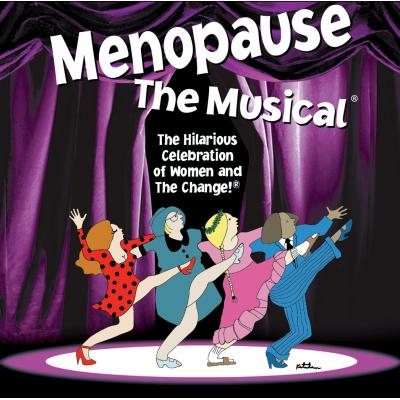
"Menopause" Soundtrack Lyrics
Musical • 2003
Track Listing
"Menopause The Musical – Original Cast Recording (2003)" – Album Guide to Tracks and Key Scenes

Overview
What happens when four strangers, a black lace bra and a department-store lingerie sale collide with 25 baby-boomer pop hits? Menopause The Musical answers that question with a wall of parody songs and a cast recording that feels like a live girls’ night out pressed onto a disc. The 2003 original cast album bottles the sound of a show that turns hot flashes, insomnia and mood swings into communal jokes.
The stage story is simple by design: four archetypes — the Iowa Housewife, the Earth Mother, the Professional Woman and the Soap Star — bump into each other at Bloomingdale’s in New York and discover they all share “the change.” Over 90 minutes they roam the store, hit the café, raid the cosmetics counters and bathroom mirrors, and sing through everything from weight gain to brain fog. On the album you hear that journey as a revue: one comic confession after another, strung together by tight harmonies and familiar hooks.
The recording’s mood moves in waves. Early tracks lean into disbelief and irritation, mid-album songs sit in exhaustion and self-mockery, and the finale tracks turn into a strangely sincere pep talk about surviving midlife with friends. The big joke is that nearly every cue is built on a song you already know, but with lyrics refocused on night sweats, cravings, and hormone therapy. It plays like a jukebox musical where the jukebox has been rewired by women who are done apologising.
Stylistically, the soundtrack jumps across eras and genres: 60s girl-group soul, Motown, disco, Brill Building pop, surf rock, soft folk and power ballad drama. Soul and R&B colours underline frustration and desire; disco tracks carry the manic, sleepless energy; folk parodies lean into resignation; girl-group harmonies sugarcoat body-image jokes. Heard front to back, the album maps menopause as a musical cycle — denial, complaint, gallows humour, then something like joyful rebellion.
How It Was Made
Menopause The Musical was written by Jeanie Linders, who handled both book and lyrics. The show premiered in Orlando in 2001 in a converted perfume shop before moving Off-Broadway in 2002 and then fanning out across North America and, later, the world. The concept is straightforward but technically tricky: take well-known songs from the 50s–80s and write new menopausal lyrics that still scan over the original melodies and grooves.
The 2003 original cast recording captures that Orlando/Off-Broadway era version of the score. The album, usually credited simply as Menopause: The Musical – Original Cast, runs about 57 minutes and contains 22 cues from overture to finale. Studio and live-style elements are blended: you hear a clean band mix, but also the slightly theatrical vocal balance and ensemble blend that keeps it close to the stage experience, not a pop “reimagining.” Music direction and arrangements were built to mimic the source records closely enough that audiences recognise them in seconds, but they avoid sampling the original masters.
Behind the scenes, the show functions as a kind of rolling franchise. GFour Productions licenses the material worldwide; local casts around the US, UK, Australia and beyond plug into the same set of parody songs but customise topical jokes and a few lyric details for each market (department stores, snack brands, celebrity references). The cast album, however, freezes one American template: Bloomingdale’s setting, US-centric jokes, four archetypes with their standard vocal assignments.
Because the songs are parodies of chart hits, the recording sits in a grey zone between cast album and novelty cover compilation. Clearances had to be negotiated for each underlying composition, since melodies and harmonic structures stay recognisable even when lyrics change. From what the producers and tour press releases have discussed, legal work and music supervision focused on making sure the show could tour indefinitely without constantly revisiting the contracts — one reason the recording is usually sold directly through official channels and theatre lobbies rather than as a mass-market pop release.
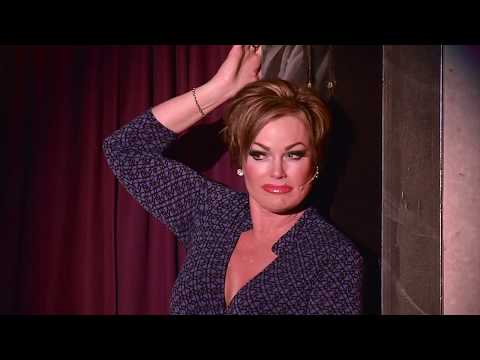
Tracks & Scenes
The show does not use traditional scene numbers on the album, but key songs align with clear comic beats in the department-store storyline. Below is a track-by-track style guide to the major cues and the moments they usually underscore.
"Change, Change, Change" — Company
Where it plays: Effectively the first big number after the brief overture, staged near the lingerie sale racks when the four women first collide over the infamous black lace bra. The Professional Woman and Earth Mother often drive the verses, with the others joining in chorus lines. It is non-diegetic in story terms, but staged like they cannot help bursting into song as they realise they are all being re-written by hormones at once.
Why it matters: This is the thesis statement and energy test. It announces that the show will remix soul classics into menopause laments, and it sets the vocal template: belty leads, gospel-coloured backups and call-and-response jokes about moods, weight and age.
"I Heard It" — Professional Woman & Soap Star
Where it plays: Usually set around makeup counters or an overheard phone call, riffing on gossip about ageing, hormone therapy and who in their circle has already “gone through it.” The Soap Star uses it to dramatise rumours about her career fading and body changing; the Professional Woman supplies the sceptical, urban commentary. The number plays as non-diegetic but is shaped like an overheard duet of anxiety and bravado.
Why it matters: It frames menopause as both medical and social news. The musical drops you inside the echo chamber of whispered advice, miracle cures and horror stories that women trade long before they sit down with a doctor.
"Sign of the Times" — Earth Mother & Iowa Housewife
Where it plays: Often staged in a quieter corner of the store or near mirrors, with the Earth Mother fussing over reading glasses, labels and “earth-friendly” products while the Iowa Housewife stares at herself under harsh lights. The diegetic illusion is that the store soundtrack fades and their inner monologues take over, turning little lapses and body changes into a 60s-style pop lament.
Why it matters: It is one of the first real bonding moments between the women. A hippie and a conservative farm wife realise they recognise the same “signs” — not just physical symptoms, but being ignored in shops and by younger staff.
"Stayin' Awake / Night Sweatin'" — Ensemble
Where it plays: Typically in a bedroom or hotel-room fantasy played out onstage, with beds, blankets and fans, or suggested through lighting while the women mime tossing and turning. The Bee Gees-inspired groove becomes the soundtrack for 3 a.m. restlessness. Choreography leans into frantic fanning, sheet-kicking and chorus-line stomps that mirror pounding heartbeats.
Why it matters: This track captures the physical toll — not just being hot, but being chronically tired and irritable the next day. Musically, the relentless disco beat underlines how long nights can feel when your body will not switch off.
"My Husband Sleeps Tonight" — Earth Mother & Company
Where it plays: Framed as the Earth Mother’s confessional comic solo, sometimes staged with a restaurant menu or bedroom prop so she can contrast her wide-awake, frustrated state with her snoring partner. Other women drift in as background singers or physical gags (couch, recliner, TV remote), building the joke that he sleeps soundly no matter how miserable she is.
Why it matters: The song takes aim at emotional and physical mismatch in long marriages. It lets the show gently roast husbands without demonising them, and gives the Earth Mother one of her biggest applause moments.
"Hot Flash" — Soap Star
Where it plays: Often set near the cosmetics counter, elevators or even in a surreal, “tropical” lighting shift, as if the Soap Star is suddenly standing under studio lights or in front of an open freezer. She goes from glamour-pose to meltdown in seconds, stripping off layers, grabbing brochures as makeshift fans and collapsing into chairs as waves of heat hit.
Why it matters: This is the show’s signature gag in miniature: tiny daily humiliations turned into a full-scale showstopper. It also lets the Soap Star puncture her own diva persona; underneath the makeup, she is just as sweaty and out of control.
"Drippin' and Droppin'" — Earth Mother
Where it plays: Usually in the bathroom or changing rooms, with props like towels, creams and endlessly refilled water bottles. The Earth Mother catalogues every fluid-related annoyance — from sweat to tears to bathroom visits — with a self-aware smirk, often playing directly to the audience.
Why it matters: It leans into oversharing as liberation. The women onstage name all the messy, leaky realities that polite conversation avoids, and the audience’s laughter becomes part of the rhythm.
"I'm Flashing" — Professional Woman
Where it plays: Typically mid-meeting or in a mock boardroom set, as the Professional Woman tries to hold onto corporate composure while her body betrays her. Suits get unbuttoned, presentation cards get fanned, and she oscillates between apology and fury.
Why it matters: The song crystallises the collision between workplace expectations and menopausal bodies. It turns a private embarrassment (sudden flushing) into a public protest song about how office culture is not built for ageing women.
"The Great Pretender" — Trio
Where it plays: Often in the cosmetics or shapewear section, with mirrors, wigs and push-up bras everywhere. The Professional Woman, Iowa Housewife and others literally try on younger versions of themselves while singing about how much of their confidence is an act.
Why it matters: Under the jokes, this is one of the more melancholy numbers. It acknowledges masking — pretending not to care about ageing, pretending to be fine at work, pretending the marriage is unchanged — and suggests that the shared joke is what finally breaks the act.
"Sane and Normal Girls / Thank You, Doctor" — Ensemble
Where it plays: Staged like a group visit to a doctor’s office in their imaginations, often using chairs as examination tables and waving prescription bottles or pamphlets. Verses cover desperation (“just make me feel normal again”), while refrains mock dependence on patches, pills and creams.
Why it matters: It’s a pointed swipe at pharmaceutical quick-fix culture that still lands as cathartic gratitude. The arrangement, echoing sunny surf-rock harmonies, makes the wry lyrics go down easily.
"Lookin' for Food" — Soap Star, Iowa Housewife & Company
Where it plays: Usually around the café or food court, sometimes with an over-the-top buffet cart rolling through. Cravings spiral from innocent snacks to full-scale raids on the fridge, with the Iowa Housewife often leading a shameless hymn to carbs.
Why it matters: The scene normalises emotional eating instead of moralising about it. It also gives the Iowa Housewife and Soap Star a shared weakness, erasing class and glamour differences in favour of chocolate and late-night snacks.
"Puff, My God, I'm Draggin'" — Earth Mother
Where it plays: Often staged as a slow-motion walk through the store or a fantasy “nature retreat” that still ends in exhaustion. The Earth Mother drags shopping bags, yoga mats or incense sticks, insisting she should be serene while clearly wiped out.
Why it matters: The folk-style melody undercuts wellness clichés. It makes fun of the idea that a few herbs or mindfulness tricks can completely offset hormonal chaos, while still being affectionate toward those coping strategies.
"My Thighs" — Iowa Housewife & Company
Where it plays: Typically in a fitting-room sequence with swimsuits or lingerie, where the Iowa Housewife confronts mirrors and unforgiving lighting. Choreography focuses on leg and hip jokes, deliberate “unflattering” poses and solidarity dancing as the others join in.
Why it matters: It is one of the clearest body-image anthems in the score. By exaggerating self-criticism until it becomes absurd, the song invites the audience to laugh with rather than at themselves.
"Don't Say Nothing Bad About My Body" — Soap Star & Company
Where it plays: Often staged like a mock confrontation with tabloids or an imaginary critic, as the Soap Star declares new rules about what can and cannot be said about ageing bodies. The ensemble becomes a cheer squad, chanting and echoing her new standards.
Why it matters: It flips the earlier self-mockery into a protective, almost activist stance. The song marks a turning point where the women stop merely complaining and start defending themselves.
"Good Vibrations" / "Only You" — Ensemble
Where it plays: These late-show numbers typically form part of a medley near the climax. “Good Vibrations” is staged as a cheeky joke about self-pleasure and modern gadgets, while “Only You” softens into a warm, slow-dance-style reflection on love and companionship. Blocking often brings the characters physically closer, standing in a row or cluster downstage.
Why it matters: Together they balance outrageous humour with real tenderness. Electrified independence and long-term attachment sit side by side, suggesting menopause can strip illusions but not affection.
"New Attitude" / "This Is Your Day" — Company
Where it plays: The finale, set back in the store but bursting the proscenium — lights up the house, audience clapping along, cast often inviting spectators to dance. Costumes shift to brighter colours and unapologetic sparkle, signalling that these women have decided to own this phase instead of dreading it.
Why it matters: Musically and dramatically, this is the “reframe” — the moment where menopause stops being a punchline and becomes a badge of survival. On the album, it lands as a brisk, upbeat coda that leaves listeners on a high rather than in complaint mode.
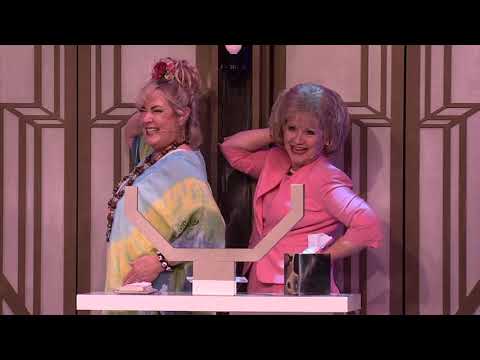
Notes & Trivia
- The musical originated in a 76-seat Orlando theatre converted from a perfume shop, then grew into a global franchise with tours across North America, Europe, Asia and Australasia.
- The four characters are never given personal names; they are identified only by archetypes (Iowa Housewife, Earth Mother, Professional Woman, Soap Star) so audiences can project themselves more easily.
- The Las Vegas sit-down production has run continuously since 2006, making Menopause The Musical one of the longest-running scripted shows in the city.
- There are roughly 25 parody songs in the stage show, but the cast album streamlines and sequences them as 22 tracks, including overture and finale.
- The tagline “The Hilarious Celebration of Women and The Change!” became so associated with the show that it appears on programmes, advertising and even the CD packaging.
- Different territories localise department-store and cultural references — Bloomingdale’s in the US, Marks & Spencer in the UK, or local chains elsewhere — while keeping the same core playlist.
- A later spin-off, Menopause The Musical 2: Cruising Through Menopause, adds a new set of parody songs set on a cruise ship, but the original cast recording remains centred on the department-store encounter.
Music–Story Links
Because Menopause The Musical works more like a revue than a plot-heavy book musical, the soundtrack’s job is to sketch character beats quickly and link them into a rough emotional arc. Each parody targets a symptom or social pressure and assigns it to one or two women, turning medical bullet points into personality moments.
When the Iowa Housewife tackles “My Thighs” and “Lookin' for Food,” the music exposes her mix of guilt and joy around comfort eating and body changes. The country or pop grooves behind those songs feel homey and unfussy, matching her small-town, no-nonsense persona. By contrast, the Soap Star’s numbers (“Hot Flash”, “Don’t Say Nothing Bad About My Body”) lean into R&B and diva-style belting, using big, glossy sonics to show how hard she fights to maintain glamour while her body rebels.
The Professional Woman’s songs — “I Heard It,” “I’m Flashing,” “What’s Love Got To Do With It?” — tie menopause to career pressure. Fast, rhythm-driven arrangements mirror the pace of boardrooms and city life, while the lyrics frame symptoms as threats to credibility. Her shift from apologetic to defiant across the album mirrors a shift from hiding to naming menopause in public.
The Earth Mother’s material, especially “Drippin’ and Droppin’,” “Puff, My God, I’m Draggin’” and “Good Vibrations,” plays off the stereotype of the eternally chilled hippie. Folk and 60s pop grooves initially support her “all natural” persona, then undercut it as she admits she is just as exhausted and cranky as the others. When she finally leans into more mischievous songs late in the show, the music signals that even the most holistic character has decided laughter is the real coping mechanism.
Ensemble numbers like “Change, Change, Change,” “Stayin' Awake / Night Sweatin'” and the finale medleys glue everything together. They take individual complaints and turn them into group anthems, which is why they anchor key story pivots: the first real bonding at the sale rack, the mutual agreement that none of them are sleeping, and the closing decision to embrace “the change” rather than fear it.
Reception & Quotes
Critically, Menopause The Musical has always been divisive, while the soundtrack has quietly done its job in the background: fuelling a show that will not die. Some theatre critics see the score as shamelessly commercial, others as cleverly targeted catharsis. Audience response over two decades has been consistently enthusiastic, with many tours reporting repeat visits and large groups of friends booking together.
Major US outlets have acknowledged the show’s impact even while raising eyebrows at its simplicity. One New York review described the lyrics as “awkward” yet “inspired” and said it was almost impossible not to laugh once the parody engine got going. A Los Angeles critic called the production’s “supreme silliness” both fresh and surprisingly effective as a night out. Regional coverage often frames it as an entry point for people who rarely attend theatre, precisely because they recognise the songs and see themselves onstage.
The UK response, especially during a 2007 London run, was harsher. The Guardian famously gave the production a rare zero-star review and called it “the least competent and most cynical piece of theatre” to hit the city in years. Yet other commentators defended the show in the same period, citing packed houses and the relief many women felt at hearing taboo symptoms sung in full voice.
Among fans and touring reviewers, the cast album is treated less like a stand-alone listening experience and more like an audio souvenir of a night that felt oddly therapeutic. A regional US reviewer said the show’s “collection of great oldies, clever tongue-in-cheek lyrics and entertaining dance routines” kept them from ever needing an “I-need-air trip” to the lobby. Another described it as “good cathartic fun,” particularly when shared with a friend who has just come through menopause.
“Each musical number is based on an actual song from the 1960s, 70s and 80s with the lyrics changed to embrace the play’s topic.” Regional theatre feature
“This joyful musical parody set to classic tunes from the ’60s, ’70s and ’80s will have you cheering and dancing in the aisles.” Touring venue copy
“The show’s oldies, tongue-in-cheek lyrics and dance routines prevented any ‘I-Need-Air’ trips to the restroom.” Campus newspaper review
“Offering less of a rosy glow and more of a long cold douche of the soul.” UK broadsheet review of the London production
In practical terms, the 2003 cast recording has been sold primarily through theatre lobbies, mail-order and a few specialty retailers, occasionally appearing on mainstream platforms or resold through second-hand marketplaces. Repressings continue to surface, and some digital storefronts list the album under Jeanie Linders’s name as an “Album + Soundtrack.”
Interesting Facts
- The idea for the show reportedly came when Jeanie Linders found herself singing about hot flashes in front of an open freezer, then realised the parody could be a full evening of theatre.
- Press materials and venue blurbs often claim that nearly 17 million people across more than 500 cities have seen the show, making it an unusually durable niche musical.
- The cast album’s track timings and even one or two included numbers vary slightly between early 2000s pressings and later reissues, which can confuse collectors comparing listings.
- Official “In Concert” versions sometimes rearrange the order of songs and add narration, but still rely on the same backing tracks and arrangements established on the 2003 recording.
- Some international productions tweak musical references (for example, rephrasing lyric jokes around local DIY chains instead of American hardware stores) while leaving the recorded orchestrations intact.
- The soundtrack does not include every single joke or short reprise from the stage script; a few tiny transitions and spoken gags remain live-only material.
- Fans sometimes use individual numbers like “My Thighs” or “My Husband Sleeps Tonight” as informal anthems in social media videos or local talent shows, separate from the full musical.
- A sequel, Menopause The Musical 2, has its own playlist of parodies and a separate tour trailer, but promotional campaigns often use the original cast album art to anchor brand recognition.
Technical Info
- Title: Menopause: The Musical – Original Cast Recording
- Year: 2003 (US CD release)
- Type: Cast album / soundtrack for stage musical
- Main creative work: Menopause The Musical (stage musical, premiered 2001)
- Book & Lyrics: Jeanie Linders
- Music: Various composers (parodies of 50s–80s pop, soul and disco hits)
- Length: Approx. 57 minutes; 22 tracks including overture and finale
- Label / credits: Issued on CD in the US; database entries list it as an Album + Soundtrack release associated with Jeanie Linders, packaged in a jewel case
- Notable tracks: “Change, Change, Change,” “Stayin’ Awake / Night Sweatin’,” “My Husband Sleeps Tonight,” “My Thighs,” “Good Vibrations,” “Only You,” “New Attitude,” “This Is Your Day”
- Key vocal assignments: Earth Mother, Iowa Housewife, Professional Woman, Soap Star plus ensemble
- Recording style: Studio capture of stage arrangements with theatre-style vocal balance
- Availability: Sold at performances, via official merchandise outlets and through limited online retailers and resellers; some copies and digital rips circulate on major marketplaces and streaming sites
Questions & Answers
- Is the 2003 Menopause The Musical recording a full document of the show?
- It covers the core score — overture, major solos, ensemble numbers and the finale — but trims some reprises, short transitions and spoken jokes. As a result, you get the musical backbone without the complete dialogue and in-between patter of a live performance.
- How close are the album arrangements to the original hit songs?
- They are intentionally very close in groove, tempo and general feel so that audiences recognise the references instantly, but melodies and lyric rhythms are adjusted just enough to serve the new words and avoid sounding like direct karaoke of the source tracks.
- Does the soundtrack change between different national productions?
- The core album stays the same; touring companies worldwide generally use the same orchestrations and song order. Local productions may customise some lyric lines and spoken jokes for regional brands or slang, but that customisation happens in the script and live delivery rather than on a different recording.
- Where can I legally get the Menopause The Musical cast album today?
- The most reliable sources are official show merchandise tables at performances and the producers’ online store; beyond that, physical CDs often show up on specialist musical-theatre shops and second-hand marketplaces. Occasional digital listings exist, but they can change as licensing agreements shift.
- How does Menopause The Musical 2 relate to the original soundtrack?
- The sequel uses a fresh set of parodies built on 70s–90s hits and a cruise-ship storyline, so it has its own future recordings and trailers. However, marketing materials for the sequel often trade on the recognisability of the first album and may feature short reprises of the original show’s themes in trailers and promotional clips.
Canonical Entities & Relations
| Subject | Relation | Object |
|---|---|---|
| Jeanie Linders | wrote book and lyrics for | Menopause The Musical (stage musical) |
| Menopause The Musical (stage musical) | premiered at | Orlando, Florida theatre (Church Street Theatre) |
| Menopause The Musical (stage musical) | uses music by | Various pop and disco composers from the 1950s–1980s |
| Menopause: The Musical – Original Cast Recording (2003) | is soundtrack for | Menopause The Musical (stage musical) |
| Menopause: The Musical – Original Cast Recording (2003) | was released in | United States |
| GFour Productions | produces and licenses | Menopause The Musical worldwide tours |
| Menopause The Musical (Las Vegas production) | is staged at | Harrah’s Las Vegas (long-running sit-down production) |
| MusicBrainz release “Menopause: The Musical” (2003 CD) | describes | Menopause: The Musical – Original Cast Recording as Album + Soundtrack |
| Official Menopause The Musical trailer (YouTube ID yqY3A83iDuY) | promotes | Menopause The Musical worldwide tours and cast recording |
Sources: Wikipedia (Menopause The Musical); MusicBrainz (Menopause: The Musical 2003 CD release); official Menopause The Musical site and tour venue pages; regional and national theatre reviews (US, UK, Australia); producer and merchandise descriptions for the original cast recording.
November, 15th 2025
A-Z Lyrics Universe
Cynthia Erivo Popular
Ariana Grande Horsepower
Post Malone Ain't No Love in Oklahoma
Luke Combs Good Riddance (Time of Your Life)
Green Day Bye Bye Bye
*NSYNC You're the One That I Wan
John Travolta & Olivia Newton-John I Always Wanted a Brother
Braelyn Rankins, Theo Somolu, Kelvin Harrison Jr. and Aaron Pierre The Power of Love
Frankie Goes to Hollywood Beyond
Auli’i Cravalho feat. Rachel House MORE ›