Soundtracks:  A B C D E F G H I J K L M N O P Q R S T U V W X Y Z #


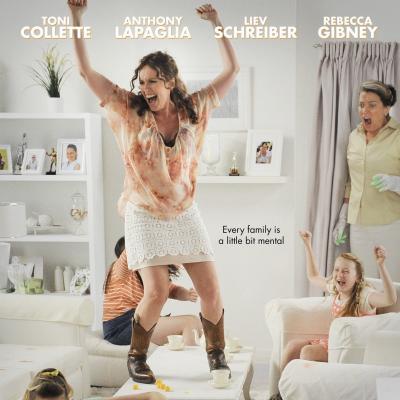
Mental Album Cover

"Mental" Soundtrack Lyrics

Movie • 2012

Track Listing


"Mental (2012) – Unofficial Original Motion Picture Soundtrack" – Album Guide to Tracks and Key Scenes

Mental (2012) film trailer still used as an unofficial soundtrack cover image
Mental (2012) – offbeat Australian comedy-drama with a song-heavy, Sound of Music–inflected soundtrack.

Overview

What happens when a family’s idea of sanity is modelled on The Sound of Music, but the person who shows up to “fix” them carries a hunting knife and a pickled shark in her backstory? Mental answers that question with a soundtrack that swings between show-tune nostalgia, scrappy Australian pop and a jagged original score.

The film follows Shaz, an abrasive drifter hired by small-town politician Barry Moochmore to look after his five daughters after their Sound of Music–obsessed mother Shirley is institutionalised. The Moochmore girls think they are all “mental”; Shaz insists that the world around them is what’s broken. Songs and score track that shift in perspective: early cues lean into Shirley’s Von Trapp fantasies, later cues tilt toward the girls’ own voices and Shaz’s furious sense of justice.

Composer Michael Yezerski builds a score that can handle wild corners — farce, menace, melodrama, sudden sincerity. Around it, pre-existing songs do a lot of heavy lifting. Rodgers and Hammerstein standards from The Sound of Music, Australian indie rock, retro soul and folk-pop tracks are cut together by editor Jill Bilcock so that musical jokes arrive hard, but the emotional beats still land.

Across the film, the soundtrack traces a kind of arc: arrival, adaptation, rebellion, collapse. We begin in Shirley’s technicolour Sound of Music daydreams; move into the chaotic adaptation phase as Shaz barges into the house, with rowdier contemporary tracks; hit open rebellion during campaign rallies and shark-tank heists; then land in an odd mix of collapse and catharsis as the Moochmores finally sing for themselves.

In genre terms, you can hear rough phases. The Rodgers and Hammerstein cues embody Shirley’s impossible ideal of a “perfect” family. Surf-y guitars, indie rock and bright pop songs sketch the Gold Coast kitsch around Dolphin Heads. Retro soul like “Love Letter” brings swagger and sexuality that belong more to Shaz and the older girls than to Barry’s conservative image. Yezerski’s score often sits underneath as a crooked spine — small ensembles, off-kilter rhythms, textures that suggest anxiety rather than comfort.

How It Was Made

The backbone of Mental’s sound world is Yezerski’s original score. He had already made a name in Australian film with The Black Balloon and The Waiting City, and here he leans into Hogan’s taste for tonal whiplash: cartoonish woodwinds can slam straight into tense, almost horror-like textures when Shaz’s trauma surfaces. According to interviews in Australian film music circles, the score was recognised locally, picking up a nomination for major Australian screen-music awards.

The pre-existing songs were not an afterthought. P. J. Hogan has said in an AFI interview that a substantial chunk of the film’s modest budget went on licensing Rodgers and Hammerstein’s music from The Sound of Music, because Shirley’s obsession with that film was non-negotiable for him. He had earned trust with ABBA on Muriel’s Wedding; here he used that reputation to persuade the rights-holders that the songs would sit at the heart of the story rather than as throwaway gags.

The Sound of Music material is not just dropped in as original cast recordings. Barry’s notorious rendition of “Edelweiss” at his campaign launch, and the Moochmore family’s full Von Trapp–style performance, were staged and recorded specifically for the film, with opera singers Henry Choo and Antoinette Halloran providing a polished “So Long, Farewell” voice-over that contrasts with the chaos on screen.

Around those show-tunes, the music team threaded in contemporary tracks that speak to the film’s Australian setting and themes. Stop Motion Poetry’s “Madness is Modern” was licensed at a moment when the band were garnering attention on the local live circuit; coverage in local press even highlighted their placement in Mental as a career milestone. Soul outfit Clairy Browne & The Bangin’ Rackettes came in with “Love Letter”, a song already winning awards on its own. Executive music producer Bonnie Greenberg helped knit these disparate pieces — musical theatre, indie rock, retro soul and Yezerski’s score — into a single, deliberately noisy palette.

Behind-the-scenes energy implied by the Mental trailer frame
Behind the chaotic humour of Mental sits a carefully curated mix of show-tunes, Australian bands and original score.

Tracks & Scenes

This section focuses on key songs and cues rather than a full tracklist. Scene descriptions are based on the film’s released version.

"The Sound of Music" — Julie Andrews, London Musicians Orchestra
Where it plays: The title song appears as part of Shirley’s obsessional viewing of the 1965 musical, with the TV musical bleeding into the Moochmore living room. We see her daughters half-watching, half-absorbing the fantasy as the camera drifts between the television hills and cluttered suburban furniture. The cue is diegetic at first — literally coming from the TV — then slips into non-diegetic territory as the orchestral swell continues over cuts of Barry politicking elsewhere.
Why it matters: It establishes that the Moochmore idea of “normal” is imported from someone else’s story. The cheesy orchestral perfection becomes a yardstick that makes everyone, especially Shirley, feel broken.

"Maria" — Julie Andrews / studio ensemble
Where it plays: Used in one of Shirley’s fantasy moments and echoed later when the girls try to make sense of Shaz’s arrival, “Maria” functions as a kind of running joke. In an early sequence, Shirley hums along while doing chores, the lyrics about “a flibbertigibbet” playing over shots of her chaotic housework and the daughters’ bickering. Later, a snippet returns non-diegetically when Shaz storms through the Moochmore home, effectively inviting the comparison: Shaz as a furious, modern Maria who refuses to behave.

"Edelweiss" — Barry Moochmore and family (onscreen), based on Rodgers & Hammerstein
Where it plays: Near the climax, at Barry’s political campaign launch, the Moochmore family are pushed into a staged, Von Trapp-style performance of “Edelweiss”. Barry starts crooning into the microphone as the crowd, banners and party machinery surround him. The girls join in, turning what begins as a hollow political image into a messy, heartfelt singalong. The song begins in a quasi-diegetic way — a mic’d performance in the event hall — but is mixed more like a musical number as the camera cuts closer and closer to the family’s faces.
Why it matters: The scene flips the song from Shirley’s private fantasy to a public act of defiance. It is one of the few times the soundtrack allows sentiment to sit almost unironically, even as the lyrics expose how fragile Barry’s “patriot” persona really is.

"So Long, Farewell" — Henry Choo & Antoinette Halloran (voice-over performance)
Where it plays: This polished operatic rendition is used in the later part of the film to mirror a turning-point goodbye. Over images of relationships fracturing and the Moochmore house literally and metaphorically burning down around Doris’ porcelain-doll empire, the familiar farewell waltz wafts in, sounding far too graceful for what we are seeing. The vocals are mixed as non-diegetic, floating above the chaos like a memory of how things “should” look in a musical.
Why it matters: The cue underlines the gap between aestheticised, stage-managed family life and the actual mess of trauma, fire and fart-lit rebellion. It is both funny and quietly cruel.

"Love Letter" — Clairy Browne & The Bangin’ Rackettes
Where it plays: Dropped into a mid-film montage, the track kicks in as Shaz drags the older Moochmore girls out of their rut. We see them in the car, hair whipping in the wind, cutting between roadside stops, cheap motels and stolen moments away from Dolphin Heads’ gossip. The song is non-diegetic but edited rhythmically with the girls’ movements — doors slamming on the downbeat, jump-cuts landing on Clairy Browne’s vocal punches.
Why it matters: “Love Letter” brings a brass-heavy, glamorous swagger that the girls simply do not have at home. It suggests, without stating it, that they deserve the kind of drama usually reserved for music-video heroines.

"Madness is Modern" — Stop Motion Poetry
Where it plays: Late in the film, as the narrative leans into the town’s collective unease with Shaz’s behaviour, this track rolls in over shots of Dolphin Heads at night. Neon signs, campaign posters, the shark exhibit and the mental institution are cross-cut as the lyrics talk about modern forms of “madness”. The cue is non-diegetic, playing like commentary while the story converges on the shark-tank rescue sequence.
Why it matters: The song’s title says what the film keeps pushing: the problem is not that individuals are “mental”, but that contemporary life is. The placement turns a pop song into something close to a thesis statement.

"Danny, Dakota & the Wishing Well" — A Silent Film
Where it plays: Used for a more intimate beat with Coral, one of the Moochmore daughters, this track underscores her emotional pivot from self-diagnosed brokenness to something like hope. We watch her alone on a hill above the town or sitting by the water, intercut with glances at a tentative love interest. The track plays non-diegetically, the chiming piano and narrative lyrics mirroring Coral’s fantasy of a different life.
Why it matters: The cue gives one of the daughters a musical world of her own that is not simply an extension of Shirley’s Sound of Music fixation or Shaz’s chaos. It sounds like the kind of song a teenager might actually play on repeat in her room.

"The Best I’ve Found So Far" — Sam Clark
Where it plays: Slotted into a lighter teen-movie stretch, this pop-rock track accompanies scenes of the Moochmore girls trying on new identities — experimenting with clothes, hair and attitudes as Shaz pushes them out of their shells. Snippets bleed from diegetic radios in the background into full non-diegetic use as the montage builds.
Why it matters: It injects a conventional, radio-friendly optimism into a film that otherwise skews quite dark. You can almost feel the studio note: give the teenage characters at least one song that sounds like it belongs on a chart playlist.

"Nothing Seems to Be Wrong" — Michael Goldman
Where it plays: Used ironically in a domestic scene where the house is clearly in disarray, this gently upbeat track plays over shots of pizza boxes, abandoned schoolbooks and Barry failing at basic parenting. Whether it is diegetic (from a stereo) or not, the title does most of the satirical work against Barry’s denial.
Why it matters: The song becomes an aural joke about the Moochmore approach to mental health — insist nothing is wrong, even as the evidence piles up in plain sight.

"Moon Comes Up" — Boy in a Box
Where it plays: The song appears around dusk-set sequences, with Trevor’s shark park and the coastal town seen in more melancholy light. Guitars and drums keep a driving pace while we cut between Shaz alone and the girls back home, making the town feel bigger than their suburbia would suggest.
Why it matters: It is one of the cues that stretches the film beyond its sitcom roots. The combination of night-time visuals and indie-rock energy hints at a world continuing beyond the Moochmore drama.

"Dancefloor" — The Brunettes
Where it plays: This indie-pop groove backs a social scene — a club or local bar — where some characters escape their domestic pressures for an evening. There is awkward dancing, low-stakes flirting and a sense that everyone is pretending to be more together than they are. The track is fully diegetic, coming from the venue speakers.
Why it matters: It is a small but effective reminder that the town contains other lives and other stories. Not everyone’s crisis is big enough to become a movie; some just leak out on the dancefloor.

Other cues, including Willie Nelson’s “Crazy”, spiritual standards such as “Amazing Grace” and comedic numbers like “My Boomerang Won’t Come Back”, pop up in shorter excerpts. They tend to colour single jokes or transitions rather than anchor big set-pieces, but they reinforce the soundtrack’s collage quality — country, gospel and novelty songs sharing space with show-tunes and modern indie.

Moment from the Mental trailer suggesting music-driven scenes and ensemble chaos
Key musical moments in Mental range from campaign-rally show-tunes to scrappy teen-movie montages.

Notes & Trivia

  • P. J. Hogan has said that licensing Rodgers & Hammerstein for Mental cost more than the entire ABBA bill on Muriel’s Wedding, even though that earlier film leaned heavily on ABBA songs.
  • The Sound of Music motif came directly from Hogan’s childhood memories of his own mother crying during “Edelweiss”, which he only later understood as tied to adult regret and disappointment.
  • “Madness is Modern” gave Stop Motion Poetry one of their first high-profile film placements; local coverage explicitly mentioned their song being picked up by Universal Pictures for Mental.
  • Classical-crossover singers Henry Choo and Antoinette Halloran are credited for “So Long, Farewell”, effectively turning a children’s bedtime chorus into a quasi-operatic showpiece.
  • Composer Michael Yezerski’s work on Mental sits between more restrained drama scores and later, much darker genre projects like The Devil’s Candy and The Vigil, making it an interesting bridge in his catalogue.

Music–Story Links

The easiest way to read the soundtrack is as a map of who gets to control the story. At first, Shirley owns the soundscape: her living room screens The Sound of Music on a loop, and the Rodgers & Hammerstein songs colouring her fantasies become the de facto soundtrack of the Moochmore home. When “The Sound of Music” or “Maria” plays, we are inside her head, even if the rest of the family rolls their eyes.

Once Shaz arrives, the musical centre shifts. Her presence coincides with modern tracks pushing the Sound of Music cues aside. “Love Letter” and “The Best I’ve Found So Far” belong to the daughters’ generation; they turn up when the girls finally leave the house physically or mentally. The move from orchestral show-tunes to band-driven songs sonically marks the daughters wresting narrative control away from both Shirley and Barry.

“Madness is Modern” functions almost like a Greek chorus. It does not belong to any one character; instead, it comments on how the whole town responds to anyone who is different. Cut over shots of the mental institution, Trevor’s shark attraction and Barry’s campaign, it connects Shaz’s trauma, Shirley’s breakdown and the town’s gossip into one big system of stigma.

At the campaign rally, “Edelweiss” becomes contested territory. Barry uses it as a tool — a piece of borrowed sentimentality to make himself look wholesome. As the daughters join in and the camera abandons the crowd to focus on their faces, the same tune begins to serve their liberation instead. It is a neat example of how the film uses familiar songs to show that context, not just content, determines meaning.

Reception & Quotes

Critically, Mental landed in mixed territory. Review aggregators show a split roughly down the middle: plenty of praise for Toni Collette’s performance and the film’s willingness to tackle mental health head-on, but also complaints about tonal chaos and an overstuffed script. The soundtrack often sits at the centre of those arguments — either as inspired lunacy or as part of the sensory overload.

Some reviewers loved the way the film weaponises show-tunes and pop songs to talk about trauma. Australian critics in particular tended to highlight the Sound of Music motif as a clever extension of Hogan’s earlier ABBA work, seeing it as a cultural shorthand for a certain kind of suburban yearning.

Others felt the musical numbers pushed the film into shrill territory. For them, the constant pivot from gag to song to earnest confession made it hard to find a stable emotional footing. Still, even less enthusiastic reviews usually singled out the campaign-launch “Edelweiss” and the burning-doll-house finale as memorable combinations of image and sound.

On the soundtrack side, niche film-music sites have been kinder. One review of Yezerski’s score called it “as entertaining as the movie” and praised the way it mirrors the script’s wild mood swings without ever completely losing control. Fans of the film often mention, in comments and forums, that the use of The Sound of Music songs “shouldn’t work” but somehow does.

Mental is a well-acted black comedy that suffers from jarring tonal shifts and a lack of comic discipline. — Rotten Tomatoes critics consensus
There are unusual rewards for viewers willing to climb ev’ry mountain with this deranged guide. — Nick Dent, Time Out Sydney
The soundtrack is as entertaining as the movie, brilliantly done and at times as mental as the script. — Movie Music International, score commentary
Emotional moment from Mental trailer showing characters underscored by music
Critics disagreed on the film’s tone, but musical set-pieces like the “Edelweiss” rally are widely remembered.

Interesting Facts

  • Michael Yezerski’s work on Mental was singled out in Australian industry awards, with the score mentioned among nominees for major feature-film music prizes.
  • Executive music producer Bonnie Greenberg has an extensive Hollywood resume; her presence on a modest Australian film helped secure some of the trickier licenses.
  • “Love Letter” had a life well beyond the movie, appearing on Clairy Browne & The Bangin’ Rackettes’ debut album and winning an international songwriting contest category.
  • “Madness is Modern” effectively tied a regional band’s fortunes to a Universal Pictures release — a reminder that a single placement can ripple through an indie act’s career.
  • No widely released, dedicated Mental score album exists; Yezerski’s cues circulate mainly through clips, composer playlists and in-film audio.
  • Because many key songs come from prior albums (Baby Caught the Bus for “Love Letter”, other EPs and singles), fans often build their own “unofficial soundtrack” playlists.
  • The prominence of The Sound of Music in Mental has led some commentators to pair the two films in essays about how musicals shape expectations of real-world family life.
  • Henry Choo lists his “So Long, Farewell” contribution to Mental alongside opera roles and concert credits, reflecting how seriously the vocal work for that brief scene was treated.
  • Yezerski later returned to themes of religious imagery and psychological strain in darker projects, but Mental is one of the few where that material plays as broad comedy.

Technical Info

  • Title: Mental (unofficial soundtrack & score overview)
  • Film year: 2012
  • Type: Feature film (comedy-drama / black comedy) — this guide focuses on songs and score, not a single physical album.
  • Director / Writer: P. J. Hogan
  • Original score by: Michael Yezerski
  • Executive music producer: Bonnie Greenberg (credited on production finance records)
  • Key licensed works: Songs from The Sound of Music (“The Sound of Music”, “Maria”, “Edelweiss”, “So Long, Farewell”), “Love Letter”, “Madness is Modern”, “Danny, Dakota & the Wishing Well”, “The Best I’ve Found So Far”, “Nothing Seems to Be Wrong”, “Moon Comes Up”, “Dancefloor”, “Crazy”, “Amazing Grace”, “My Boomerang Won’t Come Back”.
  • Studios: Screen Australia, Screen Queensland, Screen NSW, Zucker Productions, Story Bridge Films.
  • Distributors: Universal Pictures (Australia), Dada Films (United States).
  • Score / soundtrack recognition: Yezerski’s work cited in Australian screen-music awards; no mass-market soundtrack charting reported.
  • Availability: Film available on streaming and home video; songs available on their original artist albums and major digital platforms; fan-curated playlists replicate the film order using data from soundtrack sites.

Questions & Answers

Who composed the original score for Mental (2012)?
Australian composer Michael Yezerski wrote the score, blending quirky small-ensemble writing with more dramatic textures for Shaz’s trauma and the shark-tank climax.
Why does the soundtrack rely so heavily on songs from The Sound of Music?
Because Shirley Moochmore idolises that musical, its songs become the template for what she thinks a “good” family should look like. Hogan built the whole film around that obsession, so licensing those cues was essential.
Is there an official, standalone Mental soundtrack album?
No widely distributed album dedicated solely to Mental’s music has emerged. Instead, the score lives inside the film, and the licensed songs come from existing singles or albums by each artist.
Which song underscores the climactic campaign performance?
The key song is “Edelweiss”, performed by Barry and the Moochmore family in a staged, Von Trapp-style number at his campaign launch, echoing Shirley’s beloved Sound of Music.
Where can I hear “Love Letter” and “Madness is Modern” outside the film?
“Love Letter” appears on Clairy Browne & The Bangin’ Rackettes’ album Baby Caught the Bus, while “Madness is Modern” is released by Stop Motion Poetry and can be found on major digital platforms.

Canonical Entities & Relations

Subject Relation Object
P. J. Hogan directed Mental (2012 film)
P. J. Hogan wrote Mental (2012 film)
Michael Yezerski composed score for Mental (2012 film)
Bonnie Greenberg executive-produced music for Mental (2012 film)
Clairy Browne & The Bangin’ Rackettes performed “Love Letter”
Stop Motion Poetry performed “Madness is Modern”
A Silent Film performed “Danny, Dakota & the Wishing Well”
Sam Clark performed “The Best I’ve Found So Far”
Boy in a Box performed “Moon Comes Up”
Julie Andrews performed “The Sound of Music” and “Maria” (original film recordings)
Henry Choo & Antoinette Halloran performed “So Long, Farewell” (version used in Mental)
Universal Pictures distributed Mental in Australia
Dada Films distributed Mental in the United States
Screen Australia co-produced Mental (2012 film)
Dolphin Heads (fictional) is setting of Mental (2012 film)

Sources: official credits and plot summaries; AFI / AACTA and APRA award listings; soundtrack databases (Soundtrakd, Ringostrack, eCartelera); interviews with P. J. Hogan; reviews and score commentary from Rotten Tomatoes, Time Out Sydney and Movie Music International; artist discographies for Clairy Browne & The Bangin’ Rackettes, Stop Motion Poetry and other featured performers.

November, 15th 2025

Mental is a 2012 Australian comedy film: learn more on Wikipedia, Internet Movie Database
A-Z Lyrics Universe

Lyrics / song texts are property and copyright of their owners and provided for educational purposes only.