Soundtracks:  A B C D E F G H I J K L M N O P Q R S T U V W X Y Z #


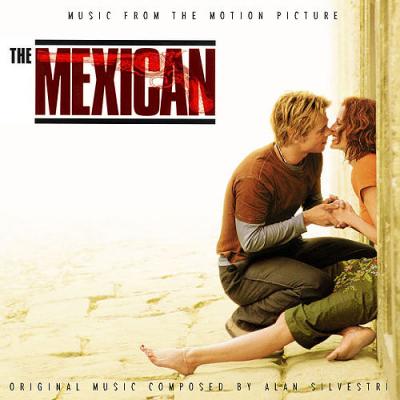
Mexican Album Cover

"Mexican" Soundtrack Lyrics

Movie • 2001

Track Listing


"The Mexican – Music From the Motion Picture" – Album Guide to Tracks and Key Scenes

The Mexican 2001 theatrical trailer still with Brad Pitt and Julia Roberts
The Mexican – film trailer imagery that frames the soundtrack’s sly, off-beat tone, 2001.

Overview

What does a cursed antique pistol sound like? In The Mexican, the answer is a swaggering trumpet, a sway of mock-epic chorus, and a jukebox that keeps dropping oddly perfect songs at the worst possible moments. Alan Silvestri’s score treats the legend of the gun “La Mexicana” as a full-blown Western myth, while the pop cuts needle the characters’ bad decisions with a knowing grin.

The film splits in two: Jerry (Brad Pitt) bumbles through rural Mexico trying not to die or lose the pistol, while Sam (Julia Roberts) ends up on the road with world-weary hitman Leroy (James Gandolfini). The soundtrack mirrors that split. South of the border we get oversized, sun-blasted orchestral parody and Latin-inflected cues; on the American side we hear mall speakers, car radios and lounge standards under conversations about love, therapy and trust.

Instead of a sleek “mixtape” of hits, the album leans heavily on Silvestri’s score, with just five major songs — Nancy Sinatra’s “These Boots Are Made for Walkin’,” War’s “Why Can’t We Be Friends,” Men Without Hats’ “The Safety Dance,” Dean Martin’s “You’re Nobody ’Til Somebody Loves You,” and Esquivel’s “El Cable” — dropped in like little grenades of cultural memory. According to one film-music review, the intent was openly parodic: a big, overblown Western pastiche that still plays well on its own.

Across the film, the music moves in phases. Arrival: brassy, mock-heroic main titles announce the cursed pistol and Jerry’s doomed “one last job.” Adaptation: bouncy, Mexican-flavored cues like “Oye” and “Oye, Oye” settle us into dusty towns and roadside mishaps. Rebellion: the pop songs kick in, openly arguing with the action — Boots strutting through a botched kidnapping, Safety Dance bouncing over grim business, War’s laid-back groove mocking everyone’s paranoia. Collapse: strings and choir in “Airport” and the “End Credits Medley” lean hard into romance and fate, almost too big for this shambling crime comedy — and that excess is exactly the joke.

How It Was Made

The score for The Mexican comes from Alan Silvestri, who was already deep into big-studio territory with Back to the Future, Forrest Gump and Cast Away behind him. Here he turns loose a deliberately outsized Western-style orchestral sound — solo trumpet, bold brass fanfares, galloping rhythms — and pushes it until parody and sincerity blur. The album’s main release, The Mexican – Music From the Motion Picture, arrived on Decca in early 2001 with about 35 minutes of score and a clutch of songs woven through.

Silvestri didn’t work alone. The score credits highlight trumpet solos by Gary Grant and additional music by Mexican-born bassist and composer Abraham Laboriel on several Latin-flavored cues, especially the two “Oye” tracks and “Frank’s Dead.” Orchestrator Conrad Pope helped shape the oversized ensemble writing, while Dennis Sands handled scoring mix duties and Skywalker-level sonics. In the film’s music department, a small team of editors and a mariachi music advisor smoothed the joins between score, songs and diegetic source cues.

Structurally, the album almost follows the film’s story. Early tracks introduce Jerry’s bumbling theme and the cursed-gun motif; mid-album cues follow his misadventures and Sam’s captivity; the later cut “Airport” blows up the romantic payoff into a huge, tongue-in-cheek orchestral love theme before the “End Credits Medley” wraps everything into a single suite. One review points out that the sequencing can feel uneven on album — short jokey cues and songs interrupting each other — but that same structure helps you hear how closely the music hugs the film’s shifting tone.

Behind the scenes style frame from The Mexican trailer highlighting road movie elements
The Mexican trailer leans into road-movie chaos, with Silvestri’s trumpet theme front and center.

Tracks & Scenes

Exact timestamps vary slightly between releases and cuts; below I focus on confirmed uses and on-screen functions rather than frame-accurate timecodes.

"These Boots Are Made for Walkin'" – Nancy Sinatra
Scene: During the failed kidnapping attempt at the mall, Nancy Sinatra’s classic blasts over the mall sound system. Sam and Leroy move through the bright, anonymous space, tension cranking up, while the song has been audibly chopped and looped so that the spoken line “Are you ready, boots? Start walkin’!” hits more than once. The track stays diegetic — it belongs to the mall speakers — yet it dominates the soundscape as security, shoppers and gunmen collide around them.
Why it matters: The film uses the song’s strutting, revenge-coded attitude to undercut the violence; critics have singled out the way a hitman calmly disposes of bloody gloves as the song’s giddy ending plays. The mismatch between cheerful go-go pop and messy crime is pure Tarantino-era irony, but here it also mirrors Sam’s own half-serious threats to walk away from Jerry for good.

"Why Can’t We Be Friends" – War
Scene: War’s easygoing funk/soul tune turns up later in the film as an ironic counter-melody to gangland negotiation. Over shots of crooks who clearly do not trust one another, the chorus drifts in like a stoner’s wish that everyone would just relax. It works as source-like background rather than a foreground performance, letting dialogue sit on top while the groove comments from the sidelines.
Why it matters: Lyrically it is on-the-nose — this story is literally about people who should cooperate but can’t stop lying and cheating — yet musically it keeps things light and almost playful. That tension between music and danger is one of the soundtrack’s signatures.

"The Safety Dance" – Men Without Hats
Scene: Men Without Hats’ new wave staple appears in what one contemporary review called a “random placement,” laid over one of the film’s more violent or bleak passages. The bright synths and “we can dance if we want to” hook run head-on into the grim logistics of the criminal plot — guns, threats, a body or two — playing non-diegetically as if the film itself starts humming a tune to keep the mood from going too dark.
Why it matters: This use is deliberately jarring. It turns an ’80s club anthem into a nervous joke about control and freedom: the characters really can’t dance, or leave, or opt out of the mess they’re in. That dissonance is part of why commentators still bring up the cue when they talk about The Mexican’s tonal whiplash.

"You’re Nobody ’Til Somebody Loves You" – Dean Martin
Scene: Dean Martin’s silky croon shows up as lounge-style source music — the kind of track that might drift from a casino bar, a restaurant speaker, or a TV set in the background while characters wrangle over whether love is worth the risk. The vintage orchestration and crooner vocal immediately evoke old Hollywood romance and mid-century bachelor-pad cool, in sharp contrast to the frazzled, therapy-speak relationship that Jerry and Sam are actually living through.
Why it matters: On album, this cut functions like a time capsule that plugs the film into a larger lineage of romantic crime capers. In context it makes the film’s messy, modern lovers look very small compared with the glossy fantasy of love that Martin sells — which is the point.

"El Cable" – Esquivel
Scene: Esquivel’s space-age bachelor-pad sound, with its gleeful brass stabs and stylized Latin swing, fits one of the film’s more playful Mexican interludes — busy streets, clattering vehicles, characters trying and failing to look inconspicuous. The piece is used as energetic source/background, framing Mexico not as grim cartel territory but as a slightly surreal playground where Jerry is hopelessly out of his depth.
Why it matters: By reaching back to mid-20th-century exotica rather than gritty contemporary Latin music, the film tips its hand: this is a fairy-tale Mexico seen through pulp and postcards. The track reinforces that stylized, self-aware distance.

"Oye" / "Oye, Oye" – Alan Silvestri & Abraham Laboriel
Scene: These two short cues bracket Jerry’s early arrival and later return beats in Mexico. You hear chanted vocals, bright horns and rhythmic guitar that pastiche Mexican and Latin pop idioms without pretending to be “authentic” folk music. When Jerry drives into town in his battered car, the cue blows in with him; when he stumbles back into the plot’s main crossroads later, “Oye, Oye” answers like an echo.
Why it matters: They establish a specific comic tone — affectionate but knowingly exaggerated — that lets the film get away with big stereotypes by keeping everything openly cartoonish. On disc, they also provide the album’s most immediate and catchy bursts of flavor.

"The Mexican" – Alan Silvestri
Scene: This is the central instrumental statement of the main theme, heard in several versions as the legend of the pistol is told and retold. Typically it announces itself over widescreen shots of the desert, the gun, or Jerry trudging toward yet another bad decision. Solo trumpet leads, backed by orchestra and often choir, with a hint of tango in the low strings and guitar.
Why it matters: The cue deliberately oversells the pistol’s mythic weight. It turns a simple plot MacGuffin into a full operatic tragedy in miniature, reminding you that everyone in the story is projecting their own fantasies onto a lump of metal.

"Airport" – Alan Silvestri
Scene: Near the film’s conclusion, as Jerry and Sam’s story finally collides with the gun’s fate at a modern airport, Silvestri unleashes the score’s big romantic crescendo. The cue tracks their emotional resolution, ramping from quiet uncertainty to full orchestral and choral blast as decisions are made and the couple’s future snaps into focus.
Why it matters: Out of context it sounds like the finale to a sweeping studio romance; in context, it is almost too much for this scruffy crime comedy. That excess is part of the joke and part of the charm — the music insists that, for these two screw-ups, this really is life or death.

"It’s Cursed, That Gun" – Alan Silvestri
Scene: This longer cue threads through one of the flashbacks that dramatize the legend of La Mexicana. Strings, trumpet and choir move between tragic, lover’s-suicide melodrama and ironic, almost playful Western gestures. On screen we see how the gun brought doom to earlier owners, intercut with how its reputation continues to warp present-day choices.
Why it matters: It’s the clearest example of the score treating the film’s folklore as both sincere and tongue-in-cheek. The music sells the curse hard enough that we start to believe it, even while we know we’re being played.

"The Mexican – End Credits Medley" – Alan Silvestri
Scene: As the credits roll, Silvestri compiles the main thematic materials — Jerry’s goofy motif, the Mexican trumpet theme, the love theme — into a single, five-minute tour. In the cinema this functions as a cool-down lap after the tonal rollercoaster; on album it’s effectively a “best-of” that lets you enjoy the writing without dialog and sound effects.
Why it matters: The medley proves how coherent the score actually is under the surface parody. It ties together comedy, romance and Western pastiche into one confident statement, and it’s arguably the most satisfying standalone listen on the album.

Trailer music
Scene: The main theatrical trailers cut Silvestri’s trumpet theme and a few of the more upbeat cues into quick bursts, punctuated by comic dialogue and gunshots. The editing favors cheeky hits on the brass stabs and snare-drum rolls, selling the film as a breezy star vehicle rather than a moody crime picture.
Why it matters: The trailers underline how central the score’s identity is. Even without listing tracks, the marketing leans on that swaggering Western parody sound as shorthand for the film’s mix of danger and goofiness.

Montage frame from The Mexican trailer emphasizing the cursed pistol and desert landscapes
Key album cues — especially “The Mexican” and “Airport” — supply much of the trailer’s musical spine.

Notes & Trivia

  • The soundtrack album tilts more toward score than songs: roughly 35 minutes of Silvestri cues versus about 15 minutes of pop and lounge tracks.
  • Nancy Sinatra’s “These Boots Are Made for Walkin’” is edited unusually in the mall sequence, repeating the “Are you ready, boots?” line more times than in the original single.
  • Critics have repeatedly described the score as a deliberate Western parody, pointing to the oversized choir and trumpet as clear genre send-ups.
  • Esquivel’s “El Cable” keeps alive a thread of mid-century “space-age pop” that rarely surfaces in mainstream 2000s Hollywood films.
  • The album’s presentation follows the story order, so you can roughly track Jerry’s and Sam’s journeys just by listening in sequence.

Music–Story Links

The most famous sync in the film — “These Boots Are Made for Walkin’” over the mall kidnapping — distills the movie’s whole attitude to violence. A pop anthem of empowerment and petty revenge plays while professionals with guns fail at their job and bleed on the linoleum. The gun is serious; the people around it are not. The soundtrack makes sure we feel both truths at once.

Silvestri’s main theme, especially in “The Mexican” and the “End Credits Medley,” treats the pistol’s legend as if it belongs beside classic Western myths. When the camera glides over desert vistas or zooms in on engraved metal, that solo trumpet and choir insist that this cursed object really has warped lives for generations. Each flashback cue adds weight to this illusion, so that by the time Jerry is dragging the pistol through modern Mexico, the music has us half-believing in its curse.

In contrast, War’s “Why Can’t We Be Friends” and Men Without Hats’ “The Safety Dance” lean into the film’s absurdist streak. When deals go sideways or bodies drop, the songs’ cheerful tones suggest that the characters are stuck in their own sitcom more than a thriller. That framing shapes how we read Jerry’s clumsiness: he’s less a noir fall guy than a sitcom goof trapped in a Coen-style mishap.

Dean Martin’s “You’re Nobody ’Til Somebody Loves You” and the blow-out love theme in “Airport” together sketch the emotional arc between Jerry and Sam. The Martin cut represents the old fantasy — effortless, glamorous romance where love redeems everything. “Airport” shows the messy, modern equivalent: two flawed people who have talked their relationship half to death finally deciding to stop running. The music gives their choice the same over-the-top weight as the gun’s myth, putting love and curse on equal footing.

Reception & Quotes

The film itself landed to mixed reviews and a mid-range box-office success, but the soundtrack has quietly built a small cult following among film-music fans. Reviewers at film-music sites have praised the boldness of the parody, while also warning that the album can feel uneven because songs and short cues interrupt the flow.

One soundtrack review noted that the album “tilts the balance” away from the contemporary song-compilation model toward a more traditional score-led presentation, with pop cuts acting as spice rather than main course. Another critic described the score as “mostly ridiculous music” that suddenly bursts into “phenomenal orchestral sequences” — and meant it as a compliment.

“Silvestri provided one of his most unique scores in recent memory, a Western parody that still works as guilty-pleasure adventure.”
Filmtracks review
“Someone dies horribly and gratuitously every half hour or so, but Verbinski employs sporadic doses of whimsy (as in the random placement of ‘The Safety Dance’).”
Gregory Weinkauf, Phoenix New Times
“Like a hit man disposing of his bloody gloves to the giddy-up ending of Nancy Sinatra’s ‘These Boots Are Made for Walkin’’.”
Salon contemporary review
“Enjoy spicy salsa and Mexican-style riffs with instrumental a-plenty… plus familiar favorites like ‘Safety Dance’ and ‘Why Can’t We Be Friends.’”
Hollywood.com soundtrack write-up

On the availability side, the Decca album was a regular U.S. release and has remained relatively easy to find in physical and digital formats. As per Filmtracks and retail listings, it runs just under 50 minutes and presents the full score plus all the prominent source songs; there isn’t a longer “complete score” edition in official circulation.

End credits styled frame from The Mexican trailer hinting at the score medley
End-credits medley: the score’s themes stitched together while viewers file out of Jerry and Sam’s misadventure.

Interesting Facts

  • The soundtrack’s official title, The Mexican – Music From the Motion Picture, appears on multiple Decca pressings with identical track order but minor packaging differences between territories.
  • Only five non-score songs appear on the album, but they cover three decades of pop history — from Dean Martin to Nancy Sinatra to ’80s synth-pop and ’70s funk.
  • “These Boots Are Made for Walkin’” has turned up in a long list of films and series; The Mexican sits in the same pop-culture lineage as Full Metal Jacket and Austin Powers in that regard.
  • The film’s portrayal of Mexico drew criticism in some quarters, yet the score’s “fake Western” angle has been praised for leaning into myth instead of faux realism.
  • Silvestri wrote The Mexican in the same broad window he handled Cast Away, What Lies Beneath and The Mummy Returns — three very different tones, which makes this parody outing stand out even more.
  • Trumpet is the star solo instrument, but listen closely and you’ll hear harmonica, whistling and banjo details poking fun at classic Western scoring tropes.
  • On disc, “Airport” is one of the few tracks that could almost pass for a straight non-parodic romantic theme; everything around it keeps winking.
  • Several online listeners have singled out “10% Clint” as a sly nod to Clint Eastwood’s spaghetti-Western persona, filtered through Silvestri’s playful lens.

Technical Info

  • Title (album): The Mexican – Music From the Motion Picture
  • Film: The Mexican (2001, feature film)
  • Year of film release: 2001
  • Album release: Early 2001 (Decca Records catalog 13757; shipping / release around late February)
  • Type: Original motion-picture soundtrack (score-led album with selected songs)
  • Composer: Alan Silvestri
  • Additional music: Abraham Laboriel (“Oye”, “Frank’s Dead”, “Oye, Oye”)
  • Featured performers (songs): Nancy Sinatra, War, Men Without Hats, Dean Martin, Esquivel
  • Key score cues: “The Mexican”, “Airport”, “It’s Cursed, That Gun”, “End Credits Medley”, “10% Clint”, “Leroy’s Morning”
  • Key song placements: “These Boots Are Made for Walkin’” (mall kidnapping sequence), “The Safety Dance” (ironic counterpoint over violence), “Why Can’t We Be Friends” (comic negotiation montage), “You’re Nobody ’Til Somebody Loves You” and “El Cable” (lounge / source interludes)
  • Music department highlights: Trumpet solos by Gary Grant; orchestrations by Conrad Pope and Silvestri; scoring mix by Dennis Sands; choir direction / vocal contracting and multiple music editors supporting picture cuts.
  • Label: Decca Records
  • Approximate running time: ~49 minutes
  • Availability: Standard CD and digital formats; no widely released expanded or “complete score” edition as of mid-2020s.

Questions & Answers

Is The Mexican soundtrack mostly songs or mostly score?
Mostly score. The album is dominated by Alan Silvestri’s orchestral cues, with a small cluster of high-impact songs dropped in at key points.
Which Nancy Sinatra song is used in The Mexican, and how?
The film uses “These Boots Are Made for Walkin’,” blasting it over a mall sound system during a botched kidnapping; the edit even repeats the spoken “Are you ready, boots?” line.
Is there an official album that collects both the score and songs?
Yes. The Mexican – Music From the Motion Picture gathers the main score cues plus the headline source songs by Nancy Sinatra, War, Men Without Hats, Dean Martin and Esquivel.
Why does the score sound like a parody of Western music?
Silvestri leans hard on trumpets, choir and galloping rhythms to exaggerate Western clichés on purpose, matching the film’s mix of myth, comedy and crime.
Are all the songs from the film on the album?
All the prominent needle-drops are represented, but a few snippets of source and background material in the film remain exclusive to the picture itself.

Canonical Entities & Relations

Subject Verb Object
Gore Verbinski directed The Mexican (2001 film)
J. H. Wyman wrote The screenplay for The Mexican
Alan Silvestri composed Original score for The Mexican
Alan Silvestri composed The album The Mexican – Music From the Motion Picture
Abraham Laboriel co-wrote Selected cues on The Mexican soundtrack (including “Oye” and “Frank’s Dead”)
Gary Grant performed Trumpet solos on The Mexican score
Brad Pitt portrayed Jerry Welbach in The Mexican
Julia Roberts portrayed Samantha “Sam” Barzel in The Mexican
James Gandolfini portrayed Hitman Winston “Leroy” Baldry in The Mexican
DreamWorks Pictures distributed The Mexican in the United States
Newmarket produced The Mexican (2001 film)
Decca Records released The Mexican – Music From the Motion Picture
Nancy Sinatra performed “These Boots Are Made for Walkin’” used in The Mexican
War (band) performed “Why Can’t We Be Friends” used in The Mexican
Men Without Hats performed “The Safety Dance” used in The Mexican
Dean Martin performed “You’re Nobody ’Til Somebody Loves You” used in The Mexican
Esquivel performed “El Cable” used in The Mexican
The Mexican – Music From the Motion Picture is soundtrack to The Mexican (2001 film)
The Mexican (2001 film) features Original score cues like “The Mexican” and “Airport”
The Mexican (2001 film) features Songs “These Boots Are Made for Walkin’”, “Why Can’t We Be Friends”, “The Safety Dance”, “You’re Nobody ’Til Somebody Loves You”, and “El Cable”

Sources: Filmtracks review of The Mexican; MovieMusic.com soundtrack listing; Hollywood.com soundtrack review; Phoenix New Times review of The Mexican; Salon contemporary review; IMDb and Wikipedia entries for The Mexican; reference articles on “These Boots Are Made for Walkin’” and other songs.

November, 15th 2025


A-Z Lyrics Universe

Lyrics / song texts are property and copyright of their owners and provided for educational purposes only.