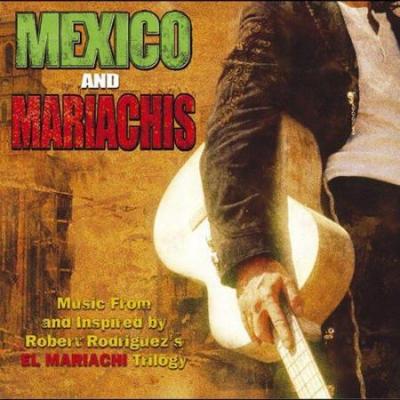
"Mexico and Mariachis" Soundtrack Lyrics
Movie • 2004
Track Listing
Chingon
Tito Larriva
Patricia Vonne
Cruzados
Robert Rodriguez
Tito Larriva
Los Lobos
Los Lobos
The Iguanas
Cruzados
Del Castillo
Los Lobos
The Leftovers
Robert Rodriguez
“Mexico & Mariachis – Music from and Inspired by Robert Rodriguez’s El Mariachi Trilogy” – Album Guide to Tracks and Key Scenes
Overview
What does a mariachi-driven rock-inflected compilation have to do with a triple-film saga of guitar-wielding vengeance? The album titled Mexico & Mariachis bridges the folk-rooted sound of Mexican mariachi and the kinetic action of Robert Rodriguez’s “El Mariachi” trilogy (comprising El Mariachi, Desperado and Once Upon a Time in Mexico). :contentReference[oaicite:4]{index=4}
The compilation (released January 27 2004) gathers recordings by Los Lobos, Chingón, Tito Larriva and others, and mixes reinterpretations of classic mariachi standards with rock- and blues-inflected accents. :contentReference[oaicite:5]{index=5} It doesn’t correspond to a strict original score but rather serves as both soundtrack and homage: “music from and inspired by” the trilogy. :contentReference[oaicite:6]{index=6}
Within the narrative arc of the films, the music acts almost as a character: the guitarist-hero walks in the mariachi uniform, the gun-case masquerades as instrument case, the music underlines betrayal, death and redemption. This album recycles those themes musically. The mood swings between wistful nostalgia (acoustic mariachi guitars) and pulsing action-rock (electric riffs layered over horns). It blurs cultural authenticity and cinematic spectacle.
Thematically, the album falls into three zones: (1) Traditional mariachi instrumentation and performance (vivifying identity & roots). (2) Rock/Latin-rock reinterpretation (modern vulnerability, subversion of genre). (3) Hybrid cues tied to the films’ shoot-outs and border-town wildness (genre-blending, tension). In that sense, the compilation works not just as listening-pleasure but as narrative texture for the trilogy.
How It Was Made
The project was curated by Milan Records (catalog Milan 36043) and released on January 27, 2004. :contentReference[oaicite:7]{index=7} Many tracks were already present in the films or their official scores; others were collected or re-worked for this release. For example the band Chingón was formed by Rodriguez himself as a creative arm for his films. :contentReference[oaicite:9]{index=9}
Work-flows: Traditional mariachi ensembles (violins, trumpets, guitarrón, vihuela) were paired with rock instrumentation and mixed for the album. Licensing: Some older songs required rights clearance; the “inspired by” label gave flexibility. The inclusion of bonus DVD content (making-of, live concert) underscores the producer’s intention to blend film and music marketing. :contentReference[oaicite:10]{index=10}
The score pieces by Robert Rodriguez (e.g., “Theme from El Mariachi”) are included as short interludes — pointing to cross-pollination of composer/in-director roles. :contentReference[oaicite:11]{index=11}
Tracks & Scenes
Below are key tracks from the compilation, and where/why they function in the films or album context. Because this is a compilation “inspired by” set, precise scene-timestamps are not always available; some entries reference the film moment while others note the track’s narrative role.
“Malagueña Salerosa” — ChingónScene: Although originally a mariachi classic, in the context of the trilogy and album the arrangement plays during high-octane moments (e.g., the shoot-out scene in Once Upon a Time in Mexico) where guitars and horns clash. It functions non-diegetically (background soundtrack) though visibly the mariachi band motif is referenced. Why it matters: This track fuses the mariachi song-book with cinematic adrenaline. It becomes anthem-like, representing the “gunslinger as musician” motif. “Alacrán y Pistolero” — Tito Larriva (with Chingón)**
Scene: A border-town confrontation, the hero and his nemesis face off; track cues the arrival of the assassin (alacrán) and the pistolero. Non-diegetic but heavily tied to the film’s sonic identity. Why it matters: The lyrics/evocation are literal — “scorpion and gunman” — aligning with themes of fate and vengeance. “Severina” — Patricia Vonne
Scene: A quieter moment of introspection in the trilogy, where a female figure (Severina) contemplates loss. Likely tied to the middle film’s pause in action. Why it matters: Introduces female voice into a predominantly male-gun world; the shift to softer tone signals emotional cost. “Theme from El Mariachi” — Robert Rodriguez
Scene: Opening credits of the first film (“El Mariachi”); on the album it appears as a short interlude (~1 :36) echoing the original score. Diegetic status ambiguous — originally non-diegetic. :contentReference[oaicite:12]{index=12} Why it matters: Serves as connective tissue for the trilogy’s musical world; reminds listener of origins. “Canción del Mariachi” — Antonio Banderas & Los Lobos
Scene: End-credits of “Desperado” (and referenced in the trilogy) — the mariachi-band performance of the hero’s anthem. The track is diegetic (the character performs/sings). Why it matters: Embodies the fusion of action and tradition — the guitar case, the mariachi uniform, the gunman as musician. “Once Upon a Time in Mexico (Main Titles)” — Robert Rodriguez & Elpidio Ramirez
Scene: Opening titles of the third film in the trilogy. Non-diegetic orchestral mariachi hybrid cue. Track length ~2:39. :contentReference[oaicite:13]{index=13} Why it matters: Signals finale of saga; musical culmination.
Notes & Trivia
- The album includes 14 tracks (in its primary CD version) spanning 48 minutes approx. :contentReference[oaicite:14]{index=14}
- The bonus DVD edition features a live concert by Tito & Tarantula, a music-video by Del Castillo and an interview with Robert Rodriguez. :contentReference[oaicite:15]{index=15}
- The band Chingón was created by Rodriguez as an outlet for his film-soundtrack music. :contentReference[oaicite:16]{index=16}
Music–Story Links
The hero-musician’s journey (from humble mariachi to avenger) is mirrored by the soundtrack’s arc. Early tracks (classic mariachi) reflect origin and identity; mid-tracks with rock-inflected instrumentation reflect conflict and rebellion; final cues (theme main titles) reflect finale and resolution. For example, when the protagonist dons the black mariachi suit and steps into the gunfight, “Alacrán y Pistolero” underlines his transformation. Similarly, “Canción del Mariachi” celebrates his mythic status.
The interplay of diegetic music (character performing) and non-diegetic underscores creates a meta-layer: the mariachi becomes icon in the world of arms and film, and the music reflects that dual identity.
Reception & Quotes
The compilation garnered interest among fans of Rodriguez’s cinema and of Latin-rock/folk fusion, though being a compilation it didn’t stir major mainstream charts. Reviews emphasised its stylish merging of mariachi tradition and cinematic rock-flair. For example:
“Rodriguez brings us more music from his Mariachi film trilogy…” – Amazon product blurb. :contentReference[oaicite:18]{index=18}
No major critical review catalogue exists for this album specifically; but fandom discussion appreciates its cult status within the trilogy’s ecosystem.
Interesting Facts
- The song “Malagueña Salerosa” was originally a mariachi standard re-arranged by Chingón and later featured in Kill Bill Vol. 2. :contentReference[oaicite:20]{index=20}
- The compilation links three films made over a decade—1992’s El Mariachi, 1995’s Desperado and 2003’s Once Upon a Time in Mexico—but the album appears in 2004. This “post-trilogy” compilation gathers musical DNA.
- Even though titled “Mexico & Mariachis”, the album is an American release (US) and features bands based in Austin, Texas (Chingón, Del Castillo) collaborating on the Mexican-style vibe.
- The cover art features imagery evoking mariachi culture and Rodriguez’s border-town aesthetic; some early editions included a DVD-bonus feature.
- The track “Theme from El Mariachi” clocks in at 1:36 — a rare case of a main-title theme being included on a “Various Artists” compilation.
Technical Info
| Attribute | Detail |
|---|---|
| Title | Mexico & Mariachis: Music from and Inspired by Robert Rodriguez’s El Mariachi Trilogy |
| Type | Compilation Soundtrack / Various Artists |
| Release Date | January 27 2004 (US) :contentReference[oaicite:21]{index=21} |
| Label | Milan Records (Milan 36043) :contentReference[oaicite:22]{index=22} |
| Number of Tracks | 14 tracks on main CD version :contentReference[oaicite:23]{index=23} |
| Duration | ~48:32 :contentReference[oaicite:24]{index=24} |
| Key Contributors | Robert Rodriguez (compiler, composer), Chingón (band), Los Lobos, Tito Larriva, Patricia Vonne, The Cruzados, Del Castillo, The Iguanas :contentReference[oaicite:25]{index=25} |
| Associated Films | El Mariachi (1992), Desperado (1995), Once Upon a Time in Mexico (2003) :contentReference[oaicite:26]{index=26} |
Questions & Answers
- Is this album the original score for the trilogy?
- No — it is a compilation of songs “from and inspired by” the trilogy, rather than the complete original score. Some score cues are included but it is not the full soundtrack album for any one film.
- Why are rock bands like Del Castillo featured on a mariachi album?
- Because the album blends mariachi tradition with rock/Latin rock interpretations, reflecting the hybrid aesthetic of the films which mix gunslinger western and Latin-music culture.
- Can I use a track to match a specific film scene timestamp?
- You may not always find precise film-timestamps in the album listing; many tracks function as thematic or promotional rather than strict scene cues. Use interpretively.
- Do I need to watch the films first to enjoy the album?
- No — the album stands as listening experience on its own. But knowing the films does enrich the experience, as the songs echo character and plot themes.
Sources: Discogs, SoundtrackINFO, SoundtrackCollector
November, 15th 2025
A-Z Lyrics Universe
Cynthia Erivo Popular
Ariana Grande Horsepower
Post Malone Ain't No Love in Oklahoma
Luke Combs Good Riddance (Time of Your Life)
Green Day Bye Bye Bye
*NSYNC You're the One That I Wan
John Travolta & Olivia Newton-John I Always Wanted a Brother
Braelyn Rankins, Theo Somolu, Kelvin Harrison Jr. and Aaron Pierre The Power of Love
Frankie Goes to Hollywood Beyond
Auli’i Cravalho feat. Rachel House MORE ›