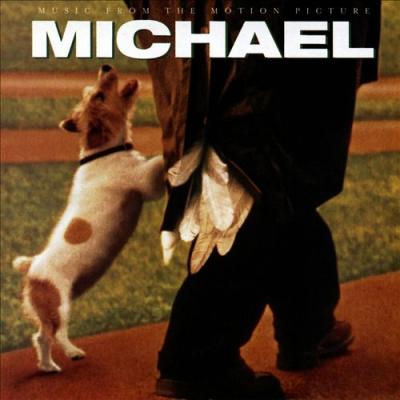
"Michael" Soundtrack Lyrics
Movie • 1996
Track Listing
Don Henley
The Mavericks
Aretha Franklin
Van Morrison
Valerie Carter
James Cotton
Bonnie Raitt
Willie Nelson
Al Green
Andie MacDowell
Norman Greenbaum
"Michael (Music from the Motion Picture)" – Album Guide to Tracks and Key Scenes
Overview
What happens when an archangel smells like cookies, swears, drinks, and still pushes everyone toward love? Michael (1996) answers that with a road movie wrapped in a jukebox of roots rock, country, soul, and Randy Newman’s wry spirituality. The film’s soundtrack album, Michael (Music from the Motion Picture), bottles that tone: tender but never pious, funny yet strangely devotional.
The plot is simple: three burned-out tabloid journalists drive to rural Iowa to “debunk” a woman who claims she lives with an angel, only to meet Michael, wings and all. The road trip to Chicago becomes a chain of small miracles, bar fights, motel stops, and emotional unthawing. Across that journey, the songs work like emotional signposts — from road-warrior rock when the group first hits the highway, to dive-bar soul when Michael turns a Texas dance floor into a mating ritual, to wistful torch songs as characters face loneliness and regret.
Musically, the film moves in phases that mirror the story: arrival, adaptation, rebellion, collapse. The opening stretch leans on classic rock and Americana (Creedence Clearwater Revival, The Mavericks), sketching a dusty, slightly comic Midwest. The middle acts slide into country-soul, R&B, and barroom blues (Aretha Franklin, Al Green, Chet Atkins) as Michael drags everyone into sensual, messy life. By the end, Randy Newman’s originals and quieter standards carry a reflective mood — angels, mortality, and the cost of wanting to stay on earth a little too long.
Genres mix freely: vintage soul signals desire and mischief; 70s rock marks open-road possibility; country swing and bar-band blues underline small-town Americana; Newman’s piano-driven themes frame the whole thing as a fable. The distinctiveness of the soundtrack lies in that blend: spiritual questions scored not with choirs and organs, but with jukebox staples and a pie song.
How It Was Made
Nora Ephron brought in Randy Newman to compose the original score and key songs. The score itself was never released commercially; instead, the official album is a tight compilation of songs “from and inspired by” the film. Newman contributes the central spiritual theme “Heaven Is My Home” (sung with Valerie Carter) and the ballad “Feels Like Home,” while his broader catalog sensibility — sardonic, sentimental, and slightly bruised — shapes the way standards are threaded through the movie.
The album pulls from multiple labels and eras, which is why the rights line on the digital version lists Warner, MCA, Reprise, Sony, Polydor and more. A short note on RandyNewman.com even stresses that this disc is a songs collection, not a true score album, underlining how much of Michael’s musical identity comes from curated needle-drops rather than orchestral cues.
Music supervision leaned into period-agnostic Americana. Creedence Clearwater Revival’s “Up Around the Bend,” Van Morrison’s “Bright Side of the Road,” Willie Nelson’s “What a Wonderful World,” and Norman Greenbaum’s “Spirit in the Sky” all appear alongside contemporary tracks like Don Henley’s hit version of John Hiatt’s “Through Your Hands.” According to one fan-discography, “Through Your Hands” was promoted specifically as a soundtrack single, helping sell the film as much through radio as through trailers.
Ephron and co-writer Delia Ephron also contributed directly: they wrote the comic “Pie Song” and “Lips Like a Blowfish,” while Teresa James and Terry Wilson provided “Sittin’ By the Side of the Road,” later recorded in-character by Andie MacDowell. The production famously staged Michael’s dancing scenes at real Texas locations — especially Gruene Hall — so the live, sticky-floor feel of “Chain of Fools” and the Cajun and bar-band cuts is rooted in actual venue acoustics rather than pure studio sheen.
Tracks & Scenes
Below are key songs from the film and album, with their story moments. Timings are approximate, based on home-video cuts.
"Up Around the Bend" — Creedence Clearwater Revival
Where it plays: Early in the film, during one of the first substantial highway sequences as the National Mirror crew drives through the Midwest toward Pansy Milbank’s farmhouse. The track’s trademark bright guitar riff kicks in over shots of the car cutting through flat, sunlit farmland, giving the trip a shot of optimism the characters don’t really feel yet. Viewers have pinned it as the “strong guitar music near the beginning” when the film shifts from office comedy to road movie.
Why it matters: It sells the promise of adventure long before the angel appears. The lyric’s invitation to “come on the rising wind” fits Michael’s disruptive arrival: something is up around the bend, and they are barreling straight toward it.
"Spirit in the Sky" — Norman Greenbaum
Where it plays: Used around Michael’s early presence in the farmhouse, tying his shabby, cigarette-stained angel persona to a song that literally jokes about going to “the place that’s the best.” Some viewers remember it in promotional spots over shots of him descending the stairs, wings scraping the walls, cigarette in hand — the most literal “spirit in the sky” gag the film could deploy.
Why it matters: The track’s half-serious, half-novelty tone mirrors the film’s theology: irreverent, grounded, but still reaching upward. It primes us to accept that this messy guy really might be holy.
"Chain of Fools" — Aretha Franklin
Where it plays: Midway through the film in the Gruene Hall bar sequence. Michael steps onto the dance floor, the band launches into Aretha’s groove, and the women in the room are almost physically pulled toward him. The camera circles as he sways, spins, and gradually draws a crowd; the smell of “cookies” becomes a running joke as everyone crowds closer. What starts as a simple bar stop explodes into a choreographed frenzy of flirtation.
Why it matters: This is the film’s kinetic center. The song’s lyric about being “just a link in your chain” echoes how everyone, briefly, orbits Michael’s gravitational pull. It’s also a sly comment on free will: the humans think they’re choosing; the angel is quietly nudging.
"Sittin' By the Side of the Road" — Andie MacDowell
Where it plays: On the road, Dorothy (MacDowell) performs the song in character, seated literally by the roadside, telling the story of her three failed marriages — Miles, Ralph, and Bradley — to the men traveling with her. The scene is intimate: a makeshift performance, no stage lights, just a woman using a song as confession while trucks hiss by in the distance.
Why it matters: The lyric “Where was my angel then? Only heaven knows” lands like a dare at Michael. It externalizes Dorothy’s fear that love always fails, setting up Michael’s mission: to prove her wrong by nudging her toward Frank.
"The Pie Song" — (music Steve Dorff, lyrics Roy Blount Jr., sung by Andie MacDowell)
Where it plays: In the “pie capital of America” diner sequence. The group sits at a long table while Dorothy stands and sings a comic ode to pie: “Pie, pie, me oh my…” listing pumpkin, apple, “wet bottom” pies to a roomful of bemused truckers and townsfolk. Michael beams like a proud director as the whole place softens and joins in the fun.
Why it matters: The scene is pure Ephron: food, community, and embarrassed sincerity. The song turns gluttony into a kind of sacrament, showing Michael’s theology in miniature — joy first, rules later.
"Heaven Is My Home" — Randy Newman & Valerie Carter
Where it plays: Used as a recurring theme, especially over travel shots and reflective moments when Michael’s mortality and homesickness creep in. A critic from the Los Angeles Times singled it out as the song that most perfectly captures the film’s mood: an angel who loves earth but knows he belongs elsewhere.
Why it matters: Newman’s melody walks a line between hymn and road song. The chorus about heaven being home, even while loving this world, is Michael in a sentence — clinging to earth’s pies, motels, and dive bars, even as his time runs out.
"Bright Side of the Road" — Van Morrison
Where it plays: Near the end, as Frank and Dorothy finally give in to their feelings, the film stages a surreal, freeze-frame dance in downtown Chicago. Time stops around them; cars and pedestrians hang mid-motion while they twirl through the street. Van Morrison’s song lifts the scene into something like a blessing, hinting that Michael’s work is still echoing even after he’s gone.
Why it matters: The lyric’s invitation to “step out on the bright side of the road” is practically the film’s thesis. Love is not an abstract; it’s a decision to dance forward, even when the world feels frozen.
"I Don't Care If You Love Me Anymore" — The Mavericks
Where it plays: Early in the road trip, on car radio and bar jukebox, underscoring the bantering, sometimes hostile truce among the journalists. The track’s country-rock swing plays under scenes of cheap motels, fast-food wrappers, and Sparky the Wonder Dog panting in the back seat.
Why it matters: Lyrically, it’s a defense mechanism — pretending not to care — which mirrors Frank’s attitude toward both his career and relationships. The song’s jaunty tone undercuts his cynicism, hinting that he protests too much.
"The Spider and the Fly" — Kenny Wayne Shepherd feat. James Cotton
Where it plays: During a smoky bar sequence and later as a bluesy backdrop to Michael’s seduction of the waitress, intercut with Sparky’s fateful accident outside. Harmonica and guitar wind around each other as Michael disappears upstairs, leaving the others to stew in jealousy and confusion.
Why it matters: It frames Michael not as a sanitized heavenly being but as a dangerous charmer. The title alone suggests the risks of getting too close — spiritually and physically.
"Sittin' By the Side of the Road" (reprise) — Andie MacDowell
Where it plays: Snatches of the song reappear later, on the radio and in Dorothy’s humming, as she rethinks the story she told about her life. The repetition signals that she’s re-editing her own “script” under Michael’s influence.
Why it matters: As a diegetic song — sung by a character who is not a professional singer — it blurs the line between soundtrack and confession. Dorothy’s arc is literally written in her lyrics.
"I Thought About You" — Frank Sinatra
Where it plays: Late in the film, on a quiet nighttime drive, after the group has splintered emotionally. Sinatra’s warm, old-fashioned vocal drifts from the car radio while one of the characters reflects on missed chances and what Michael has stirred up. Fans and soundtrack sites agree it plays “towards the end” under a reflective stretch of the story.
Why it matters: It anchors the film to the Great American Songbook, giving the angel story a sense of timeless romance. The lyric about thinking of someone on a trip mirrors Frank and Dorothy’s slow realization that they are, in fact, thinking about each other.
"Feels Like Home" — Bonnie Raitt
Where it plays: Used as a softer emotional cue, tied to domestic, in-between moments rather than big set pieces — hotel rooms, shared glances, the sense that this odd little road family might, briefly, be a home.
Why it matters: Raitt’s voice and Newman’s melody add a lived-in warmth. Even when the scene is modest, the song suggests that the characters are trying on the idea of belonging.
"Love God (And Everyone Else)" — Al Green
Where it plays: In the latter part of the film, over montage elements and transitional scenes that emphasize the road community Michael has created. The track often feels like it’s coming from a radio or sound system rather than pure score, keeping its sermon grounded in everyday sound.
Why it matters: The title could be Michael’s mission statement. Its placement ties the movie’s spiritual thesis — love as action, not doctrine — directly to a soul legend’s voice.
"Through Your Hands" — Don Henley
Where it plays: Over (or near) the closing credits, after Michael’s final intervention has nudged Frank and Dorothy together for good. We move from the last narrative beat into titles while Henley sings about miracles arriving “through your hands,” not by command.
Why it matters: As frequently noted in discographies and fan lists, this was the soundtrack’s breakout single. The lyrics reframe the entire film: Michael doesn’t fix everything himself; he leaves people changed enough to do the healing work with their own hands.
Notes & Trivia
- No official Randy Newman score album exists; only the songs compilation Michael (Music from the Motion Picture) is commercially released.
- Andie MacDowell’s vocal on “Sittin' By the Side of the Road” is in-character, but the track has since developed a small cult following on its own.
- The famous Gruene Hall dance scene has become a standalone “Top Movie Dance Scenes” clip online, often shared without context, purely for Travolta’s moves and Aretha’s groove.
- The “Pie Song” is technically written by Steve Dorff and humorist Roy Blount Jr., but many viewers assume it’s just MacDowell ad-libbing a silly jingle.
- Some promo materials and commercials leaned harder on “Spirit in the Sky” than the film itself, which is why some fans “remember” it in scenes where the movie actually uses “Chain of Fools.”
Music–Story Links
The soundtrack constantly ties specific character beats to specific songs. When Dorothy first sings “Sittin' By the Side of the Road,” she’s basically reading out her case file on love: three failed marriages and a belief that her guardian angel must have been off duty. Michael listens, amused, because the song gives him his assignment.
“Chain of Fools” turns a generic bar into a test of everyone’s self-image. Michael’s dancing exposes Frank’s insecurity, Dorothy’s jealousy, and the waitress’s longing, all while the lyrics frame them as “links” in chains they don’t fully understand. The bar isn’t just a stop; it’s a pressure cooker scored by Aretha.
“Bright Side of the Road” is the payoff. The freeze-frame dance in Chicago isn’t just a cute visual gag; the music says, in plain language, that Frank and Dorothy have finally stepped out of their stuck patterns. The city is literally stopped around them, but they move, together, on the “bright side.”
Even non-diegetic cues like “Heaven Is My Home” and “Through Your Hands” are character notes. Newman’s theme underscores Michael’s private sadness — he loves earth too much — while Henley’s closing song hands responsibility back to the humans. Michael disappears, but the chorus insists that any future “miracles” will come through their hands, not another angel.
Reception & Quotes
Critically, the film received mixed reviews; its soundtrack, however, is often singled out as one of its enduring strengths. Reviewers pointed to the way Newman’s score and the chosen standards turn a potentially schmaltzy angel story into something more offbeat and grounded in Americana.
“The mood of amusing nostalgia is reinforced by Randy Newman's exhilarating score, which incorporates lots of apt standards and a song just right for the circumstances: ‘Heaven Is My Home.’”
— contemporary newspaper review
“Whatever you think of the movie, it’s hard to argue with a track list that runs from Creedence to Van Morrison to Al Green in a single road trip.”
— later soundtrack retrospective
“Travolta’s dance to ‘Chain of Fools’ is the scene everyone remembers — the rest of the film feels like it’s working to catch up with that three minutes of pure musical charisma.”
— fan essay on 90s movie dances
Among fans, the album sits in that “used CD store gem” category: short, tightly sequenced, and full of songs that already meant something before Michael gave them new associations. Digital editions remain available on major platforms, though regional rights sometimes change which versions of certain tracks (especially standards) you get.
Interesting Facts
- Randy Newman later anthologized “Heaven Is My Home” in his own retrospective sets, always labeled explicitly as “from Michael.”
- Don Henley’s “Through Your Hands” charted on adult contemporary lists as a soundtrack single, giving the film extra radio presence long after its theatrical run.
- “Up Around the Bend” was already a staple of classic-rock radio; using it for the early highway scenes instantly ages the characters as people who grew up on 70s radio rather than 90s alt-rock.
- Andie MacDowell’s in-character singing led to some listeners searching for a non-existent “Andie MacDowell album”; she has no separate music career beyond this and a few scattered soundtrack appearances.
- Ringostrack and other soundtrack databases list dozens of additional cues — from “Ave Maria” to “Chicago (That Toddlin’ Town)” — most of which are heard only briefly, as in-world radio, TV, or background performances.
- “All You Need Is Love” appears more as a line and motif than as a full Beatles track, keeping licensing manageable while still letting Michael quote “John and Paul.”
Technical Info
- Title: Michael (Music from the Motion Picture)
- Film: Michael (1996, fantasy comedy)
- Year of album release: 1996 (CD release dated December 17, 1996)
- Type: Various Artists soundtrack (songs compilation; original score unreleased)
- Key composers / writers: Randy Newman (“Heaven Is My Home,” “Feels Like Home”), John Hiatt (“Through Your Hands”), Van Morrison, Norman Greenbaum, Don Covay, Lennon–McCartney (for “All You Need Is Love” reference), Teresa James & Terry Wilson, Steve Dorff & Roy Blount Jr.
- Principal performers: Don Henley, The Mavericks, Aretha Franklin, Van Morrison, Randy Newman & Valerie Carter, Bonnie Raitt, Al Green, Andie MacDowell, Frank Sinatra, Chet Atkins, Willie Nelson, Norman Greenbaum and others.
- Label: Warner Bros. Records / associated imprints; rights lines on digital versions reflect multiple original labels for individual songs.
- Running time: roughly 38 minutes across 11 album tracks (plus additional film-only cues).
- Notable placements: “Chain of Fools” (Gruene Hall bar dance), “Bright Side of the Road” (Chicago street freeze dance), “The Pie Song” (diner performance), “Heaven Is My Home” (recurring spiritual theme), “Through Your Hands” (end credits).
- Release context: Issued alongside the film’s Christmas 1996 theatrical run; Henley’s single helped cross-promote both movie and album on radio.
- Availability: Out-of-print on some physical formats but widely available on major streaming/download services; score remains unreleased except as isolated cues within the film.
Questions & Answers
- Is the Michael soundtrack mainly Randy Newman’s score or existing songs?
- On record it’s almost entirely existing songs by various artists, plus a few Newman-written pieces like “Heaven Is My Home” and “Feels Like Home.” Newman’s orchestral score exists only in the film mix.
- Which song is John Travolta actually dancing to in the famous bar scene?
- Despite some trailers using other music, the in-film bar dance is set to Aretha Franklin’s “Chain of Fools,” which drives the whole sequence.
- What’s the song Dorothy sings about her three ex-husbands?
- That’s “Sittin' By the Side of the Road,” written by Teresa James and Terry Wilson and sung in-character by Andie MacDowell. It appears both in the film and on the album.
- Is there a separate album of Randy Newman’s Michael score?
- No. As Newman’s own site notes, there’s only a CD of songs from the movie; a dedicated score album has never been released.
- What song plays over the end credits?
- The primary closing song is Don Henley’s version of John Hiatt’s “Through Your Hands,” used to send the audience out on a hopeful note.
Canonical Entities & Relations
| Subject | Relation | Object |
|---|---|---|
| Michael (1996 film) | directed by | Nora Ephron |
| Michael (1996 film) | music by (score) | Randy Newman |
| Michael (1996 film) | produced by | Turner Pictures; Alphaville Films |
| Michael (1996 film) | stars | John Travolta; Andie MacDowell; William Hurt; Bob Hoskins; Robert Pastorelli; Jean Stapleton |
| Michael (Music from the Motion Picture) | is soundtrack to | Michael (1996 film) |
| Michael (Music from the Motion Picture) | released by | Warner Bros. Records (and associated labels for individual tracks) |
| "Heaven Is My Home" | written by | Randy Newman |
| "Heaven Is My Home" | performed by | Randy Newman; Valerie Carter |
| "Through Your Hands" | written by | John Hiatt |
| "Through Your Hands" | performed by | Don Henley |
| "Bright Side of the Road" | performed by | Van Morrison |
| "Chain of Fools" | performed by | Aretha Franklin |
| "Sittin' By the Side of the Road" | performed by | Andie MacDowell |
| Gruene Hall (Texas) | appears as | bar and dance-hall location for Michael’s main dance scene |
| Holy Trinity Catholic Church, New Corn Hill (Texas) | used as | community-center location for dance and gathering scenes |
Sources: IMDb (soundtrack & production credits); SoundtrackINFO; Ringostrack; RandyNewman.com; contemporary reviews (e.g. Los Angeles Times); major music platforms (Apple Music, Spotify); Wikipedia entries for Michael, key songs and artists.
November, 15th 2025
A-Z Lyrics Universe
Cynthia Erivo Popular
Ariana Grande Horsepower
Post Malone Ain't No Love in Oklahoma
Luke Combs Good Riddance (Time of Your Life)
Green Day Bye Bye Bye
*NSYNC You're the One That I Wan
John Travolta & Olivia Newton-John I Always Wanted a Brother
Braelyn Rankins, Theo Somolu, Kelvin Harrison Jr. and Aaron Pierre The Power of Love
Frankie Goes to Hollywood Beyond
Auli’i Cravalho feat. Rachel House MORE ›