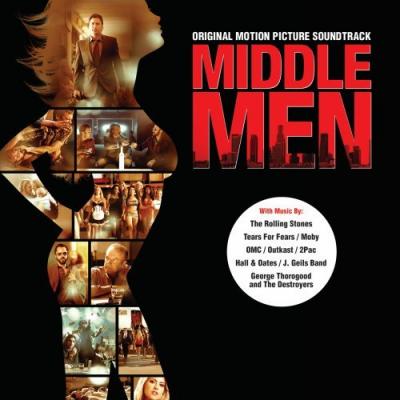
"Middle Men" Soundtrack Lyrics
Movie • 2010
Track Listing
George Thorogood
Hall & Oates
Moby
The Rolling Stones
OMC
Tito Puente
Louis Prima
Patsy Cline
Tears For Fear
J. Geils Band
Moby
The Rolling Stones
Outkast
2pac feat. Dr. Dre and Roger Troutman
Brian Tyler
Brian Tyler
"Middle Men (Original Motion Picture Soundtrack)" – Album Guide to Tracks and Key Scenes
Overview
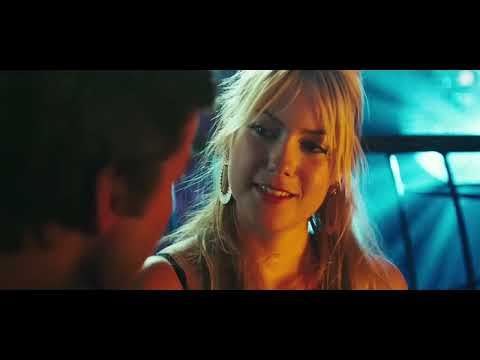
What does the birth of online porn commerce sound like? In Middle Men, it sounds like the Rolling Stones, Hall & Oates, 2Pac, Tito Puente, Moby and Tears for Fears all fighting for space on the same dial-up connection. The film follows Texas fixer Jack Harris as he stumbles into the world of credit-card billing for adult sites and slowly drowns in money, drugs and bad decisions; the soundtrack mirrors that escalation with a playlist that swings between classic-rock swagger, hip-hop excess and Latin party tracks.
The story jumps between 1990s Houston suburbs and L.A. mansions, Russian mob hangouts and grim server rooms. The music keeps those jumps legible. Early on, bar-room rock and upbeat pop sell Jack as a conventional “problem solver” who still believes in rules. As the billing empire grows, the song choices get louder and more obvious: stadium rock for success montages, hip-hop and big-band classics for blowout parties, Stones cuts for moral rot and violence. When the fallout hits — kidnappings, child-porn indictments, federal deals — the same songs suddenly feel like accusations.
The official album, Middle Men (Original Motion Picture Soundtrack), is a compilation of 16 tracks by various artists, released by ABKCO. It sits alongside a separate Brian Tyler score album, Middle Men (Music From the Original Score), which covers the more suspenseful, electronic-orchestral material. Taken together, they chart the film’s arc: arrival in a seemingly fun, lucrative niche; adaptation to a lifestyle built on other people’s secrets; rebellion against partners and mobsters; collapse when law enforcement and ethics finally catch up.
Genre-wise, the soundtrack moves in phases. Early scenes lean on bar-blues and heartland rock (George Thorogood, J. Geils Band) to ground Jack’s “normal guy” persona. As the money rolls in, high-energy 80s and 90s pop (Hall & Oates, OMC, Outkast, Tears for Fears) mark his intoxication and denial. Stones staples (“Sympathy for the Devil”, “You Can’t Always Get What You Want”) and the inevitable “California Love” push us into rebellion and hubris. Latin classics and lounge cuts (Tito Puente, Louis Prima, Patsy Cline) paint the porn-industry parties as a global, gaudy carnival that eventually eats its own creators.
How It Was Made
Two distinct music releases exist for Middle Men. The song compilation, Middle Men (Original Motion Picture Soundtrack), is a various-artists set issued by ABKCO Music & Records in 2010, clocking in at a little over 70 minutes across 16 tracks. It pulls from iconic catalogs: the Rolling Stones (twice), Hall & Oates, Moby (twice), Tito Puente, Patsy Cline, Tears for Fears, Outkast and more, plus a small number of contemporary dance and hip-hop selections like 2Pac’s “California Love (Remix)”. Label literature presents it as a “genre-blending companion” to the film’s story about the rise of online adult entertainment.
Separately, composer Brian Tyler delivers the original score, released as Middle Men (Music From The Original Score), with 17 cues such as “My Name Is Jack Harris”, “Tightrope”, “Wayne and Buck” and “Middle Men Finale”. The score album leans on tension-building strings, processed percussion and pulsing synths, giving the movie its thriller backbone while the songs do most of the surface-level heavy lifting.
Director George Gallo and producer Christopher Mallick wanted the needle-drops to feel recognisable, even obvious — almost like a 90s trailer playlist dropped into a feature. Several contemporary reviews complain about how on-the-nose some choices are: Hall & Oates’ “You Make My Dreams” for a triumphal moment, Outkast’s “The Way You Move” for a sexy success montage, Stones standards as shorthand for moral decay. One critic does single out Moby’s “Bodyrock” as a genuinely sharp choice for a long tracking shot through an orgy scene, where the insistent beat and looped vocal hook match the endless parade of bodies and screens.
Tracks & Scenes
Exact timestamps vary slightly between cuts and home-video versions, but the key song moments line up consistently. Below are the major placements and how they function in the narrative.
"Who Do You Love" — George Thorogood & The Destroyers
Where it plays: Early in the film, as Jack narrates his move from straight-arrow Houston businessman to reluctant nightlife fixer. Over bar and club shots, Thorogood’s swaggering blues riff cuts through smoke and neon while Jack sizes up Wayne and Buck’s doomed first attempt at an online porn payment scheme.
Why it matters: Lyrically it is about boast and appetite; in context it underlines how every man in the frame believes he is in control. The rough, bar-band feel marks Jack’s first steps away from corporate respectability into a looser, more dangerous ecosystem.
"You Make My Dreams" — Daryl Hall & John Oates
Where it plays: Over a high-energy success montage once Jack’s billing business starts printing money. We see servers humming, porn producers celebrating, Jack’s family life briefly stabilising, and everyone pretending this is just another tech boom. The beat lands on fast cuts of credit-card numbers, champagne, and new toys.
Why it matters: Critics point to this cue as the textbook example of the film’s blunt musical irony. It sells pure feel-good euphoria exactly when the story is laying the groundwork for eventual collapse.
"Honey" — Moby
Where it plays: Used under a sequence of traffic and data flow — intercut shots of dial-up connections, servers, and men alone at computers buying their first online content. The track’s chopped blues vocal and steady groove create a sense of perpetual motion as money flows through Jack’s “24/7” billing company.
Why it matters: “Honey” bridges the old world (its vocal sample roots) and the new (electronic production), mirroring how Jack monetises very old desires with new technology.
"Sympathy for the Devil" — The Rolling Stones
Where it plays: In one of the darker passages, as Russian mobster Sokoloff’s presence intensifies. The film cuts between Jack’s morally bankrupt partners, mob meetings and explicit imagery from the sites they bill for. The “please allow me to introduce myself” opening frames the mob not as cartoon villains, but as another set of businessmen in suits — devils with good manners.
Why it matters: As multiple reviewers note, it is a very “on the nose” choice, but that bluntness fits Gallo’s tone. The cue says out loud what Jack tries to deny: he is in bed with the devil, and he walked in willingly.
"How Bizarre" — OMC
Where it plays: Over a mid-film stretch that leans into the absurdity of Jack’s new life: private jets, ridiculous nightclubs, Wayne and Buck enjoying sudden wealth they are not equipped to handle. Sung lyrics pop up over images of tacky fashion and dumb decisions, turning the montage into a pop-song joke about how surreal everything feels.
Why it matters: The song’s chorus literally comments on the plot. Its bouncy, almost novelty tone highlights how far the characters have drifted from Jack’s “respectable” self-image.
"Oye Como Va" — Tito Puente
Where it plays: In a packed club sequence where Jack and his new associates mingle with porn performers, investors and hangers-on. The band and dancers are foregrounded: bodies pressed together, strobe lights, Latin percussion filling the room. Jack floats through it all, half-thrilled, half-overwhelmed.
Why it matters: Puente’s classic afro-Cuban groove turns the party into something ritualistic. The old standard suggests this is just one more iteration of a familiar human pattern: music, bodies, money, and someone in the corner taking a cut.
"Buona Sera" — Louis Prima
Where it plays: Over a dinner-and-deal scene with Jack entertaining clients in a faux-old-world restaurant. Waiters weave between tables as Prima’s brassy swing sets an almost romantic mood while the characters carve up explicit websites and revenue shares.
Why it matters: The contrast between charming, nostalgic music and the crass business being discussed underscores the film’s theme: surface charm hides transactional, sometimes predatory realities.
"Sweet Dreams (Of You)" — Patsy Cline
Where it plays: In a quieter moment when Jack’s double life starts to fracture. Alone in a hotel room, he watches late-night TV and flips through images of his wife and kids in Houston while the song plays on a nearby television or radio. The camera holds on his face as the lyric “sweet dreams of you” lands.
Why it matters: Cline’s voice drags the film out of its 90s setting into something timeless and sad. It’s one of the few cues that belongs more to Jack’s inner world than to the porn circus around him.
"Everybody Wants to Rule the World" — Tears for Fears
Where it plays: Over a montage of corporate expansion: new office space, more staff, upgraded infrastructure, more contracts with site owners. Jack’s narration about controlling the “pipes” of online payments slots neatly over the song’s famous refrain.
Why it matters: Few pop songs spell out the hubris of would-be moguls as cleanly as this one. Here, it practically functions as Jack’s internal theme song for the entire middle act.
"Freeze-Frame" — The J. Geils Band
Where it plays: During an exuberant quick-cut montage of web hits, sign-ups and porn thumbnails as Jack’s system scales up. The camera quite literally freeze-frames on certain shots — credit card approvals, cash counters — in rhythm with the song’s stuttering hook.
Why it matters: The cue turns the mid-90s internet into a pop-art collage. It is one of the few moments where the film openly enjoys the aesthetic of its own excess.
"Bodyrock" — Moby
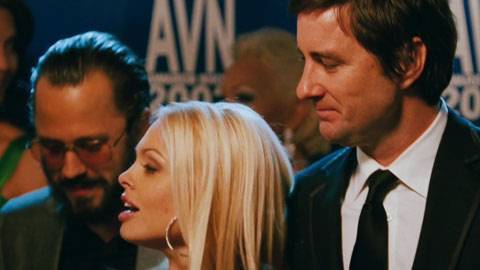
Where it plays: In the infamous long tracking shot through an orgy sequence tied to the business’s peak decadence. The camera moves from room to room, past sex workers, clients, and glowing monitors, while “Bodyrock” pounds on the soundtrack and Jack’s voiceover coolly explains how the billing operation works.
Why it matters: Several reviewers single this out as an effective pairing. The relentless beat and chopped vocal hook echo how the characters have turned sex into a mechanised, repeating system — bodies and credit cards on an endless loop.
"California Love (Remix)" — 2Pac feat. Dr. Dre & Roger Troutman
Where it plays: Over sequences set in L.A. at the height of Jack’s involvement with porn-industry power players. Cars cruise under palm trees, champagne flows, and the billing company’s money visibly translates into lifestyle.
Why it matters: This track is mid-90s West Coast excess distilled. Its presence ties the story to a specific cultural moment where hip-hop, Hollywood and tech money intermingled.
"The Way You Move" — Outkast
Where it plays: In a club or launch-party montage showcasing Jack’s rebranded, high-end image: dancers, VIP sections, porn stars posing for cameras. The groove supports wide shots of bodies in motion and close-ups of Jack playing mogul.
Why it matters: As one review notes, this is another very literal choice — a sexy track for a sexy montage — but it works. It underscores how far Jack has drifted from the family man we met at the start.
"You Can’t Always Get What You Want" — The Rolling Stones
Where it plays: Near the film’s resolution, as Jack reflects on the wreckage of his decisions: burnt bridges, criminal charges, a family almost lost. The song comes in over a sequence that ties up fates of Wayne, Buck, Sokoloff and Denny, and carries into the closing credits or their immediate lead-up depending on cut.
Why it matters: It’s the soundtrack’s thesis statement. Jack does not keep the money, the porn empire or the fantasy lifestyle; he gets the chance to crawl back to something like a real life, which is not what he wanted, but maybe what he needed.
Notes & Trivia
- Two separate albums share the Middle Men name: a various-artists song compilation on ABKCO and a Brian Tyler score release on another label.
- The soundtrack leans unusually hard on Rolling Stones cues, using both “Sympathy for the Devil” and “You Can’t Always Get What You Want” in prominent positions.
- “Bodyrock” was widely noted in reviews for accompanying a deleted-then-restored orgy tracking shot that pushed the film toward an NC-17 rating.
- Hall & Oates’ “You Make My Dreams” appears here amid a long list of film uses, contributing to its reputation as one of the most overused syncs in pop-culture montages.
- The ABKCO album runs just over 73 minutes across 16 tracks; the Brian Tyler score album adds another 17 cues and roughly 45 minutes of instrumental music.
Music–Story Links
The soundtrack’s biggest songs map directly onto Jack Harris’s moral arc. “Who Do You Love” covers his first steps into the club world; “You Make My Dreams” and “How Bizarre” score the rush of early success; “Sympathy for the Devil” and “California Love” mark the moment he fully embraces the darker side of the business; “You Can’t Always Get What You Want” underlines the price of climbing back out.
For Wayne and Buck — the impulsive inventors behind the original billing scheme — the music turns them into overgrown kids. Tracks like “Freeze-Frame”, “The Way You Move” and “Bodyrock” follow their parties and screw-ups, making clear that they love the sensation of winning more than the work or consequences. When the FBI and Russian mob close in, the soundtrack stops having fun with them.
Jack’s family life is mostly defined by contrast. When he is at home in Houston, the film leans on quieter or older songs (Patsy Cline, softer score cues) and less aggressive mixing. When he is in L.A. or abroad, high-volume, busy tracks dominate. The sonic distance between those worlds is part of why his eventual return to his wife and children feels like stepping into a different movie.
Brian Tyler’s score stitches the whole thing together. His cues sneak in under dialogue and action to keep tension alive during scenes where no big song plays — FBI briefings, kidnappings, contract signings. When the licensed tracks drop out in the third act, Tyler’s music takes the emotional lead, reminding us this is a crime story, not just a playlist.
Reception & Quotes
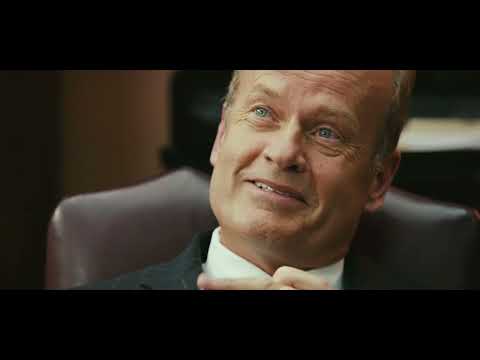
Middle Men opened in 2010 to mixed reviews and minimal box office. Critics generally found the true-story material intriguing but complained about heavy-handed narration and familiar Scorsese-style structure. The soundtrack became part of that debate: some reviewers mocked the “trailer music” obviousness of certain choices, while others praised the sheer energy of the compilation.
Director George Gallo’s musical choices here are atrocious and generic at best… stereotypical trailer songs such as the Stones’ “Sympathy for the Devil” and “You Can’t Always Get What You Want.”
— contemporary review, ComingSoon
Gallo’s directorial touches include musical cues that are so obvious as to insult your intelligence (Hall & Oates’ “You Make My Dreams,” OutKast’s “The Way You Move,” the Rolling Stones’ “You Can’t Always Get What You Want”).
— Fort Worth Weekly
Moby’s “Bodyrock” is used wisely in an orgy scene tracking shot.
— soundtrack commentary in theatrical review
The soundtrack of Middle Men skillfully incorporates a mix of energetic and suspenseful tracks, mirroring the conflicting emotions experienced by the characters.
— Banda-Sonora capsule review
As a standalone album, Middle Men (Original Motion Picture Soundtrack) plays like a time-capsule mixtape of overused but undeniably effective sync staples — something you could throw on at a 90s-to-2000s nostalgia party. The score album, by contrast, has found a smaller niche among Brian Tyler completists.

Interesting Facts
- The ABKCO soundtrack disc and the streaming version share the same 16 tracks, but runtimes listed by different services range from roughly 70 to 73 minutes due to metadata rounding.
- Both Stones cuts in the film — “Sympathy for the Devil” and “You Can’t Always Get What You Want” — show up in fan lists of the band’s most-synced songs in film and TV, with Middle Men often noted as using both.
- You can trace at least three tracks (“You Make My Dreams”, “Freeze-Frame”, “California Love”) through a long list of other films and series, making Middle Men a case study in early-2010s needle-drop clichés.
- Some soundtrack databases list Kool & The Gang’s “Hollywood Swinging” as associated with the film, but it does not appear on the official ABKCO album.
- The Brian Tyler score album includes cue titles that essentially narrate the plot in shorthand — “Wayne and Buck”, “Child Porn”, “FBI Raid”, “Middle Men Finale”.
- Because the film underperformed theatrically, the soundtrack has arguably had a longer life than the movie itself, circulating as a digital playlist detached from its on-screen context.
Technical Info
- Title (song album): Middle Men (Original Motion Picture Soundtrack)
- Title (score album): Middle Men (Music From The Original Score)
- Film: Middle Men (2009/2010 American black comedy-drama)
- Director: George Gallo
- Primary composer: Brian Tyler (original score)
- Song album type: Various-artists soundtrack, 16 tracks
- Key artists on soundtrack: George Thorogood & The Destroyers, Hall & Oates, Moby, The Rolling Stones, OMC, Tito Puente, Louis Prima, Patsy Cline, Tears for Fears, The J. Geils Band, Outkast, 2Pac feat. Dr. Dre & Roger Troutman
- Distributor / label (songs): ABKCO Music & Records (CD and digital)
- Label (score): released digitally (various territories) as a Brian Tyler title, 17 cues
- Approximate running time: ~73 minutes (song album), ~45 minutes (score album)
- Notable song placements: “Bodyrock” (orgy tracking shot), “You Make My Dreams” (success montage), “Sympathy for the Devil” (mob-and-morality sequence), “You Can’t Always Get What You Want” (resolution), “Freeze-Frame” (web-traffic montage), “California Love (Remix)” and “The Way You Move” (lifestyle and party scenes).
- Release context: both albums released August 2010 to coincide with the film’s U.S. theatrical run.
- Availability: widely available on major streaming services; physical CD for the song album remains in print through various retailers and resellers.
Questions & Answers
- How many different Middle Men albums are there?
- There are two official releases: a various-artists song compilation titled Middle Men (Original Motion Picture Soundtrack) and a Brian Tyler score album titled Middle Men (Music From The Original Score).
- Who composed the original score for Middle Men?
- Brian Tyler composed the film’s original score, which is collected on the separate score album and features cues like “My Name Is Jack Harris” and “Middle Men Finale”.
- Which Rolling Stones songs are used in the film?
- The movie uses both “Sympathy for the Devil” and “You Can’t Always Get What You Want”, each tied to key turning points in Jack Harris’s story.
- What’s the Moby track used in the orgy tracking shot?
- The long tracking shot through an orgy sequence is cut to Moby’s “Bodyrock”, which critics highlighted as one of the film’s more effective musical choices.
- Is “You Make My Dreams” actually in Middle Men, or just in the trailer?
- It is in the film itself, used over a feel-good success montage, and is also often mentioned in discussions of the soundtrack’s reliance on familiar trailer-style songs.
Canonical Entities & Relations
| Subject | Verb | Object | Notes |
|---|---|---|---|
| George Gallo | directed | Middle Men (2009 film) | Also co-wrote the screenplay. |
| Brian Tyler | composed | Original score for Middle Men | Released as Middle Men (Music From The Original Score). |
| ABKCO Music & Records | released | Middle Men (Original Motion Picture Soundtrack) | Song compilation album, 2010. |
| George Thorogood & The Destroyers | performed | "Who Do You Love" | Opening bar/world-building cue. |
| Daryl Hall & John Oates | performed | "You Make My Dreams" | Success-montage needle-drop. |
| Moby | performed | "Honey"; "Bodyrock" | Data-flow montage and orgy tracking shot. |
| The Rolling Stones | performed | "Sympathy for the Devil"; "You Can’t Always Get What You Want" | Used at moral low-points and resolution. |
| Tito Puente | performed | "Oye Como Va" | Club/party sequence. |
| OMC | performed | "How Bizarre" | Mid-film absurdist montage. |
| Patsy Cline | performed | "Sweet Dreams (Of You)" | Reflective, late-night cue for Jack. |
| Tears for Fears | performed | "Everybody Wants to Rule the World" | Corporate-expansion montage. |
| The J. Geils Band | performed | "Freeze-Frame" | Visual montage of web traffic and sign-ups. |
| Outkast | performed | "The Way You Move" | Party / lifestyle sequence. |
| 2Pac feat. Dr. Dre & Roger Troutman | performed | "California Love (Remix)" | Plays over L.A. success imagery. |
| Middle Men (film) | has soundtrack | Middle Men (Original Motion Picture Soundtrack) | Song compilation. |
| Middle Men (film) | has score album | Middle Men (Music From The Original Score) | Instrumental score by Brian Tyler. |
Sources: Wikipedia and related mirrored entries for Middle Men (film) and its music; ABKCO’s official Middle Men soundtrack page; Apple Music, Spotify, Amazon and Discogs listings for the song and score albums; contemporary reviews from ComingSoon and Fort Worth Weekly; Banda-Sonora soundtrack entry and capsule review; critic and fan discussions of Rolling Stones placements and Hall & Oates syncs; Brian Tyler discography notes.
November, 15th 2025
A-Z Lyrics Universe
Cynthia Erivo Popular
Ariana Grande Horsepower
Post Malone Ain't No Love in Oklahoma
Luke Combs Good Riddance (Time of Your Life)
Green Day Bye Bye Bye
*NSYNC You're the One That I Wan
John Travolta & Olivia Newton-John I Always Wanted a Brother
Braelyn Rankins, Theo Somolu, Kelvin Harrison Jr. and Aaron Pierre The Power of Love
Frankie Goes to Hollywood Beyond
Auli’i Cravalho feat. Rachel House MORE ›