Soundtracks:  A B C D E F G H I J K L M N O P Q R S T U V W X Y Z #


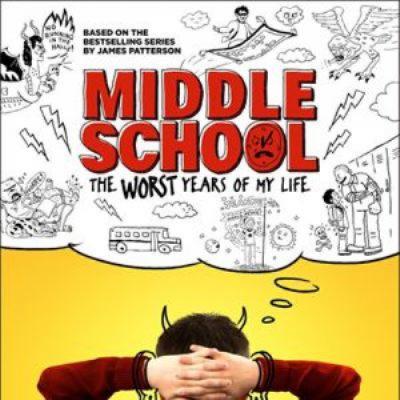
Middle School: The Worst Years of My Life Album Cover

"Middle School: The Worst Years of My Life" Soundtrack Lyrics

Movie • 2016

Track Listing


"Middle School: The Worst Years of My Life (2016) – Soundtrack & Score" – Album Guide to Tracks and Key Scenes

Middle School: The Worst Years of My Life trailer still with Rafe and school hallway doodles
Middle School: The Worst Years of My Life – main trailer visual, 2016.

Overview

What does rebellion in a tightly controlled middle school sound like? In this film, it sounds like neon pop, stadium hip-hop and a surprisingly emotional indie-folk sing-along. The story follows Rafe Khatchadorian, a rule-breaking kid with a serious sketchbook habit, who decides to dismantle his principal’s beloved rulebook one prank at a time. The soundtrack leans into that fantasy of pushing back: big hooks, loud choruses, and beats that feel more like a party than detention.

Underneath the pranks, the plot carries a heavier thread: grief, family pressure and feeling invisible at home and at school. The needle-drops mirror that double life. High-energy tracks like “Cake By The Ocean” and “HandClap” sell the surface chaos of Operation R.A.F.E., while later cues like “Spirits” and “Young and Wild” step into softer territory, underscoring Rafe’s loss and his eventual reset with his family. The score by Jeff Cardoni plays between those poles, keeping things light enough for kids but landing the emotional turns.

Because the film mixes live action with bursts of animation from Rafe’s sketchbook, the music often has to bridge worlds: grounded cafeteria noise into comic-book fantasy, a dull school assembly into a surreal chase. Pop songs do the loud, declarative work – they tell you when the story is about pure attitude – while Cardoni’s score fills in quieter beats between Rafe and his sister Georgia, or his imaginary conversations with Leo. The result is a soundtrack that feels deliberately “too big” for the smallness of middle school, which is exactly how that age feels from the inside.

Across the runtime, the genres fall into rough phases. Early scenes lean on bright, beachy pop (DNCE) and modern radio-rock to paint Rafe’s arrival and first rebellions. The middle stretch pulls in hip-hop and club-leaning tracks (“My House”, “Can’t Hold Us”, “U Can’t Touch This”) to power the escalation of pranks and test-day chaos. By the final act, the mix tilts toward folk-tinged indie and anthemic pop (“Spirits”, “Young and Wild”), aligning with the reveal about Leo and the move from prank war to emotional closure.

How It Was Made

The original score is by composer Jeff Cardoni, brought onto the project once the family comedy had locked its cast and begun post-production. Cardoni already had a track record with character-driven comedies and TV (including titles like “Mike and Dave Need Wedding Dates” and “Silicon Valley”), so he was a logical choice to handle a tone that swings from slapstick to sincere without losing the young audience.

Music supervision came from Dave Jordan and Jojo Villanueva, which explains how the film manages to clear a lineup of recognizable songs – from DNCE and Flo Rida to Macklemore & Ryan Lewis and MC Hammer – without feeling like a random playlist. Their job was to find tracks that kids might actually hear on radio or streaming, but that adults in the audience would clock immediately. As one industry listing notes, Jeff Cardoni is credited as composer while Jordan and Villanueva are credited as music supervisors, reflecting that split between score and song curation.

There is no widely released official soundtrack album collecting either Cardoni’s score or the full set of licensed songs. Instead, the music lives in scattered form: streaming playlists branded around the film, individual track streams, and the movie’s own mix on disc and digital platforms. One database formerly operating as Soundtrack.net explicitly lists the song placements while noting that it has no dedicated soundtrack album for this title, which matches the lack of an official OST on major labels.

Cardoni’s score tends to sit under dialogue and animated sequences rather than dominate. He leans on light percussion, guitar and synth textures to keep scenes moving, then steps back to let the bigger pop cues take over for pranks, test montages and the ending. You can hear the strategy: let known tracks handle the marketing-friendly moments, let the score glue everything together and support the emotional twist around Leo without tipping it too early.

Middle School: The Worst Years of My Life trailer classroom shot with principal and students
Classroom chaos framed in the trailer – where the pop needle-drops do a lot of work.

Tracks & Scenes

Below are the key songs and how they line up with specific moments in the film and marketing. Timecodes are approximate from the standard 92-minute cut.

"Cake By The Ocean" – DNCE
Where it plays: Opens the film (around 0:03). Non-diegetic, running over Rafe’s first arrival at Hills Village Middle School and the quick montage of hallways, lockers and rules posters. The song sets a laid-back but mischievous tone as we see his sketches and get a fast sense of how suffocating the school rules feel compared to the music.
Why it matters: That breezy, party-adjacent groove instantly positions Rafe as someone mentally “on the beach” even when he’s physically trapped in fluorescent corridors. It says “this kid’s head is somewhere more fun,” before he says a word.

"HandClap" – Fitz and The Tantrums
Where it plays: Early in the film (~0:04), when Georgia takes their mother’s car for a spin and blasts the track. This one is diegetic – the kids are vibing to it as they drive, the camera cutting between the siblings and the suburban streets sliding by.
Why it matters: The pounding clap hook underlines Georgia’s own streak of rebellion and keeps the sibling dynamic from being purely adversarial. It’s one of the rare moments where their shared rule-breaking feels fun rather than desperate.

"Tubthumping" – Chumbawamba
Where it plays: Around 0:19, when Carl (“Bear”) picks up Rafe from school. The track is on the car stereo and Carl loudly sings along, absolutely convinced he’s the fun adult while Rafe dies inside in the passenger seat.
Why it matters: Using a late-90s pub anthem as Carl’s sing-along theme is deliberate: it makes him feel stuck in his own glory days, oblivious to what Rafe is actually going through. The song’s “I get knocked down…” refrain ironically foreshadows how many times Rafe will bounce back from adult pressure.

"Blown" – DNCE feat. Kent Jones
Where it plays: About 0:24, after Rafe and Leo cover the school hallways with Post-It notes. As Rafe heads home, the track kicks in over shots of the chaos he’s left behind and his giddy satisfaction.
Why it matters: The song has a swagger that fits the first big “win” of Operation R.A.F.E. It frames the prank as stylish and clever rather than simply destructive, pulling us onto Rafe’s side even as the stakes start to climb.

"When We Were Young" – The Wild Wild
Where it plays: Roughly 0:27, during the outing to Dave & Buster’s. Carl takes Rafe and Georgia to the arcade restaurant, presenting it as quality family time while still talking down to them and flexing his authority.
Why it matters: The track’s nostalgic edge, paired with the neon arcade visuals, underlines how adults can turn kids’ spaces into stage sets for their own ego. It’s fun on the surface, hollow underneath – very much Rafe’s view of Carl.

"Tonight" – Animal Island
Where it plays: Around 0:30, as Rafe and Leo sit down and sketch out a prank aimed directly at Carl. The song runs non-diegetically over their planning montage – drawings, whispered schemes, a sense of two conspirators locked in.
Why it matters: Sonically it sits somewhere between indie and pop, which suits the way the scene blurs Rafe’s internal, animated imagination with real-world plotting. It feels smaller and more personal than the big radio hits.

"My House" – Flo Rida
Where it plays (film): About 0:30–0:32, when Rafe and Leo break into the school at night to tamper with equipment. The song plays over their nighttime infiltration, turning the empty corridors and classrooms into their playground rather than Dwight’s domain.
Where it plays (marketing): The same track also drives at least two of the film’s trailers, cutting between pranks and classroom slapstick as the “Welcome to my house” hook hits.
Why it matters: Using the same song both in the film and in the trailers gives the movie a clear sonic brand. In-story, it’s Rafe symbolically taking ownership of the school; in the marketing, it’s an invitation to kids who dream of doing the same to their own principals.

"Monchy Nova" & "The Shortest Path" – The Dave Monsch Quartet
Where they play: Around 0:40–0:42, during the restaurant dinner with Carl, Rafe’s mother and the kids. The jazz cues are diegetic, coming from the restaurant’s background music while the family sits at their table, tensions simmering just under small talk.
Why they matter: These are subtle pieces, but they’re part of the film’s contrast game. Smooth, adult-coded jazz plays while Carl tries to perform the role of respectable future stepdad, even as Rafe and Georgia know he’s anything but.

"Psychotic" – Alvin Risk
Where it plays: Around 0:48. Rafe dreams that Principal Dwight is chasing him through a warped, animated version of the school – corridors twisting, rules literally clawing at him. The track runs non-diegetically over this nightmare sequence, synced with the surreal visuals.
Why it matters: This is where the soundtrack leans hardest into electronic chaos. It gives the nightmare real teeth and hints that, behind the jokes, school anxiety for Rafe is genuinely overwhelming.

"Classic" – MKTO
Where it plays: At about 1:01, when Rafe pulls the fire alarm, triggering sprinklers and full chaos in the building. The song hits as kids rush through soaked hallways and faculty scramble to respond, leading directly into his expulsion by Dwight.
Why it matters: Putting a glossy pop-romance track over a full-scale prank is an intentionally cheeky move. The lyrics about someone being “classic” echo Rafe’s own love for big, almost cinematic acts of rebellion.

"Can't Hold Us" – Macklemore & Ryan Lewis
Where it plays: Around 1:14, as Principal Dwight heads toward the big standardized B.L.A.A.R. testing day, convinced everything is under control. The song plays non-diegetically over shots of the school gearing up for the test and Dwight strutting around like a conquering hero.
Why it matters: Using a triumphal track under the villain is textbook irony. It sets up Dwight’s hubris and primes the audience to enjoy the inevitable collapse of his perfect testing plan.

"U Can't Touch This" – MC Hammer
Where it plays: Around 1:16, during the B.L.A.A.R. Day sequence itself. As the test kicks off and the whole school is locked into Dwight’s rigid system, the song plays over the montage of proctors, students and bubble sheets.
Why it matters: Putting an early-90s party staple under a standardized test is pure comedy flex. It undercuts the supposed seriousness of the exam and hints that Dwight’s authority is much shakier than he thinks.

"Spirits" – The Strumbellas
Where it plays: Around 1:23, when Leo and Rafe finally say goodbye. By this point, the film has revealed the truth about Leo’s status in Rafe’s life, and the scene plays as a farewell to both a brother and a coping mechanism.
Why it matters: Here the soundtrack drops the snark and lets anthemic indie-folk carry the weight. The song’s mix of melancholy and lift mirrors Rafe’s realization that he has to move forward without forgetting Leo.

"Pep Rally Party" – Lech Chill feat. Boogieman
Where it plays: Around 1:25, in a late-film fantasy beat where Rafe’s imaginary characters celebrate. The track underscores animated figures dancing and partying once Operation R.A.F.E. has effectively blown up Dwight’s system.
Why it matters: It’s one of the most explicitly cartoonish tracks in the film, which fits the idea that this is happening in Rafe’s imagination. The sound is less about narrative and more about giving kids a release valve after the tension of the B.L.A.A.R. showdown.

"Young and Wild" – The Strumbellas
Where it plays: Around 1:26 and into the end credits. After the main story resolves – Dwight exposed, Carl out of the picture, the family moving toward a healthier situation – this track rides us out of the film.
Why it matters: As an end-credits song, it reframes everything we’ve seen: the rule-breaking, the pranks, the grief, as part of being “young and wild” rather than broken. It’s cathartic without being sugary.

Trailer & TV-Spot Songs – “My House” and “We’re Not Gonna Take It”
Where they play: Outside the film itself, the marketing uses music aggressively. “My House” drives theatrical trailers, while Twisted Sister’s “We’re Not Gonna Take It” turns up in on-demand TV spots and cable promos tied to the film’s home-release window.
Why they matter: These choices aren’t subtle. They tell parents exactly what kind of story this is – kids pushing back against authority – and they position the movie alongside a long line of rebellion-coded teen and pre-teen comedies, even if the final product stays fairly PG.

Middle School: The Worst Years of My Life prank montage from the trailer
Prank montage – where radio hits and Cardoni’s score overlap most clearly.

Notes & Trivia

  • The film adapts the 2011 James Patterson / Chris Tebbetts novel but adds heavy use of pop songs and animated sequences that obviously weren’t in the books.
  • Jeff Cardoni was announced as composer months before release, with trade coverage emphasizing the film’s mix of live action and animation rather than the soundtrack itself.
  • Industry listings credit Dave Jordan and Jojo Villanueva as music supervisors, which lines up with the film’s very sync-driven approach.
  • Databases tracking film music note that there is still no official commercial soundtrack album for this movie; fans rely on playlists and user-compiled track lists.
  • Several of the film’s songs (“My House”, “Spirits”) went on to have long lives outside the movie – in sports, TikTok and other films – which retroactively boosts the soundtrack’s recognizability.

Music–Story Links

The soundtrack tracks Rafe’s emotional arc more closely than it might look at first glance. At the start, “Cake By The Ocean” and “HandClap” coat the world in a layer of fun that Rafe doesn’t actually feel yet – they sell his potential for mischief, not his current reality. Once Dwight destroys his sketchbook, the songs that accompany Operation R.A.F.E. (“Blown”, “Tonight”, “My House”) become victory laps for each prank, scoring the moments when Rafe momentarily feels in control again.

As the family storyline darkens, the choices change. Jazz cues in the restaurant underline how out of place Rafe is in Carl’s curated “adult” life; they sound like somebody else’s soundtrack dropped onto his evening. “Psychotic” takes the same anxiety and turns it into a nightmare, with Dwight becoming a literal monster in Rafe’s animated visions. By the time “Classic” covers the fire-alarm stunt, the music is almost mocking the idea that Rafe can solve deep problems with style alone.

The last stretch pushes the emotional connection hardest. “Can’t Hold Us” and “U Can’t Touch This” make the standardized B.L.A.A.R. test feel like a rigged sports event, with Dwight as the puffed-up coach. When that system collapses, “Spirits” and then “Young and Wild” move the focus from pranks to healing – the goodbye to Leo, the family’s fresh start, and the sense that the rebellion has turned into growth rather than just destruction.

Reception & Quotes

Critically, the film landed in the “mixed but fine for its audience” zone. Review aggregators put it in the low-to-mid fresh range on release, with praise for the pranks and animation and more skepticism about the script and direction. Commercially it did modestly well for a mid-budget family movie, earning more than its production budget but not becoming a franchise-driving hit.

One reviewer focusing on animation singled out the film’s hybrid style and upbeat soundtrack, calling the music “a lot of fun” thanks to its mix of modern hip-hop and classic rock songs. Others were cooler on the whole package: Dennis Schwartz, for instance, described it as a “promising family comedy” that never quite turns into a fresh film, even while noting Jeff Cardoni’s contribution in the credits. Fans in the target age group, unsurprisingly, have tended to be more forgiving, especially on home video and streaming.

As for the soundtrack in isolation, there’s no official album for critics to rate, but the songs themselves carry their own reputations. “My House”, “Can’t Hold Us” and “U Can’t Touch This” all arrived pre-proven as hits; “Spirits” and “Young and Wild” have picked up a second life in other media. That means many listeners now come to the film already knowing the songs, rather than discovering them through the movie.

“Promising family comedy on schools stifling students never materializes as a fresh comedy.” — Dennis Schwartz Reviews
“The music is also a lot of fun with modern hip-hop and classic rock songs like Twisted Sister’s ‘We’re Not Gonna Take It’.” — Rotoscopers review
“For who it is made for I think it does a pretty good job… at least worth seeing for the cool animated sequences.” — Rotoscopers review
Middle School: The Worst Years of My Life animated doodle sequence from trailer
Animated doodles and Jeff Cardoni’s score: the movie’s most distinctive pairing.

Interesting Facts

  • Streaming guides list the film under family, kids and comedy categories; the soundtrack leans into that with PG-friendly lyrics even when the sonic style is club-ready.
  • According to one song’s entry, “Spirits” was already a charting single before the film used it, and later went viral on TikTok – long after its appearance here.
  • Flo Rida’s “My House” has become a trailer staple beyond this film, also turning up in promotions for animated features and commercials, which can confuse viewers about where they first heard it.
  • TV spots promoting the film on cable leaned heavily on Twisted Sister’s “We’re Not Gonna Take It,” even though the track is most prominent in marketing rather than the movie itself.
  • Databases that track film music explicitly flag that no official soundtrack album exists, which is unusual for a movie with this many recognizable songs.
  • Some library and video releases list Jeff Cardoni as “music by” on the packaging, but do not mention the pop artists at all, reinforcing how invisible licensed songs can be in physical media credits.
  • The film’s production used multiple Atlanta-area schools as locations, which gave the music team a real acoustic canvas for things like hallway echo and gym ambience layered under the tracks.

Technical Info

  • Title: Middle School: The Worst Years of My Life
  • Year / Type: 2016, American live-action/animated family comedy feature film
  • Director: Steve Carr
  • Based on: 2011 novel by James Patterson and Chris Tebbetts
  • Main cast (selected): Griffin Gluck (Rafe Khatchadorian), Lauren Graham (Jules), Rob Riggle (Carl “Bear”), Thomas Barbusca (Leo), Andy Daly (Principal Dwight), Isabela Merced (Jeanne)
  • Original score: Jeff Cardoni
  • Music supervision: Dave Jordan; Jojo Villanueva
  • Notable licensed tracks (selected): “Cake By The Ocean” (DNCE), “HandClap” (Fitz and The Tantrums), “Tubthumping” (Chumbawamba), “My House” (Flo Rida), “Can’t Hold Us” (Macklemore & Ryan Lewis), “Spirits” & “Young and Wild” (The Strumbellas), “U Can’t Touch This” (MC Hammer)
  • Studios / distributors: CBS Films, Participant Media, James Patterson Entertainment; distributed by Lionsgate
  • Runtime: approx. 92 minutes
  • Release context: U.S. theatrical release October 7, 2016; later Blu-ray, DVD and digital releases; appeared on Netflix in some territories after home-video window.
  • Soundtrack album status: No official commercial OST or score album confirmed as of 2025; music available via individual tracks and unofficial streaming playlists.

Questions & Answers

Is there an official soundtrack album for “Middle School: The Worst Years of My Life”?
No. Databases tracking film music explicitly note that there is no official soundtrack album; fans mostly use playlists replicating the cue list.
What song plays over the end credits?
“Young and Wild” by The Strumbellas plays over the end credits, following the emotional resolution with Rafe’s family and the fallout from the B.L.A.A.R. test.
Which song is used when Rafe and Leo break into the school at night?
That sequence is scored with “My House” by Flo Rida, the same track that powers some of the movie’s trailers.
What kind of music dominates the soundtrack overall?
The film leans on contemporary pop and hip-hop radio hits, with some rock and indie-folk, plus Jeff Cardoni’s lighter comedic score underneath.
Is the music from the film available on streaming platforms?
The individual songs are widely available on major streaming services, often grouped into user-made playlists named after the film; the original score is not bundled as an album.

Canonical Entities & Relations

Subject Relation Object
“Middle School: The Worst Years of My Life” (film) directed by Steve Carr
“Middle School: The Worst Years of My Life” (film) based on Novel by James Patterson & Chris Tebbetts
“Middle School: The Worst Years of My Life” (film) music by (score) Jeff Cardoni
“Middle School: The Worst Years of My Life” (film) music supervised by Dave Jordan; Jojo Villanueva
Jeff Cardoni composed score for “Middle School: The Worst Years of My Life” (film)
DNCE performs “Cake By The Ocean” featured in film
Fitz and The Tantrums performs “HandClap” featured in film
Flo Rida performs “My House” featured in film and trailers
Macklemore & Ryan Lewis perform “Can’t Hold Us” featured in film
The Strumbellas perform “Spirits” and “Young and Wild” featured in film
Twisted Sister performs “We’re Not Gonna Take It” used in TV spots promoting the film
CBS Films / Participant Media produced “Middle School: The Worst Years of My Life” (film)
Lionsgate distributed “Middle School: The Worst Years of My Life” (film)
Griffin Gluck portrays Rafe Khatchadorian
Lauren Graham portrays Jules Khatchadorian
Andy Daly portrays Principal Ken Dwight

Sources: Wikipedia film & song entries; Soundtrakd/Soundtrack.net scene listings; The Numbers; Film Music Reporter; Rotoscopers review; Dennis Schwartz Reviews; Netflix and trailer/TV-spot listings.

Aggravated & exaggerated story about strict school with too many rules make kids behave like robots. They can’t do this & that (which is nicely underlined by MC Hammer’s U Can't Touch This), they have an extended list of prohibitions, which make their time lapsing without fun & nice things young people usually do – riding, chatting, kissing, acquainting, studying, funning & fooling around. All they have amongst the above-mentioned is just studying, which is extra-boring, with a dull principal, who takes your personality & just throws it away in the trash tin. That is why a protagonist can't hold it any longer (Can't Hold Us song fits the moment well) and gathers every active student to help him make a big project – to violate every rule in the school to bring the disorder in the educational process. But this isn’t bad, as the principal says one of the most frightening words ever for a kid – ‘The creativity isn’t allowed in our school.’ Whaaaa? Are you insane? You shouldn’t be a principal, especially if you were born with no nipples – you are a mental & physical freak in that case, who should be disallowed working with kids. The collection of tunes here isn’t disappointing, and uprising the mood the same as the plot of the movie itself – is has such fancy performers like DNCE, Flo Rida, and Chumbawamba. Together they create a wonderful tandem that gives the fun all the way along. The latter-mentioned present here their outstanding Tubthumping – with the same exaggerated feed of its faded lyrics as the plot of this film here bulks the peculiarities of one individual school, outlining the ignorance of kids’ needs as the great harm for the future life of the entire generations. The soundtrack also includes ‘Psychotic’ – its lyrics define what students may become with such a treatment.

November, 15th 2025

Learn more about Middle School: The Worst Years of My Life on Wikipedia, Movie page on IMDb, Official Website
A-Z Lyrics Universe

Lyrics / song texts are property and copyright of their owners and provided for educational purposes only.