Soundtracks:  A B C D E F G H I J K L M N O P Q R S T U V W X Y Z #


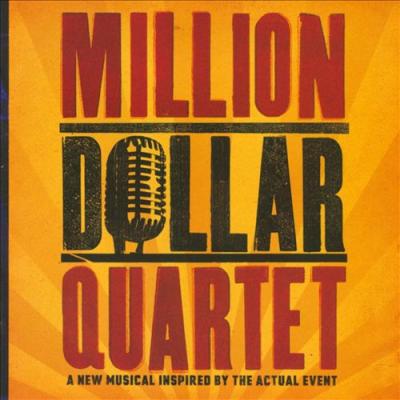
Million Dollar Quartet Album Cover

"Million Dollar Quartet" Soundtrack Lyrics

Musical • 2011

Track Listing


"Million Dollar Quartet (Original Broadway Cast Recording)" – Album Guide to Tracks and Key Scenes

Million Dollar Quartet musical trailer still of the four musicians at Sun Records microphones
Million Dollar Quartet – Broadway trailer frame, capturing the Sun Records jam-session staging

Overview

What does a cast album sound like when the whole show is supposed to be one long recording session that actually happened? Million Dollar Quartet (Original Broadway Cast Recording) answers by trapping you in Sun Records on a single winter night in 1956, with Elvis Presley, Johnny Cash, Jerry Lee Lewis and Carl Perkins blasting through rockabilly, gospel and country while producer Sam Phillips tries to keep his little label alive. The musical turns that historic jam into a 90-minute “live in studio” gig; the 2011 cast album bottles that energy and lets you replay the night as if you were standing next to the console.

Structurally, the show barely leaves the studio. Perkins is cutting a follow-up session, a young and chaotic Jerry Lee Lewis is on piano, Cash drops by with contract news and Elvis visits with his girlfriend Dyanne. In between songs, Phillips breaks the fourth wall to explain how he discovered each of them. The recording follows that flow: tight, present-tense performances with only slivers of dialogue, enough to keep the narrative spine while the album stays focused on the music.

Because the actors all sing and play live on stage, the cast recording feels closer to a club bootleg than to a polished concept album. Guitars distort, Jerry Lee’s piano hammers, bass and drums sit right on the edge of the beat. You hear Levi Kreis (Jerry Lee), Eddie Clendening (Elvis), Lance Guest (Johnny Cash) and Robert Britton Lyons (Carl Perkins) trading solos like a working band rather than a pit orchestra and four musical-theatre tenors. According to the BroadwayWorld album notes, it was tracked like a rock record rather than a traditional cast session, with the band playing together in the room.

Genre-wise, the album moves through phases that match the story’s emotional curve. Early tracks lean hard into rockabilly and jump blues, announcing the swagger of young Sun Records. The middle of the album weaves in country ballads and torch songs (“Folsom Prison Blues,” “Memories Are Made of This,” “Fever”), exposing the doubts behind the bravado. The finale and concert-style encores push into full rock ’n’ roll release with “Hound Dog,” “Whole Lotta Shakin’ Goin’ On” and gospel “Peace in the Valley,” mapping musical styles onto themes of ambition, betrayal, faith and survival.

How It Was Made

The stage musical was developed by Floyd Mutrux and rock historian Colin Escott, who built a compact book around the real 4 December 1956 session at Sun Studio in Memphis. The show premiered regionally, then settled into a long-running Chicago production before transferring to Broadway’s Nederlander Theatre in 2010. On Broadway, director Eric Schaeffer staged the story like a documentary concert: no intermission, one set, short scenes between songs and Sam Phillips narrating what that night meant for his career and for the four artists.

The original Broadway quartet — Eddie Clendening (Elvis), Lance Guest (Johnny Cash), Levi Kreis (Jerry Lee Lewis) and Robert Britton Lyons (Carl Perkins) — all played their own instruments onstage, with Hunter Foster as Sam Phillips and Elizabeth Stanley as Dyanne. The album captures that lineup close to how audiences heard it in the theatre. According to references in the CD booklet quoted in later discographies, the recording sessions took place at Avatar Studios in New York and Chicago Recording Company, mirroring the show’s twin Chicago–New York development path.

Label credit on the 2011 digital release goes to ECA Music / Entertainment Co. of America, while earlier CD pressings list MDQ Merchandising LLC as the imprint; in practice, the album circulated through theatre channels first, then via mainstream digital platforms. When the musical opened in London’s West End in 2011, a separate London Cast Recording followed on Rhino, using the same arrangements but a different ensemble — a reminder that this material is treated more like a band book than a typical show score.

Because it is a jukebox musical based entirely on existing catalogue titles, the legal side was more complicated than its stripped-down staging suggests. Rights to the original songs draw from Sun’s historic catalogue, RCA material and a spread of publishers linked to writers like Chuck Berry, Merle Travis and Otis Blackwell. The orchestrations and arrangements, led by Chuck Mead, reshape those songs for a seven-piece stage band that has to cover rock, country, gospel and straight blues without ever leaving the “studio” set.

Behind the scenes style trailer shot of Million Dollar Quartet cast performing instruments onstage
Actor-musicians in Million Dollar Quartet – the Broadway band plays everything live, just as on the cast recording

Tracks & Scenes

(Song order below follows the general Broadway flow, not the full album tracklist.)

"Blue Suede Shoes" — Company (led by Carl Perkins)
Where it plays: The show opens with Carl Perkins already in the Sun studio cutting “Blue Suede Shoes,” angry that his hit has become better known in Elvis’s RCA version. Jerry Lee Lewis bangs on the piano as the new kid, overplaying fills and arguing with the engineer, while Sam Phillips rides herd from the booth. It is staged as a working recording session — mics, baffling, half-finished take — but plays to the audience as a full-throttle opening number.

Why it matters: This track establishes the triangle of pride, jealousy and opportunity driving the night. Perkins’ tight, clipped vocal contrasts with Lewis’s chaotic piano and Sam’s control-freak presence behind the glass. On album, it’s also a mission statement: these actors are going to play like a bar band, not a polite pit orchestra.

"Real Wild Child" — Jerry Lee Lewis
Where it plays: Early in the show, Jerry Lee is supposed to be comping quietly on Perkins’ session; instead, he launches into “Real Wild Child,” pounding the keys, whooping and testing how far he can push before Sam kicks him out. The others watch half-amused, half-annoyed as he hijacks the room from his bench, the scene punctuated with Sam warning him about “respecting the artist.”

Why it matters: The number is Jerry Lee’s calling card. It shows the audience what Levi Kreis can do physically and musically, and it makes clear that this kid will knock the story off its rails. The cast album catches every glissando and shouted aside, giving you most of the character introduction even without seeing him crawling over the piano.

"Matchbox" — Carl Perkins
Where it plays: “Matchbox” grows out of the same recording session. Perkins is desperately trying to land another crossover hit, working through takes while Sam talks about his earlier success and frustrations. Jerry Lee keeps throwing in licks, trying to modernise the groove; Perkins snaps back, insisting the guitar stays front and centre.

Why it matters: Dramatically, this is about ownership: whose sound is this, and who gets the credit. Musically, it shows how close rockabilly sits to straight blues. The album version has a raw, forward guitar tone that lets you hear why Sam saw Perkins as a potential long-term star.

"Who Do You Love?" — Carl Perkins & Company
Where it plays: As the jam loosens up, the guys slide into “Who Do You Love?” around the central microphone, almost as if they have forgotten the mics are on. Sam uses the groove under his narration to tell the audience how rock ’n’ roll has blurred lines between blues, country and gospel, while the band leans into the Bo Diddley beat.

Why it matters: The track makes explicit what the whole show is about: cross-pollination. You hear white rockabilly musicians riding a rhythm that comes straight out of Black rhythm and blues. The cast recording keeps the vocal blend loose and conversational instead of perfectly stacked, which matches the idea of a jam more than a staged number.

"Folsom Prison Blues" — Johnny Cash
Where it plays: Johnny Cash’s entrance is scored with “Folsom Prison Blues.” The lights freeze, and Sam steps downstage to explain how a shy gospel singer became the man in black. We flash back to Johnny auditioning in the Sun office, nervous but stubborn, singing that hard four-chord progression with the band gradually joining in.

Why it matters: Cash’s signature song frames him as the conscience of the group — fascinated by darkness and guilt even while chasing success. Lance Guest doesn’t imitate Cash so much as sketch him, and the cast recording preserves that balance: recognisable boom-chicka rhythm without parody.

"Fever" — Dyanne
Where it plays: Midway through the night, Sam nudges Elvis to let his girlfriend Dyanne sing something. She steps up with “Fever,” turning the tiny studio into a smokey club with just bass, brushed drums and finger clicks underneath. The men look on, half teasing, half impressed, as the temperature in the room shifts from competitive to sultry.

Why it matters: “Fever” cuts through all the male rock-star posturing. On album, Elizabeth Stanley’s vocal slides between jazz and pop, reminding you there were women in the building too, even if history mostly quotes the men. It also gives the show one pure torch song amid all the backbeat.

"Memories Are Made of This" — Elvis Presley
Where it plays: Later, after some joking and showboating, Elvis slows the pace with this Dean Martin hit, aiming it first at Dyanne and then at the others. Sam’s narration folds in how RCA pulled Elvis away from Sun, and how fame has already started to cost him any kind of normal life.

Why it matters: The song lets Eddie Clendening lean into crooner mode and shows Elvis as someone who understands the sentimental mainstream he’s about to dominate. On the record, the gentle shuffle and backing harmonies provide one of the few truly “sweet” moments before the finale turns back up to 11.

"That’s All Right" — Elvis Presley & Band
Where it plays: At one point Sam tells the story of the night Elvis, then an unknown kid, first found his Sun sound. Lights shift, and we replay that discovery with “That’s All Right”: Elvis goofing off between takes, Sam hearing something different, the band racing to catch up. The scene collapses the past into the present jam.

Why it matters: Dramatically, this is the founding myth of the whole Sun catalogue. Musically, it is the bridge between blues and rock that the show keeps circling. The album’s version has the most “re-created original record” feel, and for good reason — it’s the moment where history and theatre overlap almost perfectly.

"Sixteen Tons" — Johnny Cash
Where it plays: During a quieter stretch, Johnny leans into “Sixteen Tons,” standing near the big ribbon microphone with the others sitting or leaning around him. Sam talks about growing up poor and understanding the grind behind the hit records. The studio lights feel dimmer, the tempo slower, as everyone listens rather than shows off.

Why it matters: This song pulls class struggle into a night otherwise focused on fame. It reminds the audience that all four men came from working-class backgrounds where debt and hard labour were normal. On the cast album, the low-end thump and unadorned vocal make it one of the most grounded tracks.

"Party" ("Let’s Have a Party") — Carl Perkins & Company
Where it plays: As tensions rise — contracts, rival labels, egos — Carl tries to shake off bad mood by launching into “Party.” Jerry Lee jumps in on piano, Elvis and Johnny add vocals, and the scene turns into a full studio rave-up. Sam uses the chaos to avoid confronting Cash about his Columbia deal for a few more minutes.

Why it matters: The number is a pressure valve. It channels the anger in the room into a song about cutting loose, and the album leans into that feel with shouted backing vocals and handclaps. According to a Guardian feature on the original Million Dollar Quartet, these looser rockers capture what the real session probably felt like between the gospel numbers.

"Hound Dog" / "Long Tall Sally" — Elvis Presley & Company
Where it plays: Near the end, the walls of the studio metaphorically “fly away” and the show turns into a mini-concert. Elvis rips into “Hound Dog” and “Long Tall Sally,” strutting across the stage while the band finally plays to the audience rather than to the control room. The jam-session conceit gives way to a full rock ’n’ roll show, with lights, solos and audience clapping encouraged.

Why it matters: These tracks are the payoff for anyone who came wanting an Elvis show. On record, they also mark the point where the album stops worrying about narrative and simply delivers hits performed by a live band at full tilt.

"Great Balls of Fire" / "Whole Lotta Shakin’ Goin’ On" — Jerry Lee Lewis
Where it plays: Jerry Lee dominates the climax and curtain call. He stands on the piano, kicks the stool away, bangs out “Great Balls of Fire” and “Whole Lotta Shakin’ Goin’ On” while the others either join in or stand back and grin. In the theatre, this is where people end up dancing in the aisles; lights and sound are pushed past realistic “studio” levels into pure concert spectacle.

Why it matters: These songs seal Jerry Lee as the show’s secret protagonist — the hungry newcomer who will out-play everybody and, at least for one night, own the room. The cast album captures Kreis’s showboating vocal phrasing and furious piano, even without the visual of him climbing the instrument.

"Peace in the Valley" — Company
Where it plays: After contracts are revealed and Sam realises he is losing Elvis and Johnny to bigger labels, the men circle one microphone and sing “Peace in the Valley.” The rowdy studio calms; lights warm; the music shifts fully into gospel. Sam’s narration sits over the top, acknowledging that this might be the last time they ever sing together like this.

Why it matters: Ending the jam on a hymn reframes the whole evening as something larger than career manoeuvring. It connects these rockers back to the gospel roots that shaped them and gives the audience a moment of stillness before the encore concert kicks back in. On the album, it is one of the few tracks where all four leads blend rather than compete.

Concert-style finale moment with silhouettes of the Million Dollar Quartet band rocking out
Finale energy – the album’s closing tracks turn the jam session into a full rock ’n’ roll concert

Notes & Trivia

  • The musical is performed without an intermission, and the cast album mirrors that continuous energy: only brief bits of dialogue, almost wall-to-wall music.
  • Levi Kreis won the 2010 Tony Award for Featured Actor in a Musical for his Jerry Lee Lewis, a performance the album showcases on “Real Wild Child” and the finale numbers.
  • According to the musical’s Wikipedia entry, each star’s first big song is framed by a “freeze” and a flashback, a structure that still comes across on the recording via short spoken intros.
  • The West End production at London’s Noël Coward Theatre generated its own cast recording in 2011, using the same score but slightly different song interpolations and patter.
  • Because the score uses the real Sun catalogue, the album effectively doubles as a sampler of 1950s rock, country and gospel — just filtered through Broadway timing.

Music–Story Links

Sam Phillips is the quiet centre of both show and album, and the song choices trace his emotional arc. The early cluster of Perkins tracks — “Blue Suede Shoes,” “Matchbox,” “Who Do You Love?” — underline his belief that guitar-driven rockabilly will keep Sun afloat. When Johnny’s “Folsom Prison Blues” and “Sixteen Tons” arrive, the mood turns darker; Sam’s narration over those songs admits his fear that big labels will poach his discoveries.

Elvis numbers serve a different function. “Memories Are Made of This” and “That’s All Right” operate as flashpoints between past and present: what Elvis was at Sun versus what he has become at RCA. On disc, you can hear that contrast in how the arrangements sit — the former smoother and more crooner-friendly, the latter rawer and more rhythm-driven. That tension embodies Sam’s larger struggle with seeing “his boy” become someone else’s brand.

Jerry Lee’s songs propel the narrative towards the future. Every time he attacks the piano — “Real Wild Child,” the finale pair — the story jumps ahead to the next wave of rock ’n’ roll, more brash and less controllable. The album puts those tracks at key structural points, so listeners feel the same pressure the characters do: this wild kid is about to change the game.

Dyanne’s feature numbers (“Fever,” “I Hear You Knocking” on some editions) and the ensemble gospel of “Peace in the Valley” complicate what could have been a simple nostalgia revue. They remind us that these men’s roots lie in church music and club standards as much as in radio hits, and that the night in question was messy, social and improvised. The cast recording keeps those contrasts in place, letting the story breathe between the obvious jukebox bangers.

Reception & Quotes

Critics were divided on the musical but almost universally positive about the music itself. Reviews of the Broadway run noted that the thin book sometimes felt like an excuse to get to the next song, but also that the band and arrangements delivered the thrill of hearing four legends’ catalogues colliding in one room. The cast album, by stripping away most dialogue, leans into that strength.

The New York Times praised the show’s “pleasing modesty,” pointing out that it takes place on a single afternoon in a “rattletrap” studio and relies on the actors’ musicianship to carry the night. Trade papers and theatre blogs echoed that: even critics who found the script light recommended the recording to rock ’n’ roll fans curious about a stage take on the Sun sound.

There were sharper takes too. Backstage’s review famously noted that when the curtain call is the most exciting part of a show, “it’s definitely a problem” — and that curtain-call concert is exactly what the album leans into in its final stretch. That said, subsequent regional productions and the London run softened some of that criticism, with UK commentary framing the piece more as a gig-theatre hybrid than as a traditional book musical.

“The actors… don’t just play the roles but play the music too… from their slick pompadours to their frisky, agile fingertips.” — The New York Times
“When the curtain call is the most exciting part of a show, it’s definitely a problem.” — Backstage, on the Broadway staging
“A musical treasure for rock ’n’ roll fans… you feel like you’re in the room at Sun.” — Regional review of a later production
Audience-facing curtain call concert moment from Million Dollar Quartet trailer
The encore concert – the cast album’s final tracks match the stage show’s high-voltage curtain call

Interesting Facts

  • The Broadway production earned three Tony nominations, including Best Musical and Best Book; only Levi Kreis’s performance as Jerry Lee Lewis walked away with a win.
  • Unlike many jukebox shows, the band is fully visible and woven into the action — bass and drums are characters, not just accompaniment.
  • The London Cast Recording, released in 2011 on Rhino, swaps in a few more extended solos and slightly different banter while keeping the Sun-studio framing.
  • The real 1956 session leaned heavily on gospel; the musical nods to that with “Peace in the Valley” while still foregrounding the rock and country hits that sell tickets.
  • Some regional and touring productions stretch the finale into a mini-set of extra numbers, so live audiences occasionally hear songs that never made it onto the Broadway album.
  • Because of the rights maze, the cast recordings credit “various artists” for music and lyrics rather than a single composer/lyricist team.
  • Promotional material often bills the show as “the Broadway musical inspired by the true story,” emphasising that the book compresses events but the songs are historically grounded.
  • A separate TV drama, Sun Records, later reused some of the same figures and story beats, but the musical’s cast album remains the most complete “one-night” audio version.

Technical Info

  • Title: Million Dollar Quartet (Original Broadway Cast Recording)
  • Year of album release: 2010–2011 (CD issue around 2010; digital soundtrack tagged 2011)
  • Type: Stage musical cast album (jukebox musical)
  • Stage work: Million Dollar Quartet — book by Colin Escott and Floyd Mutrux
  • Music & Lyrics: Various original songwriters (including Carl Perkins, Chuck Berry, Johnny Cash, Jerry Lee Lewis, Merle Travis, Otis Blackwell and others)
  • Principal cast on album: Eddie Clendening (Elvis Presley), Lance Guest (Johnny Cash), Levi Kreis (Jerry Lee Lewis), Robert Britton Lyons (Carl Perkins), Hunter Foster (Sam Phillips), Elizabeth Stanley (Dyanne), with Corey Kaiser (Jay Perkins, bass) and Larry Lelli (Fluke, drums)
  • Director (stage production): Eric Schaeffer
  • Orchestrations/Arrangements: Chuck Mead
  • Recording studios: Avatar Studios (New York City) and Chicago Recording Company (Chicago)
  • Label / Imprint: MDQ Merchandising LLC / ECA Music (Entertainment Co. of America)
  • Approximate running time: about 47 minutes across just over 20 tracks (songs plus brief dialogue)
  • Original Broadway run: Nederlander Theatre, New York — opened 11 April 2010, closed 12 June 2011
  • Notable tracks (selection): “Blue Suede Shoes,” “Real Wild Child,” “Matchbox,” “Who Do You Love?,” “Folsom Prison Blues,” “Fever,” “Memories Are Made of This,” “That’s All Right,” “Sixteen Tons,” “Party,” “Hound Dog,” “Great Balls of Fire,” “Whole Lotta Shakin’ Goin’ On,” “Peace in the Valley”
  • Companion release: Million Dollar Quartet – London Cast Recording (2011), label Rhino
  • Awards context: Associated Broadway production nominated for 2010 Tony Awards (Best Musical, Best Book, Best Featured Actor); Levi Kreis won Featured Actor.
  • Availability: Widely available on major streaming services and digital stores; original CDs still circulate via theatre merch and online retailers.

Questions & Answers

Is the Million Dollar Quartet cast album a live recording?
It was recorded in studios rather than at the theatre, but the band played together and the arrangements preserve the feel of a one-take jam session.
Do the actors on the album really play their own instruments?
Yes. The Broadway production is built around actor-musicians; the same performers who sing as Elvis, Cash, Perkins and Jerry Lee also play guitar or piano on the recording.
How different is the London cast recording from the Broadway one?
The song stack and arrangements are very similar, but the London album has a different cast, slightly tweaked patter and a somewhat brighter mix.
Does the album include every song used in the stage show?
It covers the core score and major numbers; some brief reprises and bits of underscoring were trimmed to keep the album focused and under an hour.
Is the musical historically accurate to the real 1956 session?
The jam session and main players are real, but the dialogue, exact song order and some character beats are shaped for theatre rather than strict documentary fidelity.

Canonical Entities & Relations

Subject Relation Object
Million Dollar Quartet (musical) is inspired by Million Dollar Quartet 1956 Sun Records jam session
Million Dollar Quartet (Original Broadway Cast Recording) is cast album of Million Dollar Quartet (musical)
Colin Escott co-wrote book for Million Dollar Quartet (musical)
Floyd Mutrux co-wrote book for Million Dollar Quartet (musical)
Eric Schaeffer directed original Broadway production of Million Dollar Quartet
Eddie Clendening portrays Elvis Presley in Million Dollar Quartet (Broadway)
Lance Guest portrays Johnny Cash in Million Dollar Quartet (Broadway)
Levi Kreis portrays Jerry Lee Lewis in Million Dollar Quartet (Broadway)
Robert Britton Lyons portrays Carl Perkins in Million Dollar Quartet (Broadway)
Hunter Foster portrays Sam Phillips in Million Dollar Quartet (Broadway)
Elizabeth Stanley portrays Dyanne in Million Dollar Quartet (Broadway)
MDQ Merchandising LLC released early CD edition of Million Dollar Quartet (Original Broadway Cast Recording)
ECA Music / Entertainment Co. of America issued digital edition of Million Dollar Quartet (Original Broadway Cast Recording)
Rhino released Million Dollar Quartet (London Cast Recording)
Sun Records originally recorded songs used in Million Dollar Quartet (musical) and its cast recordings
Million Dollar Quartet (Original Broadway Cast Recording) features song “Blue Suede Shoes”
Million Dollar Quartet (Original Broadway Cast Recording) features song “Great Balls of Fire”
Million Dollar Quartet (Original Broadway Cast Recording) features song “Peace in the Valley”

Sources: Wikipedia (Million Dollar Quartet musical & original 1956 session), BroadwayWorld cast-album listings, Discogs entries for Broadway and London cast recordings, Apple Music and Spotify album metadata, StageAgent and regional study guides, The New York Times and Backstage Broadway reviews, Guardian feature on the original quartet, assorted regional production reviews and programme notes.

November, 15th 2025

'Million Dollar Quartet' – Review on The Guardian, Internet Broadway Database profile
A-Z Lyrics Universe

Lyrics / song texts are property and copyright of their owners and provided for educational purposes only.