Soundtracks:  A B C D E F G H I J K L M N O P Q R S T U V W X Y Z #


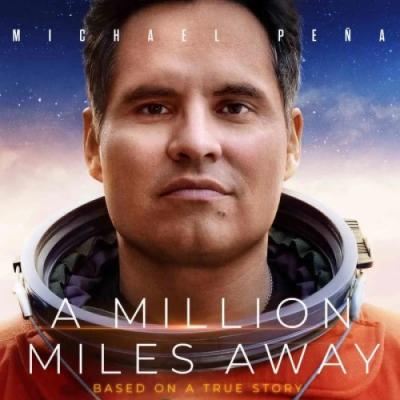
Million Miles Away Album Cover

"Million Miles Away" Soundtrack Lyrics

Movie • 2023

Track Listing


"A Million Miles Away (Amazon Original Motion Picture Soundtrack)" – Album Guide to Tracks and Key Scenes

A Million Miles Away trailer frame with young José looking at the sky in a cornfield
A Million Miles Away – trailer imagery of José’s childhood in the fields under the night sky

Overview

How do you score a story where a boy lying in a cornfield ends up orbiting 200 miles above Earth, without turning his life into a generic “inspirational” playlist? A Million Miles Away (Amazon Original Motion Picture Soundtrack) answers by leaning into José Hernández’s two worlds at once: migrant farmworker rows and gleaming NASA labs, banda cassettes and space telemetry. Mexican Institute of Sound (Camilo Lara) builds a score that starts in Michoacán and the San Joaquin Valley and slowly expands until it can hold launch pads and the silence of orbit.

The film follows José from child field worker to NASA flight engineer, but the soundtrack never treats him as a solo hero. Songs like Calexico’s “California Dreamin’,” Los Tigres del Norte’s “Contrabando Y Traición” and Juan Gabriel’s “Querida” keep pulling the story back to family, cars that break down, and living-room parties. Against that, Lara’s score cues — pieces like “How to Become,” “First Training” and “Against Our Expectations” — trace the procedural grind: applications, rejections, simulations, the 12-step plan that he writes on a scrap of paper and actually follows.

The album’s mood shifts in clear phases. Early on, it sits in warm nostalgia and road-movie territory, full of corridos, 60s pop and 80s synth ballads. Mid-film, as José’s life tightens, the needle-drops become more pointed — Rick Astley’s “Never Gonna Give You Up” scoring a risky date, Devo’s “Whip It” backing work montages, Wilkins and Juan Gabriel colouring in family dynamics. By the time you reach the NASA sequences and the ISS, the soundscape has tilted towards electronic textures and steady, pulsing rhythms, with the folk elements folding into the score rather than sitting on top of it.

Stylistically, you can hear three main strands. Folk and regional Mexican songs anchor identity and memory; Anglo pop and new wave mark the wider American culture José moves through; Lara’s hybrid score sits in between, using cumbia-inflected beats, synths and guitars to glue both worlds together. Folk colours signal belonging and sacrifice; 80s pop and new wave stand in for aspiration and distraction; the score’s more meditative cues track doubt, distance and the cost of a dream that keeps pulling José farther from home before finally circling back.

How It Was Made

Director Alejandra Márquez Abella approached the film as a character piece more than a pure NASA procedural, and the music brief followed that. The studio hired Mexican Institute of Sound — the recording project of producer and DJ Camilo Lara — to compose the original score, precisely because his work already mixed Mexican rhythms with electronics and sampling. According to industry coverage, he came on early enough to write themes around the script’s structure rather than just decorate finished scenes, building recurring motifs for José’s childhood stargazing, family gatherings and training milestones.

The official soundtrack album, A Million Miles Away (Amazon Original Motion Picture Soundtrack), was released digitally on September 15, 2023, the same day the film hit Prime Video. It contains 23 tracks and runs about 50 minutes, pairing Calexico’s cover of “California Dreamin’” with 22 score cues by Mexican Institute of Sound. A separate “Official Playlist” on streaming platforms collects the licensed songs that sit alongside the score in the film — everything from ? and the Mysterians’ “96 Tears” to Spandau Ballet’s “True” and The Kingston Trio’s “This Land Is Your Land,” curated under the Prime Video brand.

Music supervision was handled by Javier Nuño and Joe Rodriguez, who cleared a mix of Mexican catalogue (José Alfredo Jiménez, Los Tigres del Norte, Juan Gabriel), U.S. pop (Rick Astley, Devo) and older country cuts. According to Imagen Awards and Guild of Music Supervisors reporting, their work on the film was prominent enough to be recognised with major nominations and awards for both score and supervision. The result is a soundtrack that feels less like one album and more like the inside of José’s head: the songs his parents played, the radio hits on U.S. highways, and the new sounds he meets in training facilities.

On the technical side, the score was released under the Amazon Content Services, LLC imprint and is credited simply to Mexican Institute of Sound, blurring the line between Lara’s artist persona and his film-composer role. Cue titles such as “What Are Stars For?,” “Ignition,” “First Training” and “Against Our Expectations” map almost directly onto story beats, making the album relatively easy to follow even away from the picture. As per film-music trade write-ups, the score suite that circulates online is essentially a stitched-together highlight reel of those cues.

Behind-the-scenes style trailer image of José training with NASA in a centrifuge
Training the body and the ear – NASA sequences lean heavily on Camilo Lara’s hybrid score

Tracks & Scenes

(Scene notes below use approximate timing within the 121-minute film rather than exact timecodes.)

"California Dreamin'" — Calexico feat. Brian Lopez
Where it plays: This cover opens the film and album. Overhead shots of a Michoacán cornfield drift down to seven-year-old José lying on his back, staring up through the stalks. The song continues as he sprints back to his mother carrying a husk and the family heads to the car for another migration north. It is non-diegetic but mixed loud, essentially singing over his first memories.
Why it matters: As an opening cue, it flips the usual direction of the song. “California Dreamin’” here belongs to a child who is literally heading to the fields, not to a bored city dweller; the dusty, trumpet-laced Calexico arrangement underlines that this dream will involve hard labour long before it touches palm trees or freeways.

"96 Tears" — ? and the Mysterians
Where it plays: Early in the film, José is in a classroom answering a math problem while his friend Beto sneaks in late. The song plays over Miss Young’s amused reaction and then follows José home into a bedroom scene as the boys talk and we see how work cuts into their schooling. The track is diegetic in feel, as if coming from a radio in the background, but the mix nudges it towards score-like presence.
Why it matters: The garage-organ pulse fits José’s restless energy and the sense that his mind is already elsewhere. At the same time, the song dates the early sequences firmly in the era when his family is still figuring out life in California, framing his academic spark against a backdrop of cheap speakers and hand-me-down records.

"El Hijo del Pueblo" — José Alfredo Jiménez
Where it plays: In an early migration sequence, Salvador starts the car and drives the family into Stockton. Later, near the end of the film, the same song returns as the Hernández family travels again, this time in a very different context, reminding us how many trips north and south they have made. In both cases, the music plays as if from the car stereo, blending with engine noise and roadside sound.
Why it matters: Using a classic ranchera that literally talks about being the “son of the people” frames José’s journey as part of a larger migrant story. It’s not subtle, but it works: every time we hear Jiménez, we are yanked back to the idea that whatever NASA patch he wears, José came from that car and those fields.

"Contrabando Y Traición" — Los Tigres del Norte
Where it plays: In a 1985 sequence, teenage José sings along at the top of his lungs while driving, using the corrido as a kind of road mantra. The song later reappears when he’s older, on commutes and drives that mark turning points in his education and career. It is always clearly diegetic — sung or played in the car — and often fights with dialogue for space.
Why it matters: Corridos about smugglers and betrayal might seem like an odd choice for an aspiring astronaut, but here they function as a tether. Every time José slides into that melody, we’re reminded that he doesn’t escape the world of his parents just by changing jobs or zip codes. It also undercuts any clean “model immigrant” narrative the film might accidentally build.

"True" — Spandau Ballet
Where it plays: José fills out a NASA application at work. The office stereo plays “True” in the background while coworkers move around him and his colleague Lety drops by. The schmaltzy 80s synths contrast with his hyper-focused face and the unglamorous setting of a cubicle with fluorescent lighting.
Why it matters: The song’s slow-dance romance feels almost comically at odds with what José is doing, which is quietly trying to change the entire trajectory of his life. That clash makes the moment memorable and pins his first serious application attempt to a very specific musical year in U.S. pop.

"This Land Is Your Land" — The Kingston Trio
Where it plays: As José and his cousin Beto visit a used-car lot and test-drive an ancient Impala, this folk revival version of “This Land Is Your Land” plays over the loudspeakers and then bleeds into the score. The montage covers both the sales pitch and José’s first meeting with Adela, cutting between asphalt and faces while the song runs.
Why it matters: Putting this particular song under a Mexican-American family buying a shaky car to chase work is pointed bordering on sarcastic. The film doesn’t labour the irony; the soundtrack does it for us, letting the chorus about shared land sit over a scene about debt, risk and trying to carve out a place inside the system.

"Never Gonna Give You Up" — Rick Astley
Where it plays: After Adela reluctantly agrees to a date, José drives to pick her up. The global earworm kicks in as a transition — car on the highway, nervous glances in the mirror, cutting to them at a restaurant. It’s clearly diegetic, supposedly on the radio, and the film leans into the sheer 80s-ness of it without apology.
Why it matters: It’s funny on the nose (José is literally never going to give up on NASA), but it also nails the period feel and the awkward optimism of his early relationship. For viewers, this moment is a little time capsule: a young couple, a borrowed car, a song that became a meme decades later — and the knowledge that their life will not be as simple as the chorus.

"Whip It" — Devo
Where it plays: In an office montage, José looks over documents, carries boxes and quietly gets better at his job while superiors barely notice. “Whip It” drives the sequence, the synth whip-crack and deadpan vocal turning repetitive tasks into a kind of internal training montage.
Why it matters: The track feels like the American engineering culture José is trying to break into: efficient, ironic, a little cold. Putting Devo under his grind scenes essentially says, “this is what the inside of a tech-heavy workplace sounds like in his head,” and contrasts sharply with the rancheras we hear in family spaces.

"Hoy Me He Vuelto a Equivocar" — Wilkins
Where it plays: José meets Adela’s mother in a home scene that is both welcoming and anxious. The Wilkins ballad plays softly from a speaker system while polite small talk gives way to more pointed questions about money, prospects and responsibility. The music never stops, but it stays low enough to feel like real background.
Why it matters: It’s a classic “my life is a mess again” love song, tucked under a scene where everyone is trying to present their best selves. That mismatch hints at how many mistakes José and Adela will have to weather together long before space ever becomes real.

"Querida" — Juan Gabriel
Where it plays: In a key relationship transition, José asks if he can be alone with Adela, and “Querida” carries them through a time jump that includes their wedding. We move from a slightly awkward request to a full celebration, with the song’s wailing vocal and orchestration gluing the images into one continuous emotional line.
Why it matters: “Querida” is already an anthem of longing and devotion in Latin American pop. Dropping it here crowns their love story with something bigger than them — a communal, melodramatic feeling that makes the later strains on their marriage feel all the more painful because we remember this high.

"Deja Que Salga La Luna" — Ashley Ciarra & Haziel Chenoa Lopez Diaz
Where it plays: During a memorial gathering after Beto’s death, young Marisa stands up and sings this bolero live in the living room. The room is packed with family and friends, the camera circling faces as people quietly cry or close their eyes. There’s no separate score underneath; the performance is fully diegetic.
Why it matters: It’s one of the few purely musical moments that belongs to the next generation. The scene underlines how heritage, grief and music pass forward — and how José’s dream is built on sacrifices that include his cousin’s unrealised life. On the album, this cut doesn’t appear, which makes it one of the film’s little hidden gems.

"Más Allá del Sol" — Joan Sebastian
Where it plays: Later, José jogs in an exterior sequence, headphones in, the track pumping as he pushes himself and stares at a building tied to his NASA training. The volume rises from tinny in-ear sound to full mix as the camera settles on his determined face.
Why it matters: A devotional song about a world beyond this one plays over a man training to leave the planet. It’s a simple but effective metaphor: his faith, culture and body all pulling together in a single direction, even as the institutions around him keep moving the goalposts.

"Yo Tengo Una Receta" — Mexican Institute of Sound
Where it plays: Early on, this cue underscores family kitchen scenes and Adela’s cooking, linking food to stability and intellect — the “recipe” for surviving constant movement. Banging pots, sizzling pans and chatter blend into the track’s rhythmic bed; you’re not always sure where diegetic sound ends and score begins.
Why it matters: It quietly sets up Adela’s career ambitions and the idea that her recipes and José’s equations are both forms of problem-solving. On album, it works as a small, bright vignette between larger cues.

"What Are Stars For?" — Mexican Institute of Sound
Where it plays: When José asks his mother what the stars are for, the camera lingers on his face and the sky. This short cue slips in around that line, using tremolo tones and gentle pulses to turn a child’s question into a motif. It reappears later in altered form when adult José looks at the night sky from different points in his journey.
Why it matters: This is the thematic seed of the whole score. The track’s title echoes the question his mother defers to “ask at school,” and the music grows more complex as he gets closer to answering it himself — in classrooms, labs and, finally, orbit.

"How Big Is It?" — Mexican Institute of Sound
Where it plays: This cue accompanies José confronting the physical scale of NASA’s technology: huge test rigs, tanks, centrifuges, endless control rooms. The rhythm is playful but slightly off-kilter, built on repeating figures that feel like him counting, measuring, recalibrating his sense of the possible.
Why it matters: Conceptually, it’s the moment where a farmworker’s scale of “big” (fields, tractors) gets replaced by “big” as in rockets and re-entry. On the album, its title and looping motif make it a neat micro-essay on perspective.

"How to Become" — Mexican Institute of Sound
Where it plays: This longer piece tracks José’s 12-step plan: studying harder, getting advanced degrees, picking up new skills, re-applying to NASA after each rejection. We cut between classrooms, workshops, offices and late-night desk sessions while the cue builds layers of percussion, synth and guitar over a steady pulse.
Why it matters: It is essentially the soundtrack’s thesis about work. There is no single “training montage” song; instead, this cue emphasises repetition and accumulation, mirroring how long it actually took him to go from application number one to an astronaut candidate slot.

"Goodbye Beto" — Mexican Institute of Sound
Where it plays: Around the time of Beto’s death, this cue supports José processing grief — quiet moments before and after the memorial, shots of an empty chair, a drive where the radio stays off for once. It’s mostly strings and soft pads, with a melodic line that never quite resolves.
Why it matters: Many biopics sidestep grief in favour of momentum; this one lets music slow things down. “Goodbye Beto” doesn’t try to compete with “Deja Que Salga La Luna,” it complements it, giving us a wordless coda that hangs over José’s later successes.

"First Training" — Mexican Institute of Sound
Where it plays: When José finally enters NASA training proper, this cue powers sequences of physical tests, classroom work and simulator runs. The musical language shifts closer to contemporary Hollywood sports-film scoring here: ticking percussion, rising chords, small brass stabs, occasional electronic pulses mimicking telemetry.
Why it matters: It marks his full entry into an environment that once felt impossibly distant. The trick is that the rhythm and some percussion colours still echo the earlier, more “Mexican Institute of Sound” cues, so his roots aren’t erased, just folded into new shapes.

"Against Our Expectations" — Mexican Institute of Sound
Where it plays: Near the film’s climax and into the final ISS mission sequence, this cue covers both NASA control room tension and glimpses of José in space. We hear it under shots of the rocket, the family watching, and José floating, with a blend of swelling harmony and precise, almost minimal pulses.
Why it matters: The title nods to everyone who underestimated him — institutions, colleagues, sometimes even family. Musically, it’s the closest the score gets to outright triumph, but even then it keeps a hint of fragility, as if reminding us how many tiny things have to go right for him to be there at all.

Trailer montage frame of José in a NASA control room with mission screens glowing
From fields to flight – score cues like “First Training” and “Against Our Expectations” trace José’s path into NASA

Notes & Trivia

  • The official OST album is credited to Mexican Institute of Sound, but film and awards listings credit Camilo Lara personally as the composer.
  • According to film-music press, the album was released by Amazon Content Services on the same day the film dropped on Prime Video, making it a true day-and-date digital release.
  • The “Official Playlist” curated under Prime Video includes 17 songs, combining Lara’s “California Dreamin’” cover with all the major needle-drops.
  • Several key diegetic songs in the film, including “Deja Que Salga La Luna,” are not on the OST album and only appear in the movie and playlists.
  • The score and music supervision later won major Latino-industry honours for both composition and supervision, a rare sweep for the same film.

Music–Story Links

The soundtrack’s structure mirrors the film’s migration pattern. In early Mexico and California sequences, music comes mostly from family and radios: corridos, rancheras, classic pop, classroom tunes. Those songs — “El Hijo del Pueblo,” “Contrabando Y Traición,” “Querida” — root José in a specific class and culture. Whenever life gets chaotic, the film tends to reach for these tracks, as if saying, “this is the ground he comes from.”

As José moves into college and corporate environments, the sound tilts towards English-language pop and new wave: “True,” “This Land Is Your Land,” “Never Gonna Give You Up,” “Whip It.” They stand in for the America he’s trying to join, and they often play over scenes where he’s doing paperwork or absorbing bad news. The music here tells us he’s inside institutions that were not built with him in mind; he’s hearing their songs while carrying his own.

Lara’s original score stitches these spheres together. Motifs first heard under stargazing questions or family dinners reappear in NASA hallways and training facilities, suggesting that José isn’t leaving his identity behind so much as stretching it. When “How to Become” or “First Training” glide from cumbia-adjacent shuffles to straight-ahead film score pulses, you can almost hear him translating his background into a language institutions respect.

For Adela and the children, music signals both sacrifice and resilience. Her mother’s house has Wilkins ballads on in the background; the kids’ memorial performance of “Deja Que Salga La Luna” becomes a turning point, a moment when grief and pride coexist. Those cues don’t push the plot forward, but they deepen the emotional cost of José’s choices. By the time we reach “Against Our Expectations,” the triumphant space imagery carries echoes of every song we heard in kitchen, car and church.

Reception & Quotes

Critically, the film itself was generally received as a sincere, if conventional, biographical drama, and the music was often singled out as part of its emotional effectiveness. Mainstream reviews noted how the soundtrack’s mix of Mexican songs, U.S. pop and original score helped keep the decades-long story cohesive and grounded in specific communities rather than drifting into abstraction.

Reviewers at outlets like RogerEbert.com described the movie as an “inspiring” tale of astronomical success in the face of adversity, with the score supporting that arc without overwhelming it. Some critics, on the other hand, argued that Lara’s music tilted a bit too heavily into “majestic” tones during the final launch sequence, pushing the inspiration angle harder than necessary. That tension — between subtlety and uplift — is baked into the album too.

Within film-music circles, the soundtrack was treated as a strong, slightly under-the-radar entry in 2023’s crop. Commentators praised its hybrid sound and the way the licensed tracks were woven into the narrative rather than dropped in as simple nostalgia triggers. The combination of Imagen Awards wins for both composition and supervision and Guild of Music Supervisors recognition suggests that peers saw it as a serious piece of craft rather than just an adjunct to a feel-good story.

“Camilo Lara contributes a score that strives for majesty as José’s dream comes true.” — One Guy’s Opinion
“An inspiring movie based on an inspiring story told in an inspiring way… the music helps keep it grounded in family and community.” — RogerEbert.com
“Beautifully shot and interspersed with historical footage… the most effective and touching scenes revolve around the family relationships.” — Summary of New York Times review
A Million Miles Away trailer moment with José in his NASA flight suit looking out at the launch pad
Launch-day tension – the score leans into majesty and pulse as José nears orbit

Interesting Facts

  • Camilo Lara’s work on this film earned him a Best Music Composition for Film or Television award at the 2024 Imagen Awards, with the same ceremony also honouring the music supervisors.
  • The film’s music supervision team, Javier Nuño and Joe Rodriguez, took home both Imagen and Guild of Music Supervisors awards for their song choices.
  • Calexico’s “California Dreamin’” is branded on streaming services as “From the Amazon Original Movie ‘A Million Miles Away’,” effectively turning a cover into a mini-theme song.
  • The official OST album credits only Mexican Institute of Sound, but the “Official Playlist” tags many of the licensed songs to their original albums, encouraging discovery beyond the film.
  • Because some diegetic songs aren’t on the OST, fans often reconstruct the full musical experience using a mix of the album, the official playlist and fan-made YouTube lists.
  • The soundtrack sits in a small club of space-related films where regional music (here, Mexican genres) is as important as the expected “cosmic” orchestral material.
  • In some territories, the album’s metadata lists the artist simply as “Mexican Institute Of Sound” and the label as Amazon Content Services, without mentioning the composer’s given name at all.
  • The score suite circulating on video platforms is not an official single track but a fan-assembled run of cues, stitched from the OST’s most recognisable moments.
  • For many streaming listeners, this album is their first contact with Mexican Institute of Sound, whose previous work was more associated with club and remix culture than with biopic scoring.

Technical Info

  • Title: A Million Miles Away (Amazon Original Motion Picture Soundtrack)
  • Film: A Million Miles Away (2023)
  • Year of soundtrack release: 2023
  • Type: Film soundtrack — original score plus one featured cover song
  • Composer / Primary Artist: Mexican Institute of Sound (Camilo Lara)
  • Director (film): Alejandra Márquez Abella
  • Screenwriters (film): Bettina Gilois, Hernán Jiménez, Alejandra Márquez Abella
  • Music Supervisors: Javier Nuño and Joe Rodriguez
  • Main cast (selection): Michael Peña (José Hernández), Rosa Salazar (Adela), Julio César Cedillo (Salvador), Veronica Falcón (Julia), Garret Dillahunt (Rick Sturckow), Bobby Soto (Beto)
  • Studios: Amazon MGM Studios, Select Films
  • Distributor: Prime Video (Amazon)
  • Label (soundtrack): Amazon Content Services, LLC
  • Album length: approximately 50 minutes, 23 tracks
  • Key OST cues: “California Dreamin’ (feat. Brian Lopez),” “Yo Tengo Una Receta,” “What Are Stars For?,” “Ignition,” “Force of Nature,” “Comida Michoacana,” “How Big Is It?,” “How to Become,” “Goodbye Beto,” “First Training,” “Against Our Expectations”
  • Key licensed songs in film (selection): “96 Tears,” “El Hijo del Pueblo,” “Contrabando Y Traición,” “True,” “This Land Is Your Land,” “When Your Heart Goes Crazy,” “Never Gonna Give You Up,” “Whip It,” “Hoy Me He Vuelto a Equivocar,” “Querida,” “Deja Que Salga La Luna,” “Más Allá del Sol”
  • Runtime of film: about 121 minutes
  • Release context: Released worldwide on Prime Video on September 15, 2023 after a limited theatrical window
  • Awards (music-related): Imagen Award for Best Music Composition for Film or Television (Camilo Lara); Imagen Award for Best Music Supervision for Film or Television (Javier Nuño & Joe Rodriguez); Guild of Music Supervisors award (tie) for music supervision on a streaming film
  • Availability: OST available on major streaming platforms (Spotify, Apple Music, Amazon Music) and digital download stores; official playlist curated by Prime Video available on streaming services.

Questions & Answers

Who composed the original score for A Million Miles Away?
The score was composed by Mexican Institute of Sound, the project of producer and DJ Camilo Lara, who blends Mexican rhythms with electronic and sample-based textures.
Is there a separate album for the songs used in the movie?
There is one official OST album for the score plus “California Dreamin’,” and a separate Prime Video “Official Playlist” that gathers most of the licensed songs heard in the film.
Why isn’t every song from the movie on the soundtrack album?
Rights and album length play a role. The OST focuses on original score; some needle-drops and live performances, like “Deja Que Salga La Luna,” appear only in the film and playlists.
Did the music for A Million Miles Away receive any awards?
Yes. Camilo Lara won an Imagen Award for Best Music Composition, and music supervisors Javier Nuño and Joe Rodriguez won both Imagen and Guild of Music Supervisors honours for their work.
What makes this soundtrack different from other space-mission scores?
Instead of only using grand orchestral writing, it layers regional Mexican music and 80s/90s pop with a hybrid score, keeping José’s cultural roots audible even in NASA scenes.

Canonical Entities & Relations

Subject Relation Object
A Million Miles Away (film) is directed by Alejandra Márquez Abella
A Million Miles Away (film) is scored by Mexican Institute of Sound (Camilo Lara)
A Million Miles Away (Amazon Original Motion Picture Soundtrack) is soundtrack to A Million Miles Away (film)
Mexican Institute of Sound composed and produced A Million Miles Away (Amazon Original Motion Picture Soundtrack)
Amazon Content Services, LLC released A Million Miles Away (Amazon Original Motion Picture Soundtrack)
Amazon MGM Studios produced A Million Miles Away (film)
Prime Video distributed A Million Miles Away (film)
Michael Peña portrays José M. Hernández in A Million Miles Away
Rosa Salazar portrays Adela Hernández in A Million Miles Away
Javier Nuño served as music supervisor on A Million Miles Away (film)
Joe Rodriguez served as music supervisor on A Million Miles Away (film)
A Million Miles Away (Amazon Original Motion Picture Soundtrack) features recording “California Dreamin’ (From the Amazon Original Movie ‘A Million Miles Away’)” by Calexico feat. Brian Lopez
A Million Miles Away: Official Playlist curates songs from A Million Miles Away (film)
Camilo Lara won Imagen Award for Best Music Composition for A Million Miles Away
Javier Nuño and Joe Rodriguez won Imagen and Guild of Music Supervisors awards for music supervision on A Million Miles Away

Sources: film and soundtrack entries on Wikipedia; Amazon/MGM and Prime Video press pages; Filmmusicreporter album details; Apple Music, Spotify, Amazon Music and MusicBrainz metadata; Vague Visages “Soundtracks of Cinema” feature; Soundtracki tracklist and scene notes; Amazon’s official playlist listings; Imagen Awards and Guild of Music Supervisors announcements; reviews from RogerEbert.com, The New York Times and One Guy’s Opinion; Amazon and aboutamazon.com feature articles on the film.

November, 15th 2025


A-Z Lyrics Universe

Lyrics / song texts are property and copyright of their owners and provided for educational purposes only.