Soundtracks:  A B C D E F G H I J K L M N O P Q R S T U V W X Y Z #


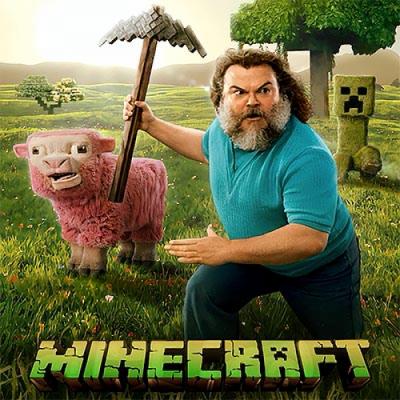
Minecraft Movie Album Cover

"Minecraft Movie" Soundtrack Lyrics

Movie • 2025

Track Listing


"A Minecraft Movie (Original Motion Picture Soundtrack)" – Album Guide to Tracks and Key Scenes

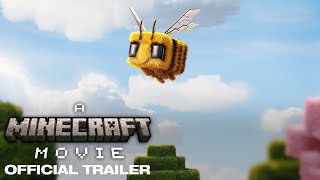
A Minecraft Movie official trailer still with Steve and the Overworld
A Minecraft Movie – live-action fantasy adventure set between Chuglass, Idaho and the blocky Overworld, 2025.

Overview

How do you score a story about limitless creativity when your heroes come from the least imaginative town in Idaho? A Minecraft Movie answers that by smashing three musical worlds together: the meditative ambience of the original game, a chunky 80s-leaning adventure score, and loud, goofy songs built around Jack Black’s voice. The result is a soundtrack that feels like a tug-of-war between routine and imagination, which is exactly what the film is about.

The film follows Steve, a former doorknob salesman who escaped to the Minecraft Overworld years ago, Garrett the washed-up arcade champion, and siblings Henry and Natalie from Chuglass, Idaho. Once a portal drags the humans into the blocky Overworld and the Piglin ruler Malgosha starts her conquest, the music shifts from small-town rock and radio-friendly pop into muscular orchestral writing and game-derived textures. You can almost hear the moment when Idaho’s flat horizons give way to cubic mountains.

Across its 74 minutes, the album balances Mark Mothersbaugh’s score cues with songs by Black, Dayglow, BENEE, Bret McKenzie, Dirty Honey and the inherited game tracks by C418 and Lena Raine. The orchestral writing pushes momentum and scale; the songs push character and comedy. When Steve sings to his dog or shouts about lava-fried chicken, the soundtrack stops being background and becomes part of the joke the movie is telling about how kids (and adults) use this game world to vent their feelings.

In genre terms, the soundtrack moves in phases. Early Chuglass scenes lean on hard rock and indie pop to underline frustration and stagnation. Once the Overworld adventure starts, synth-inflected orchestral score and C418’s ambient piano lines dominate, signaling wonder and low-key melancholy. The Nether material brings in heavier percussion, choral writing and the stomping bass of “Pigstep,” turning the film into something close to a kid-friendly metal opera. By the finale, you’re hearing everything at once: rock, score and game music stacked together like layers of blocks.

How It Was Made

The core of the soundtrack is Mark Mothersbaugh’s score. He records with the New Zealand Symphony Orchestra and the Tudor Consort choir, using big brass and busy percussion for the set-pieces but frequently dropping down to small, almost toy-like keyboard textures that echo the game’s lo-fi charm. According to the official album notes and interviews, he was specifically asked to keep one foot in 80s adventure movies and one foot in Minecraft’s calm piano world.

Music supervisors Gabe Hilfer and Karyn Rachtman built the rest of the soundscape around that score. They clear classic Minecraft tracks by C418, fold in Lena Raine’s “Pigstep” from the Nether update, and then commission new originals from Jack Black, Dayglow, BENEE and Bret McKenzie. The brief was simple but tricky: songs had to be catchy enough for TikTok and car rides, but also specific to the scenes, so they couldn’t just feel like generic needle-drops.

On the song side, Black co-writes and records “I Feel Alive,” “Steve’s Lava Chicken,” “Birthday Rap” and “Ode to Dennis,” with heavy hitters like Dave Grohl, Mark Ronson and Troy Van Leeuwen contributing to the studio version of “I Feel Alive.” The EP I...Am Steve later extends some of those cues into slightly longer novelty tracks, but the versions on the main soundtrack are cut to fit the film’s editing.

Recording splits across Wellington’s Michael Fowler Centre and Park Road Post for the orchestra, and Burbank’s Noise Alchemy Studio for band sessions and overdubs. The game-music callbacks are treated almost like cameos: C418’s main “Minecraft” theme and “Dragon Fish,” plus Raine’s “Pigstep,” are dropped into precise moments rather than spread everywhere, so they punch hard when they arrive. The album is released by WaterTower Music in multiple configurations: the main Original Motion Picture Soundtrack, a score-only edition and a songs-only set.

Recording and orchestra session imagery used in Minecraft Movie marketing
Mark Mothersbaugh’s score sessions give the pixel world a full symphonic spine.

Tracks & Scenes

Below are the key cues and songs, with how they sit inside the movie. Exact timestamps can shift slightly between formats, so think in terms of beats within the story rather than frame-accurate numbers.

"Minecraft" — C418
Where it plays: The film’s opening credits. After a short cold open sets up Steve’s discovery of the Orb of Dominance, the camera glides over the blocky Overworld at dawn while the original “Minecraft” piano motif rolls in non-diegetically. The titles appear as if mined out of the landscape. It’s calm, contemplative and almost shockingly quiet for a $150-million studio movie.
Why it matters: This is the anchor to the game. Before any jokes, before Jack Black even really performs, you hear the sound most players associate with building alone at night. It quietly tells older fans that the film remembers what Minecraft felt like before it was a franchise.

"Dragon Fish" — C418
Where it plays: Mid-film, when the party takes a breath in a bamboo forest filled with pandas. After a run of frantic action in the Nether and a minecart chase, the pace drops; ambient pads and a soft melodic figure drift in as Henry and Natalie pet pandas and Dennis finally relaxes. The cue sits non-diegetically but syncs neatly to the camera’s slow pans and the blocks of light moving through the trees.
Why it matters: The track comes straight from the game’s music, so this oasis functions as a playable-world moment dropped into a noisy blockbuster. It also underlines that the Overworld is worth saving for its quiet spaces, not just its boss fights.

"Pigstep" — Lena Raine
Where it plays: In a flashback to the “Nether’s Got Talent” sequence featuring Malgosha’s realm. The film briefly cuts to a talent-show-from-hell showcase in the Nether, with Piglins strutting on a stage lit in lurid reds and golds. “Pigstep” blasts on the soundtrack, its lurching bass and hip-hop-adjacent groove mixed loud while the crowd of Piglins stomps in time. The cue is partly diegetic – it clearly pumps through Nether speakers – but it’s also treated as score over the montage of acts.
Why it matters: It’s one of the smartest game-to-film ports: the cue already sounded like a villain-disco inside Minecraft, so when the movie folds it into Malgosha’s propaganda show, it feels inevitable.

"When I’m Gone (A Minecraft Movie Version)" — Dirty Honey
Where it plays: Garrett’s introduction in Chuglass, roughly in the first act. Over shots of his failing video-game store and his drive out to a storage auction, the Dirty Honey track kicks in with crunchy guitars and a swaggering vocal. It’s non-diegetic at first, playing over a mini-montage of Garrett hustling for cash and reminiscing about his glory days as an 80s arcade champion, then dips under as dialogue at the auction starts.
Why it matters: The song brands Garrett instantly: he’s loud, a little washed-up and stuck in a classic-rock headspace. It sets him apart from the kids, whose musical world leans more modern and online.

"I Feel Alive" — Jack Black
Where it plays: Near the end of the film in the Chuglass epilogue. After Malgosha is defeated and the sun returns to the Overworld, the heroes come back through the portal. We jump forward to see Steve now working with Garrett in the revived game shop. The two hop onto a tiny in-store stage and perform “I Feel Alive” for a small crowd of kids, with Steve fronting and Garrett jamming along. The track begins diegetically as an in-story performance and then swells into a fuller mix over the closing montage and early end credits.
Why it matters: As several outlets pointed out, this is the big “victory lap” song rather than a traditional “I Want” number. It wraps the film by showing Steve choosing community over solitude and by letting Black go full rock-frontman without the constraints of a gag.

"Steve’s Lava Chicken" — Jack Black
Where it plays: In an Overworld sequence built around Steve’s restaurant of the same name. Steve unveils his lava-powered fryer to the party and sings the song as an over-the-top advertisement to both them and an imaginary crowd. As he belts out lines about “la-la-la-lava” and crispy chicken, the camera cuts between sizzling cubical drumsticks, close-ups of Steve’s ecstatic face and the slightly horrified reactions of his human companions. It’s fully diegetic – Steve is performing in-world – and runs a brisk half-minute or so.
Why it matters: Beyond being a viral chart-breaker, it’s the purest expression of the film’s absurd tone: a ridiculous food jingle that somehow also sells the idea of Steve as an eternally optimistic creator who can’t stop turning danger into dinner.

"Birthday Rap" — Jack Black & Jason Momoa
Where it plays: In the Nether, when Steve and Garrett need a distraction. The two improvise a chaotic “Birthday Rap” performance for a group of Piglins, turning Steve’s usual sing-song antics into a full call-and-response routine. The beat is diegetic, apparently banged out on improvised percussion and claps, while they dance across a fortress balcony and goad the Piglins into chanting along. Under the music, Henry and Natalie sneak through the background on their mission.
Why it matters: The scene sells the Steve–Garrett partnership. Music becomes a con – a way to weaponize performance and buy time – and it’s one of the few moments where Momoa is forced into Jack Black’s rhythm instead of the other way around.

"Ode to Dennis" — Jack Black
Where it plays: Late in the film, in a quieter stretch after Dennis has been used as leverage by Malgosha. Steve sings to his dog in a small mushroom house, half lullaby and half apology, while the others rest. The song plays mostly diegetically – just Steve’s voice with minimal accompaniment – and then blends into a more produced version as they prepare for the final battle.
Why it matters: Even though marketing framed the soundtrack as loud and meme-ready, this cue gives Steve one straightforward emotional moment. It reframes him not only as comic relief but as someone who genuinely regrets unleashing all this chaos on the Overworld.

"Change Song" — Dayglow
Where it plays: Early-to-mid film, over a montage of Henry struggling to adjust to Chuglass and school life before everything goes fully off the rails. We see his jetpack experiments, his clashes with authority and the sense that he and Natalie are stuck in a town that doesn’t know what to do with them. The track plays non-diegetically, its jagged indie-pop groove matching the cut-up editing and jumpy camera moves.
Why it matters: Stylistically it sits between small-town reality and the weirder Overworld music. It also underlines that the kids’ problems don’t begin or end with Minecraft; the portal just gives them a language to talk about change they already needed.

"Zero to Hero" — BENEE
Where it plays: During a major fight sequence when Steve’s adopted village is raided by Piglins. As the golems march out and the humans scramble to defend the blocky houses they’ve just learned to build, BENEE’s track kicks in over slow-motion shots of arrows flying and wooden walls splintering. The song is mostly non-diegetic but the chorus hits exactly on key heroic beats: Henry finally mastering block placement, Natalie saving a villager, Garrett accidentally pulling off something impressive.
Why it matters: It’s the clearest “training-turns-into-victory” needle-drop in the film. The lyrics about finding your power line up neatly with a story beat where all four misfits finally start acting like a party instead of four disconnected people.

"Could This Be Love?" — Bret McKenzie
Where it plays: Over the comic subplot linking Jennifer Coolidge’s vice principal Marlene with Nitwit the villager. The cue surfaces during a late-film sequence where the two slowly, awkwardly dance around the idea that they might actually like each other, cutting between Overworld and Chuglass moments. McKenzie’s earnest, slightly awkward vocal plays non-diegetically at first, then folds into a diegetic gag when a character switches on a radio part-way through.
Why it matters: It keeps the movie from becoming wall-to-wall kid chaos. You get a wry, grown-up romantic beat that still fits the blocky world, and McKenzie’s songwriting threads directly into the film’s running joke about weird couples finding each other across dimensions.

"Just Can’t Get Enough" (Instrumental Version) — Jamieson Shaw
Where it plays: A brief, bright transition sequence back in the real world. The Depeche Mode melody, stripped of vocals and translated into slick synths and guitars, plays over images of Chuglass starting to wake up to the heroes’ success: kids crowding the game store window, townsfolk rebuilding the damaged potato-chip factory mascot and a few Minecraft-themed posters appearing on school walls.
Why it matters: The instrumental sits halfway between nostalgia and present tense, which fits a film obsessed with the 80s but aimed squarely at kids who know the song from their parents’ playlists. It’s also one of the few needle-drops that isn’t obviously about the plot; it’s about mood and a background hum of optimism.

"Birthday Rap" and "Steve’s Lava Chicken" – marketing versions
Where they appear outside the film: Both songs get extended mixes on the I...Am Steve EP and dedicated promo clips. The EP stretches them just long enough to work as standalone novelty tracks without over-explaining the film’s jokes. The music videos mostly reuse film material, but they push the soundtrack’s identity as a Jack Black comedy project rather than only a game adaptation.

Action-heavy fight montage from the Minecraft Movie trailer
From quiet ambience to all-out battle songs, the film’s music constantly flips gears.

Notes & Trivia

  • The main soundtrack album combines game cues, songs and score; separate score-only and songs-only releases tidy that up for collectors.
  • “Steve’s Lava Chicken” runs about 34 seconds in the film version yet still managed to chart in multiple territories.
  • The full soundtrack clocks in at just over 74 minutes, but only a fraction of Mothersbaugh’s recorded score made the album.
  • An EP, I...Am Steve, was released later with extended versions of three of Black’s mini-songs plus the quick jingle “Welcome to Steve’s!”
  • The orchestral sessions took place in Wellington, New Zealand, linking this very American story to the same scoring infrastructure used on several prestige fantasy projects.

Music–Story Links

The soundtrack constantly mirrors the film’s core conflict: creativity versus control. When Garret, Henry, Natalie and Dawn are in Idaho, you hear tracks that could plausibly be tuned in on a small-town rock station. Once they hit the Overworld, the sound opens up – more reverb, more choir, more digital textures derived from the original game music. The listener experiences that “portal” almost as strongly through their ears as through the visuals.

Steve’s songs usually arrive when he tries to smooth over tension or sell an idea. “Steve’s Lava Chicken” pushes his restaurant scheme; “Birthday Rap” gets him and Garrett out of a tight corner; “Ode to Dennis” repairs a relationship. Musically, the movie is arguing that performance is his main tool – he crafts with songs as much as he crafts with blocks.

By contrast, Henry’s growth is scored by cues where ambient game music and orchestral writing bleed together. The moment he starts to understand block placement at night, the score shifts from scattered piano plinks into longer, confident phrases. When “Zero to Hero” finally lands over the village battle, it sounds like the pop-song version of that evolution: the kid who couldn’t make his jetpack work suddenly gets a heroic chorus behind him.

Even Malgosha’s villainy is musical. The Nether is filled with pounding rhythms and brass hits, but the movie lets “Pigstep” and other game-derived riffs define how her world feels. Unlike Steve, she uses spectacle and rhythm to suppress creativity – turning talent shows into propaganda, weaponizing noise instead of joy.

Reception & Quotes

Critics were split on the film but generally agreed that the music did a lot of heavy lifting. Several soundtrack-focused reviews praised Mothersbaugh’s knack for blending game motifs into a big-budget score, even when they were lukewarm on the script. Others found some of Black’s mini-songs “too meme-ready for their own good” but admitted they played well with rowdy audiences.

Commercially, the album performed strongly for a modern soundtrack. In the UK it reached the upper tier of the soundtrack-albums chart and hung around the compilation charts for weeks, helped by streaming numbers for “I Feel Alive,” “Steve’s Lava Chicken” and “Zero to Hero.” The short runtime of “Steve’s Lava Chicken” became a talking point in music press and chart coverage.

The movie’s poppy, boisterous soundtrack adds an epic, fantastical sheen to what is otherwise a pretty straightforward family comedy. — paraphrasing a Screen Rant soundtrack summary
Mark Mothersbaugh’s 80s-inflected score does much of the world-building that the script can’t quite manage on its own. — based on IndieWire’s review of the film
Jack Black’s originals sometimes grate, but the orchestra and game cues clear your ears and remind you why Minecraft’s music mattered in the first place. — echoing MovieWeb’s mixed response
If you’re under 15, this soundtrack is basically a greatest hits of the Minecraft multiverse; if you’re over 30, it’s a nostalgia bomb with kids yelling “chicken jockey” over it. — composite of press and fan reactions
Final trailer frame with main cast of A Minecraft Movie posed heroically
By the finale, rock songs, game tracks and orchestral score are all firing at once.

Interesting Facts

  • “Steve’s Lava Chicken” set a record in some territories as one of the shortest songs ever to crack major singles charts.
  • The soundtrack credits specifically call out C418 and Lena Raine for the reused game music, an unusual amount of spotlight for original game composers in a film tie-in.
  • Jack Black’s “I Feel Alive” single dropped before the movie, functioning both as trailer music and a proof-of-concept that the project would lean into his rock persona.
  • The MusicBrainz and Discogs entries list the album simply as a “Various Artists” release, even though the marketing heavily pushes Mothersbaugh and Black.
  • The score-only edition, A Minecraft Movie (Score from the Original Motion Picture Soundtrack), strips away all songs and plays like a compact adventure album in its own right.
  • The EP I...Am Steve was released only after “Steve’s Lava Chicken” went viral, effectively capitalizing on a 34-second gag by turning it into its own mini-project.
  • Choral sessions for the Nether cues used a classical choir that normally sings Renaissance music, repurposed here to belt about cubic hell pigs.
  • The soundtrack briefly turns “Just Can’t Get Enough” into a family-film transition cue, without ever using Depeche Mode’s original recording.
  • Several fan edits online reorder the album to follow the film’s plot beat-by-beat, turning the playlist into a kind of audio storyboard.

Technical Info

  • Title: A Minecraft Movie (Original Motion Picture Soundtrack)
  • Year: 2025
  • Type: Film soundtrack (songs + score)
  • Primary composer: Mark Mothersbaugh
  • Additional composers: Daniel Rosenfeld (C418), Lena Raine (game tracks reused), plus additional score work by Peter Bateman, Tim Jones and Sunna Wehrmeijer
  • Key songwriters/performers: Jack Black, Dayglow (Sloan Struble), BENEE, Bret McKenzie, Dirty Honey, Jamieson Shaw
  • Music supervisors: Gabe Hilfer, Karyn Rachtman
  • Label: WaterTower Music
  • Recorded: 2024–2025 in Wellington (Michael Fowler Centre, Park Road Post) and Burbank (Noise Alchemy Studio)
  • Length: ~74 minutes (main album)
  • Release context: Digital release on 28 March 2025, ahead of the film’s worldwide theatrical opening in early April 2025
  • Chart notes: Reached the top 20 on the UK Compilation Albums chart and top 10 on the UK Soundtrack Albums chart
  • Related releases: A Minecraft Movie (Score from the Original Motion Picture Soundtrack); A Minecraft Movie (Songs from the Original Motion Picture Soundtrack); I...Am Steve (Bonus Songs from “A Minecraft Movie” Soundtrack) EP

Questions & Answers

Is A Minecraft Movie really a musical?
Not in the traditional sense. Characters occasionally break into song, but there are only a few full musical numbers. Most of the soundtrack is score and needle-drops.
How closely does the music follow the original game?
Quite closely in key moments. C418’s “Minecraft” and “Dragon Fish” and Lena Raine’s “Pigstep” are used in specific scenes as deliberate callbacks rather than wallpaper.
Do I need to know the game’s music to enjoy the soundtrack?
No. If you do, you’ll catch extra references; if you don’t, the album plays as a quirky mix of orchestral adventure, rock and left-field pop.
What’s special about “Steve’s Lava Chicken” beyond the meme?
Its length and impact. It is unusually short for a charting single yet became one of the film’s biggest talking points, proving how far a tightly cut gag can travel.
Is there a best way to listen to the album?
If you want the story arc, play the main soundtrack front-to-back. If you just want the big emotions, try a custom playlist that alternates songs with major score cues like “Minecraft,” “Steve in the Nether” and “Run from the Great Hog.”

Canonical Entities & Relations

Subject Relation Object
Mark Mothersbaugh composed A Minecraft Movie (Original Motion Picture Soundtrack)
Gabe Hilfer served as music supervisor on A Minecraft Movie
Karyn Rachtman served as music supervisor on A Minecraft Movie
Jack Black performed “I Feel Alive,” “Steve’s Lava Chicken,” “Birthday Rap” and “Ode to Dennis”
Dirty Honey performed “When I’m Gone (A Minecraft Movie Version)”
Dayglow (Sloan Struble) wrote & performed “Change Song” for A Minecraft Movie
BENEE performed “Zero to Hero” for A Minecraft Movie
Bret McKenzie wrote & performed “Could This Be Love?”
Daniel Rosenfeld (C418) composed original Minecraft tracks “Minecraft” and “Dragon Fish” reused in the film
Lena Raine composed “Pigstep,” used in the “Nether’s Got Talent” sequence
Jamieson Shaw produced & performed instrumental version of “Just Can’t Get Enough” and served as supervising music editor
New Zealand Symphony Orchestra performed the film’s orchestral score
The Tudor Consort sang choral parts of the score
WaterTower Music released A Minecraft Movie (Original Motion Picture Soundtrack)
Mojang Studios created Minecraft, the game on which A Minecraft Movie is based
Warner Bros. Pictures distributed A Minecraft Movie (film)
Legendary Pictures co-produced A Minecraft Movie (film)
Empire Leicester Square hosted the world premiere of A Minecraft Movie

Sources: Wikipedia (film and soundtrack entries), WaterTower Music notes, Business Wire press release, Radio Times soundtrack feature, assorted critic reviews (IGN, IndieWire, MovieWeb), NME and Kerrang song coverage, box-office and chart reporting, and cast/crew interviews about the music.

November, 15th 2025


A-Z Lyrics Universe

Lyrics / song texts are property and copyright of their owners and provided for educational purposes only.