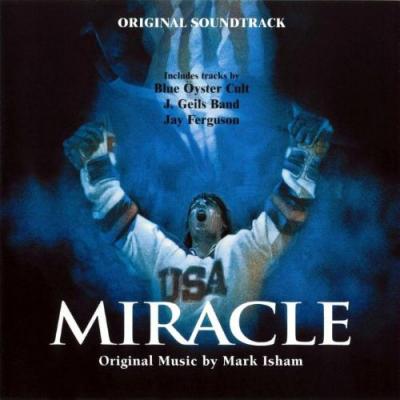
"Miracle" Soundtrack Lyrics
Movie • 2004
Track Listing
Blue Oyster Cult
J. Geils Band
Jay Ferguson
"Miracle (Soundtrack from the Motion Picture)" – Album Guide to Tracks and Key Scenes

Overview
What does victory sound like when nobody expects you to win? Miracle answers with a soundtrack that moves from doubt to defiance to catharsis, mirroring the 1980 U.S. Olympic hockey team’s arc from unknowns to legends. The film follows coach Herb Brooks as he forges a group of college kids into a unit capable of facing the seemingly invincible Soviet team, and the music tracks that emotional grind more closely than many viewers realize.
Composer Mark Isham builds the score like a long power play. Early cues sit low in the register, strings close-mic’d, brass held in reserve. As the team suffers through conditioning drills, exhibition losses and internal friction, the music stays restrained, almost under-scored, letting skate noise and locker-room echoes dominate. When the Americans finally hit Lake Placid and start to believe, Isham gradually widens the orchestral palette, adding brighter brass figures and more open harmonies.
Around this orchestral spine sit needle-drops that nail time and place: barroom classic rock, TV themes, Christmas standards, even Olympic fanfares. A jukebox of “You Can Suit Yourself,” “Musta Got Lost,” “Thunder Island,” and “(Don’t Fear) The Reaper” ties the story to late-70s/early-80s American pop culture, while Louis Armstrong and Brenda Lee bring in cozy holiday nostalgia. The highly recognizable “Bugler’s Dream and Olympic Fanfare” and anthemic “We Will Rock You” push the film right into arena-memory territory.
Genre-wise, the album and broader soundtrack move in phases. The score starts as subdued orchestral drama (muted strings, low brass) for the “arrival” of Brooks and his untested roster, slides into muscular sports scoring with minimalist ostinatos during training “adaptation,” flirts with classic rock and TV-theme comfort as the team briefly tastes celebrity “rebellion,” and then collapses all that into a tense, almost spiritual orchestral build in “The Miracle” cue. Rock mainstays like 70s AOR signal swagger; Christmas pop cues signal vulnerability and home; Olympic fanfares signal national myth-making. Everything is doing story work, not just filling silence.
How It Was Made
The score for Miracle was written by Mark Isham, a composer known for blending atmospheric textures with clear, singable themes in films like A River Runs Through It and later sports dramas such as Eight Below. The film’s production history shows director Gavin O’Connor wanted something traditional and orchestral rather than rock-only bombast, and Isham has described this score himself as one of his more “theme-driven, fairly traditional” sports works rather than a hybrid experiment.
The official album, released by Hollywood Records under catalog number 2061-62438-2, is structured as a long-form listening experience: four extended orchestral suites (“The Team,” “Training,” “The Games,” “The Miracle”) followed by three source songs (“(Don’t Fear) The Reaper,” “Must of Got Lost,” “Thunder Island”). The long cues were recorded on major Los Angeles scoring stages (Newman and Todd-AO) with a full orchestra, then mixed at Isham’s own Wet Dog Studios; the album runs just under 57 minutes and was shipped in February 2004 to coincide with the film’s theatrical run.
On the film side, music supervision was handled under Disney’s umbrella with Brian Ross credited as music supervisor in detailed credits, while music editors Jim Burt and Curtis Roush shaped Isham’s cues around dense hockey action. The production also licensed a Boston Pops recording of “Bugler’s Dream and Olympic Fanfare Medley” plus pop and classic rock cuts from Blue Öyster Cult, the J. Geils Band and Jay Ferguson. One curious choice: the Boston Pops Olympic medley is prominent in the film but omitted from the commercial album, something later noted by orchestral-music commentators.
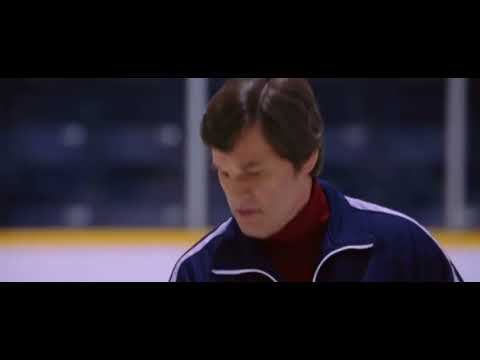
Tracks & Scenes
Below is a curated walk-through of key cues and songs. Exact timestamps can vary slightly between releases, but the scene placements and dramatic functions are consistent across home video and streaming versions.
"The Team" — Mark Isham
Where it plays: Early in the film, over the sequence of tryouts in Colorado Springs and Brooks’ first hard choices about who makes the roster. The cue typically starts after the opening newsreel-style montage and carries us through introductions to the players, cutting between drills, clipboard notes and quick character beats. It is non-diegetic, sitting just under skate noise and whistles.
Why it matters: Isham lays out the main “striving” theme here: a rising motif in strings that never quite resolves, matched by brass that feels more questioning than triumphant. The music tells us this is not yet a patriotic victory story – it’s about process, uncertainty and Herb’s willingness to be unpopular as he picks “his” team.
"Training" — Mark Isham
Where it plays: Across multiple training montages, including the infamous “again” skating drill where Brooks punishes the team after a lackluster exhibition game. The album version is a 17-minute suite built from material that, in the film, is spread over several sequences of bus rides, practices, and conditioning, mostly non-diegetic but often mixed loud enough to feel almost like another character pacing the players.
Why it matters: According to one soundtrack review, this cue slowly grows from small ensemble gestures into fuller orchestral statements, mirroring the players’ incremental cohesion. The repetitive rhythmic figures and grinding low strings make you feel the exhaustion, but Isham threads in small harmonic “wins” when the team shows progress, so the montage never becomes pure misery.
"The Games" — Mark Isham
Where it plays: During the early Olympic matches in Lake Placid – Sweden, Czechoslovakia and other non-Soviet opponents. The cue underscores fast-cut sequences of goals, saves and changing scoreboard graphics, intercut with crowd shots and TV commentary. It is non-diegetic but mixed tightly with arena sound so it feels like an emotional overlay on top of realistic game noise.
Why it matters: This cue is where the score turns from training pain to competitive focus. The main theme returns more confidently, and Isham uses snare and brass in almost militaristic patterns, suggesting that the games are proxy battles in the Cold War narrative humming under the film. It primes you for the idea that beating the Soviets is not just about hockey.
"The Miracle" — Mark Isham
Where it plays: Over the final USA–USSR game and bleeding into its immediate aftermath. The album version is a 15-plus-minute continuous piece; on screen, fragments underscore face-offs, breakaways, Soviet counterattacks, and the desperate final minute before Al Michaels’ “Do you believe in miracles?” call. It is entirely non-diegetic but rides alongside the real TV audio of the broadcast.
Why it matters: This is the emotional core of the album. Isham starts almost minimal – oscillating strings, barely-there brass chords – then gradually layers in harmonies, percussion and, finally, a full-throated statement of the main theme when the U.S. takes the lead. The climax avoids easy bombast; the harmony opens up but never feels jingoistic, which is why many listeners single this cue out as one of Isham’s strongest sports set-pieces.
"(Don't Fear) The Reaper" — Blue Öyster Cult
Where it plays: In a bar scene early in the film, with the song’s iconic cowbell clearly audible on the soundtrack as players socialize and TV news about the outside world hums in the background. The track is diegetic, tied to the bar’s sound system, and helps anchor the story in the late-70s classic-rock soundscape.
Why it matters: A DVD review noted this needle-drop specifically because the famous cowbell mix is hard to miss. Dropping a song about mortality and acceptance into a casual hangout scene adds a sly edge: these are kids treating the Olympic chance almost like another game night, while the lyrics and history of the song hint that stakes – both personal and political – are much higher than they realize.
"You Can Suit Yourself" — Bobby Charles
Where it plays: Very early in the film, around the time Herb gets the life-changing phone call from the U.S. Olympic Committee at home. A period R&B shuffle drifts from the radio/record player as domestic background while he moves through his kitchen and living room. In at least one recording of the scene, the song is audible by roughly the 3½-minute mark, making it a clearly diegetic piece of home atmosphere.
Why it matters: The laid-back groove and sly, independent lyrics quietly underline Herb’s position: he’s about to “suit himself” and pursue a controversial, demanding coaching philosophy that will alienate both officials and players. The relaxed New Orleans feel also contrasts with the tight, regimented training score that will come later.
"Musta Got Lost" — The J. Geils Band
Where it plays: In a team-bonding context – usually recalled by viewers as a locker room or bus sequence where the players are more relaxed, singing or reacting to the track while blowing off steam between grinding practices and pressure games. The track is diegetic, coming from a tape or locker-room sound system, and it plays long enough for you to recognize its chorus hook.
Why it matters: Rock histories point out that the song later gained renewed pop-culture visibility partly through its use in Miracle. Within the film, it suggests that the boys are still very much kids, clowning around to Boston bar-band rock even as the world treats them as Cold War symbols. The title phrase also winks at the idea that they are in over their heads – emotionally and tactically – until Herb’s system finally clicks.
"Thunder Island" — Jay Ferguson
Where it plays: As a light, summery counterpoint to the on-ice grind: a transitional scene away from the rink, often remembered as a bus-ride or off-day sequence where the players joke, flirt or simply enjoy being young athletes on the road. The song is fully diegetic, playing like a radio hit with its breezy guitar riff and yacht-rock sheen.
Why it matters: The placement gives us a rare breather. Instead of heroic brass, we get sun-washed guitars and wistful verses about fleeting romance. That emotional lightness makes the later, brutally focused training and game cues feel heavier; it shows what these kids are sacrificing in terms of “normal” youth culture.
"Bugler's Dream and Olympic Fanfare Medley" — John Williams & Boston Pops Orchestra (based on Leo Arnaud)
Where it plays: Over televised Olympic coverage within the film, as the U.S. team’s games are introduced and contextualized for the TV audience. The fanfare is diegetic in the sense that characters hear it as broadcast music, though it also works like non-diegetic commentary for viewers, bridging montage shots of flags, crowds and scoreboards.
Why it matters: This cue brings in the broader Olympic myth. Listeners familiar with ABC’s long-standing Olympic broadcasts recognize the descending brass figure instantly, and commentators have since pointed out how striking it is that this exact Boston Pops recording is used in the film but absent from the official soundtrack album. On screen, it elevates the underdog hockey team into the larger ceremony of the Games.
"White Christmas" — Louis Armstrong
Where it plays: During a brief winter/holiday interlude, as the narrative marks time between training blocks and the Olympic tournament. The song plays in a domestic or TV context – a classic recording drifting through a home or public space while characters talk, argue gently or simply share the season. It remains diegetic, slightly muffled by room acoustics.
Why it matters: Using Armstrong’s warm, lived-in version rather than the more common Bing Crosby recording gives the moment a smoky, nostalgic color. It’s a reminder that for Herb and his family this is still “just” life – there are kids, holidays, dishes – even while the media and the government are casting him as a Cold War strategist.
"Rockin' Around the Christmas Tree" — Brenda Lee
Where it plays: In the same general holiday stretch, often recalled as background to decorations or a family gathering, with the track’s swinging sax and 50s rock-and-roll pulse cutting through. Again, it’s diegetic – this is party music, not score – and we only get a portion of the song before the film returns to hockey business.
Why it matters: Given how iconic this track has become in Christmas pop history, its appearance ties Miracle to a much broader American cultural memory. In context, it adds a bittersweet note: the players and their families get a normal festive moment before the Games demand full commitment and, for some, painful cuts.
"Dream On" — Aerosmith
Where it plays: Over the film’s closing credits, after the on-screen text tells us what happened to each player and to Herb Brooks himself. The song kicks in as the camera lingers on real-life stills and the emotional high of the Soviet upset begins to settle. It is non-diegetic to the story proper but diegetic to the audience experience as we leave the theater.
Why it matters: Classic-rock essays have noted how often this track is used to signal “earned nostalgia,” and that’s exactly what happens here. The lyrics about life as a series of moments you only understand later dovetail with the film’s epilogue, which reminds viewers that the “miracle” was a single game in a complicated era, not a permanent cure-all.
"We Will Rock You" — Queen
Where it plays: As an arena-style chant connected to crowd energy, usually during montage coverage of the U.S. riding momentum in Lake Placid. It might appear as a sound-alike or licensed segment layered into crowd noise, functioning diegetically as something the spectators are clapping and stomping along to.
Why it matters: The stomp-stomp-clap pattern has become shorthand for mass, unified energy at sports events. Dropping it into Miracle is a quick way to say, “this is bigger than a normal game now” – the entire building is in sync, and so, finally, is Herb’s once-fractured team.
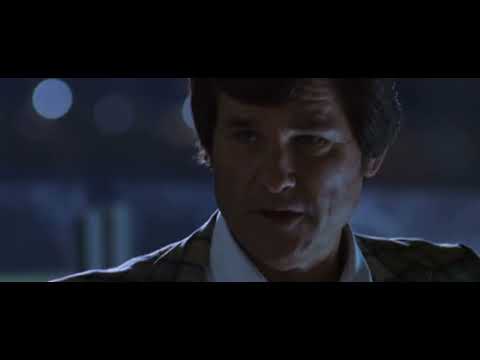
Notes & Trivia
- The official album only includes four Isham score suites and three classic-rock cuts; many songs heard in the film (including the Olympic medley and Christmas tracks) never appeared on the CD.
- The soundtrack CD has been out of print for years and tends to circulate mainly as second-hand copies among collectors.
- A Boston Pops recording of “Bugler’s Dream and Olympic Fanfare Medley” is used on the film’s soundtrack but omitted from the commercial album, a detail pointed out by orchestral-music bloggers.
- “Musta Got Lost” was originally a mid-70s J. Geils Band single; its later pop-culture writeups often mention Miracle as a notable screen placement.
- Isham scored several other sports and competition films soon after (Crash, Racing Stripes, Eight Below), but Miracle is frequently cited as his most straightforward, traditional sports score of that period.
Music–Story Links
The simplest way to read the soundtrack is as a mirror of Herb Brooks’ psychology. In the early reels, when he is more analyst than motivator, Isham’s themes are there but emotionally flattened, often buried under rink ambience. As Herb starts to trust his “brooksian” system – and the players start to buy in – the same motifs expand harmonically. You can almost chart his internal shift from “prove my theory” to “protect my boys” by when the brass finally opens up around the main theme.
Character beats are also tied to specific songs. The early domestic scene underscored by “You Can Suit Yourself” frames Patti Brooks and the kids inside a slightly shabby but warm home soundscape, just before the Olympic job turns that home into collateral damage. Later, bar-room scenes with “(Don’t Fear) The Reaper” and, in broader recollection, “Thunder Island” and “Musta Got Lost” emphasize that the players still live in a college-age sound world of jukebox rock and road-trip anthems, not of national anthems and fanfares. The soundtrack constantly reminds us that these “symbols” are, first, young guys who like loud guitars.
Even the Christmas tracks have story jobs. “White Christmas” and “Rockin’ Around the Christmas Tree” play under scenes that show what the team and their families are temporarily stepping out of: ordinary holiday rituals, safe domestic rhythms, secular nostalgia. After those cues, the score leans harder into austere textures and Olympic fanfare quotes, as if musically saying, “you don’t live in that cozy world right now; you live in the glare of geopolitics.”
During the climactic game, Isham largely stays out of the way of Al Michaels’ real broadcast audio until absolutely necessary. When he does push the orchestra forward – especially near the penultimate face-off and during the aftermath as the team piles onto Jim Craig – it feels like an emotional translation layer, turning raw sports footage into myth without drowning out the reality that they could have lost. That restraint is one reason the finale still plays for viewers who already know the final score.
Reception & Quotes
Film critics generally liked both the movie and its music. Aggregators show Miracle with a “generally favorable” score, and reviewers repeatedly single out Kurt Russell’s performance and the understated music that supports him rather than competing for attention. Variety’s contemporary review praised the film’s “effective restraint,” and Isham’s score is a large part of that sense of control.
Specialist soundtrack outlets were more divided. One long-running review site described the album as emotionally effective but sometimes too subdued for such a legendary sports moment, while still recommending it to listeners who appreciate slow-burn orchestral builds. Another niche review at Maintitles took almost the opposite angle, arguing that repeat listens reveal a carefully shaped dramatic curve and calling Miracle proof that Isham “knows a thing about sports scoring.”
Among fans, the album has a quiet cult status. Sports-movie discussions often mention the way the score grows in tandem with the team’s confidence, and collectors note that the CD’s out-of-print status makes it oddly hard to find for a Disney film of this era. Classic-rock fans, meanwhile, sometimes come to the soundtrack sideways, via placements of “Musta Got Lost” or “(Don’t Fear) The Reaper” noted in song-history articles.
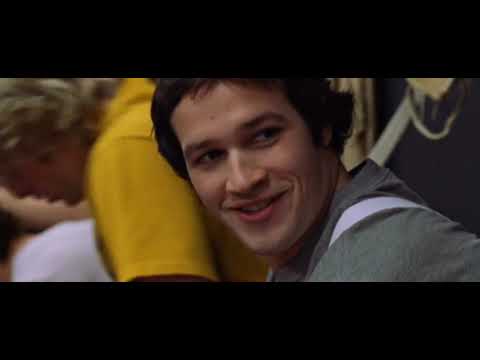
Interesting Facts
- The commercial album track list is only seven cuts long, but four of those are extended suites over seven minutes; “Training” runs more than 17 minutes and “The Miracle” over 15.
- The CD was issued by Hollywood Records, a Disney-owned label; MusicBrainz and other catalogs list its release date as 10 February 2004 in the U.S.
- Licensing notes and later commentary confirm that the specific Boston Pops recording of “Bugler’s Dream and Olympic Fanfare” heard in the film comes from the mid-90s Summon the Heroes era, even though the piece itself dates back decades.
- The album pairs Isham’s score with only three source songs: “(Don’t Fear) The Reaper,” “Musta Got Lost,” and “Thunder Island” – other featured tracks like “White Christmas” and “Dream On” are missing, which has frustrated some fans.
- Because of its limited print run, sealed copies of the original CD have become minor collector’s items on auction sites, often advertised specifically to Isham completists and hockey-movie fans.
- Louis Armstrong’s “White Christmas,” used briefly in the film, belongs to a relatively small discography of Christmas recordings he made late in his career but shows up in multiple modern films and TV projects.
- “Rockin’ Around the Christmas Tree” has had a late-career chart renaissance, hitting major streaming milestones and even topping the Billboard Hot 100 decades after release – so its use here reads very differently to modern ears than it did in 2004.
- Film music fans sometimes compare Miracle to other “Olympic” or sports scores of the era; it’s often described as less overtly patriotic than, say, Hoosiers, and more focused on process and discipline.
Technical Info
- Title: Miracle (Soundtrack from the Motion Picture)
- Film Year / Type: 2004; American sports drama about the 1980 “Miracle on Ice” Olympic hockey team
- Album Year / Type: 2004; score-dominated soundtrack album with selected songs
- Composer: Mark Isham
- Music Supervision (film): Brian Ross; music editing and supervision support from Jim Burt and Curtis Roush
- Label: Hollywood Records (Disney Music Group), catalog 2061-62438-2 (CD)
- Album Structure: Four long orchestral suites (“The Team,” “Training,” “The Games,” “The Miracle”) plus three rock songs (“(Don’t Fear) The Reaper,” “Musta Got Lost,” “Thunder Island”)
- Running Time (album): Approximately 56 minutes 39 seconds
- Recording Locations (score): Newman Scoring Stage and Todd-AO Scoring Stage; mixed at Wet Dog Studios
- Notable On-Screen Songs Not on Album: “Bugler’s Dream and Olympic Fanfare Medley” (John Williams/Boston Pops, based on Leo Arnaud); “White Christmas” (Louis Armstrong); “Rockin’ Around the Christmas Tree” (Brenda Lee); “Dream On” (Aerosmith); “We Will Rock You” (Queen); Bach’s Brandenburg Concerto No. 4; the U.S. national anthem.
- Release Context: Album issued shortly after the film’s February 2004 U.S. theatrical release; the film itself opened to positive reviews and solid box-office returns relative to its mid-range budget.
- Availability: Original CD currently out of print; music surfaces via digital storefronts and streaming in various regional configurations, sometimes under the title Miracle (Soundtrack from the Motion Picture).
Questions & Answers
- Is the Miracle soundtrack mostly score or mostly songs?
- The official album is overwhelmingly score: four long orchestral suites by Mark Isham and only three classic-rock tracks. The film itself uses more songs (Christmas standards, Olympic fanfares, TV themes), but most of those stayed off the CD.
- Why isn’t “Dream On” by Aerosmith on the album if it plays over the credits?
- “Dream On” is licensed for the film’s end credits but was not included on the Hollywood Records CD, likely for rights and cost reasons. This kind of partial overlap between what you hear in the movie and what appears on the album is common, especially when classic hits from major artists are involved.
- What makes Mark Isham’s score for Miracle different from other sports movie scores?
- Isham deliberately underplays many big moments. Instead of wall-to-wall triumphant brass, he uses gradual builds, restrained themes and long-form cues that track process rather than just victory. The final game cue “The Miracle” takes its time, staying more sincere than bombastic, which some reviewers see as a strength and others as too reserved.
- Are all the songs heard in the movie available in one place?
- No. The official album combines part of the score with three songs, but the Boston Pops Olympic medley, Christmas tracks, “Dream On,” “We Will Rock You,” and some TV themes remain scattered across other releases or only tied to the film itself. Fans often build their own playlists based on cue sheets and soundtrack databases.
- Where in the film does the big “Miracle on Ice” theme actually appear?
- The fully developed version of Isham’s main theme appears in the long cue “The Miracle,” which runs under key stretches of the USA–USSR game and continues into the aftermath. You’ll hear it swell most clearly after the U.S. takes the lead and during the final scramble, then soften as Herb walks alone down the corridor in one of the film’s last emotional beats.
Canonical Entities & Relations
| Subject | Relation | Object |
|---|---|---|
| Gavin O'Connor | directed | Film Miracle (2004) |
| Mark Isham | composed score for | Film Miracle (2004) |
| Mark Isham | created | Album Miracle (Soundtrack from the Motion Picture) |
| Hollywood Records | released | Album Miracle (Soundtrack from the Motion Picture) |
| Walt Disney Pictures | produced | Film Miracle (2004) |
| Kurt Russell | portrayed | Herb Brooks |
| Herb Brooks | coached | 1980 U.S. men’s Olympic ice hockey team |
| Blue Öyster Cult | performed | Song “(Don’t Fear) The Reaper” |
| The J. Geils Band | performed | Song “Musta Got Lost” |
| Jay Ferguson | performed | Song “Thunder Island” |
| Louis Armstrong | performed | Song “White Christmas” (used in film) |
| Brenda Lee | performed | Song “Rockin’ Around the Christmas Tree” (used in film) |
| Queen | performed | Song “We Will Rock You” (used in film) |
| John Williams & Boston Pops Orchestra | performed | “Bugler’s Dream and Olympic Fanfare Medley” (used in film) |
| Album Miracle (Soundtrack from the Motion Picture) | is soundtrack to | Film Miracle (2004) |
| Lake Placid, New York | hosted | 1980 Winter Olympics ice hockey tournament |
| Film Miracle (2004) | depicts | “Miracle on Ice” game (USA vs USSR, 1980 Olympics) |
| Brian Ross | served as | music supervisor on Miracle (film) |
| Hollywood Records | is imprint of | Disney Music Group |
Sources: film credits and cue sheets; commercial album listings (Hollywood Records, MusicBrainz, SoundtrackCollector, MovieMusic); soundtrack reviews from Filmtracks and Maintitles; long-form film reviews and blogs; discographies and song-history entries for Blue Öyster Cult, The J. Geils Band, Jay Ferguson, Louis Armstrong, Brenda Lee and Queen; Olympic music commentary and Boston Pops discography notes.
November, 16th 2025
A-Z Lyrics Universe
Cynthia Erivo Popular
Ariana Grande Horsepower
Post Malone Ain't No Love in Oklahoma
Luke Combs Good Riddance (Time of Your Life)
Green Day Bye Bye Bye
*NSYNC You're the One That I Wan
John Travolta & Olivia Newton-John I Always Wanted a Brother
Braelyn Rankins, Theo Somolu, Kelvin Harrison Jr. and Aaron Pierre The Power of Love
Frankie Goes to Hollywood Beyond
Auli’i Cravalho feat. Rachel House MORE ›