Soundtracks:  A B C D E F G H I J K L M N O P Q R S T U V W X Y Z #


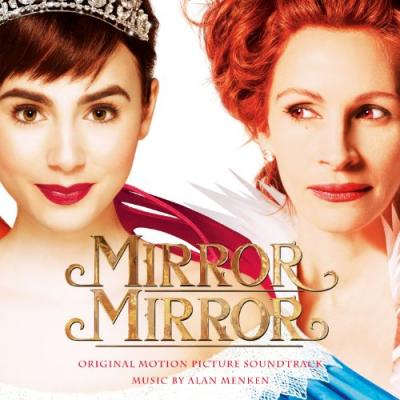
Mirror Mirror Album Cover

"Mirror Mirror" Soundtrack Lyrics

Movie • 2012

Track Listing


"Mirror Mirror: Original Motion Picture Soundtrack" – Album Guide to Tracks and Key Scenes

Mirror Mirror 2012 trailer still with Snow White and the Evil Queen facing off
Mirror Mirror film trailer imagery, 2012 fantasy-comedy Snow White adaptation

Overview

What happens when a classic Grimm fairy tale collides with a candy-colored Bollywood finale and a veteran Disney composer? Mirror Mirror answers that with a score that starts like a storybook and ends on the dance floor. The film follows Snow White’s exile, her alliance with a bandit gang of dwarfs, and her fight to reclaim the kingdom from the vain Queen Clementianna; the soundtrack shadows that journey from courtly elegance to full-blown pop exuberance.

The album is built primarily around Alan Menken’s orchestral score, recorded with a large symphonic ensemble and choir. Across its cues you can hear his familiar DNA: big, singable themes, lyrical waltzes for the royal court, and punchy action writing for sword fights and monster encounters. The one outlier is “I Believe in Love,” the end-credits number sung by Lily Collins, which turns Snow White’s victory lap into a glossy, choreographed celebration.

Across the film, the music helps define the shifting balance of power. Early cues frame the Queen’s rule with ceremonial polish and sly humor; mid-film the palette hardens into propulsive strings and brass as Snow joins the dwarfs and mounts raids on the treasury; by the finale, lush melodic writing takes over as curses break and identities are restored. The soundtrack mirrors that arc: arrival in a fragile kingdom, adaptation to life outside the palace, rebellion in the forest, and finally the collapse of the Queen’s illusions.

Stylistically, the album moves through several phases. The opening tracks lean on classical orchestration and waltz time to evoke fairy-tale pageantry. Training and combat cues bring in sharper rhythmic figures and occasional Hispanic and swashbuckling flavors, giving the heists and duels more bite. The “Beast” and resolution material push towards dramatic fantasy scoring, before the two mixes of “I Believe in Love” pivot into Bollywood-inflected pop: handclaps, driving percussion, layered vocals, and a bright, almost disco-leaning groove that undercuts any lingering darkness with sheer exuberance.

How It Was Made

Director Tarsem Singh, known for visually dense films like The Cell and The Fall, wanted music that could match ornate costumes and storybook sets without drowning the comedy. The producers brought in Alan Menken, whose run of Disney scores had already defined modern animated fairy-tale sound. Industry coverage at the time noted this as his first non-Disney live-action fairy-tale film in years, with the brief explicitly leaning into his melodic, theatrical instincts while still supporting action and physical comedy.

The score was recorded with the Northwest Sinfonia at Bastyr University Chapel near Seattle, a favorite hall for big, reverberant orchestral sessions. Choir, large brass, and detailed woodwind writing were tracked there, with long-time collaborators handling conducting, choir direction, and technical engineering. According to the album credits, Menken’s producer Kevin Kliesch oversaw the score production, with Frank Wolf handling recording and mixing, and Patricia Sullivan mastering the final album.

The most unusual ingredient is “I Believe in Love.” The song itself was written decades earlier by Nina Hart for Miloš Forman’s 1971 film Taking Off, where she also performed it. For Mirror Mirror, the team re-imagined it as a bright, Hindi-cinema-influenced dance number, with Lily Collins on vocals and contemporary pop producers adapting the arrangement into the “Mirror Mirror Mix” and “Evil Queen Mix” variations heard on the album. Menken’s score does not constantly quote the song, but the finale’s shift into that track feels prepared by the general major-key optimism and rhythmic buoyancy he builds into the preceding cues.

Music supervision and licensing work focused less on assembling a jukebox of pre-existing songs and more on clearing the revived use of “I Believe in Love,” tracing rights across earlier film and international releases and ensuring the film’s new versions were properly credited. The rest of the film relies almost entirely on original score; this makes Mirror Mirror feel closer to a classic studio fairy-tale than to the needle-drop-heavy fantasy films that were hitting theaters around the same time.

Mirror Mirror 2012 trailer frame showing the ornate royal ballroom
Opulent ballroom world that Alan Menken scores with waltzes and choral colors

Tracks & Scenes

Below are key cues and songs from Mirror Mirror: Original Motion Picture Soundtrack, with the moments they illuminate. Timings are approximate and follow the theatrical cut.

"Opening" — Alan Menken
Scene: Early in the film, a stylized animated prologue and Snow White’s narration sketch the kingdom’s past and the Queen’s rise. This cue lays a glittering storybook canvas: harp arpeggios, warm strings, and a slightly ironic fairy-tale cadence that hints the tale might not be as innocent as it looks. Non-diegetic, it runs under the visual exposition and the transition into the live-action court.
Why it matters: It establishes the main thematic material and the tone balance: grand and romantic, but with a wink. Later cues pay off fragments of this opening motif whenever the film returns to questions of rightful rule and memory of the lost king.

"Snow White and the Kingdom" — Alan Menken
Scene: Around the first ten minutes, Snow slips out of the castle to see what the Queen’s tax policies have done to her people. Menken’s cue moves from soft, curious woodwinds as she explores the snowy village to heavier harmonies as she witnesses hunger and fear, then back to a more intimate version of her theme when she interacts with the townsfolk. Fully non-diegetic, but it feels like the soundtrack to her awakening conscience.
Why it matters: This track musically separates Snow’s inner gentleness from the brittle luxury of the palace. When the same melodic shapes reappear later over the rebels’ victories, the album quietly reminds you of this moment of first empathy.

"Beauty Treatment" — Alan Menken
Scene: In one of the film’s broadest comic interludes, the Queen undergoes an elaborate, slightly grotesque spa ritual: bees, birds, and odd ingredients swarm around her as servants fuss. The music leans into stylized choral textures and a mock-sacred tone, undercut by rhythmic stings and sudden choral accents that punch the jokes.
Why it matters: According to one prominent score review, this cue almost suggests an Elfman-style gothic pastiche before the score settles into its own voice. It marks the Queen as both ridiculous and genuinely powerful, and the track stands out on album as one of the clearest character portraits.

"The Ball" — Alan Menken
Scene: During the palace ball where Snow, re-introduced by the dwarfs’ plotting, meets the Prince again, this cue underpins sweeping camera moves through the ballroom. A lush waltz swirls around guests in towering gowns while Snow’s entrance gets a more transparent, harp-and-strings arrangement, making her feel lighter than the court around her. The music stays non-diegetic but tightly choreographed with the dance patterns and the Queen’s scheming glances from her throne.
Why it matters: “The Ball” is the album’s purest dose of fairy-tale romance. It showcases Menken’s knack for writing memorable waltzes that carry emotion without lyrics, and on the album it becomes a central thematic anchor between the comic early tracks and the darker action material.

"The Dwarfs" — Alan Menken
Scene: Snow’s first real encounter with the dwarf bandits in the forest carriage robbery is scored with agile, almost circus-like rhythmic figures: plucked strings, nimble woodwinds, and punchy percussion. As their acrobatics and stilt-legged fighting style are revealed, the music bounces between stealth and swagger, leaning toward diegetic feel even though it lives in the background.
Why it matters: This cue gives the dwarfs their own musical identity, distinct from both the palace and the enchanted woods. On album it’s one of the main “fun” tracks, signaling that the revolution against the Queen will be playful as well as risky.

"The Training" — Alan Menken
Scene: In a mid-film montage, the dwarfs teach Snow to fight, steal, and navigate the forest. The cue keeps a fast tempo with repeated patterns in strings and percussion, punctuated by comic stingers for pratfalls and successful moves. It often feels almost like a dance track filtered through an orchestral lens, tightly synced to physical gags and quick cuts.
Why it matters: It is the musical bridge between early, passive Snow and the active leader she becomes. The same musical ideas sneak back into later action cues, signaling that her growth is rooted in this scrappy training rather than royal birthright.

"Dueling" — Alan Menken
Scene: The flirtatious sword fight between Snow and Prince Alcott in the forest, where both test each other more than they try to kill, is driven by this cue. It mixes bright brass, swirling strings, and a hint of swashbuckling, almost Zorro-like flair as blades clash on wooden walkways and improvised platforms. The orchestration keeps a light touch so their banter and physical comedy land clearly.
Why it matters: Reviewers have singled out this track as one of the album’s highlights. It crystallizes the tone the whole film aims for: romantic, cheeky, and kinetic without ever becoming brutal.

"Love Potion" — Alan Menken
Scene: When the Queen’s bungled magic has the Prince acting like an over-affectionate puppy toward her instead of Snow, this cue plays through the resulting chaos: the spell’s casting, his transformation into an absurdly devoted suitor, and Snow’s horrified reactions. The music leans into comedic exaggeration, with overblown romantic gestures in the strings and sudden little woodwind yelps to mirror the Prince’s dog-like behavior.
Why it matters: This track shows how the score supports broad comedy without abandoning thematic coherence. Even here, fragments of the love theme are twisted to fit the wrong couple, making the eventual musical “correction” later feel more satisfying.

"Mannequin Attack" — Alan Menken
Scene: Deep in the woods, Snow and the dwarfs face a surreal threat: giant puppet-like marionettes controlled from the magic mirror. The cue shifts into darker territory with pounding rhythms, dissonant brass, and ghostly choral swells as wooden limbs crash through the trees and the heroes are thrown around like toys. The sequence is fully non-diegetic, but the music is so tightly cut it almost functions like an extended horror set-piece.
Why it matters: It demonstrates the score’s range. Menken, often associated with bright, family-friendly melodies, proves he can sustain tension and menace when the film calls for it.

"Beast" — Alan Menken
Scene: In the climactic fight with the chimera-like Beast in the forest, this lengthy cue carries the emotional and physical stakes. It cycles through tense build-ups, heroic statements of Snow and the Prince’s motifs, and tragic hues as the truth about the Beast’s identity emerges. The orchestra goes full fantasy here: low brass growls, tremolo strings, and sweeping choir as the curse begins to crack.
Why it matters: On album, this is one of the most substantial narrative arcs, effectively a condensed third act. It proves that the score can do more than decorate costumes; it can carry genuine mythic weight.

"Breaking the Spell" — Alan Menken
Scene: When Snow’s actions finally undo both the Beast’s curse and the enchantments clouding the kingdom’s history, this cue steps in with a more delicate, piano-led version of the main theme. Visuals of ice melting, vines retreating, and the true King restored are matched with musical “thawing”: harmonies open up, choir enters more gently, and the tempo relaxes.
Why it matters: It is the emotional payoff for the album’s recurring motifs. Critics who praised the score often call out this track alongside “The Ball” and “Happy End” as peak Menken.

"Happy End" — Alan Menken
Scene: The pre-credits wrap-up in the palace — Snow crowned, the Prince at her side, the dwarfs rehabilitated, and the Queen’s schemes finally undone — plays as a montage scored by this cue. It reprises several themes in more straightforward, triumphant form, with full orchestra and choir. Non-diegetic but closely aligned with hugs, applause, and the kingdom’s literal return to color.
Why it matters: It is deliberately on-the-nose, closing the fairy-tale loop. As one score reviewer joked, it sounds exactly like a track called “Happy End” by Alan Menken would: no ambiguity, just resolution.

"I Believe in Love (Mirror Mirror Mix)" — Lily Collins
Scene: Immediately after the narrative ending, the image freezes on Snow, and the film “breaks” into a Bollywood-style end-credits sequence staged in the palace. Snow, the dwarfs, the Prince, and townspeople dance through choreographed formations on the great staircase and in the throne room while Collins performs on screen, trading lines with a backing chorus. The track runs over much of the end credits as a fully diegetic performance inside the world, then as non-diegetic playback as the credits roll on.
Why it matters: This is the film’s most iconic musical moment. Contemporary coverage highlighted how unusual it was for a Hollywood fairy-tale to end with a full, integrated dance number in this style, and the track’s earlier history in a 1970s art-film adds an extra layer of cinephile curiosity.

"I Believe in Love (Evil Queen Mix)" — Lily Collins
Scene: This alternate mix is primarily an album bonus, offering a slightly darker, more rhythm-heavy version that plays with backing vocals and arrangement details. Some home-video versions use fragments of this mix over extended credits, but the theatrical film leans on the primary “Mirror Mirror Mix.”
Why it matters: It underlines how flexible the song is: originally a melancholic audition piece, then a Euro-hit, and now a modern pop-Bollywood hybrid. On the album it also helps balance the heavy orchestral material with something instantly playlist-friendly.

Mirror Mirror trailer shot of Snow White and the dwarfs in the snowy forest
Forest bandit energy: the dwarfs’ acrobatics get their own nimble musical identity

Notes & Trivia

  • The score album contains fifteen orchestral cues and two versions of “I Believe in Love,” with only that song being fully performed on screen.
  • Although many viewers assumed Alan Menken wrote “I Believe in Love” for the film, the song’s origins go back to Nina Hart’s work on Taking Off in 1971.
  • Tarsem Singh reportedly chose the song after playing an old recording for his daughter, who loved it; he then built the end-credits set-piece around it.
  • The album was released physically by Relativity Music Group in 2012 and later distributed digitally through major platforms like Apple Music and Spotify.
  • The score helped Menken win a BMI Film & TV Award for film music, even though the film itself received mixed reviews.
  • Because nearly all the music is original score, fan sites catalog only a single “song with scene description” for Mirror Mirror: the end-credits number.

Music–Story Links

Menken’s writing here is tightly tied to character arcs. Snow White’s music starts curious and slightly fragile in “Snow White and the Kingdom,” then grows more confident and rhythmically assertive through “The Training” and “Dueling.” By the time “Beast” and “Breaking the Spell” arrive, her theme has shifted from wondering to declarative, tracking her transformation from sheltered princess to active liberator.

The Queen’s musical world is marked by formality and excess. The choral pomp of “Beauty Treatment” and the ornamental touches during palace scenes emphasize that her power rests on spectacle. Whenever that veneer slips — tax riots, failed spells — the score undercuts her with comedic gestures or harsh dissonances, making her seem brittle rather than truly invincible.

The dwarfs and commoners inhabit yet another palette: lighter instrumentation, more syncopated rhythms, and an almost folk-dance feel in tracks like “The Dwarfs” and “The Training.” When those textures bleed into bigger cues — a bit of their rhythmic language inside “Beast,” for example — the music is effectively saying that the kingdom’s salvation relies on their ingenuity, not just royal blood.

“I Believe in Love” ties the themes together in a very literal way. It invites every major character (even the recently deposed Queen) into the same space, under one groove. The song’s lyrics about trust and emotional resilience mirror Snow’s journey, while the Bollywood-leaning arrangement winks at Tarsem’s own background. It is both a curtain call and a thesis statement: this version of Snow White belongs as much to global pop culture as it does to European folklore.

Reception & Quotes

The film’s overall critical reception landed in the “mixed” zone, with many reviewers admiring the costumes and visual flair more than the script. Aggregated scores hovered around the mid-range, but comments about the music were often kinder, framing the score as one of the production’s safest hands.

Specialist soundtrack sites and reviewers generally described the album as solid, tuneful Menken. One critic noted that while the main themes feel familiar from his Disney work, the action writing in cues like “Dueling” and “Beast” shows a surprisingly muscular side. Another site praised the orchestral craftsmanship but argued that the Bollywood song at the end sits slightly apart stylistically from the rest of the score, even if it works in the film.

“There are big, sweet themes, an opulent waltz, and some surprisingly robust action music — classic Menken, just in a different studio wrapper.”
James Southall, Movie-Wave review
“Affable and light-hearted, the score delivers exactly the breezy fantasy texture you’d expect, though the end-credits song lives in its own, very pop universe.”
Filmtracks editorial overview

More general outlets tended to mention the soundtrack in passing when discussing Tarsem’s maximalist approach, filing it alongside costumes and production design as part of the film’s “wall of prettiness.” At least one modern retrospective on the 2012 Snow White dueling releases singles out the Bollywood-style finale as a key reason Mirror Mirror still feels distinct today.

Mirror Mirror trailer shot of Snow White in her wedding-like gown smiling
Snow’s final transformation into an active, joyful heroine lines up with the score’s brightest material

Interesting Facts

  • The original “I Believe in Love” recording by Nina Hart became a minor hit in Italy in the 1970s before being rediscovered for this film.
  • Lily Collins performs the end-credits song herself; contemporary teen magazines at the time promoted it almost like a debut pop single.
  • The film’s end-credits dance has been discussed in academic writing as a rare case of a Hollywood fairy-tale using a full Bollywood-style curtain-call sequence.
  • On some soundtrack databases, Mirror Mirror is listed under both “classical” and “stage & screen,” reflecting the hybrid orchestral-theatrical style of Menken’s writing.
  • Relativity Music Group released the album on CD with a slipcase and printed liner note from Menken about the score’s themes and recording.
  • The score is part of Alan Menken’s broader discography of fairy-tale projects that includes The Little Mermaid, Beauty and the Beast, Aladdin, Enchanted, and Tangled.
  • Despite a comparatively modest box-office showing next to The Hunger Games that same month, the film’s music continues to circulate via streaming playlists and fan edits of the dance sequence.

Technical Info

  • Title: Mirror Mirror: Original Motion Picture Soundtrack
  • Year: 2012
  • Type: Film score / soundtrack album for the feature film Mirror Mirror
  • Primary composer: Alan Menken
  • Primary featured vocalist: Lily Collins (“I Believe in Love” mixes)
  • Recording venue: Bastyr University Chapel / Seattle scoring stage
  • Labels: Relativity Music Group; Sony Classical (distribution and international issues)
  • Core genres: Orchestral film score, classical, fantasy adventure, end-credits pop/Bollywood fusion
  • Key cues highlighted on album art and reviews: “Opening,” “Beauty Treatment,” “The Ball,” “Dueling,” “Beast,” “Breaking the Spell,” “Happy End,” “I Believe in Love” (both mixes)
  • Film context: Score to Tarsem Singh’s 2012 live-action Snow White adaptation starring Lily Collins and Julia Roberts
  • Release & availability: 2012 CD release (catalog numbers associated with Relativity); available on major digital platforms including Apple Music and Spotify; typically filed under Alan Menken’s discography.
  • Awards linkage: The film’s music contributed to Alan Menken receiving a BMI Film & TV Award for film music for Mirror Mirror.

Questions & Answers

Did Alan Menken write “I Believe in Love” specifically for Mirror Mirror?
No. The song was originally written and performed by Nina Hart for the 1971 film Taking Off. Mirror Mirror uses a newly arranged, pop-Bollywood version sung by Lily Collins, with updated production and credits that include Menken and modern pop writers for the adaptation.
Why does the film end with a Bollywood-style dance number?
The director wanted a joyful, unexpected finale that matched the film’s heightened visual style and also nodded to his own cultural background. He reportedly chose “I Believe in Love” after his daughter responded strongly to the old recording, then built a choreographed end-credits sequence around a new version of the song.
Is the soundtrack mostly songs or mostly instrumental score?
It is overwhelmingly instrumental. The album contains a large orchestral score and only two vocal tracks, both mixes of “I Believe in Love.” The film itself behaves more like a scored fantasy adventure with a single, show-stopping song rather than a full musical.
How does this score compare to Alan Menken’s classic Disney work?
You can hear the same love of melody and waltz-time romance found in Beauty and the Beast or Enchanted, but the action writing leans a bit darker and more swashbuckling. Some critics consider it a “comfort zone” effort with standout set-pieces rather than a radical reinvention.
Where can I legally listen to the Mirror Mirror soundtrack today?
The album is available on the major streaming services (such as Apple Music and Spotify) and still turns up on physical media via CD. If you search under Alan Menken’s discography, you will usually find it alongside his Disney scores and later fantasy projects.

Canonical Entities & Relations

Subject Relation Object
Mirror Mirror (2012 film) is scored by Alan Menken
Mirror Mirror: Original Motion Picture Soundtrack is album for Mirror Mirror (2012 film)
Alan Menken composes score for Mirror Mirror (2012 film)
Lily Collins performs song “I Believe in Love (Mirror Mirror Mix)”
Nina Hart writes original song “I Believe in Love”
Relativity Music Group releases Mirror Mirror: Original Motion Picture Soundtrack
Tarsem Singh directs Mirror Mirror (2012 film)
Bastyr University Chapel hosts recording sessions for Mirror Mirror: Original Motion Picture Soundtrack
Alan Menken is awarded BMI Film & TV Award for film music for Mirror Mirror

Sources: Wikipedia (film and soundtrack entries); AllMusic album and release pages; Filmtracks editor review; Movie-Wave review; Discogs listings; BMI and trade-press award notes; Times of India feature on the Bollywood-style ending; academic article on the end-credits sequence; Spotify/Apple Music availability pages; coverage in Teen Vogue and other contemporary press about Lily Collins’s recording.

November, 15th 2025

Read about 'Mirror Mirror', an American family adventure fantasy film based on the fairy tale "Snow White" collected by the Brothers Grimm: Wikipedia, IMDb
A-Z Lyrics Universe

Lyrics / song texts are property and copyright of their owners and provided for educational purposes only.