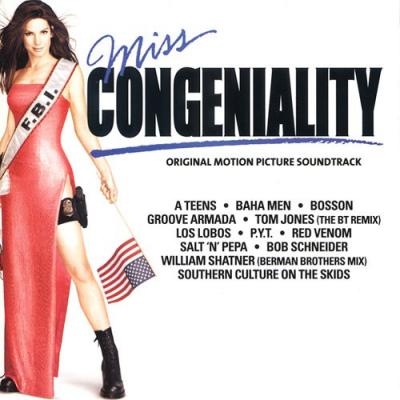
"Miss Congeniality" Soundtrack Lyrics
Movie • 2000
Track Listing
Bosson
Groove Armada
Tom Jones
P.Y.T.
A Teens
Red Venom
Baha Men
Salt 'N' Pepa
Los Lobos
Bob Schneider
Southern Culture on the Skids
William Shatner
Bosson
"Miss Congeniality (Original Motion Picture Soundtrack)" – Album Guide to Tracks and Key Scenes

Overview
Can a beauty pageant comedy double as a time capsule of turn-of-the-millennium pop? Miss Congeniality quietly answers yes. The 2000 film follows FBI agent Gracie Hart, forced to transform from brusque, socially awkward cop into “Gracie Lou Freebush,” a viable Miss United States contestant while tracking a bomb threat. Around her, the soundtrack throws bright pop, hip hop and retro standards at every step of the makeover, turning the pageant into a jukebox that comments on how women are supposed to look, move and behave.
The movie’s sound world splits in two. Edward Shearmur’s orchestral score handles the procedural spine and action beats, keeping chase scenes and FBI briefings taut and slightly tongue-in-cheek. The needle drops, by contrast, sit almost entirely in Gracie’s undercover world: locker-room gags scored with feminist rap, catwalks powered by Tom Jones, and talent routines that veer from Sousa marches to “Lara’s Theme” on water glasses. The result is a soundtrack that feels like a broadcast mix – half network TV pageant, half MTV rotation.
What makes it distinct is how much of the comedy and character work is delegated to songs. Gracie’s first night “training” with a punching bag lands harder because Salt-N-Pepa is literally telling the world it’s none of their business. Cheryl’s goofy, full-body joy in her performance scenes only really lands when Baha Men blast under her. William Shatner crooning “Miss United States” sells the pageant’s camp better than any line of dialogue. The album takes these cues and rearranges them into a smoother, dance-floor-friendly listen.
Stylistically, the soundtrack moves in phases. Early scenes lean on hip hop and dance-pop that telegraph Gracie’s rough edges and stubborn independence; the Salt-N-Pepa cue and Groove Armada’s slick house textures stand in for her prickly, sarcastic energy. The mid-film makeover and party sequences swing into glossy Y2K pop and remixed classics – Tom Jones, A*Teens, P.Y.T. – mirroring her reluctant embrace of “feminine” performance. By the finale, the music toggles between sentimental pop (“One in a Million”) and bombastic anthems (“Miss United States”), pointing to a new equilibrium: Gracie stays herself, but she has learned how to wield spectacle instead of rejecting it.
How It Was Made
The film’s original score comes from British composer Edward Shearmur, who was also scoring slick studio projects like Charlie’s Angels around the same period. His job here is tricky: keep the FBI plot credible enough, while leaving plenty of space for songs to dominate pageant and comedy beats. He leans on light, rhythmic orchestration, quick brass punches and a slightly jazzy harmonic palette that can pivot from slapstick to suspense without calling attention to itself. Industry profiles later noted that he picked up BMI Film & TV Awards for his work on Miss Congeniality, which hints at how central his score was to the film’s success.
On the song side, the official soundtrack album – Miss Congeniality (Original Motion Picture Soundtrack) – compiles mostly pre-existing tracks plus Bosson’s “One in a Million,” written and produced as the romantic theme. The album is credited to Various Artists with Shearmur, and was issued through TVT Soundtrax/TVT Records in the U.S., with Gut Records handling at least one European CD release. Library catalogues and Discogs listings credit Steve Schnur as music supervisor and Sandra Bullock as an executive soundtrack producer, which matches Schnur’s wider reputation as a high-profile supervisor on late-90s and early-2000s studio films.
The selection strategy is clear: license songs that feel instantly familiar but not over-exposed. Instead of pulling the original ABBA recording of “Dancing Queen,” the film uses a bright A*Teens cover; instead of a Motown classic, it leans on Red Venom’s “Let’s Get It On” update. Baha Men and Groove Armada supply club-ready energy that was still contemporary in 2000. Mixed with novelty cues and the kitschy pageant anthem “Miss United States,” the soundtrack builds a pop collage that makes the movie feel like it’s constantly flipping channels between MTV, ESPN and a live pageant broadcast.
Tracks & Scenes
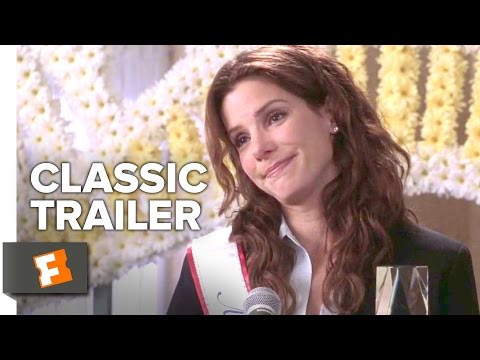
This section maps the key licensed songs (and a few score-adjacent cues) to the scenes where they hit hardest. Timings are approximate, based on a 110-minute runtime.
"None of Your Business" – Salt-N-Pepa
Where it plays: Around 0:09:00, back in her grim apartment, agent Gracie Hart tapes up her hands, cranks the boombox and goes at the punching bag. The track is diegetic – coming from her stereo – and we hear the verses as she throws sloppy but committed combinations, still in baggy clothes and combat boots. The cut alternates between her aggression in the room and the FBI team mocking her in the office, so the groove bleeds slightly into non-diegetic territory as it bridges scenes.
Why it matters: A 1994 feminist rap hit repurposed as a character cue says a lot. The song’s message – my life, my choices – aligns perfectly with Gracie’s refusal to conform, especially before any makeover or coaching has happened. It frames her as someone whose anger is principled, not just messy.
"She’s a Lady (The BT Remix)" – Tom Jones
Where it plays: The film’s most iconic sync arrives mid-movie when Gracie emerges from the hangar after Victor’s extreme makeover. Around the 0:40:00 mark, time slows down as she walks in heels for the first time, hair blown out, dress fitted, colleagues gaping. The remix plays non-diegetically over slow-motion shots of her strut, intercut with FBI agents dropping coffees and almost walking into walls.
Why it matters: The cue walks a tonal tightrope. The lyrics celebrate a “lady,” but the arrangement is tongue-in-cheek, and the visuals underline how absurd the transformation is. The song lets the movie have it both ways: parody the male gaze while still delivering a genuinely effective star entrance.
"If Everybody Looked the Same" – Groove Armada
Where it plays: Around 1:06:00, during the pre-pageant club outing, the contestants – now friendly with Gracie – let loose on the dance floor. The track plays diegetically through the club system, its bassline and filtered horns washing over quick cuts of shots, spilled drinks and unexpectedly good choreography from women we’ve only seen in rehearsals. Gracie relaxes, finally dancing without treating it as undercover work.
Why it matters: Lyrically, the song undercuts pageant logic: if everyone looked the same, the world would be boring. The cue signals a pivot from competition to solidarity; the women stop being stereotypes competing for a crown and start to feel like a messy, diverse group of people sharing a night off.
"Let’s Get It On" – Red Venom
Where it plays: In the same club sequence, around 1:08:00, this contemporary reworking of the Marvin Gaye classic slides in under a quieter one-on-one conversation between Gracie and Cheryl outside the main dance floor. The music is mostly background (diegetic), heard through walls and open doors while they talk about fears and expectations.
Why it matters: The slightly on-the-nose title is part joke – this is the least sexual conversation the song could accompany – but it also marks a genuine intimacy. This is where the two characters finally trust each other, and the flirty music plays against the vulnerability of the moment.
"Get Ya Party On" – Baha Men
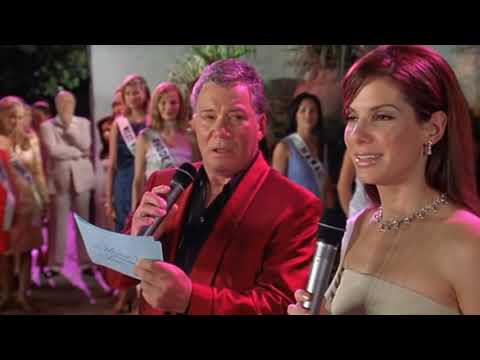
Where it plays: Around 1:24:00, during the televised talent portion, Cheryl performs her baton and fire routine. The track plays diegetically as her backing music in the arena, kicking in with a sharp drum intro as the batons light up. Crowd noise, announcer patter and William Shatner’s commentary ride on top of the mix.
Why it matters: The choice is pure late-90s/early-2000s optimism. Baha Men were fresh off “Who Let the Dogs Out,” so the sound instantly signals “party” to the audience. For Cheryl, it amplifies her transformation from nervous pageant punchline to genuinely impressive performer.
"Anywhere USA" – P.Y.T.
Where it plays: Listed twice in cue sheets – around 1:02:00 during the swimwear competition and again near 1:23:00 at a break in the final contest – this upbeat teen-pop track is woven into the televised portions of the pageant. It’s diegetic, blasting in the arena as contestants parade in swimsuits and wave flags.
Why it matters: The lyrics frame the pageant as a cross-section of the country, which is both sincere and satirical. It underscores how the show sells an image of national unity, even as the film quietly points out how manufactured and constrained that image is.
"Dancing Queen" – A*Teens
Where it plays: Around 0:42:00, another rehearsal sequence shows contestants practicing choreographed routines. This sleek cover plays non-diegetically over a montage of missteps, eye-rolls and small triumphs as Victor drills everyone into shape.
Why it matters: Using a teen pop cover instead of the original ABBA recording fits the movie’s tone: familiar but slightly bubble-wrapped. It also doubles down on the theme of borrowed glamour – these young women are literally stepping into someone else’s moves and music.
"Miss United States" – William Shatner
Where it plays: The in-universe pageant anthem recurs in fragments, but two moments stand out. First, during early rehearsals, Shatner’s Stan Fields croons it hesitantly onstage while contestants find their marks. Later, in the live broadcast finale around 1:35:00, a remixed “Berman Brothers Mix” version underscores the coronation, with Shatner leaning fully into the melodrama as confetti falls.
Why it matters: The song is camp by design. Having Shatner actually perform it blurs the line between satire and sincerity; you can’t tell if Stan thinks it’s a masterpiece or just knows it pays the bills. The cue anchors the pageant as its own slightly ridiculous universe.
"Lara’s Theme (Theme from Doctor Zhivago)" – Maurice Jarre
Where it plays: During the talent segment set in front of the Alamo, around 0:52:00, Gracie, in an old-fashioned dirndl and bloomers, plays “Lara’s Theme” on tuned water glasses, with bells added. The melody is diegetic, performed live onstage, and the scene is filmed with surprisingly earnest coverage until she spots a potential threat and launches herself into the crowd, collapsing the performance into chaos.
Why it matters: This is the moment where her undercover role and her real instincts collide. The choice of a lush, nostalgic film theme for her “talent” contrasts brutally with the hard stop when she shifts back into FBI mode. It is also one of the few moments where the soundtrack explicitly references another classic movie.
"You Light Up My Life" – performed in-film by Deirdre Quinn as Miss Texas
Where it plays: During a montage of talents at roughly the same 0:51:00 sequence, Miss Texas takes the stage to sing “You Light Up My Life.” The recording credit goes to LeAnn Rimes on some releases, but in the film the voice is tied tightly to the character in costume, framed in saccharine close-ups and crowd reaction shots.
Why it matters: It’s a textbook pageant song choice: earnest, sentimental, slightly over-sung. Placing it near Gracie’s glass-harp stunt underlines how off-brand Gracie is for this world. She is literally surrounded by traditional power ballads and still chooses something odd and old-fashioned.
"Mustang Sally" – The Commitments / Los Lobos
Where it plays: Two different recordings pop up. Around 0:34:00, The Commitments’ version scores Gracie’s first emergence as “Miss New Jersey” in the hotel corridor, a swaggering, slightly rough-edged cue that fits her discomfort in heels. Later, Los Lobos’ take rolls over the end credits around 1:45:00, fully non-diegetic as we see backstage clips and relaxed character beats.
Why it matters: Using a soul standard associated with working-class bar bands to score runway moments undercuts the glamour. It keeps reminding us that Gracie is still more at home in a dive bar than on a stage, even when she nails the walk.
"One in a Million" – Bosson
Where it plays: The main version lands in the final act, around 1:19:00, as the climactic show and emotional resolutions play out in quick montage: Gracie saving the day, Cheryl crowned, friendships cemented. The song plays non-diegetically over the broadcast, deliberately syrupy against the chaos of explosives and arrests. A remixed version appears on the album and in some promotional uses.
Why it matters: Written specifically for the film, this is the closest thing to a love theme – not just between Gracie and Eric, but between Gracie and the life she didn’t think she wanted. Its Golden Globe nomination for Best Original Song cemented the soundtrack’s profile and helped the track become a standalone hit in several territories.
"Bullets" – Bob Schneider
Where it plays: Around 1:43:00, as the main story wraps and the credits roll, “Bullets” takes over from the more bombastic cues. It plays non-diegetically over quiet images and credit text, pushing a slightly more introspective alt-rock tone after all the pageant glitz.
Why it matters: Ending on a song this laid-back is a subtle flex. It nudges the film away from pure farce into something like a character piece; you are invited to sit with Gracie’s emotional journey instead of just the jokes.
"Liquored Up and Lacquered Down" – Southern Culture on the Skids
Where it plays: Used as honky-tonk background in one of the bar or party moments, the track sits low in the mix, essentially as source music driving the sense that these events exist beyond the TV broadcast frame.
Why it matters: It is a deep-cut choice that fits the film’s slightly off-beat sense of Americana – tacky, loud, but genuinely affectionate towards the spaces where these characters live when the cameras are off.
Trailer and promotional music
Where it plays: Most surviving official trailers mix dialogue and Shearmur’s score stings rather than centering a single “trailer song.” Later promos and TV spots often lean on short bursts of “She’s a Lady” or “One in a Million” under quick-cut montages of the makeover and the final dance, but documentation is patchy, and different territories used different cuts.
Why it matters: The lack of a single, universally recognized trailer song is almost quaint now. Instead of a big sync to sell the movie, the campaign leans on Bullock’s star power and the premise, letting the soundtrack reveal itself in the theater and on the CD.
Notes & Trivia
- “One in a Million” is the only purpose-written pop song on the album and earned a Golden Globe nomination for Best Original Song – Motion Picture.
- Edward Shearmur’s score for the film later received BMI Film & TV Awards recognition, grouping it with his more obviously “epic” work.
- Steve Schnur is credited as music supervisor on the soundtrack, years before he became widely known for reshaping music in video games at Electronic Arts.
- William Shatner is both an actor and an in-universe vocalist here, credited for “Miss United States” and its Berman Brothers remix.
- The film’s German home-video title, Miss Undercover, led to at least one alternate-branded CD edition of the soundtrack in Europe.
- Some cue sheets list both The Commitments and Los Lobos versions of “Mustang Sally,” reflecting the film’s mix of on-screen performance and end-credits use.
Music–Story Links
The soundtrack is tightly woven into Gracie’s identity arc. At the start, her world sounds like “None of Your Business”: combative, defensive, explicitly uninterested in playing by anyone else’s rules. That track over the punching-bag scene makes it clear that she experiences both her job and patriarchy as constant fights. When she enters the pageant bubble, the sound flips; Shearmur’s score pulls back and chart-friendly pop takes over, almost as if the film itself gets a network-TV gloss.
“She’s a Lady” sits at the center of this shift. The makeover reveal would feel cruel without the soundtrack framing it as a joke shared with Gracie rather than at her expense. Because the cue is so knowingly overblown, we read her walk as performance – she is trying on “lady” behaviour like a costume, not abandoning her previous self. Later, when she plays “Lara’s Theme” on glasses, the use of a lush, romantic film theme for a comedic talent act shows how far she’s come in understanding spectacle. She can use sentimentality as a tool rather than simply rejecting it.
For the supporting characters, songs function almost like flags. Cheryl’s joy is tied to “Get Ya Party On,” a track that refuses to be cool but insists on fun; when the film asks us to take her seriously as a person, it keeps that musical exuberance intact instead of swapping in a more “prestige” cue. The pageant establishment, embodied by Shatner’s Stan Fields and Candice Bergen’s villain, is encoded in “Miss United States” – a syrupy anthem that sounds proud of tradition even as the plot reveals how corrupt the system around it can be. By the time “One in a Million” rolls over the finale, the music has stopped belonging to the pageant and started belonging to Gracie’s found family of misfits.
Reception & Quotes
The film itself landed with mixed reviews but strong box-office numbers, and the music followed a similar path: mainstream, accessible, sometimes dismissed as lightweight, but sticky in popular memory. The combination of big-room covers and one standout original track gave the album enough identity to live beyond the movie, especially in territories where Bosson’s single charted.
Retail blurbs leaned into that breezy energy. One Amazon description for the CD notes that its “free-floating, lightweight pop” mirrors the film’s light-hearted humour, which is about right: the album rarely pushes, it just glides. User reviews tend to be nostalgic rather than analytical, often focusing on how replaying the soundtrack instantly conjures specific scenes – the hallway walk, the talent show, the final dance line.
Critical writing about the film’s gender politics has increasingly pointed to the soundtrack as part of its “rose-tinted girl power” package. The music sells empowerment in familiar commercial terms – dance-pop, victorious ballads, feel-good rap – but the actual story complicates that by letting Gracie remain physically messy, angry and resistant even as she participates in the spectacle. In that sense, the album functions as both sincere fuel for feel-good montages and an unintentional commentary on how polished “empowerment” was being packaged at the turn of the 2000s.
“Its free-floating, lightweight pop perfectly reflects the light-hearted humour that underpins Sandra Bullock’s film.”
– Product blurb, Amazon UK soundtrack listing
“The music was fun to listen to again.”
– Customer review of the CD release
“Shearmur won BMI Film & TV Awards for
– Composer profile, mfilesMiss Congeniality, underlining how central his music was to the film’s appeal.”
“Twenty years later, glaring flaws aside, the bond it created among women endures.”
– Essay on the film’s legacy, Merry-Go-Round Magazine
Interesting Facts
- The official CD has only 13 tracks, so several memorable diegetic cues – “Lara’s Theme,” “Miss United States” in full, and the on-screen “You Light Up My Life” – never appeared on the primary album.
- “None of Your Business” predates the film by six years; its use here introduced a new generation to Salt-N-Pepa’s Grammy-winning track.
- Baha Men’s “Get Ya Party On” comes from the same era as “Who Let the Dogs Out,” giving Cheryl’s talent routine the exact glossy sound radio stations were hammering in 2000.
- Different regions saw different label logos on the disc: TVT Soundtrax/TVT Records in North America, Gut Records on at least one European edition, all with similar track listings.
- Streaming platforms now often bundle music from Miss Congeniality and its sequel into a single playlist, framing them as one extended Y2K pop universe.
- The makeover scene paired with “She’s a Lady” is so culturally sticky that social media posts can reference it just by quoting “She’s a Lady… IYKYK.”
- The talent-show “Lara’s Theme” gag has been repeatedly cited in articles about musical wine glasses and novelty instruments – a rare case of a rom-com inspiring gift-guide copy.
- “One in a Million” still turns up on adult-contemporary and nostalgia radio rotations in parts of Europe, entirely detached from its original film context.
Technical Info
- Title: Miss Congeniality (Original Motion Picture Soundtrack)
- Work type: Film soundtrack album for Miss Congeniality (2000)
- Film release year: 2000 (U.S. theatrical release 22 December 2000)
- Album original release: Late 2000 (U.S.), with additional CD issues in 2001 in Europe
- Primary composer (score): Edward Shearmur
- Key featured artists: Bosson; Groove Armada; Tom Jones; P.Y.T.; A*Teens; Red Venom; Baha Men; Salt-N-Pepa; Los Lobos / The Commitments; Bob Schneider; Southern Culture on the Skids; William Shatner
- Music supervision: Steve Schnur (album and film credits)
- Executive soundtrack production: Sandra Bullock (among others, on some editions)
- Labels: TVT Soundtrax / TVT Records (U.S.); Gut Records (selected European CD); additional Castle Rock Entertainment branding on some pressings
- Core styles: Pop, dance-pop, hip hop, electronic, soul, film score
- Notable placements: “None of Your Business” (training scene); “She’s a Lady” (makeover walk); “Lara’s Theme” (talent show glasses); “One in a Million” (finale montage); “Miss United States” (pageant anthem), “Get Ya Party On” (Cheryl’s talent); “Bullets” (end credits)
- Album length (typical CD): approx. 48–49 minutes
- Availability: Out-of-print on some physical formats but widely available via digital retailers and streaming platforms, often combined with the sequel’s music
- Awards: “One in a Million” nominated for Golden Globe – Best Original Song; score recognised in BMI Film & TV Awards categories
Questions & Answers
- Does the soundtrack album include every song heard in the film?
- No. The CD focuses on the main pop and hip-hop cues. Several diegetic pieces – notably “Lara’s Theme,” the full “Miss United States” performance and some talent-show snippets – are absent.
- Is “One in a Million” actually a theme for Gracie and Eric, or just end-credits music?
- It functions as both. In the cut of the film, it plays over the climactic resolution of the case and the romantic payoff, so it reads as a broad theme for Gracie’s emotional wins rather than a standard love duet.
- Who was responsible for balancing the score and all the licensed songs?
- Composer Edward Shearmur handled the original score, while music supervisor Steve Schnur oversaw song selection and placement. Editors and the director then shaped where songs overpower the score and where they drop to the background.
- Why does the makeover scene work so well musically?
- Because “She’s a Lady (The BT Remix)” is knowingly outsized. The brass hits and remix sheen exaggerate Gracie’s new look just enough that we understand the film is laughing with her, not just at her.
- Is the soundtrack worth hearing if you have never seen the movie?
- If you like turn-of-the-millennium pop and hip hop, yes – it plays like a tightly curated Y2K playlist. If you are after the film’s orchestral score, only small parts of Shearmur’s work are easily available, so the album alone will not give the full picture.
Canonical Entities & Relations
| Subject | Relation | Object |
|---|---|---|
| Miss Congeniality (film) | is directed by | Donald Petrie |
| Miss Congeniality (film) | stars | Sandra Bullock as Gracie Hart / Gracie Lou Freebush |
| Miss Congeniality (film) | has music by | Edward Shearmur |
| Miss Congeniality (film) | is distributed by | Warner Bros. Pictures |
| Miss Congeniality (film) | is produced by | Castle Rock Entertainment |
| Miss Congeniality (film) | is produced by | Fortis Films |
| Miss Congeniality (film) | is produced by | Village Roadshow Pictures |
| Miss Congeniality (Original Motion Picture Soundtrack) | is album for | Miss Congeniality (film) |
| Miss Congeniality (Original Motion Picture Soundtrack) | is released by | TVT Records / TVT Soundtrax |
| Miss Congeniality (Original Motion Picture Soundtrack) | is released by | Gut Records (European edition) |
| Steve Schnur | is music supervisor of | Miss Congeniality (film) |
| Sandra Bullock | is executive soundtrack producer of | Miss Congeniality (Original Motion Picture Soundtrack) |
| Bosson | performs | “One in a Million” |
| “One in a Million” | is featured in | Miss Congeniality (film) |
| Salt-N-Pepa | perform | “None of Your Business” |
| “None of Your Business” | is featured in | Miss Congeniality (film) |
| Tom Jones | performs | “She’s a Lady (The BT Remix)” |
| “She’s a Lady (The BT Remix)” | underscores | Gracie’s makeover hallway walk |
| William Shatner | performs | “Miss United States” |
| “Miss United States” | is anthem of | Miss United States pageant (fictional) |
| Maurice Jarre | composes | “Lara’s Theme (Theme from Doctor Zhivago)” |
| “Lara’s Theme (Theme from Doctor Zhivago)” | is performed by | Gracie Hart on water glasses in the talent show |
| Baha Men | perform | “Get Ya Party On” |
| “Get Ya Party On” | underscores | Cheryl Frasier’s talent routine |
Sources: Wikipedia film entry; soundtrack tracklist summaries (Warner Bros. / Fandom, SoundtrackINFO); song placement databases (WhatSong, MoviesOST); Amazon and retailer listings for the CD (TVT / Gut); composer and supervisor profiles (mfiles, Kraft-Engel, Steve Schnur biographies); press and essays on Miss Congeniality and its legacy (Merry-Go-Round Magazine, regional feature articles on the San Antonio shoot).
November, 15th 2025
A-Z Lyrics Universe
Cynthia Erivo Popular
Ariana Grande Horsepower
Post Malone Ain't No Love in Oklahoma
Luke Combs Good Riddance (Time of Your Life)
Green Day Bye Bye Bye
*NSYNC You're the One That I Wan
John Travolta & Olivia Newton-John I Always Wanted a Brother
Braelyn Rankins, Theo Somolu, Kelvin Harrison Jr. and Aaron Pierre The Power of Love
Frankie Goes to Hollywood Beyond
Auli’i Cravalho feat. Rachel House MORE ›