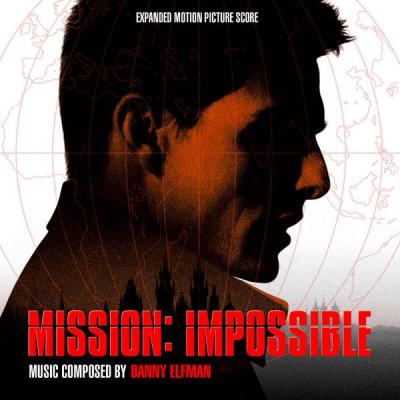
"Mission Impossible" Soundtrack Lyrics
Movie • 1996
Track Listing
Larry Mullen / Adam Clayton
Massive Attack
Pulp
Danny Elfman
Bjork
Skunk Anansie
Longpins
Danny Elfman
The Cranberries
Gavin Friday
Salt
Danny Elfman
Nicolette
Cast
Adam Clayton and Larry Mullen
"Mission: Impossible — Music from and Inspired by the Motion Picture" – Album Guide to Tracks and Key Scenes
Overview
How do you reboot a 60s spy TV show for 1996 and keep its pulse? By welding Lalo Schifrin’s 5/4 signature to Danny Elfman’s paranoid orchestral muscle and letting one chart-friendly remix torch the end credits. Mission: Impossible opens with the fuse and never drops it: terse motifs, stealth electronics, and abrupt rhythmic switches that mimic Ethan Hunt’s game of three cups and a disc.
The album — a hybrid “music from and inspired by” compilation — mirrors the film’s sleight of hand. Only a handful of tracks are heard in the movie proper; the rest sketch a mid-90s cosmopolis (Björk, Massive Attack, Pulp) that matches De Palma’s cold glass and Dutch angles. The mood arc is precise: arrival (brief calm and cocktail music), adaptation (IMF operation gears up), rebellion (operations implode; Ethan runs), collapse (betrayal revealed), and a neon-slick coda in the sky.
Genres map to function. Schifrin’s theme = mission parameters, pulse, countdown. Elfman’s orchestra = dread and velocity. Catalog cues (Mozart, The Cranberries) humanize two key social beats — party and decompression — while the Adam Clayton & Larry Mullen Jr. single modernizes the brand for radio. According to the soundtrack’s notes, only five album cuts are actually used onscreen; the rest are there to extend the world offscreen.
How It Was Made
Brian De Palma hired Alan Silvestri first; late in post, producers pivoted to Danny Elfman, who retained and foregrounded Schifrin’s TV theme while building a tense, brass-and-strings chassis around it. A dedicated score album (Mission: Impossible — Music from the Original Motion Picture Score) arrived in June 1996, while Island’s companion compilation (Music from and Inspired by the Motion Picture) hit in May with the radio-ready “Theme from Mission: Impossible” by U2’s Adam Clayton & Larry Mullen Jr. The single went gold and hit top-10 in multiple territories, and the soundtrack album also certified gold in the U.S.
Elfman’s cue design is modular: terse cells (“Mole Hunt,” “The Disc,” “Looking for ‘Job’”) interlock around the Schifrin riff, with occasional breathers (“Love Theme?”/“Claire”). On record, it plays like a pressure system — sudden release, immediate recoil. As per discographies, later vinyl issues restored and expanded material with new liner notes for collectors.
Tracks & Scenes
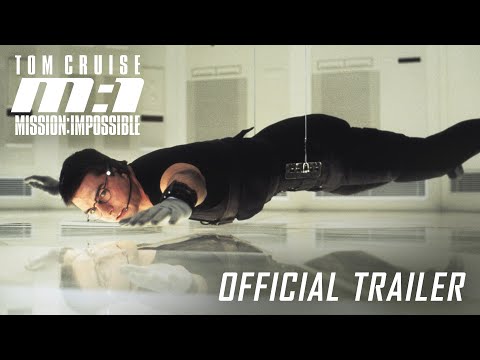
"Mission: Impossible Theme" — Lalo Schifrin (film version)
Where it plays: Title sequence around 00:03 with fuse imagery; reprises mid-film and in the finale as plot gears engage. Non-diegetic, aggressively mixed, edits jump-cut to action.
Why it matters: The 5/4 meter keeps the audience slightly off-balance — mission time is never comfortable.
"Divertimento in E-flat Major, K.563" (Menuetto) — Mozart; perf. Yo-Yo Ma, Gidon Kremer, Kim Kashkashian
Where it plays: Prague embassy party (~00:10). Jack briefs Ethan on “chewing-gum” plastique as chamber strings waft from the hall; we cross-cut from polite society to surveillance and sweat.
Why it matters: Classic civility as cover. The cue underlines how IMF work thrives in spaces built to hide things in plain sight.
"Claire" — Danny Elfman
Where it plays: Early aftermath beats and private exchanges with Claire Phelps; woodwinds and muted strings let suspicion pool without answering it.
Why it matters: The closest the score gets to tenderness — still uneasy, never quite trusting.
"Mole Hunt" — Danny Elfman
Where it plays: Kittridge’s debrief and Ethan’s dawning realization the job was a setup; ticking ostinati and brass bursts sting every verbal feint.
Why it matters: It’s the sound of the floor dropping out — Elfman’s architecture for paranoia.
"Dreams" — The Cranberries
Where it plays: Near the end (~01:44), at an outdoor café when Ethan and Luther decompress; the song spills from nearby speakers as the dust settles and a different life briefly seems possible.
Why it matters: A human-scale needle-drop after two hours of chess and knives — soft focus, earned exhale.
"Theme from Mission: Impossible" — Adam Clayton & Larry Mullen Jr.
Where it plays: Final airplane beat into end credits (~01:45). Common-time groove modernizes the theme; a flight attendant offers “a movie?” and the fuse metaphor relights for the sequel era.
Why it matters: Radio hit + brand seal. It hands the property to a new generation and charts the franchise’s pop footprint.
"Impossible Mission" — Danny Elfman
Where it plays: Tied to operation-planning passages; quotes Schifrin’s “The Plot” within Elfman’s harmonic frame.
Why it matters: Franchise grammar: legacy motif + new orchestration = continuity with teeth.
"Trouble" — Danny Elfman
Where it plays: Late-film tension knot (train/helicopter sequence build); percussive writing latches to moving machinery.
Why it matters: It’s Elfman at full sprint — the moment Schifrin’s heritage becomes modern action grammar.
Trailer needle-drops
Early trailers lean almost entirely on Schifrin’s theme (edited and re-cut) with rhythmic whooshes and percussion hits. The theatrical spots associated the fuse close-up and face-mask reveals with the iconic riff long before audiences heard the full Clayton/Mullen single.
Notes & Trivia
- Only five tracks from the Island compilation actually appear in the film; most “inspired by” cuts (e.g., Massive Attack, Björk, Pulp) are album-only.
- Elfman replaced Alan Silvestri late in post; the finished score prominently integrates Schifrin’s TV theme.
- “Theme from Mission: Impossible” (Clayton/Mullen) peaked top-10 in the U.S. and several countries and earned RIAA gold; the parent album also went gold.
- Mondo later issued the Elfman score on vinyl, with new liner notes and colored variants for collectors.
- The “M:I” theme’s 5/4 rhythm famously echoes Morse for “M.I.” — a bit of music-theory folklore repeated across franchise coverage.
Music–Story Links
Schifrin’s riff is mission logic: every time it enters, the movie defines stakes or resets rules (titles, mid-mission pivot, finale). Mozart at the embassy weaponizes civility — Ethan smiles while the trap is already sprung. When the Cranberries’ “Dreams” finally arrives, it reframes Ethan not as an agent but as a person who might like a normal lunch. The Clayton/Mullen version over credits states the new world plainly: same melody, fresh armor.
Reception & Quotes
The score album drew praise for marrying classic TV identity to 90s blockbuster grammar; the compilation sold on the strength of the single. A typical critical line: Elfman “found the anxious rhythm beneath Schifrin’s swagger and rode it hard.” The Clayton/Mullen track was called “a fun jolt for fans of the show and a slick gateway for new ones.”
“Elfman’s replacement score is all wire and voltage — modular cells that snap together under Schifrin’s 5/4 flag.”
— film-music review digest
“Clayton & Mullen funk the theme up for the 90s without losing its coiled menace.”
— contemporary single review
Interesting Facts
- Only the Schifrin theme and a few Elfman cues appear diegetically edited in marketing; the album’s Brit-alt tracks are absent from trailers.
- The Clayton/Mullen CD single shipped with multiple mixes, including “Mission Accomplished.”
- The score album’s cue titles (“Mole Hunt,” “The Disc,” “Looking for ‘Job’”) are practically a plot outline.
- Prague’s embassy party needle-drop is one of the series’ rare uses of classical chamber music in-world.
- The soundtrack peaked at No. 16 on the Billboard 200 — unusually high for a spy score-led package in the mid-90s.
Technical Info
- Title (compilation): Mission: Impossible — Music from and Inspired by the Motion Picture (Island Records; May 14, 1996)
- Title (score album): Mission: Impossible — Music from the Original Motion Picture Score (Point Music; June 18, 1996)
- Film: Mission: Impossible (1996) — dir. Brian De Palma
- Composer: Danny Elfman (integrating Lalo Schifrin’s TV theme)
- Notable placements: Schifrin “Theme” (titles/mid/finale); Mozart K.563 (embassy party); The Cranberries “Dreams” (café coda); Clayton & Mullen “Theme from Mission: Impossible” (end credits)
- Chart/awards notes: Compilation peaked Billboard 200 #16; Clayton/Mullen single certified RIAA Gold and hit U.S. Hot 100 top-10
- Availability: Score and compilation on major platforms; collectible vinyl issues exist for the Elfman score
Questions & Answers
- How much of the 1996 compilation is actually in the movie?
- Five tracks. Most album artists (e.g., Massive Attack, Björk, Pulp) are compilation-only.
- Who wrote the famous theme — and who plays it in the film?
- Lalo Schifrin composed it for the 1960s TV series. The film uses both the classic theme (in-film) and a modern end-credits version by Adam Clayton & Larry Mullen Jr.
- Why did the composer change late in production?
- Alan Silvestri’s original score was replaced in post; Danny Elfman’s version leaned more heavily on Schifrin’s identity motif and the film’s edgier rhythm.
- Where does “Dreams” by The Cranberries appear?
- Near the end at a café scene with Ethan and Luther — a brief, diegetic exhale before the credits.
- Is there a separate score album?
- Yes. The Elfman score album runs ~52 minutes and collects the film cues (“Mole Hunt,” “The Disc,” etc.).
Canonical Entities & Relations
| Subject | Relation | Object | Notes |
|---|---|---|---|
| Brian De Palma | directed | Mission: Impossible (1996) | Feature adaptation of the CBS series |
| Danny Elfman | composed | Mission: Impossible (original score) | Integrates Schifrin’s theme |
| Lalo Schifrin | wrote | “Mission: Impossible Theme” | TV origin; used in film |
| Adam Clayton & Larry Mullen Jr. | performed | “Theme from Mission: Impossible” | End-credits single |
| Island Records | released | Music from and Inspired by the Motion Picture | Compilation album |
| Point Music | released | Original Motion Picture Score | Elfman score album |
| Wolfgang A. Mozart | composed | K.563 Divertimento (Menuetto) | Embassy party cue |
| The Cranberries | performed | “Dreams” | Café coda placement |
Sources: Wikipedia (albums, certifications, “only five tracks in film” note); Vague Visages scene-by-scene placements (times for Mozart, Cranberries, theme drops, end-credits); Official Charts Company (Clayton/Mullen chart history); Spotify/Apple Music/Discogs (album availability, labels, track titles); Pitchfork (Mondo vinyl issue); general franchise coverage on the Schifrin theme.
November, 16th 2025
A-Z Lyrics Universe
Cynthia Erivo Popular
Ariana Grande Horsepower
Post Malone Ain't No Love in Oklahoma
Luke Combs Good Riddance (Time of Your Life)
Green Day Bye Bye Bye
*NSYNC You're the One That I Wan
John Travolta & Olivia Newton-John I Always Wanted a Brother
Braelyn Rankins, Theo Somolu, Kelvin Harrison Jr. and Aaron Pierre The Power of Love
Frankie Goes to Hollywood Beyond
Auli’i Cravalho feat. Rachel House MORE ›