Soundtracks:  A B C D E F G H I J K L M N O P Q R S T U V W X Y Z #


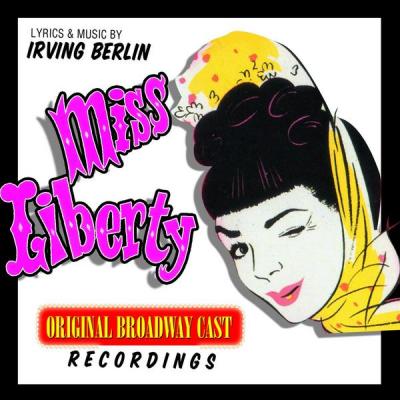
Miss Liberty Album Cover

"Miss Liberty" Soundtrack Lyrics

Musical • 1949

Track Listing


"Miss Liberty (Original Broadway Cast Recording, 1949)" – Album Guide to Tracks and Key Scenes

Artwork collage for Irving Berlin’s Miss Liberty cast album and stage imagery
Miss Liberty – Irving Berlin’s 1949 Broadway musical about the Statue of Liberty and a very mistaken “model”.

Overview

How do you turn the Statue of Liberty into a romantic-comedy heroine and still keep a straight face? Irving Berlin’s 1949 musical Miss Liberty answers that by leaning into sentiment, newsroom farce, and a score stuffed with songs that outlived the show itself. Set in 1885, it follows young New York Herald photographer Horace Miller, sent to Paris to find the woman who posed for Bartholdi’s statue. He falls for the wrong model, Monique DuPont, while his tough, funny American girlfriend Maisie Doll watches her own dreams get sidelined.

The cast album – usually issued as Miss Liberty – Original Broadway Cast 1949 – captures that story in snapshot form. The numbers move from bustling New York streets to misty Paris bridges, from a raucous Policeman’s Ball to the deportation hall at Castle Garden. Stylistically, it’s pure late–Golden Age Broadway: bright two-steps and patter numbers for the newspapermen, lyrical waltzes for the lovers, comedy showpieces for Maisie, and a final quasi-hymn, “Give Me Your Tired, Your Poor,” that lifts Emma Lazarus’s words into a curtain-raiser for postwar patriotism.

What makes the recording interesting now is the tension between subject and tone. The plot is built on a circulation war between Bennett and Pulitzer, fake news about Monique’s “model” status, and a French immigrant nearly deported for a lie she didn’t start. Yet the songs sell warmth, decency and second chances. You can hear Berlin reaching for a big, unifying statement about America’s immigrant ideal while still writing the kind of singable, self-contained numbers that could be lifted straight to radio.

Across the score, musical styles map cleanly to character and theme. Newsroom and street numbers (“Extra, Extra”, “The Most Expensive Statue in the World”) use march and quasi-vaudeville rhythms – America in hustle mode. Horace and Monique’s duets (“Let’s Take an Old-Fashioned Walk”, “Just One Way to Say I Love You”) soften into gentle mid-tempo tunes that sit comfortably alongside other Berlin standards of the 40s. Maisie’s solos (“Homework”, “Falling Out of Love Can Be Fun”) lean toward cabaret, half-wisecrack, half-confession. And the finale, “Give Me Your Tired, Your Poor”, shifts into quasi-hymn territory, consciously echoing “God Bless America” in its attempt to close the evening with a capital-S Statement.

How It Was Made

Miss Liberty pairs two heavyweights: music and lyrics by Irving Berlin and a book by playwright and screenwriter Robert E. Sherwood. Sherwood conceived the show after watching troops cheer the Statue of Liberty on returning from World War II; he wanted a story that treated the statue as a living symbol. Berlin joined him, and they brought in Moss Hart as co-producer and director, with Jerome Robbins staging dances and musical numbers. The creative team produced the show themselves and opened it on Broadway at the Imperial Theatre in July 1949 after a profitable Philadelphia tryout.

Behind the scenes, the musical had a classic “too many geniuses” problem. Contemporary accounts describe Sherwood as unused to the constant rewriting musicals demand, Berlin recycling a couple of songs written for Easter Parade, and Hart balancing egos while trying to tighten a plot everyone agreed was over-complicated. Yet out of that chaos came a score that generated an unusual number of recordings: according to later catalog research, nearly a hundred singles and several albums of the show’s songs appeared around 1949–50, even as the show itself drew mixed reviews and lasted 308 performances rather than becoming a long-run smash.

The original Broadway cast album was recorded quickly after opening. RCA Victor, a backer of the production, handled the first recording; later LP and CD issues have appeared under Sony’s Masterworks Broadway line, often using the title Miss Liberty – Original Broadway Cast 1949 with remastered mono sound. The orchestra, conducted by Jay Blackton with Don Walker’s orchestrations, gives the album its sheen: reed-heavy dance arrangements, crisp brass writing for the big production set pieces, and a relatively intimate string sound under the ballads. It’s the kind of recording that documents not just songs but a whole mid-century house style.

Vintage artwork and staging stills evoking the Miss Liberty original Broadway production
Cast-album era Broadway: a full orchestra, big chorus and Irving Berlin writing in late–Golden Age mode.

Tracks & Scenes

Because Miss Liberty is a stage musical, “scenes” here means key stage moments rather than film cuts. The original Broadway synopsis and song list line up quite neatly, so we can map the major numbers to specific beats in the story.

"Extra, Extra" — Newsboys and Ensemble
Where it appears: Act I, Printing House Square, New York. The curtain rises on newsboys shouting headlines as photographers and reporters gather for a ceremony where the Mayor will accept Joseph Pulitzer’s check to fund the Statue of Liberty’s pedestal. The number is staged as a bustling street tableau, with overlapping cries and bits of dialogue breaking through the choral writing.
Why it matters: It sets the world in one shot: competitive newspapers, urban energy and a statue that is, for the moment, just another headline. Musically, it plants the brisk, march-like feel that will return whenever the show zooms out to the civic level rather than the romance.

"What Do I Have to Do to Get My Picture Took?" — Maisie Doll, Horace Miller, Dancers
Where it appears: Still in Printing House Square, before the ceremony. Maisie, a reporter for The Police Gazette, coaches Horace on how to take photographs that will please the public – and conveniently flatter her. The song plays as a flirtatious lesson, with dancers weaving in and out to demonstrate poses while the press crowd mills in the background.
Why it matters: This is our introduction to the Maisie–Horace dynamic. She is worldly, funny and very aware of how images shape public taste; he is eager but green. On the album, Mary McCarty’s brassy delivery and Eddie Albert’s bemused responses sketch their whole relationship in under two minutes.

"The Most Expensive Statue in the World" — Joseph Pulitzer, James Gordon Bennett, the Mayor, Singers, Dancers
Where it appears: The dedication ceremony itself. The Mayor, flanked by dignitaries and reporters, sings about the cost and symbolism of the statue as he accepts Pulitzer’s cheque. Bennett and Pulitzer trade lines with a mix of pride and rivalry while dancers and ensemble punctuate the speechifying with refrains.
Why it matters: The number does double duty: it explains the financial stakes (Pulitzer’s public fund-raising drive) and frames the statue as a political and media event. The jaunty tune undercuts the solemnity, signalling that the show will treat high ideals and circulation wars with the same skeptical grin.

"A Little Fish in a Big Pond" — Horace Miller, Maisie Doll, and the Sharks
Where it appears: After Horace is fired for photographing crates instead of dignitaries. In Bennett’s office and then out on the street, Horace considers slinking back home while Maisie pushes him to think bigger. The “Sharks” – a dance quartet – join in as a kind of Greek chorus, swirling physically around the pair as they sing about being small fry in a massive city.
Why it matters: This is the pivot that sends Horace to Paris. Dramatically, the song gives Maisie her first real argument for ambition: she insists that the only way out of smallness is to take a wild shot, like tracking down the statue’s model. The cast album preserves the rhythmic interplay between dialogue and dance breaks that must have been a Robbins speciality.

"Let’s Take an Old-Fashioned Walk" — Horace Miller, Monique DuPont, Singers, Dancers
Where it appears: Act I, under a Paris bridge and then through the city streets. Horace has stumbled into Bartholdi’s studio, met Monique, and – mistakenly believing she was the original model – convinced her to show him “her” Paris. They stroll as lamplighters work and couples drift past, the chorus occasionally swelling to frame them against the city.
Why it matters: This is the breakout hit. Onstage, it’s the moment Horace and Monique fall gently in love; on record, it’s a classic Berlin walking song that escaped the show’s mixed reputation and entered the pop standard repertoire. The easy swing of the melody and the almost conversational lyric make the romance sound simple, which is exactly the trap Horace falls into.

"Homework" — Maisie Doll
Where it appears: Still Act I, back in New York after Horace’s big “scoop” has been wired. Bennett wants Maisie to come work for the Herald, but her mind is on Horace. Alone, she sings about wanting someone to come home to, ironing shirts and “doing homework” together – domestic chores as love fantasy.
Why it matters: It’s one of Berlin’s sharpest Golden Age “comic yearning” songs. Maisie turns housework into something she actively desires because it would mean emotional security, not servitude. The cast recording leans into that twist; you can hear McCarty balancing wisecrack and genuine ache.

"Paris Wakes Up and Smiles" — Lamplighter, Monique DuPont, Ensemble
Where it appears: Dawn in Paris, near the end of Act I. A lamplighter sings about the city as he snuffs the lamps, while Monique dances in the early light and the ensemble builds the picture of a city coming fully alive. Horace arrives with news that they’re going to America, and the number folds into dialogue as her excitement spikes.
Why it matters: This is the show’s big Paris mood piece. It lets Berlin paint the city with waltz-like phrases and gives Monique a chance to be carefree before the pressures of being “Miss Liberty” descend. On record, it’s an atmospheric track that quietly shifts the story from European fantasy to transatlantic journey.

"Only for Americans" — The Countess, Horace Miller, Singers, Dancers
Where it appears: Still in Paris, just before Act I closes. The Countess – Monique’s eccentric grandmother – explains certain French customs to Horace, half sincerely, half as a private joke. The ensemble joins in as she warns him about what is “only for Americans” and what locals really think.
Why it matters: It’s a character-comedy number that also signals how the show will play with stereotypes. The Countess is both indulgent and shrewd, and the tune lets her tease Horace for his naïveté while still approving the match with her granddaughter. The cast album preserves Ethel Griffies’ dry attack on Berlin’s punchlines.

"Just One Way to Say I Love You" — Horace Miller, Monique DuPont
Where it appears: Act I finale. With the plan to sail to New York in place, Horace finally declares his love; Monique responds without yet knowing he believes she is the statue’s model. The staging is simple: essentially a spotlight duet that grows into a romantic clinch while a small onstage ensemble frames them.
Why it matters: Musically, it’s one of Berlin’s straightforward love songs, but here it carries dramatic irony – the “one way” he chooses involves a lie he doesn’t recognise as such. The cast recording underlines how earnest Eddie Albert sounds; you can hear why this tune later showed up in 1949 songbooks alongside much bigger-hit shows.

"Miss Liberty" — Entire Company
Where it appears: Act II opening, on the New York waterfront and dock. Monique, Horace and the Countess arrive to a hero’s welcome. Banners, brass bands and delegations fill the stage as Monique is presented to the public as the living embodiment of the statue, complete with mock-heroic poses and newspaper flashbulbs.
Why it matters: It’s the title song and the show’s most direct hymn to the symbol itself. At the same time, the lyrics and staging make it clear how quickly a symbol can become a publicity stunt. The cast album’s full-company sound gives a good sense of the Broadway scale even without the visuals.

"You Can Have Him" — Maisie Doll, Monique DuPont
Where it appears: Mid–Act II, in Monique’s New York hotel room. After a grueling tour, Monique collapses in tears; Maisie sneaks in to confront her rival and instead finds another honest woman. In the duet, each tries to give Horace up to the other, convinced he really loves the other woman more. Staging keeps them apart physically for much of the song, circling one another before cautiously drawing closer.
Why it matters: As critics have noted ever since, this may be the score’s finest number. It takes a standard love-triangle setup and refuses to vilify either woman; the hurt in the lyric is balanced by real respect. On the cast album, McCarty and Allyn McLerie turn it into a compact dramatic scene, and the song later thrived as a cabaret and jazz standard well beyond the show.

"The Policeman’s Ball" — Maisie Doll, the Dandy, Ensemble
Where it appears: Later in Act II, at Walhalla Hall. Horace, Monique and the Countess, on the run after Bennett discovers the deception, duck into the Policemen’s Ball, where Maisie is selling tickets. The number opens as comic social dance – beat cops and their dates cutting loose – then becomes a showcase for Monique as she finally drops her stiff “Miss Liberty” posture and dances for pure fun.
Why it matters: It’s the most overtly Robbins-ish sequence in the show: character revealed through social dance. For the album listener, it’s an ensemble track that shows Berlin still loved building big, syncopated set pieces even late in his stage career.

"Falling Out of Love Can Be Fun" — Maisie Doll
Where it appears: Immediately after the ball, once Bennett has had the fugitives arrested and Maisie is left alone. She sings to herself about how “falling out of love can be fun” if you decide to treat heartbreak as liberation instead of tragedy, holding back tears between jokes.
Why it matters: The song has had an independent life as a wry torch number, recorded by several singers. In context, it’s the moment Maisie accepts that Horace has chosen another woman and decides, with typical toughness, to survive it. On record, the mix of rueful lyrics and lightly swinging accompaniment lands as peak Berlin.

"Me and My Bundle" — Horace Miller, Monique DuPont, Company
Where it appears: Late in Act II, as deportation looms. Horace and Monique, bundled with their belongings and on the verge of being shipped back to France, sing about starting over with nothing more than their “bundle” and each other. The ensemble joins to swell the perspective, hinting at the many immigrants in similar situations.
Why it matters: It’s the closest the show comes to explicitly aligning itself with immigrant narratives beyond this specific love story. The tune is modest, almost lullaby-like, which keeps the sentiment grounded rather than bombastic.

"Give Me Your Tired, Your Poor" — Monique DuPont, Singers
Where it appears: Finale at Castle Garden. With her deportation about to be reversed thanks to Pulitzer’s intervention, Monique steps forward and sings Emma Lazarus’s sonnet “The New Colossus” set to Berlin’s new melody, with the ensemble joining for the climactic lines. The statue itself is often suggested in lighting or silhouette behind her as she sings.
Why it matters: Berlin clearly meant this to be the anchor of the show – his chance to create another patriotic standard. It closes the story by connecting Monique’s personal journey to a wider, idealised American promise. On the cast album, the number still lands as the emotional summit, even if the musical as a whole never became the hit its creators expected.

Stylised Statue of Liberty and 19th century New York setting associated with Miss Liberty musical numbers
From Printing House Square to Castle Garden: each song in Miss Liberty hangs on a precise moment in the story.

Notes & Trivia

  • Two of the show’s strongest songs, “Let’s Take an Old-Fashioned Walk” and “You Can Have Him”, were written earlier for the film Easter Parade before Berlin repurposed them for Miss Liberty.
  • The original Broadway production was produced not by an outside backer but by Berlin, Sherwood and Hart themselves, using roughly $215,000 of capital they raised jointly.
  • Jerome Robbins staged the dances and musical numbers, placing Miss Liberty between High Button Shoes and Call Me Madam in his Broadway chronology.
  • The score’s patriotic finale, “Give Me Your Tired, Your Poor”, directly sets Emma Lazarus’s “The New Colossus”; later recordings sometimes excerpt it separately as a stand-alone choral piece.
  • Even with lukewarm reviews, the original run generated profits of several thousand dollars a week, thanks in part to a strong advance sale built on the Berlin/Sherwood/Hart combination.

Music–Story Links

At story level, the cast album traces a neat trajectory: civic bustle, romantic detour, press-fed illusion, then a hard return to questions of belonging and truth. The early numbers tie closely to media spectacle. “Extra, Extra” and “The Most Expensive Statue in the World” emphasise how newspapers frame the statue’s arrival; the music is brassy, public, built for choruses and parades. Horace and Maisie’s duet “A Little Fish in a Big Pond” sits right between that public noise and personal ambition. It is literally the song that convinces him to turn news into a self-making adventure.

Once Horace hits Paris, the sound softens and individual motives start to pull at the big patriotic story. “Let’s Take an Old-Fashioned Walk” and “Paris Wakes Up and Smiles” turn the Statue of Liberty’s origin into a backdrop for private romance. Horace stops thinking about the scoop and starts seeing Monique as a person; the music follows him, swapping marches for lilting strolls. When he and Monique sing “Just One Way to Say I Love You”, the statue is offstage; we’re meant to feel both how real the emotion is and how fragile its foundations are.

The second act brings politics and immigration back to the front, and the songs change weight. “Miss Liberty” and “The Policeman’s Ball” show how easily Monique’s image can be repackaged – first as a national symbol, then as entertainment at a policemen’s fundraiser. “You Can Have Him” and “Falling Out of Love Can Be Fun” reposition the emotional centre of the show around Maisie, who has to process both professional disappointment and romantic loss in musical terms. By the time Monique sings “Give Me Your Tired, Your Poor”, the Statue of Liberty is no longer just a statue or a press stunt; it’s explicitly tied to people like her – precarious immigrants whose lives turn on decisions made in offices and newsrooms.

Reception & Quotes

On Broadway, Miss Liberty landed with what one contemporary paper called “a sharp disappointment”. Critics felt Sherwood’s book was over-plotted and Berlin’s score pleasant rather than essential, especially coming so soon after Annie Get Your Gun. Trade reviews singled out the convoluted story, “undistinguished” tunes by Berlin’s own high standards, and the lack of a star the size of Ethel Merman. Still, the show ran a respectable 308 performances and later revivals and concert versions have been kinder, treating it as a fascinating near-miss in Berlin’s late career.

The cast album, by contrast, has often been described by historians as the best argument for revisiting the piece. The Masterworks Broadway reissue notes that, while the musical itself never became a classic, the recording documents a “most pleasant score” anchored by the hit “Let’s Take an Old-Fashioned Walk”. Theatre writers have also repeatedly pointed to “You Can Have Him” as a standout; more than one critic has admitted they first fell for the song via pop recordings and only later worked back to its Broadway origin.

Later essays have reassessed the show’s patriotic aspirations. The Milken Archive, discussing “Give Me Your Tired, Your Poor”, frames the finale as Berlin’s attempt to write a second “God Bless America” for the stage – an attempt that may have been too earnest for a book this light. And when smaller companies like 42nd Street Moon and York Theatre’s Musicals-in-Mufti series revived or concertised Miss Liberty, reviewers tended to accept the story’s contrivances while praising the craftsmanship of the individual numbers and the curiosity value of a “forgotten” Berlin show.

“The cast album documents a most pleasant score that includes one of my favorite songs, ‘You Can Have Him’.”

– Peter Filichia, TheaterMania, on revisiting Miss Liberty

“Despite an overly-plotty book and undistinguished score … weekly profits were respectable.”

– Summary of original trade reviews and box-office reports

“Berlin set Emma Lazarus’s famous text as the finale, hoping to create another patriotic standard.”

– Liner-note commentary on “Give Me Your Tired, Your Poor”
Stylised concert or revival imagery associated with Miss Liberty songs
Later concerts and revivals often treat the score as a chance to rediscover lesser-known Berlin gems.

Interesting Facts

  • The original Imperial Theatre run opened with a $500,000 advance sale – unusually high for a brand-new musical not based on a hit film or novel.
  • RCA Victor’s involvement as a backer made an original cast album almost a certainty; the first LP appeared within weeks of the Broadway opening.
  • Masterworks Broadway’s modern CD/digital reissue of the cast recording uses transfers from the original tapes and adds historical notes on the show’s development.
  • “You Can Have Him” became a favourite of jazz and cabaret singers, with notable recordings by Peggy Lee, Ella Fitzgerald, Nina Simone, Nancy Wilson and others.
  • “Let’s Take an Old-Fashioned Walk” produced Top 20 pop hits for both Perry Como and a Frank Sinatra–Doris Day duet in 1949.
  • Berlin’s daughter Mary Ellin Barrett later wrote that her father initially believed “Give Me Your Tired, Your Poor” might rival “God Bless America” as a patriotic song.
  • Because of its complex book and large cast, Miss Liberty is now more commonly revived in concert or “Mufti” formats than in full-scale productions.
  • Guides and licensing agencies still file the show under “Americana” and “Romantic Comedy”, but modern directors often lean into its media-satire angle.
  • The score’s orchestration calls for five reed books, three trumpets, horn, two trombones, full rhythm section and small string section – a compact but flexible pit for 1949.
  • 42nd Street Moon’s 2005 San Francisco revival and York Theatre’s 2005 Musicals-in-Mufti concert both helped nudge the cast album back into collectors’ conversations.

Technical Info

  • Title (album): Miss Liberty – Original Broadway Cast 1949 (various reissue titles)
  • Work: Miss Liberty, a Broadway musical comedy in 2 acts
  • Premiere: Imperial Theatre, New York – 15 July 1949
  • Broadway run: 308 performances (closed 8 April 1950)
  • Music & lyrics: Irving Berlin
  • Book: Robert E. Sherwood
  • Direction (original production): Moss Hart
  • Choreography / musical staging: Jerome Robbins
  • Orchestrations: Don Walker
  • Musical director: Jay Blackton
  • Original cast highlights: Eddie Albert (Horace Miller); Allyn McLerie (Monique DuPont); Mary McCarty (Maisie Doll); Philip Bourneuf (Joseph Pulitzer); Charles Dingle (James Gordon Bennett); Ethel Griffies (The Countess)
  • Original cast recording: Recorded 1949; first LP release August 5, 1949
  • Original label / later reissue: Recorded for RCA Victor; later reissued on CD and digitally by Sony’s Masterworks Broadway imprint
  • Approximate album length: about 37–38 minutes (standard cast-album sequence)
  • Key numbers on the cast album: “What Do I Have to Do to Get My Picture Took?”, “The Most Expensive Statue in the World”, “A Little Fish in a Big Pond”, “Let’s Take an Old-Fashioned Walk”, “Homework”, “Paris Wakes Up and Smiles”, “Just One Way to Say I Love You”, “Miss Liberty”, “You Can Have Him”, “The Policeman’s Ball”, “Me and My Bundle”, “Falling Out of Love Can Be Fun”, “Give Me Your Tired, Your Poor”
  • Current rights/licensing: handled by Concord Theatricals and related Rogers & Hammerstein/Origin Theatrical entities for English-language productions
  • Availability today: Original LPs and 78s are collector’s items; the OBC is available digitally on major streaming platforms and via Masterworks Broadway’s catalogue.

Questions & Answers

Is the original cast recording of Miss Liberty complete?
It’s reasonably complete for its era. All the major numbers are present, including “Let’s Take an Old-Fashioned Walk”, “You Can Have Him”, “Homework” and “Give Me Your Tired, Your Poor”. As with many 1940s albums, dance music and some reprises are trimmed or represented only in short form.
Which songs from Miss Liberty became standards outside the show?
The biggest breakout songs were “Let’s Take an Old-Fashioned Walk” and “You Can Have Him”, both recorded by a range of pop and jazz singers. “Falling Out of Love Can Be Fun” and “Give Me Your Tired, Your Poor” have also had lives in cabaret, recordings and patriotic concerts.
How does the music reflect the Statue of Liberty theme?
Directly in the finale “Give Me Your Tired, Your Poor”, which sets Lazarus’s poem, and indirectly in songs like “Miss Liberty” and “Me and My Bundle”, which link Monique’s story to immigrant experience and public pageantry. The rest of the score balances that symbolism with intimate, character-driven numbers.
Why is Miss Liberty less famous than other Irving Berlin shows?
Compared with Annie Get Your Gun or Call Me Madam, it has a more complicated, less focused book and no giant star turn. Critics in 1949 liked individual songs but not the overall structure, so the show never became a perennial. The cast album and later revivals have kept interest alive among enthusiasts.
Is Miss Liberty still performed today?
Full productions are rare, but the musical surfaces in concert formats, staged readings and small-company revivals. Licensing houses still carry the title, and the cast album serves as the main reference point for directors and fans considering a production.

Canonical Entities & Relations

Subject Relation Object
Miss Liberty (musical) has music & lyrics by Irving Berlin
Miss Liberty (musical) has book by Robert E. Sherwood
Miss Liberty (musical) is directed by Moss Hart (original Broadway production)
Miss Liberty (musical) has choreography by Jerome Robbins (original Broadway production)
Miss Liberty (musical) opens at Imperial Theatre, Broadway
Miss Liberty (musical) is produced by Irving Berlin, Robert E. Sherwood, Moss Hart
Miss Liberty (musical) is set in Paris and New York City in 1885–1886
Miss Liberty – Original Broadway Cast 1949 (album) is cast recording of Miss Liberty (musical)
Miss Liberty – Original Broadway Cast 1949 (album) features performer Eddie Albert as Horace Miller
Miss Liberty – Original Broadway Cast 1949 (album) features performer Allyn McLerie as Monique DuPont
Miss Liberty – Original Broadway Cast 1949 (album) features performer Mary McCarty as Maisie Doll
Miss Liberty – Original Broadway Cast 1949 (album) is conducted by Jay Blackton
Miss Liberty – Original Broadway Cast 1949 (album) has orchestrations by Don Walker
Irving Berlin writes song “Let’s Take an Old-Fashioned Walk”
Irving Berlin writes song “You Can Have Him”
Irving Berlin sets poem “The New Colossus” by Emma Lazarus as “Give Me Your Tired, Your Poor”
“Give Me Your Tired, Your Poor” is sung by Monique DuPont and ensemble in the finale
Statue of Liberty (Liberty Enlightening the World) is symbolic subject of Miss Liberty (musical)
Joseph Pulitzer is portrayed by Philip Bourneuf in the original Broadway cast
James Gordon Bennett Jr. is portrayed by Charles Dingle in the original Broadway cast
42nd Street Moon produces revival of Miss Liberty in San Francisco (2005)
York Theatre Company presents Musicals-in-Mufti concert of Miss Liberty (2005)

Sources: Wikipedia entry on Miss Liberty; Guide to Musical Theatre synopsis and musical numbers; Masterworks Broadway album notes for Miss Liberty – Original Broadway Cast 1949; Theatre Trip overview and licensing details; Milken Archive notes on “Give Me Your Tired, Your Poor”; U.S. museum notes on the Lazarus text; discographic snippets from RCA/Discogs and cast-album databases; TheaterMania’s “Give Me Liberty” article on the show’s history and Musicals-in-Mufti concert; general Irving Berlin and Jerome Robbins profiles from Steinway, TCM and other reference sources.

November, 15th 2025


A-Z Lyrics Universe

Lyrics / song texts are property and copyright of their owners and provided for educational purposes only.