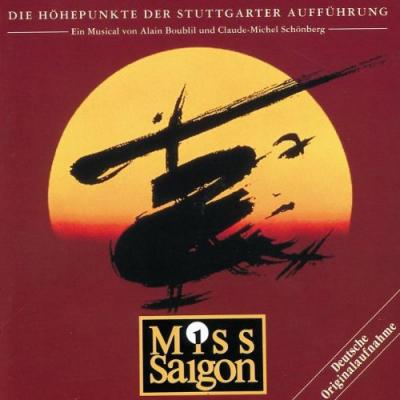
"Miss Saigon" Soundtrack Lyrics
Musical • 1975
Track Listing
"Miss Saigon (Original London Cast Recording)" – Album Guide to Tracks and Key Scenes
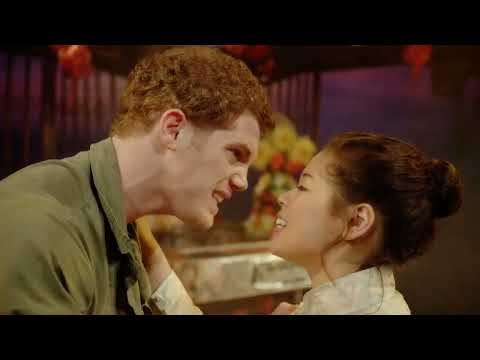
Overview
What if a love story keeps the engine of war humming beneath every lyric? Miss Saigon does exactly that. Premiered in London in 1989 (not 1975; 1975 is the drama’s setting), the sung-through score by Claude-Michel Schönberg and lyrics by Alain Boublil & Richard Maltby Jr. translate the Madama Butterfly template into the fall of Saigon. The result is a recording that moves like a film: brass and drums for panic, aching strings for private vows, and a nightclub band that never stops selling the dream.
The album’s dramatic arc is ruthless. Arrival: “The Heat Is On in Saigon” drops us in a neon pressure cooker where the Engineer hustles and Marines numb themselves. Adaptation: “The Movie in My Mind,” “Sun and Moon,” and “Why, God, Why?” sketch fantasies that can’t survive daylight. Rebellion: “The Morning of the Dragon” and “Bui Doi” turn politics into anthems. Collapse: “I’d Give My Life for You,” “The Confrontation,” and the Finale strip everything down to a mother, a child, and a choice.
Genres and timbres map cleanly to theme. Show-band kitsch and cabaret keys = survival performance. Symphonic romanticism = private hope. Martial snare and choral roar = history shutting the door. According to widely cited production notes, this duality was deliberate: the club and the war share the same beat.
How It Was Made
The show opened at Theatre Royal Drury Lane on 20 September 1989 with Lea Salonga (Kim) and Jonathan Pryce (Engineer) under Nicholas Hytner’s direction. Cameron Mackintosh produced; John Napier’s set and the “helicopter” coup de théâtre demanded a score that could pivot from intimate to apocalyptic in seconds. The first commercial album — Miss Saigon (Original London Cast Recording) — followed in 1990 on First Night/Geffen, becoming a fast seller and later spawning the Complete Symphonic Recording and multiple revival sets.
Schönberg writes in long, through-composed scenes; motifs recur (Engineer’s hustler grin, Kim/Chris’s fragile lyric theme) and collide as the personal story is crushed by history. The recording captures that design: seamless crossfades, crowd textures, and the infamous evacuation sequence mixed like reportage. As per discographies and label notes, the OLC album runs roughly 1h47m across two discs and foregrounds the original London orchestrations heard by West End audiences.

Tracks & Scenes
"The Heat Is On in Saigon" — Company
Where it plays: Act I opener, April 1975. Backstage and out front at the Engineer’s club, Dreamland. Drums pop, horns stab, girls hustle, Marines bargain; the Engineer sells fantasies while the city tilts toward chaos. Diegetic band bleeds into full pit orchestra as the frame widens.
Why it matters: Establishes the thesis — pleasure as camouflage. Kim’s arrival reads as a small, fragile line inside a very loud machine.
"The Movie in My Mind" — Gigi, Kim, Bar Girls
Where it plays: Immediately after the floor-show grind, spotlights cool. Gigi sings a private cinema: white dress, snow, a man who stays. Kim echoes, softer. Non-diegetic strings wrap a diegetic stage — the border between fantasy and survival blurs.
Why it matters: The recording’s blend of close-miked confession and lush orchestra makes the dream feel dangerously real.
"Why, God, Why?" — Chris
Where it plays: Night outside Dreamland. Chris steps out, Saigon noise recedes, and he interrogates his shock at feeling anything in a war zone. Trumpet and snare whisper “military,” but the harmony pleads.
Why it matters: Gives the American lead a moral key without absolution; the melody will haunt later choices.
"Sun and Moon" — Chris & Kim
Where it plays: Quiet room, midnight. Two voices trade a simple, rocking lullaby over harp and strings, the outside world paused. The take on the OLC is intimate — breath and consonants up close.
Why it matters: The show’s emotional fulcrum: if this duet convinces, Act II hurts.
"The Morning of the Dragon" — Chorus
Where it plays: Three years later, Ho Chi Minh City. Kitsch-propaganda onstage: red banners, drilled chorus, and a hard, percussive orchestration. The Engineer survives by smiling.
Why it matters: The album’s gear-shift from romance to regime is shocking — a martial spectacle that sounds like a machine.
"I Still Believe" — Ellen & Kim
Where it plays: Split-stage night. In America, Ellen keeps a lamp burning; in Vietnam, Kim clings to memory. The recording layers them in counterpoint so neither cancels the other.
Why it matters: Two incompatible truths sung simultaneously — a rare instance where the album format strengthens the scene’s design.
"Bui Doi" — John, Men
Where it plays: U.S. veterans’ event. A choral lament for Amerasian children left behind, orchestrated like a pledge drive, which is the point. The hook is built to recruit.
Why it matters: According to multiple production histories, this number was shaped to function both as plot and advocacy; the album preserves that rhetoric.
"If You Want to Die in Bed" — The Engineer
Where it plays: The Engineer outlines his survival rules over sleazy, bouncing accompaniment; the band sounds like a grinning shrug.
Why it matters: Character study as cabaret; the track’s dryness keeps sentimentality out of his scenes.
"I’d Give My Life for You" — Kim
Where it plays: After “The Confrontation,” alone with her son Tam. A classic Boublil/Schönberg pledge aria: verse builds to vow, then breaks on a key change that feels like steel.
Why it matters: The album centerpiece. Lea Salonga’s original delivery set a template later casts still chase.
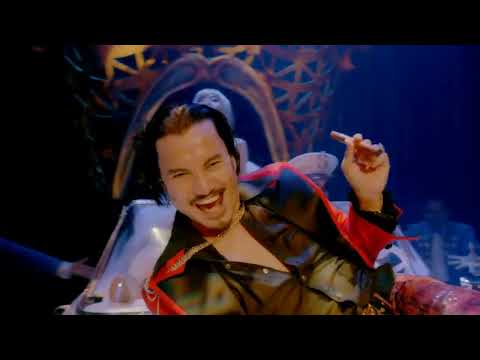
"The American Dream" — The Engineer
Where it plays: Vegas-fever hallucination on a lacquered Cadillac, girls in feathers, blaring brass. The pit and a fake show band fuse; it’s grotesque and exhilarating.
Why it matters: Satire with showbiz teeth. On record, you hear the joke and the seduction at once.
"Finale / This Is the Hour" — Company
Where it plays: Last decisions. Themes collide; percussion mimics rotor wash without needing a real helicopter. A child cries, a gunshot cracks, then silence and reprise.
Why it matters: The through-composed design pays off — motives that promised rescue become epitaphs.
Trailer music
Where it plays: Modern promotional trailers cut “Bui Doi,” “The Heat Is On in Saigon,” and “The American Dream” hits into a single pulse with helicopter SFX and crowd vocals.
Why it matters: It underlines what the album already does: welds intimate melody to industrial noise.
Notes & Trivia
- The show premièred in 1989; the year 1975 refers to the story’s opening timeframe (Saigon’s fall).
- The Original London Cast (OLC) album rapidly went gold, then platinum; later pressings appeared on Geffen in multiple territories.
- “Bui Doi” was positioned to spotlight Amerasian children; many productions partnered with charities at curtain call.
- The notorious evacuation scene’s “helicopter” is musical first: percussion and brass simulate rotor chaos before any stage effect appears.
- Revival trailers (2014) reshaped marketing tone — more grit, less romance — while keeping the same musical spine.
Music–Story Links
Kim’s melodies begin as borrowed light — inside Gigi’s “movie.” When “Sun and Moon” lands, she finally owns a theme, and every subsequent reprise measures what the war takes back. Chris’s “Why, God, Why?” motif answers with doubt, then vanishes when he returns to the U.S.; the silence says more than a reprise would.
The Engineer’s numbers (“If You Want to Die in Bed,” “The American Dream”) weaponize entertainment. He survives by selling illusions; the orchestration mirrors that grift — slick reeds, punchy brass, a grin in the drum kit. When politics take the stage (“Morning of the Dragon,” “Bui Doi”), the score lets propaganda sound like salvation. That confusion is the point.
Reception & Quotes
Contemporary coverage praised Salonga’s vocal clarity and Schönberg’s sweep, while criticism focused on casting and representation debates around the original Broadway transfer. Over decades, the recording remains a staple: a reference point for how to balance diegetic sleaze and symphonic heartbreak in one album.
“The helicopter may be the spectacle, but it’s the album that explains why people came back.”
— theatre-music retrospective
“‘I’d Give My Life for You’ is the Boublil/Schönberg aria perfected: direct, merciless, inevitable.”
— cast-album column
“‘Bui Doi’ walks a thin line between advocacy and anthem — and knows it.”
— revival review
“On disc, the club numbers hit harder: you hear the commerce in the cymbals.”
— audio engineer interview
Interesting Facts
- Lea Salonga became the first Asian woman to win both Olivier and Tony for the same role (Kim).
- The OLC album credits and later digital issues show mixed label lineage (First Night, Geffen, later Verve/UMG catalogue control).
- The Complete Symphonic Recording expanded orchestral details not fully audible on the OLC; many fans treat the two as complementary.
- “The American Dream” was tightened and re-staged in revivals; the track order on revival albums reflects those edits.
- Some digital listings timestamp OLC tracks as “1989” while copyright lines read 1990; that reflects premiere vs. release year.
Technical Info
- Title (album): Miss Saigon (Original London Cast Recording)
- Work: Miss Saigon — stage musical (premiere: 20 Sep 1989, Theatre Royal Drury Lane, London)
- Creators: Music — Claude-Michel Schönberg; Lyrics — Alain Boublil & Richard Maltby Jr.; Book — Boublil & Schönberg
- Principal OLC cast on album: Lea Salonga (Kim), Jonathan Pryce (Engineer), Simon Bowman (Chris), Claire Moore (Ellen)
- Label / releases: First Night Records (UK) / Geffen Records (US/EU); later digital catalogue under UMG/Verve
- Key numbers (album highlights): “The Heat Is On in Saigon,” “The Movie in My Mind,” “Why, God, Why?,” “Sun and Moon,” “I Still Believe,” “Bui Doi,” “I’d Give My Life for You,” “The American Dream,” “Finale”
- Setting (story time): 1975–1978 (Saigon/Ho Chi Minh City and USA)
- Availability: 2-CD OLC set; streaming on major platforms; additional releases include Complete Symphonic Recording and revival cast albums
Questions & Answers
- Is “1975” the year of the musical?
- No — 1975 is the opening setting. The musical premièred in 1989 in London and opened on Broadway in 1991.
- Which album should a first-time listener start with?
- The Original London Cast Recording: it captures the blueprint performances (Salonga, Pryce) and the show’s original orchestration.
- Where does the helicopter sequence occur on the album?
- Across the Act I climax into “This Is the Hour” material; percussion, brass, and chorus simulate the evacuation before the Finale materializes.
- Is “Bui Doi” part of the original show?
- Yes; it appears in Act II as a veterans’ appeal and became one of the show’s most recognizable anthems.
- Are there major differences in revival albums?
- Yes — trims, lyric clarifications, and re-balanced numbers (notably “The American Dream”) reflect new staging choices.
Canonical Entities & Relations
| Subject | Verb | Object |
|---|---|---|
| Claude-Michel Schönberg | composed | Miss Saigon (score) |
| Alain Boublil | wrote | book & lyrics for Miss Saigon |
| Richard Maltby Jr. | co-wrote | English lyrics for Miss Saigon |
| Cameron Mackintosh | produced | Original London production |
| Nicholas Hytner | directed | Original London production |
| John Napier | designed | scenery for the original production |
| Lea Salonga | originated | Kim (OLC/Broadway) |
| Jonathan Pryce | originated | The Engineer (OLC/Broadway) |
| Geffen Records / First Night Records | released | Miss Saigon (Original London Cast Recording) |
| UMG / Verve (catalogue) | reissued | digital versions of the OLC album |
| Miss Saigon (1989) | is set in | Saigon/Ho Chi Minh City (1975–78) and the USA |
Sources: Wikipedia (Miss Saigon); MTI Show History; Miss Saigon Wiki (Fandom); Apple Music & Spotify listings for OLC; Discogs label entries; official Miss Saigon trailer (2014) channel.
November, 16th 2025
A-Z Lyrics Universe
Cynthia Erivo Popular
Ariana Grande Horsepower
Post Malone Ain't No Love in Oklahoma
Luke Combs Good Riddance (Time of Your Life)
Green Day Bye Bye Bye
*NSYNC You're the One That I Wan
John Travolta & Olivia Newton-John I Always Wanted a Brother
Braelyn Rankins, Theo Somolu, Kelvin Harrison Jr. and Aaron Pierre The Power of Love
Frankie Goes to Hollywood Beyond
Auli’i Cravalho feat. Rachel House MORE ›