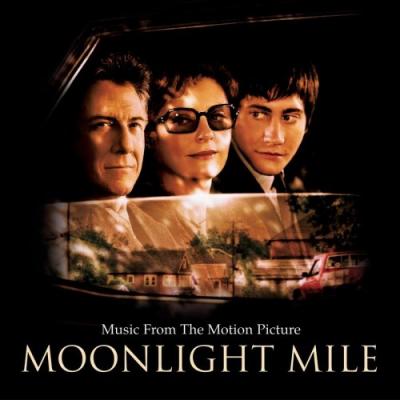
"Moonlight Mile" Soundtrack Lyrics
Movie • 2002
Track Listing
Sly & The Family Stone
The Rolling Stones
Travis
T-Rex
David Bowie
Sly & The Family Stone
Dave Edmunds
Gary Glitter
Elton John
Van Morrison
Jefferson Airplane
Bob Dylan
Robert Plant
Jorma Kaukonen
"Moonlight Mile – Music From The Motion Picture" – Album Guide to Tracks and Key Scenes
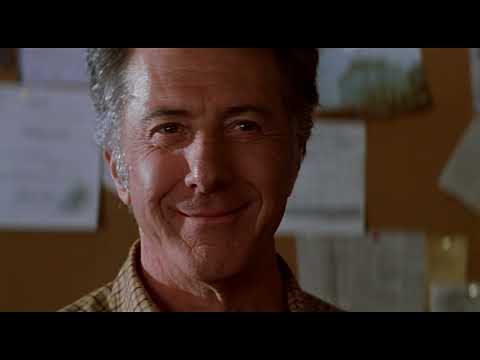
Overview
How do you score a film about grief that quietly refuses to behave like a tragedy? Moonlight Mile (2002) takes place in early-’70s New England, but its soundtrack feels like a second script: classic rock, folk and soul tracks nudging characters toward choices they are not ready to make. The album "Moonlight Mile – Music From The Motion Picture" distills that idea into a tightly curated compilation that plays like a mixtape about shock, denial and the slow decision to live again.
The story follows Joe Nast, a young man who stays with the parents of his murdered fiancée in the aftermath of the killing. The film lives in the uncomfortable space where everyone tries to perform “the right kind” of grief while quietly breaking down. The soundtrack keeps puncturing that politeness: Sly & The Family Stone, T. Rex, Van Morrison, Dylan, the Rolling Stones, Jefferson Airplane and others give the film a rough emotional grain that the suburban interiors cannot hide.
What makes this soundtrack stand out among early-2000s compilation albums is how precisely it choreographs that clash between interiors and inner monologue. The Stones’ “Moonlight Mile” does not just lend its name; it becomes a thesis statement about distance and longing. Psychedelic folk from Jefferson Airplane, a devastating Van Morrison ballad, and Robert Plant’s haunted “Song to the Siren” all push the movie away from easy sentiment into something more ambiguous, almost ghostly.
Across the film you can hear a clear sequence of moods: funk and soul for the “arrival” phase of the story (Joe coming into this family’s orbit), glam-rock swagger and hard-edged cuts for the “adaptation” phase where everyone pretends they are coping, hushed folk and confessional singer-songwriter moments for the “rebellion” and emotional break, and finally dreamlike, almost liturgical tracks for the “collapse” and release. Funk and classic R&B mark denial and performance; glam and hard rock carry bravado and self-deception; acoustic folk and soft rock mark the painful honesty that finally appears.
How It Was Made
Writer-director Brad Silberling based Moonlight Mile on his own experience of losing actress Rebecca Schaeffer and then staying close with her parents. That personal angle shaped the musical approach: instead of leaning on a sweeping orchestral score, the film uses familiar early-’70s tracks as emotional anchors, songs a character could plausibly have on the radio or a jukebox while trying not to fall apart.
Composer Mark Isham provides a restrained original score, largely textural — short cues like “The Telling” bridge the needle drops rather than dominate them. The album itself is credited as a various-artists compilation with Isham as composer and Epic/Sony Music Soundtrax as label, reflecting a production that is built on licensing existing recordings rather than commissioning new pop songs.
According to industry coverage at the time, the soundtrack was deliberately stacked with “deep cuts” from major artists rather than the usual hits: Van Morrison’s “I’ll Be Your Lover Too” instead of “Brown Eyed Girl,” Dylan’s “Buckets of Rain” instead of “Knockin’ on Heaven’s Door,” a Rolling Stones album closer instead of the obvious singles. That choice fits a story about people who have already been through the headline moment; they are living in the aftermath, where quieter, stranger songs make more sense.
The album was released on CD on 24 September 2002, with a standard single-disc configuration and no deluxe edition. Regionally, there were small catalog variations (Sony/Epic numbers differ between U.S. and international pressings), but content stayed essentially the same. One wrinkle: the film uses Van Morrison’s “Sweet Thing” in a climactic stretch, but that track does not appear on the official album, a common licensing compromise for catalog-heavy soundtracks.
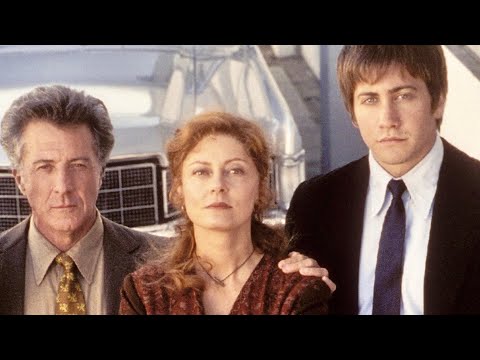
Tracks & Scenes
“I Want To Take You Higher” — Sly & The Family Stone
Where it plays: Kicks in just under four minutes into the film during the funeral procession. Jojo (Susan Sarandon) abruptly cranks the car stereo, blasting the song as the hearse pulls away and the family follows in their car, stunned and wired on adrenaline. Dialogue about the rabbi and “no God” fades into the background as the groove takes over, turning a solemn ritual into something furious and defiant.
Why it matters: The track announces that Jojo will not follow tasteful, quiet-grief rules. Funk here is armor — raw rhythm covering up the terror of losing an only child.
“Twentieth Century Boy” — T. Rex
Where it plays: Around the 30-minute mark, backing a chaotic real-estate convention sequence. Ben (Dustin Hoffman) works the room while Joe drifts, clearly unsure if this “Floss & Son” future belongs to him. The song blares over nametags, cheap coffee and forced networking patter as Ben tries to sell both property and the idea of Joe as his heir.
Why it matters: Glam-rock swagger mocks the attempt to paste normal career ambitions over unresolved grief. The lyric bravado contrasts sharply with Joe’s reluctance, underlining how performative this new life is.
“Moonlight Mile” — The Rolling Stones
Where it plays: At roughly 00:41, in the bar where Bertie (Ellen Pompeo) tends both drinks and wounded locals. Joe drops a coin in the jukebox and selects this track; the room goes quiet as the opening acoustic figure and strings glide in. He and Bertie share a slow dance, their bodies close while emotionally both are miles away, each holding a different ghost. The subtitles mark the song starting at 00:41:10 and continuing through a long, uninterrupted stretch of conversation, glances and near-confessions in the bar’s dim light.
Why it matters: This is the core image of the film and album: a “moonlight mile” between who you are supposed to be and who you are now. The song’s sense of weary travel mirrors Joe’s suspended life, and the choice coming from the jukebox makes it feel like Joe is trying on someone else’s courage.
“I’ll Be Your Lover Too” — Van Morrison
Where it plays: Around 01:09, in an intimate scene between Joe and Bertie. The track begins over a quiet, awkward bedroom moment — half argument, half confession — as they confront whether this new connection is betrayal or survival. Morrison’s voice and finger-picked guitar glide under half-whispered lines like “please let me see you,” which the subtitles echo as Joe struggles to say what he wants.
Why it matters: The song is not about first love; it is about a second chance taken carefully. That nuance fits Joe and Bertie perfectly: two people stepping into something tender while still covered in wreckage.
“Comin’ Back To Me” — Jefferson Airplane
Where it plays: Near the film’s final stretch (around 01:38). The track comes in as Joe begins reading his letter to Bertie, part of the sequence of seventy-five letters he writes and scatters across town. We see images of small-town streets, mailboxes and quiet interiors while the song’s drifting, echoing vocal floats above. The film slows down here, almost turning into a memory essay.
Why it matters: Psychedelic folk here becomes a grief diary. The music does not push toward catharsis; instead it lets the sense of “coming back” be uncertain. Joe is trying to come back to himself, not only to a relationship.
“Sweet Thing” — Van Morrison (film-only, not on the CD)
Where it plays: Over a late-film sequence that moves through reconciliations and departures, the song blankets images of people finally moving on — Ben and Jojo, Joe and Bertie, the town itself. The scene plays almost like a montage of future memory, the camera lingering on faces that finally look tired rather than shocked.
Why it matters: Using another Morrison track here completes a small arc: “I’ll Be Your Lover Too” marks the risky first step into a new bond, while “Sweet Thing” marks the moment when love feels possible again in a broader sense — toward life, not just one person.
“Song to the Siren” — Robert Plant
Where it plays: In the closing minutes (from about 01:52 onward), over the film’s final images and the emotional landing. As Joe’s voice-over reaches its most poetic, describing a place “where every sky’s without color,” Plant’s version of the Tim Buckley song pours in with its sea-imagery and aching vocal. The cut extends over credits, letting the story drift out rather than snap shut.
Why it matters: The song turns grief into myth: Joe is no longer just a guy in Massachusetts, he is someone trying to steer a wrecked boat toward shore. Ending with this track rather than a neat, upbeat closer is a strong statement about what kind of “romantic drama” this really is.
“Buckets of Rain” — Bob Dylan
Where it plays: Used in a reflective passage where Joe and Jojo confront the limits of what punishment or legal closure can do. The song filters through like an inner monologue, its laconic tone undercutting any courtroom grandstanding or revenge fantasy.
Why it matters: Dylan’s wry, resigned mood fits the film’s view of justice: there is no perfect verdict that balances the scales. You just keep walking through the “buckets of rain.”
“Love Will Come Through” — Travis
Where it plays: The track is more closely associated with the film’s marketing than with a showpiece scene, surfacing around transitional moments and strongly in promotional use at the time. Written originally for this soundtrack, it sits stylistically outside the ’70s period but echoes the film’s core idea that genuine connection might eventually cut through numbness.
Why it matters: It functions as a thematic bridge between the early-’70s diegetic world and the early-2000s audience: a contemporary band articulating the same hope the film carefully, cautiously reaches for.
Notes & Trivia
- The film’s title comes directly from the Rolling Stones song “Moonlight Mile,” and the jukebox scene is built around that track.
- Composer Mark Isham’s original cue “The Telling” is the only short score piece on an otherwise all-songs album.
- Van Morrison’s “Sweet Thing” appears prominently in the film but is absent from the official CD release, a frequent complaint among fans.
- The soundtrack favors lesser-known cuts by major artists (Dylan, Van Morrison, Bowie, the Stones) over their radio staples.
- Travis’s “Love Will Come Through” was later re-used on the band’s own album and in other film and TV placements, giving the song a life well beyond this movie.
- Several tracks (“Comin’ Back to Me,” “Song to the Siren”) later reappeared in other memory-heavy dramas, reinforcing their reputation as “grief songs.”
Music–Story Links
Joe’s emotional arc is written into the track order as much as the screenplay. In the opening, “I Want To Take You Higher” blasts through the funeral car because Jojo refuses to surrender her daughter’s memory to hush and platitudes. That choice immediately frames Jojo as someone who weaponizes music — she uses funk to punch through social stiffness and to insist that Diana’s life was loud and messy, not tasteful and quiet.
Ben, by contrast, gets “Twentieth Century Boy” over his convention scenes. The glam-rock stomp underlines how invested he is in appearances: the show of being back at work, of making deals, of being the unstoppable provider. The song’s swagger works as a mask he puts on Joe, too, pushing him into a role (“Floss & Son”) that Joe has not actually chosen. The louder the riff, the more obvious the lie.
Bertie’s connection to Joe is defined musically before they fully articulate it. When Joe plays “Moonlight Mile” on the jukebox, he is reaching for a song that admits vulnerability without collapsing. The lyrics about travel and distance reflect his emotional state: he is still on the road away from Diana’s death, not at the destination of new love. Bertie’s reaction — half teasing, half moved — shows that she understands he is speaking through the song rather than through direct confession.
The Van Morrison pairing is clever. “I’ll Be Your Lover Too” scores the private, somewhat messy intimacy of Joe and Bertie, where nothing is resolved yet. “Sweet Thing” later scores a larger, more open sense of moving forward, as if the personal risk they took in that earlier scene has rippled outward into a broader willingness to live. The two songs map onto “rebellion” and “collapse into acceptance.”
The final act’s use of Jefferson Airplane and Robert Plant pushes the film toward a different register. “Comin’ Back to Me” plays as Joe writes and sends his letters, turning his grief into language instead of silence. “Song to the Siren” then frames the ending as a question, not an answer: will he be able to “sail” back to ordinary life, or will some part of him always be caught in that night? The soundtrack refuses a clean emotional resolution, which is exactly why it sticks.
Reception & Quotes
The film itself drew mixed-to-positive reviews on release: some critics found the plot contrived, others praised the performances and tonal control. The soundtrack, however, was often singled out as one of the movie’s strongest assets, with several commentators ranking it alongside other classic-rock-heavy compilations of the era.
Reviewers noted the way the album leaned on deep cuts. One mainstream outlet pointed out how the funeral procession “glides down the road to Sly and the Family Stone’s ‘I Want To Take You Higher’” and later described Joe dropping the coin for “Moonlight Mile” in the bar as the film’s standout musical moment.
“The song selections — such ’70s favorites as Sly & the Family Stone and the Rolling Stones — give the film a texture it otherwise sometimes fumbles for.”
DVD review, early 2000s
“Blessedly highlighting lesser-known but still worthy cuts, the album stands alongsideThe Royal Tenenbaumsas a model of smart crate-digging.”
Retail editorial blurb
“A solid album through and through… a compilation that could work as a late-night playlist even if you never saw the film.”
Paraphrased from online buyer reviews
The CD has remained in print or easily obtainable via second-hand markets, and digital availability is generally good, though regional streaming catalogues sometimes swap in newer remasters (for example, later mixes of the Stones track) depending on licensing.
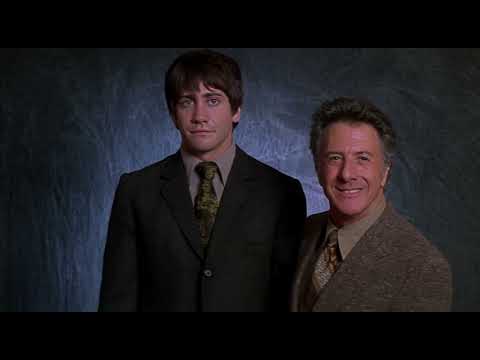
Interesting Facts
- The soundtrack album clocks in at about 55 minutes, unusually lean for a various-artists compilation of that era.
- Bob Dylan’s “Buckets of Rain” appears here via a film-soundtrack release rather than a Dylan-centric compilation, which makes the album a minor collectible for fans.
- The Stones’ “Moonlight Mile” had rarely been used in film before; this placement helped cement its reputation as a “deep cut” favorite.
- “Love Will Come Through” started life as a soundtrack commission and only later became a Travis single, reversing the usual order.
- Robert Plant’s “Song to the Siren” is itself a cover of Tim Buckley; using a cover in a film already obsessed with memory and repetition adds another layer of echo.
- The album weaves in two Sly & The Family Stone tracks, bookending funk energy with more introspective material in the middle of the sequence.
- Because “Sweet Thing” is not on the album, fan-made playlists often add it manually to recreate the full film experience.
- Physical CD copies typically credit Isham prominently on the back, even though his original music is only a small fraction of the running time.
Technical Info
- Title: Moonlight Mile – Music From The Motion Picture
- Year: 2002 (album release 24 September 2002)
- Type: Various-artists film soundtrack (song-driven with minimal score)
- Main film: Moonlight Mile (2002, feature film)
- Director (film): Brad Silberling
- Composer (score): Mark Isham
- Primary artists on album: Sly & The Family Stone, The Rolling Stones, Travis, T. Rex, David Bowie, Elton John, Van Morrison, Jefferson Airplane, Bob Dylan, Robert Plant, Jorma Kaukonen, Mark Isham
- Label: Epic / Sony Music Soundtrax (CD catalog number commonly listed as EK 86874 or variants)
- Format: CD, later digital releases and streaming
- Duration: Approximately 55:30
- Notable omissions: Van Morrison’s “Sweet Thing” (in film but not on CD)
- Recording era of songs: Primarily late 1960s to early/mid-1970s original recordings, plus one early-2000s track by Travis
- Release context: Issued to coincide with the film’s limited U.S. theatrical release and home-video window
- Availability / chart notes: Widely available on used CD markets and major digital platforms; niche but respected among classic-rock soundtrack collectors.
Questions & Answers
- Does the Moonlight Mile soundtrack album include every song heard in the film?
- No. The key omission is Van Morrison’s “Sweet Thing,” which plays prominently near the end of the movie but is not included on the CD. The core classic-rock and folk cues, however, are present.
- Is the Rolling Stones track “Moonlight Mile” used diegetically in the story?
- Yes. Joe selects it on a bar jukebox, and the whole room quiets as it plays while he dances with Bertie. It is one of the most explicitly diegetic, story-driving music moments in the film.
- What makes this soundtrack stand out from other early-2000s compilations?
- It emphasizes deep cuts over greatest-hits staples, uses songs as active scene partners rather than background wallpaper, and maintains a coherent early-’70s soundscape even when introducing a contemporary track like Travis’s “Love Will Come Through.”
- How prominent is Mark Isham’s original score compared to the licensed songs?
- The score is spare and textural, often acting as connective tissue between set-piece songs. On the commercial album, Isham’s presence is mostly represented by the brief cue “The Telling.”
- Is the album still worth hearing if you have never seen the film?
- Yes. It works surprisingly well as a self-contained listening experience — a moody classic-rock and folk mix that moves from swagger to quiet devastation and back to fragile hope.
Canonical Entities & Relations
| Subject | Verb | Object |
|---|---|---|
| Brad Silberling | directed | Moonlight Mile (film, 2002) |
| Brad Silberling | wrote | Moonlight Mile (screenplay) |
| Mark Isham | composed music for | Moonlight Mile (film score) |
| Epic / Sony Music Soundtrax | released | Moonlight Mile – Music From The Motion Picture (soundtrack album) |
| The Rolling Stones | performed | “Moonlight Mile” (song, 1971) |
| Sly & The Family Stone | performed | “I Want To Take You Higher” and “Everybody Is a Star” |
| Van Morrison | performed | “I’ll Be Your Lover Too” and “Sweet Thing” |
| Jefferson Airplane | performed | “Comin’ Back To Me” |
| Robert Plant | performed | “Song to the Siren” (cover version used in film) |
| Travis | performed | “Love Will Come Through” (written for the soundtrack) |
| Touchstone Pictures | produced | Moonlight Mile (film) |
| Buena Vista Pictures Distribution | distributed | Moonlight Mile (theatrical release) |
| Cape Ann, Massachusetts (fictionalized setting) | hosts events of | Moonlight Mile (story world) |
Sources: film release notes and credits; soundtrack album listings (Epic/Sony Music Soundtrax); contemporary reviews and DVD notes; AllMusic editorial entry; Discogs release data; subtitle timing transcripts; artist discographies and song histories.
November, 16th 2025
A-Z Lyrics Universe
Cynthia Erivo Popular
Ariana Grande Horsepower
Post Malone Ain't No Love in Oklahoma
Luke Combs Good Riddance (Time of Your Life)
Green Day Bye Bye Bye
*NSYNC You're the One That I Wan
John Travolta & Olivia Newton-John I Always Wanted a Brother
Braelyn Rankins, Theo Somolu, Kelvin Harrison Jr. and Aaron Pierre The Power of Love
Frankie Goes to Hollywood Beyond
Auli’i Cravalho feat. Rachel House MORE ›