Soundtracks:  A B C D E F G H I J K L M N O P Q R S T U V W X Y Z #


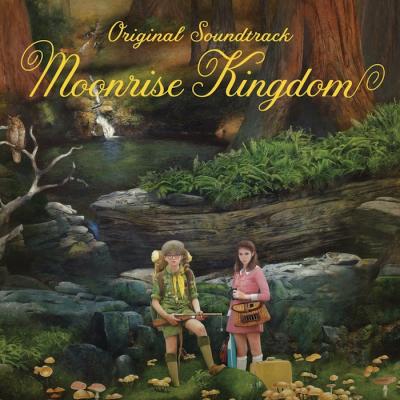
Moonrise Kingdom Album Cover

"Moonrise Kingdom" Soundtrack Lyrics

Movie • 2012

Track Listing

The Young Person's Guide To The Orchestra, Op. 34: Themes A-F (Instrumental)

Leonard Bernstein

Camp Ivanhoe Cadence Medley (Instrumental)

Peter Jarvis and His Drum Corps

Playful Pizzicato from Simple Symphony, Op. 4 (Instrumental)

English Chamber Orchestra

Kaw-Liga

Hank Williams

Noye's Fludde, Op. 59: Noye, Noye, Take Thou Thy Company

Trevor Anthony

The Heroic Weather-Conditions of the Universe, Part 1: A Veiled Mist (Instrumental)

Alexandre Desplat

The Heroic Weather-Conditions of the Universe, Part 2: Smoke/Fire (Instrumental)

Alexandre Desplat

The Heroic Weather-Conditions of the Universe, Part 3: The Salt Air (Instrumental)

Alexandre Desplat

A Midsummer Night's Dream, Act 2: On The Ground, Sleep Sound

Choir Of Downside School, Purley

Long Gone Lonesome Blues

Hank Williams

Le Carnaval des Animaux: Volie're (Instrumental)

Leonard Bernstein

Le Temps de l'Amour

Francoise Hardy

An die Musik

Alexandra Rubner

Ramblin' Man

Hank Williams

Songs From Friday Afternoons, Op. 7: Old Abram Brown

Choir Of Downside School, Purley

The Heroic Weather-Conditions of the Universe Parts 4-6: Thunder, Lightning, and Rain (Instrumental)

Alexandre Desplat

Noye's Fludde, Op. 59: The Spacious Firmament On High

David Pinto

Noye's Fludde, Op. 59: Noye, Take Thy Wife Anone

Trevor Anthony

The Young Person's Guide To The Orchestra, Op. 34 Fugue: Allegro Motto (Instrumental)

Leonard Bernstein

Songs From Friday Afternoons, Op. 7: Cuckoo!

Choir Of Downside School, Purley

The Heroic Weather-Conditions of the Universe, Part 7: After The Storm (Instrumental)

Alexandre Desplat


"Moonrise Kingdom (Original Soundtrack)" – Album Guide to Tracks and Key Scenes

Moonrise Kingdom official trailer frame emphasizing the island setting and young protagonists
Moonrise Kingdom trailer imagery – the island world that the soundtrack scores

Overview

What happens when a children’s adventure is scored like a miniature opera? Moonrise Kingdom (Original Soundtrack) answers that by treating a 1965 summer on a small New England island as if it were a Britten play for orchestra and choir. Instead of the usual indie mixtape, this album leans on Benjamin Britten, Hank Williams, Françoise Hardy, and Alexandre Desplat to turn a simple runaway story into something closer to a fable.

The film follows Sam Shakusky and Suzy Bishop, two twelve-year-olds who flee their unhappy homes and scout camp to claim a tiny beach as their own kingdom. The soundtrack keeps them surrounded by structure even as they rebel against it: children’s operas, instructional orchestral pieces, scout cadences and storm suites. Over that spine, Anderson layers yé-yé pop and lonesome country, so every time the kids try to improvise their lives, the music reminds us of the rules and expectations they’re pushing against.

As a listening experience, the album oscillates between strict order and emotional volatility. The recorded version of Britten’s The Young Person’s Guide to the Orchestra that opens the film returns at the end in Desplat’s tribute suite, while Britten’s Friday Afternoons songs and Noye’s Fludde excerpts thread through the story like the musical equivalent of scout badges. In between, Hank Williams crackles out of a record player whenever Bruce Willis’s lonely policeman appears, and Françoise Hardy’s “Le Temps de l’amour” briefly turns a rocky cove into the most fragile dance floor in Anderson’s filmography.

Style-wise, the soundtrack moves in phases that mirror the plot: didactic classical works and scout percussion for “arrival” and orientation; Britten miniatures and quirky score for “adaptation” as Sam and Suzy test their escape; yé-yé pop and Hank Williams’ country laments for the “rebellion” when adult authority loses control; finally, Britten’s choral pieces and Desplat’s “Heroic Weather-Conditions of the Universe” suite for the storm and emotional “collapse.” Classical writing stands for order and social structure, country for private loneliness, and French pop for the intoxicating, slightly ridiculous rush of first love.

How It Was Made

Wes Anderson built this soundtrack around a long-standing obsession with Benjamin Britten. He has talked about performing in Britten’s children’s opera Noye’s Fludde as a kid, and here he uses that experience literally: Sam and Suzy first meet during a church staging of the piece, and the recording Anderson chose sits at the emotional center of both the film and the album. Music supervisor Randall Poster, Anderson’s regular collaborator since Bottle Rocket, helped structure the track list so Britten’s works act as a frame for everything else.

Classical recordings, mostly from the mid-20th century, do a lot of heavy lifting. Leonard Bernstein and the New York Philharmonic perform The Young Person’s Guide to the Orchestra, complete with narrator breaking down instruments one by one. Those same ideas reappear in Alexandre Desplat’s original compositions, especially the multipart “Heroic Weather-Conditions of the Universe,” which treats changing barometric pressure like character development. As one classical-focused article pointed out, the film uses Britten’s music to teach kids what orchestral sound can do without ever talking down to them.

To keep the movie from floating away into pure concert music, Anderson and Poster wove in a small set of pop and country cues: Hank Williams for the weary adults, Françoise Hardy for the kids’ romantic fantasy, and a few other period-appropriate songs. Anderson has described the Hank Williams needle drops as belonging specifically to Captain Sharp, the policeman who unofficially adopts Sam; the idea was that whenever Sharp appeared alone, you would hear “his” record spinning somewhere in the scene.

The album itself arrived in May 2012 on ABKCO as Moonrise Kingdom (Original Soundtrack), produced by Anderson and Poster. It collects Britten pieces, Desplat cues, Mark Mothersbaugh’s “Camp Ivanhoe Cadence Medley,” the pop songs, and even the scout drum corps. It topped Billboard’s Classical Albums chart and reached the upper tier of the soundtrack charts, a rare feat for a record that leans so hard into modern classical repertoire.

Moonrise Kingdom production still montage used in trailer, highlighting scouts, Suzy, and storm imagery
The trailer already foregrounds Britten, scouts, and storm imagery – the soundtrack’s core ingredients

Tracks & Scenes

“The Young Person’s Guide to the Orchestra, Op. 34: Themes A–F” — Leonard Bernstein & New York Philharmonic (music by Benjamin Britten)
Where it plays: Over the opening tour of the Bishop house. A narrator explains the orchestra’s sections as the camera glides from room to room: Suzy’s brothers listening to records, Suzy reading and staring out the window, parents isolated in their own spaces. Each orchestral family gets its moment as the camera isolates another family member in a dollhouse-like composition.
Why it matters: The piece literally teaches us how to listen while Anderson shows us how to look. The split-screen of instruments versus rooms sets up the whole film’s structure: a precise world that cannot fix its own emotional distance.

“Noye’s Fludde, Op. 59” (excerpts) — Benjamin Britten
Where it plays: In the church pageant where Sam and Suzy first meet. She stands on stage in raven makeup; he appears as a Khaki Scout among a chorus of animals and townspeople. Britten’s choral writing swells as the congregation watches the children reenact Noah’s Ark, storm and all. Later, echoes of the same music return under scenes of the approaching real storm and the kids’ escape.
Why it matters: The opera is both plot and metaphor. The kids are literally performing a flood story before they get swept into one. The music makes their runaway pact feel like a continuation of the pageant, not a break from it.

“Simple Symphony, Op. 4: Playful Pizzicato” — English Chamber Orchestra (music by Benjamin Britten)
Where it plays: Over an early montage of Camp Ivanhoe: Khaki Scouts marching, crafting, creating elaborate campsite contraptions. The string orchestra plucks and bounces while the camera follows precise diagonals of tents, flags and hand-made inventions. The rhythm matches the kids’ short, efficient movements as they perform their assigned tasks.
Why it matters: The piece turns the camp into clockwork. Every plucked string says “routine,” which makes Sam’s eventual decision to blow up that routine by running away feel like snapping one string too many.

“Kaw-Liga” — Hank Williams
Where it plays: Heard repeatedly on Captain Sharp’s record player, especially in scenes where he is alone at home, smoking and staring at the water, or quietly talking with Suzy’s mother. The song’s story of a wooden Indian who “never got a kiss” plays as Sharp tries to figure out how to care for a boy who does not belong to him, while also managing his awkward, half-hidden affair.
Why it matters: The track becomes Sharp’s signature. Its mix of folksy humor and sadness mirrors a man who is outwardly calm, inwardly convinced he has missed his moment to connect with anyone.

“Ramblin’ Man” — Hank Williams
Where it plays: Over part of the search for the missing kids and in another of Sharp’s domestic interludes, coming from the same small record player. We see maps, flashlights and worried adults trying to organize a response while the song’s drifting narrator describes a life lived in motion, never settling down.
Why it matters: Williams’ rambling persona stands in ironic contrast to Sam and Suzy’s run. The adults’ music imagines leaving but never actually leaves; the kids’ music (and actions) follow through.

“Le Temps de l’amour” — Françoise Hardy
Where it plays: On the beach at “Moonrise Kingdom” itself. Suzy puts a small battery-powered phonograph on a rock, drops the needle, and the yé-yé groove spills out over wind and surf. She and Sam dance in their underwear, clumsy and wildly serious, then share an awkward first kiss as the waves crash behind them and a storm slowly gathers on the horizon.
Why it matters: This is the film’s most iconic pairing of image and song. The lyrics about love, friends and adventure line up almost too perfectly with what the kids think they are doing, while Hardy’s cool delivery undercuts any sense of parody. For a minute, the world really does shrink to that cove.

“A Midsummer Night’s Dream: ‘On the ground, sleep sound’” — Benjamin Britten
Where it plays: During the montage of Sam and Suzy’s letter exchange. We read snippets of their blunt, oddly adult correspondence as the camera cuts between miserable home lives and the fantasy worlds they describe to each other. The fairy lullaby floats over these images, its harmonies moving slowly as the kids list their frustrations in flat, matter-of-fact voice-over.
Why it matters: The piece is a lullaby, but here it does not soothe; it keeps a cool distance. That gap between tender choral writing and the brutal little details in the letters stops the montage from turning into pure sentimentality.

“Old Abram Brown” — from Friday Afternoons, Op. 7 — Benjamin Britten
Where it plays: As Sam, Suzy and a small group of Khaki Scouts race across the island trying to reach safe ground before the big storm. The children’s choir intones the eerily calm tune while we see improvised rafts, makeshift gear and the kids’ determined faces. The sky darkens, adults begin to close in, and the music stays oddly steady, almost ritualistic.
Why it matters: The song is about death, but in a small, uncanny way. Using it over a chase scene turns the island into a kind of playground graveyard, where childhood is ending whether the characters want it to or not.

“Cuckoo!” — from Friday Afternoons, Op. 7 — Benjamin Britten
Where it plays: First when Scoutmaster Ward tries to comfort Sam after it looks like he will be separated from Suzy for good. Ward speaks gently in a dim, cramped space while the choir sings a bright, almost nursery-rhyme melody. Later, the piece returns close to the end, playing over a calm, almost suspended final shot of the island after the storm has passed, before the credits shift to other music.
Why it matters: It is a “happy” tune that still sounds strangely sad. That tension fits Sam perfectly: he is a child, but the film refuses to treat his feelings as childish.

“The Heroic Weather-Conditions of the Universe, Parts 4–6: Thunder, Lightning and Rain” — Alexandre Desplat
Where it plays: Over the climactic storm and church steeple sequence. The orchestra surges as wind tears through the tent city, lightning strikes the steeple, and adults scramble to rescue the children perched high above the flooded town. Brass and percussion hammer out a mock-epic pattern while the camera stays clinically composed, tracking the chaos with Anderson’s usual precision.
Why it matters: Desplat turns weather into character. The music treats the storm as the inevitable consequence of every little decision the kids and adults have made, a pressure system that finally has to break.

“Cuckoo!” and “The Young Person’s Guide to the Orchestra, Op. 34: Fugue” — Benjamin Britten / Alexandre Desplat
Where it plays: In the closing stretch and end credits. After the final image of the kids and their reconfigured “family,” Britten’s children’s chorus and then the famous orchestral fugue carry us into the credits, joined by Desplat’s narrated tribute where each instrument is introduced once again.
Why it matters: The film ends the way it began: with careful explanation. After all the chaos, we are back to naming instruments and roles. The story might be over, but the “lesson plan” continues.

Notes & Trivia

  • The soundtrack album leans so heavily on Britten that several critics joked it could pass as a modern classical compilation if you removed the Hank Williams cuts.
  • Wes Anderson has said that once he tried Hank Williams against Captain Sharp’s first scene, he could not imagine using any other artist for the character.
  • The opening use of The Young Person’s Guide to the Orchestra echoes educational TV from the 1960s, but the performance is a major-label Bernstein recording rather than a bespoke pastiche.
  • “Le Temps de l’amour” was already a cult favorite; the beach dance scene pushed it into a new wave of playlists and TikTok edits years after the film.
  • Desplat’s “Heroic Weather-Conditions of the Universe” suite breaks a single weather report into seven movements, echoing Britten’s modular approach to orchestral teaching pieces.
  • Mark Mothersbaugh’s “Camp Ivanhoe Cadence Medley” is a small nod to his earlier work on Anderson’s films, now folded into a mostly classical album.

Music–Story Links

The score maps cleanly onto the film’s four-part emotional arc: arrival, adaptation, rebellion, collapse. In the “arrival” phase, Britten’s Young Person’s Guide and the Camp Ivanhoe drum cadences tell us that this island has rules. Instruments are introduced like characters; scouts march to rigid patterns; adults speak through bullhorns and radios. Everything has its place.

As Sam and Suzy adapt to being runaways, the music begins to fracture. The letter-writing montage under Britten’s A Midsummer Night’s Dream aria shows us how both children use imagination to survive. Their words are blunt, but the choral writing is sophisticated and slippery, hinting that their inner lives are more complex than the adults assume.

The “rebellion” stretch belongs to pop songs. When Suzy drops the needle on “Le Temps de l’amour,” she is effectively casting a spell: Hardy’s voice tells her and Sam that this is what love is supposed to feel like. The fact that the song is coming from a tiny portable record player in a very real, very cold cove keeps the fantasy grounded — but only just. Meanwhile, Hank Williams’ tracks turn adult spaces into mini soap operas. Every time Sharp’s player spins up “Kaw-Liga” or “Ramblin’ Man,” we are reminded that the grown-ups also nurse their own half-buried romantic stories.

In the “collapse” phase, Britten and Desplat take over. “Old Abram Brown” and “Cuckoo!” put an eerie halo around the chase and the emotional fallout, while “Heroic Weather-Conditions of the Universe” gives the storm the shape of a symphony. The music makes the flood feel less like a random act of nature and more like an orchestral coda — the inevitable resolution chord after too many dissonant notes.

Reception & Quotes

Critics treated the soundtrack almost as a separate work. It topped the U.S. Classical Albums chart, hit the soundtrack charts, and appeared on multiple “best of 2012” and “best of the decade” lists for film music. Commentators highlighted how bold it was to build a mainstream film’s musical identity around Britten and other classical material while still feeling playful.

An A.V. Club piece called the album “as tasteful and impeccably curated as you’d expect,” pointing to the mix of Bernstein-conducted Britten, Hank Williams and Françoise Hardy. An AllMusic review praised its flow and “vivid beauty,” arguing that it stands comfortably next to Anderson’s earlier compilations. Writers in classical outlets focused on how thoughtfully the Britten selections were integrated with narrative beats rather than dropped in as highbrow decoration.

“The soundtrack really couldn’t be more perfect for the story: children teaching adults about matters beyond their comprehension.”
Alarm review, paraphrased
“While its choices set it apart from other Anderson films, its effortless flow makes it another fine musical companion to his work.”
AllMusic summary, paraphrased
“Britten, Saint-Saëns, Mozart, Schubert, Hank Williams and Desplat are woven together in a way that deserves an essay of its own.”
Festival review, paraphrased
Collage of Moonrise Kingdom scenes spotlighting Suzy, Sam, scouts and storm, used in trailer promotions
Publicity emphasized how tightly the film’s images and musical choices are braided together

Interesting Facts

  • The album’s Billboard Classical Albums No. 1 peak put it ahead of several high-profile concert releases the summer it came out.
  • ABKCO, which released the soundtrack, is better known for handling classic rock catalogs; here it functioned as a curator of mid-century classical recordings.
  • The score album Moonrise Kingdom (Original Score), issued shortly afterward, expands Desplat’s material and includes Mark Mothersbaugh’s theme separately.
  • Two separate recordings of Britten’s “Cuckoo!” have been associated with the film in liner notes and playlists, making discographical credits a small puzzle for collectors.
  • Because of rights and regional licensing, streaming track orders and timings sometimes differ slightly from the original U.S. CD release.
  • Several essays treat the film as an unofficial introduction to Britten for younger listeners, citing how often kids discovered his music here first.
  • The famous beach dance with “Le Temps de l’amour” is frequently cited in lists of great movie beach scenes, alongside far older, more adult films.
  • Some fans build “complete” playlists that add extra Britten excerpts not on the official album to match every musical moment in the movie.

Technical Info

  • Title: Moonrise Kingdom (Original Soundtrack)
  • Year: 2012 (soundtrack release May 2012)
  • Type: Various-artists film soundtrack with classical focus and original score
  • Main film: Moonrise Kingdom (2012 feature film)
  • Director (film): Wes Anderson
  • Writers (film): Wes Anderson, Roman Coppola
  • Primary composers/featured writers: Benjamin Britten, Alexandre Desplat, Hank Williams, Camille Saint-Saëns, Wolfgang Amadeus Mozart, Franz Schubert
  • Key performers on album: Leonard Bernstein & New York Philharmonic, English Chamber Orchestra, Choir of Downside School, Hank Williams, Françoise Hardy, Peter Jarvis and His Drum Corps, others
  • Label: ABKCO Music & Records
  • Producers (album): Wes Anderson, Randall Poster
  • Length: ~64 minutes (21 tracks on most editions)
  • Release formats: CD, digital download, later streaming
  • Chart performance: US Classical Albums No. 1; strong showings on US Soundtrack Albums and Billboard 200.
  • Related releases: separate Moonrise Kingdom (Original Score) album with expanded Desplat material.

Questions & Answers

Is the Moonrise Kingdom album mostly songs or mostly score?
It is dominated by classical and orchestral material: Britten pieces, Bernstein-conducted recordings and Desplat’s score, with a small but crucial set of pop and country songs.
Does the soundtrack include “Le Temps de l’amour” from the beach dance?
Yes. Françoise Hardy’s “Le Temps de l’amour” is on the official album and is presented essentially as heard in the film’s dance-and-kiss sequence.
How important is Benjamin Britten’s music to the film?
Central. Britten supplies the opening, the church pageant, the letter-writing montage, the escape and closing stretch, effectively bookending the entire story.
What role does Hank Williams play in the soundtrack?
His songs serve as an audio signature for Captain Sharp and, more broadly, for the adult world’s loneliness. Whenever you hear Hank, you are usually seeing Sharp’s private life.
Is the soundtrack enjoyable on its own if you are not into classical music?
It can be. The sequencing, short track lengths and contrast between Britten, Hank Williams and Françoise Hardy make it feel like a curated story rather than a museum playlist.

Canonical Entities & Relations

Subject Verb Object
Wes Anderson directed Moonrise Kingdom (film, 2012)
Wes Anderson co-wrote Moonrise Kingdom with Roman Coppola
Alexandre Desplat composed score for Moonrise Kingdom
Benjamin Britten wrote The Young Person’s Guide to the Orchestra, Noye’s Fludde, Friday Afternoons, and other works used in the film
Leonard Bernstein & New York Philharmonic performed The Young Person’s Guide to the Orchestra used in the opening sequence
Françoise Hardy performed “Le Temps de l’amour” used in the beach dance scene
Hank Williams performed “Kaw-Liga”, “Ramblin’ Man” and other songs used as Captain Sharp’s motif
ABKCO Music & Records released Moonrise Kingdom (Original Soundtrack)
Randall Poster served as music supervisor and co-producer of the soundtrack
Indian Paintbrush produced Moonrise Kingdom (with American Empirical Pictures)
Focus Features distributed Moonrise Kingdom theatrically
New Penzance (fictional island) serves as setting for the events scored by the Moonrise Kingdom soundtrack

Sources: official soundtrack notes and label information; film credits and release data; contemporary soundtrack reviews (A.V. Club, AllMusic, Alarm, festival coverage); critical essays on Britten’s music in the film; ABKCO and major retailer track listings; classical and film-music commentary on specific scene placements.

November, 16th 2025

Visit 'Moonrise Kingdom' profiles on Internet Movie Database and Rotten Tomatoes
A-Z Lyrics Universe

Lyrics / song texts are property and copyright of their owners and provided for educational purposes only.