Soundtracks:  A B C D E F G H I J K L M N O P Q R S T U V W X Y Z #


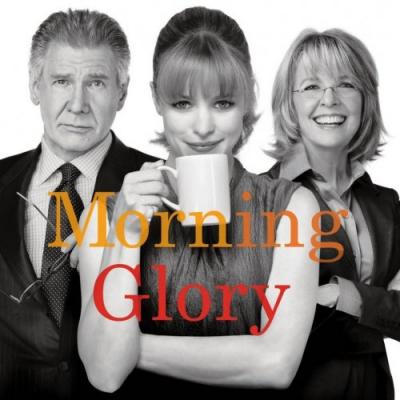
Morning Glory Album Cover

"Morning Glory" Soundtrack Lyrics

Movie • 2010

Track Listing


"Morning Glory (Unofficial Motion Picture Soundtrack)" – Album Guide to Tracks and Key Scenes

Morning Glory 2010 trailer frame with Becky Fuller rushing through a TV newsroom
Morning Glory — the unofficial soundtrack lives in the film’s montages, commutes and newsroom chaos as much as in its theme song.

Overview

How do you score a story about a woman who lives on coffee, panic and ratings graphs? The Morning Glory soundtrack answers with bright pop songs, soft indie, a few sly classical cues and David Arnold’s quietly optimistic score. There is no official commercial album, but between the licensed songs and Arnold’s themes the film builds a very coherent sound-world that fans now treat as a de facto soundtrack.

The narrative spine is Becky Fuller (Rachel McAdams), a young producer trying to drag the dying show DayBreak back to life while her own life falls apart. The music maps directly onto that arc. Early on, Joss Stone and Paolo Nutini push her through morning commutes and job-hunt montages; Colin Hay and The Weepies cover the bruised middle stretch where ambition collides with reality; later, a run of on-air stunts (50 Cent, Tchaikovsky, Hoagy Carmichael) tracks the moment Becky starts treating news like circus — and the ratings finally move.

What makes this soundtrack distinct is how unapologetically “morning TV” it sounds. You get feel-good pop, folk-pop, soft rock and light R&B, but the film keeps dropping in proper score and a bit of classical to remind you there’s still a serious journalist sulking at the desk. Arnold’s music sits under Becky’s private doubts; the songs tend to explode when she’s moving — running to interviews, crossing bridges, racing between studios, literally sprinting from one future to another.

If you think in phases: arrival → adaptation → rebellion → collapse. Arrival is all groove and optimism (“Free Me”, “New Shoes”). Adaptation pulls in introspective folk and ballads (“Waiting for My Real Life to Begin”, “Same Changes”). Rebellion is noisy and slightly ridiculous (50 Cent’s “Candy Shop”, “Dance of the Sugar Plum Fairy” underscoring stunt segments). Collapse and reset lean on reflective tracks like Corinne Bailey Rae’s “Are You Here”, Newton Faulkner’s “Gone in the Morning” and Natasha Bedingfield’s “Strip Me”, which finally nails Becky’s decision to choose her own path.

How It Was Made

Officially, there is no studio soundtrack CD for Morning Glory. The film’s music entry, production notes and label listings all stress that only individual songs and score cues were released, not a unified album. In practice, though, the 15-song compilation commonly tagged online as the Morning Glory soundtrack (with Joss Stone, Colin Hay, Corinne Bailey Rae, 50 Cent and others) has become the standard “album” fans use — explicitly labeled as an unofficial OST on at least one catalog site and mirrored as playlists on services like Spotify and YouTube.

The creative core is composer David Arnold, best known for several James Bond scores. Here he strips away the bombast. In an interview about his work around 2010 he described half of the Morning Glory score as an “optimistic, simple tune on piano” built as Becky’s theme — small, bouncy, slightly anxious. You hear it whenever she’s walking into a disaster with a clipboard and a plan. Around that, Arnold threads warm strings and light comic stings to support newsroom banter, Pomeroy’s deadpan fury and the escalating stunt segments.

Song selection works in two lanes. Lane one is character-and-montage: Joss Stone, Paolo Nutini, Colin Hay, The Weepies, Corinne Bailey Rae and Newton Faulkner all end up attached directly to Becky’s inner life and relationship with Adam. Lane two is pure television: Michael Bublé’s “Stuck in the Middle with You” for a cheesy photoshoot, 50 Cent performing “Candy Shop” live on DayBreak, a very on-the-nose “Dance of the Sugar Plum Fairy” needle-drop when Colleen does ballet with kids on air.

The theme song “Strip Me” by Natasha Bedingfield sits slightly outside the story — it’s heard over the end credits and in trailers rather than inside a scene, but structurally it’s the capstone. According to Bedingfield’s own promotional materials and chart write-ups, the single’s visibility spiked when it was tied to the film’s marketing, even though it never became a massive hit by her standards. The Weepies’ “Same Changes” was recorded specifically for the film, later promoted via Nettwerk and the band’s own channels as being “from the original motion picture.”

Morning Glory trailer still with Becky Fuller in the control room watching monitors
Behind the scenes: the score and song choices follow Becky into control rooms, edit bays and long, lonely walks to work.

Tracks & Scenes

Below is a selection of the key songs tied to specific scenes. Timestamps are approximate (based on a 107-minute runtime); descriptions follow the structure used by speciality soundtrack sites.

“Free Me” — Joss Stone
Where it plays: Over the opening credits, during Becky’s frantic morning commute to work at Good Morning, New Jersey. We see alarms, treadmill time, train platforms and Becky already juggling calls before sunrise — a moving character dossier delivered in under two minutes. Non-diegetic, but it feels like the track in her headphones.
Why it matters: Sets the pace and tone immediately: soul-pop groove, but in a rush. It tells you Becky’s life is already running at maximum speed before the plot even kicks in.

“Waiting for My Real Life to Begin” — Colin Hay
Where it plays: After Becky is fired, in a montage of her heading home, getting rejected from job after job and lying on her bed with résumés scattered around. The cue comes in early (around 00:08) and runs over several short, quiet shots of trains and city streets.
Why it matters: The lyrics are on the nose in a good way. This is Becky's “rock bottom but not quite giving up” moment; the song underlines that she still believes that the real, meaningful work — and life — are out there.

“Incredible” — Joss Stone
Where it plays: As Becky gets the unexpected call offering her the interview at IBS and then sprints through the city, trying to make it on time. We move from her bedroom into taxis, revolving doors and the IBS lobby in a tight, energetic sequence (~00:09).
Why it matters: Acts like an adrenaline shot. The groove and title both reinforce the idea that Becky is being handed a last, unlikely chance — and she’s going to chase it.

“New Shoes” — Paolo Nutini
Where it plays: Used over the montage of Becky taking the DayBreak job, moving into a small New York apartment and trying to convince herself she’s excited rather than terrified (~00:14). Boxes, IKEA furniture, new ID badges and a lot of nervous smiling.
Why it matters: It’s pure reset energy: new job, new city, new alarm time. The song’s casual optimism keeps the sequence from feeling bleak, even though we know how rickety the show she’s joining really is.

“Stuck in the Middle with You” — Michael Bublé
Where it plays: Around a third into the film (~00:34), when Mike Pomeroy and Colleen are forced into a promo photoshoot. As they grimace through fake poses and stare each other down, a smooth, jazzy version of the Stealers Wheel classic plays non-diegetically over their awkwardness.
Why it matters: The lyric joke is obvious — Becky really is stuck between these two — but the polished Bublé arrangement also mirrors the glossy sheen the network wants while their anchors quietly hate each other.

“Don’t Hold Me Down” — Colbie Caillat
Where it plays: Background music in a bar where Becky and fellow producer Adam grab a beer after work (~00:40). They flirt, talk shop and test the line between co-workers and something more, with the song audible over the speakers and under their dialogue.
Why it matters: It’s a tonal palate cleanser. After a lot of workplace humiliation, this is one of the first scenes where Becky is allowed to just be a person, and the mellow acoustic-pop track supports that softer register.

“Johnny Got a Boom Boom” — Imelda May
Where it plays: Shortly after, as Becky leaves Adam’s place in the early hours and discovers that Mike has been drinking the night before her first big broadcast (~00:48). The rockabilly swing drives a fast, slightly chaotic walk-and-discover sequence.
Why it matters: The song’s swagger undercuts the “responsible producer” image Becky is trying to project. It’s a reminder that she’s improvising constantly and that her personal and professional lives collide messily.

“Two Sleepy People” — Hoagy Carmichael & The Pacific Jazzmen
Where it plays: At Mike’s apartment, when Becky camps out to make sure he actually gets to the studio. She ends up dozing off in a chair while he watches old news tapes. The vintage recording plays on an old stereo as they both drift (~00:51).
Why it matters: It’s an old-fashioned love song used to score the very beginning of mutual respect rather than romance. The cue softens Mike just enough for us to imagine he cares about something besides his own legend.

“Finale from String Quartet in B-Flat Major (Op. 64 No. 3)” — Kodály Quartet
Where it plays: During an early “serious” news broadcast segment (~00:57), as DayBreak tries to stage something with a little gravitas. The classical piece runs quietly under Pomeroy’s attempts to force real journalism into a fluffy format.
Why it matters: This is Mike’s sonic home turf: formal, tasteful, rooted in old-school television news values. Using Haydn-era chamber music in a morning-show context is both sincere and a little sarcastic.

“Same Changes” — The Weepies
Where it plays: After Becky and Adam finally sleep together, she walks across a bridge at dawn on her way to work (~1:01). The city is unusually quiet; the song carries the whole moment as she smiles to herself and checks her phone.
Why it matters: Written specifically for the film, this song crystallises Becky’s emotional middle ground: she’s changing, but the job and its demands are changing her too. The gentle folk-pop feel gives the scene an earned warmth.

“Candy Shop” — 50 Cent feat. Olivia
Where it plays: Live on the DayBreak set (~1:15). Becky has begun booking outrageous stunts to chase ratings, and one of the biggest is getting 50 Cent to perform in the studio. We watch from the control room and the floor as the crew scrambles to keep up.
Why it matters: This is the moment the show stops pretending to be dignified. It’s Becky’s gamble: lean into spectacle and hope the audience follows. The needle-drop is diegetic, loud and impossible for Mike to ignore.

“Dance of the Sugar Plum Fairy” — Tchaikovsky (Royal Philharmonic / London players)
Where it plays: In a later ratings run (~1:16), Colleen does a dance segment with children on air, dressed in ballet gear and clowning through the Nutcracker piece while Mike glowers nearby.
Why it matters: The joke writes itself: serious art repurposed as morning-show filler. It also highlights Colleen’s willingness to humiliate herself on air for the sake of the programme — something Mike stubbornly resists.

“Are You Here” — Corinne Bailey Rae
Where it plays: After a fight with Adam about her work obsession (~1:21). Becky walks away, hurt and stubborn, through evening streets while the track plays non-diegetically, wrapping the scene in a mellow but melancholy atmosphere.
Why it matters: Musically, it is the most openly sad song in the film. It signals that Becky’s career choices now threaten the only relationship she has time for, and that she knows it.

“Gone in the Morning” — Newton Faulkner
Where it plays: In the ending run (~1:39). Becky leaves a high-profile interview at the Today show, realises she doesn’t want the job on those terms, and runs back through Manhattan to the DayBreak studio while Mike casually cooks on set.
Why it matters: The lyric and tempo turn what could be a clichéd “run back to him” beat into something closer to “run back to yourself.” It’s about choosing the messy, hard-earned job she built rather than the safer, shinier alternative.

“Strip Me” — Natasha Bedingfield
Where it plays: The film’s official theme song. A version plays over the end credits, right after Becky decides to stay with DayBreak and the camera floats through the buzzing studio. The same track features heavily in trailers and TV spots, often cut to Becky power-walking through hallways and the streets of New York.
Why it matters: It is the branding song. The message — “you can strip me of everything but not my voice” — is basically Becky’s mission statement as a producer fighting to be taken seriously.

“Happy Birthday to You” — traditional (various performers)
Where it plays: Briefly in a celebratory beat on the show, used as on-air incidentals. It is treated as pure source music, not a featured needle-drop.
Why it matters: Tiny but telling: even the most generic public-domain song is turned into content when you run a morning show that needs to fill time.

Morning Glory newsroom montage shot with multiple TV monitors showing the DayBreak show
The pop songs sit on top; David Arnold’s score and a few classical cues keep the newsroom grounded under the chaos.

Notes & Trivia

  • All the key songs are licensed individually; the widely circulated 15-track “OST” is explicitly described by at least one catalog site as an unofficial compilation.
  • “Strip Me” doubles as the title track of Natasha Bedingfield’s 2010 album and the film’s official theme, appearing in trailers and over the end credits.
  • The Weepies’ “Same Changes” was recorded especially for the movie and promoted by the band and label as being from the film’s soundtrack.
  • David Arnold’s score for Morning Glory has never had a commercial release, but specialist databases list it as a separate, unreleased soundtrack with no label information.
  • At least one playlist and one download store present the songs in a fixed 15-track running order, which is why many fans talk about “the Morning Glory album” even though the studio never issued one.
  • 50 Cent, Lloyd Banks and Tony Yayo all appear as themselves when “Candy Shop” is performed live on DayBreak, blurring the line between soundtrack, cameo and in-universe stunt.
  • “Gone in the Morning” became associated strongly enough with the finale that uploads of the song online often use Becky’s last run back to the studio as background footage.

Music–Story Links

The soundtrack mirrors Becky’s career arc very closely. When she is in motion — chasing jobs, hauling boxes, sprinting between studios — the film almost always leans on upbeat, radio-ready tracks: “Free Me”, “Incredible”, “New Shoes”, “Gone in the Morning”. When she is stuck, the songs slow down and become more introspective: “Waiting for My Real Life to Begin”, “Are You Here”, “Same Changes”.

Mike Pomeroy’s world, by contrast, is defined more by silence, low-key score and the occasional classical or jazz cue. Putting “Two Sleepy People” into his apartment and a Haydn quartet into the newsroom visually linked to him underlines that he belongs to an older, more formal idea of television. It also makes the explosion of “Candy Shop” on the DayBreak set feel like an invasion of his space.

The relationship between Becky and Adam is almost entirely tracked through songs instead of score. Their early bar conversation has Colbie Caillat playing in the background; their first night together leads directly into The Weepies on the bridge; their conflict rides on Corinne Bailey Rae. None of these moments are treated as “big needle drops”; they sit just loud enough under the dialogue to register emotionally.

The show’s ratings rescue plan has its own mini-arc. 50 Cent’s performance and the “Sugar Plum Fairy” dance montage, followed by increasingly silly segments, are where the soundtrack fully embraces the idea that a morning show is part circus. You can almost track the Nielsen graph just by how brazen the music choices become.

Finally, “Strip Me” ties the whole package together. It is not Becky’s diegetic anthem — she never hears it in the story — but as viewers we are trained by the trailers and credits to hear it as her voice. When it kicks in at the end, it reframes the entire film as a story about someone insisting on her right to do the job her own way, even if the industry (and the people around her) don’t quite get it.

Reception & Quotes

The film itself received mixed but generally warm reviews. Most critics focused on performances and the script rather than the music, but several singled out the “surprisingly strong” soundtrack as part of why the film feels lighter and more propulsive than its premise suggests. More than one review mentions that the combination of Bedingfield’s theme, The Weepies’ contribution and a run of well-placed indie and pop cuts gives the film a consistent, upbeat pulse.

Fan and blogger responses picked up on the same point. A number of online reviews explicitly call out “New Shoes”, “Same Changes” and “Strip Me” as perfect fits, and some go so far as to say that the film feels like a hybrid between a standard romcom and a soft, music-driven montage movie. One reviewer notes that the pacing “almost works like a hybrid of a movie and a playlist, with the soundtrack guiding mood shifts.”

The theme song’s reception has been more measured. On its own, “Strip Me” charted modestly in the U.S. and Canada and drew mixed responses from music critics, but it consistently gets described as “uplifting” or “feel-good” in the context of the film’s trailers and closing sequence. The association with Morning Glory became a key part of its promotion.

“Morning Glory has a strong soundtrack, headed by Natasha Bedingfield’s ‘Strip Me’ straight out of the film’s well-built trailer.”
– online film review
“Paolo Nutini’s ‘New Shoes’ and The Weepies’ new single work perfectly, giving the film a consistently upbeat pace.”
– blogger reaction
“Same Changes was recorded exclusively for Morning Glory; its lyrics and gentle tone fit Becky’s story better than some of the script’s own speeches.”
– soundtrack-focused write-up
Morning Glory trailer shot of Becky Fuller walking across a New York street at dawn
Endgame vibes: Becky choosing her own path while “Gone in the Morning” and “Strip Me” close the loop.

Interesting Facts

  • Unofficial but structured: At least one soundtrack site lists a 15-track Morning Glory album with length and running order, but labels it clearly as “unofficial album”.
  • Playlist afterlife: Multiple user playlists on Spotify and other platforms copy that exact sequence, so the “fake” album has become the default listening format.
  • Bond to breakfast TV: Composer David Arnold went straight from big action scores like Quantum of Solace to this newsroom comedy, and has joked that it was his last major feature for a while.
  • Commissioned song: The Weepies’ “Same Changes” was commissioned specifically for the film and later promoted by the band’s label as part of the movie’s music identity.
  • Theme-song economics: Coverage of “Strip Me” notes that its download and iTunes performance jumped immediately after appearing in the Morning Glory trailer.
  • Score in limbo: Specialist databases list Arnold’s score but note that there is no known label release, hinting that the master exists but has never been commercially issued.
  • Classical deep cuts: The use of the Haydn string quartet finale and Bach’s “Prelude and Fughetta in G Major” is unusually specific for a light studio comedy; both pieces are credited with exact ensemble versions.
  • 50 Cent as content: Casting 50 Cent as himself lets the film use “Candy Shop” as both a soundtrack needle-drop and an in-universe booking triumph, which fits Becky’s producer fantasy perfectly.
  • Repeated montage favourite: “Waiting for My Real Life to Begin” is used twice in some TV edits, reinforcing the “career in limbo” theme more strongly for broadcast viewers.
  • Romcom lineage: Articles about romcom soundtracks regularly mention “Strip Me” alongside other Bedingfield cuts (“Unwritten”, “Pocketful of Sunshine”) as shorthand for the genre’s 2000s–2010s pop sound.

Technical Info

  • Title (film): Morning Glory
  • Year: 2010
  • Type: Romantic comedy-drama; unreleased official soundtrack, widely circulated unofficial song compilation + original score
  • Director: Roger Michell
  • Writer: Aline Brosh McKenna
  • Lead cast: Rachel McAdams (Becky Fuller), Harrison Ford (Mike Pomeroy), Diane Keaton (Colleen Peck), Patrick Wilson (Adam Bennett), Jeff Goldblum (Jerry Barnes)
  • Score composer: David Arnold
  • Theme song: “Strip Me” — Natasha Bedingfield (also on her album Strip Me)
  • Key featured songs: “Free Me”, “Incredible” (Joss Stone); “Waiting for My Real Life to Begin” (Colin Hay); “New Shoes” (Paolo Nutini); “Same Changes” (The Weepies); “Are You Here” (Corinne Bailey Rae); “Gone in the Morning” (Newton Faulkner); “Candy Shop” (50 Cent feat. Olivia)
  • Classical cues: “Prelude and Fughetta in G Major” (J.S. Bach); “Finale from String Quartet in B-Flat Major, Op. 64 No. 3”; “Dance of the Sugar Plum Fairy” (from The Nutcracker)
  • Label status: No official studio soundtrack album; unofficial 15-track compilation documented online; score unreleased with no label credited
  • Running time (film): 107 minutes
  • Notable usage: “Strip Me” used in trailers and end credits; “Same Changes” commissioned for the film; 50 Cent’s on-screen performance doubles as a diegetic concert and soundtrack highlight.

Questions & Answers

Is there an official Morning Glory soundtrack album?
No. The studio never released a full official soundtrack. What most people call the “Morning Glory soundtrack” is an unofficial 15-track compilation (plus various playlists) that gathers the film’s main songs.
What song plays over Becky’s opening commute?
Joss Stone’s “Free Me” scores the opening credits and Becky’s early-morning commute to her local TV job, before she gets fired and the main plot starts.
Which track is used when Becky is job-hunting after being fired?
Colin Hay’s “Waiting for My Real Life to Begin” plays over the montage of Becky sending out résumés and riding trains home after losing her first job.
What song closes the movie and runs into the credits?
Newton Faulkner’s “Gone in the Morning” plays as Becky runs back to DayBreak, and Natasha Bedingfield’s “Strip Me” rolls over the end credits as the film’s theme song.
Which song is performed live on the DayBreak set?
50 Cent performs “Candy Shop” live on air, with Lloyd Banks and Tony Yayo appearing as themselves. It’s both a ratings stunt in the story and a prominent diegetic soundtrack moment.

Canonical Entities & Relations

Subject Relation Object
Roger Michell directed Morning Glory (2010 film)
Aline Brosh McKenna wrote Screenplay for Morning Glory
David Arnold composed Original score for Morning Glory
Natasha Bedingfield performed “Strip Me” (theme song for Morning Glory)
The Weepies performed “Same Changes” (recorded for Morning Glory)
Joss Stone performed “Free Me” and “Incredible” used in the film
Colin Hay performed “Waiting for My Real Life to Begin” for a job-hunt montage
Paolo Nutini performed “New Shoes” used over Becky’s move to New York
Corinne Bailey Rae performed “Are You Here” used during Becky and Adam’s conflict
Newton Faulkner performed “Gone in the Morning” used in the film’s ending run
50 Cent performed “Candy Shop” live on the in-universe show DayBreak
Bad Robot produced Morning Glory (through its production company credit)
Paramount Pictures distributed Morning Glory theatrically
Rachel McAdams portrays Becky Fuller, executive producer of DayBreak
Harrison Ford portrays Mike Pomeroy, veteran news anchor forced onto DayBreak
Diane Keaton portrays Colleen Peck, long-time DayBreak co-host
Morning Glory (unofficial soundtrack) collects 15 key songs used in the film
Morning Glory (film) features Original song “Same Changes” and theme song “Strip Me”

Sources: Wikipedia film entry and music section; Song-credit databases (Soundtrakd, MoviesOST); TheOST unofficial album listing; Strip Me single and chart coverage; interviews and articles about David Arnold; reviews and blog posts discussing the film’s soundtrack and use of songs; label and artist materials for The Weepies, Natasha Bedingfield and other featured artists.

November, 16th 2025


A-Z Lyrics Universe

Lyrics / song texts are property and copyright of their owners and provided for educational purposes only.