Soundtracks:  A B C D E F G H I J K L M N O P Q R S T U V W X Y Z #


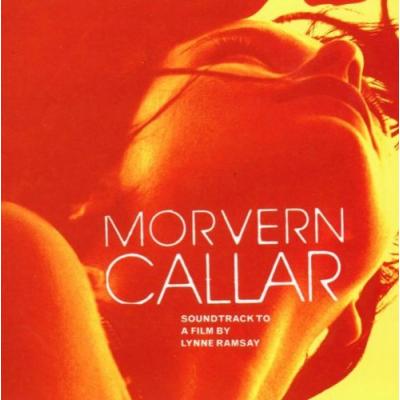
Morvern Callar Album Cover

"Morvern Callar" Soundtrack Lyrics

Movie • 2003

Track Listing


"Morvern Callar (Original Soundtrack)" – Album Guide to Tracks and Key Scenes

Morvern Callar official UK trailer frame with Samantha Morton under supermarket lights
Morvern Callar – the trailer already foregrounds how music and fluorescent everyday life collide.

Overview

What does grief sound like when the person feeling it refuses to speak? In Morvern Callar, the answer is a mixtape: Can, Aphex Twin, The Velvet Underground, Stereolab, Broadcast, Nancy & Lee, Lee “Scratch” Perry, The Mamas & The Papas and more, all stitched into one of the most talked-about soundtracks of the 2000s.

Lynne Ramsay’s 2002 film follows Morvern (Samantha Morton), a young supermarket worker in a Scottish coastal town, who wakes on Christmas morning to find her boyfriend dead by suicide. He leaves her a note, a novel manuscript and a cassette labelled “Music For You”. Morvern does two decisive things: she deletes his name from the book and submits it under her own, and she puts the tape in her Walkman and lets it guide everything that follows.

The soundtrack moves with her: from the dull aisles of the supermarket to Highland parties, from Oban bars to Almería clubs, from the bathtub where she cuts up his body to the Spanish hills where she buries him. It is not background. Critics regularly describe the music here as another character in the film, a running commentary on Morvern’s choices and on a grief she barely articulates aloud.

Across the running time you can trace a loose arc: arrival, adaptation, rebellion, collapse. Early tracks sit over shock and denial, almost too beautiful for what we are seeing. Mid-film pieces lean into escape – road journeys, parties, package-holiday hedonism. In the last third, music turns reflective again: old pop about loyalty, eerie electronica on the credits, a sense that the mixtape is still there but its meaning has changed.

Genre-wise the album is a crate-digger’s dream. Krautrock (Can, Holger Czukay), IDM (Aphex Twin), hauntological electronica (Boards of Canada), post-rockish lounge (Stereolab), 60s pop (The Mamas & The Papas, Nancy Sinatra & Lee Hazlewood), New York art-rock (The Velvet Underground), dub (Lee “Scratch” Perry), indie electronics (Broadcast) and rougher rave and folk pieces all appear. Ramsay lines them up so that styles map to states of mind: motorik grooves for forward motion, woozy synths for dissociation, 60s pop-soul for fragile longing, dub and rave for the disorientation of Spain.

How It Was Made

Unlike many soundtracks, the Morvern Callar mixtape existed before the shoot. Ramsay has said in interviews that she and her team compiled the tape early in the process and played it on set; the actors moved and performed with those exact tracks in their ears. That is why the film feels so welded to its music – the songs are baked into the blocking and the cutting, not draped on later in the edit.

Alan Warner’s source novel is already a “mixtape book”, packed with track references. Ramsay respected that but swapped out much of the playlist for her own choices, keeping the idea of a fiercely personal, eclectic tape while changing the contents. The finished soundtrack leans even further into obscure electronics and adventurous pop than the novel, with Warp Records releasing a compilation in late 2002 that effectively doubles as a label showcase.

Officially there are two overlapping album identities. Warp issued Morvern Callar (Soundtrack to a Film by Lynne Ramsay) in the UK in 2002, credited to Various Artists. A separate “original motion picture soundtrack” followed in early 2003 under the Alliance Atlantis banner in North America. Both revolve around the same core tracklist: Aphex Twin, Boards of Canada, Can, Stereolab, Broadcast, The Velvet Underground, Nancy Sinatra and Lee Hazlewood, Holger Czukay, Ween and others.

Sound designer Paul Davies has described how the team worked with sound early: building up the Walkman’s presence, pushing foley loud in the mix and treating car journeys and parties as shifting “dream periods” stitched together by music. According to a Warp-era press write-up, the album was positioned less as conventional score, more as “Morvern’s life soundtrack” – her internal logic pressed onto tape.

Morvern Callar trailer shot of Samantha Morton walking through a supermarket in slow motion
The team compiled the mixtape before shooting and played it on set, so scenes grow directly out of the songs.

Tracks & Scenes

Below are key tracks as they appear in the film, with scene context. Exact timestamps vary slightly between releases, so timings are approximate and based on scene order rather than minute-perfect clocking.

“Some Velvet Morning” — Nancy Sinatra & Lee Hazlewood
Where it plays: Early in the film, shortly after Morvern has discovered her boyfriend’s body but refused to tell anyone, she walks into her supermarket job wearing her headphones. The store is harshly lit and almost painfully ordinary: trolleys, sale signs, slow-moving customers. “Some Velvet Morning” plays over this as she moves down the aisles, the dreamy duet sitting completely at odds with her blank face and the fluorescent gloom. The track is diegetic – it is on that “Music For You” tape in her Walkman – but we hear it full and clear.
Why it matters: The song is the first big statement of how the soundtrack will work: mythic and psychedelic on the tape, mundane and numb on screen, perfectly expressing the gap between Morvern’s inner and outer worlds.

“I Want More” — Can
Where it plays: After a night in the local Mantrap pub, Morvern persuades her friend Lanna to leave town with her. As they drive away through the Scottish dark, “I Want More” kicks in on the car stereo/Walkman feed. The camera rides with them: headlights cutting across empty roads, the glow of the dashboard, two girls laughing and smoking as they speed away from a life they both hate. The cue covers most of this transitional stretch, bridging the pub and their next stop.
Why it matters: The title does a lot of work. This is the first time Morvern actively moves toward something new rather than simply reacting. The track turns the car into a little capsule of possibility.

“Japanese Cowboy” — Ween
Where it plays: Earlier that same night, “Japanese Cowboy” blares in the Mantrap pub while Morvern and Lanna drink with local guys. There is a bonfire outside, cheap decorations inside, the kind of small-town party that feels both thrilling and depressing. People shout over the music; the track is clearly diegetic bar music, muddy and loud.
Why it matters: It sets a baseline for Morvern’s life before everything really changes: chaotic, slightly tacky, surrounded by other people’s noise. Later, the cleaner, stranger textures of the mixtape will contrast hard with this.

“Fragrance” — Holger Czukay
Where it plays: At the start of one of the film’s big house parties, “Fragrance” drifts in as guests arrive. The camera roams through cramped rooms: bodies squeezed into doorways, cigarettes, cheap drinks, Morvern hovering at the edge of conversations. The track’s dubby oddness slips under the chatter, never quite settling.
Why it matters: It eases us from “normal” party sound into the stranger, more interior world of the mixtape. We start to feel that the music is following her, not the room.

“Goon Gumpas” — Aphex Twin
Where it plays: Later in that same party, near New Year, “Goon Gumpas” plays over a hazy montage. There are fairy lights, a bonfire, dancing bodies, bits of shouted dialogue half-buried in the track. Morvern floats through it all, half there, half somewhere else, still processing what she has done with the body and the manuscript. The piece stays diegetic – this is still her tape – but in the mix it takes over, drowning the room.
Why it matters: This is one of the most celebrated uses of Aphex Twin in cinema. The track’s playful, almost childlike melody undercuts the heaviness of the moment and makes her dissociation feel oddly tender rather than merely bleak.

“Everything You Do Is a Balloon” — Boards of Canada
Where it plays: Back in her flat, Morvern lies on the couch listening to her Walkman while the tape spins through its mid-section. “Everything You Do Is a Balloon” floats over shots of her alone – smoking, staring, not quite sleeping. The outside world goes quiet; we are basically inside her headphones.
Why it matters: The Boards of Canada sound – nostalgic, slightly decayed – matches the way Morvern clings to the tape as proof that something beautiful was once here, even as she erases the man who made it.

“Spoon” — Can
Where it plays: As the couch sequence continues, “Spoon” follows “Everything You Do Is a Balloon” on the tape. The camera doesn’t move much; instead we sit with her as the music changes but the room does not.
Why it matters: The pairing of Boards of Canada and Can here emphasises the mixtape logic. The songs are not only mood; they also mark time passing, tracks skipping forward while Morvern stays stuck.

“I’m Sticking With You” — The Velvet Underground
Where it plays: In one of the film’s most infamous scenes, Morvern tapes the Walkman to her semi-naked body, puts on sunglasses and starts to dismember her boyfriend’s corpse in the bathtub. “I’m Sticking With You” plays in her headphones as she saws and cleans, the childlike vocal humming along while blood hits the tiles and she methodically scrubs. We mostly hear the song as she hears it, loud and close, with only occasional intrusion from the brutal foley.
Why it matters: The contrast is shocking. A sweet, slightly creepy love song over a pragmatic, almost domestic butchery turns the scene into something between ritual and denial. Many critics pick this moment as the clearest example of Ramsay using music as both shield and scalpel.

“Blue Milk (Edit)” — Stereolab
Where it plays: “Blue Milk” appears around the scenes where Morvern and Lanna carry the body out to the hills to bury it. The track’s long, hypnotic repetitions run over images of the Scottish landscape, torches in the dark and the strange, almost peaceful labour of digging and covering. At points it spills over into their walk back.
Why it matters: The length and structure of the piece make the burial feel endless and slightly unreal, as if the world itself has slipped into a loop. It is one of the score’s most overtly “cinematic” uses of an existing track.

“You Can Fall” — Broadcast
Where it plays: In a quiet domestic interlude, Morvern and Lanna make biscuits in the kitchen before their trip. Flour everywhere, small jokes, a brief sense of normal friendship. “You Can Fall” plays while they work, with the lo-fi electronics and Trish Keenan’s voice softening the scene.
Why it matters: It shows the tape as something shared, not just private. For once the music underscores connection, not distance, hinting at a version of Morvern’s life where she might stay.

“Cool in the Pool” — Holger Czukay
Where it plays: When the story jumps to Spain, “Cool in the Pool” plays in a bar in Almería as Morvern and Lanna get drunk among tourists and locals. The track’s off-kilter funk bounces around the room, competing with fruit machines and multilingual chatter.
Why it matters: It marks the shift into a more hedonistic, dislocated phase. The music is still from the mixtape, but now it also blends with the sound world of cheap package holidays and holiday bars.

“Double Speed Mayhem” — 303 Nation
Where it plays: In a Spanish nightclub/rave sequence, after Morvern has had a strange, overwhelming trip in the bathroom, she steps back into the frenetic main room. “Double Speed Mayhem” pounds over the images: strobes, smoke, anonymous bodies, the camera drifting slightly out of sync. The track is diegetic club sound, hard and fast.
Why it matters: It is one of the few moments where the soundtrack abandons dreamy ambiguity and goes for straight sensory overload, matching Morvern’s attempt to obliterate herself in noise and colour.

“Hold of Death” — Lee “Scratch” Perry
Where it plays: Later in Spain, as Morvern wanders through a hotel corridor toward the mysterious room 1022 and its older resident, “Hold of Death” bubbles in the background. The dub track oozes through the walls and air vents as she moves, echoing and distant, as if the building itself is playing it.
Why it matters: The track adds a slight supernatural air to an otherwise mundane setting, underlining how far Morvern has travelled from the Christmas-tree blinking in her flat to this eerie, anonymous hotel.

“Cînd eram la ’48” — Taraf de Haïdouks
Where it plays: In a brief but vivid moment, Morvern sits inside a gypsy-driven Mercedes taxi while Taraf de Haïdouks play on the stereo. The camera watches the countryside roll by; the music feels like it belongs to the driver and the car, not to her tape.
Why it matters: It is one of the few cues not tied to the mixtape but to the world she’s passing through, reminding us that other people’s stories and soundtracks continue all around her.

“Cordevesa / Tanguillo” — Amor Juan Jose Sanchez Crus & friends
Where it plays: In a small café, Morvern drinks alone while local musicians perform traditional tunes. The voices and guitars fill the cramped space as she sits silently, half listening, half lost in thought.
Why it matters: Again, the film lets another culture’s music briefly take over. Morvern is no longer the centre of the soundscape; she is an outsider watching a scene she cannot fully enter.

“Many Tears Ago” — Eddy Arnold
Where it plays: Back in Scotland, in a pub scene where Morvern invites Lanna to travel with her again, “Many Tears Ago” plays on the jukebox. The sentimental country tune winds through their awkward conversation about staying versus leaving.
Why it matters: The lyrics about past regret and unrealised love quietly underline that this may be the last time they are truly in sync.

“Dedicated to the One I Love” — The Mamas & The Papas
Where it plays: In the final nightclub sequence, after Morvern has returned to Scotland with a large cheque and a new story, she stands alone on the dancefloor listening to “Dedicated to the One I Love” on her headphones while the club’s own music plays faintly in the background. It is late in the night; coloured lights flicker; other dancers blur around her. The track carries over to the end as she moves, then into the credits in some versions.
Why it matters: The song turns the ending into something both triumphant and devastating: a love song to a dead man, a love song to herself, and a farewell to the version of her that needed this tape.

“Nannou” — Aphex Twin
Where it plays: “Nannou” rolls over the end credits, after the last club images fade. The clinking, music-box-like beat and distant hum run against a black screen and white names.
Why it matters: It is a strange, gentle epilogue. Where much of the film’s music is about escape or masking, this closing track feels like suspension: not resolution, not collapse, just ongoing, private motion.

Morvern Callar trailer shot of Samantha Morton in a Spanish club with coloured lights
From Scottish supermarkets to Spanish clubs, the soundtrack acts like Morvern’s private operating system.

Notes & Trivia

  • The soundtrack is literally diegetic for much of the film: most songs come from the cassette Morvern’s boyfriend leaves labelled “Music For You”.
  • Ramsay replaced many of the tracks listed in Alan Warner’s novel with her own picks, then built the film around that revised mixtape.
  • The official album was released twice: as a Warp Records compilation in 2002 and as an Alliance Atlantis “original soundtrack” release in early 2003.
  • Critics often compare the “I’m Sticking With You” bathtub scene to Reservoir Dogs’ “Stuck in the Middle with You” ear-cut, but less sadistic and more quietly horrifying.
  • Aphex Twin appears twice (“Goon Gumpas”, “Nannou”), making him one of the few artists repeated on the tape.
  • The film also uses songs not on the commercial album, including Taraf de Haïdouks’ “Cînd eram la ’48” and the café flamenco pieces.
  • Warp’s CD is now a small cult object; Stereolab fans especially chase it for the exclusive edit of “Blue Milk”.
  • Director Sean Baker, musician Kim Gordon and the band Beach House have all publicly cited Morvern Callar as a favourite, often singling out the soundtrack.

Music–Story Links

The simplest way to read Morvern Callar is as a film about a woman who lets music make decisions for her. At each major turn – hiding the body, leaving town, boarding a plane, refusing to go back – a track from the tape carries her over the threshold. The Walkman is almost a co-author of the plot.

“Some Velvet Morning” defines the dissociative supermarket walk: Morvern goes through the motions of work while hearing something far more epic and strange. The song doesn’t describe what she is doing; it describes the private, mythic story she tells herself to survive the day. Later, “I Want More” and “Japanese Cowboy” power the move out of town, turning a fairly reckless decision into something that feels, in the moment, destined.

“I’m Sticking With You” links most directly to the boyfriend’s manuscript. While Morvern literally cuts him up in the bathroom, the lyrics about total identification – “anything that you might do, I’m gonna do too” – map onto her decision to take his book as her own. The soundtrack here does narrative work: it lets us grasp that this is not only disposal, but a disturbing kind of merging.

In Spain, the contrast between tape-songs and environment grows sharper. Rave and dub pieces like “Double Speed Mayhem” and “Hold of Death” make hotels and clubs feel uncanny; meanwhile, local music in taxis and cafés briefly takes control of the frame, suggesting other lives and griefs running parallel to Morvern’s. When she finally stands alone to “Dedicated to the One I Love”, the story has looped back to her and the tape, but the world around her has clearly moved on.

The mixtape also tracks relationships. When the tape is shared – “You Can Fall” over biscuit-baking, shared listening on buses – Lanna is still inside Morvern’s orbit. Once the soundtrack closes in around Morvern alone, Lanna effectively falls out of the story. The last song is not something they hear together; it is Morvern’s final, solitary track.

Reception & Quotes

The film opened to strong critical praise and modest box office, but its soundtrack quickly became the thing people kept returning to. Reviewers in the early 2000s highlighted how the mixtape structure made the film feel like a continuous interior monologue, and how fearlessly Ramsay mixed cult electronics with 60s pop and reggae. Over time, essays and anniversary pieces have cemented its status as a “great mixtape movie”.

Music writers also warmed to the album on its own terms. Warp’s compilation sat comfortably alongside their early-2000s catalogue, while film outlets pointed out how unusual it was to see a mainstream-distributed feature lean so hard on artists like Boards of Canada and Broadcast. According to one UK review, the soundtrack works “as a life playlist first, as film score second”, which is exactly how it feels when you play it front to back.

Fans – especially younger viewers discovering the film via streaming – often mention finding Aphex Twin, Stereolab or The Velvet Underground through Morvern Callar. The movie now surfaces regularly in lists of best film uses of Aphex Twin, best needle-drops, or best soundtracks about grief.

“Music plays an integral part in Morvern Callar, forming a kind of life soundtrack for its central protagonist.”

Paraphrased from an IndieLondon soundtrack review

“The accompanying music is ‘Some Velvet Morning’. Shortly after this scene, Callar and her friend leave town.”

Paraphrased from a Feminist Music Geek scene analysis

“The Velvet Underground’s ‘I’m Sticking With You’ gives the butchery scene a humorous black energy and suggests identities sliding into each other.”

Paraphrased from BFI Sight & Sound commentary
Morvern Callar trailer image of Samantha Morton in sunglasses with a Walkman
Critics now routinely point to the soundtrack as one of the defining “mixtape movies” of the 21st century.

Interesting Facts

  • The soundtrack album is officially credited to “Various Artists”, but some retailers filed it under Warp Records compilations rather than as a film OST.
  • The Warp CD includes an exclusive edit of Stereolab’s “Blue Milk”, which has become a minor collector’s item among fans.
  • Morvern’s boyfriend’s cassette in the film and the commercial CD are not identical; a few film-only pieces (like Taraf de Haïdouks) were left off the album.
  • Ramsay originally wanted different big pop tracks for certain scenes (including a Michael Jackson song for the end) but could not clear them on the budget.
  • The film helped introduce Aphex Twin’s gentler tracks (“Goon Gumpas”, “Nannou”) to viewers who knew him only from more abrasive work.
  • Because the tape is diegetic, you often see Morvern rewinding, fast-forwarding or flipping it – tiny on-screen actions that explain sudden song changes.
  • Critics and academics now teach the supermarket “Some Velvet Morning” sequence as a textbook example of non-matching mood between sound and image.
  • Beach House, Kim Gordon and several contemporary directors have publicly cited the film and its soundtrack as influences on their own work.
  • Warp’s 2002 album title mis-spells the director’s surname as “Ramsey” in some digital listings, a small metadata glitch that has confused search results ever since.

Technical Info

  • Title (film): Morvern Callar
  • Film year: 2002 (UK), often associated with a 2003 wider release window
  • Title (album): Morvern Callar (Original Soundtrack) / Movern Callar (Soundtrack to a Film By Lynne Ramsay) (compilation)
  • Year of soundtrack release: 2002 (Warp Records compilation), 2003 (Alliance Atlantis motion picture soundtrack)
  • Type: Various-artists soundtrack built from existing recordings (no traditional orchestral score)
  • Key artists featured: Aphex Twin, Boards of Canada, Can, Stereolab, Broadcast, The Velvet Underground, Nancy Sinatra & Lee Hazlewood, Holger Czukay, Ween, Lee “Scratch” Perry, The Mamas & The Papas, Taraf de Haïdouks and others
  • Labels: Warp Records (UK/Europe compilation); Alliance Atlantis / associated imprints (original motion picture soundtrack release)
  • Concept: Soundtrack presented as the diegetic mixtape left to Morvern by her boyfriend; tracks function as psychological score rather than simple background
  • Recording sources: Album tracks licensed from original labels; no new studio score sessions were commissioned
  • Availability: Widely available on streaming platforms as a compilation; physical CD copies circulate on the second-hand market; no major vinyl reissue to date

Questions & Answers

What kind of soundtrack does Morvern Callar have?
It is a various-artists mixtape built from existing recordings – krautrock, IDM, 60s pop, dub, experimental rock – used almost entirely as diegetic music from a cassette.
Who selected the songs for the film?
Lynne Ramsay and her collaborators assembled the playlist, drawing partly on Alan Warner’s novel but ultimately building their own tape and playing it on set during filming.
Is there a difference between the film’s music and the official soundtrack album?
Yes. The Warp/Alliance albums cover the core cassette tracks, but a few cues heard in the film – like some folk and café pieces – are not included on the commercial release.
Which Aphex Twin tracks are used in Morvern Callar?
The film uses “Goon Gumpas” during a hazy party sequence and “Nannou” over the end credits; both appear on the official soundtrack compilation.
Why do critics say the soundtrack is “another character” in the movie?
Because the tape drives Morvern’s actions, shapes scene transitions and often expresses emotions she never voices, the music feels like an active presence rather than decoration.

Canonical Entities & Relations

Subject Relation Object
Lynne Ramsay directed Morvern Callar (2002 film)
Alan Warner wrote source novel for Morvern Callar (adapted film)
Samantha Morton starred as Morvern Callar in Morvern Callar (2002 film)
Kathleen McDermott starred as Lanna in Morvern Callar (2002 film)
Alwin Küchler served as cinematographer on Morvern Callar (2002 film)
Fun City Editions released Blu-ray edition of Morvern Callar (home video)
Warp Records released compilation album Morvern Callar (Soundtrack to a Film By Lynne Ramsay)
Alliance Atlantis released Morvern Callar (Original Motion Picture Soundtrack)
Aphex Twin (Richard D. James) performed “Goon Gumpas” and “Nannou” on the soundtrack
Boards of Canada performed “Everything You Do Is a Balloon” on the soundtrack
Can performed “I Want More” and “Spoon” on the soundtrack
Stereolab performed “Blue Milk (Edit)” on the soundtrack
Broadcast performed “You Can Fall” on the soundtrack
The Velvet Underground performed “I’m Sticking With You” on the soundtrack
Nancy Sinatra & Lee Hazlewood performed “Some Velvet Morning” on the soundtrack
Lee “Scratch” Perry performed “Hold of Death” on the soundtrack
The Mamas & The Papas performed “Dedicated to the One I Love” in the film
Taraf de Haïdouks performed “Cînd eram la ’48” used in the film (not on the main album)
Oban, Scotland served as primary Scottish location for Morvern Callar (2002 film)
Almería, Spain served as Spanish location for Morvern Callar (2002 film)

Sources: Wikipedia (film & soundtrack entries), IMDb Soundtrack, AllMusic, Discogs, Apple Music / Warp Records listings, IndieLondon review, BFI Sight & Sound essays, Feminist Music Geek, Senses of Cinema, Decider, Far Out Magazine, GQ, Bright Wall/Dark Room, academic and fan cue breakdowns (A2 Film Studies blog, “The Definitive Morvern Callar Soundtrack”).

November, 16th 2025


A-Z Lyrics Universe

Lyrics / song texts are property and copyright of their owners and provided for educational purposes only.